Last updated: July 23, 2026
For most late-model Toyota RAV4 models, the engine coolant change interval is first at 100,000 miles or 120 months, then every 50,000 miles or 60 months. RAV4 Hybrid and RAV4 Prime models can also have a separate inverter cooling circuit; Toyota commonly lists its first replacement at 150,000 miles or 180 months, then every 50,000 miles or 60 months. Always confirm the schedule for your exact model year, powertrain, and market before service.
Quick Answer
Replace the engine coolant in many recent RAV4 models at 100,000 miles/10 years, then every 50,000 miles/5 years. On many Hybrid and Prime models, the separate inverter coolant interval starts at 150,000 miles/15 years, then repeats every 50,000 miles/5 years. Replace coolant sooner only when testing, contamination, leakage, repairs, or the model-specific service procedure justify it.
Key Takeaways
- Toyota’s recent RAV4 maintenance guides list the first engine coolant replacement at 100,000 miles/120 months, then every 50,000 miles/60 months.
- Many RAV4 Hybrid and Prime guides list the first inverter coolant replacement later: 150,000 miles/180 months, then every 50,000 miles/60 months.
- Use Toyota Super Long Life Coolant or an equivalent that matches Toyota’s specified chemistry; do not choose coolant by color alone.
- A falling coolant level, oily residue, overheating, or recurring air pockets calls for diagnosis—not repeated top-offs.
- Never open a hot cooling system or touch orange high-voltage wiring, connectors, or the hybrid service plug.
At a Glance
| System | Typical First Replacement | Afterward |
|---|---|---|
| Gas-model engine coolant | 100,000 miles or 120 months | Every 50,000 miles or 60 months |
| Hybrid/Prime engine coolant | 100,000 miles or 120 months | Every 50,000 miles or 60 months |
| Hybrid/Prime inverter coolant | 150,000 miles or 180 months | Every 50,000 miles or 60 months |
Important: These are common U.S. Toyota intervals, not a substitute for the maintenance guide tied to your VIN and model year.
How Often Should You Change the Coolant in a Toyota RAV4?
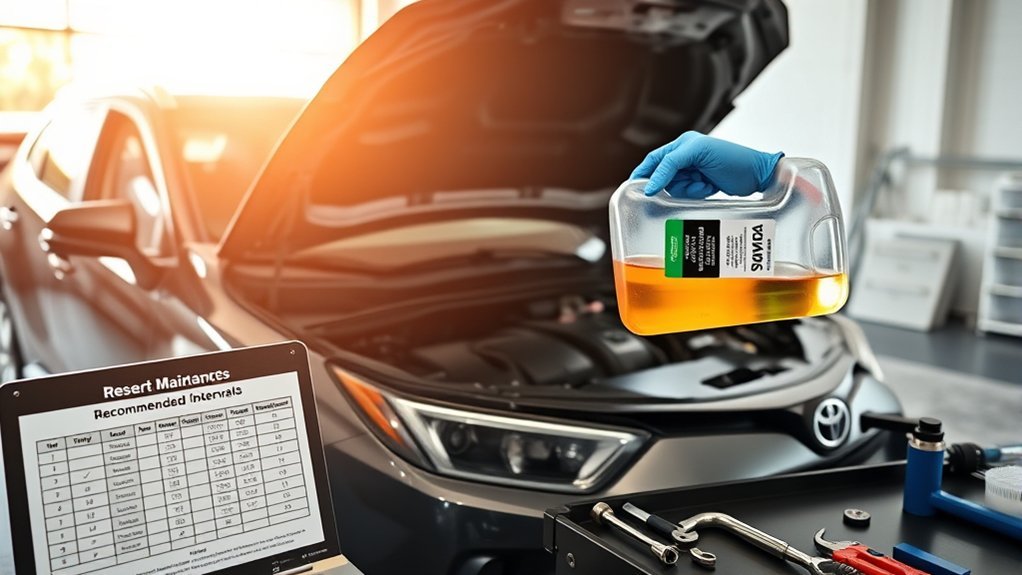
For the 2025 U.S. RAV4, Toyota’s official Warranty & Maintenance Guide lists the first engine coolant replacement at 100,000 miles or 120 months, whichever comes first. It then calls for replacement every 50,000 miles or 60 months.
The 2025 RAV4 Hybrid guide separates the engine and inverter schedules. The engine coolant follows the 100,000-mile/120-month first interval, while the inverter coolant begins at 150,000 miles/180 months. Toyota’s 2026 RAV4 Hybrid maintenance guide continues to list a later first interval for the inverter cooling circuit.
Do not apply one model year’s schedule to every RAV4. Older generations, non-U.S. vehicles, replacement coolants, and repaired systems may have different requirements. Use Toyota’s owner portal or the printed maintenance guide to verify the exact schedule before ordering coolant or paying for service.
Note: Toyota’s schedule uses time and mileage. Coolant color is not a reliable age or compatibility test, and pink fluid can still be diluted, contaminated, or mixed with the wrong chemistry.
When Should You Replace RAV4 Coolant Early?
Replacing coolant before the scheduled interval can be reasonable when the system has been opened, the service history is unknown, or the coolant fails a condition check. It should not be an automatic upsell based only on vehicle age, color, or a generic “30,000-mile flush” recommendation.
Consider early service when:
- The cooling system was opened for a water pump, radiator, thermostat, hose, heater core, engine, inverter, or related repair.
- The coolant is rusty, cloudy, oily, sludgy, or contains visible debris.
- A properly used refractometer or hydrometer shows inadequate freeze protection for your climate.
- The wrong coolant or plain water was added in a significant amount.
- You bought the RAV4 used and cannot verify what fluid is in the system.
- The system repeatedly loses coolant or traps air after a repair.
Severe driving conditions can justify more frequent inspections, but Toyota’s special-operating-condition charts do not automatically shorten the coolant replacement interval for every RAV4. Follow the notes in the exact maintenance guide.
What Signs Mean Your RAV4 Needs Coolant Service or Diagnosis?
Some symptoms point to old coolant. Others point to a leak or mechanical problem that a simple drain-and-fill will not fix.
- Rusty, brown, cloudy, or sludgy coolant: The fluid may be contaminated or chemically depleted.
- A coolant level that keeps dropping: A closed cooling system should not need repeated top-offs. Inspect for an external or internal leak.
- Sweet odor or dried residue: Wet spots or crusty deposits near hoses, the radiator, reservoir, or water pump can indicate leakage.
- Overheating, a red temperature warning, or steam: Stop safely, shut the vehicle off, and do not open the cooling system while hot.
- Weak cabin heat or gurgling: Low coolant or trapped air may be reducing heater-core flow.
- Oil sheen, foam, or sludge: Diagnose a possible gasket, cooler, or internal engine problem before flushing.
For leak symptoms and pressure-test guidance, see the site’s RAV4 coolant leak diagnosis guide. For a rising temperature gauge or warning message, use the RAV4 overheating guide instead of continuing to drive.
Warning: Do not remove the coolant reservoir cap, radiator cap, drain plug, or inverter coolant cap while the engine or hybrid system is hot. Pressurized coolant can spray and cause serious burns.
[Products Worth Considering]

This professional water pump kit is designed as a direct OE replacement for select Toyota and Lexus 3.5L V6 vehicles, helping restore reliable engine cooling performance. Built to strict quality standards and tested for leak-free operation, it includes the necessary gasket for easier installation and a secure fit. It offers a practical upgrade for drivers seeking dependable cooling system maintenance and long-lasting performance.

This engine water pump kit is designed to help maintain reliable cooling performance across a wide range of compatible Toyota, Lexus, Scion, and Pontiac vehicles. Built with aluminum and tested for leak-free operation, it offers a direct replacement solution that supports engine efficiency and long-term service life. The kit includes a professional water pump and gasket for a convenient installation-ready repair.
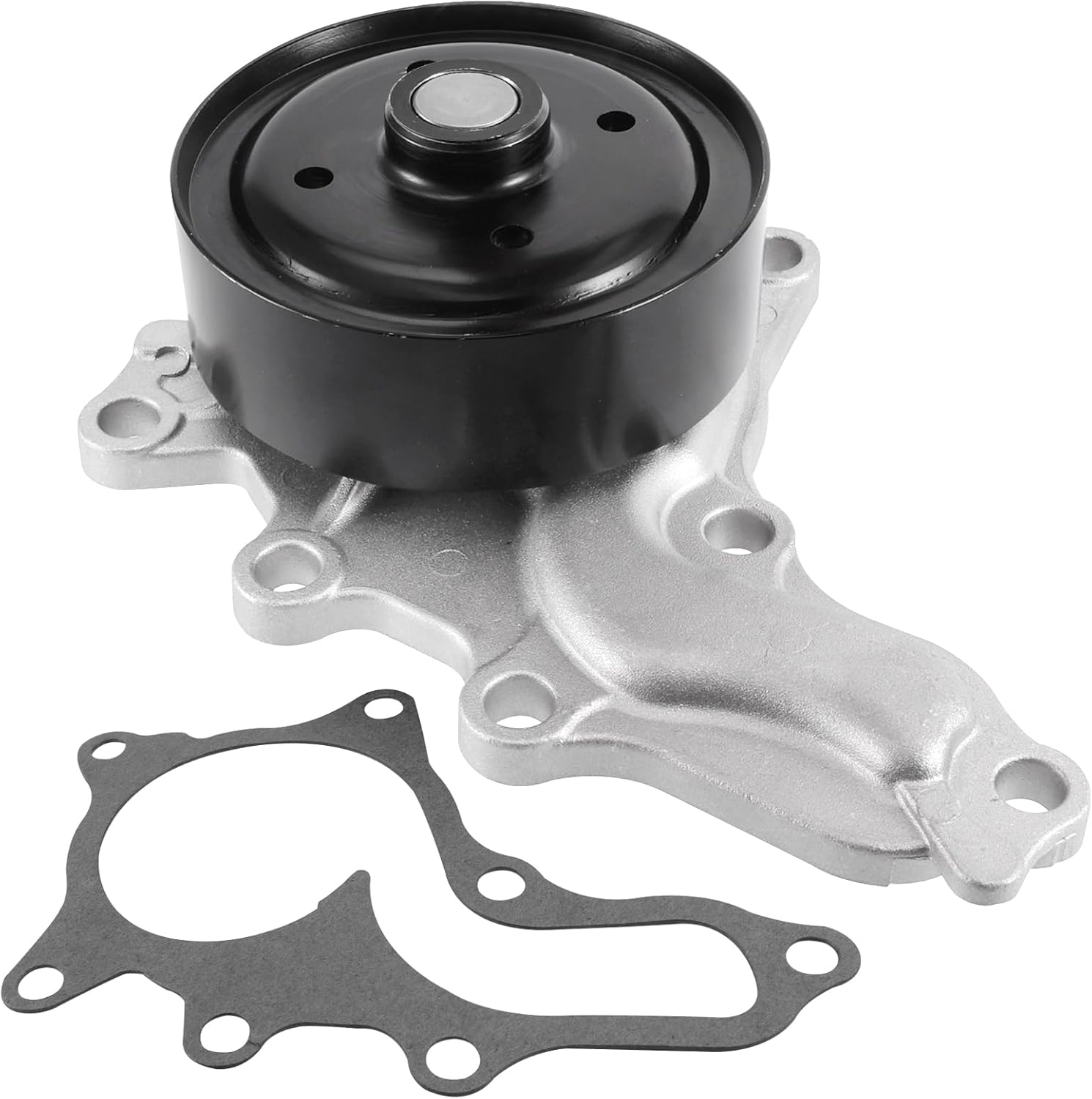
This AW6252 water pump is designed for a wide range of Toyota, Scion, and Lexus applications, helping maintain reliable engine cooling across compatible models. It features case hardened bearings for durability, a graphite-impregnated gasket for a secure seal, and 100% function and leakage testing for dependable performance. Built in TS16949 certified facilities, it offers a strong replacement option backed by service support.
How Do You Change Toyota RAV4 Coolant Safely?
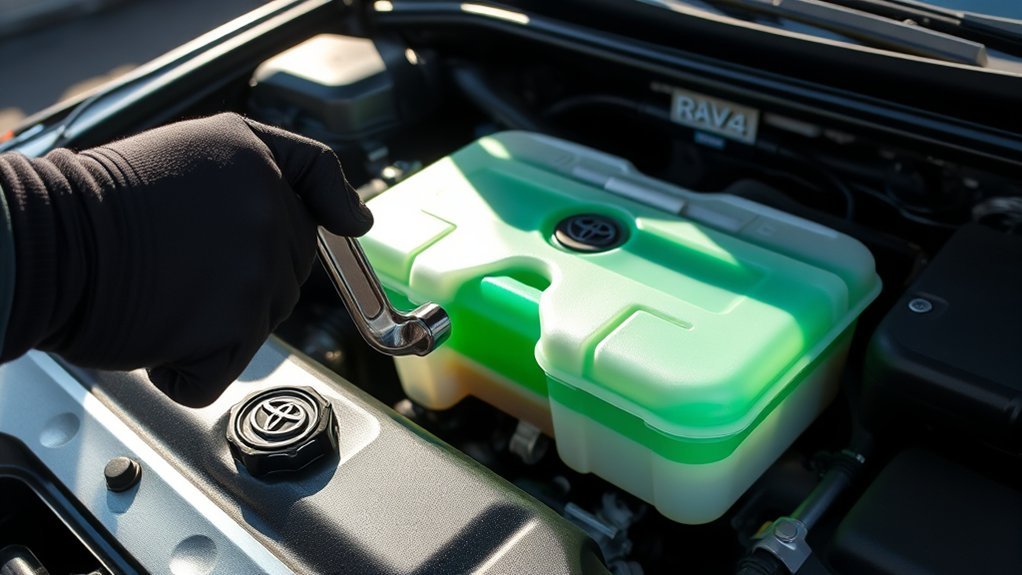
A correct coolant service is more than emptying the reservoir. It drains the correct circuit, refills it with the specified fluid, removes trapped air, confirms circulation and cabin heat, checks for leaks, and verifies the cold level after a complete heat cycle.
The steps below are a general workflow. Drain locations, capacities, bleed valves, maintenance modes, and pump activation procedures vary by model year and powertrain. Use Toyota repair information for the exact VIN, especially on Hybrid and Prime models.
[Products Worth Considering]

This coolant electric water pump is designed as a replacement for select Toyota vehicles, helping maintain proper engine cooling performance and reliable temperature control. Built to OE specifications, it offers fitment support for compatible Avalon, Camry, and RAV4 models with 2.5L L4 engines. It also includes cross-reference part numbers for easier matching and comes with after-sales support for covered defects.

This coolant bypass valve is a direct replacement for select Toyota models, helping regulate coolant flow for stable engine temperature and dependable performance. Built from high-temperature, corrosion-resistant materials, it is designed to handle demanding driving conditions while supporting long-term durability. Its straightforward design also makes installation quick and hassle-free.
Tools Required for the Change
- Safety glasses and chemical-resistant gloves
- A drain pan and sealed waste container
- A funnel or spill-free fill tool
- Basic hand tools for shields and access panels
- Toyota Super Long Life Coolant or a verified equivalent
- A refractometer or hydrometer for freeze-protection checks
- Model-specific Toyota service information for capacity, drain points, and bleeding
Toyota’s recent guides specify a high-quality, non-silicate, non-amine, non-nitrite, non-borate ethylene-glycol coolant with long-life hybrid organic acid technology. Toyota Genuine Super Long Life Coolant is the reference product. Do not dilute a premixed product unless its label and the vehicle instructions specifically call for it.
Step-by-Step Process
- Verify the vehicle and circuit. Confirm the model year, powertrain, coolant specification, capacity, and whether you are servicing the engine or inverter loop.
- Park level and let the vehicle cool completely. Set the parking brake and make sure a hybrid cannot enter READY mode while you work.
- Remove only the covers required by the service procedure. Do not disturb orange high-voltage cables, connectors, or the service plug.
- Position the drain pan. Keep coolant away from children and animals. Clean spills immediately.
- Open the specified drain point while cold. Do not force plastic drain cocks or substitute a random hose for the documented drain point.
- Close the drain to the specified condition. Replace any required gasket or seal and avoid overtightening plastic fittings.
- Refill with the correct coolant. Do not mix unknown formulas or use tap water.
- Bleed the circuit exactly as Toyota specifies. Some models require a particular fill sequence, engine run procedure, heater setting, pump operation, or maintenance mode.
- Check temperature, heater output, circulation, and leaks. Stop if the temperature rises abnormally or coolant circulation is not established.
- Recheck only after the vehicle cools. Confirm the cold level is between the marked limits and record the date, mileage, circuit, and coolant used.
Pro Tip: A normal drain-and-fill does not remove every ounce of old coolant. If the fluid is oily, badly contaminated, or mixed with an unknown product, diagnose the cause before choosing a flush or exchange method.
Hybrid and Prime Coolant Systems
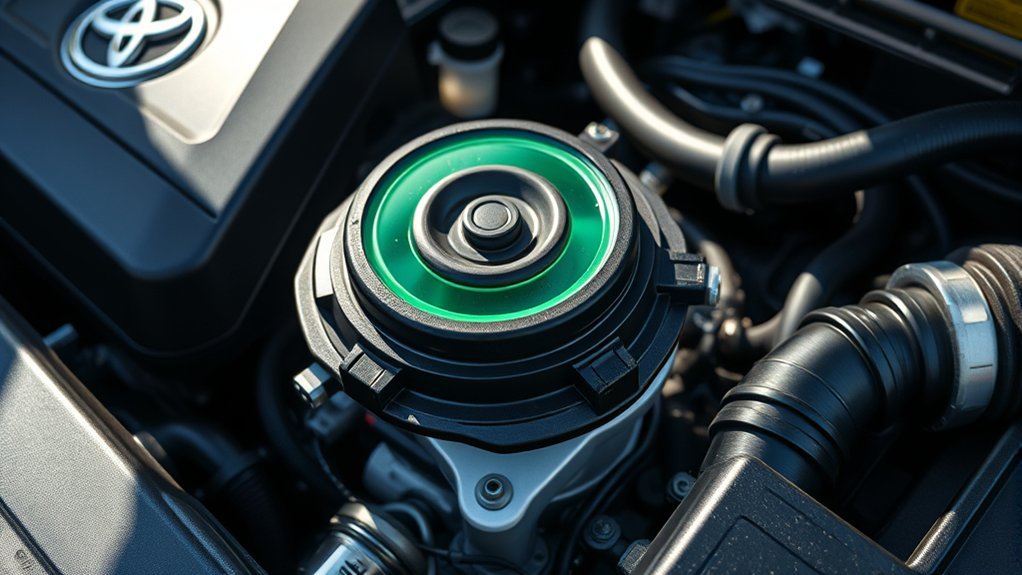
RAV4 Hybrid and RAV4 Prime models can have separate engine and inverter cooling loops. The reservoirs, electric pumps, drain points, and air-bleeding steps are not interchangeable. Servicing the engine circuit does not automatically service the inverter circuit.
Toyota’s do-it-yourself service precautions warn that electric cooling fans can start unexpectedly. Turn the vehicle fully off, keep it out of READY mode, and do not touch orange high-voltage wiring, connectors, or the service plug. Use a qualified hybrid technician when the procedure requires pump activation, maintenance mode, scan-tool functions, or high-voltage-area access.
How Should You Dispose of Used RAV4 Coolant?
Used antifreeze can contain glycol, metals, and other contaminants. Disposal rules vary by state and locality, so place the fluid in a sealed, labeled container and take it to a program that accepts used antifreeze. The U.S. EPA recommends checking with local environmental, health, or solid-waste agencies for household hazardous waste options.
Local Disposal Regulations
- Use a clean, leak-resistant container with a secure cap.
- Label it “Used Antifreeze/Coolant.”
- Do not mix coolant with oil, fuel, brake fluid, solvents, or household chemicals.
- Do not pour coolant onto soil, into a storm drain, septic system, street gutter, or surface water.
- Confirm acceptance rules before visiting a recycling center, repair shop, or auto-parts store.
Eco-Friendly Disposal Methods
Recycling is preferable when an approved program is available. Some household hazardous waste sites, municipal collection events, repair facilities, and retailers accept used coolant, but policies differ. Call ahead and transport the sealed container upright.
| Action | Why It Matters |
|---|---|
| Use a sealed container | Prevents leaks, spills, and accidental exposure |
| Label the container | Helps collection staff identify the waste |
| Keep coolant separate | Mixed fluids may be rejected or require different handling |
| Use an approved program | Protects water, soil, people, pets, and wildlife |
What Coolant-Change Mistakes Should RAV4 Owners Avoid?
- Using color as the specification: Match the required chemistry, not just pink, red, or another dye color.
- Mixing unknown coolants: Incompatible additives can reduce protection or create deposits.
- Diluting premixed coolant: Extra water weakens freeze, boil, and corrosion protection.
- Using tap water: Minerals can leave deposits inside the system.
- Opening a hot system: Pressurized coolant can cause severe burns.
- Skipping the bleed procedure: Trapped air can cause poor heat, noise, or overheating.
- Treating a leak as a maintenance interval: Fresh coolant does not repair a hose, radiator, pump, reservoir, gasket, or damaged component.
- Assuming engine and inverter service are the same: Hybrid circuits can have different intervals and procedures.
- Working around high-voltage parts: Do not touch orange wiring, connectors, or the service plug.
How Can You Check RAV4 Coolant Condition?
Start with the vehicle cold and parked level. Check the reservoir level against its marks, then inspect the fluid and surrounding components. A refractometer or hydrometer can estimate freeze protection when used correctly. Generic pH strips are not a substitute for the Toyota schedule and may not be accurate for every coolant formulation.
Look for:
- Correct cold level: The fluid should remain stable between the marked limits.
- Adequate freeze protection: The mixture must suit the lowest temperatures in your climate.
- Clean appearance: Rust, sediment, oil, foam, or sludge needs investigation.
- No recurring loss: A falling level points to leakage, trapped air after service, or an internal problem.
- No abnormal warning or temperature behavior: A red temperature warning requires an immediate safe stop.
For a coolant-temperature code, use the site’s RAV4 P0128 diagnostic guide. A code or warning should be diagnosed before parts or coolant are replaced at random.
How Do You Maintain the RAV4 Cooling System Between Changes?
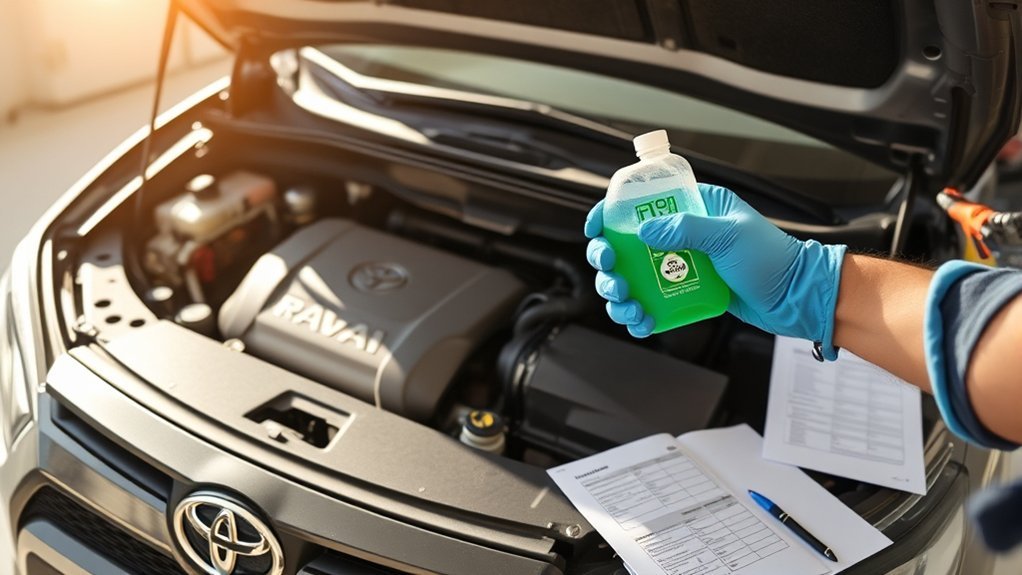
Coolant replacement is only one part of cooling-system care. Short visual checks can catch leakage, damaged hoses, restricted airflow, and falling fluid levels before the vehicle overheats.
- Check the coolant level only when the system is cold.
- Look for wetness or crusty residue around hoses, clamps, radiator seams, reservoirs, and the water pump.
- Keep leaves and debris from blocking the radiator and condenser.
- Replace swollen, cracked, chafed, or unusually soft hoses.
- Use only the specified coolant for top-offs.
- Record the date, mileage, circuit serviced, coolant brand/specification, and amount used.
- Recheck the cold level after any cooling-system repair or coolant service.
Coolant age matters as much as mileage. A low-mileage RAV4 can still reach Toyota’s time-based replacement limit.
Should You Top Off, Replace, or Diagnose the Coolant?
| Condition | Best Next Step | Reason |
|---|---|---|
| Slightly low once, no visible leak | Top off cold with the exact specified coolant and monitor | A one-time correction may be appropriate after prior service |
| Level keeps falling | Pressure-test and diagnose | Repeated coolant loss is not normal |
| Clean fluid at scheduled interval | Perform the documented drain-and-fill or exchange | The time/mileage interval has been reached |
| Unknown or mixed coolant | Identify the fluid and use a model-appropriate exchange procedure | Mixing chemistry can reduce protection |
| Oil, foam, sludge, or severe rust | Diagnose before flushing | Contamination may indicate a mechanical failure |
| Overheating, steam, or red warning | Stop safely and shut the vehicle off | Continued driving can cause major damage |
[Products Worth Considering]

Formulated to replace the OEM fluid in Asian make vehicles such as Toyota , Lexus , Scion and others requiring a red, silicate free HOAT antifreeze/coolant
Frequently Asked Questions
Is Toyota RAV4 coolant lifetime fluid?
No. Toyota Super Long Life Coolant has a long service interval, but it still requires replacement. Many recent RAV4 guides list the first engine coolant change at 100,000 miles or 120 months, then every 50,000 miles or 60 months.
What coolant should I use in a Toyota RAV4?
Use Toyota Super Long Life Coolant or an equivalent that matches the coolant specification in the owner’s or maintenance guide. Recent Toyota guidance calls for a compatible ethylene-glycol coolant with long-life hybrid organic acid technology. Do not rely on color alone.
When should RAV4 Hybrid inverter coolant be changed?
Many recent U.S. RAV4 Hybrid and Prime maintenance guides list the first inverter coolant replacement at 150,000 miles or 180 months, then every 50,000 miles or 60 months. Confirm the interval for the exact model year.
Should I flush or drain-and-fill RAV4 coolant?
For routine service, follow Toyota’s model-specific replacement procedure, which may be described as a drain-and-fill or coolant exchange. A more involved flush may be appropriate for mixed, contaminated, or sludged coolant, but the cause should be diagnosed first.
Can I use water instead of coolant in my RAV4?
Not for normal use. Water alone does not provide the required freeze, boil, corrosion, or water-pump protection. In a true emergency, water may be a temporary measure only after the system is completely cool; correct the mixture and diagnose any leak as soon as possible.
Can I drive a RAV4 with low coolant?
Do not continue driving if the engine is overheating, steam is present, or a red coolant-temperature warning appears. If the engine is fully cold and the level is only slightly low, use the correct coolant and inspect for the reason it dropped before normal driving.
Does coolant color prove it is compatible?
No. Dye color is not a coolant specification. Products with similar colors can use different additive packages, so match the Toyota-required chemistry and product instructions.
Conclusion
For many recent Toyota RAV4 models, replace the engine coolant first at 100,000 miles or 10 years, then every 50,000 miles or 5 years. On many RAV4 Hybrid and Prime models, the separate inverter coolant begins at 150,000 miles or 15 years, then follows the same 50,000-mile/5-year repeat interval.
Before service, verify the exact maintenance guide, cooling circuit, fluid specification, capacity, and bleed procedure for your VIN. Diagnose recurring loss, contamination, or overheating instead of treating it as a routine coolant-change problem.
Sources
- Toyota 2025 RAV4 Warranty & Maintenance Guide — engine coolant interval and Toyota coolant chemistry
- Toyota 2025 RAV4 Hybrid Warranty & Maintenance Guide — engine and inverter coolant intervals
- Toyota 2022 RAV4 Prime Warranty & Maintenance Guide — Prime engine and inverter coolant intervals and high-voltage precautions
- Toyota 2026 RAV4 Hybrid Warranty & Maintenance Guide — current hybrid maintenance reference
- Toyota Genuine Super Long Life Coolant — official Toyota coolant product information
- Toyota RAV4 Do-It-Yourself Service Precautions — cooling-fan and maintenance safety
- Toyota Warning Lights Guide — high coolant temperature warning response
- U.S. EPA Household Hazardous Waste Guidance — local collection and safe handling
- U.S. EPA: How Do I Dispose of Used Antifreeze? — antifreeze recycling and disposal considerations