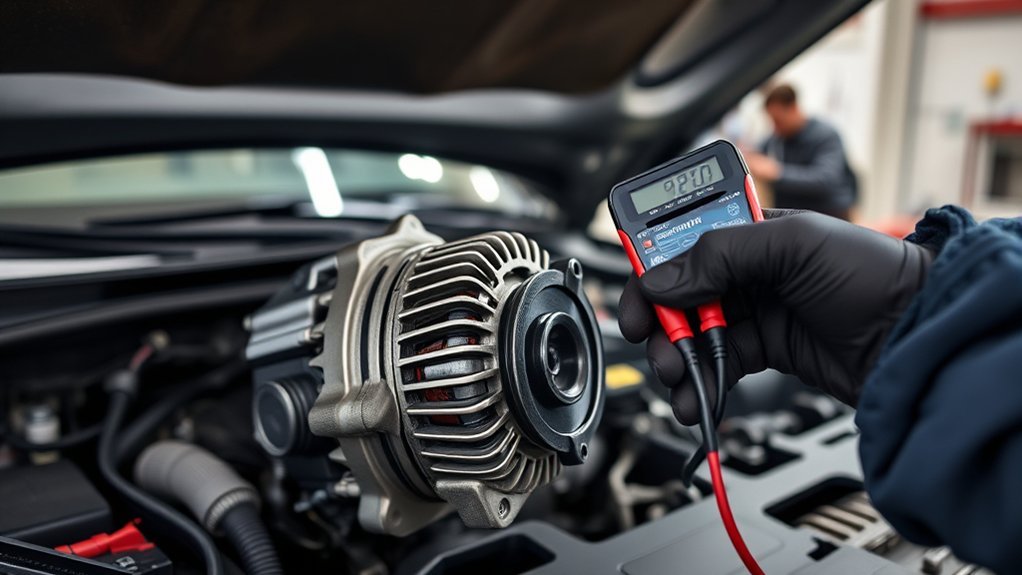
You can mistake RAV4 alternator trouble for a weak battery, a bad starter, a loose belt, or corroded wiring. That mistake can lead you to replace good parts while the real charging fault keeps draining the 12-volt battery.
Use a simple order: check symptoms, inspect easy failure points, measure resting battery voltage, test charging voltage with the engine running, and then decide whether the battery, wiring, belt, fuse, starter circuit, or alternator needs service.
Last updated: July 5, 2026
Quick Answer
To diagnose RAV4 alternator problems, check for dim lights, hard starts, warning lights, stalling, belt noise, or burning smells. Then test battery voltage at rest and charging voltage while the engine runs. If charging stays low after you confirm a good battery, belt, fuse, wiring, and grounds, the alternator may need testing or replacement.
Key Takeaways
- Check the 12-volt battery first because a weak battery can mimic a bad alternator.
- Look for a clear voltage rise after the engine starts, then test again with electrical loads on.
- Inspect the drive belt, alternator fuse, relays, terminals, grounds, and wiring before replacing major parts.
- Use voltage-drop testing when the alternator seems to work but charging voltage at the battery stays low.
- Stop driving and get professional help if you smell hot wiring, see smoke, find melted connectors, or notice severe electrical loss.
At a Glance
| Time Required | 20 to 45 minutes for basic checks; longer if wiring repairs or alternator removal is needed. |
| Difficulty | Beginner for voltage checks; intermediate for voltage-drop checks, belt diagnosis, and wiring diagnosis. |
| Tools Needed | Digital multimeter, flashlight, gloves, eye protection, battery terminal brush, basic hand tools, and model-specific Toyota owner or service information. |
| Cost | Usually low for testing if you already own a multimeter; repair cost depends on whether the issue is a battery, belt, fuse, wiring, or alternator. |
What’s in This Article
- RAV4 Alternator Symptoms: Quick Triage Checklist
- Tools, Safety, and Setup Before Testing
- Quick Checks: Belts, Fuses, Harnesses, and Connections
- Measure Battery Resting Voltage and Interpret Results
- Test Charging With a Voltmeter While the Engine Runs
- Cranking Tests: Distinguish Starter vs. Alternator Problems
- Listen and Look: Noise, Smell, and Overheating Signs
- Isolate Alternator Faults: Diodes, Regulator, and Bearings
- Check Voltage Drop Before Replacing the Alternator
- Replace Alternator or Fix Battery and Wiring: Make the Call
- Parts, OEM Options, and When to Get Professional Help
- Frequently Asked Questions
RAV4 Alternator Symptoms: Quick Triage Checklist
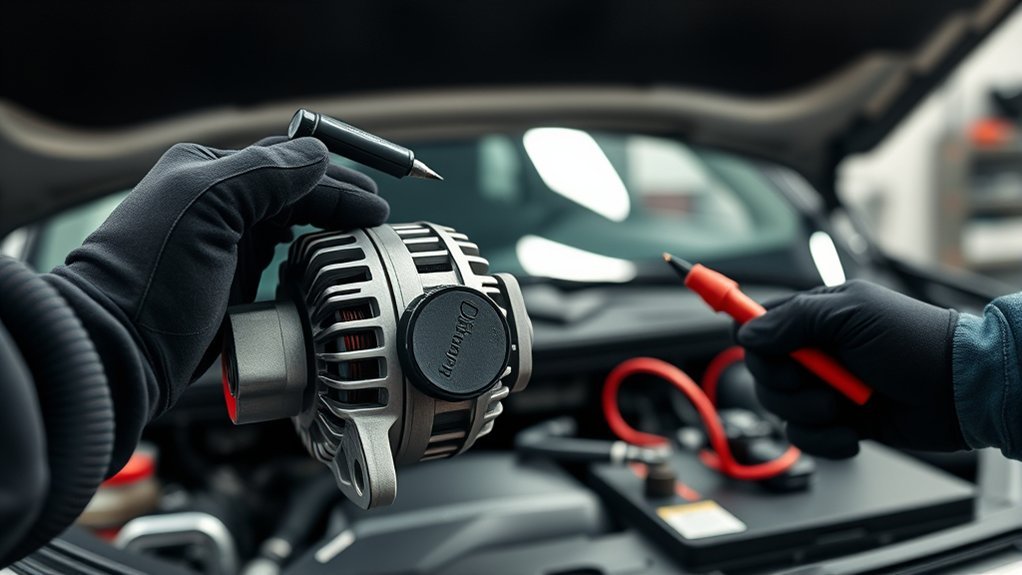
When your RAV4 shows dim headlights, flickering interior lights, hard starts, or stalling after startup, check the charging system early. The alternator keeps the 12-volt battery charged while the engine runs and supports many electrical loads while you drive.
Listen for whining, grinding, howling, or belt squeal from under the hood. Note whether the noise changes with engine speed. Also watch for a battery warning light or a charging-system warning message.
Symptoms help you choose the next test, but they do not prove the alternator has failed. A weak battery, loose belt, corroded ground, blown fuse, or poor cable connection can create similar signs.
- Check for dim headlights or flickering dash lights.
- Listen for belt squeal, whining, grinding, or howling.
- Note hard starts, slow cranking, or stalling after startup.
- Watch for a battery warning light or charging-system message.
- Smell for burning rubber or hot electrical insulation.
- Look for erratic accessories, weak blower speed, or radio resets.
Compare the alternator’s age with your service records. Old units, weak belts, corrosion, oil contamination, and heavy electrical loads can shorten charging-system life. Good notes help you avoid repeated roadside trouble.
Warning: Stop testing and get professional help if you see smoke, smell hot wiring, find melted connectors, or lose major electrical power while driving. A charging-system fault can leave the vehicle running only until the 12-volt battery drains.
Tools, Safety, and Setup Before Testing
Basic alternator diagnosis does not require a full shop, but you need safe access to the battery and engine bay. Park on a level surface, set the parking brake, keep loose clothing away from the belt, and work in a well-ventilated area.
Use a digital multimeter that can read DC volts. Most basic charging tests use the 20-volt DC range when the meter has manual ranges. You also need a flashlight so you can inspect the belt, terminals, grounds, and alternator connector.
- Digital multimeter with DC voltage setting
- Safety glasses and gloves
- Flashlight or work light
- Battery terminal brush or cleaning tool
- Basic hand tools for covers or terminal service
- Your RAV4 owner information or service data for the exact model year
Do not disconnect the battery while the engine runs. That old shortcut can create voltage spikes and damage modern electronics. Use measured voltage, visual checks, and proper circuit testing instead.
Note: Hybrid and newer RAV4 models can use different 12-volt charging-control strategies. Keep DIY checks limited to the 12-volt battery and basic charging circuit unless you have Toyota service information and the right training.
Quick Checks: Belts, Fuses, Harnesses, and Connections
Start with a visual and manual check of the drive belt. Look for cracks, glazing, fraying, looseness, missing ribs, or poor pulley alignment. A damaged or slipping belt can stop the alternator from charging well.
Then test the alternator fuse and related relay for continuity and heat damage. Replace a blown fuse only after you check for shorts or wiring damage. A new fuse may fail again if the circuit still has a fault.
Inspect the wiring harness, battery terminals, alternator output lead, and ground points. Loose or corroded connections raise resistance and reduce charging current. Clean and tighten these points before you judge the alternator.
Drive Belt Condition
Inspect the drive belt and nearby electrical connections at every service interval. This catches wear that can reduce alternator output. Scan for cracks, fraying, glazing, missing ribs, or uneven wear.
Confirm that the belt sits straight on each pulley. With the engine running, listen for squeal or screech that suggests belt slip, misalignment, or weak tension. Fix tension or pulley alignment before the belt damages other parts.
If the belt shows damage or the noise continues after adjustment, replace the belt. Then retest charging voltage under light and heavy electrical loads.
Fuse and Relay Check
Belts and wiring look obvious, but fuses and relays can also stop charging. Check the alternator fuse for continuity. Then check related charging-system relays for proper switching.
Use a multimeter to test the fuse. No continuity means the fuse has opened and the circuit cannot carry current. Before you replace it, inspect the harness for rubbed insulation, melted connectors, or shorted wiring.
For relay testing, swap in a known-good relay with the same rating or use a bench tester. If the relay clicks but fails to pass current, replace it. Record your readings so you can compare them with Toyota service specs.
Wiring and Terminal Inspection
After you check fuses and relays, inspect the wiring paths that carry charging current. A good alternator cannot charge the battery through loose, dirty, or broken wiring.
Probe the harness for frayed insulation, broken conductors, pinched sections, and heat damage. Check the alternator output lead, battery positive cable, engine ground, and body ground. Corrosion at these points can cause voltage drop.
Confirm that the voltage regulator connector seats tightly and shows no melted plastic. Repair damaged wiring or terminals, then retest charging voltage with the engine running.
Warning: Disconnect the negative battery cable before you repair charging-system wiring. Remove metal jewelry and keep tools from bridging battery terminals.
Measure Battery Resting Voltage and Interpret Results
Let the vehicle sit off for several hours with all accessories shut off. Then use a multimeter to measure the battery’s resting voltage. Put the red probe on the positive terminal and the black probe on the negative terminal.
A healthy 12-volt battery often reads about 12.6 to 12.8 volts after rest. A reading below 12.4 volts suggests a partial discharge. A reading near or below 12.0 volts means the battery needs charging and deeper testing before you blame the alternator.
This step gives you a baseline before you diagnose alternator issues. A weak battery can make the alternator look bad. Charge and retest a low battery before you make repair decisions.
Measure resting battery voltage before running charging tests. The alternator test only makes sense when you know the battery’s starting point.
| Resting Voltage | What It Usually Means | Next Step |
|---|---|---|
| 12.6 to 12.8 V | Battery appears well charged at rest. | Continue to running charging-voltage tests. |
| 12.4 to 12.5 V | Battery may have partial discharge. | Recharge if needed, then retest. |
| 12.0 to 12.3 V | Battery has low charge. | Charge and load-test the battery before alternator diagnosis. |
| Below 12.0 V | Battery may be deeply discharged or damaged. | Charge, test, and inspect before replacing other parts. |
Document voltage, temperature, and recent driving conditions. Cold weather, short trips, old batteries, and long accessory use can all affect the baseline.
Test Charging With a Voltmeter While the Engine Runs
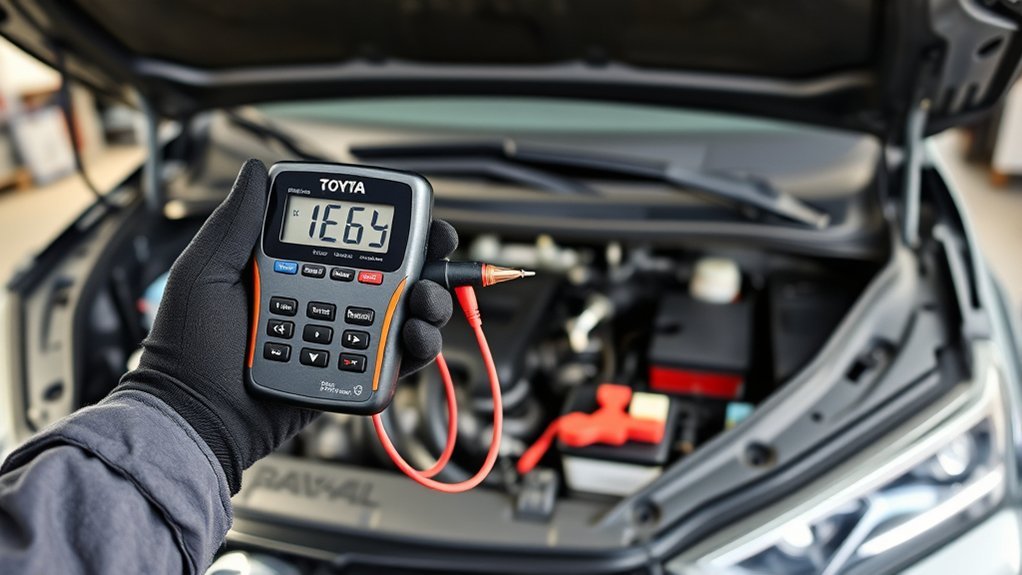
Start the engine and turn off major accessories. Connect your multimeter across the battery terminals. Use red on positive and black on negative.
A typical healthy charging system often shows about 14.0 to 14.5 volts with the engine running and accessories off. Some vehicles may vary, so compare your reading with Toyota service data for your RAV4 year, engine, and charging-system type. Toyota lets owners select their vehicle to access model-specific manuals and warranty information.
The running voltage should rise clearly above the resting battery voltage. If the reading stays near resting voltage, such as 12.4 to 12.6 volts, the alternator may not be charging the battery.
If the reading stays below about 13.5 to 13.7 volts under normal conditions, inspect the belt, wiring, fuse, regulator, and alternator. If voltage climbs too high or swings erratically, stop testing and get professional help.
Pro Tip: Test once with accessories off, then test again with headlights, blower, and rear defroster on. A weak charging system may look acceptable with no load but drop too far under load.
Raise engine speed gently and watch for voltage fluctuations. A healthy system should stay fairly steady as revolutions per minute rise. Large dips or spikes can point to worn brushes, failing diodes, poor wiring, or a weak regulator.
Record values at idle, at a light rev, and under electrical load. Trends matter more than one reading.
| Running Voltage Pattern | Likely Direction | What to Check Next |
|---|---|---|
| Clear rise above resting voltage | Charging system is working at least at a basic level. | Add electrical load and watch stability. |
| Stays near resting voltage | Alternator may not be charging. | Check belt, fuse, relay, connector, output lead, and grounds. |
| Drops under load | Weak output or high circuit resistance. | Run voltage-drop checks and inspect wiring. |
| Spikes or unstable high voltage | Possible regulator or control fault. | Stop testing and get professional diagnosis. |
Cranking Tests: Distinguish Starter vs. Alternator Problems
After you check charging voltage, run cranking tests to separate starter faults from charging-system problems. Watch the battery voltage while someone starts the engine. Use caution and keep hands, tools, and meter leads away from moving parts.
A healthy battery should usually stay above about 9.6 volts during a load test. A brief dip can happen during cranking, especially in cold weather. A drop far below that range can suggest a weak battery, bad connection, or starter circuit problem.
If cranking voltage stays acceptable but charging voltage stays low after startup, focus on the alternator and charging circuit. If cranking voltage plunges near 8.0 volts, inspect the battery, starter, terminals, and cables before you blame the alternator.
- Measure battery voltage with the ignition off.
- Watch voltage during cranking and note the lowest reading.
- Check cable ends and grounds if voltage drops hard.
- Inspect the starter circuit if the battery tests good but cranking stays weak.
- Return to charging tests after the engine starts.
These targeted diagnostics help you avoid the wrong repair. A starter that draws too much current can mimic a charging fault during startup.
Listen and Look: Noise, Smell, and Overheating Signs
Use your senses before you remove parts. A whining or howling noise from the engine bay can point to failing alternator bearings, pulley wear, or belt misalignment. A burning rubber smell can point to belt slip or excessive heat.
Watch for persistent dimming or flickering lights while the engine runs. Also look for melted insulation, discolored connectors, or oil contamination near the alternator. These signs call for careful testing and fast repair.
Whining or Howling Noise
A persistent whining or howling from the engine bay often signals failing alternator bearings or a misaligned drive belt. The sound may change pitch with engine speed. It may also grow louder when you accelerate.
Do not unplug the alternator while the engine runs. That old test can damage modern vehicle electronics. Use a mechanic’s stethoscope, visual belt checks, and voltage readings instead.
- Listen for pitch change with engine speed.
- Inspect pulley alignment and belt tracking.
- Check for bearing play with the engine off.
- Inspect belt tension and pulley runout.
- Replace the alternator or worn pulley parts if noise continues.
Act early. Persistent bearing noise can lead to friction, overheating, belt damage, and full alternator failure.
Burning Rubber Smell
A smell of burning rubber often points to a slipping belt, seized pulley, or overheated alternator. The smell may come with whining or screeching that rises with engine speed.
Treat that scent as a diagnostic warning. Inspect the alternator housing for heat, check belt glazing, and look for loose tension. Also check for oil leaks that may contaminate the belt.
Persistent odor plus poor charging often means the alternator, pulley, or belt needs service. Clean connections, verify belt tension, and test output under load before you replace parts.
Alternator Overheating Signs
When your RAV4’s alternator overheats, you may notice a burning odor, RPM-linked whining, and low charging voltage. You may also find melted plastic, discolored terminals, or brittle insulation near the alternator.
- Burning odor: belt slip, hot insulation, or internal alternator heat may cause it.
- RPM-linked whine: mechanical wear or pulley misalignment may harm bearings.
- Low charging voltage: weak output can lead to dim lights and erratic accessories.
- Heat damage: melted connectors or damaged insulation can create resistance.
Stop driving if you smell hot wiring, see smoke, or lose electrical power. A qualified technician can test the circuit safely.
Isolate Alternator Faults: Diodes, Regulator, and Bearings
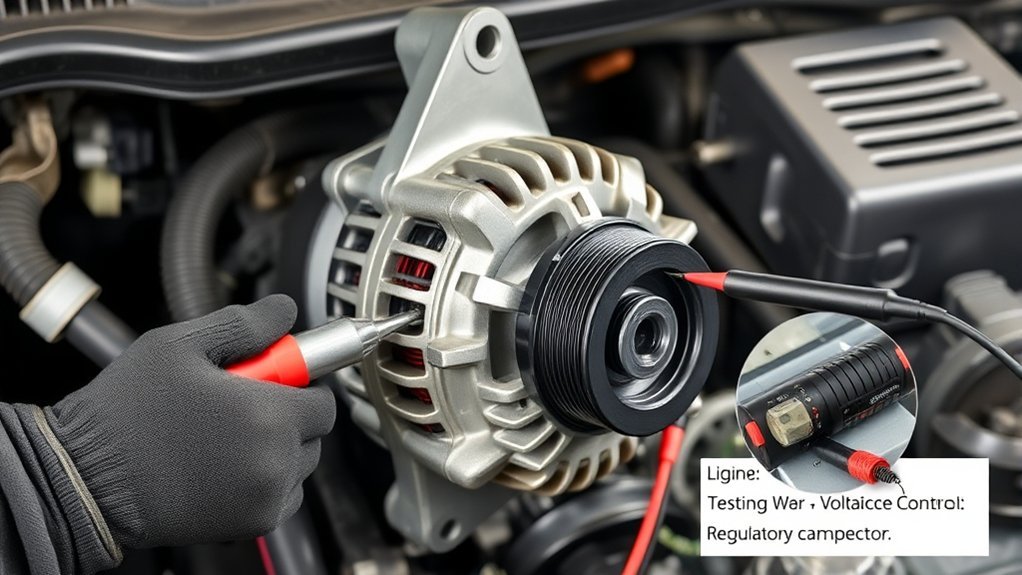
Start by checking charging voltage at the battery with the engine running. A normal system should show a clear rise above resting voltage. If the voltage stays low, inspect the belt and wiring before you blame internal alternator parts.
Next, check for diode or rectifier problems. A failing diode can reduce charging output and allow current ripple. Some multimeters can read alternating current ripple across the battery, but a bench test gives a better answer.
Inspect the voltage regulator by monitoring voltage under changing loads. Turn on headlights, blower, and the rear defroster. Unstable readings or overcharging spikes can point to regulator failure.
Listen for mechanical symptoms. Whining, growling, or grinding can point to bearing wear. With the engine off, inspect the pulley for wobble, rough rotation, or looseness.
Also check wiring and connectors for heat damage or corrosion. Bad leads can hide the real diagnosis. After these checks, you’ll know whether the alternator, regulator, wiring, or belt needs repair.
[Products Worth Considering]

The ANCEL AD410 PRO combines engine diagnostics and 12V battery testing in one easy-to-use tool, helping you read and clear check engine codes while checking battery health, cranking, and charging performance. It also provides live data, freeze frame details, and I/M readiness checks to help you diagnose issues faster and prepare for emissions testing. With plug-and-play operation, a clear screen, and broad vehicle compatibility, it is a practical solution for home mechanics and everyday drivers.

This KAIWEETS digital multimeter is a versatile tool for measuring AC/DC voltage, DC current, resistance, continuity, and diodes in home, automotive, and electrical applications. It includes pre-installed batteries, a carrying case, test leads, data hold, backlight, and overload protection for easier and safer everyday testing. Built with double fuses and rated for broad household and light professional use, it helps users diagnose electrical issues with confidence.
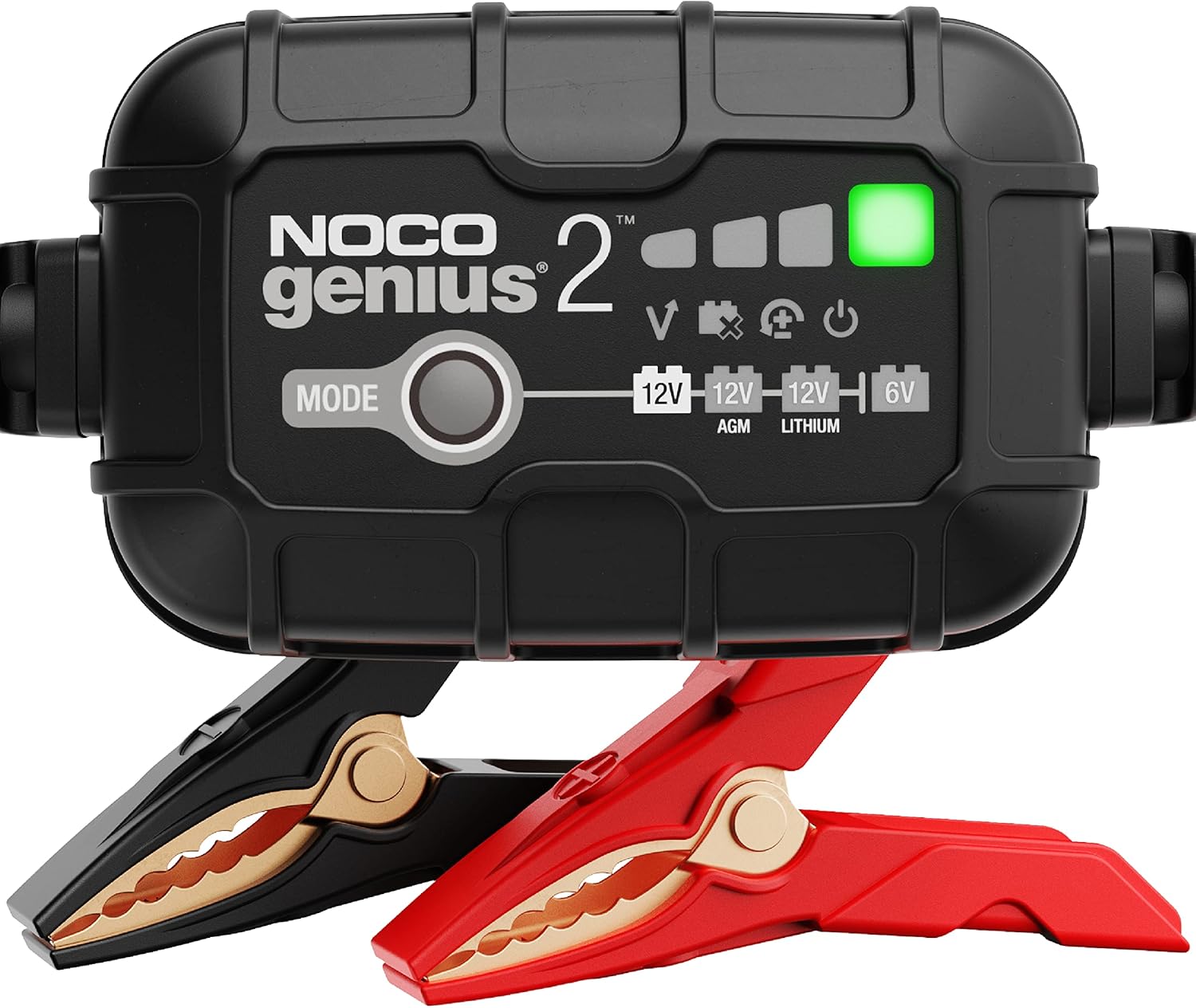
The NOCO GENIUS2 is a compact, all-in-one smart charger that automatically charges, maintains, and restores 6V and 12V lead-acid and lithium batteries. It features temperature compensation, overcharge protection, pulse desulfation, and Force Mode for reviving deeply discharged batteries, making it ideal for long-term battery care across many vehicle types. Designed for safe indefinite connection, it helps extend battery life and keep batteries ready to go.
Check Voltage Drop Before Replacing the Alternator
Voltage-drop testing helps you find hidden resistance in the charging circuit. A cable can look clean from the outside but still lose voltage through corrosion, loose connections, poor crimps, or damaged strands.
Delco Remy voltage-drop guidance identifies loose connections, corrosion, improperly sized wiring, and poor crimps as causes of high resistance. For a 12-volt system, its alternator circuit guidance lists 0.500 volts as the maximum total voltage loss during the described test method.
For a basic DIY check, compare voltage at the alternator output and at the battery while the engine runs under load. If voltage is higher at the alternator than at the battery, the alternator may be producing power but the circuit may not be delivering it well.
- Check the positive side from alternator output to battery positive.
- Check the ground side from alternator case or engine ground to battery negative.
- Inspect cable ends, grounds, fusible links, and terminals if voltage loss is high.
- Repair wiring or grounds before installing a new alternator.
Note: Voltage-drop testing is more advanced than a simple battery voltage check. If you are not comfortable working around a running engine and live circuits, ask a technician to perform this test.
Replace Alternator or Fix Battery and Wiring: Make the Call
You can decide between alternator replacement and battery or wiring repair by following the data. Measure resting voltage, cranking voltage, running voltage, and voltage drop. Then inspect belt condition and circuit resistance.
Replace the alternator when charging voltage stays low after you confirm a good battery, good belt, clean terminals, sound fuses, tight grounds, and healthy wiring. Do not replace it only because the vehicle starts poorly. A weak battery or starter can create similar symptoms.
If cranking voltage drops very low, inspect the starter circuit and battery cables before you condemn the alternator. If voltage drop appears between the alternator and battery, repair the wiring or ground path first.
| Test Result | Likely Problem Area | Best Next Move |
|---|---|---|
| Low resting voltage | Battery charge or battery health | Charge and test the battery first. |
| Good resting voltage but very low cranking voltage | Battery, cables, grounds, or starter draw | Load-test battery and inspect starter circuit. |
| Low running voltage with good belt and wiring | Alternator, regulator, or internal fault | Bench-test or replace the alternator if confirmed. |
| Voltage higher at alternator than battery | Cable, fuse link, terminal, or ground resistance | Repair circuit resistance before replacing the alternator. |
| Voltage spikes or unstable high readings | Regulator or control problem | Stop DIY testing and get professional diagnosis. |
Follow a simple order: isolate, measure, verify, then act. This approach cuts guesswork and prevents wasted parts.
[Products Worth Considering]

This smart automatic battery charger and maintainer helps keep automotive batteries charged and ready by delivering a full charge before switching to float mode for long-term maintenance. It supports 6V and 12V batteries with broad compatibility for lead-acid, AGM, gel, and lithium types, while built-in safety features like reverse polarity detection and spark-proof connection help ensure reliable use. Compact construction, included connection cables, and indicator lights make it a convenient choice for cars, SUVs, trucks, and storage maintenance.

SOPAMI Ceramic Paint Sealant Spray delivers a mirror-like shine while adding a durable hydrophobic layer that helps repel water and everyday contaminants. Designed for long-lasting protection, it helps defend paint against UV exposure, acid rain, bug splatter, and bird droppings while enhancing gloss and clarity. The odor-free formula is easy to apply with a simple spray-and-wipe process and can be used on paint, headlights, and mirrors for versatile vehicle care.

[Replacement Numbers] 11402N, 11402, 1042102270, 1042102340, 1042102341, 1042108431, 2706036010, 2706036011, 270600V010, 2706036010, 2706036011
Parts, OEM Options, and When to Get Professional Help
Parts selection matters because your RAV4’s charging system must match the vehicle’s electrical design. An original equipment manufacturer (OEM) alternator or a high-quality direct-fit replacement helps protect fit, pulley alignment, output rating, and regulator behavior. Always match the part by year, engine, trim, and charging-system type.
Inspect the drive belt and wiring harness before you condemn the unit. A new alternator will not fix bad cables, weak grounds, belt slip, or a blown fusible link.
| Component | Action |
|---|---|
| OEM or direct-fit alternator | Match fit, pulley type, output rating, connector, and regulator design |
| Drive belt | Check tension, glazing, cracks, missing ribs, and pulley alignment |
| Wiring harness | Inspect corrosion, loose terminals, heat damage, and broken insulation |
| Voltage reading | Get help when voltage stays low, spikes, or fluctuates after basic checks |
| Service records | Track battery age, belt replacement, and prior charging repairs |
Call a qualified technician when you see smoke, melted wiring, burning electrical smells, or unstable high voltage. Also get help if the battery warning light returns after you replace a battery or alternator. Professional load testing and voltage-drop testing can find faults that basic checks miss.
[Products Worth Considering]

【Compatibility】Fit for Toyota RAV4 2.0L 2001-2003 (Only for Manual transmission) / for RAV4 2.4L 2004-2005 (Only for Manual transmission), Fti for Toyota 2.4L for Camry / Solara 2002-2003
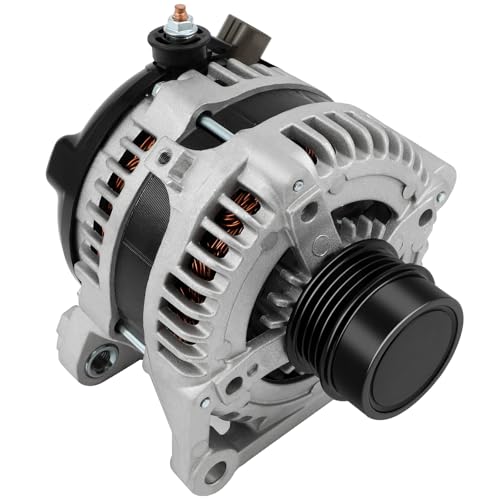
【Alternator Fitment】- Automotive new alternator replacement for Scion tC 2.5L 2011-2016,for Toyota Camry 2.5L 2012-2015,for Toyota RAV4 2.5L 2009-2012
Frequently Asked Questions
What are common RAV4 alternator failure signs?
Common signs include dim lights, flickering dash lights, hard starts, warning lights, stalling after startup, whining from the engine bay, and odd electrical behavior. You may also smell burning rubber or hot electrical insulation if the belt slips or the alternator overheats.
How do you diagnose a bad alternator in a RAV4?
Check the battery first, then measure charging voltage with the engine running. Inspect the belt, fuses, relays, terminals, grounds, and alternator wiring. If the battery and circuit pass but charging stays low, test or replace the alternator.
Will a code reader tell you if your alternator is bad?
No. A code reader may show low-voltage or charging-related diagnostic trouble codes, but it will not prove that the alternator has failed. You still need voltage tests, wiring checks, and sometimes a bench test.
Can a bad battery look like a bad alternator?
Yes. A weak or discharged battery can cause hard starts, warning lights, and low voltage readings. Charge and test the battery before you blame the alternator.
Should you drive with a RAV4 charging-system warning?
Limit driving and test the vehicle as soon as possible. If the alternator stops charging, the RAV4 may run only until the battery drains. Stop safely if lights dim badly, power steering behavior changes, or the engine starts to stall.
What voltage should a RAV4 alternator show?
Many healthy charging systems show about 14.0 to 14.5 volts with the engine running and accessories off, but Toyota charging behavior can vary by model year, engine, battery state, and temperature. Compare your reading with service data for your exact RAV4.
Can a loose belt cause alternator problems?
Yes. A loose, glazed, cracked, or misaligned belt can slip on the pulley and reduce alternator output. Belt slip may also cause squealing, burning rubber smell, overheating, and low charging voltage.
Safety Disclaimer: This article gives general vehicle troubleshooting information only. Automotive electrical systems can cause burns, sparks, short circuits, battery damage, and vehicle damage. Always follow your owner’s manual and consult a qualified technician when a test exceeds your skill level.
Conclusion
Your RAV4 alternator diagnosis should start with simple checks and end with measured proof. Test resting voltage, charging voltage, cranking voltage, belt condition, fuses, relays, wiring, terminals, and grounds before you replace parts.
If readings sit outside spec or noise, smell, heat, or warning lights continue, repair the fault or call a qualified technician. Do not guess. Let the readings guide your next move, and you will protect both the battery and the charging system.
Sources
- AutoZone: How to Test the Alternator and Charging System — supports common charging-voltage guidance and alternator test sequence.
- Midtronics: Key Indicators of a Healthy Battery Test — supports resting battery voltage and battery-health context.
- AutoZone: How Many Amps Is a Car Battery? — supports the 9.6-volt load-test threshold.
- Delco Remy: Tech Tip: Checking Voltage Drops — supports voltage-drop testing and high-resistance troubleshooting.
- Toyota Owners: Manuals and Warranties — supports using model-specific Toyota owner information.