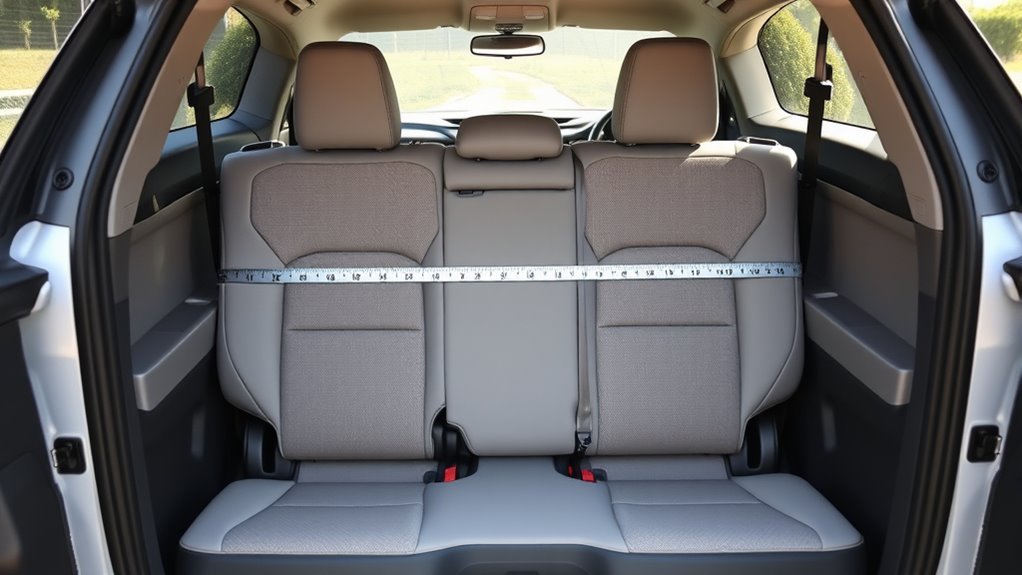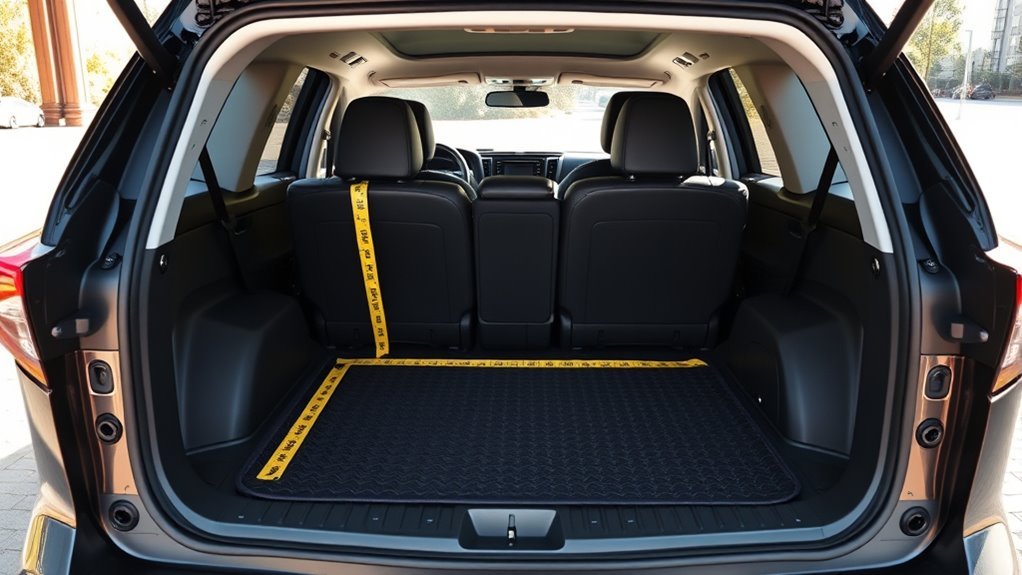
You’ll get the most useful RAV4 cargo space by matching the number to the right model year and powertrain. The latest 2026 RAV4 grows slightly to 70.4 cu ft with the second row folded, while many 2019–2025 gas and hybrid models list up to 69.8 cu ft. The key is simple: use the folded-seat volume for big items, the behind-seat volume for daily cargo, and the doorjamb load label for weight limits.
Quick Answer
The 2026 Toyota RAV4 offers 70.4 cu ft of cargo volume behind the front row with the second row folded and 37.8 cu ft behind the second row. For most 2019–2025 RAV4 gas and hybrid models, the folded-seat figure is 69.8 cu ft, with about 37.5–37.6 cu ft behind the rear seats.
Key Takeaways
- The newest 2026 RAV4 lists 70.4 cu ft folded and 37.8 cu ft behind the second row.
- Most 2019–2025 RAV4 gas and hybrid models list 69.8 cu ft behind the front row and about 37.5–37.6 cu ft behind the rear row.
- The 2025 RAV4 Plug-in Hybrid has 33.5 cu ft behind the rear seats, so tall boxes and stacked luggage need more careful planning.
- Cargo volume is not the same as payload. Always check the tire-and-loading label on your driver-side doorjamb before hauling heavy gear.
At a Glance
| Time Required | 5–10 minutes to measure and plan a load |
| Difficulty | Easy |
| Tools Needed | Tape measure, straps or cargo net, blanket or padding for fragile items |
| Cost | $0 if measuring only; about $10–$30 for basic tie-downs or a cargo net |
RAV4 Cargo Quick Specs With Seats Folded
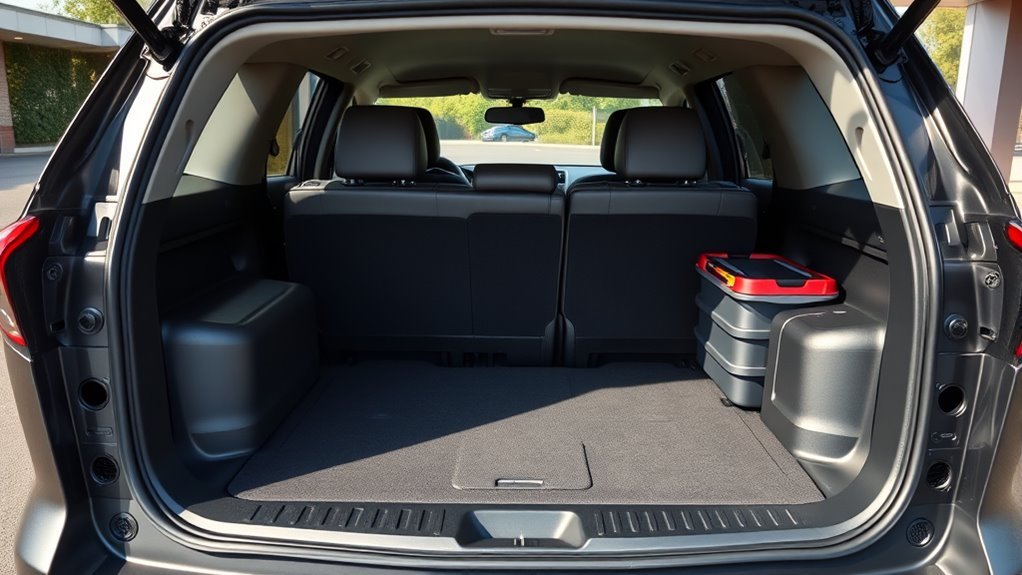
The headline number depends on the generation. Toyota’s 2026 RAV4 sales guide lists 70.4 cu ft behind the front row with the second row folded and 37.8 cu ft behind the second row. For the 2019–2025 generation, Toyota’s official 2024 RAV4 brochure lists 69.8 cu ft behind the front row and about 37.5–37.6 cu ft behind the rear seat, depending on trim.
You’ll use the 60/40 split-folding rear seats to tailor the space: fold both sides for maximum room, or fold one side for long items while keeping one rear passenger position. The RAV4’s low cargo opening and mostly flat folded surface help when sliding boxes, coolers, luggage, or sports gear into place.
For the redesigned 2026 RAV4, Toyota lists 70.4 cu ft with the second row folded—slightly more than the 69.8 cu ft figure commonly listed for 2019–2025 gas and hybrid models.
[Products Worth Considering]

This custom-fit center console organizer tray adds practical storage to the Toyota RAV4 2026, helping keep small essentials neatly separated and easy to reach. Designed with precise 3D scanning for a snug fit, it creates extra usable space in the armrest area while reducing clutter and rattling. The durable insert installs easily without tools and includes a non-slip mat to help keep items in place.

This custom-fit car phone holder is designed for Toyota RAV4 models with a 7/8-inch screen, providing a secure and convenient mounting solution without blocking vents or sightlines. It combines magnetic alignment with fast wireless charging to keep your phone powered while offering 360-degree rotation for optimal viewing in portrait or landscape mode. Built from durable ABS material and easy to install without tools, it supports safer hands-free navigation and calling on every drive.

These custom-fit seat covers are tailored for Toyota RAV4 gasoline models from 2019 through 2025, giving your SUV a refined interior upgrade with a precise OEM-inspired look. The spill-resistant faux leather surface helps protect against daily messes, scuffs, and pet wear while staying easy to clean, and the reinforced airbag-compatible stitching supports safety without sacrificing style. A secure strap, zipper, and Velcro installation system helps keep the covers in place for a stable, comfortable fit in all seasons.
Cargo Volume by Model and Seat Configuration
Use this table as the clean starting point before you pack. The most important split is not just gas, hybrid, or plug-in—it is also model year, because the 2026 RAV4 begins a new generation.
| RAV4 version | Seats folded / behind front row | Seats up / behind rear row | Best for |
|---|---|---|---|
| 2026 RAV4 Hybrid | 70.4 cu ft | 37.8 cu ft | Largest current factory-listed folded cargo figure |
| 2019–2025 RAV4 gas | 69.8 cu ft | About 37.5–37.6 cu ft | Large boxes, luggage, furniture runs, camping gear |
| 2019–2025 RAV4 Hybrid | 69.8 cu ft | About 37.5–37.6 cu ft | Same practical cargo footprint as most gas models, with hybrid efficiency |
| 2025 RAV4 Plug-in Hybrid | Check your model-year spec sheet for folded volume | 33.5 cu ft | Daily cargo plus plug-in driving range, with less rear-seat-up cargo height |
Note: Cubic feet describe volume, not weight. Passenger weight, cargo weight, accessories, and trailer tongue weight all count against the vehicle’s load limit. Use the load label on your RAV4’s driver-side doorjamb before carrying dense items such as tile, batteries, tools, or bags of concrete.
What Fits in RAV4 Cargo: Luggage, Bikes, Boards, and Boxes
Cargo numbers become useful when you translate them into real items. With the rear seats folded, a RAV4 can handle many bulky everyday loads: flat-pack furniture boxes, camping bins, coolers, sports gear, pet crates, and luggage for a family road trip. Behind the rear seats, you still have enough space for groceries, backpacks, carry-ons, duffels, and weekend gear.
For bikes, the safest answer is to measure first. Many adult road, gravel, or mountain bikes can fit with the front wheel removed, especially if the bike is placed diagonally and the handlebar is turned. XL frames, wide handlebars, large e-bikes, or two-bike loads may need more disassembly or an exterior rack. For boards, snowboards and skateboards are usually easier than surfboards because the RAV4’s roofline and rear hatch angle limit long, tall items inside the cabin.
- Large suitcases: Usually several will fit behind the rear seats, but hard-shell cases waste more space than soft duffels.
- Adult bike: Often possible with the front wheel off; measure wheelbase, handlebar width, and seat height.
- Camping gear: Put coolers and bins low, then fill gaps with sleeping bags, tents, and soft bags.
- Flat-pack furniture: Measure the package length and keep the front seats adjusted for safe driving.
- Dog crate: Check crate height and hatch clearance, not just floor length.
Pro Tip: Use soft bags instead of hard suitcases when the cargo area is nearly full. Soft items can fill the small gaps around wheel wells, bike frames, coolers, and boxes.
[Products Worth Considering]

This custom-fit center console armrest cover is designed to refresh and protect the lid on compatible Toyota RAV4 models and trims. Made to follow the console curvature for a smooth, wrinkle-free look, it helps guard against scratches, spills, dirt, and everyday wear while improving the appearance of an aging armrest. Installation is simple and the cover is tailored for a snug, secure fit across supported RAV4, RAV4 Hybrid, and RAV4 Prime vehicles.
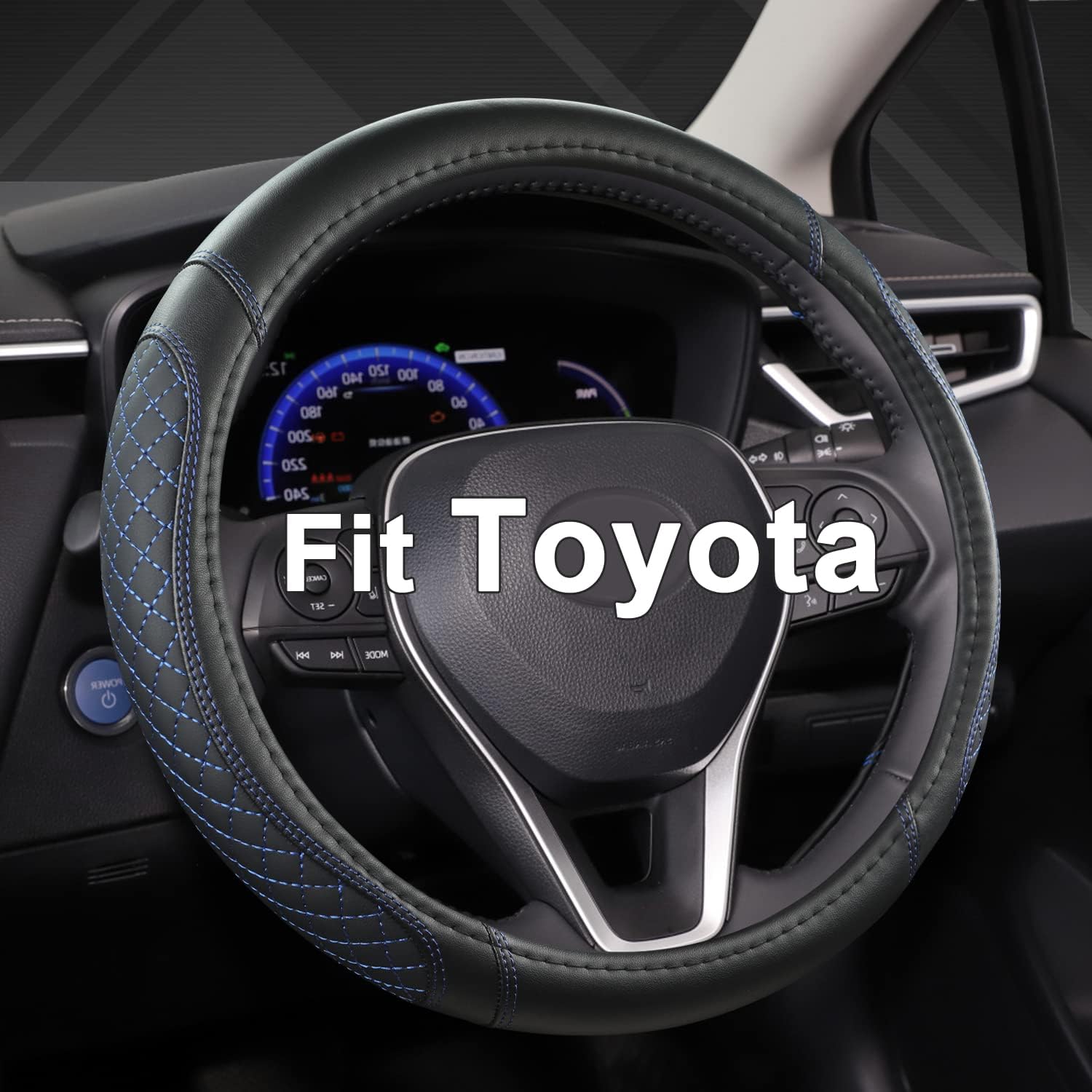
This custom-fit steering wheel cover is designed for select Toyota models and sized for standard steering wheels to help improve grip and comfort while driving. Made with soft microfiber leather and a non-slip rubber inner ring, it adds control, protects your wheel, and brings a stylish diamond-quilted look to your car interior. Installation is simple and tool-free, making it an easy upgrade for everyday driving.

Sturdy Box Design – FORTEM premium trunk storage organizer for car is reinforced with rigid base plates to support every side panel. Among car organizers and storage, ours will leave less mess to worry about with multiple side pockets and up to 3 compartments.
How Hybrid and Plug-in Models Change Cargo Space
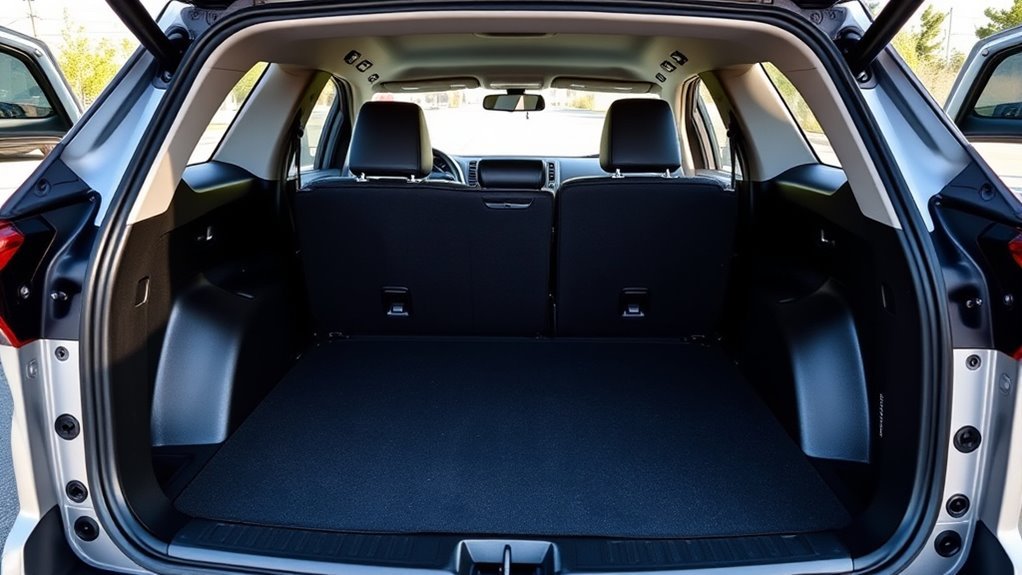
The standard RAV4 Hybrid is easy to plan around because recent non-plug-in hybrid models keep cargo space very close to gas versions. For many 2019–2025 RAV4 gas and hybrid trims, Toyota lists the same 69.8 cu ft behind the front row and about 37.5–37.6 cu ft behind the rear row.
The plug-in version changes the decision slightly. Toyota’s 2025 RAV4 Plug-in Hybrid press information lists 33.5 cu ft of rear cargo volume. That is still practical for daily use, but it gives you less behind-seat cargo room than gas and standard hybrid models. If you regularly carry tall boxes, large pet crates, or stacked luggage with all seats in use, the non-plug-in RAV4 variants are easier to pack.
For 2026, Toyota moved the RAV4 lineup to an electrified-only family, with hybrid and plug-in hybrid choices. The official 2026 RAV4 page lists the redesigned RAV4 as hybrid only, and the 2026 RAV4 Plug-in Hybrid page lists updated plug-in performance and range figures. For cargo planning, treat 2026 separately from 2019–2025 because the body and published cargo specs changed.
Maximizing RAV4 Cargo Space: Seat Folds, Floor, and Tie-Downs
Fold the rear seats when you need maximum length and volume. Use the 60/40 split when you need a mixed layout: one passenger on the smaller side, long gear on the folded side, and smaller bags tucked around the base. Keep dense items low and forward, then stack lighter items higher only if they do not block rear visibility or rise above the seatbacks.
Fixed cargo hooks, straps, bins, and cargo nets help keep items from shifting. That matters because the Toyota owner’s manual warns drivers to secure items in the occupant compartment and avoid stacking cargo higher than the seatbacks. NHTSA also warns that unsecured loads can become a road hazard, so secure cargo inside the vehicle and on any exterior rack.
Warning: Never let a person ride in the cargo area, and do not place loose items where they can slide under the pedals, block your view, or fly forward during hard braking.
- Place the heaviest boxes low and as far forward in the cargo area as practical.
- Use straps or a cargo net for bikes, coolers, toolboxes, and stacked bins.
- Remove or retract the cargo cover when carrying taller items, but do not use it as a shelf.
- Protect interior panels with a blanket when loading bikes, boards, or furniture.
- Keep the driver’s seat position safe; do not move it too far forward just to force a long item inside.
[Products Worth Considering]

Easy to Install - You can simply install by yourself for this heavy duty mesh truck cargo net. Attach the cargo net to your vehicle via the corner hooks. Reinforced hard plastic hooks will keep stuff taught and secure. Ideal for rear cargo storage in sedan

【Fits most cars】: This cargo net comes in three sizes for you to choose from, 43.3 inch cargo net is recommended for truck owners, 35.43 inch cargo net is recommended for SUV owners, and 49.2 inch cargo net is recommended for RV owners. Your cargo is secure on any bumpy road, it fits securely in the right size trunk, and driving or opening the trunk is no longer bothered by rolling cargo

[Reliable Quality] Our cargo net is made of high-quality polyester material, features high elasticity performance, no easy to deform and loose even in long-term use. And these included carabiner clips are made out of aluminium material, very sturdy, hard to break. The quality has been upgraded to ensure durability and service life, you can buy with confidence!
Quick Packing Checklist and How to Measure Your Items
Before loading a large item, measure the cargo area and the item itself. Toyota’s 2024 RAV4 brochure lists a 40.0-inch cargo length behind the rear seat, 39.4-inch minimum cargo width, 59.0-inch maximum cargo width, and 34.5–36.6 inches of cargo height on most trims. Prime models in that brochure list a lower cargo height of 33.2 inches. Your usable space may change with floor position, accessories, cargo mats, and front-seat placement.
Measure Key Dimensions
Use a tape measure instead of relying only on cubic feet. Cubic volume tells you total space, but an object can still fail to fit if it is too long, too wide between the wheel wells, too tall for the hatch opening, or too heavy for the vehicle’s load rating.
- Length: Measure from the closed liftgate area toward the front seats or rear seatbacks.
- Width: Measure both the narrowest point between wheel wells and the widest open floor area.
- Height: Measure from the cargo floor to the lowest point of the roofline or hatch opening.
- Shape: Check handles, pedals, wheels, box corners, and uneven edges that can steal space.
- Weight: Compare passenger and cargo weight with the doorjamb load label.
Packing Priority List
Because space is finite, prioritize safety and balance first. Place heavy gear low and toward the front of the cargo area, then layer medium-weight boxes, and finish with light, compressible items on top or in gaps. Use the 60/40 split seats for mixed passenger-and-cargo loads, and secure items before driving.
| Priority | Placement | Examples |
|---|---|---|
| High | Front, low, secured | Toolbox, battery pack, cooler, dense bins |
| Medium | Middle layer | Boxes, folded chairs, soft cases |
| Low | Top layer and gaps | Clothing, pillows, sleeping bags, jackets |
Frequently Asked Questions
Is RAV4 cargo space bigger with the seats down?
Yes. Folding the rear seats gives you the largest cargo area. Toyota lists 70.4 cu ft behind the front row for the 2026 RAV4 and 69.8 cu ft behind the front row for many 2019–2025 RAV4 gas and hybrid models.
Which RAV4 model has the most cargo space?
Based on current Toyota-published figures, the 2026 RAV4 has the largest listed folded-seat cargo number at 70.4 cu ft. For 2019–2025 models, gas and standard hybrid RAV4 versions commonly list up to 69.8 cu ft with the rear seats folded.
Does the RAV4 Hybrid lose cargo space?
For many recent non-plug-in RAV4 Hybrid models, cargo space is effectively the same as the gas model. The bigger cargo difference is usually with plug-in hybrid versions, which can have less rear-seat-up cargo volume because of battery packaging.
Can a bike fit in a Toyota RAV4 cargo area?
Many adult bikes can fit with the rear seats folded and the front wheel removed, but it depends on frame size, handlebar width, tire size, and seat height. Measure the bike first, and secure it so it cannot slide or damage interior panels.
Is cargo volume the same as payload?
No. Cargo volume measures space in cubic feet. Payload measures how much weight the vehicle can safely carry, including passengers and cargo. Use the load-carrying label on the driver-side doorjamb for your exact RAV4.
Conclusion
You’ve got enough room in a RAV4 to treat the cargo area like a practical loading tool, not a guessing game. For the latest 2026 RAV4, start with 70.4 cu ft folded and 37.8 cu ft behind the second row. For most 2019–2025 gas and hybrid models, plan around 69.8 cu ft folded and about 37.5–37.6 cu ft seats up. Measure awkward items, fold the 60/40 rear seats as needed, load heavy items low, and secure everything before you drive.
Sources
- Toyota 2026 RAV4 Sales Consultant Guide — backs 70.4 cu ft folded and 37.8 cu ft behind the second row for the 2026 RAV4.
- Toyota 2024 RAV4 eBrochure — backs 2019–2025-generation cargo dimensions including 69.8 cu ft behind the front row and cargo area length, width, and height figures.
- Toyota USA Newsroom: 2025 RAV4 Plug-in Hybrid — backs the 33.5 cu ft rear cargo volume figure for the 2025 plug-in model.
- Toyota 2026 RAV4 Official Model Page — backs the redesigned 2026 RAV4 lineup and current Toyota-published model information.
- Toyota Owners Manual: 2025 RAV4 Cargo and Luggage — backs safe cargo placement warnings and secure-loading guidance.
- NHTSA: How to Secure Your Load — backs the safety advice to tie down and secure cargo before driving.