Last updated: July 31, 2026 · Gas-versus-hybrid applicability, Toyota fluid specifications, service procedures, maintenance timing, and safety guidance were rechecked.
By: [VERIFY: add the real author/byline and relevant automotive maintenance credentials] · Method: Reviewed against Toyota owner and maintenance information, current service-procedure data, jack-stand instructions, and EPA used-oil guidance.
For 2019–2025 gas RAV4 AWD models, the mechanical transfer and rear differential use model-specific gear oil. RAV4 Hybrid, Prime, Plug-in Hybrid, and 2026 electrified AWD models use a dedicated rear electric drive unit, so the gas-AWD transfer-case procedure does not apply to them.
Before draining anything, identify your model year, powertrain, and AWD system. Then confirm the exact fluid, capacity, plug gaskets, tool access, fill level, and torque in Toyota service information for your vehicle.
The most important rule is simple: loosen the fill plug before removing the drain plug. If the fill plug will not come out, leave the old fluid in place until the plug can be serviced safely.
Estimated total time: Plan about 45 to 90 minutes for a mechanical gas-AWD RAV4 if you have the correct tools, safe lifting equipment, model-specific service data, and clear access to both plugs. Torque-vectoring models or vehicles with difficult under-cover access may take longer.
Quick Answer
For a mechanical gas-AWD RAV4, drain and refill the transfer and rear differential only with the fluid specified for that model and AWD system. Keep the vehicle level, remove the fill plug first, use new gaskets where required, fill to the specified level, and torque the plugs with a calibrated wrench. Do not apply this gear-oil procedure to a RAV4 Hybrid, Prime, Plug-in Hybrid, or 2026 motor-driven AWD system.
Key Takeaways
- Identify gas AWD versus hybrid or plug-in hybrid AWD before buying fluid.
- Remove or loosen the fill plug before opening the drain plug.
- Keep the vehicle level so the fill-hole level is accurate.
- Do not treat one capacity or torque value as universal across RAV4 generations.
- Use new drain and fill plug gaskets when the applicable procedure calls for them.
- Stop if the vehicle cannot be supported safely, a plug begins to round, or the drained oil contains large metal fragments.
Which RAV4 Differential and Transfer-Case Procedure Applies?
RAV4 AWD hardware changes by generation and powertrain. Use this table to determine whether the mechanical gear-oil procedure on this page applies.
| RAV4 configuration | AWD layout | Does this gear-oil procedure apply? |
|---|---|---|
| 2019–2025 gas AWD | Mechanical transfer and rear differential; Dynamic Torque Control or Dynamic Torque Vectoring, depending on trim | Yes, after confirming the exact LT/LX fluid, capacity, plug access, gaskets, and torque for the vehicle.[1] |
| 2019–2025 RAV4 Hybrid, Prime, or Plug-in Hybrid AWD | Independent rear electric motor and reduction/differential unit rather than the gas model’s driveshaft-based AWD layout | No. Do not use the gas-AWD transfer-case procedure or assume that 75W-85 gear oil is correct.[2] |
| 2026 RAV4 HEV or PHEV AWD | Motor-driven AWD with a dedicated rear electric motor | No. Use 2026 model-specific Toyota service information for the rear electric drive unit.[3] |
| 2006–2018 mechanical AWD/4WD | Mechanical transfer and rear differential, with specifications that vary by generation | Generally yes, but do not use fifth-generation fluid capacities or torque values without verifying them. |
Hybrid warning: A RAV4 Hybrid rear electric drive unit is not the same assembly as a gas RAV4 rear differential. For example, the 2023 RAV4 Hybrid owner’s manual lists a 1.7-liter rear electric-motor differential fill using Toyota Genuine ATF WS. That is very different from the roughly half-liter 75W-85 fills used in contemporary gas-AWD units.[4]
[Products Worth Considering]

This center console armrest cover is designed to fit the 2026 Toyota RAV4 for added comfort and a cleaner interior look. Made with breathable vegan leather and a thick cushioned feel, it helps reduce arm fatigue on long drives while protecting the console from pet paws, dirt, and sticky fingerprints. The band-secured design installs easily with no tools required and blends with the OEM-style interior.

These genuine Toyota oil drain plug gaskets are designed to help maintain a reliable seal during oil changes, reducing the chance of leaks and supporting proper engine maintenance. With an OEM fit and trusted Toyota quality, they are a practical choice for routine service on compatible vehicles. The convenient quantity pack is ideal for keeping multiple maintenance intervals covered.

This flexible oil funnel is designed to make fluid changes cleaner and easier by guiding oil around obstacles like skid plates and crossmembers. Its shape-retaining core and silicone body can be molded for custom positioning, while the heat-resistant, leak-proof design helps prevent spills during draining and filter removal. Reusable and easy to clean, it works well for cars, trucks, motorcycles, and other hard-to-reach fluid fill or drain applications.
Why You Should Change Your Differential Fluid Regularly
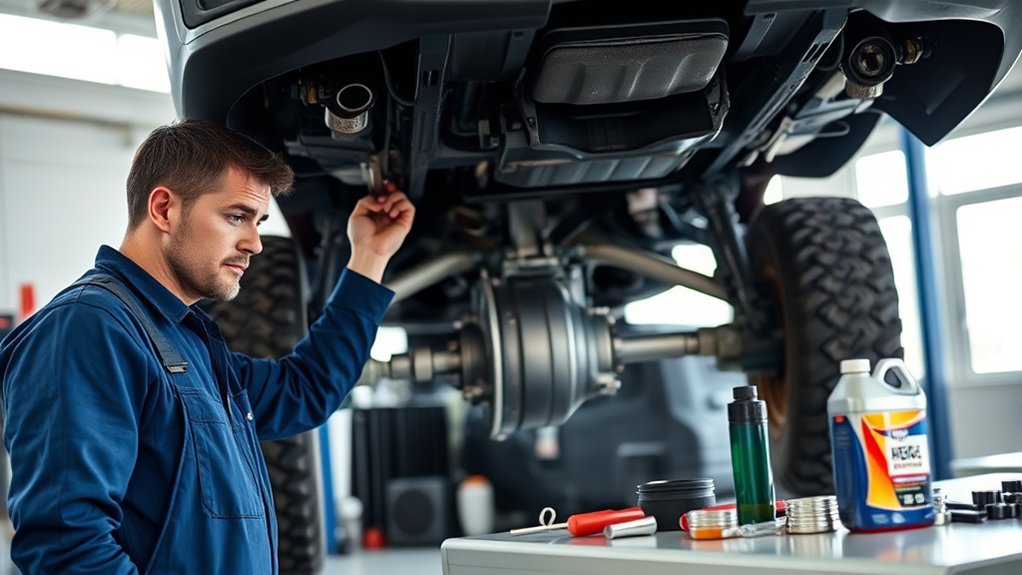
Gear oil separates loaded gear teeth and bearings, carries heat, and suspends fine wear material. A correct fluid level is as important as fresh fluid because an underfilled unit may not lubricate every component properly.
Toyota maintenance guides commonly list rear differential and transfer oil for periodic inspection. Some model-year guides call for replacement when the vehicle is used primarily for towing, a car-top carrier, or heavy loading. The exact mileage row and operating-condition language vary, so the schedule for one RAV4 should not be copied to another model year.[5]
A fluid change supports lubrication, but it will not repair an existing bearing, gear, clutch, seal, or housing problem. Diagnose persistent whining, grinding, vibration, overheating, or leakage instead of assuming new fluid will correct it.
Before You Begin: Check Your Model Year and Fluid Specs
Confirm the year, engine or hybrid powertrain, trim, and AWD type before opening a plug. On fifth-generation gas models, Dynamic Torque Control and Dynamic Torque Vectoring systems can have different fluid requirements, capacities, and access procedures.
[Products Worth Considering]

This upgraded engine oil funnel kit makes oil changes cleaner and easier with a spill-proof design, flow control valve, and transparent body for precise filling. Built from durable polycarbonate and equipped with 12 adapters, two 45-degree elbows, and a debris filter, it fits a wide range of vehicles and works well in tight engine spaces. The secure, hands-free setup helps reduce mess while improving control during oil filling and fluid transfers.
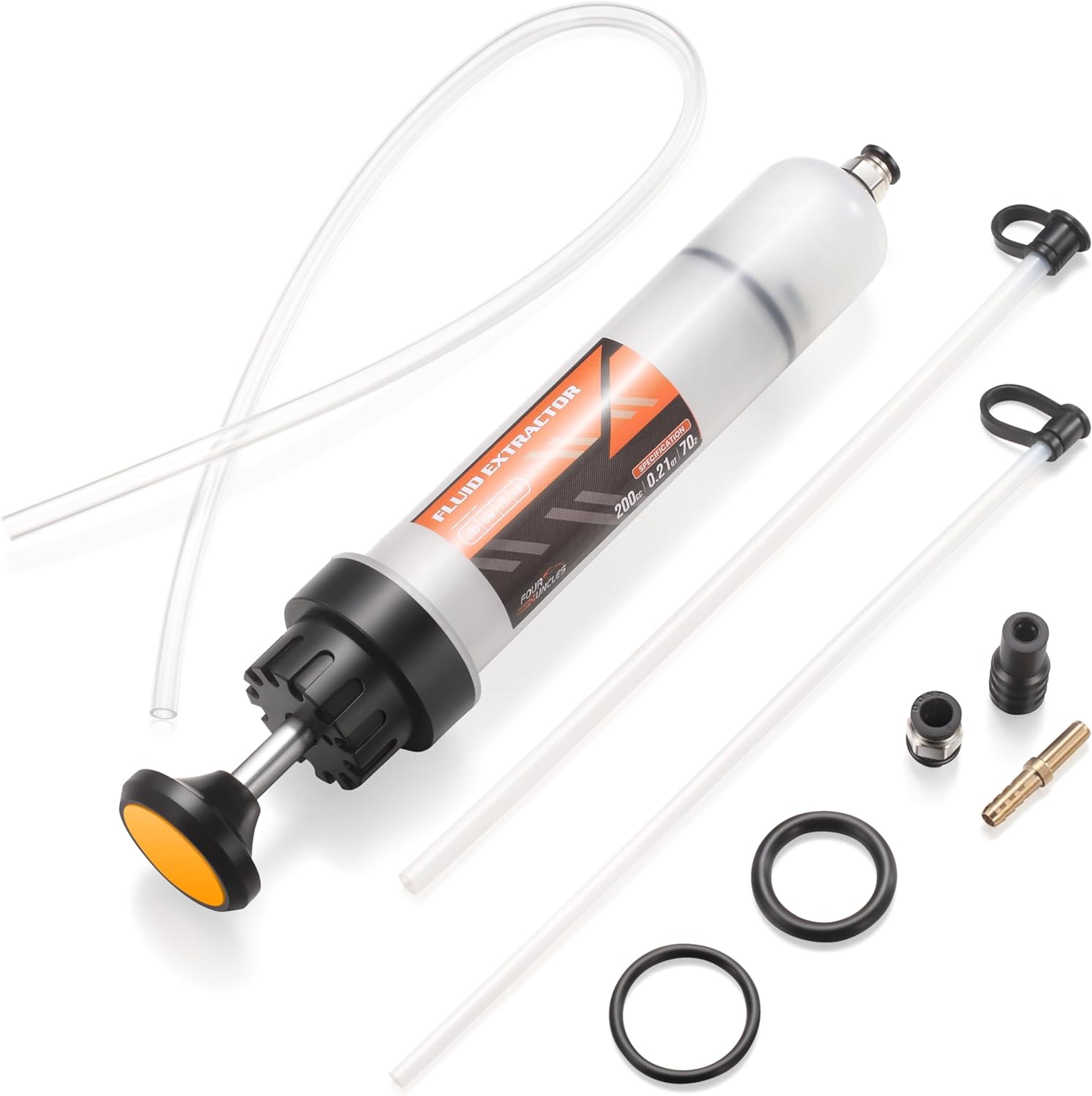
This fluid transfer syringe with flexible hose helps you reach tight service points for cleaner, more controlled automotive fluid changes. The transparent barrel and smooth plunger make it easier to monitor flow and reduce spills while working in engine bays, transmissions, differentials, and other confined areas. It is a versatile DIY garage essential for transferring compatible fluids in cars, motorcycles, ATVs, marine equipment, and more.

This replacement filter set is designed for a range of Toyota hybrid vehicles, including popular models like RAV4 Hybrid, Camry Hybrid, Highlander Hybrid, Sienna, Venza, and more. It combines cabin and engine filtration to help support cleaner airflow, reduce dust and odors, and protect your HVAC and engine systems. Built for easy installation and extended service life, it offers a convenient maintenance upgrade for compatible hybrid and gas-only Corolla models.
Verified Fifth-Generation Gas-AWD Examples
The following values are examples from Toyota owner data and 2024–2025 service procedures. They are not universal specifications for every RAV4.
| Application | Verified example | Important limitation |
|---|---|---|
| 2021 Dynamic Torque Control AWD transfer | 0.48 US qt. (0.45 L); Toyota Genuine Differential Gear Oil LX SAE 75W-85 GL-5 or equivalent | Confirm against the exact model-year manual.[1] |
| 2021 Dynamic Torque Vectoring AWD transfer | 0.41 US qt. (0.39 L); Toyota Genuine Differential Gear Oil LX | Do not substitute a generic viscosity assumption.[1] |
| 2021 Dynamic Torque Control rear differential | 0.50 US qt. (0.50 L); Toyota Genuine Differential Gear Oil LX SAE 75W-85 GL-5 or equivalent | Capacity is a reference; final level is set at the fill opening.[1] |
| 2021 Dynamic Torque Vectoring rear differential | 0.56 US qt. (0.53 L); Toyota Genuine Differential Gear Oil LX | Torque-vectoring hardware has a different access procedure.[1] |
| 2024–2025 gas-AWD transfer procedure | 0.40–0.50 L reference capacity; SAE 75W-85 API GL-5 LT or LX equivalent; 0–5 mm below the filler-hole lip; plugs tightened to 39 N·m (29 lb-ft) | The fill-plug torque-wrench reading changes when Toyota’s offset/SST arrangement changes the effective wrench length.[6] |
| 2024–2025 gas-AWD rear differential procedure | 0.45–0.55 L for non-torque-vectoring; 0.50–0.54 L for torque-vectoring; 0–5 mm below filler hole; plugs tightened to 39 N·m (29 lb-ft) | Torque-vectoring units specify Toyota Genuine Differential Gear Oil LX and require different fill-plug access.[7] |
Note: The approximate bottle quantity is not the final level specification. With the vehicle level, use the fill-hole measurement stated in the applicable Toyota procedure.
Tools and Supplies
- Correct fluid for the exact RAV4 AWD system
- New drain and fill plug gaskets where required
- Floor jack, ramps, lift, or another approved lifting method
- Properly rated jack stands used according to their instructions
- Wheel chocks
- Correct hex sockets or low-profile access tools
- Breaker bar and ratchet
- Calibrated torque wrench
- Fluid pump or hose that fits the fill opening
- Drain pan with more capacity than the expected fill
- Gloves, eye protection, rags, and a leakproof used-oil container
For 2024–2025 gas models, the published procedures use 10 mm hex tooling. The transfer filler may require a straight 10 mm hex tool with an offset-wrench or service-tool arrangement. Do not assume the same access tools fit older generations.[6]
How to Change RAV4 Rear Differential Fluid on a Gas AWD Model
This procedure is a general guide for a mechanical gas-AWD rear differential. Compare each step with the Toyota procedure for your year and AWD system before continuing.
Remove or loosen the fill plug first. If the fill plug will not come out, do not drain the old oil.
- Warm the oil briefly: A short drive can help the oil drain, but let the housing and exhaust cool enough to work around safely.
- Park on a solid, level surface: Apply the parking brake and chock the wheels as required for the lifting method.
- Raise and support the RAV4: Use approved lifting and support points. The vehicle must remain level during the final fill check.
- Identify both plugs: Confirm the upper filler and lower drain plug before turning either one. Do not mistake another case fastener for a service plug.
- Clean the plug recesses: Remove dirt and corrosion so the hex tool can seat fully. Stop if the recess is already rounded or badly damaged.
- Loosen the fill plug: Use the correct fully seated tool and controlled force. Leave the plug loosely installed while positioning the drain pan.
- Drain the old oil: Remove the lower plug and allow the flow to slow to an occasional drip. Avoid contact with hot oil.
- Inspect the oil and plug: A thin gray paste on a magnetic plug may consist of fine wear material. Distinct chips, sharp flakes, large fragments, water-like separation, or an unexpectedly low quantity need further diagnosis.
- Install the drain plug: Clean the sealing surfaces, fit the required new gasket, and tighten the plug to the exact model-specific torque.
- Fill the differential: Pump in the specified oil slowly. On the verified 2024–2025 procedures, the final level is 0–5 mm below the lower edge of the filler opening, with the vehicle level.[7]
- Install the fill plug: Fit the required gasket and tighten it to the applicable torque. Clean all spilled oil from the housing and nearby components.
- Inspect after driving: Take a short, gentle drive, park on level ground, and check the drain plug, fill plug, housing seams, axle seals, and surrounding area for fresh oil.
Torque-vectoring note: The 2024–2025 procedure requires moving the No. 2 differential disconnect cover for access. Its fill-plug installation can require a straight hex tool, union-nut wrench, service tool, and a corrected torque-wrench reading. Use the applicable Toyota procedure rather than improvising with stacked extensions.[7]
[Products Worth Considering]

This reusable stretch belt installation and removal tool helps guide stretch-fit belts on and off pulleys with greater control during service. It is designed to improve alignment, reduce belt damage, and make installation easier on compatible vehicles. Built for repeated use, it offers a practical solution for mechanics and DIY repairs working with stretch belt systems.

This reusable flexible funnel is designed for clean, efficient oil transfer in automotive and other maintenance tasks. Made from soft silicone, it folds for easy storage, cleans quickly, and performs reliably through repeated use. Its smooth surface helps liquids flow more easily, making it especially useful in tight spaces and narrow work areas.

This 12-pack oil filter and drain plug washer set is designed for a wide range of Toyota and Scion vehicles, helping support clean oil flow and dependable engine performance. It replaces several common OE part numbers and offers an easy-fit solution for routine maintenance. Built with corrosion-resistant materials and efficient filtration, it helps keep engine contaminants out and supports longer service life.
How to Change RAV4 Transfer-Case Fluid on a Gas AWD Model
This section applies only when Toyota service information identifies a mechanical, serviceable transfer on the vehicle. It does not apply to the motor-driven rear AWD layout used by RAV4 Hybrid, Prime/PHEV, and 2026 electrified AWD models.
Some models require removal or partial removal of an engine under cover before the plugs can be accessed. The verified 2024–2025 gas-model procedure removes the No. 2 engine under-cover assembly before draining the transfer oil.[6]
| Step | Action | What to verify |
|---|---|---|
| 1 | Remove the required under cover | Use the model-specific fastener locations and reinstall procedure. |
| 2 | Identify and loosen the fill plug | Confirm the plug can be removed before draining. Fifth-generation access may require a low-profile 10 mm tool arrangement. |
| 3 | Remove the drain plug and drain the oil | Capture the oil in a clean pan if you intend to inspect its quantity or contamination. |
| 4 | Install the drain plug with the required gasket | Use the exact torque. The verified 2024–2025 value is 39 N·m (29 lb-ft).[6] |
| 5 | Add the specified transfer oil | For the verified 2024–2025 gas procedure, use SAE 75W-85 API GL-5 LT or LX equivalent and fill to 0–5 mm below the opening.[6] |
| 6 | Wait and recheck the level | The procedure calls for waiting about five minutes before confirming that the level has not changed. |
| 7 | Install the fill plug and under cover | Account for any torque-adapter length specified by Toyota, then reinstall all under-cover fasteners correctly. |
| 8 | Road-test and inspect | Look for fresh oil at both plugs, the case seams, and nearby seals. |
What About RAV4 Hybrid and Plug-in Hybrid Rear Differential Fluid?
RAV4 Hybrid, Prime, and Plug-in Hybrid AWD models use a rear electric motor to drive the rear wheels. Toyota describes the fifth-generation hybrid layout as using an independent rear motor instead of the gas model’s transmission torque-distribution system and driveshaft.[2]
That rear assembly contains a reduction gear and differential, but it is not serviced using the gas-AWD transfer-case steps on this page. For example, Toyota’s 2023 RAV4 Hybrid specification lists Toyota Genuine ATF WS and a 1.7-liter reference capacity for the rear electric-motor differential.[4]
Do not buy 75W-85 gear oil, half-liter quantities, or gas-model plug gaskets for a hybrid based only on a generic RAV4 fluid guide. Confirm the rear drive-unit fluid, quantity, gasket, plug torque, and high-voltage safety boundaries in the manual or service data for the exact vehicle.
High-voltage limit: A routine rear drive-unit fluid service should not require opening or disconnecting high-voltage components. Stop if the procedure would disturb orange high-voltage cables, motor electrical connectors, damaged cable shielding, or hybrid-system components outside the specified fluid-service steps.
Safety Tips While Your RAV4 Is Raised
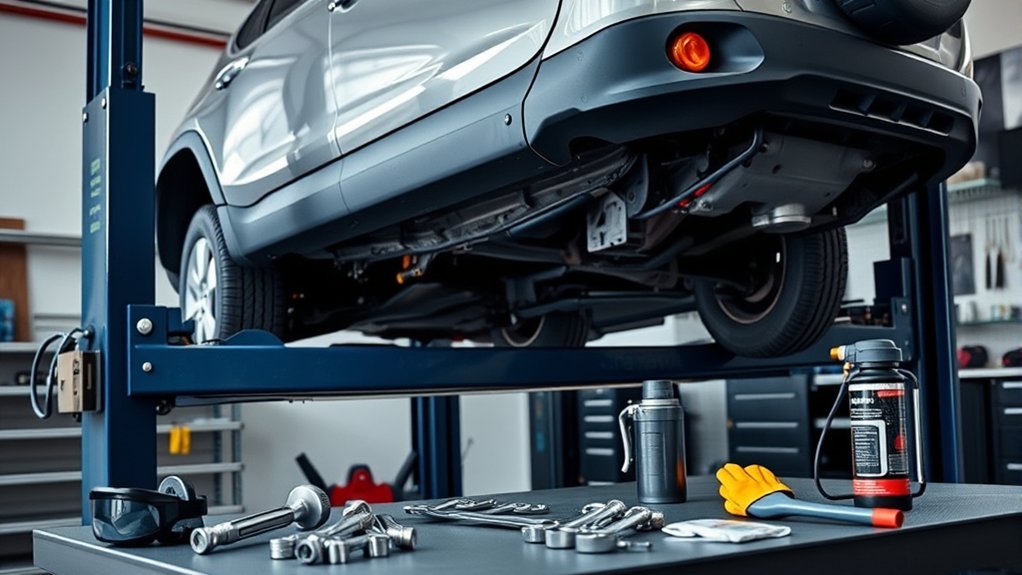
Gather the tools, fluid, gaskets, drain container, and cleanup materials before lifting the vehicle. Do not begin the service if the support setup prevents the RAV4 from remaining stable and approximately level.
- Follow the lifting guide: Use the approved RAV4 lifting and support locations for the exact generation.
- Use correctly rated stands: Follow the stand manufacturer’s instructions and use matching stands where required.
- Never rely on the jack alone: A hydraulic or mechanical jack is a lifting device, not the only support for a person working underneath.
- Chock the wheels: Prevent vehicle movement according to the lifting position and manufacturer instructions.
- Perform a stability check: Confirm that the vehicle is settled securely before placing any part of your body underneath.
- Wear gloves and eye protection: Gear oil can be hot and may splash when a plug releases.
- Seat the hex tool fully: Clear dirt from the recess and keep the tool square to reduce the chance of rounding the plug.
- Use a torque wrench: Overtightening can damage threads or the housing; undertightening can allow leakage.
Warning: Never put any part of your body under a vehicle supported only by a jack. Jack stands must be used within their rated capacity and according to their operating instructions.[8]
How to Handle Used Gear Oil
Collect the drained oil in a clean pan and transfer it to a leakproof container with a secure lid. Do not pour it onto the ground, into a drain, or into a storm sewer. EPA guidance includes automotive gear oil in used-oil management and recommends checking with local repair shops, waste authorities, or collection facilities for recycling options.[9]
When Should RAV4 Differential or Transfer Fluid Be Changed?
There is no single replacement interval that safely covers every RAV4 generation, drivetrain, and operating condition. Use the maintenance guide for the exact model year rather than adopting an unsourced 30,000-, 60,000-, or 100,000-mile rule.
| Operating pattern | How to use Toyota’s schedule |
|---|---|
| Normal road use | Complete the rear differential and transfer inspections shown at the scheduled mileage or time points. Replace the oil if the manual calls for it or if inspection finds leakage, contamination, an incorrect level, or another service need. |
| Towing, car-top carrier use, or heavy vehicle loading | Some Toyota maintenance guides add rear differential and transfer-oil replacement at specified services when the vehicle is used primarily under these conditions.[5] |
| Dirt or dusty roads | Follow the exact additional-maintenance row. Do not assume that every dirt-road condition automatically requires fluid replacement at every service. |
| Unknown service history | Inspect for leaks and confirm the vehicle’s configuration. A technician can help decide whether a preventive drain-and-fill is appropriate without relying on a universal interval. |
Repeated short trips in cold weather commonly affect engine-oil maintenance in Toyota schedules, but they should not automatically be presented as a differential or transfer-oil replacement trigger unless the exact RAV4 maintenance guide says so.
Record the date, mileage, fluid specification, quantity purchased, gaskets used, plug torque, and any observations from the old oil. Keep the receipt or product label with the service record.
What Can the Drained Fluid Tell You?
Fluid appearance alone cannot prove whether a differential or transfer is healthy, but it can identify conditions that deserve closer inspection.
| Observation | Recommended response |
|---|---|
| Dark used oil without large debris | Complete the correct refill and monitor for noise or leakage. Color alone is not a complete diagnosis. |
| Thin gray paste on a magnetic plug | Clean the plug and record the observation. Fine wear material is different from distinct chips or fragments. |
| Large chips, sharp flakes, or chunks | Stop and arrange professional inspection before assuming a routine fluid change solved the problem. |
| Milky, foamy, or separated fluid | Investigate possible water contamination, vent issues, or seal leakage. |
| Much less oil than the expected reference quantity | Inspect the plugs, housing, axle seals, transfer seals, and surrounding underbody for leakage. |
| Strong noise, vibration, or heat after service | Stop driving when necessary and verify the fluid specification, level, plug installation, and underlying mechanical condition. |
Common Mistakes to Avoid
Small errors can damage threads, cause an incorrect oil level, or leave the vehicle unable to be refilled.
- Do not assume that every AWD RAV4 has a mechanical transfer case.
- Do not use the gas-AWD gear-oil procedure on a Hybrid, Prime, Plug-in Hybrid, or 2026 motor-driven AWD model.
- Do not remove the drain plug before confirming that the fill plug can be removed.
- Do not mix fluid specifications between Dynamic Torque Control and Dynamic Torque Vectoring systems.
- Do not copy capacities or torque values from another RAV4 generation.
- Do not fill by bottle quantity alone when the procedure specifies a level at the fill opening.
- Do not reuse a damaged gasket, sealing surface, or rounded plug.
- Do not apply a standard torque value through a long adapter without calculating the corrected wrench setting required by the procedure.
- Do not ignore large metal fragments, water contamination, an unexpectedly low level, or continuing leakage.
- Do not dispose of used gear oil in household drains, storm drains, soil, or ordinary outdoor dumping areas.
Frequently Asked Questions
Does a RAV4 Hybrid Have Transfer-Case Fluid?
A fifth-generation RAV4 Hybrid uses an independent rear electric motor rather than the gas model’s driveshaft-based transfer layout. Do not sell or perform a gas-model transfer-case service on a hybrid without first identifying the actual component in Toyota service information.
How Often Should I Change the Differential Fluid in My AWD RAV4?
Follow the maintenance guide for the exact model year. Toyota commonly lists inspections during scheduled maintenance and may call for replacement under specified special operating conditions, including towing, car-top carrier use, or heavy loading. There is no universal RAV4 interval for every drivetrain.
How Often Should I Change the Transfer-Case Fluid on My Toyota RAV4?
Use the maintenance chart for the exact gas-AWD model. Some charts list routine inspection and additional replacement under special operating conditions. Hybrid and plug-in hybrid models should not be assigned a mechanical transfer-case interval without confirming that the component exists.
What Fluid Should I Use for RAV4 Differential Fluid?
Use the fluid specification listed for the exact AWD system. A 2021 gas RAV4 may specify Toyota Genuine Differential Gear Oil LX SAE 75W-85 GL-5 or Toyota LX fluid depending on the differential. A RAV4 Hybrid rear electric-motor differential can specify Toyota Genuine ATF WS instead. Do not choose fluid by vehicle name alone.
How Much RAV4 Differential Fluid Do I Need?
The amount varies by system. Verified 2021 gas-AWD examples range from 0.39 L for a torque-vectoring transfer to 0.53 L for a torque-vectoring rear differential. A 2023 RAV4 Hybrid rear electric-motor differential lists 1.7 L. Treat capacity as a purchase and reference value; use the specified fill-level procedure for the final level.
What Is the Correct RAV4 Differential or Transfer Fill Level?
On the verified 2024–2025 gas-AWD service procedures, the oil level is set between 0 and 5 mm below the lower edge of the filler opening while the vehicle is level. Older or different systems must be checked against their own procedure.
Should RAV4 Differential Fluid Be Flushed?
The Toyota procedures reviewed describe a drain-and-refill service. They do not describe connecting a powered flushing machine to the differential or transfer. Drain the old oil, install the plug and gasket correctly, and refill to the specified level.
Can I Change RAV4 Differential Fluid Myself?
You can perform the service when you can identify the correct system, support the vehicle safely, keep it level, access both plugs without damage, and verify the fluid and torque specifications. Let a qualified technician handle it if any of those conditions cannot be met.
What Should I Do if the Fill Plug Is Stuck?
Do not remove the drain plug. Clean the recess, use the exact fully seated tool, and apply controlled force. Stop if the plug begins to round, the housing moves on its mounts, or safe tool access is not possible.
How Much Does RAV4 Differential or Transfer Service Cost?
There is no reliable universal price because labor access, local rates, fluid specification, under-cover work, torque-vectoring hardware, and the number of serviced units vary. Ask for separate written line items identifying the actual component, fluid, quantity, gaskets, and labor before approving the work.
Safety Disclaimer: This article is for informational purposes only and does not replace your Toyota owner’s manual, maintenance guide, factory service information, equipment instructions, or professional repair advice. If you cannot identify the drivetrain, support the vehicle safely, or verify the model-specific fluid and torque values, have a qualified technician perform the service.
Final Checks Before You Drive
Before lowering the RAV4, confirm all five items:
- Correct drivetrain: The procedure matched a mechanical gas-AWD unit or the correct hybrid rear-drive procedure.
- Correct fluid: The specification came from service information for the exact model and AWD system.
- Correct level: The vehicle was level and the final oil height matched the specified fill-opening measurement.
- Correct sealing and torque: Required gaskets were installed and both plugs were tightened using the applicable torque method.
- No fresh leakage: The housing was cleaned and rechecked after a short drive.
Do not continue driving if oil is leaking, the AWD or hybrid system reports a warning, the unit becomes unusually hot, or new grinding, whining, or vibration appears after service.
References
- 2021 RAV4 Maintenance Data — Toyota Motor Sales, U.S.A.; gas-AWD transfer and differential fluid types and capacities.
- 2025 Toyota RAV4 Powertrain and AWD Information — Toyota USA Newsroom; independent rear electric-motor description.
- The Next Adventure Begins: 2026 RAV4 — Toyota USA Newsroom; dedicated rear motor and motor-driven AWD information.
- 2023 RAV4 Hybrid Owner’s Manual Specifications — reproduced owner-manual page showing rear electric-motor differential fluid type and capacity.
- 2025 Toyota RAV4 Warranty & Maintenance Guide — Toyota Motor Sales, U.S.A.; scheduled and special-operating-condition maintenance.
- 2024–2025 RAV4 GF1A Transfer Oil Replacement Procedure — current service-procedure data; tool access, fluid, fill level, capacity, and torque.
- 2024–2025 RAV4 Differential Oil Replacement Procedure — current service-procedure data; standard and torque-vectoring specifications.
- Jack Stand Instructions — OTC Tools.
- Managing, Reusing, and Recycling Used Oil — U.S. Environmental Protection Agency.