
Last updated: July 14, 2026
What’s in This Article
- How the i-FORCE Turbo Boosts Tundra Performance
- How the Compressor and Turbine Work
- Airflow Path: Airbox to Intercooler to Engine
- Oil, Coolant, and Turbo Sealing Checks
- Wastegate and Compressor Bypass Control
- Before You Inspect the Turbo System
- Symptoms, Possible Causes, and Next Steps
- How to Check Whether a Recall Applies
- What a Professional Turbo Inspection Should Cover
- Maintenance and OEM-Friendly Upgrades
- Frequently Asked Questions
The 2022–2026 Toyota Tundra i-FORCE system uses a 3,445 cc twin-turbo V6. Exhaust gas spins the turbine wheels, the connected compressor wheels pressurize the intake air, and a water-cooled intercooler removes compression heat before the air enters the engine. The gas i-FORCE produces up to 389 horsepower and 479 lb-ft of torque, while i-FORCE MAX adds a motor generator for 437 net combined horsepower and 583 lb-ft.
Reliable operation depends on clean engine oil, stable coolant flow, sealed charge-air piping, and accurate electronic boost control. This guide explains the Tundra-specific airflow path, early warning signs, current V35A recall context, safe owner checks, and the tests a qualified technician should complete before replacing a turbocharger.
Quick Answer
The Tundra i-FORCE uses two turbochargers to convert exhaust energy into compressed intake air. The water-cooled intercooler lowers the temperature of that air before it reaches the engine. A hissing sound with weak boost often points to leaking piping, while heavy smoke, scraping, active fluid loss, or sudden power loss requires immediate professional diagnosis. The current V35A machining-debris recalls concern crankshaft main bearings, not the turbochargers themselves.
Key Takeaways
- The Tundra i-FORCE and i-FORCE MAX use two turbochargers and a water-cooled intercooler.
- The 2026 SR has a lower-output i-FORCE calibration than higher-output gas configurations.
- The wastegate controls turbine speed, while a charge-side bypass function helps prevent compressor surge.
- A boost leak can cause weak power without either turbocharger being mechanically damaged.
- The V35A machining-debris recalls concern crankshaft main bearings, not turbochargers.
- Heavy smoke, grinding, overheating, low oil pressure, or sudden power loss means you should stop driving.
How the i-FORCE Turbo Boosts Tundra Performance
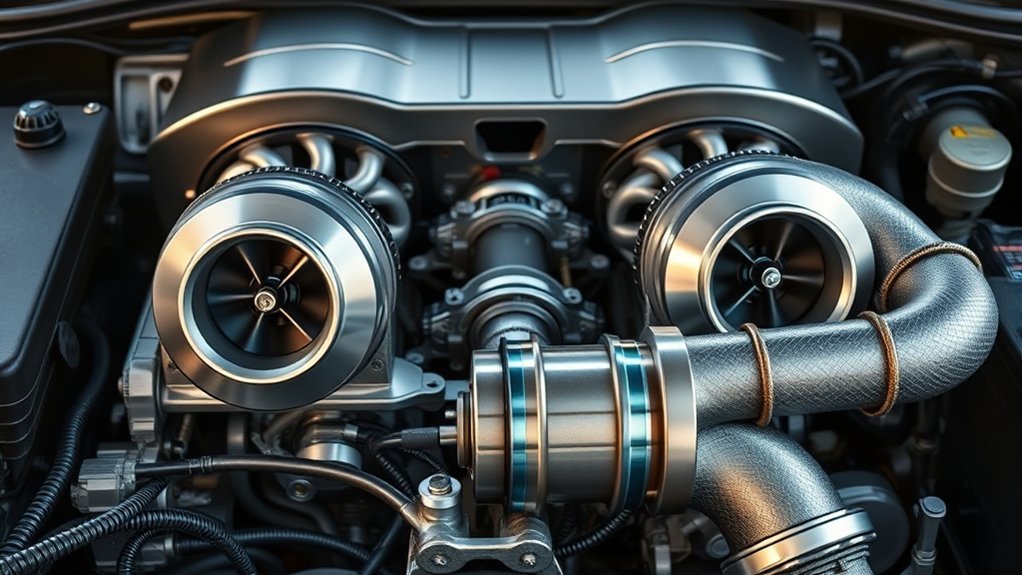
The i-FORCE system uses two turbochargers to help the 3,445 cc V6 produce strong low-speed torque without the displacement of the previous Tundra V8. Toyota markets the engine as a 3.5-liter V6, although its published displacement is 3,445 cc.
| Powertrain | Output | Key Difference |
|---|---|---|
| i-FORCE in SR | 358 hp and 406 lb-ft | Lower-output gas calibration |
| Higher-output i-FORCE | 389 hp and 479 lb-ft | Gas twin-turbo powertrain on applicable grades |
| i-FORCE MAX | 437 net combined hp and 583 lb-ft | Adds a motor generator between the engine and transmission |
Availability varies by grade and configuration. The i-FORCE MAX uses the same basic twin-turbo V6 platform but adds an electric motor generator and clutch inside the bell housing. You can read the separate Tundra i-FORCE MAX hybrid system guide for a deeper explanation of electric assist and regeneration.
During acceleration, exhaust gas flows through each turbine. The turbines turn shafts connected to compressor wheels, which push more air toward the engine. The engine control system manages throttle position, fueling, ignition timing, wastegate operation, and other inputs to produce the requested torque.
Compression raises intake-air temperature. Toyota uses a water-cooled intercooler to remove part of that heat before the charge reaches the cylinders. Cooler, denser air supports more consistent output and greater knock resistance when you tow, climb a grade, or drive in high ambient temperatures.
How Do the Compressor and Turbine Work?
The turbine extracts energy from the exhaust stream, while the compressor uses that energy to pressurize incoming air. The two wheels share a shaft, so increasing exhaust flow generally increases compressor speed and available boost.
When you press the accelerator under load, exhaust flow rises and spins the turbine faster. The compressor draws filtered air from the intake, compresses it, and sends it through the intercooler. The engine control system then adjusts fuel and ignition to match the increased air mass.
The turbochargers do not switch on at one exact vehicle speed. Boost depends on engine load, engine speed, throttle request, selected gear, temperature, and control-system limits. That is why you can feel useful boost at a low road speed while towing uphill but little boost while cruising steadily at a higher speed.
Lag, flutter, scraping, a siren-like sound, or sudden power loss deserves diagnosis. These symptoms may come from a charge-air leak, restricted filter, faulty sensor, boost-control problem, lubrication fault, exhaust restriction, or damaged rotating assembly. A noise alone does not identify the failed part.
What Is the Tundra Turbo Airflow Path?
Filtered air moves from the airbox to the turbocharger compressors, through the water-cooled intercooler system, and into the intake manifold. Every connection between those components must remain sealed under pressure.
- Check the air filter and airbox for dirt, incorrect installation, or damaged sealing surfaces.
- Inspect intake boots and charge pipes for splits, rubbing marks, loose clamps, or disconnected fittings.
- Look around intercooler hoses and couplers for oil-stained leak paths or displaced seals.
- Check nearby wiring and sensor connectors before blaming a mechanical turbocharger.
- Use a controlled pressure or smoke test to locate a leak that is not visible at rest.
A small pressure leak can produce weak acceleration, a hissing sound, unusual fuel correction, or a check engine light. Repairing a loose coupler or split hose may restore normal boost without replacing a turbocharger.
The dedicated Toyota Tundra intercooler guide explains the cooling circuit and heat-soak considerations in more detail.
Which Oil, Coolant, and Turbo Sealing Checks Matter?
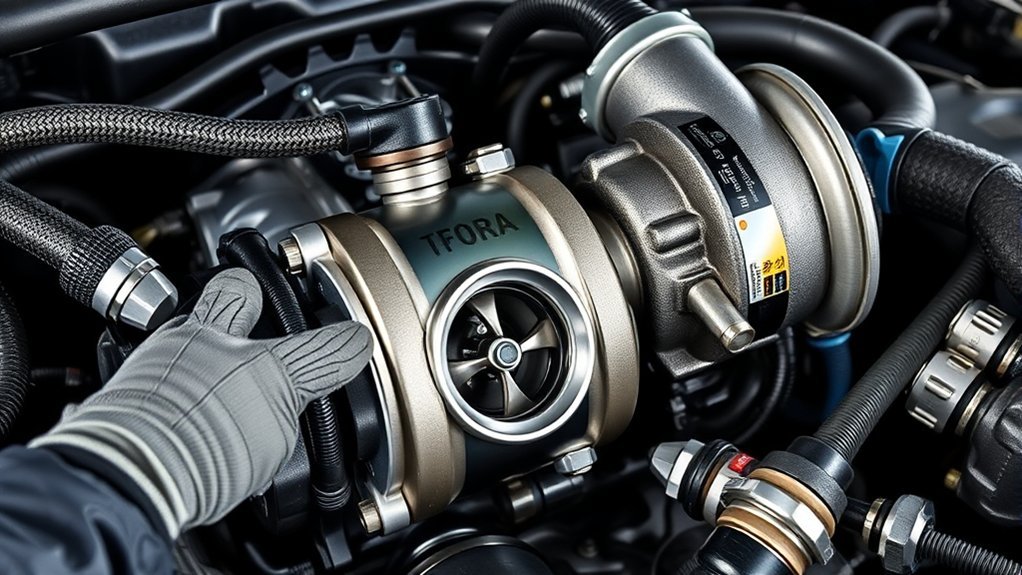
Clean oil at the correct pressure lubricates and cools the turbocharger bearing assemblies. Low oil level, restricted supply, contaminated oil, an obstructed return path, or an incorrect lubricant can damage the bearings and shaft.
Follow the oil grade and service schedule for your exact model year, powertrain, and driving conditions. Towing, repeated short trips, dusty roads, heavy loading, and off-road use can change the required maintenance. The site’s Tundra maintenance schedule explains the normal and special-operating-condition checkpoints.
Coolant controls engine, exhaust, and charge-air temperatures. Inspect accessible hoses, fittings, reservoirs, and dried residue only after the engine has cooled. Never remove a pressure cap or open a coolant line on a hot engine.
Oil near a charge pipe does not prove that a turbocharger has failed. Turbo sealing depends on airflow, pressure balance, oil drainage, and crankcase ventilation. A light film requires context, while pooling oil, dripping oil, rising consumption, or continuous blue smoke requires diagnosis.
Before approving a replacement turbo, ask the technician to check the crankcase ventilation system, oil supply and return paths, intake restriction, exhaust restriction, and charge-air leaks. A new turbo may not solve an underlying engine or plumbing fault.
[Products Worth Considering]

This dual filter kit helps keep your vehicle running and riding cleaner by replacing both the engine air filter and cabin air filter at the same time. It is designed for a range of Toyota and Lexus hybrid models, helping support engine performance while reducing odors and airborne particles inside the cabin. Built with high-quality filtration materials, it offers a convenient maintenance solution for routine filter replacement.

This replacement gas cap is designed for a wide range of Toyota and Lexus models, offering a direct-fit solution for restoring a proper seal at the fuel tank. It helps address check engine light issues related to the fuel cap while providing easy installation and dependable performance. Built from durable materials and rigorously tested before shipping, it is a practical replacement for worn or damaged fuel caps.

This mass air flow sensor is designed to replace compatible OEM parts for a wide range of Toyota and Lexus vehicles, helping restore accurate airflow readings and smoother engine operation. It is computer-tested for stable signal output, fast response, and improved fuel efficiency, while also supporting reliable performance under demanding driving conditions. The easy-install design makes replacement straightforward, and a 12-month warranty adds extra peace of mind.
How Do the Wastegate and Compressor Bypass Function Control Boost?
The wastegate and the charge-side pressure-relief function control different parts of the turbo system. The wastegate manages turbine speed by diverting some exhaust flow when the control system reaches its boost target.
When the throttle closes quickly after boost, compressed air can become trapped between the compressor and throttle. A bypass or pressure-relief function gives that air another path and helps prevent compressor surge. Factory terminology and component placement may vary, so use Toyota repair information for the exact VIN before testing or replacing a valve.
Boost control is an electronic and mechanical system. A valve, hose, sensor, actuator, wiring fault, or pressure leak can produce similar symptoms.
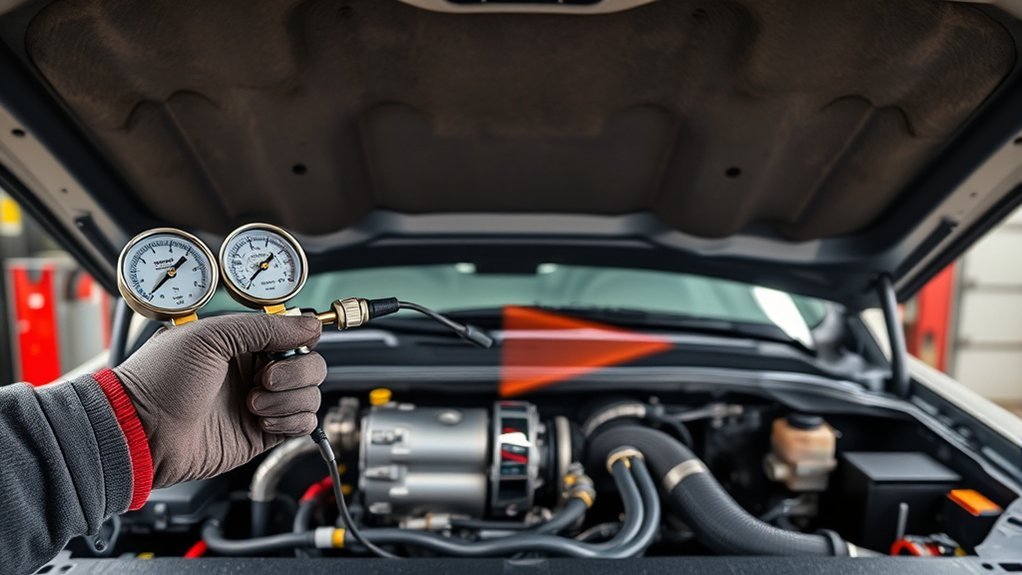
- Scan for diagnostic trouble codes and save freeze-frame data before clearing anything.
- Inspect accessible pressure hoses, electrical connectors, charge pipes, and clamps.
- Compare commanded and measured boost with Toyota-compatible scan data.
- Do not force an electronic actuator or apply uncontrolled pressure to its linkage.
- Keep the factory recirculation strategy unless a qualified Toyota tuner documents a compatible change.
[Products Worth Considering]

This coolant thermostat is a direct replacement designed for a wide range of Toyota, Lexus, and Scion vehicles. It helps maintain proper engine temperature, supports reliable cooling system performance, and installs easily without special tools or programming. Built to meet OEM standards, it offers durable, stable operation and dependable fitment for compatible models.

These heavy-duty running board side steps are designed to improve access to your Toyota Tundra without reducing ground clearance. Built for Double Cab and CrewMax front door applications, they offer practical convenience for everyday entry, roof loading, and off-road use. The durable iron construction and easy no-drill installation make them a reliable upgrade for rugged driving.

This coolant electric water pump is designed as a replacement for select Toyota vehicles, helping maintain proper engine cooling performance and reliable temperature control. Built to OE specifications, it offers fitment support for compatible Avalon, Camry, and RAV4 models with 2.5L L4 engines. It also includes cross-reference part numbers for easier matching and comes with after-sales support for covered defects.
What Should You Do Before Inspecting the Turbo System?
Let the engine cool, park on level ground, set the parking brake, and keep hands, tools, hair, and loose clothing away from belts and electric cooling fans. Wear eye protection and gloves when checking accessible hoses, clamps, wiring, oil residue, or coolant residue.
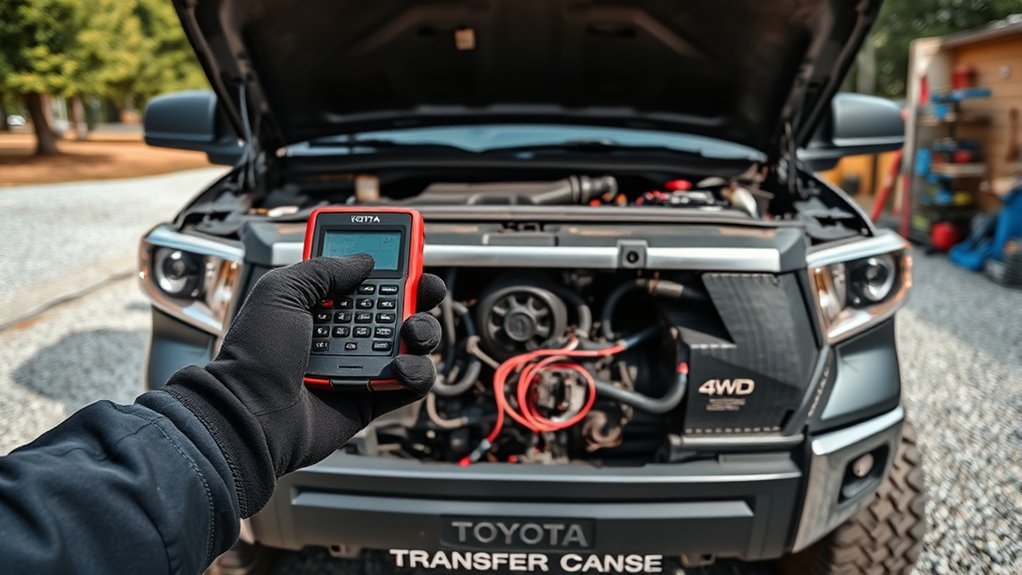
Start with a scan before removing parts. Record the codes, freeze-frame information, warning messages, and the conditions that triggered the problem. A code may point toward a pressure leak, sensor circuit, misfire, fueling problem, temperature fault, or boost-control issue.
Stop driving: Arrange professional diagnosis if the truck has a low-oil-pressure warning, overheating warning, heavy continuous smoke, grinding or scraping, an active oil or coolant leak, severe knocking, or sudden loss of motive power.
A brief visual inspection can identify a loose clamp or disconnected hose. It cannot confirm bearing clearance, actuator calibration, compressor efficiency, oil pressure, or an internal engine defect.
What Do Common Tundra Turbo Symptoms Mean?
Turbo-related symptoms often have causes outside the turbocharger. Use the symptom pattern to choose the next test instead of replacing parts from sound or appearance alone.
| Symptom | Systems to Check | Next Step |
|---|---|---|
| Weak boost with hissing | Charge pipes, couplers, clamps, intercooler circuit, pressure sensors | Inspect, scan, and pressure-test the charge-air path |
| Blue smoke or rising oil use | Oil supply and return, crankcase ventilation, turbo sealing, engine internals | Check oil level and arrange diagnosis before continued high-load driving |
| Scraping, grinding, or siren-like noise | Compressor wheel, turbine wheel, bearings, foreign-object damage | Stop driving and inspect professionally |
| Coolant loss or dried coolant residue | Cooling-system hoses, fittings, intercooler circuit, engine cooling system | Pressure-test only after the engine has cooled |
| Knocking, rough running, or no-start | Engine lubrication, main bearings, ignition, fueling, open V35A recall | Stop driving, check the VIN, and request engine diagnosis |
| Sudden power loss | Boost system, throttle control, fueling, ignition, engine internals | Move to a safe location and arrange towing if normal power does not return |
Do not judge turbo condition with an informal finger test. Wheel contact, scraping, visible blade damage, or metal debris requires professional inspection. A technician should compare measured movement with Toyota’s service limit for the exact turbocharger and test conditions.
Garrett’s diagnostic guidance also warns that lack of power, noise, smoke, or oil use can come from air restrictions, exhaust faults, lubrication problems, or fuel-system faults. Confirm the root cause before replacing the turbo assembly.
Warning: Do not continue towing or accelerating hard with heavy smoke, loud mechanical turbo noise, grinding, low oil pressure, overheating, severe knocking, or sudden power loss.
[Products Worth Considering]

This plug-and-play OBD2 scanner helps drivers quickly read and clear engine error codes while providing live data, freeze frame information, I/M readiness, and MIL status for more confident troubleshooting. It adds a built-in voltage test and clear status indicators to support electrical checks and faster diagnostics, making it a practical choice for home users, car enthusiasts, and repair professionals. Compatible with most OBDII vehicles since 1996 and designed with an easy-to-use interface, it offers broad coverage and simple operation in one compact tool.

The OEMTOOLS coolant vacuum refill kit helps quickly refill a vehicle’s cooling system while removing trapped air that can lead to overheating and engine damage. It also performs vacuum leak tests to help confirm system integrity and reduce the chance of repeat repairs. With multiple bushings, adapters, and a tapered cone seal, it is designed for flexible use on many radiator and coolant bottle necks.

The FOXWELL NT301 is a plug-and-play OBD2 code reader designed to help drivers and home mechanics diagnose check engine light issues with ease. It reads fault codes, clears emissions-related warnings, displays live sensor data in graph form, and shows I/M readiness so you can quickly check vehicle status before an emissions test. With broad compatibility across many OBD2 vehicles and a clear color screen, it offers a practical, user-friendly way to monitor and troubleshoot engine performance.
Is the V35A Recall a Turbocharger Recall?
No. The related V35A safety campaigns concern possible machining debris and crankshaft main-bearing failure inside specific engines. They do not identify the turbochargers as the recalled component.
Toyota and NHTSA have issued multiple related campaigns:
- 24V381: Certain 2022–2023 non-hybrid Toyota Tundra and Lexus LX vehicles.
- 25V767: Certain 2022–2024 Toyota Tundra, Lexus LX, and 2024 Lexus GX vehicles with specific V35A engines.
- 26V320: Certain 2024 non-hybrid Tundras produced from February 7 through August 5, 2024. The filing lists 43,566 potentially involved vehicles.
The May 2026 NHTSA filing for 26V320 said the remedy was still being developed and scheduled phased owner notifications through July 20, 2026. Recall details can change, so use a current VIN lookup rather than relying only on this summary.
Check your VIN through Toyota’s recall lookup and NHTSA’s recall lookup. Ask the dealer to document the campaign number, remedy status, diagnostic findings, warranty position, and whether the truck should be driven.
A VIN search normally shows unrepaired safety recalls. NHTSA notes that it may not display a recall that has already been repaired, and recently announced campaigns may take time to appear while VIN information is added.
What Should a Professional Turbo Inspection Cover?
Turbo removal and disassembly require Toyota service information, clean handling procedures, model-specific torque values, and correct oil and coolant priming. Owners should not open turbo oil or coolant lines for exploratory inspection.
- Record diagnostic trouble codes, freeze-frame data, warning messages, and customer symptoms.
- Inspect the air filter, intake tract, charge pipes, clamps, intercooler circuit, wiring, and accessible connectors.
- Pressure-test or smoke-test the charge-air system at the specified test pressure.
- Compare requested boost, measured pressure, throttle data, and actuator commands with Toyota service information.
- Verify engine oil level, condition, pressure, supply path, return path, and crankcase ventilation.
- Inspect the cooling system and charge-air cooling circuit for pressure loss or restricted flow.
- Inspect compressor and turbine components only through the approved access procedure.
- Check the VIN for recalls and confirm whether engine symptoms overlap an open V35A campaign.
- Document the root cause before approving a turbocharger, actuator, engine, sensor, or piping replacement.
If a turbocharger is replaced, the shop should correct the cause of the original failure, clean or replace contaminated piping as required, prime the lubrication path, verify coolant flow, and confirm normal boost operation after repair.
How Do You Help the Tundra Turbos Last Longer?
Use the correct oil, maintain the specified oil level, replace the oil filter on schedule, keep the air filter sealed, and repair oil, coolant, or boost leaks early. Severe operating conditions may require more frequent service than ordinary highway driving.
Avoid heavy throttle immediately after a cold start. Drive gently while the engine and oil warm, especially in cold weather. Hard acceleration before stable oil circulation can increase stress on the turbocharger bearings.
After high-speed driving or a hard hill climb, follow the turbo-cooling instructions in your exact owner’s manual. Toyota’s 2026 manual instructs drivers to idle after these conditions and stop the engine only after the turbocharger has cooled. Do not apply an invented universal cooldown time to every drive.
Factory-compatible hoses, seals, clamps, and recirculation components usually preserve the original control strategy better than sound-focused vent-to-atmosphere modifications. Keep emissions equipment intact and avoid boost increases that lack matching fuel, ignition, cooling, transmission, and monitoring changes.
Before approving turbo replacement or a performance modification, ask the shop to document the failed component, pressure-test results, relevant scan data, software status, and whether an open recall or powertrain coverage applies.
Frequently Asked Questions
How Many Turbos Does the Tundra i-FORCE Have?
The Tundra i-FORCE V6 uses two turbochargers. The i-FORCE MAX hybrid also uses the twin-turbo V6 and adds an electric motor generator between the engine and 10-speed automatic transmission.
At What Speed Does the Turbo Kick In?
The turbo does not activate at one exact vehicle speed. Boost depends on engine load, RPM, throttle request, gear, temperature, and control-system limits. You may make boost at low road speed while towing uphill and little boost while cruising steadily at highway speed.
Is the i-FORCE MAX Turbo System Different?
The i-FORCE MAX uses the same basic twin-turbo V6 platform but adds a motor generator and hybrid components. Toyota lists the 2026 i-FORCE MAX at 437 net combined horsepower and 583 lb-ft of torque.
Can You Turbocharge an Older Tundra?
Some older naturally aspirated Tundras can accept a custom forced-induction system, but the conversion requires engine, fuel, cooling, exhaust, calibration, transmission, emissions, and drivetrain planning. Current i-FORCE Tundras already use factory twin turbochargers.
What Are the First Signs of Tundra Turbo Trouble?
Possible warning signs include weak boost, hissing, persistent blue smoke, rising oil use, unusual siren-like noise, scraping, or a check engine light. Hissing with weak boost often points to piping or a coupler, while scraping, heavy smoke, or active fluid loss requires immediate diagnosis.
Should You Upgrade the Blow-Off Valve on an i-FORCE Tundra?
Do not replace a factory bypass or pressure-relief component only for sound. A vent-to-atmosphere modification can change airflow behavior and drivability. Use Toyota-compatible service information and consult a qualified tuner before changing the factory strategy.
Does a Tundra Turbo Need to Cool Before Shutdown?
Follow the instructions for your exact model year. Toyota’s 2026 owner’s manual tells drivers to idle after high-speed driving or hill climbing and stop the engine after the turbocharger has cooled. Normal light driving does not justify inventing a fixed cooldown period.
Is the V35A Engine Recall a Turbocharger Recall?
No. NHTSA campaigns 24V381, 25V767, and 26V320 concern possible machining debris and crankshaft main-bearing failure in specific engines. A recall match does not establish that either turbocharger has failed.
How Do You Know If a Tundra Recall Affects Your Truck?
Enter the VIN in Toyota’s and NHTSA’s recall lookup tools. Model year alone cannot confirm coverage because the campaigns apply to specific engine configurations and production periods. Ask a Toyota dealer to confirm the campaign and remedy status.
Safety Disclaimer: This article is for informational purposes only and does not replace Toyota service information or professional vehicle diagnosis. Stop driving when warning lights, overheating, low oil pressure, heavy smoke, grinding, severe knocking, an active fluid leak, or sudden power loss makes continued operation unsafe.
Conclusion
The Tundra i-FORCE turbo system depends on sealed airflow, accurate boost control, clean oil, stable coolant flow, and correct electronic inputs. Start with codes, hoses, couplers, fluid condition, warning messages, and a current VIN recall check.
Do not assume that every loss of power means a failed turbocharger. A pressure leak, sensor fault, oil-supply problem, cooling fault, or recalled main-bearing condition can produce overlapping symptoms. Stop driving for smoke, scraping, low oil pressure, overheating, severe knocking, or sudden power loss, then ask the shop to document the root cause before replacing parts.
References
- 2026 Toyota Tundra specifications, Toyota
- 2026 Toyota Tundra: A Bold New Chapter in Full-Size Pickup Excellence, Toyota USA Newsroom, 2025
- Absolute Powerhouse: Next-Generation Toyota Tundra, Toyota USA Newsroom, 2021
- 2026 Toyota Tundra Owner’s Manual, Toyota
- Toyota Recalls Certain Toyota Tundra and Lexus GX and LX Vehicles, Toyota USA Newsroom, 2025
- Toyota Recalls Certain 2024 Toyota Tundra Vehicles, Toyota USA Newsroom, 2026
- Part 573 Safety Recall Report 24V381, National Highway Traffic Safety Administration, 2024
- Part 573 Safety Recall Report 25V767, National Highway Traffic Safety Administration, 2025
- Part 573 Safety Recall Report 26V320, National Highway Traffic Safety Administration, 2026
- NHTSA Vehicle Recall Lookup, National Highway Traffic Safety Administration
- What Is the Difference Between a Wastegate and a Blow-Off Valve?, Garrett Motion, 2022
- Turbocharger Diagnostics, Garrett Motion
- Why Do Turbochargers Fail?, Garrett Motion


[…] cooldown idling, not a reason to let a cold truck sit for a long warm-up. See the related guide to how Tundra i-FORCE turbochargers work for more […]