
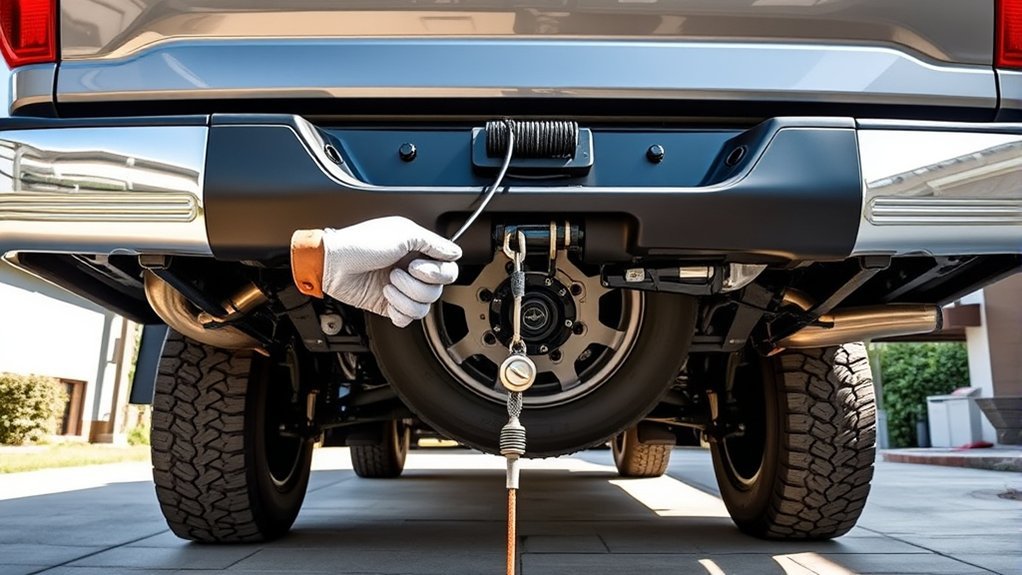
A Toyota Tundra spare tire sits under the bed, so you need the factory lowering tool before you can pull it out for a tire change. The job is simple when the tool seats correctly, but rust, dirt, a missing tool section, or a flat spare can turn it into a long delay. Use this guide to find the access slot, lower the spare safely, check the tire, and raise it securely again.
Last updated: July 5, 2026
Quick Answer
Assemble the Toyota Tundra factory spare-tire tool, insert the lowering bar straight into the rear access slot near the bumper, and turn it in the lowering direction shown in your owner’s manual. Many Tundra instructions describe the lowering direction as counterclockwise. Keep turning until the tire rests on the ground, then remove the retainer from the wheel center.
Key Takeaways
- Find the factory toolkit first. You need the lowering bar sections and crank handle before you can access the spare.
- Insert the tool straight into the rear access slot. Angling the bar can make it slip or damage the actuator.
- Turn slowly and stop if the tool binds, grinds, or feels misaligned.
- Check the spare’s pressure before installing it. Use the door label or owner’s manual, not the sidewall maximum, as your pressure target.
- Inspect the cable, retainer, wheel, and carrier before raising the spare back into place.
At a Glance
| Time Required | 10 to 15 minutes with practice; 20 to 30 minutes on your first attempt |
| Difficulty | Easy to moderate, depending on rust, lighting, and tool alignment |
| Tools Needed | Factory spare-tire lowering tool, crank handle, tire gauge, gloves, flashlight, and wheel chocks |
| Cost | Usually $0 if your factory toolkit is complete; extra cost only if a tool, lock key, or damaged carrier part needs replacement |
What’s in This Guide
- Before You Start
- What You’ll Need
- Find the Tundra Toolkit and Handle
- Locate the Spare Tire Access Slot
- Assemble and Attach the Lowering Bar
- Lower the Spare Tire Step by Step
- After the Spare Is Down
- Check Spare Tire Pressure and Correct PSI
- Raise and Secure the Spare Tire
- Troubleshooting Common Problems
- Inspect the Undercarriage and Mounting Hardware
- Prevent Theft and Stow Tools Safely
- Practice Routine
- Frequently Asked Questions
Before You Start
Park on firm, level ground away from traffic whenever possible. Set the parking brake, turn on the hazard lights if you are roadside, and chock the wheels before you work near the rear bumper. Keep children, pets, and bystanders away from the truck while the spare moves.
Warning: Never place your head, hands, feet, or tools under the spare while it hangs from the cable. Lower the tire fully to the ground before removing the retainer plate.
If your Tundra has a spare-tire lock, confirm that you have the lock key before you start. If the tool kit is missing, the lock key is gone, or the carrier looks heavily rusted, call roadside assistance or a Toyota service department instead of forcing the mechanism.
What You’ll Need
Gather these items before you start. The Toyota factory toolkit handles the lowering process, but a tire gauge and flashlight help you work safely and confirm that the spare is ready to use.
- Toyota Tundra factory toolkit, including lowering bar sections, crank handle, and any required adapters
- Tire pressure gauge, digital or analog, to check the spare after you lower it
- Work gloves, to protect your hands from sharp edges, rust, and grime
- Flashlight or headlamp, for night work, shaded bumpers, or muddy undercarriage areas
- Wheel chocks or wedges, to help keep the truck stable
- Wire brush and penetrating lubricant, optional, for a rusty or stiff lowering mechanism
Estimated time: Plan for 10 to 15 minutes if you have practiced before. Allow 20 to 30 minutes the first time, especially if you need to clean the access slot or identify the tool sections.
[Products Worth Considering]
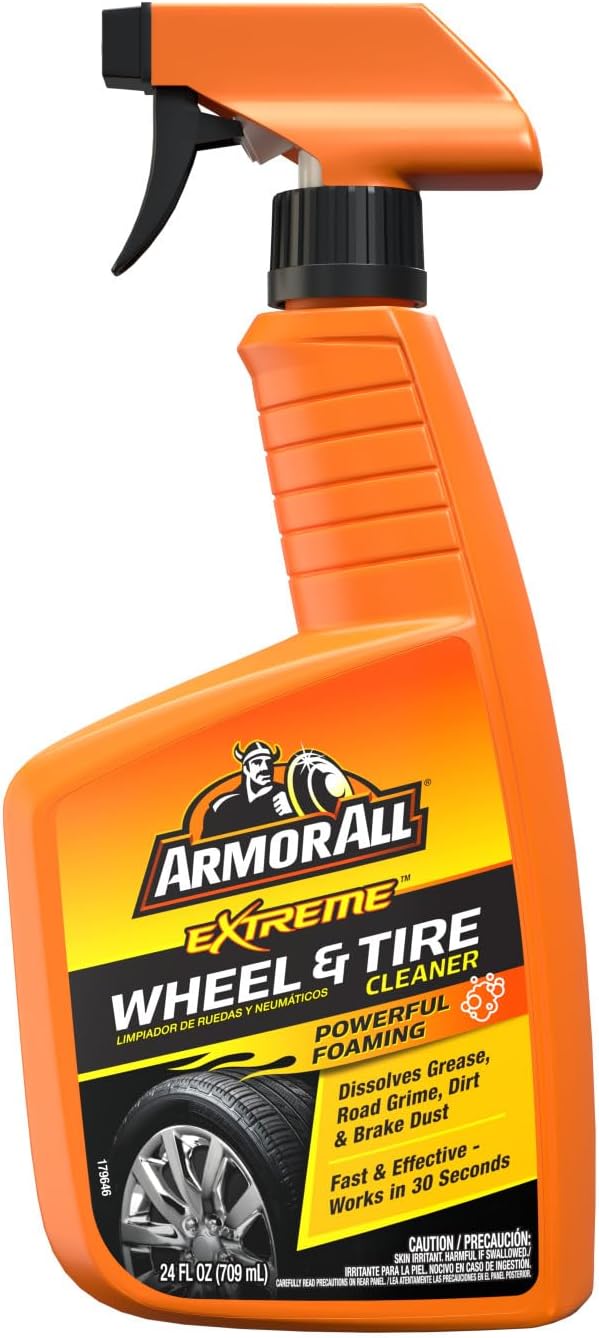
Armor All Extreme Wheel and Tire Cleaner is a powerful spray designed to cut through stubborn dirt, grease, tar, and brake dust on wheels and tires. It is safe for use on factory and aftermarket finishes, including alloy, steel, chrome, and plastic wheel trims, while its fast-acting formula works in just seconds. The deep-cleansing action helps reach hard-to-clean areas and leaves wheels looking clean and shiny.

The JACO ElitePro Digital Tire Pressure Gauge delivers shop-grade accuracy with a clear digital readout, making it easy to maintain proper tire pressure for safer driving and better performance. Built with rugged brass and steel components, a protective guard, and a flexible air hose, it is designed for reliable use across cars, trucks, motorcycles, bikes, RVs, and trailers. The lock-on display, built-in bleeder valve, and bright backlit screen add convenience in any lighting condition.

The ETENWOLF T300 digital tire pressure gauge delivers accurate readings across a wide pressure range, making it ideal for cars, trucks, and other vehicles. It is built to perform reliably in extreme temperatures and features replaceable AAA batteries plus an LED light for easier checks in low-light conditions. Designed for durability, it can withstand tough use while maintaining dependable performance.
Find the Tundra Toolkit and Handle Inside the Truck
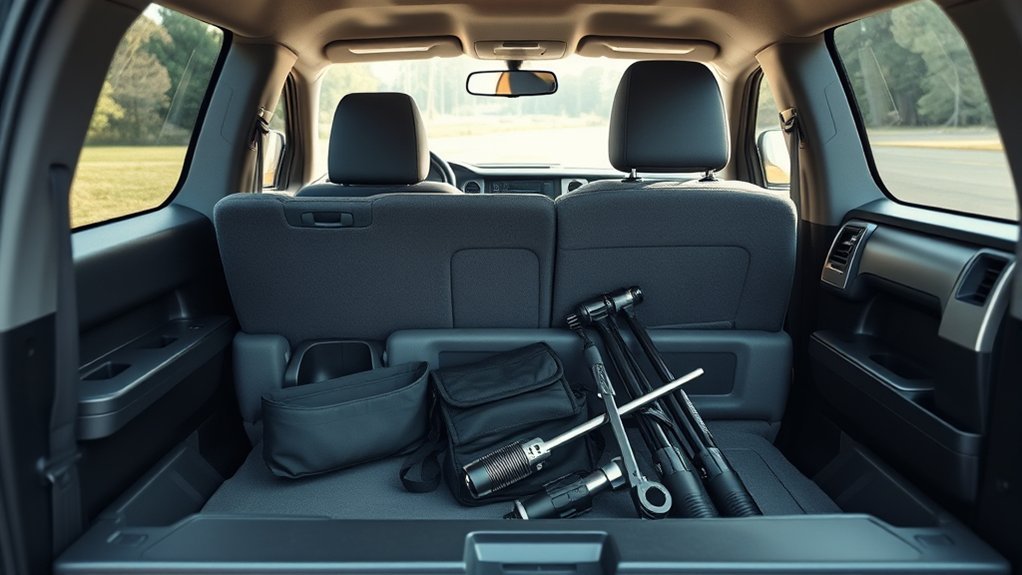
Check under the rear seat, behind the rear seat, or in the rear storage compartment for the Tundra toolkit. The exact storage spot can vary by cab style and model year, so use your Toyota owner’s manual if you do not see it right away.
Open the pouch or fabric roll and confirm that the lowering bar sections, crank handle, and any adapters are present. Snap the sections together once before moving to the rear bumper. This quick dry run helps you understand the order and prevents fumbling during a roadside stop.
If a section is missing or bent, do not try to improvise with random rods, extensions, or power tools. A poorly fitting tool can strip the actuator or damage the spare tire winch. Replace the missing factory tool or get professional help.
Locate the Spare Tire Access Slot Under the Rear Bumper
Move behind the Tundra and look for the spare tire lowering access slot near the rear bumper. On many Tundra models, this access point sits above the license plate or near the driver’s side of the bumper. The exact location can vary, so confirm it in the owner’s manual for your model year.
Clear mud, salt, rust flakes, or road debris from the slot before inserting the tool. Use a flashlight if the bumper area is dark. A clean, visible opening makes it easier to keep the lowering bar straight.
Slide the lowering tool into the slot without angling it up, down, or sideways. You should feel the tool reach the internal actuator before you turn the crank. If the tool slips, binds, or refuses to seat, stop and realign it.
Assemble and Attach the Lowering Bar to the Silver Mechanism
Connect the lowering bar sections and crank handle, then guide the bar through the access slot until it seats in the spare tire winch mechanism. Push firmly but do not force it. A secure fit lets the bar turn the winch without slipping.
Keep a steady grip and test the handle with a light turn. If the bar meets hard resistance, remove it, check the angle, and insert it again. Forcing the tool can damage the actuator, cable drum, or tool end.
| Action | Checkpoint | Result |
|---|---|---|
| Align bar | Access slot near rear bumper | Bar stays centered |
| Insert straight | Winch actuator | Tool seats securely |
| Test rotate | Light movement | Ready to lower |
| Realign if stuck | Remove and reinsert | Safer attachment |
How to Lower the Toyota Tundra Spare Tire Step by Step
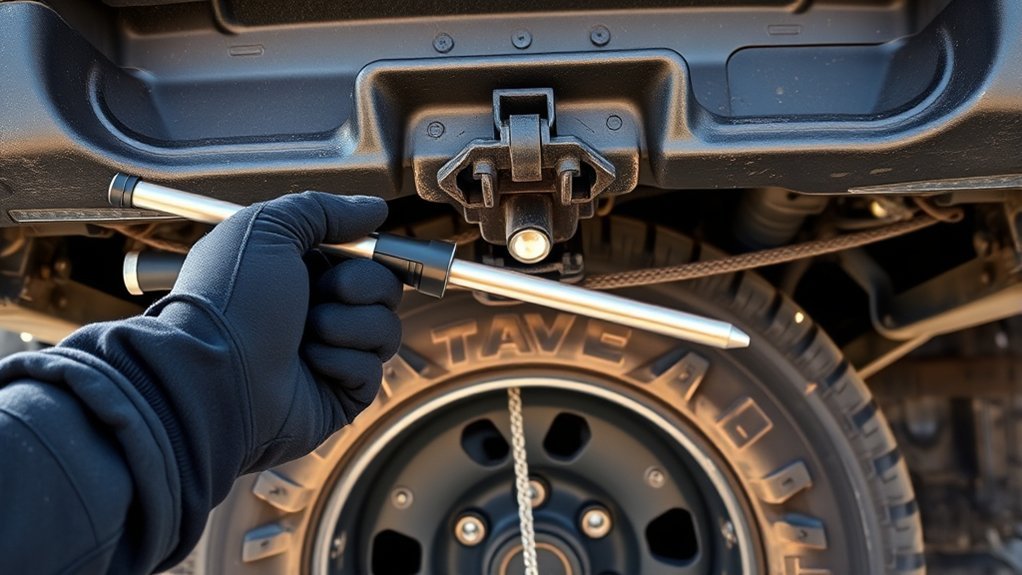
Use slow, steady movement from start to finish. A controlled turn protects the cable, keeps the tire from dropping suddenly, and helps you catch alignment problems early.
- Park safely on firm, level ground, set the parking brake, and chock the wheels.
- Assemble the lowering tool sections and crank handle.
- Find the rear access slot near the bumper and clear debris from the opening.
- Insert the tool straight into the slot until it seats in the winch actuator.
- Turn the tool in the lowering direction shown in your owner’s manual. Many Tundra instructions describe this as counterclockwise.
- Lower the spare until the tire rests fully on the ground and the cable has enough slack to remove the retainer.
- Remove the retaining bracket from the wheel center and slide the tire out from under the truck.
Note: If the crank turns but the tire does not move, stop. The tool may not be engaged, the cable may be stuck, or the carrier may be corroded.
Locate the Lowering Slot
Find the small rectangular slot near the rear bumper. This access point connects the tool to the spare tire winch under the truck. Scan the area by sight and touch, because dirt and shadow can hide the opening.
- Check the area above the license plate and near the driver’s side of the rear bumper.
- Look for the rectangular opening that lines up with the spare carrier.
- Clear mud, rust flakes, and road debris before you insert the tool.
- Remember the slot location so you can find it quickly next time.
Connect the Lowering Tool
Place the lowering tool into the rectangular slot and engage it with the actuator beneath the truck. You should feel the tool seat when it aligns correctly. Confirm a firm connection before you start turning.
Keep your stance stable and your hands steady. Apply controlled pressure and avoid jerking the tool. Stop and realign the bar if the handle slips, grinds, or wobbles.
Rotate the Tool Slowly
With the tool seated and the actuator engaged, turn the handle slowly in the lowering direction shown in your owner’s manual. Many Tundra instructions describe this as a counterclockwise turn. Keep steady, even pressure until the spare reaches the ground.
- Confirm that you inserted the tool into the correct access point.
- Apply even pressure and avoid sudden motions.
- Turn until the cable releases enough for the tire to rest on the ground.
- Stop if you feel sharp resistance, then inspect and reposition the tool.
A slow rotation helps prevent cable stress and gives you better control during the descent.
After the Spare Is Down
Once the spare reaches the ground, keep turning until the cable has enough slack to remove the retainer from the center of the wheel. Tilt the retaining plate, slide it through the wheel opening, and move the spare away from the truck before you inspect it.
Check the tread, sidewall, valve stem, and wheel before you install the spare. Do not use the spare if you see deep cracks, a bulge, exposed cords, severe rust around the wheel, a damaged valve stem, or a tire that will not hold pressure.
Pro Tip: Keep a small tire gauge and flashlight in the truck, not only in your garage. You need both most when a flat happens away from home.
Check the Spare Tire Pressure and Correct PSI to Aim For
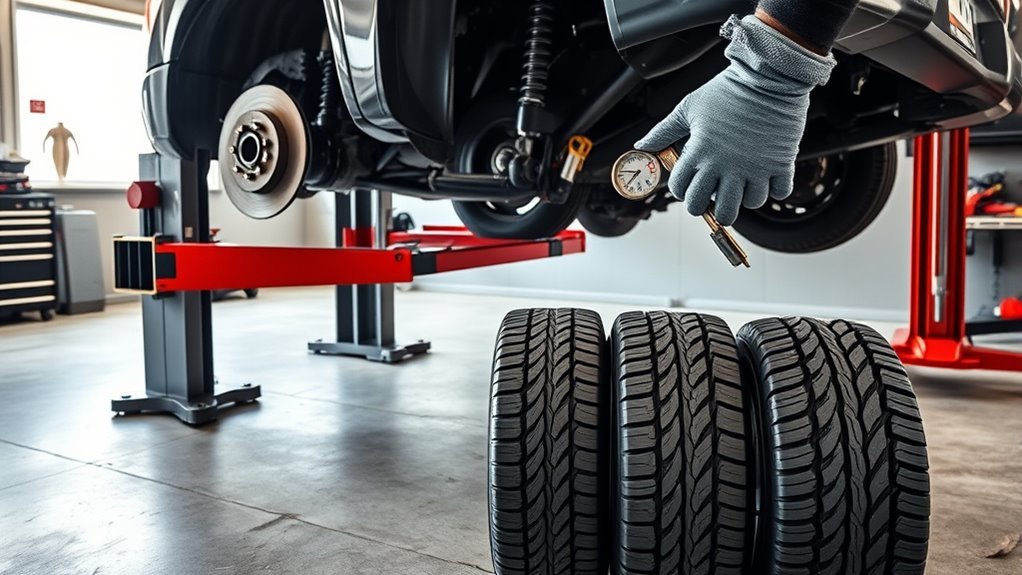
After lowering the spare, use a tire gauge to read its pressure. Your exact pressure target depends on the model year, tire size, and trim. The National Highway Traffic Safety Administration tells drivers to use the Tire and Loading Information Label on the driver’s side door edge or the owner’s manual for the correct cold tire pressure.
If the reading sits above the target, bleed a small amount of air. If it sits below the target, add air in short bursts and recheck. Proper pressure helps the truck handle more predictably when you put the spare into service.
[Products Worth Considering]
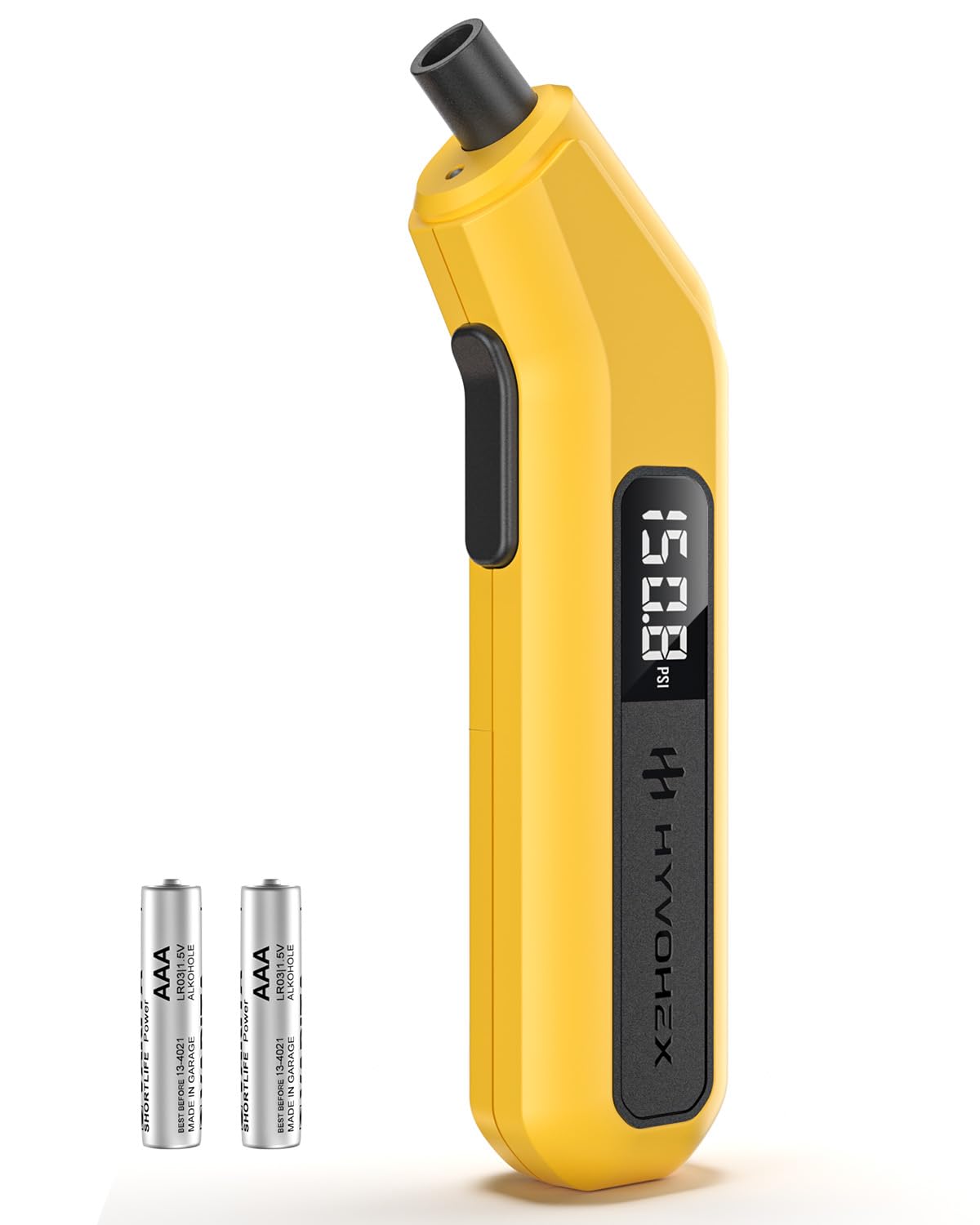
HYVOHEX digital tire pressure gauge delivers fast, accurate readings with an easy-to-read LED backlit display and a high-sensitivity sensor for reliable tire checks. Its valveless one-click operation, rotating valve head, and broad compatibility make it a practical tool for cars, bikes, and trucks. Built with a durable rubber shell and aluminum nozzle, it is compact enough to keep in your glove box or tool bag.

HYVOHEX digital tire pressure gauge delivers fast, highly accurate readings with an easy-to-read LED backlit display for convenient checking in any lighting. Its valveless one-click operation, 360-degree rotating valve, and wide PSI range make it a practical tool for cars, bikes, and trucks. Built with a durable aluminum nozzle and rubberized shell, it is designed for everyday use and easy storage in your vehicle or tool bag.

This tire inflator attachment combines accurate pressure reading and easy inflation in one heavy-duty tool for maintaining tire pressure with less hassle. A longer hose and 360-degree swivel air chuck help create a secure seal while giving you better control during use. Designed for universal compressor compatibility, it measures, inflates, and deflates without batteries.
Recommended Tire PSI
Inflate the spare to the pressure shown on your door jamb label or in your owner’s manual. Do not use the number molded on the tire sidewall as your target. That number usually shows the tire’s maximum pressure, not Toyota’s recommended cold pressure for your truck.
- Inspect the spare for cracks, bulges, nails, or sidewall damage before measuring pressure.
- Check pressure when the tire is cold for the most accurate reading.
- Bleed air slowly if the reading sits above the target.
- Add air in small bursts if the reading sits below the target.
- Check the spare monthly and before long trips.
Note: NHTSA recommends checking tire pressure when tires are cold, meaning the vehicle has not been driven for at least three hours.
How to Read a Tire Pressure Gauge
Remove the valve cap, press the gauge squarely onto the valve stem, and read the stem or digital display. Both analog and digital gauges can give reliable readings when you seat them firmly. Compare your number to the target on your door sticker and adjust the pressure as needed.
| Step | Tool | Action |
|---|---|---|
| 1 | Gauge | Press squarely onto the valve stem and hold steady |
| 2 | Valve | Read the display and compare it to your door-sticker target |
| 3 | Air source | Bleed or add air until pressure matches the target |
| 4 | Valve cap | Reinstall the cap to help keep dirt out of the valve stem |
How Temperature Affects Spare Tire Pressure
Tire pressure changes as outside temperature changes. AAA notes that a 10°F drop can lower tire pressure by about 1 PSI, and larger seasonal swings can move pressure more. A spare that sits through cold weather can lose enough air to affect handling when you need it.
- Use a calibrated tire gauge for more accurate readings.
- Compare your measured pressure to the target on your door sticker.
- Release air slowly if the reading sits too high.
- Add air in small increments if the reading sits too low.
- Recheck pressure after adjustment and before storing the spare.
How to Raise and Secure the Spare Tire
Warning: Keep fingers, loose clothing, and tools clear of the cable and tire carrier while you raise the spare.
Place the retainer plate through the wheel center, then turn the crank in the raising direction shown in your owner’s manual. Use steady pressure as the cable tightens. Continue turning until the wheel pulls fully into the holder.
Pause at intervals and confirm that the tire tracks squarely into its mount. Keep the truck on level ground with the parking brake set while you work.
Once the tire reaches the carrier, give it a firm upward shove and visually inspect the undercarriage to confirm secure seating. The spare should not swing, hang at an angle, or sit loosely against the carrier. Wipe the tool clean, inspect it for bends, and stow the toolkit in its proper compartment.
[Products Worth Considering]
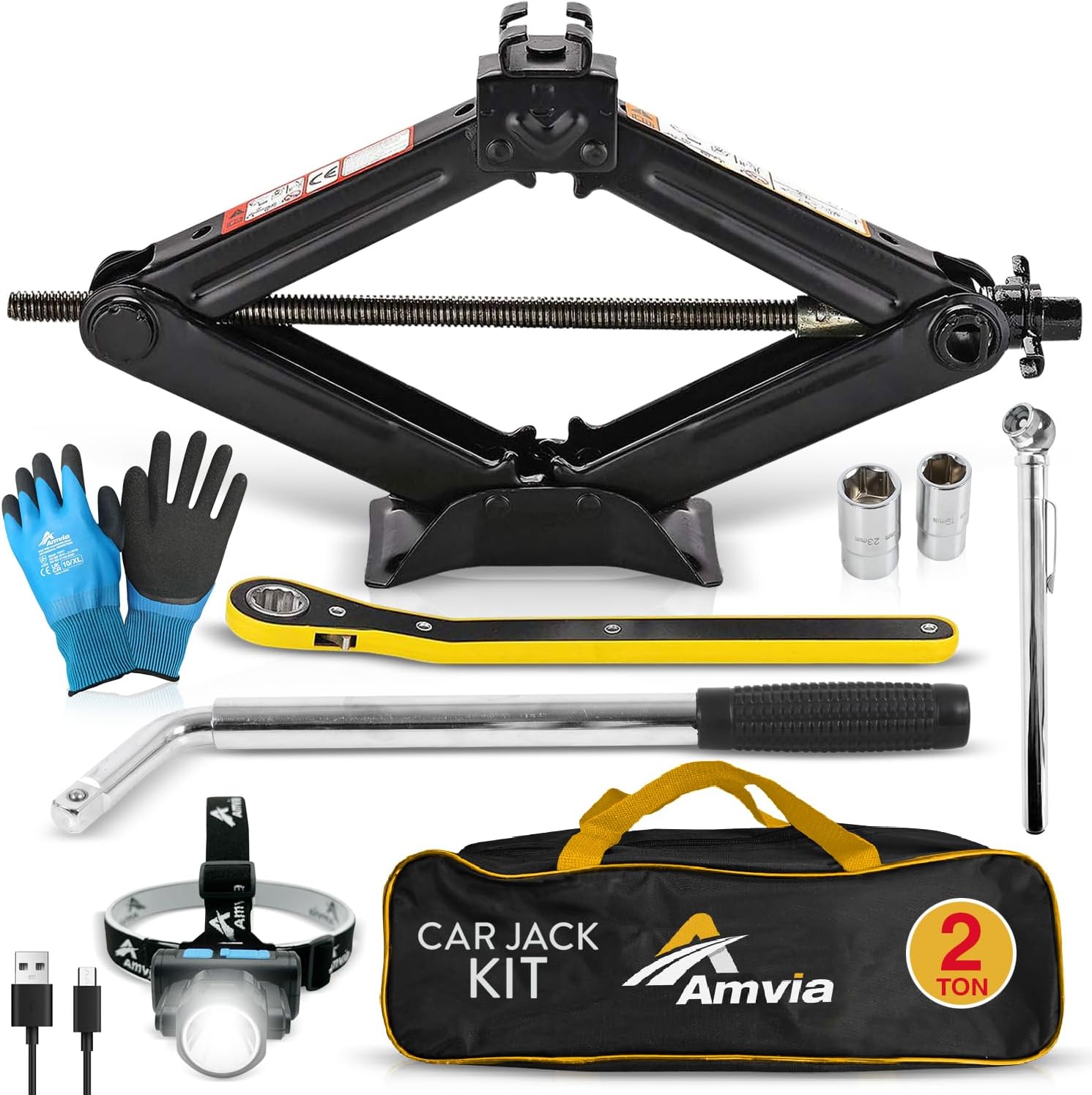
This all-in-one car jack kit is built to help drivers handle flat tire emergencies quickly and safely. It includes a 2 ton scissor jack, telescopic lug wrench, USB rechargeable LED headlamp, tire pressure gauge, gloves, and a storage bag for organized trunk storage. Designed for a wide range of vehicles, it offers a compact, portable solution for roadside tire changes day or night.

This AstroAI digital tire pressure gauge delivers factory-calibrated readings with dependable ±1 PSI accuracy, helping you keep cars, trucks, motorcycles, and spare tires at the right pressure. Its bright backlit LCD and illuminated nozzle make nighttime checks easy, while the one-button unit switch and auto-off design add convenience and battery efficiency for routine maintenance.
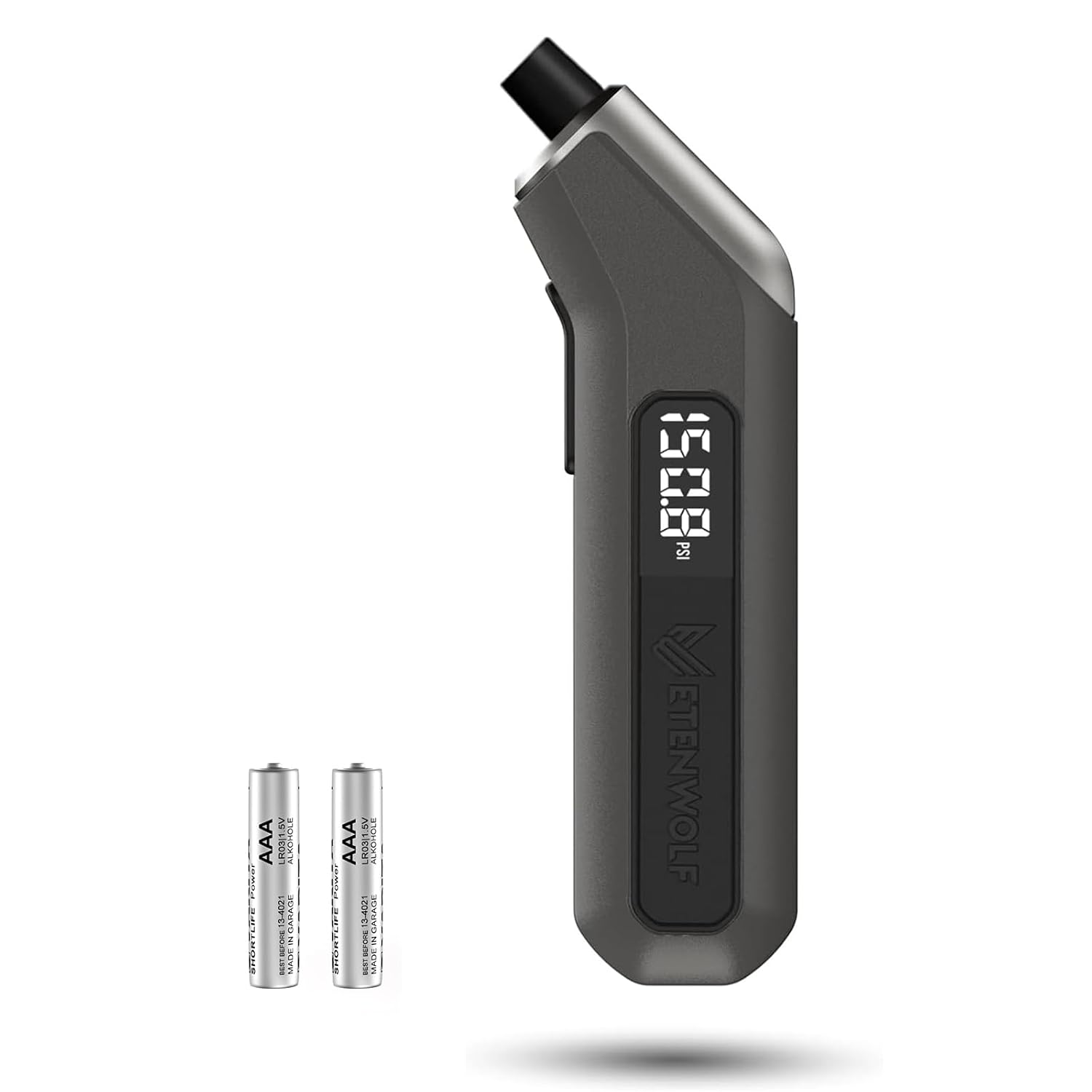
The ETENWOLF T300 digital tire pressure gauge delivers precise readings for cars, RVs, trucks, bikes, and heavy-duty vehicles with a wide measuring range and consistent accuracy. It is built to perform in extreme temperatures, includes a bright LED light for low-visibility use, and uses replaceable AAA batteries for convenient long-term operation. Durable enough to withstand rugged use, it is a practical tool for maintaining proper tire pressure across a variety of vehicles.
Troubleshooting Common Problems When Lowering or Raising
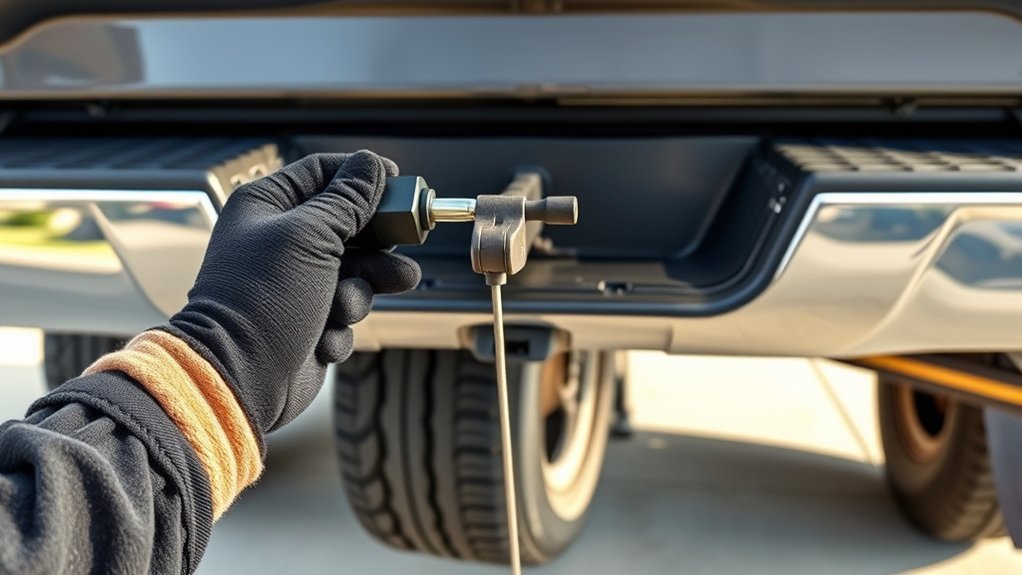
If the tool will not engage, confirm that you are using the correct insertion point from your owner’s manual and that the bar seats fully in the actuator. If lowering feels stiff, check for debris, rust, or obstructions around the winch. If the tire will not retract, verify that the mechanism moves freely and that the tire lines up with the carrier.
Tool Not Engaging
Start by confirming that the tool sits fully in the designated slot under the truck. Misalignment, rust, missing tool sections, or a damaged tool end can prevent proper engagement.
- Verify the correct insertion point and adjust the bar until it seats fully.
- Clear debris and rust around the engagement piece with a wire brush.
- Use penetrating spray sparingly after cleaning if the mechanism feels stiff.
- Check the toolkit for missing, bent, or damaged components.
- Do not hammer the tool into place or use a drill to force engagement.
Regular tool inspections and spare tire checks help keep the system ready when you need it.
Stiff Lowering Mechanism
Rust, dirt, or misalignment can make the spare hoist feel stiff. Always align the tool squarely before inserting it. Misalignment increases wear and can block engagement.
If the tool meets resistance during insertion, withdraw it, clean the slot with a wire brush, and try again. Apply light lubricant to moving parts after cleaning. Turn the tool with steady, consistent pressure and stop if the resistance feels sharp or uneven.
If the tire still will not lower after cleaning and proper alignment, stop and get a professional inspection. Forcing the mechanism can damage the cable, actuator, or carrier.
Tire Won’t Retract
If the spare will not retract, confirm that the lowering tool engages the actuator under the bumper. Clear visible debris around the cable drum before trying again.
- Verify tool engagement and realign the bar if needed.
- Inspect the cable for kinks, fraying, or visible damage.
- Remove rust, dirt, or lodged debris from around the mechanism.
- Apply light lubricant to moving parts after cleaning.
- Lower and raise the spare during routine checks to catch problems early.
Routine spare tire maintenance gives you the best chance of avoiding a retraction failure.
Missing or Damaged Toolkit
If the factory spare-tire lowering tool is missing, do not force the winch with an improvised rod. The tool end must match the actuator. A loose fit can round the mechanism and make the spare harder to remove later.
- Check every under-seat and rear storage compartment before assuming the kit is missing.
- Look for a spare-tire lock key if your truck has a lock installed.
- Order the correct replacement tool for your Tundra model year and cab configuration.
- Call roadside assistance if you have a flat and cannot access the spare safely.
Inspect the Undercarriage and Mounting Hardware for Damage
Pro Tip: Apply a light coat of rust-inhibiting lubricant to the lowering mechanism once a year if you drive in road salt, mud, or frequent rain.
Inspect the undercarriage for rust, bends, or damage that could weaken the spare tire mounting hardware. Scan mounting points, brackets, the cable, and surrounding sheet metal for corrosion, cracks, or deformation. Use a mirror and flashlight to see hard-to-reach areas.
Test connections by hand and feel for looseness, play, or missing fasteners. If the lowering-tool connection plate, retaining plate, or cable looks bent, frayed, or heavily corroded, do not lower or raise the tire until a qualified technician checks the system.
If your Tundra is older or shows heavy corrosion near the spare carrier, check Toyota’s Safety Recalls and Service Campaigns lookup with your VIN or license plate. A recall lookup will not replace a physical inspection, but it helps you see whether Toyota has an open campaign for your vehicle.
Tighten fasteners only to the correct specification for your truck, replace corroded hardware promptly, and clear debris from the lowering mechanism. Regular inspections reduce the chance of failure during a roadside repair.
How to Prevent Spare Tire Theft and Stow Tools Safely
A visible spare and loose tools can invite theft. Secure the tire and stow the jack, wrench, and lowering tool out of sight after every use. Use these steps to protect your equipment without slowing down emergency access.
- Use a keyed or combination lock on the spare carrier if your setup supports one.
- Store the jack, lug wrench, and lowering tool in the Tundra’s designated compartment or a locked toolbox.
- Inspect the lock and mounting hardware after each use.
- Keep the tire and tools off the tailgate and out of view.
- Memorize the kit’s location so you can retrieve the tools quickly.
Secure storage keeps your gear in working condition and ready to use.
Practice Routine: How to Rehearse Lowering the Spare
After you secure the spare and stow the tools, run through the lowering procedure in your driveway. Assemble the toolkit, locate the slot on the truck’s underside, and insert the tool until it connects to the actuator. Turn the handle in the lowering direction shown in your owner’s manual and note how the mechanism feels.
Pause, inspect the engagement, and continue until the tire drops to a safe working height. Wear gloves, stand clear of pinch points, and keep bystanders away. Once lowered, check the tire’s position, condition, and pressure before you reverse the action.
Raise and stow the wheel, then confirm that it sits firmly in the carrier. Rehearse this full sequence a few times a year to keep the steps familiar and reduce stress on the road.
Frequently Asked Questions
Can I lower the spare without parking on level ground?
You should not lower the spare on uneven ground unless you have no safer option. The winch can bind, and the tire can drop unevenly. Park on level ground, set the parking brake, turn on hazard lights if you are roadside, and chock the wheels before you lower the tire.
Will lowering the spare activate any dashboard warnings?
Lowering the spare tire should not normally trigger dashboard warnings or indicator lights. The process does not require you to start the truck or disconnect sensors. Work slowly, though, because snagging wiring or damaging a valve stem or TPMS component during a tire change can create a separate warning.
Is a jack required to lower the spare tire?
No. You use the cable-and-winch mechanism under the bed to lower the spare with the factory toolkit. You still need the jack when you lift the truck to replace a flat tire, and you should use only the jack points listed in your owner’s manual.
Can I use a cordless drill to turn the lowering tool?
Hand tools are safer for this job. A drill can apply too much torque, especially if the winch is rusty or the tool is not fully seated. Too much torque can strip the actuator, damage the cable drum, or pull the spare into the carrier too aggressively.
How often should I inspect the spare’s mounting hardware?
Inspect the spare carrier, cable, winch, retainer, and surrounding metal monthly and before long trips. Check more often if you drive on salted roads, mud, gravel, or deep water. Replace corroded or damaged parts promptly so the system works when you need it.
What should I do if the spare tire cable is frayed or kinked?
Do not keep using a frayed or kinked cable. Lowering or raising the spare with a damaged cable can let the tire hang crooked, jam, or fall. Have the spare tire carrier inspected and repaired before you rely on it again.
Conclusion
Knowing how to lower your Tundra’s spare can turn a flat tire into a manageable roadside task. Practice the process at home, confirm that your toolkit has every piece, and check your spare’s pressure this month. A short practice session now can save you time, stress, and a tow call later.
Sources
- Toyota Owners Manuals and Warranties — model-specific owner’s manual guidance for Toyota Tundra owners
- NHTSA TireWise Tire Safety — tire pressure, cold-pressure checks, spare tire checks, and tire safety guidance
- AAA: Understanding Tire Pressure and Temperature Change — temperature-related tire pressure changes
- Toyota Safety Recalls and Service Campaigns Lookup — VIN and license-plate recall lookup for Toyota vehicles
- Vic Vaughan Toyota of Boerne: How to Change a Toyota Tundra Tire — Toyota dealer procedural support for locating and lowering the spare tire


[…] your Toyota Tundra trailer lights don’t work, test the trailer on another vehicle first. Then inspect the 4-way […]