
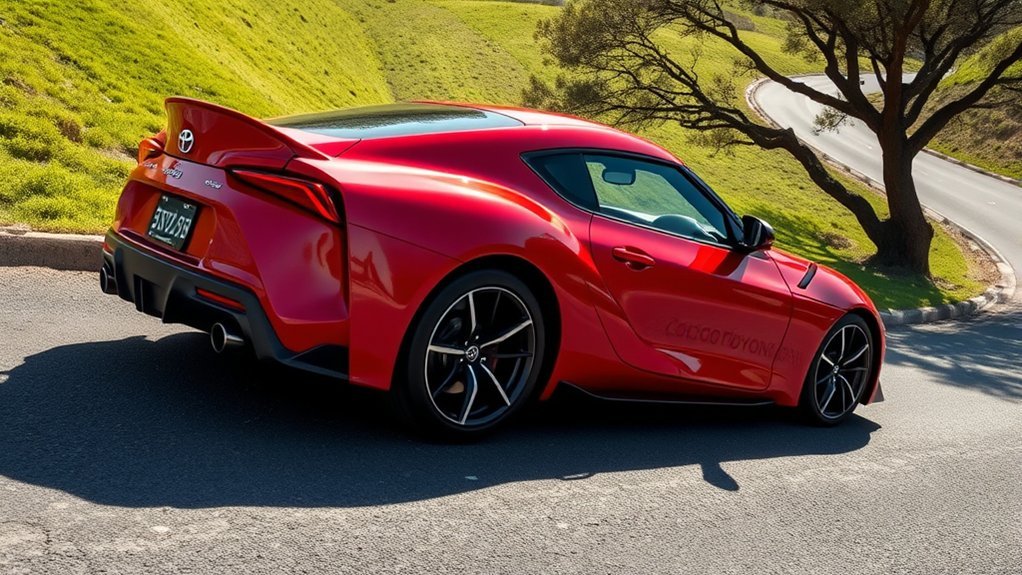
Parking a Toyota Supra on a hill is not the time to rely on the transmission alone. Use the parking brake every time, keep your foot on the brake until the car is fully secured, and turn the front wheels the right way for the slope. The exact control depends on the Supra generation: current GR Supra models use an electric parking brake switch, while older Supras may use a handbrake lever.
Quick Answer
Yes, you should use the parking brake whenever your Toyota Supra is parked on a hill. Stop with the foot brake, shift to Park on an automatic or leave a manual in gear, set the parking brake, turn the front wheels correctly, and only then release the foot brake.
Key Takeaways
- The parking brake helps prevent rollaways and reduces load on the transmission when the car is parked on a slope.
- Modern GR Supra models use an electric parking brake switch; older Supra models may use a traditional lever.
- For an automatic Supra, keep the foot brake pressed, shift to Park, set the parking brake, then release the foot brake.
- For a manual Supra, keep the foot brake pressed, set the parking brake, leave the transmission in gear, then release the foot brake.
- Wheel direction matters: downhill points toward the curb; uphill with a curb points away from the curb; no curb points toward the road edge.
At a Glance
| Time Required | 10–20 seconds |
| Difficulty | Easy |
| Tools Needed | None; wheel chocks are useful on steep grades or during maintenance |
| Cost | Free for normal parking |
The Importance of Engaging the Parking Brake on Hills

When you park your Toyota Supra on a hill, the parking brake is a safety step, not an optional habit. Toyota’s GR Supra Owner’s Manual says the parking brake is used to prevent the vehicle from rolling when parked and warns that an unsecured vehicle can move and roll away.
The parking brake also helps keep the car’s weight from resting only on the automatic transmission’s Park mechanism. On a steep hill, that can make it easier to shift out of Park later and can reduce unnecessary stress on the driveline.
Toyota warns that an unsecured vehicle can begin to move and roll away, creating a risk of an accident.
How to Properly Engage the Parking Brake in Your Supra
The safest parking sequence is simple: keep control with the foot brake first, then secure the car with the transmission, parking brake, and wheel position before you let go.
Automatic Transmission Supra Parking Steps
- Stop fully and keep your foot firmly on the brake pedal.
- Shift into Park while the vehicle is still held by the foot brake.
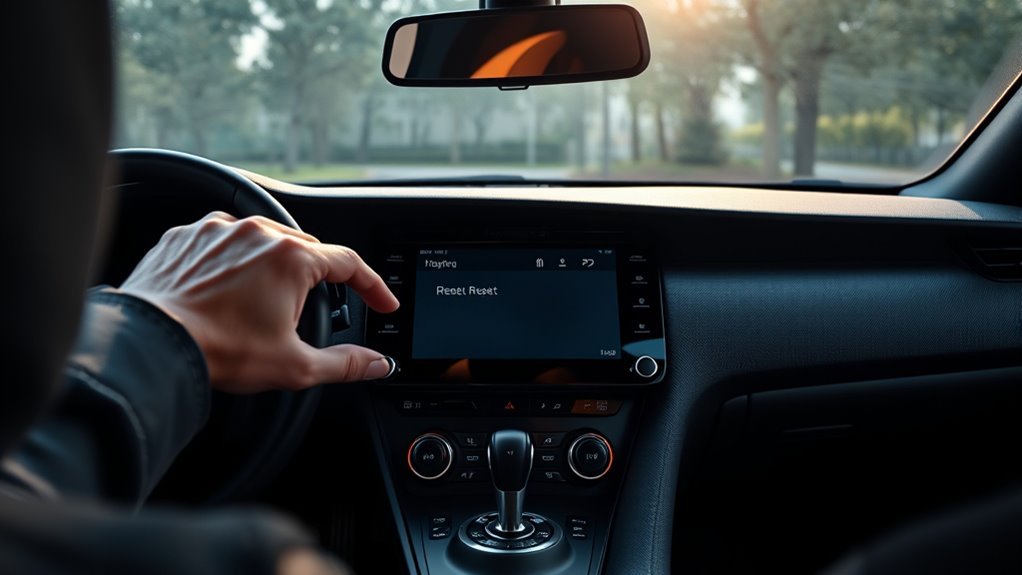
- Set the parking brake. On current GR Supra models, pull the electric parking brake switch until the indicator confirms it is set.
- Turn the front wheels based on whether you are facing uphill, downhill, and whether there is a curb.
- Release the foot brake slowly and confirm the car stays still before you exit.
Manual Transmission Supra Parking Steps
- Stop fully and keep the brake pedal pressed.
- Set the parking brake with the vehicle stationary.
- Leave the transmission in gear after shutting off the engine. A common rule is first gear when facing uphill and reverse when facing downhill, unless your owner’s manual gives different guidance.
- Turn the front wheels correctly for the hill.
- Release the foot brake slowly to make sure the car is secure.
Warning: Do not leave a Supra in Neutral as the only parking position on a hill. Use Park on an automatic or an appropriate gear on a manual, set the parking brake, and never leave children or pets unattended in the vehicle.
How to Avoid Common Mistakes When Using the Parking Brake
Using the parking brake correctly prevents most hill-parking problems. The biggest mistake is releasing the foot brake before the car is fully secured. That lets the vehicle settle hard against Park on an automatic or roll against the brake system before it is properly engaged.
- Do not rely on Park alone. Park helps hold an automatic vehicle, but the parking brake is designed to prevent movement when parked.
- Do not skip wheel positioning. Turned wheels give you a backup path if the vehicle moves.
- Do not force the shifter out of Park. If it feels stuck after hill parking, press the foot brake firmly, set or reset the parking brake, and let the vehicle settle before shifting.
- Do not ignore warning lights. If the parking brake indicator flashes, stays on unexpectedly, or a warning message appears, have the system checked.
- Do not drive with the parking brake on. Confirm the indicator is off before driving away.
Pro Tip: On a steep hill, set the parking brake before easing off the foot brake. This lets the parking brake take the load instead of letting the vehicle settle heavily against the transmission.
What’s the Difference Between Emergency and Regular Brakes?
The regular brake pedal and the parking brake are separate systems with different jobs. Your regular service brakes are for slowing and stopping the car while driving. They use the vehicle’s main brake system and apply braking force through the wheels during normal driving.
The parking brake is for holding the vehicle when it is parked. Federal safety regulations define a parking brake as a mechanism designed to prevent movement of a stationary motor vehicle. In the current GR Supra, Toyota describes an electric parking brake that is set by pulling a switch while the vehicle is stationary. Toyota also notes that the switch can be pulled and held while driving for emergency braking, but that is for emergency use only, not normal stopping.
Essential Tips for Safe Parking on Inclines
Safe hill parking is a three-part habit: use the transmission correctly, set the parking brake, and turn the wheels so the car rolls away from traffic if anything fails. The California Driver Handbook gives clear wheel-positioning guidance for uphill and downhill parking.
Proper Brake Engagement Steps
- Hold the foot brake: Keep the brake pedal pressed until the vehicle is fully secured.
- Select the right transmission position: Use Park on an automatic. Use an appropriate gear on a manual.
- Set the parking brake: Pull the electric parking brake switch on a current GR Supra, or pull the handbrake lever firmly on older models.
- Turn the wheels: Point the front wheels based on the direction of the hill and curb position.
- Check stability: Release the foot brake slowly and confirm the car does not move.
Importance of Wheel Positioning
Wheel positioning is a backup safety step. If the car moves, the front wheels should guide it into the curb or toward the road edge instead of into traffic.
Here’s a quick reference:
| Situation | Wheel Positioning |
|---|---|
| Facing downhill with a curb | Turn front wheels toward the curb |
| Facing uphill with a curb | Turn front wheels away from the curb and let the tire rest gently against it |
| Facing uphill or downhill with no curb | Turn front wheels toward the road edge or shoulder |
| Very steep hill or service work | Use the parking brake and add wheel chocks when needed |
Note: Local driver handbooks may describe wheel direction slightly differently depending on traffic side and curb layout. The goal is always the same: if the car moves, it should not roll into traffic.
Risks of Not Using the Parking Brake
Neglecting the parking brake can create safety and repair risks, especially on inclines. Even if the car seems secure at first, gravity, road surface, vibration, or a mechanical issue can allow movement.
- Vehicle rollaway: A Supra that rolls after parking can hit another vehicle, property, or a person.
- Extra transmission load: On an automatic, relying only on Park can put the car’s weight against the parking mechanism, especially on a steep slope.
- Hard shifting from Park: If the car settles against Park, shifting out of Park later may feel stiff or clunky.
- Reduced backup protection: If the main holding method fails and the wheels are not turned correctly, the vehicle may roll into traffic.
Maintaining Your Parking Brake for Safety
Using the parking brake is only part of the equation; maintaining it matters too. On current GR Supra models, watch for warning lights, warning messages, unusual noises, or a parking brake that does not set or release normally. Toyota says that if a parking brake malfunction occurs, the vehicle should be secured against rolling, such as with a wheel chock, and the system should be checked.
For older Supras with a mechanical handbrake, have the cable, rear brake hardware, and adjustment inspected if the lever pulls too high, feels loose, sticks, or does not hold the car on a slope. Cold weather, corrosion, worn rear brake components, and poor adjustment can all affect holding power.
- Test it safely: On a mild slope with space around the car, set the brake and confirm the vehicle holds before relying on it on a steep hill.
- Keep warning lights in mind: A red parking brake light should behave normally when the brake is set and released.
- Do not ignore drag: If the car feels held back after release, stop driving and have the system checked.
- Use wheel chocks when appropriate: Chocks add protection on steep slopes, during storage, or any time you are working around the vehicle.
User Insights on Using the Parking Brake in the Supra
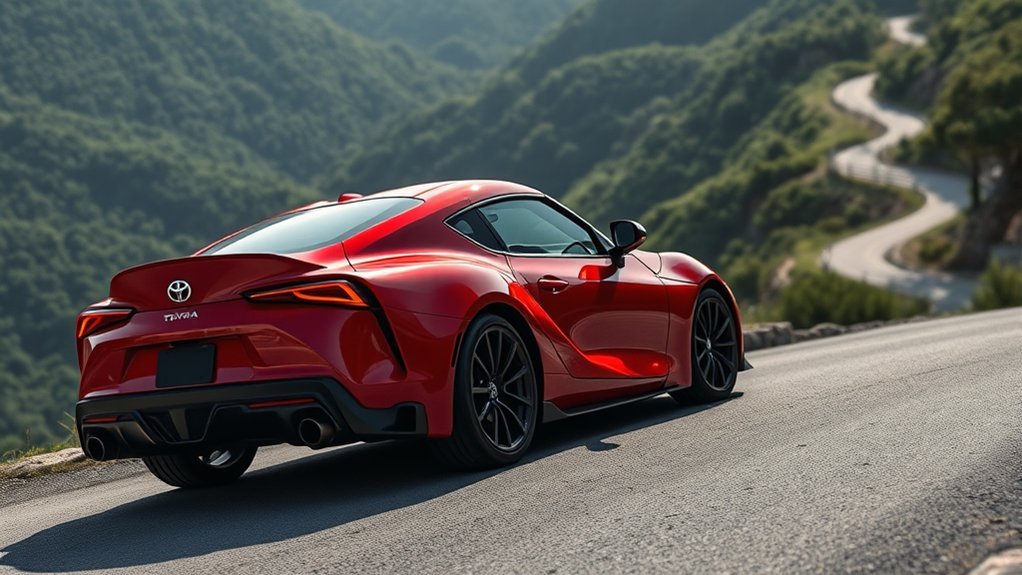
Supra owners often use the parking brake for one simple reason: it makes hill parking feel more controlled. The habit is especially useful in a low sports car where even a small roll can feel sudden.
- Engage before relaxing: Keep your foot on the brake until Park or gear, the parking brake, and wheel position are all set.
- Use the indicator: In a GR Supra with an electric parking brake, confirm the parking brake light shows the brake is set before exiting.
- Respect hill-start assist: Hill-start assist can help when moving off uphill, but it is not a parking brake and does not replace proper parking technique.
Does Hill-Start Assist Replace the Parking Brake?
No. Hill-start assist helps when you are driving away on an uphill grade, not when the car is parked. Toyota’s 2023 GR Supra Quick Reference Guide says hill-start assist can hold the vehicle for approximately two seconds after the foot brake is released, and the vehicle may still roll back slightly depending on loading.
That short hold is useful during a hill start, but it is not designed to secure an unattended vehicle. When parking, use the parking brake every time.
When to Use Wheel Chocks
For normal street parking, correct wheel positioning and the parking brake are usually the main steps. Wheel chocks are worth using when the hill is very steep, the car will be parked for a long time, the parking brake has a warning or malfunction, or you are doing any work around the vehicle.
Place the chock on the downhill side of the tire so it blocks the direction the car would roll. Never use a chock as a substitute for the parking brake or the correct transmission position.
[Products Worth Considering]

Heavy-Duty Solid Rubber Construction: Premium-grade molded rubber resists cracking, crushing, deformation, and weather damage for long-lasting stability under vehicle weight
Frequently Asked Questions
Should you use the handbrake on a hill start?
Yes, a handbrake or parking brake can help during a hill start, especially in an older manual-transmission Supra. It keeps the car from rolling while you move from the brake to the throttle. In a current GR Supra, hill-start assist can help briefly, but the parking brake is still the correct tool for securing the car when parked.
Does the Toyota Supra have hill assist?
Yes, current GR Supra models include hill-start assist. Toyota describes it as a system that supports driving off on uphill grades and can hold the vehicle for about two seconds after the foot brake is released. It may still roll back slightly, so it should not be treated as a parking brake.
Should I set the parking brake before or after shifting into Park?
For an automatic Supra, keep your foot on the brake, shift to Park, set the parking brake, and then release the foot brake slowly. The key is not letting the car roll onto the Park mechanism before the parking brake is set.
Which way should I turn the wheels when parking a Supra on a hill?
Facing downhill with a curb, turn the front wheels toward the curb. Facing uphill with a curb, turn the front wheels away from the curb and let the tire rest gently against it. With no curb, turn the wheels toward the road edge or shoulder so the car rolls away from traffic if it moves.
Can I use the GR Supra’s electric parking brake in an emergency?
Toyota describes an emergency function where pulling and holding the electric parking brake switch while driving can brake the vehicle. This is for emergencies only. For normal driving, use the brake pedal; for parking, set the parking brake only when the vehicle is stationary.
Conclusion
Using the parking brake on hills is one of the easiest ways to protect your Toyota Supra and reduce rollaway risk. Keep the foot brake pressed, select Park or the proper manual gear, set the parking brake, turn the wheels correctly, and check that the car is stable before you walk away. It takes only a few seconds, but it makes hill parking safer and smoother every time.
Sources
- Toyota GR Supra Owner’s Manual — parking brake operation, rollaway warning, electric parking brake use, and wheel chock guidance.
- Toyota 2023 GR Supra Quick Reference Guide — hill-start assist behavior and its approximate two-second hold.
- California DMV Driver Handbook: Parking on a Hill — wheel direction and parking brake guidance for uphill and downhill parking.
- 49 CFR Part 571: Federal Motor Vehicle Safety Standards — federal definition of a parking brake.

[…] wheel position and a wheel chock can provide additional protection. See the separate guide to parking a Toyota Supra on hills for the full incline-parking […]