Toyota Supra engine codes only help when you match the fault to the correct year, engine, market, and diagnostic system. Early MKIV/A80 Supras can output Toyota two-digit blink codes through the check engine light by bridging TE1 and E1, while 1996-and-newer U.S.-market cars use an OBD-II scan tool and standardized P-codes. On the early 2JZ-GTE system, code 31 is the mass air flow meter circuit, code 42 is the No.1 vehicle speed sensor circuit, and G/NE crank/cam-related signal faults are codes 12 and 13. Record the code first, then test the circuit instead of replacing the named part by guesswork.
Last updated: August 31, 2026 · Diagnostic definitions and procedures rechecked against Toyota factory-service references.
Quick Answer
To read applicable early MKIV Supra blink codes, turn the ignition ON, bridge TE1 and E1 in the Toyota diagnostic connector, and count the check-engine-light flashes. Code 31 is a mass air flow meter circuit fault on the 2JZ-GTE, code 42 is the No.1 vehicle speed sensor signal circuit, and G/NE signal faults are codes 12 or 13. A 1997 U.S.-market OBD-II Supra uses P-codes instead, including P0100 for the mass air flow circuit and P0500 for the vehicle speed sensor circuit.
Key Takeaways
- Use TE1–E1 blink-code reading only on an ECU and market that use Toyota’s pre-OBD-II diagnostic procedure; use an OBD-II scanner on 1996-and-newer U.S.-market Supras.
- Do not confuse G/NE signal codes with code 31. On the early MKIV 2JZ-GTE chart, G/NE faults are codes 12 and 13; code 31 is the mass air flow meter circuit.
- Code 34 is a factory turbo-pressure overpressure fault. Code 35 covers the turbo pressure sensor circuit or the BARO sensor circuit; the BARO sensor is built into the ECM.
- Later OBD-II cars use P-codes rather than the older two-digit system, so do not assume every early blink code has a universal one-to-one P-code translation.
- Always diagnose the circuit, connector, sensor signal, power, ground, and relevant mechanical system before replacing expensive parts.
At a Glance
| Time Required | 10–20 minutes to read and record codes; longer for testing |
| Difficulty | Beginner for code reading; intermediate for electrical diagnosis |
| Tools Needed | Jumper wire or SST, notebook, multimeter, service manual, and an OBD-II scanner for applicable 1996+ U.S. cars |
| Cost | Usually free for blink-code reading; scan tools and shop testing vary |
Warning: Bridge only the specified diagnostic terminals on a car that uses this procedure. Shorting the wrong pins can create electrical faults. If the diagnostic cap is missing, the terminals are damaged, the ECU has been changed, or the car has aftermarket wiring, stop and verify the correct wiring diagram first.
How Do You Read Pre-OBD-II MKIV Supra Codes With TE1–E1?
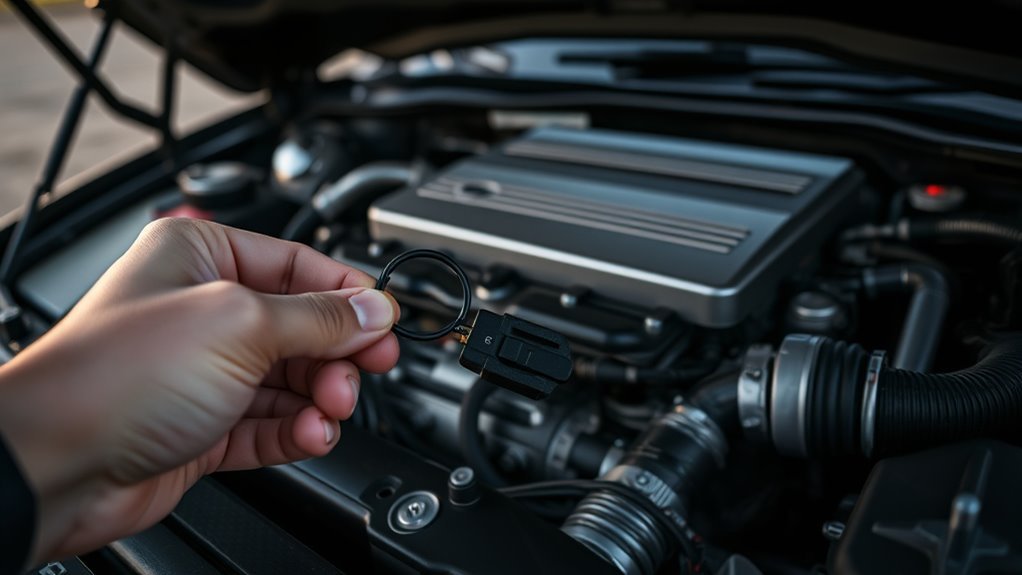
On applicable early MKIV Supras, Toyota’s diagnostic system can output trouble codes through the malfunction indicator lamp, also called the MIL or check engine light. The factory 2JZ-GTE diagnostic procedure says to turn the ignition switch ON, connect terminals TE1 and E1 in DLC1 or DLC2, and read the code from the MIL.
- Park safely, set the parking brake, and make sure the engine is off.
- Open the Toyota diagnostic connector used by your ECU. On many MKIV cars, the terminal names are printed under the connector cap.
- Use a short jumper wire or the Toyota SST to connect TE1 to E1.
- Turn the ignition switch to ON without starting the engine.
- Watch the check engine light and write down every flash group before removing the jumper.
- Turn the ignition OFF and remove the jumper when finished.
A normal no-code pattern is a steady, even flash. A stored fault appears as grouped flashes. For example, three flashes, a pause, then one flash is code 31. If more than one code is stored, Toyota’s procedure outputs the codes in numerical order, from the lowest code to the highest.
Pro Tip: Record the sequence twice before clearing anything. A single miscount can send diagnosis toward the wrong circuit, and a stored historical code may not be the fault causing today’s symptom.
Which Diagnostic System Does Your MKIV Supra Use?
The MKIV Supra spans several model years and markets, so one diagnostic method does not fit every car. Many early A80s use Toyota’s two-digit pre-OBD-II blink-code system. U.S.-market 1996-and-newer cars use OBD-II with a 16-pin DLC3 connector and standardized P-codes. Toyota’s official Technical Information System is the best place to confirm model-year-specific procedures.
| Supra Type | Typical Diagnostic Method | Code Format |
|---|---|---|
| Early MKIV / Toyota pre-OBD-II system | TE1–E1 jumper and MIL flashes on applicable ECUs | Two-digit Toyota codes such as 12, 31, 42 |
| 1996+ U.S.-market OBD-II | OBD-II scan tool through DLC3 | P-codes such as P0100, P0335, P0340, P0500 |
| Late/JDM/VVT-i or swapped cars | Use the ECU, harness, market and service information that match the actual car | Varies by ECU and market |
Note: P0100, P0171, P0172, P0300 and P0500 are OBD-II-style codes. On an early blink-code Supra, faults are represented by Toyota two-digit codes instead. Do not translate a two-digit code into a P-code unless the service information for that exact ECU supports the comparison.
Common 1997 U.S.-Market OBD-II Codes
The 1997 U.S. Supra factory diagnostic manual uses an OBD-II scan tool through DLC3. The examples below show why year and diagnostic system matter: the later ECU identifies several familiar systems with P-codes rather than the early two-digit numbers.
| 1997 OBD-II Code | Factory Detection Item | First Diagnostic Direction |
|---|---|---|
| P0100 | Mass Air Flow Circuit Malfunction | MAF circuit, meter and ECM |
| P0335 | Crankshaft Position Sensor Circuit Malfunction | Crankshaft-position signal circuit, sensor, starter-related conditions and ECM |
| P0340 | Camshaft Position Sensor Circuit Malfunction | Camshaft-position circuit and related engine-position signals |
| P0500 | Vehicle Speed Sensor Malfunction | Speed sensor, combination meter, signal wiring and ECM |
If you were looking for A40, A60, A70, A80 or A90 identification rather than diagnostic trouble codes, see the separate Toyota Supra model codes guide.
How Do Supra Engine Codes Work and Where Are They Stored?
The Supra’s engine control module watches sensor inputs and actuator feedback while the engine runs. When a signal falls outside its expected range and the code’s detection conditions are met, the ECU can store a diagnostic trouble code and illuminate the MIL. Some faults can be detected quickly. Others require a specific engine speed, temperature, load, driving condition, or repeat detection.
On applicable early systems, stored codes remain in ECU backup memory until they are cleared. OBD-II cars can also retain freeze-frame data that records operating conditions around a detected fault. This is why you should read and document the codes before pulling fuses, disconnecting the battery, or using a scan tool to erase memory.
| Item | Purpose | Access |
|---|---|---|
| DTCs | Fault records | ECU memory |
| MIL | Visual warning/output | Blink patterns or scan-tool diagnosis |
| DLC1/DLC2 | Toyota diagnostic interface | TE1–E1 jumper on applicable early cars |
| DLC3 | OBD-II interface | 16-pin scan-tool port on OBD-II cars |
| Service manual | Correct code definition and test sequence | Match by ECU, engine, year and market |
What Do Common MKIV Supra Engine Codes Mean?
The most important distinction on the early MKIV 2JZ-GTE chart is that code 31 is not the G/NE crank or cam signal code. Toyota lists DTC 31 as the mass air flow meter circuit. G/NE signal faults are listed separately as DTC 12 and DTC 13.
| Code | System | What to Check First |
|---|---|---|
| 12 | G/NE signal circuit No.1 | Crank/cam position signals, wiring, connectors and ECU input |
| 13 | G/NE signal circuit No.2 | Intermittent engine-position/RPM signal, waveform and harness continuity |
| 14 | Ignition signal circuit | Igniter, IGT/IGF signals, ignition wiring and ECU input/output |
| 25 / 26 | Air-fuel ratio lean/rich malfunction | Vacuum leaks, fuel pressure, oxygen-sensor feedback, injectors and exhaust leaks |
| 31 | Mass air flow meter circuit on 2JZ-GTE | MAF connector, power, ground, signal voltage and wiring to the ECU |
| 34 | Turbo pressure malfunction | Wastegate actuator, wastegate-control VSV circuit and ECM; then inspect connected pressure-control hardware |
| 35 | Turbo pressure sensor / BARO sensor circuit | External turbo-pressure sensor circuit, wiring and PM1/E2 signal; the BARO sensor is built into the ECM |
| 42 | No.1 vehicle speed sensor signal circuit | Speed sensor, combination-meter/odometer signal path, wiring and ECU speed input |
What Does MKIV Supra Blink Code 31 Mean?
On the early MKIV 2JZ-GTE troubleshooting chart, DTC 31 identifies the mass air flow meter circuit. Toyota defines the fault as an open or short in the MAF circuit under its specified detection conditions. Before replacing the meter, check its connector, power supply, ground, signal wire and harness back to the ECU.
The same factory section also says the ECU can enter a fail-safe strategy when DTC 31 is detected, using turbo-pressure-sensor information so the vehicle can continue operating. That does not prove the MAF itself has failed, and it is not a reason to ignore the code.
On the early non-turbo 2JZ-GE troubleshooting chart, code 31 is listed as a volume air flow meter circuit fault. The diagnostic principle remains the same: identify the exact circuit first, then verify the meter, power, ground, signal and harness before replacement.
What Does Supra Speed-Sensor Code 42 Mean?
DTC 42 identifies the No.1 vehicle speed sensor signal circuit. Toyota’s early 2JZ-GTE diagram shows the speed-sensor signal passing through the odometer and trip-meter circuitry before reaching the ECM. That means a problem in the speed-signal path can involve more than the sensor itself.
- Check whether the speedometer and odometer behave normally.
- Inspect the speed-sensor connector and related wiring for corrosion, contamination or broken terminals.
- Check continuity through the combination-meter signal path before replacing the sensor.
- Verify the ECM receives a changing vehicle-speed signal.
- Road-test after repair and confirm the code does not return.
On a 1997 U.S.-market OBD-II Supra, the related factory code is P0500 Vehicle Speed Sensor Malfunction. Toyota’s later diagnostic procedure likewise includes the vehicle speed sensor, combination meter, wiring and ECM as possible trouble areas.
Which Supra Codes Cover G/NE Crank and Cam Signals?
G and NE are engine-position and engine-speed signals used by the ECU. On the early MKIV 2JZ-GTE diagnostic chart, these are covered under codes 12 and 13, not code 31. Code 12 covers G/NE signal circuit No.1, while code 13 covers G/NE signal circuit No.2 and intermittent signal conditions.
| Item | Action |
|---|---|
| Code 12 | Inspect G/NE signal circuit No.1 |
| Code 13 | Inspect G/NE signal circuit No.2 |
| Sensors/signals | Check crankshaft and camshaft position-related signals for the exact engine |
| Oscilloscope | Verify waveform quality and intermittent dropouts during cranking or running |
What Do MKIV Supra Turbo Codes 34 and 35 Actually Mean?
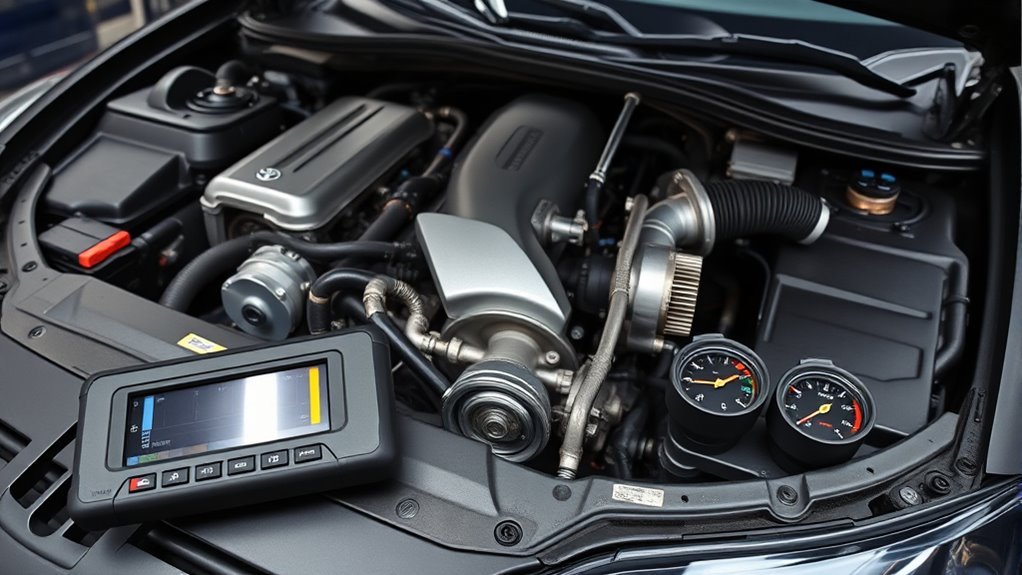
A turbo-related Supra code does not automatically mean the turbocharger itself has failed. On the early 2JZ-GTE system, DTC 34 is a turbo-pressure malfunction. Toyota sets it when manifold absolute pressure is at least 200 kPa, throttle opening is at least 20°, and engine speed is at least 2,400 rpm continuously for two seconds. The manual’s 29-psi figure is absolute pressure, so it must not be read as 29 psi of gauge boost.
The factory trouble areas for code 34 are the wastegate actuator, a short in the wastegate-control VSV circuit and the ECM. Related hoses, plumbing and mechanical boost-control parts are still worth inspecting because they affect system behavior, but code 34 should not be treated as proof that either turbocharger is damaged.
DTC 35 is different. It can indicate an open or short in the external turbo-pressure-sensor circuit, a failed turbo pressure sensor, or an ECM problem. Toyota also uses code 35 for the BARO sensor circuit, and that BARO sensor is built into the ECM.
What Symptoms Point to Actual Turbocharger Failure?
Actual turbocharger failure is diagnosed through mechanical inspection and pressure testing, not one DTC alone. Evidence can include abnormal shaft play, wheel damage, oil entering the compressor or turbine side, heavy smoke, unusual turbo noise, slow spool, or measured boost that does not match expected operation.
- Inspect for oil and smoke: Blue smoke can point toward oil-seal or engine oil-control problems; black smoke can indicate an excessively rich mixture.
- Log boost versus rpm: A boost gauge or data log helps separate low boost, overpressure and boost cut.
- Check the control system: Inspect pressure hoses, VSVs, actuators and pressure-sensor wiring before replacing turbochargers.
- Confirm mechanical condition: Check compressor-wheel damage, shaft play, exhaust leaks and intake restrictions.
How Can an Actuator or VSV Problem Mimic Turbo Failure?
Actuator and wastegate-control problems can mimic a turbocharger fault. A stuck actuator, damaged pressure line, incorrect hose routing or failed control VSV can produce abnormal boost behavior. If code 34 appears, compare the factory code definition with the measured pressure and inspect the wastegate-control system before condemning major turbo hardware.
Warning: Do not repeatedly drive into overpressure or fuel cut while testing. Excessive cylinder pressure or detonation on an unverified fuel and ignition setup can cause serious engine damage.
How Should You Diagnose Supra Boost-Control Codes?
Boost-control diagnosis should connect three pieces of evidence: the stored code, the measured pressure behavior, and the response of the control hardware. For code 34, start with the wastegate actuator, wastegate-control VSV circuit and actual manifold pressure. For code 35, determine whether you are diagnosing the external turbo-pressure-sensor circuit or the BARO side of the fault.
For the turbo-pressure-sensor branch of DTC 35, Toyota’s circuit procedure includes checking voltage between PM1 and E2 at the engine control module and checking for open or short circuits. The BARO sensor itself is internal to the ECM, so it should not be treated as a separate external sensor with its own under-hood harness.
- Match the code to the correct system and factory detection condition.
- Inspect pressure and vacuum hoses that affect the system’s physical behavior.
- Use a multimeter, oscilloscope or scan data to verify sensor and control signals.
- Repair wiring, connectors, hose routing or control hardware before condemning major turbo components.
How Should You Handle Intermittent Codes, JDM Cars and VVT-i Swaps?
Intermittent codes are difficult because the car may behave normally by the time you inspect it. Do not erase them immediately. Record the code, note the conditions in which the symptom occurred, and reproduce those conditions only when it is safe: cold start, hot idle, light throttle, load, wet weather or vibration over bumps.
Some Japanese-market A80 Supras were equipped with additional display or monitor features, but those should be treated as a supplement rather than a replacement for the correct service-manual diagnostic process. Late VVT-i cars and engine-swapped Supras may not match an early U.S. 2JZ-GTE blink-code chart. Use service information for the actual ECU, harness, engine and market in the car.
Note: Modified Supras with standalone ECUs, piggyback controllers, MAF-to-MAP conversions, single-turbo conversions or deleted factory equipment may store factory codes that reflect the modification rather than a failed original component.
How Do You Diagnose, Verify and Clear Supra Codes Safely?
Reading the code is only the first step. A DTC identifies the circuit or operating condition the ECU detected; it does not always identify the failed component. On OBD-II cars, save the code and freeze-frame data before clearing memory.
- Record the code: Write down every blink code or scan-tool DTC before touching the car.
- Save OBD-II data: On later cars, record freeze-frame and relevant live data when available.
- Match the right chart: Confirm the engine, ECU, model year and market before applying a two-digit or P-code definition.
- Inspect basics first: Check connectors, damaged harnesses, pressure/vacuum hoses, grounds, fuses and obvious intake or exhaust leaks.
- Test the circuit: Use a multimeter, oscilloscope or scan data to verify power, ground, continuity and signal behavior.
- Repair the fault: Fix the wiring, hose, sensor, actuator or mechanical cause found during testing.
- Clear the code only after repair: Use the scan tool or service-manual clearing procedure appropriate to the ECU.
- Confirm the fix: Recheck for codes and road-test under the conditions that originally triggered the fault.
A Supra code identifies the circuit or condition to test, not the part to throw at the car.
[Products Worth Considering]

This POWOXI solar battery maintainer helps keep 12V batteries charged and protected with intelligent charging and built-in safety features. Its durable tempered glass construction, scratch-resistant frame, and easy installation make it a practical solution for cars, motorcycles, boats, tractors, ATVs, and other battery-powered equipment. An LED indicator helps show charging status at a glance, while the waterproof design supports low-maintenance use.

The KONNWEI KW208 is a versatile 12V battery tester designed to quickly analyze battery health, cranking performance, and charging system status for cars, trucks, boats, motorcycles, and more. It supports multiple battery types and provides clear guidance on whether a battery should be recharged or replaced, helping you diagnose issues before they become failures. With plug-and-play use, high accuracy, and multilingual support, it offers a convenient way to test batteries in-vehicle or out-of-vehicle.

This automotive circuit tester checks low-voltage DC systems from 3-65V, making it useful for diagnosing headlights, taillights, fuses, sockets, and other vehicle wiring issues. The digital backlit display provides clear voltage readings with fine accuracy, while the bidirectional polarity indicator helps you test from either ground or positive. Built with a durable probe, insulated tip, and extra-long spring wire, it is designed for dependable everyday use in automotive and household electrical work.
What Tests Should a Shop Perform Before Replacing Supra Parts?
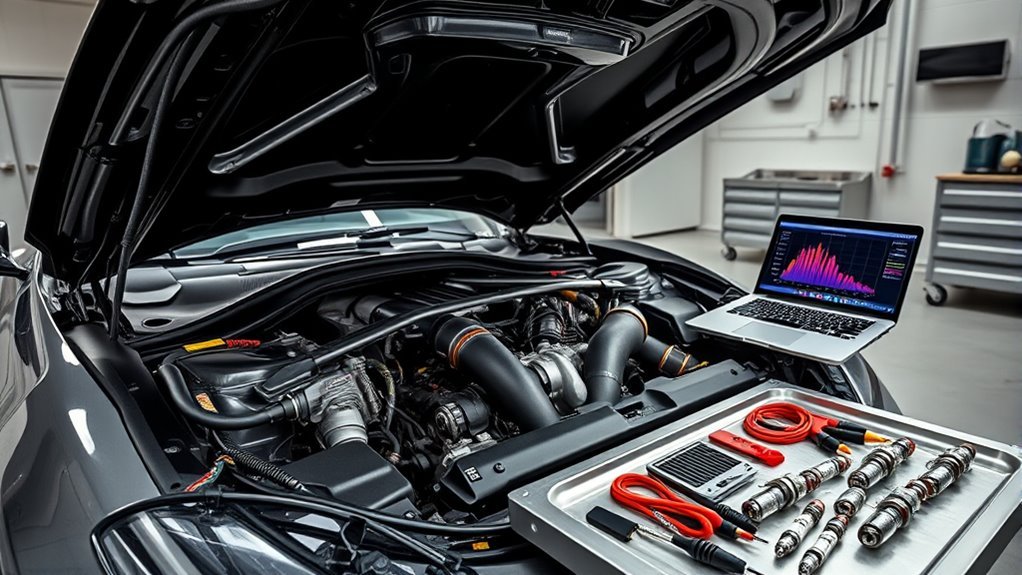
Before handing the car to a shop, ask for documented diagnostic results rather than only a parts estimate. A technician should be able to tell you which DTC was found, which year/engine service-manual chart was used, what measurements were taken, and why those results support the recommended repair.
| Item | Purpose |
|---|---|
| Toyota service manual or TIS access | Correct code definitions and procedures |
| Toyota blink-code process | Early diagnostic code readout where applicable |
| OBD-II scanner | Later P-code, freeze-frame and live-data diagnosis |
| Digital multimeter | Power, ground, resistance, continuity and signal checks |
| Oscilloscope | G/NE, ignition, speed and sensor waveform checks |
| Smoke/pressure tester | Intake, vacuum and boost-system leak diagnosis |
Ask the shop to save the old part if anything is replaced. For costly items such as turbochargers, ECUs, wiring harnesses and sequential-turbo control parts, ask for the failed measurement or test result before approving the repair.
[Products Worth Considering]
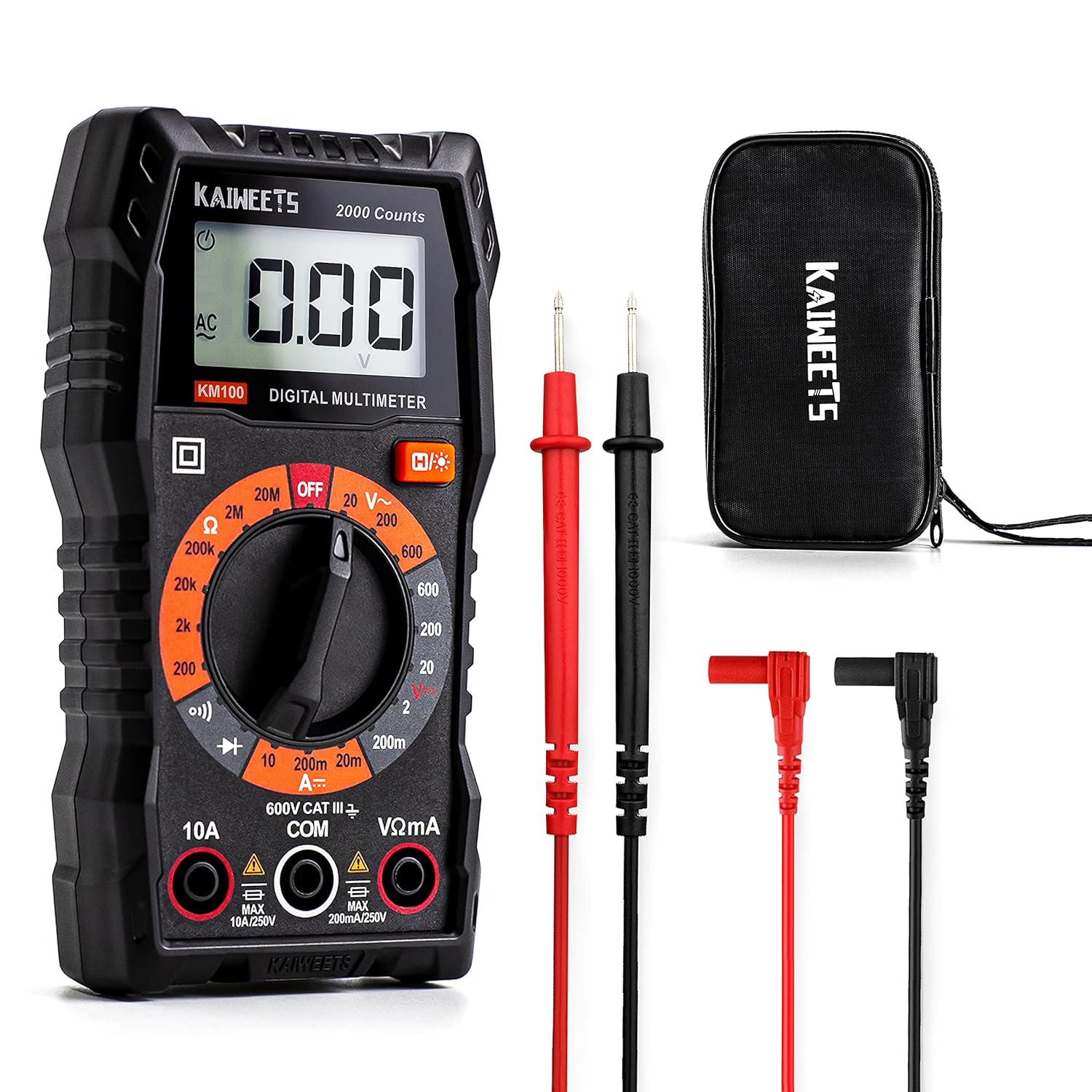
This KAIWEETS digital multimeter is a versatile tool for measuring AC/DC voltage, DC current, resistance, continuity, and diodes in home, automotive, and electrical applications. It includes pre-installed batteries, a carrying case, test leads, data hold, backlight, and overload protection for easier and safer everyday testing. Built with double fuses and rated for broad household and light professional use, it helps users diagnose electrical issues with confidence.

The ANCEL AD410 helps drivers quickly read and clear engine-related fault codes, view live data, and understand why the check engine light is on before heading to a repair shop. With built-in code definitions, readiness checks, and support for common OBD2 functions, it makes basic diagnostics straightforward for beginners and DIY users. Powered directly from the vehicle and easy to use with no app required, it offers practical value for everyday vehicle troubleshooting.
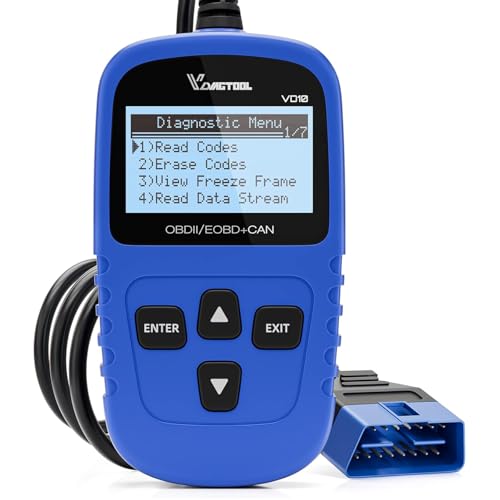
【A MUST-HAVE SCANNER TOOL FOR DIYERS】 - VDIAGTOOL VD10 car code reader is an incredibly useful, handheld obd2 scanner for each car owner or hobbyist, even for those with little to no experience when it comes to vehicle mechanics! Similar to a fixd car diagnostic tool, using this car diagnostic scanner is extremely easy. All you have to do is attach it to your car OBDII port and you can diagnose car problems in seconds! Read Codes (DTCs); Clear Codes; Live Data; View Freeze Frame; I/M Readiness; Vehicle Information.
When Should You Get Professional Supra Diagnostic Help?
Seek professional help if the check engine light returns after repair, the car has multiple interacting codes, the engine misfires under boost, the car repeatedly enters overpressure protection, the wiring has been heavily modified, or the diagnostic connector is damaged. Professional diagnosis is also useful when an oscilloscope is needed to verify engine-position, ignition or speed signals.
- Sensor or circuit repair: MAF, pressure sensor, oxygen sensor, speed sensor, coolant sensor or related wiring.
- Ignition/position-signal repair: Igniter wiring, crank/cam signal faults or ECU signal faults.
- Fuel and air repair: Vacuum leaks, injector issues, fuel-pressure problems or intake-metering faults.
- Turbo-system repair: VSVs, actuators, pressure hoses, pressure sensors, wastegate control or confirmed turbocharger hardware faults.
- Modified-car correction: ECU calibration, deleted factory components, incorrect sensor scaling or wiring cleanup.
[Products Worth Considering]

8 channels oscilloscope for vehicle testing. Over 80 types of automotive diagnostic function (Ignition/Sensor/Bus detection/Performe/Starter and charging circuits etc.).

【Oscilloscope】 4 Channels oscilloscope, 1GSa/s real time sampling rate, 2mV-10V/DIV high input sensitivity and large input range, 70MHz high bandwidth oscilloscope.
Frequently Asked Questions
What engine code does the MKIV Supra have?
If you mean engine model, the MKIV Supra uses versions of the 2JZ-GE non-turbo inline-six or 2JZ-GTE turbo inline-six depending on specification and market. If you mean diagnostic trouble codes, the format depends on the ECU, year and market: early cars can use Toyota two-digit blink codes, while later U.S.-market cars use OBD-II P-codes. For chassis/generation identifiers such as A70 and A80, see the Supra model codes guide.
What does Supra code 31 mean?
On the early MKIV 2JZ-GTE troubleshooting chart, code 31 is the mass air flow meter circuit. On the early 2JZ-GE chart, code 31 is the volume air flow meter circuit. It should not be diagnosed as a crank or cam signal fault unless the correct service information for your specific ECU says otherwise.
Which Supra codes are related to crank and cam position signals?
On the early MKIV 2JZ-GTE blink-code chart, G/NE signal circuit faults are codes 12 and 13. Later OBD-II cars use P-codes; the 1997 U.S. factory diagnostic chart includes P0335 for a crankshaft-position-sensor circuit malfunction and P0340 for a camshaft-position-sensor circuit malfunction.
Does a turbo pressure code mean my Supra needs new turbos?
No. Early code 34 is a turbo-pressure malfunction whose factory trouble areas include the wastegate actuator, wastegate-control VSV circuit and ECM. Code 35 can involve the external turbo-pressure-sensor circuit or the ECM’s internal BARO sensor. Test the control and sensor circuits before replacing turbochargers.
How do I clear MKIV Supra codes?
Record and repair the fault before clearing it. Depending on the ECU and model year, codes can be cleared with a compatible scan tool or through the service-manual power-reset procedure. Removing battery or ECU backup power can erase stored data and other learned settings, so use the procedure specified for your car.
Can I read MKIV Supra codes without a scan tool?
On applicable early Toyota diagnostic systems, yes. You can bridge TE1 and E1 and count the MIL flashes. A 1996-and-newer U.S.-market OBD-II Supra should be diagnosed through its DLC3 connector with an OBD-II-compatible scan tool.
What is the OBD-II equivalent of Supra code 42?
On the 1997 U.S.-market Supra factory diagnostic chart, P0500 is Vehicle Speed Sensor Malfunction and covers the speed-sensor signal path to the ECM. Do not assume P0500 is a universal direct translation of early code 42 for every Supra ECU or market; match the code to the correct service manual.
Conclusion
Toyota Supra engine codes are most useful when you first identify the diagnostic system, then match the code to the correct engine, ECU, year and market. Use TE1–E1 only on cars that use Toyota’s early blink-code procedure, and use an OBD-II scanner on later U.S.-market cars. On the early MKIV 2JZ-GTE chart, code 31 is the mass air flow meter circuit, code 42 is the No.1 vehicle speed sensor circuit, codes 12 and 13 cover G/NE signals, code 34 is a turbo-pressure malfunction, and code 35 covers the turbo-pressure/BARO sensor circuit. Record the evidence, diagnose the circuit, repair the cause, clear the code, and confirm that it does not return.
Sources
- Toyota Technical Information System — official Toyota service-information portal for repair, diagnostic and technical publications.
- MK4 Supra 2JZ-GTE Diagnosis Inspection — TE1–E1 MIL blink-code reading procedure and code ordering.
- MK4 Supra 2JZ-GTE Diagnostic Trouble Code Chart — early G/NE and ignition-code definitions.
- MK4 Supra DTC 31 Mass Air Flow Meter Circuit — code-31 detection conditions and fail-safe operation.
- MK4 Supra DTC 34 Turbo Pressure Malfunction — factory pressure, throttle and engine-speed detection conditions.
- MK4 Supra DTC 35 Turbo Pressure/BARO Sensor Circuit — external turbo-pressure-sensor circuit and ECM-integrated BARO sensor information.
- MK4 Supra DTC 42 No.1 Vehicle Speed Sensor Circuit — speed-signal path through the odometer/trip meter to the ECM.
- 1997 Toyota Supra OBD-II System Operation — OBD-II scan-tool, freeze-frame and diagnostic-system context for later U.S.-market Supras.