You can expect Toyota Tacoma rotors to last about 30,000–70,000 miles under typical daily driving, but that range is only a rule of thumb. Toyota does not publish a fixed rotor-replacement interval; instead, the maintenance schedule calls for regular brake pad and disc inspections. Smooth highway driving can stretch rotor life well beyond that range, while towing, oversized tires, mountain roads, mud, sand, and stop-and-go city driving can wear rotors much sooner.
Quick Answer
Most Tacoma brake rotors last 30,000–70,000 miles. Gentle braking, highway use, quality pads, and proper wheel-lug torque help them last longer. Replace or professionally inspect them sooner if you feel pedal pulsation, hear grinding, see deep grooves, or measure rotor thickness at or below the stamped minimum specification.
Key Takeaways
- Tacoma rotors usually last 30,000–70,000 miles, but driving conditions matter more than mileage alone.
- Towing, heavy payloads, city traffic, hard braking, off-road grit, and low-quality pads can shorten rotor life.
- Toyota’s maintenance guidance focuses on routine inspection, not a fixed rotor replacement schedule.
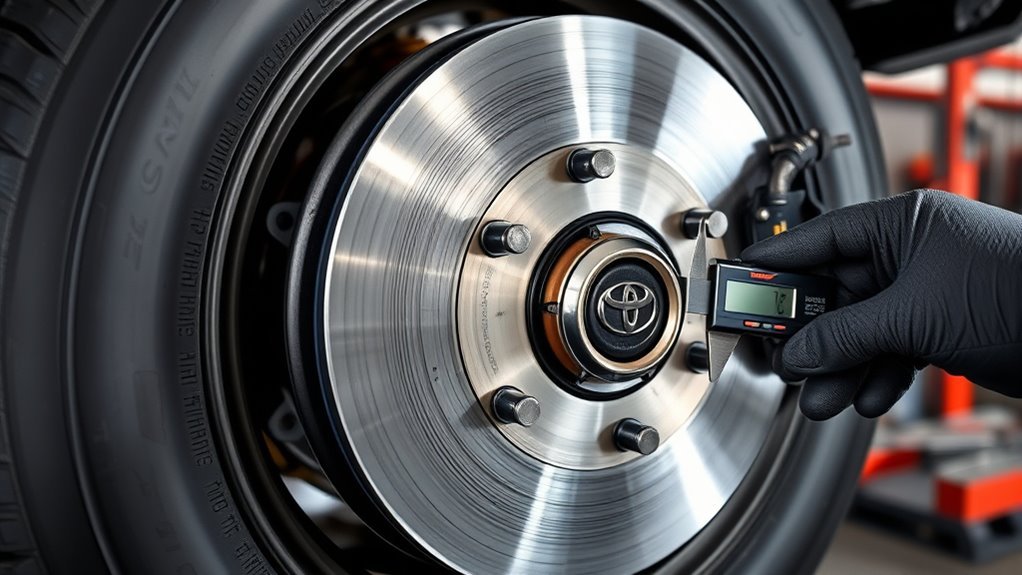
- Use a micrometer to compare rotor thickness with the minimum specification stamped on the rotor or listed in the repair manual.
- Grinding, vibration, pedal pulsation, cracks, heavy scoring, or a brake warning light means the brakes need prompt attention.
At a Glance
| Time Required | 10–20 minutes for a visual check; 30–60 minutes if measuring thickness with wheels removed |
| Difficulty | Beginner for visual checks; intermediate for wheel removal and micrometer measurements |
| Tools Needed | Flashlight, jack and jack stands, lug wrench, torque wrench, micrometer, gloves, and eye protection |
| Typical Cost | Inspection may be free or low-cost; rotor replacement varies by axle, parts quality, labor rate, and location |
How Long Do Tacoma Rotors Last?
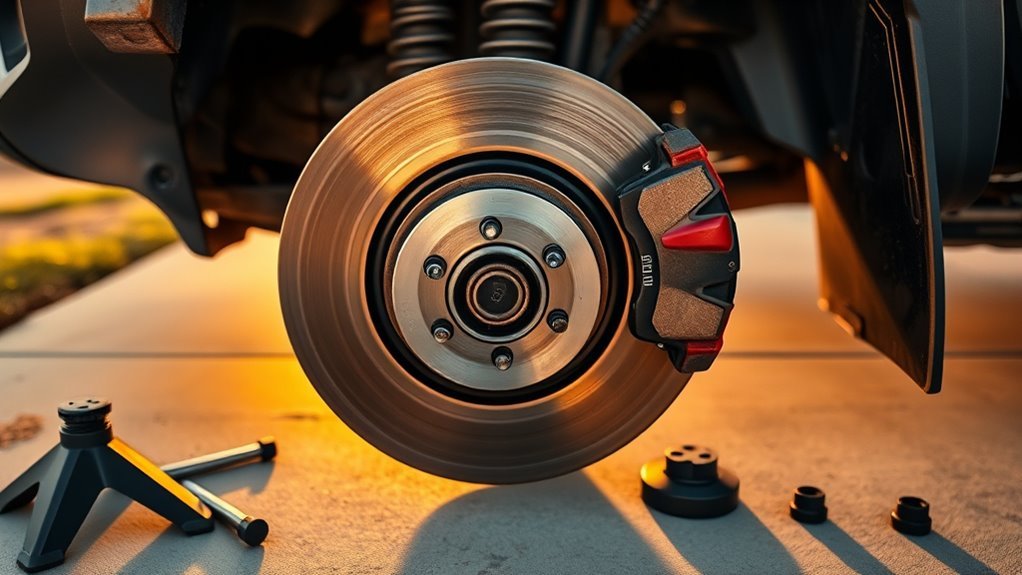
Most Tacoma owners should plan around a 30,000–70,000-mile rotor lifespan. That range fits normal mixed driving: commuting, highway trips, light hauling, and routine maintenance. Some owners get more than 100,000 miles from factory rotors, but that usually comes from smooth braking, mostly highway driving, timely pad replacement, and clean installation practices.
The better way to judge rotor life is not mileage alone. Measure the rotor, inspect the surface, and pay attention to braking feel. A rotor can still look usable but be too thin to service safely. A rotor can also have plenty of thickness left but still need replacement if it has cracks, heavy scoring, severe rust, or vibration-causing thickness variation.
| Driving Use | Expected Rotor Life | Why It Changes |
|---|---|---|
| Mostly highway driving | Often 60,000–100,000+ miles | Fewer brake cycles and less heat |
| Mixed daily driving | About 30,000–70,000 miles | Normal pad and rotor wear |
| City traffic | Often 25,000–50,000 miles | Frequent stopping and heat cycling |
| Towing, hauling, mountain roads, or off-road use | Can be under 30,000–50,000 miles | Higher brake load, heat, dust, and grit |
Note: Rotor thickness specifications vary by Tacoma model year, axle, engine, trim, and brake package. Use the minimum thickness stamped on the rotor or the correct Toyota repair information for your exact truck.
What Shortens or Extends Rotor Life
Your rotor life depends on heat, friction, pad condition, vehicle weight, road conditions, and installation quality. Two Tacomas with the same mileage can need very different brake work if one is a highway commuter and the other tows, crawls off-road, or works in stop-and-go traffic.
Driving Style Impact
Hard braking, late braking, tailgating, and repeated downhill stops generate high heat. Heat is the enemy of rotor life because it can speed up pad transfer, surface cracking, glazing, and thickness variation. Smooth braking does the opposite. Lift earlier, leave more following distance, and use progressive pedal pressure instead of stabbing the brakes at the last second.
City driving is also harder on rotors than steady highway driving. Every stop adds another friction cycle. Over thousands of stops, that adds up to measurable rotor and pad wear.
Load and Towing
Towing and hauling make the brakes convert more energy into heat. Toyota notes in the 2026 Tacoma owner’s manual towing section that towing can affect handling, performance, braking, durability, and fuel consumption. Toyota also lists the current Tacoma with a towing capacity of up to 6,500 pounds when properly equipped, but the exact trailer weight rating depends on your specific configuration.
If you tow near your truck’s limit, drive in hills, or carry heavy payloads often, inspect rotors and pads more frequently. A loaded Tacoma needs more braking force, and the front rotors usually absorb a large share of that work.
Warning: Never tow by using a generic online number alone. Check the tire-and-loading label, owner’s manual, hitch rating, payload, trailer weight rating, and gross combined weight rating for your exact Tacoma.
Pad Material and Quality
Brake pads and rotors wear together. A pad that is too aggressive, contaminated, unevenly worn, or worn down to the backing plate can damage the rotor quickly. Low-quality pads may also create noise, dust, uneven transfer layers, or premature scoring.
For most Tacoma drivers, quality OEM-style ceramic or semi-metallic pads are a safe choice. Heavy towing, off-roading, and larger tires may justify a more heat-tolerant pad and rotor setup, but the best parts are the ones that match how you actually use the truck.
Maintenance and Installation
Maintenance and installation often decide whether a rotor has a long, quiet life or starts vibrating early. Toyota’s 2025 Tacoma Warranty & Maintenance Guide includes regular visual inspection of brake linings, drums, pads, and discs as part of scheduled service. That matters because pads that are caught early usually protect the rotors.
During brake service, the hub face should be clean, the caliper slide pins should move freely, and the wheel lug nuts should be tightened evenly with a torque wrench. Uneven clamping force can contribute to brake vibration and rotor runout complaints.
| Practice | Effect |
|---|---|
| Smooth braking | Lowers heat and reduces rotor wear |
| Timely pad replacement | Prevents deep scoring and metal-on-metal damage |
| Brake fluid service | Helps protect hydraulic parts from moisture-related corrosion |
| Clean hub surface | Helps reduce runout and vibration |
| Proper lug-nut torque | Promotes even clamping and helps prevent pedal pulsation complaints |
Signs Your Tacoma Rotors Are Worn
When Tacoma rotors wear, the symptoms usually show up in sound, pedal feel, stopping performance, or visible surface damage. Do not ignore these signs, especially if the truck is used for towing or mountain driving.
A rotor does not need to fail completely to become unsafe. Vibration, grinding, cracks, and measurements below minimum thickness are enough reason to stop guessing and inspect the brakes.
- Pedal pulsation or steering-wheel vibration: Often caused by rotor thickness variation, runout, pad deposits, or uneven friction surfaces.
- Grinding noise: Usually means severe pad wear or metal-on-metal contact. This can damage the rotor quickly.
- Squeaking or squealing: Can come from pad wear indicators, glazing, dust, rust, hardware issues, or pad vibration.
- Deep grooves or scoring: Visible channels in the rotor face reduce smooth pad contact.
- Blue spots or heat checking: Signs of high heat that may come from hard braking, towing, seized caliper hardware, or dragging pads.
- Cracks: Structural damage means the rotor should be replaced, not resurfaced.
- Longer stopping distance or soft pedal feel: Could involve pads, fluid, calipers, lines, or rotors, so inspect the full system.
- Brake warning light: Treat this as a brake-system warning, not just a rotor warning.
Warning: If you hear grinding, feel strong vibration while braking, or need much more pedal force to stop, avoid towing and have the truck inspected before normal driving continues.
How to Check Tacoma Rotors at Home
A quick visual check can catch obvious damage, but rotor condition is best confirmed with measurements. Use this process when the truck is parked on a level surface and the brakes are cool.
- Look through the wheel first. Use a flashlight to check for heavy grooves, rust flakes, cracks, or blue heat spots.
- Check pad thickness. Thin pads can damage a good rotor. If the pads are near the wear limit, plan brake service before the backing plate reaches the rotor.
- Raise the truck safely if needed. Use the correct jacking points and support the Tacoma with jack stands before removing any wheel.
- Measure rotor thickness. Use a micrometer, not a tape measure. Measure several points around the rotor, away from the outer lip.
- Compare with the minimum specification. Use the number stamped on the rotor or the correct Toyota repair specification for your exact model.
- Check both sides of the axle. Replace rotors in axle pairs when replacement is needed so braking stays balanced.
- Torque the wheels correctly. Reinstall the wheel and tighten lug nuts in a star pattern with a calibrated torque wrench.
Pro Tip: Write down pad thickness, rotor thickness, mileage, and any symptoms at each inspection. Tracking the trend is more useful than guessing from mileage alone.
[Products Worth Considering]
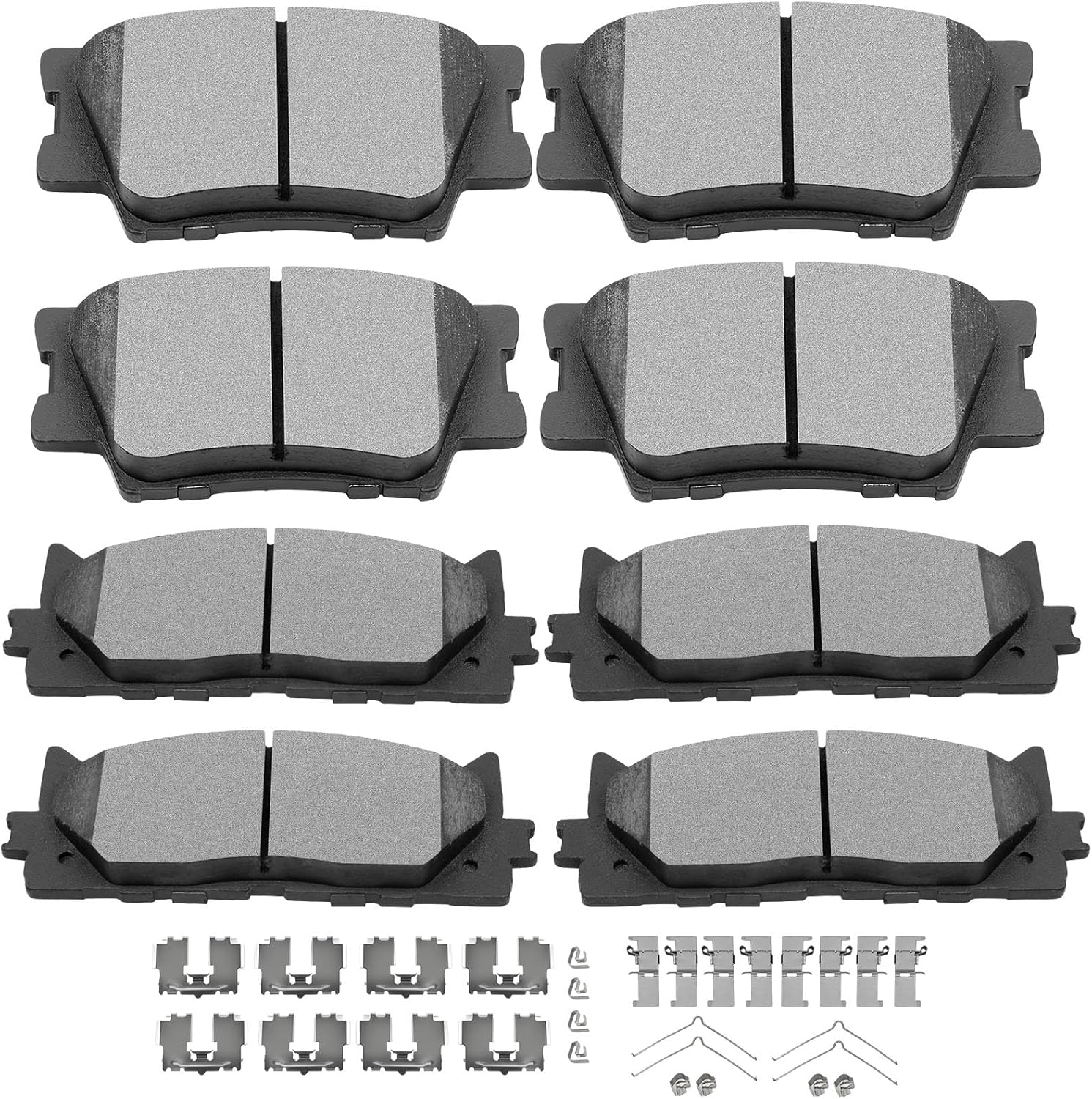
This ceramic front and rear brake pad set is designed as a direct replacement for select Lexus and Toyota models, helping restore reliable stopping performance. The pads feature a scorch-treated friction surface for quicker break-in and consistent wear, while the included gasket design helps reduce vibration and noise for quieter braking. Built for easy installation, this kit comes ready to fit compatible vehicles without modification.

Bosch QuietCast premium ceramic rear brake pads are engineered for quiet, reliable stopping power with low dust performance. Featuring pre-attached multilayer shims, corrosion-resistant backing plates, and OE-style slots and chamfers, this set is designed for smooth fitment and long-lasting durability. It includes pads for one axle, plus hardware and lubricant where available, making installation easier for compatible Lexus, Pontiac, and Toyota vehicles.

Bendix Premium Ceramic Front Brake Pads are engineered to match original equipment fit, form, and function for a straightforward replacement. Built with durable materials to help resist wear and corrosion, they support consistent braking performance and reduced brake fade for everyday driving. These pads are a dependable choice for compatible Pontiac, Scion, Toyota, and related vehicles.
Resurface or Replace? How to Decide
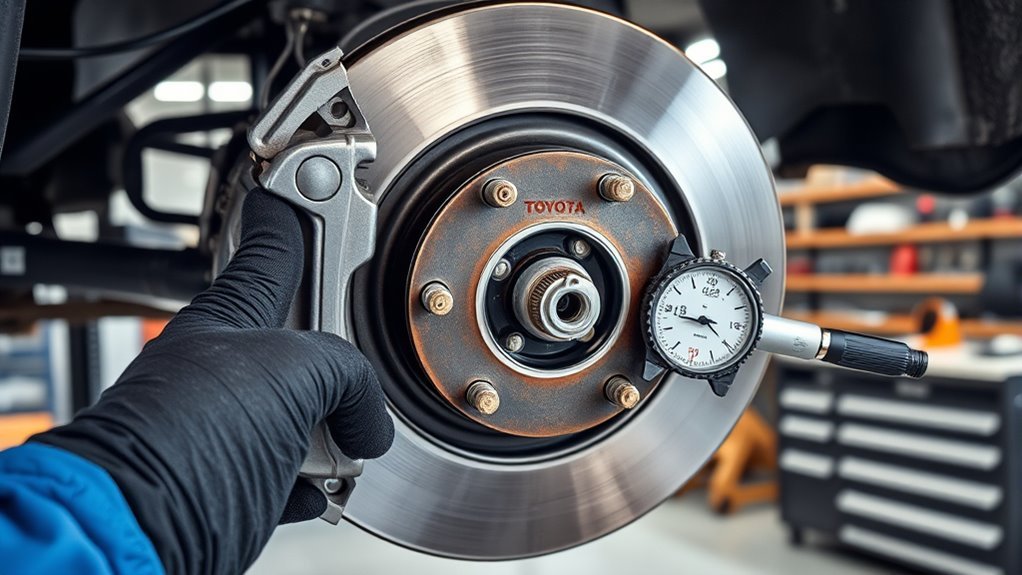
Deciding whether to resurface or replace Tacoma rotors starts with thickness. If the rotor is at or below minimum thickness, replace it. If machining would bring it below minimum thickness, replace it. If the rotor is cracked, deeply scored, badly rusted, or heat damaged, replace it.
Resurfacing may make sense when the rotor is still safely above specification and has only minor surface issues. However, many modern rotors have less extra material than older rotors, and replacement is often the cleaner choice once labor and machining cost are included. A brake-disc resurfacing guideline hosted by the National Highway Traffic Safety Administration database notes that rotors above minimum specification may be reused during pad service when condition allows.
| Condition | Best Choice | Reason |
|---|---|---|
| Above minimum thickness with light glazing | Inspect, clean, or resurface if needed | Rotor may still be serviceable |
| At or below minimum thickness | Replace | Too little material remains for safe heat control |
| Deep scoring or grooves | Usually replace | Machining may remove too much material |
| Cracks or severe heat spots | Replace | Structural and heat damage are safety concerns |
| Pedal pulsation with adequate thickness | Measure runout and thickness variation | The cause may be rotor variation, hub runout, pad deposits, or installation issues |
[Products Worth Considering]

PowerStop Z17 Evolution Ceramic Brake Pad Set is an OE replacement solution built for dependable everyday braking and consistent value. Designed with chamfered, slotted surfaces and rubberized shims, it helps deliver quiet stopping performance with reduced brake dust and cleaner wheels. The kit includes stainless steel installation hardware for an easy bolt-on install and comes backed by a limited warranty.
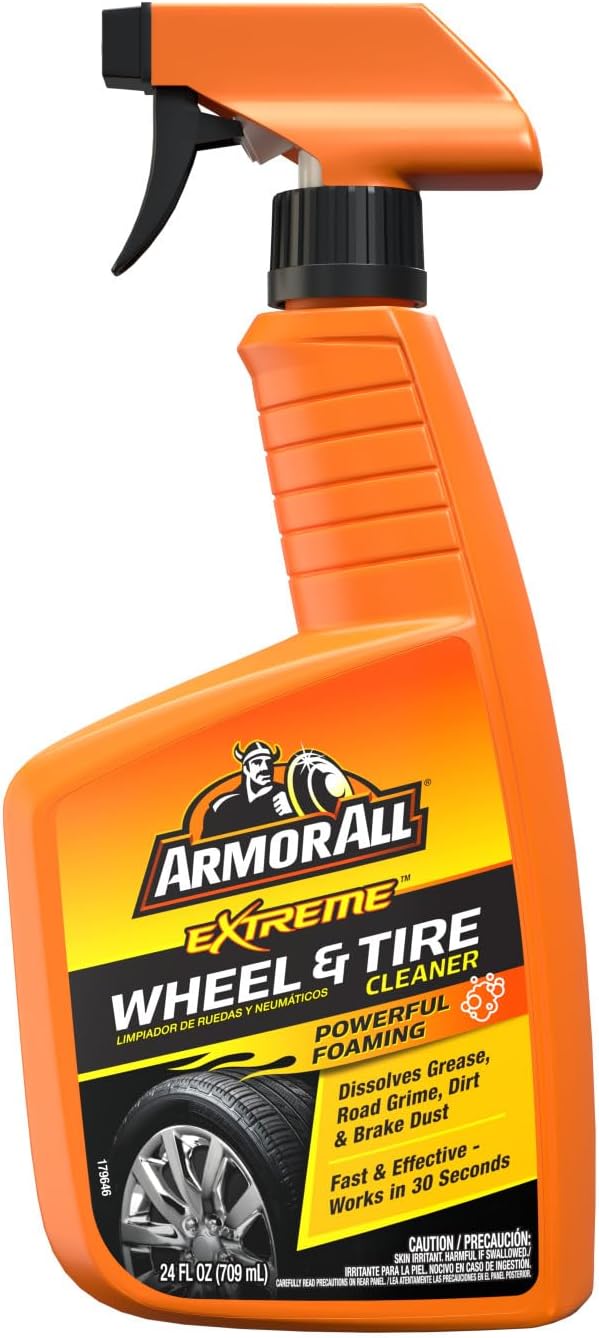
Armor All Extreme Wheel and Tire Cleaner is a powerful spray designed to cut through stubborn dirt, grease, tar, and brake dust on wheels and tires. It is safe for use on factory and aftermarket finishes, including alloy, steel, chrome, and plastic wheel trims, while its fast-acting formula works in just seconds. The deep-cleansing action helps reach hard-to-clean areas and leaves wheels looking clean and shiny.
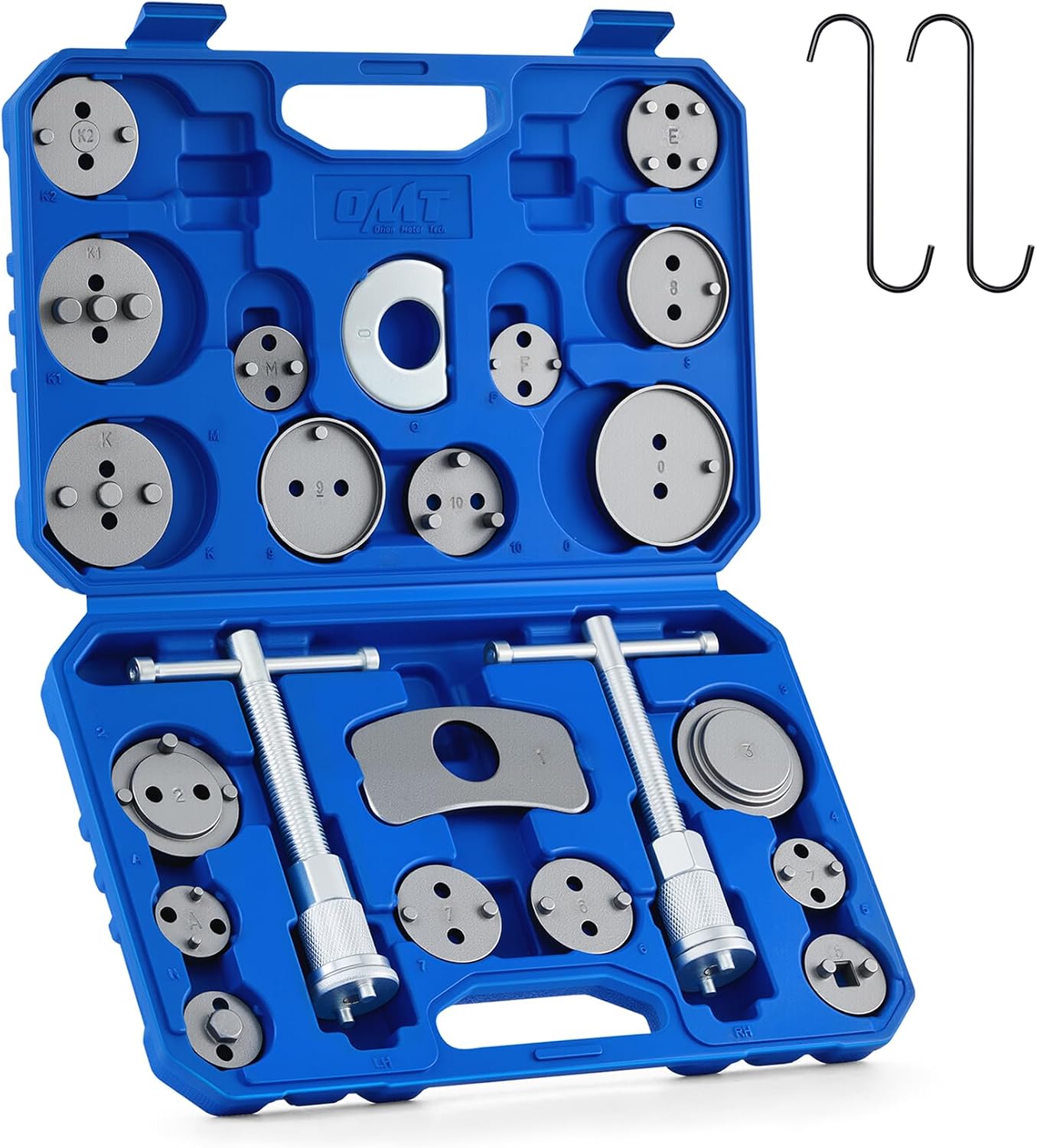
This 24-piece brake caliper compression tool set helps you quickly and safely rotate pistons back into the caliper during brake pad service. It includes multiple adapters, retaining plates, thrust bolt assemblies, and hangers for broad vehicle compatibility, while the heavy-duty steel construction and organized storage case make it ideal for reliable shop or home repairs.
Rotor Replacement Cost for Tacomas
Tacoma rotor replacement cost depends on model year, axle, part quality, local labor rate, whether pads are replaced at the same time, and whether calipers or hardware need service. Online repair estimators vary: YourMechanic lists an average Tacoma brake rotor/disc replacement cost around the mid-$300s, while Openbay shows front rotor/disc replacement estimates that commonly run several hundred dollars. RepairPal lists Tacoma brake pad replacement as a separate service, so a full pad-and-rotor job will cost more than pads alone.
For a realistic quote, ask the shop to separate parts, labor, taxes, shop supplies, brake hardware, and whether the quote includes both sides of the axle. Also ask which rotor brand and pad compound they are using. Cheap rotors can save money today but may warp, rust, or wear faster under truck use.
- Parts: OEM, economy aftermarket, coated, heavy-duty, drilled, or slotted rotors all have different prices and tradeoffs.
- Labor: Front and rear brake labor can differ, and rusted hardware can add time.
- Related work: Pads, slide pins, clips, brake fluid, calipers, and wheel bearings can affect the final bill.
- Use case: Towing and off-road use may justify higher-quality rotors and pads.
[Products Worth Considering]

TOVASTY rear brake pads are designed for a wide range of Toyota and Lexus models, delivering dependable braking performance with a carbon ceramic formula. They help reduce brake dust, promote quieter operation, and support consistent stopping power with improved heat resistance for everyday driving confidence.

This brake bleeder bottle is designed to make fluid bleeding easier for one-person use with a built-in check valve and magnetic mount. The flexible hose fits most bleeder valves and helps reduce the chance of air entering the system during service. With a practical fluid capacity and universal fit, it is a handy tool for brake maintenance and repair.
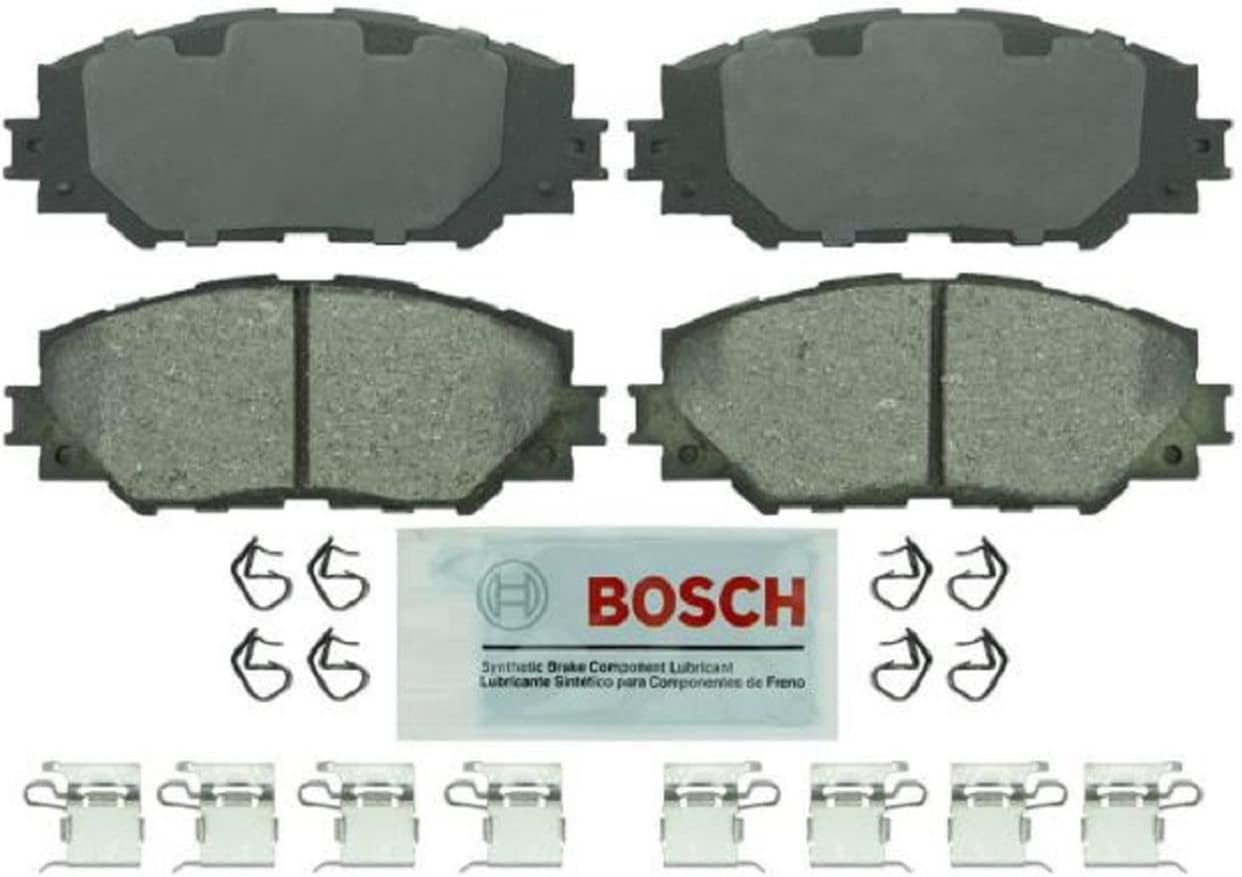
Bosch Blue ceramic front brake pads deliver dependable stopping power with platform-specific friction material designed for select Lexus, Pontiac, Scion, and Toyota vehicles. OE-style shims, slots, and chamfers help promote quiet braking, while the rust-inhibitive coating supports long-lasting performance and cleaner operation. The set includes hardware and synthetic lubricant for easier installation on one axle.
Maintenance Checklist to Maximize Rotor Life
Rotor life is easier to control when you treat the brakes as a system. Pads, rotors, calipers, fluid, tires, wheel torque, and driving habits all matter.
- Inspect brakes at scheduled service. Follow Toyota’s maintenance schedule and check pads and discs during routine service visits.
- Replace pads before they get too thin. Waiting for grinding can turn a pad job into a rotor job.
- Use quality pads and rotors. Match the parts to daily driving, towing, off-road use, and tire size.
- Keep caliper slide pins moving freely. Sticking hardware can cause uneven pad pressure and rotor hot spots.
- Clean the hub face during rotor service. Rust or debris between the hub and rotor can cause runout.
- Torque lug nuts evenly. Use a star pattern and the correct torque specification for your Tacoma.
- Avoid riding the brakes downhill. Use lower gears when appropriate and safe to reduce brake heat.
- Rinse off mud, sand, and road salt. Grit and corrosion speed up brake wear, especially after off-road trips or winter driving.
- Service brake fluid on schedule. Moisture-contaminated fluid can contribute to internal corrosion and poor pedal feel.
- Investigate vibration early. Early diagnosis can prevent repeat rotor problems after a brake job.
Frequently Asked Questions
How long do brake rotors last on a Toyota Tacoma?
Most Tacoma brake rotors last about 30,000–70,000 miles. Smooth highway driving can push them farther, while towing, city traffic, off-road grit, aggressive braking, or delayed pad replacement can shorten rotor life.
How much does it cost to replace rotors on a Toyota Tacoma?
Expect several hundred dollars for rotor replacement, with the final price depending on axle, labor rate, parts quality, and whether pads are replaced too. A full pad-and-rotor service costs more than rotor replacement alone, so always ask for a written parts-and-labor breakdown.
How long do Toyota rotors last in general?
Many Toyota rotors last roughly 30,000–80,000 miles, but the vehicle type and driving use matter. A lightweight commuter car may be easier on brakes than a Tacoma used for towing, hauling, off-roading, or mountain driving.
Should I replace pads and rotors at the same time?
Not always. If the rotors are smooth, above minimum thickness, and free of vibration or damage, pads alone may be enough. If the rotors are thin, cracked, deeply scored, badly rusted, or causing pulsation, replace the rotors with the pads.
Can warped Tacoma rotors be resurfaced?
Sometimes, but only if the rotor remains above minimum thickness after machining and has no cracks or severe heat damage. Many “warped rotor” complaints are actually rotor thickness variation, pad deposits, hub runout, or installation issues, so proper measurement matters.
Are drilled or slotted rotors worth it on a Tacoma?
For most daily-driven Tacomas, high-quality plain or coated rotors are the best value. Drilled or slotted rotors may help in certain heat-heavy uses, but they can cost more, wear pads faster, or be unnecessary for normal commuting. Choose parts based on towing, tire size, terrain, and driving style.
Conclusion
Tacoma rotors usually last 30,000–70,000 miles, but mileage is only a starting point. The real answer comes from brake feel, surface condition, pad condition, and rotor measurements. Smooth braking, correct towing habits, regular inspections, quality pads, clean installation, and proper lug-nut torque all help rotors last longer. If the rotor is below minimum thickness, cracked, deeply scored, or causing strong vibration, replacement is the safer choice.
Sources
- Toyota 2026 Tacoma Owner’s Manual: Trailer Towing — towing impact on braking, handling, performance, durability, and fuel consumption
- Toyota Vehicles for Towing — current Tacoma maximum towing capacity when properly equipped
- Toyota 2025 Tacoma Warranty & Maintenance Guide — scheduled inspection of brake linings, drums, pads, and discs
- NHTSA-Hosted Brake Disc Resurfacing Guidelines — rotor minimum-thickness and reuse/resurfacing guidance during brake service
- RepairPal Tacoma Brake Pad Replacement Estimate — current brake pad cost context
- YourMechanic Tacoma Brake Rotor/Disc Replacement Estimate — current rotor replacement cost context