
Last updated: September 1, 2026
Toyota does not publish one fixed brake-pad replacement mileage for every Tacoma. A useful planning range is about 25,000–75,000 miles, but the correct replacement point is based on measured friction material, wear pattern, driving conditions, load, and brake-hardware condition—not the odometer alone. For the 2024 Tacoma, Toyota lists a brake-pad wear limit of 1.0 mm (0.04 in.); use the specification for your exact model year before deciding a pad is serviceable.
Quick Answer
Toyota Tacoma brake pads often fall in a broad 25,000–75,000-mile planning range, but Toyota does not set one mileage-only replacement interval for every Tacoma. For the 2024 model, Toyota lists a 1.0 mm (0.04 in.) brake-pad wear limit. Check the specification for your exact model year, and replace pads sooner when wear is uneven or you notice grinding, a soft pedal, fluid loss, severe vibration, or weaker stopping power.
Key Takeaways
- Use 25,000–75,000 miles as a broad planning window, not a Tacoma factory replacement interval.
- Front pads often wear faster, but a sticking caliper or rear-brake problem can change the normal pattern.
- Towing, heavy loads, city traffic, mountain roads, and off-road dust or mud can shorten pad life.
- Grinding, a soft pedal, fluid loss, severe vibration, or weaker stopping power needs immediate inspection.
- For the 2024 Tacoma, Toyota lists a 1.0 mm (0.04 in.) brake-pad wear limit; other model years should be checked against their own specification.
- Recall 25V-058 covers certain 2024–2025 Tacoma 4WD trucks with 16-inch brakes and 17-inch Toyota wheels because rear brake-hose damage can cause a fluid leak; check your VIN.
How Long Do Toyota Tacoma Brake Pads Usually Last?
J.D. Power gives a broad brake-pad lifespan of about 25,000–75,000 miles across vehicles. That range is useful for planning, but it is not a Toyota-issued Tacoma replacement interval. A lightly loaded truck driven mostly on open highways may exceed the range, while a Tacoma used for towing, hauling, off-roading, mountain driving, or daily stop-and-go commuting may need service sooner.
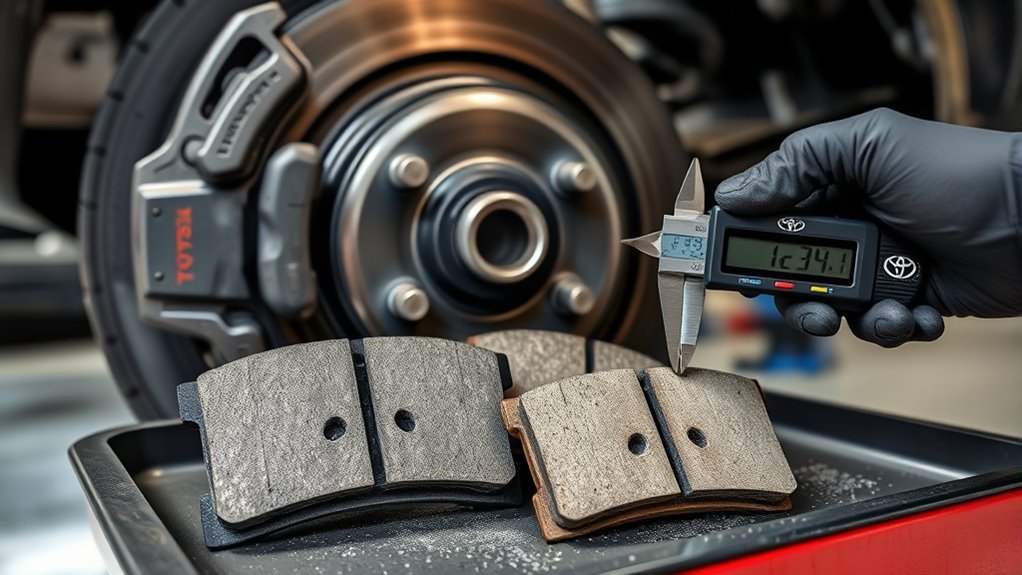
Toyota’s maintenance guidance relies on inspection and condition rather than one mileage number for every truck. For the 2024 Tacoma, Toyota’s maintenance data lists a 1.0 mm (0.04 in.) brake-pad wear limit. That number should not be applied automatically to every older Tacoma; use the specification for your exact model year and brake setup.
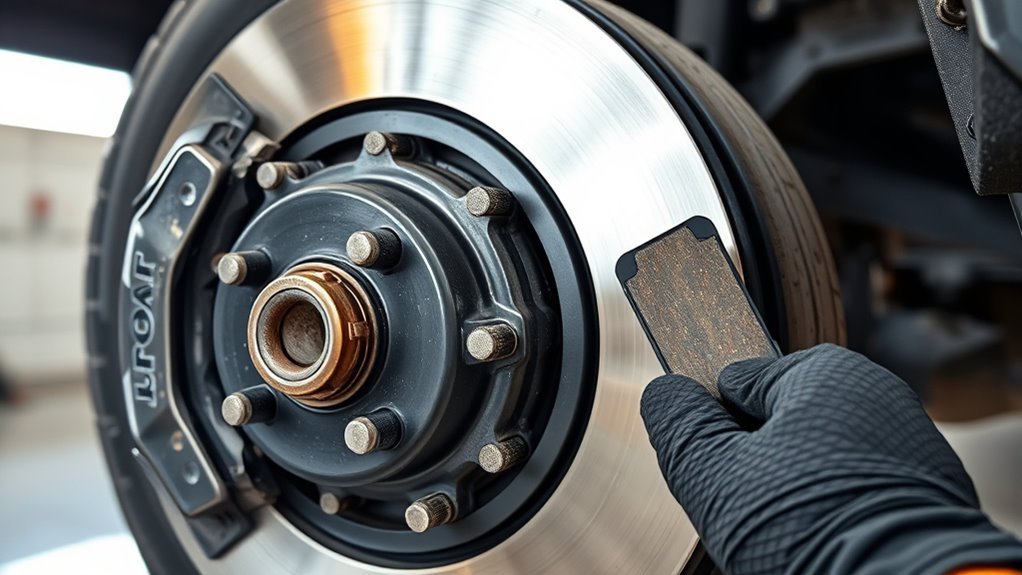
A useful inspection checks the inner and outer pad at each disc-brake wheel, rotor or drum condition as applicable, caliper movement, hoses, fluid level, and signs of uneven heat or wear.
| Use Pattern or Finding | Likely Effect | Best Next Step |
|---|---|---|
| Mostly highway driving with light loads | Pads may wear more slowly | Inspect during tire rotations and scheduled service |
| City traffic, towing, hauling, or steep grades | Heat and friction can increase wear | Inspect more often and watch for fade, odor, or vibration |
| One pad or wheel wears much faster | Possible sticking caliper, slide pin, hose, or hardware fault | Diagnose the cause before fitting new pads |
| Grinding, soft pedal, fluid loss, or weak braking | Possible safety-critical brake failure | Avoid normal driving and arrange immediate inspection |
Mileage gives you a rough window, but measured wear and brake condition tell you when service is due.
A practical time to inspect pad thickness is during tire rotations or scheduled service. Ask the technician to record the friction-material thickness for each pad and compare it with the service limit for your exact model year. On a 2024 Tacoma, Toyota lists 1.0 mm (0.04 in.) as the wear limit. Schedule service before a pad reaches its limit if wear is uneven, the wear indicator is sounding, or the rotor surface is badly scored or grooved.
Which Driving Habits Shorten or Extend Tacoma Pad Life?
Your Tacoma’s brake pad life depends less on the model badge and more on how the truck is used. A lightly loaded Tacoma cruising on the highway may go a long time between brake jobs. The same truck in city traffic or towing a trailer can wear pads much faster.
Habits That Shorten Pad Life
- Frequent stop-and-go driving: City traffic creates constant heat and friction.
- Hard braking: Late, aggressive stops wear pads and heat rotors faster.
- Towing or hauling: Extra weight increases the work your brakes must do.
- Mountain driving: Long downhill braking can overheat pads and rotors.
- Off-road driving: Mud, sand, dust, and water can speed up wear or cause uneven contact.
- Riding the brakes: Resting your foot on the pedal keeps heat in the system.
Habits That Help Pads Last Longer
- Look farther ahead: Anticipate red lights, traffic, and turns so you can brake gently.
- Keep a safe following distance: More space means fewer panic stops.
- Use lower gears on long descents: Engine braking helps reduce heat buildup.
- Remove unnecessary cargo: Less weight means less brake load.
- Service problems early: A sticking caliper or rough rotor can destroy new pads quickly.
Pro Tip: If you tow with your Tacoma, use properly functioning trailer brakes when required and downshift on long grades. This reduces the heat the truck’s service brakes must absorb and can lower the risk of brake fade and heat-related wear.
Signs Your Tacoma Brake Pads Need Replacement Now
Do not wait for a mileage target if your Tacoma is already showing brake symptoms. Brake problems can worsen quickly and may damage rotors, calipers, drums, brake shoes, or brake hardware.
- Squealing or chirping: Many pads use a metal wear indicator that makes noise when the pad is low.
- Grinding: This can mean the pad material is gone and metal is contacting the rotor.
- Vibration or pulsation: You may have uneven pad deposits, rotor thickness variation, excessive runout, or another brake or suspension issue.
- Longer stopping distance: Reduced brake bite is a safety warning.
- Burning smell after braking: This may point to overheating, a sticking caliper, or severe brake stress.
- Brake warning light: Have the system checked instead of assuming it is only a pad issue.
- Low brake fluid level: Brake fluid can drop as pads wear, but frequent refilling may signal a leak or other serious problem.
Warning: If your Tacoma has grinding brakes, a soft pedal, severe vibration, brake-fluid loss, or poor stopping power, avoid normal driving and have the truck inspected immediately. Brakes are safety-critical.
[Products Worth Considering]

Bosch QuietCast premium ceramic rear brake pads are engineered for quiet, reliable stopping power with low dust performance. Featuring pre-attached multilayer shims, corrosion-resistant backing plates, and OE-style slots and chamfers, this set is designed for smooth fitment and long-lasting durability. It includes pads for one axle, plus hardware and lubricant where available, making installation easier for compatible Lexus, Pontiac, and Toyota vehicles.

Bendix Premium Ceramic Front Brake Pads are engineered to match original equipment fit, form, and function for a straightforward replacement. Built with durable materials to help resist wear and corrosion, they support consistent braking performance and reduced brake fade for everyday driving. These pads are a dependable choice for compatible Pontiac, Scion, Toyota, and related vehicles.

TOVASTY rear brake pads are designed for a wide range of Toyota and Lexus models, delivering dependable braking performance with a carbon ceramic formula. They help reduce brake dust, promote quieter operation, and support consistent stopping power with improved heat resistance for everyday driving confidence.
Should You Check for a Tacoma Brake Recall?
Yes. Worn pads are not the only cause of brake symptoms. NHTSA recall 25V-058 covers certain 2024–2025 Toyota Tacoma 4WD trucks equipped with 16-inch brakes and 17-inch Toyota wheels. Mud and dirt can build up inside the rear wheels, contact the rear brake hoses, and eventually cause a brake-fluid leak. NHTSA lists 106,061 potentially affected vehicles. The remedy is replacement of both rear brake hoses with improved parts at no charge.
Use your 17-digit VIN on the Toyota recall lookup or the NHTSA recall lookup. A recall check does not replace a brake inspection, especially if the pedal feels soft, fluid is low, or stopping performance has changed.
Front vs. Rear Tacoma Brake Pads: Expected Wear Patterns
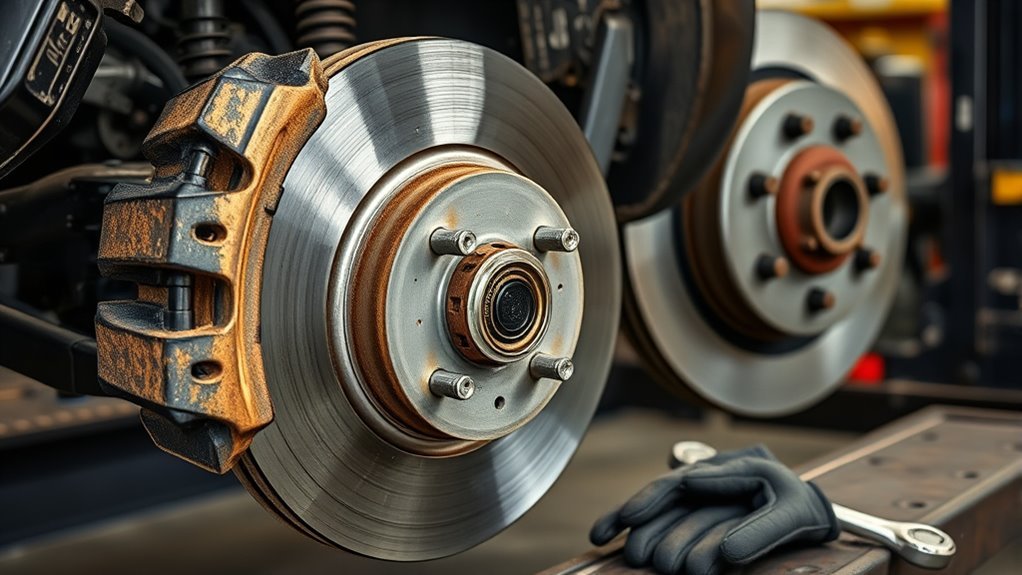
Front Tacoma brake pads often wear faster because braking transfers load toward the front axle. However, wear balance varies with generation, brake design, payload, towing, driving style, and hardware condition, so the front axle should not be treated as an automatic first-to-replace rule.
Front brakes often wear sooner than rear brakes, but no mileage split applies to every Tacoma. A sticking caliper, parking-brake issue, contaminated hardware, off-road grit, or towing use can make one axle or one wheel wear faster than expected.
Always inspect both axles. Replace brake pads in axle sets—both front wheels or both rear wheels at the same time—so braking stays balanced from side to side. If one pad is much thinner than the other on the same axle, look for a seized slide pin, sticking caliper, damaged hardware, or a rotor problem before installing new pads.
Note: Tacoma brake design changes by generation. Toyota says the redesigned 2024 Tacoma uses four-wheel disc brakes, while the 2023 Tacoma specifications list ventilated front discs with rear drums. Identify your exact model year and brake setup before ordering parts or following a service procedure.
How Tacoma Rotors and Drums Change Pad Replacement Timing
Brake pads do not wear in isolation. Rotors, drums, calipers, brake shoes, slide pins, and brake fluid condition all affect how long your Tacoma’s pads last and how well the truck stops.
Rotor Wear Effects
If your Tacoma’s rotors are scored, grooved, warped, rusty, too thin, or have too much runout, they can wear new pads unevenly. That is why a proper brake job includes measuring rotor thickness and checking the rotor surface—not just swapping pads.
Do not assume rotors must be replaced at a certain mileage. Some rotors last through more than one set of pads, while others need resurfacing or replacement sooner because of heat, wear, rust, or prior metal-on-metal contact. The correct decision is based on measurement and condition.
Drum Condition Impact
If your Tacoma has rear drum brakes, as the 2023 model does, drum and shoe condition matters. Out-of-round drums, worn shoes, seized adjusters, contaminated friction material, or leaking wheel cylinders can reduce rear braking. When the rear brakes do less work, the front pads may wear faster because they carry more of the stopping load.
During service, have the shop inspect rear shoes, drums, adjusters, springs, wheel cylinders, parking-brake operation, and brake dust buildup. Keeping the rear brakes adjusted and working correctly helps preserve balanced braking.
Calipers, Slide Pins, and Brake Fluid
A sticking caliper or dry slide pin can keep a pad dragging against the rotor, causing rapid wear and excess heat. Old or contaminated brake fluid can also affect pedal feel and system reliability. If one wheel smells hot, leaves excessive brake dust, or wears pads much faster than the others, inspect the caliper and hardware before replacing pads.
What Should a Tacoma Brake Inspection Include?
A useful brake inspection should give you measurements and findings, not only a recommendation to replace parts. Ask for the results in writing so you can see whether the pads are worn evenly and whether another component caused the wear.
- Pad measurement: Inner and outer friction-material thickness at each disc-brake wheel, compared with the model-year service limit. Toyota lists 1.0 mm (0.04 in.) for the 2024 Tacoma.
- Rotor condition: Thickness compared with the service limit, plus scoring, rust, heat spots, and runout if vibration is present.
- Caliper operation: Piston movement, slide-pin movement, dust boots, clips, and hardware condition.
- Hydraulic system: Brake hoses, lines, fluid level, leaks, and pedal feel.
- Rear drum system, if equipped: Shoe lining, drum condition, adjusters, springs, wheel cylinders, and parking-brake operation.
- Wear pattern: Any large difference between left and right, inner and outer, or front and rear brakes.
If a shop recommends rotors, calipers, hoses, or drums, ask which measurement or visible defect supports the recommendation. Replacing pads without correcting a dragging or leaking component can cause rapid repeat wear.
How Much Does Tacoma Brake-Pad Replacement Cost?
RepairPal’s estimate, last updated August 7, 2026, places Toyota Tacoma brake-pad replacement at about $271–$346 on average. It separates that estimate into roughly $122–$179 for labor and $149–$167 for parts. Taxes, fees, location, related repairs, and your truck’s exact model year and brake design can change the final total.
| Service Item | Current Cost Guidance | What Changes the Price |
|---|---|---|
| Brake pads | RepairPal average: $271–$346 | Model year, axle, labor rate, pad choice, and hardware |
| Pads and rotors | Higher than pads-only service; request a written estimate | Rotor measurements, corrosion, parts choice, and labor |
| Caliper, hose, fluid, or drum work | Varies by the failed component and brake configuration | Diagnosis, parts availability, bleeding, and related damage |
| DIY pad replacement | Parts and tools only, with no shop labor | Tool ownership, exact procedure, hardware, and rotor condition |
Ask for a written estimate that separates pads, rotors, hardware, labor, brake fluid, shop supplies, and taxes. If a shop recommends rotors, ask whether it measured thickness or runout, or found scoring, pulsation, rust, heat damage, or metal-on-metal contact.
[Products Worth Considering]
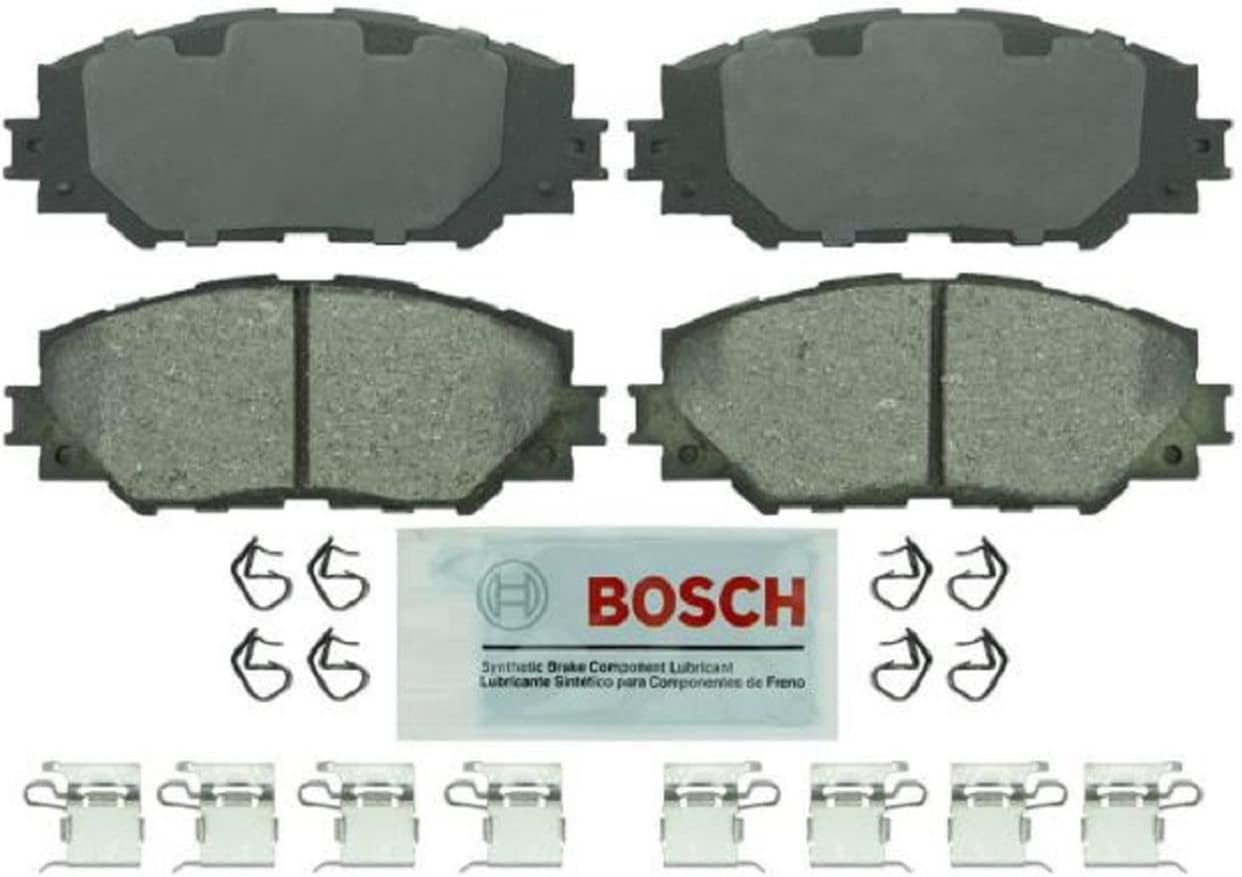
Bosch Blue ceramic front brake pads deliver dependable stopping power with platform-specific friction material designed for select Lexus, Pontiac, Scion, and Toyota vehicles. OE-style shims, slots, and chamfers help promote quiet braking, while the rust-inhibitive coating supports long-lasting performance and cleaner operation. The set includes hardware and synthetic lubricant for easier installation on one axle.

PowerStop Z17 Evolution Ceramic Brake Pad Set is an OE replacement solution built for dependable everyday braking and consistent value. Designed with chamfered, slotted surfaces and rubberized shims, it helps deliver quiet stopping performance with reduced brake dust and cleaner wheels. The kit includes stainless steel installation hardware for an easy bolt-on install and comes backed by a limited warranty.
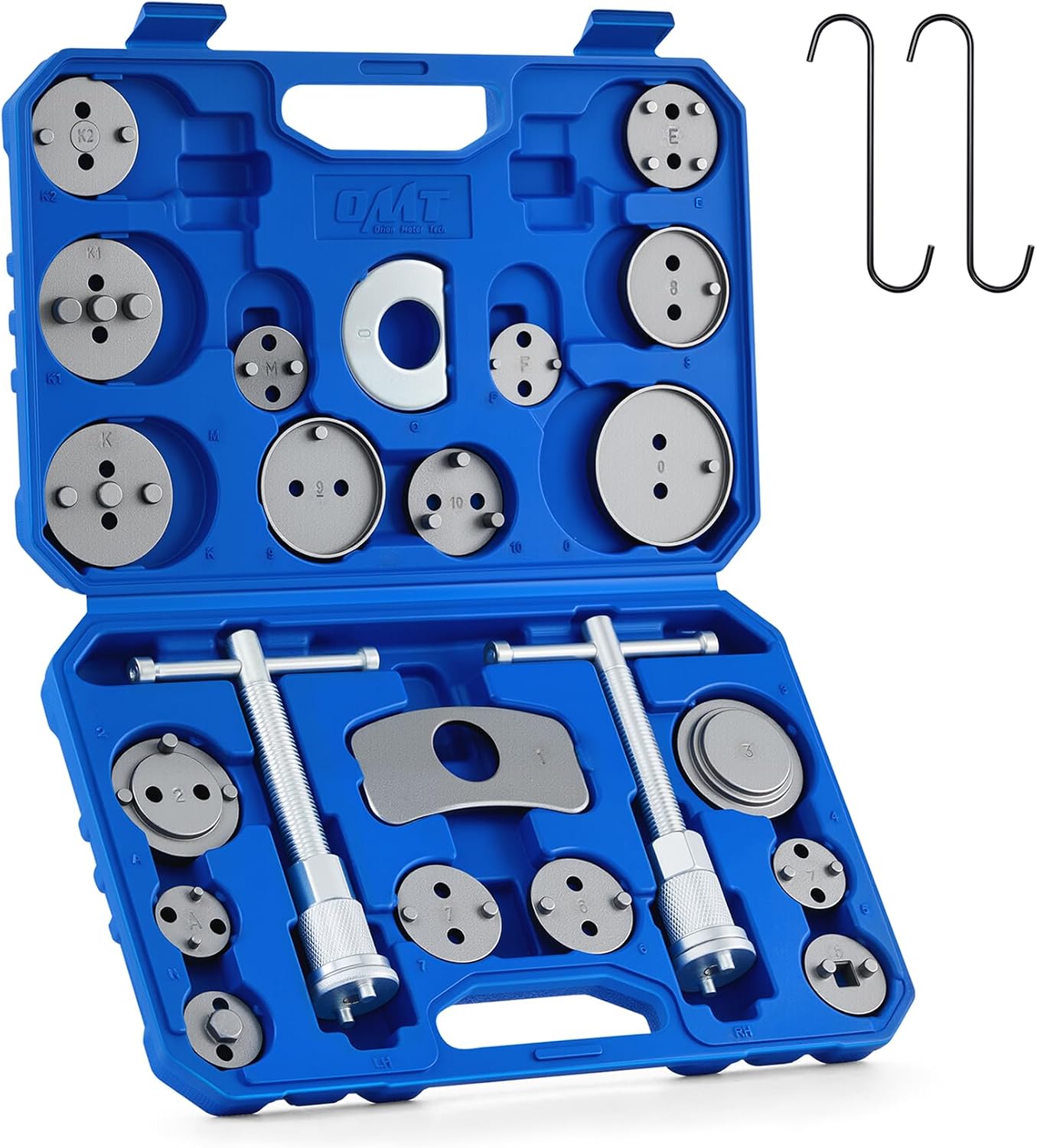
This 24-piece brake caliper compression tool set helps you quickly and safely rotate pistons back into the caliper during brake pad service. It includes multiple adapters, retaining plates, thrust bolt assemblies, and hangers for broad vehicle compatibility, while the heavy-duty steel construction and organized storage case make it ideal for reliable shop or home repairs.
Practical Tips to Make Tacoma Brake Pads Last Longer
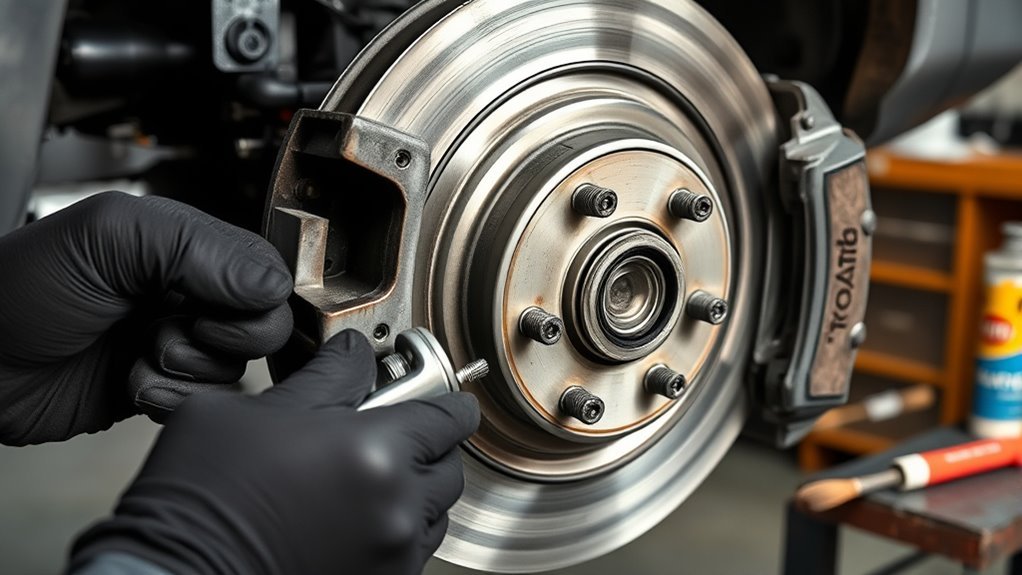
You can extend Tacoma brake pad life with smoother driving and routine maintenance. The goal is to reduce unnecessary heat, avoid dragging brakes, and catch uneven wear before it damages other parts.
- Brake earlier and lighter: Smooth braking creates less heat than late, hard braking.
- Coast when safe: Letting off the throttle early reduces brake use.
- Use engine braking on hills: Downshifting can reduce brake heat on long descents.
- Keep tires properly inflated: Good tire condition helps braking stability.
- Wash off mud and road salt: Off-road debris and corrosion can affect hardware.
- Inspect brakes after trail use: Rocks, mud, and sand can damage pads or get trapped around hardware.
- Fix dragging brakes quickly: A stuck caliper can ruin pads and rotors in a short time.
When to DIY vs. Hire a Shop for Tacoma Brake-Pad Service
You can replace Tacoma brake pads yourself if you have the tools, experience, safe lifting equipment, and factory torque specifications. However, brakes are essential safety equipment, so this is not a good first repair if you are unsure about calipers, slide pins, rotor inspection, brake bleeding, or torque procedures.
At a Glance
| Time Required | Varies by axle, corrosion, rotor condition, and experience |
| Difficulty | Moderate; safety-critical repair |
| Tools Needed | Jack, jack stands, lug wrench, socket set, torque wrench, brake cleaner, caliper tool, gloves, eye protection |
| Cost | DIY parts and tools only; professional cost depends on diagnosis and related repairs |
[Products Worth Considering]
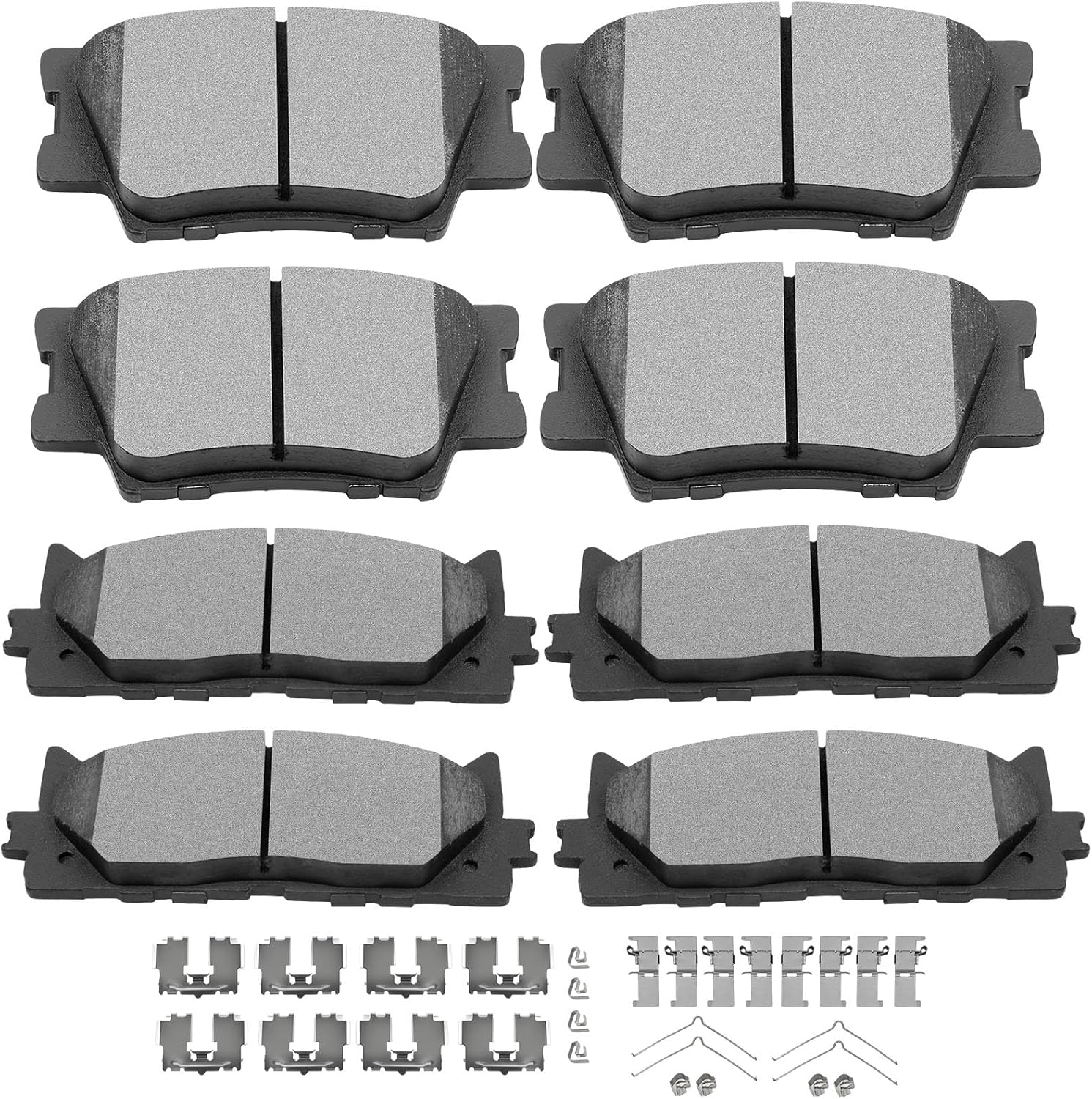
This ceramic front and rear brake pad set is designed as a direct replacement for select Lexus and Toyota models, helping restore reliable stopping performance. The pads feature a scorch-treated friction surface for quicker break-in and consistent wear, while the included gasket design helps reduce vibration and noise for quieter braking. Built for easy installation, this kit comes ready to fit compatible vehicles without modification.

This brake caliper compression tool helps make disc brake pad replacement and caliper servicing faster, safer, and more controlled. Its universal ratcheting design supports multi-angle operation in tight wheel spaces, while the sturdy steel build and widened contact plate help reduce slipping and uneven force during maintenance. Two caliper hooks are included to simplify solo brake work and keep components organized.

This brake bleeder hose kit helps remove old brake fluid and air from motorcycle brake and clutch systems quickly and efficiently. Its one-way check valve prevents air from being drawn back into the system, while the easy-to-connect clips make bleeding simple for routine maintenance. Built for reliable use, it is a practical tool for keeping motorcycle braking performance responsive.
DIY May Make Sense If
- You have safely performed brake work before.
- You can lift and support the Tacoma correctly.
- You have the correct torque specs and replacement procedure for your exact model year.
- You can inspect rotor condition and caliper slide movement.
- You are replacing pads as routine maintenance, with no major symptoms.
Hire a Shop If
- The brakes grind, vibrate, pull, smell hot, or feel soft.
- You tow, haul, or drive mountain roads often.
- Rotors are deeply scored, rusty, warped, or close to minimum thickness.
- One pad is much thinner than the others.
- You do not have a torque wrench, jack stands, or brake-service experience.
Frequently Asked Questions
Does Toyota set a fixed Tacoma brake-pad replacement interval?
No. Toyota relies on inspection and condition rather than one universal mileage-only replacement interval for every Tacoma. Use mileage as a planning tool, then base the service decision on measured pad material, wear pattern, symptoms, and the condition of rotors, drums, calipers, hoses, and fluid.
Can Toyota Tacoma brake pads last 80,000 miles?
They can in favorable light-duty highway use, but 80,000 miles should not be your automatic service target. City driving, towing, hauling, off-roading, hills, corrosion, and aggressive braking can shorten pad life. Inspect measured thickness and wear pattern instead of relying only on mileage.
How often should I inspect Tacoma brake pads?
A practical approach is to inspect the brakes during tire rotations, scheduled service, or any time you notice noise, vibration, pulling, burning smells, low brake fluid, or longer stopping distance. Trucks used for towing, off-roading, dusty roads, steep grades, or heavy city traffic need closer monitoring.
What brake-pad thickness means my Tacoma needs service?
Use the service limit for your exact model year and brake setup rather than a universal number. For the 2024 Tacoma, Toyota lists a brake-pad wear limit of 1.0 mm (0.04 in.). Ask the shop to record inner and outer pad thickness at every disc-brake wheel and compare each measurement with the correct Toyota specification. Uneven wear can require service even when one pad still looks usable.
Do Tacoma front brake pads wear faster than rear pads?
Usually, yes, because braking shifts weight forward. Rear pads or shoes can still wear quickly if hardware sticks, the parking brake drags, the truck works under heavy loads, or mud, sand, and road salt contaminate the brakes. Compare both axles instead of assuming the rear brakes are fine.
Should I replace Tacoma rotors every time I replace pads?
Not automatically. Rotors should be measured and inspected. A rotor may be reusable when it is within specification and free of serious scoring, rust, runout, heat damage, or pulsation. Replace or resurface it only when the measurements, condition, and Toyota procedure support that decision.
Is it safe to drive with squealing Tacoma brakes?
Brief squeaking after rain or washing may be temporary, but repeated squealing can indicate a wear tab, contamination, glazing, or another brake problem. Arrange an inspection soon. If the sound becomes grinding or the pedal, fluid level, or stopping performance changes, avoid normal driving and get immediate service.
Conclusion
Toyota does not set one fixed brake-pad replacement mileage for every Tacoma. Use 25,000–75,000 miles only as a planning range, then rely on measured wear, symptoms, and the condition of the full brake system. For the 2024 Tacoma, Toyota lists a 1.0 mm (0.04 in.) pad wear limit. Check your VIN for open recalls, request written inspection measurements, and arrange immediate service for grinding, a soft pedal, fluid loss, severe vibration, or weaker stopping power.
Sources
- Toyota Owners: 2024 Tacoma Maintenance Requirements — supports Toyota’s inspection-based maintenance approach.
- Toyota Owners: 2026 Tacoma General Maintenance — supports professional inspection when a problem is noticed.
- Toyota Owners: 2024 Tacoma Engine Compartment Maintenance — supports checking brake-fluid level and investigating repeated fluid loss.
- Toyota Owners: Safety Recall and Service Campaign Lookup — lets owners check open campaigns by VIN or license plate.
- NHTSA Recall Lookup — provides the U.S. government recall search tool.
- Reuters: Toyota Tacoma Brake-Hose Recall — reports the recall affecting certain 2024–2025 Tacoma 4WD models.
- RepairPal: Toyota Tacoma Brake Pad Replacement Cost Estimate — supports the $271–$346 estimate last updated August 7, 2026.
- J.D. Power: Brake Pad Replacement Cost and Lifespan — supports the broad 25,000–75,000-mile planning range and wear factors.


[…] outer pad wear, check hose routing, and look for fluid loss at every hydraulic connection. Use this Tacoma brake-pad lifespan and wear guide for related pad checks. If the pedal sinks, feels spongy, requires pumping, or the truck pulls hard […]