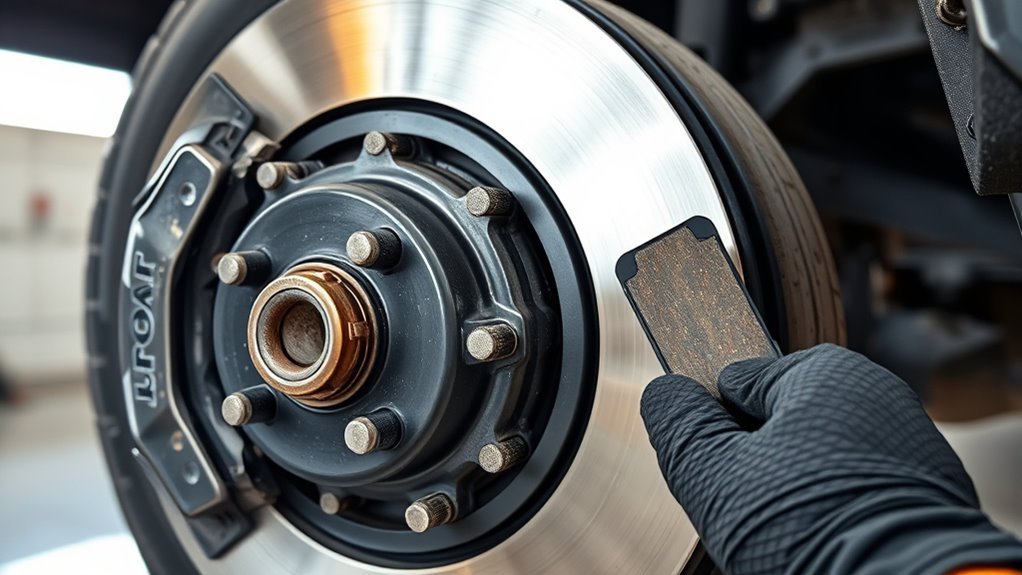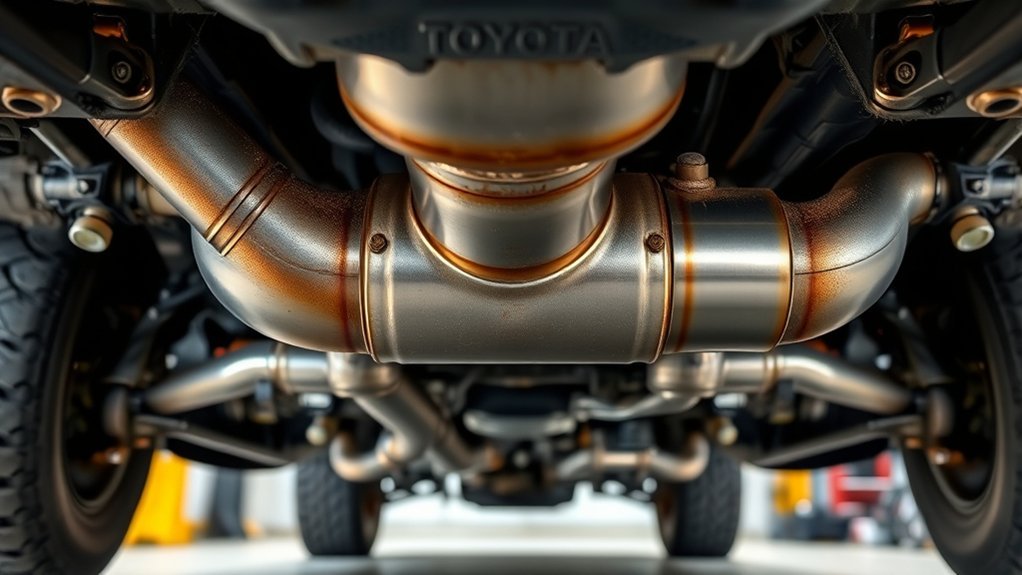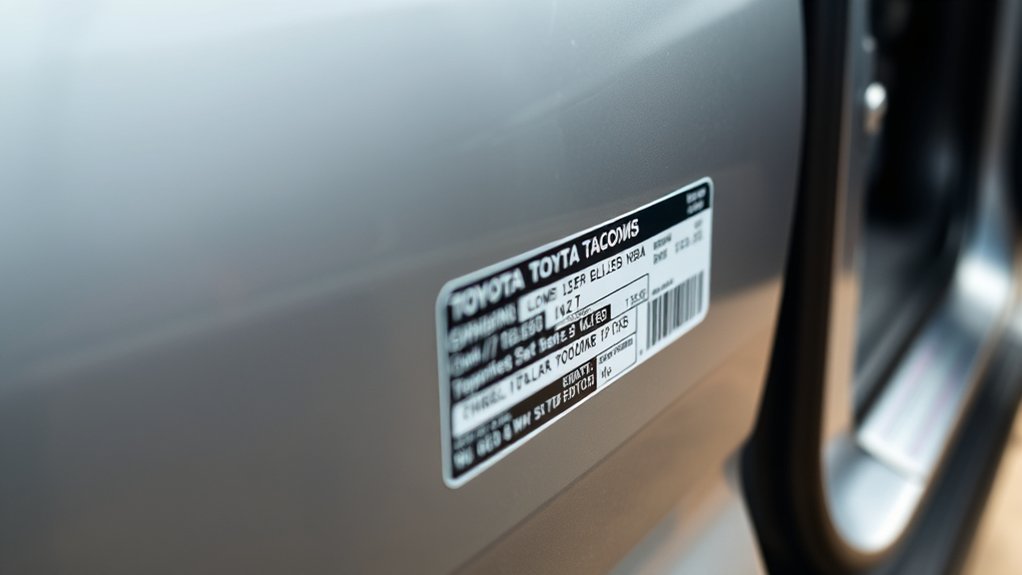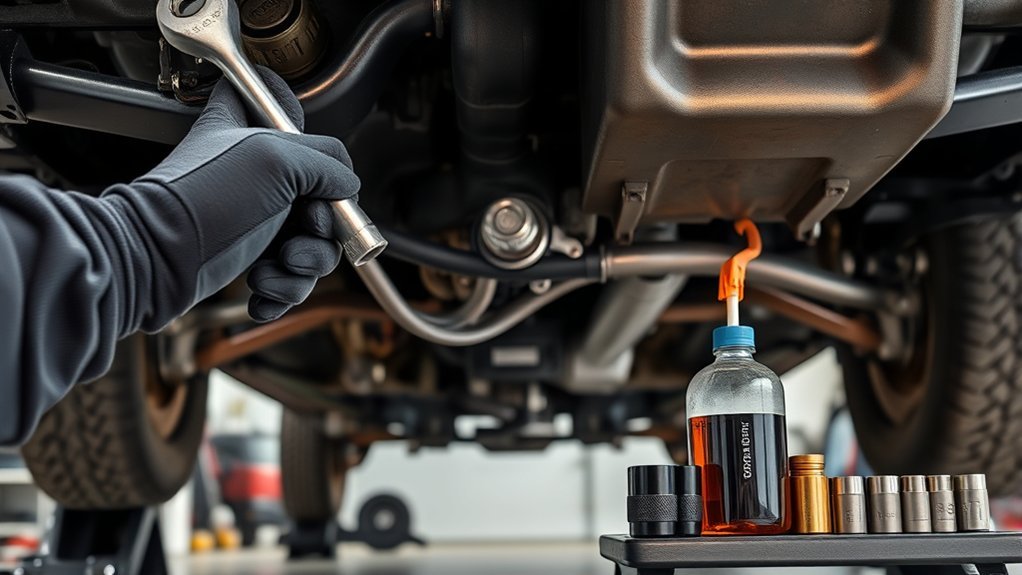
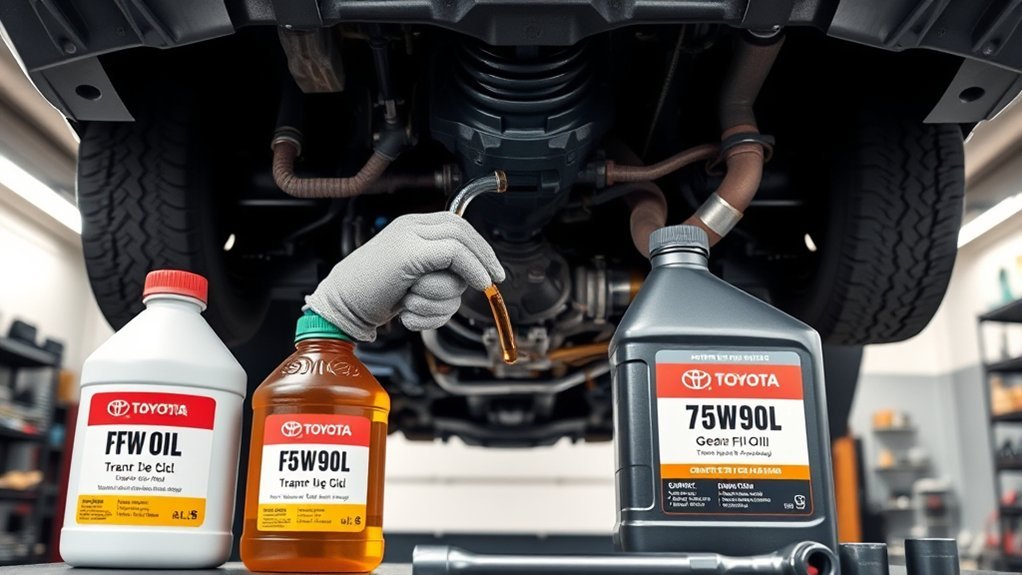
Your Tacoma transfer case needs the exact fluid Toyota lists for its model year, drivetrain, and transfer case. Some older Tacomas use SAE 75W-90 gear oil with API GL-4 or GL-5, while late-model trucks may call for Toyota Genuine Transfer Gear Oil LF 75W or an exact equivalent. Check the owner’s manual or confirm by VIN before you pour.
Quick Answer
Use the transfer case fluid your Tacoma manual lists. Older owner manual data can call for SAE 75W-90 gear oil meeting API GL-4 or GL-5, while late-model service information may call for Toyota Genuine Transfer Gear Oil LF 75W or equivalent. Do not choose by GL rating alone.
Key Takeaways
- Match Tacoma transfer case fluid to your model year and manual, not to generic gear oil advice.
- Use Toyota Genuine Transfer Gear Oil LF 75W or an exact equivalent only when your Tacoma calls for it.
- Use SAE 75W-90 GL-4 or GL-5 only when your older Tacoma manual lists that spec.
- Do not assume differential fluid, transfer case fluid, and manual transmission fluid are interchangeable.
- Replace or inspect the fluid sooner after towing, dusty roads, mud, water crossings, or heavy off-road use.
At a Glance
| Time Required | 30 to 45 minutes for a careful drain and refill |
| Difficulty | Moderate DIY if the truck is secure and the fill plug opens |
| Tools Needed | Correct fluid, drain pan, fluid pump, socket or wrench, new plug gaskets, torque wrench, gloves, eye protection |
| Cost | Usually the correct fluid plus new drain and fill plug gaskets |
Tacoma Transfer Case Fluid Specs by Model Year
Toyota did not use one transfer case fluid rule across every Tacoma generation. Your owner’s manual is the final source because the spec can change by model year, drivetrain, market, and transfer case design. The safest path is to check the Toyota owner manual portal, then confirm by VIN with a Toyota parts counter if the truck has an unclear history.
For a verified older example, the 2005 Tacoma owner’s manual lists the transfer oil as Gear Oil API GL-4 or GL-5 with SAE 75W-90 viscosity and a 1.0 L, or 1.1 qt, capacity. Some 2024+ service-kit information lists Toyota Genuine Transfer Gear Oil LF 75W or equivalent and about 1.1 L, or 1.2 qt, for the transfer case. Treat those as model-specific examples, not universal rules.
| Tacoma Group | Common Transfer Case Fluid Guidance | What to Verify |
|---|---|---|
| Older Tacoma example, including 2005 manual data | SAE 75W-90 gear oil meeting API GL-4 or GL-5 | Exact model year, transfer case capacity, and plug torque |
| Late-model Tacoma examples | Toyota Genuine Transfer Gear Oil LF 75W or equivalent may apply | Owner’s manual, service manual, or VIN-based parts lookup |
| Any Tacoma with uncertain service history | Do not guess from bottle labels or forum advice | Manual spec, fluid level, leaks, previous contamination, and correct washers |
Note: A GL-5 gear oil can be correct for one Tacoma component and wrong for another. Always separate transfer case, front differential, rear differential, and manual transmission specs before buying fluid.
[Products Worth Considering]

Next-level performance with 4X better gear wear protection, 4X better extreme pressure protection and 60% better protection against towing and heavy loads

API GL-4 CERTIFIED 75W-90 SYNTHETIC GEAR OIL: Exceeds API GL-4 and SAE J306 standards with premium synthetic base oils, advanced anti-scuff additives, and friction modifiers for extreme-pressure gear protection.
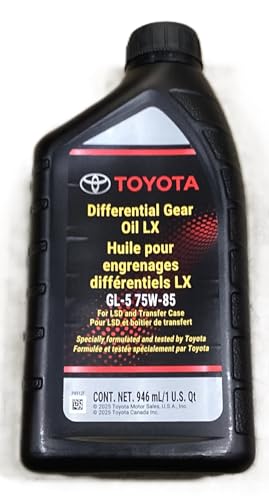
GENUINE TOYOTA: Specially formulated and tested differential gear oil designed specifically for Toyota LSD and transfer case applications
Toyota Transfer Case Fluid: What 75W, 75W-90, GL-4, and GL-5 Mean
Think of the fluid label as two separate pieces of information. The SAE viscosity grade tells you how the oil flows at low and high temperatures. The API GL rating tells you the type of gear service the oil supports. A guide to gear oil classification systems explains that multigrade oils, such as 75W-90, must meet both low-temperature and high-temperature viscosity requirements.
The American Petroleum Institute describes GL-5 as a designation for gears, especially hypoid gears in axles, under high-speed shock load and low-speed high-torque conditions. API also says the equipment maker’s lubricant recommendation should be followed. That rule matters with Tacoma transfer cases because Toyota specs changed across model years.
| Attribute | Meaning |
|---|---|
| Toyota LF 75W | Low-viscosity transfer gear oil used by some late-model Toyota transfer cases |
| SAE 75W-90 | Multigrade gear oil listed for some older Tacoma transfer cases |
| API GL-4 | Gear oil category often used where transmission or yellow-metal compatibility may matter |
| API GL-5 | Higher-load gear oil category often used for hypoid axle gears |
| Owner’s manual | Final source for the correct fluid, capacity, and service interval |
Do not treat 75W, 75W-90, GL-4, and GL-5 as interchangeable labels. Use the exact fluid type your Tacoma manual lists.
GL-4 vs GL-5: Transfer Case, Differential, and Manual Transmission Guidance
GL-4 and GL-5 do not rank one oil as universally better. They describe different gear oil service categories. Your Tacoma transfer case, differentials, and manual transmission can use different fluids, even when the bottles look similar.
Use GL-5 in differentials when Toyota lists hypoid GL-5 gear oil. Use GL-4 or GL-5 in an older transfer case only when the manual allows both. Do not use GL-5 in a manual transmission unless Toyota lists it for that exact transmission, because synchronized transmissions can have different material and friction needs.
- Verify the transfer case spec by model year, drivetrain, and market.
- Use GL-5 in differentials only when Toyota calls for hypoid GL-5 gear oil.
- Use the manual transmission fluid Toyota lists, even if another gear oil looks close.
- Ask a Toyota parts counter to confirm by VIN when the manual or service history is unclear.
Fluid chemistry matters as much as viscosity. Matching the oil to the part helps you avoid poor shift feel, gear wear, and avoidable repair costs.
[Products Worth Considering]

For best performance, follow the manufacturer's recommendations in your vehicle owner’s manual.

SATISFIES REQUIREMENTS - for gear oil viscosity of SAE 75W80, 75W, 80W and 85W, as well as SAE 30 and SAE 10W30 motor oil
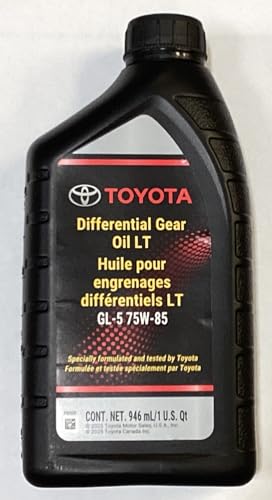
GENUINE OEM: Toyota factory-approved differential gear oil designed specifically for Toyota vehicles, ensuring optimal performance and protection
75W or 75W-90? Viscosity Tradeoffs and Real-World Impact
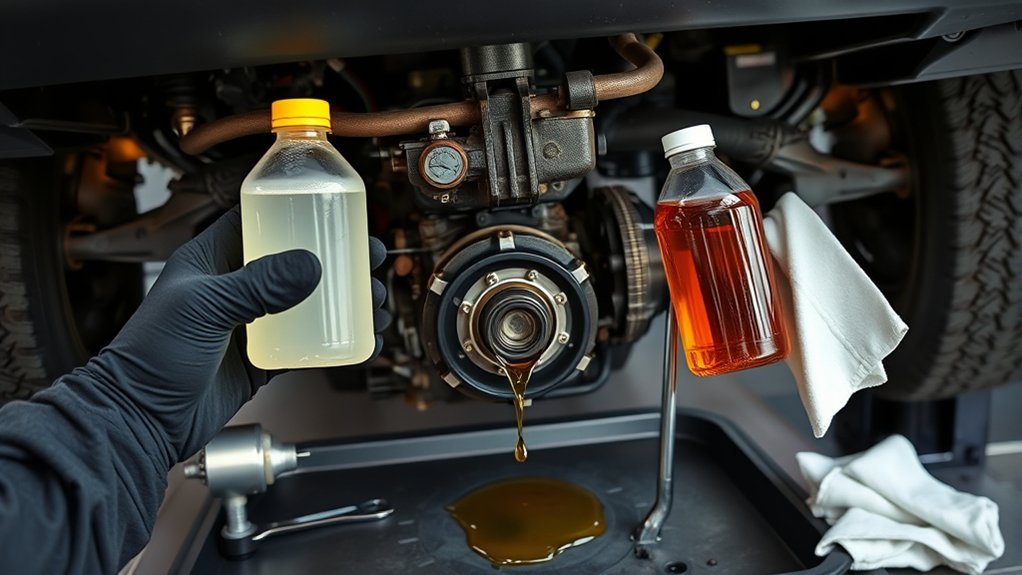
SAE 75W and SAE 75W-90 do not mean the same thing. A 75W-90 gear oil meets a cold-flow grade and a high-temperature 90 grade. Toyota LF 75W transfer gear oil follows a lower-viscosity transfer case spec for some late-model Toyota applications.
Choose by your manual, not by the idea that thicker oil always protects better. A heavier oil can reduce cold flow in a transfer case designed for LF 75W. A thinner oil can fail to match an older transfer case that lists SAE 75W-90.
| Choice | Use It When | Watch For |
|---|---|---|
| Toyota LF 75W | Your Tacoma manual or VIN-based Toyota lookup lists Toyota LF 75W or equivalent | Do not replace it with 75W-90 without model-specific confirmation |
| SAE 75W-90 GL-4 or GL-5 | Your Tacoma manual lists SAE 75W-90 for the transfer case | Pick only a GL rating your manual allows |
| GL-5 only | Your differential or transfer case spec specifically requires it | Do not assume it suits a manual transmission |
When two fluids look close, let Toyota’s spec settle the choice. Your transfer case works best with the viscosity and chemistry Toyota designed it to use.
[Products Worth Considering]

Tested and approved by Toyota

EXTREME DRAIN INTERVALS: PAO and Esters formulation lasts up to 500,000 miles for heavy-duty trucks and passenger cars, and 750,000 miles for Class 8 highway trucks

VEHICLE FITMENT: Compatible with select 2012-2020 Toyota 4Runner, 2005-2017 Toyota Tacoma and 2000-2006 Toyota Tundra 4WD models. Use as a Tacoma transfer case actuator or Tundra transfer case actuator only when the OE number, connector layout, housing shape and transfer case configuration match the original part.
When to Change Transfer Case Fluid
Toyota maintenance guides treat severe use differently from light road use. The 2023 Tacoma Warranty and Maintenance Guide lists transfer case oil replacement under special operating conditions such as dirt roads, dusty roads, towing, car-top carrier use, or heavy vehicle loading. Water crossings also justify an early fluid check because water can reduce gear oil’s lubricating quality.
A 30,000-mile drain and refill gives many Tacoma owners a conservative service rhythm, especially if the truck tows, runs dusty roads, or sees trails. For heavy off-road use, mud, or water exposure, shorten the interval and inspect the fluid more often. Your owner’s maintenance guide should set the final interval for your exact truck.
- Inspect the transfer case for leaks during oil changes and tire rotations.
- Replace fluid early if it looks milky, smells burnt, or contains heavy metal debris.
- Service the transfer case sooner after deep water, mud, or long towing trips.
- Record the mileage, fluid brand, viscosity, API rating, and gaskets used after each service.
Warning: Never work under a Tacoma that sits only on a jack. Use rated jack stands on solid ground, wear eye protection, and stop if the truck is not stable.
Before You Start: Confirm Fluid, Gaskets, Capacity, and Torque
Do a quick parts check before you remove any plug. You need the correct fluid spec, the right amount of fluid, new drain and fill plug gaskets if Toyota calls for them, and the correct torque values from your service manual. Capacity can change by generation, so do not use another Tacoma owner’s refill amount as your final number.
- Confirm the fluid spec from the owner’s manual, service manual, or Toyota parts counter by VIN.
- Buy enough fluid to fill until fluid begins to trickle from the fill hole on a level truck.
- Use new gaskets or crush washers when the service manual requires them.
- Find the fill plug before the drain plug and make sure it can open.
- Check plug torque in the service manual instead of guessing.
Pro Tip: Always loosen the fill plug first. If you drain the transfer case and then discover the fill plug is seized or stripped, the truck may be stuck until the plug issue is fixed.
How to Drain and Refill Transfer Case Fluid
Estimated time: 30 to 45 minutes for a careful DIY service. Gather the correct fluid, a drain pan, a fluid pump, new crush washers or gaskets, gloves, eye protection, and the right sockets. Check your service manual for plug torque and capacity before you start.
What You’ll Need
- Correct transfer case fluid for your Tacoma model year
- Drain pan and shop towels
- Fluid pump that fits the fill bottle
- Socket or wrench for the fill and drain plugs
- New plug gaskets or crush washers
- Torque wrench set to the manual’s plug spec
- Gloves and eye protection
- Park the truck on a level surface and let the drivetrain cool.
- Secure the Tacoma with the parking brake and rated jack stands if you need more room.
- Remove the fill plug first, so you know you can refill the case before draining it.
- Place the drain pan under the transfer case drain plug.
- Drain the old fluid fully and inspect it for water, burnt smell, or heavy metal debris.
- Clean the plug, install a new gasket if required, and torque the drain plug to the manual’s spec.
- Pump the correct fluid into the fill hole until fluid begins to trickle from the opening.
- Install the fill plug with the correct gasket and torque it to spec.
- Wipe the case clean, drive a short distance, and check for leaks.
- Recycle the used gear oil at an approved collection site.
Do not guess the plug torque or fluid capacity. Your Tacoma’s model year and transfer case design can change both values.
Common Transfer Case Fluid Mistakes to Avoid
Most transfer case service problems come from rushing the basics. A few minutes of checking can prevent a stripped plug, a leak, or the wrong fluid choice.
- Draining before opening the fill plug: Always confirm you can refill the case before you drain it.
- Buying by GL rating alone: A GL-5 bottle is not automatically correct for every Tacoma component.
- Using differential specs for the transfer case: Differentials and transfer cases can have different fluid requirements.
- Reusing damaged washers: Old gaskets can seep after the service.
- Overfilling on an uneven surface: Fill level should be checked with the truck level.
- Ignoring water contamination: Milky oil after deep water means the fluid needs attention fast.
Signs Your Transfer Case Fluid Needs Attention
Transfer case fluid should not look milky, smell burnt, or carry heavy metal flakes. A little fine metallic paste on a magnetic plug can appear during service, but large chips or shiny debris point to a bigger problem. Strange driveline noise, leaks around the case, or hard engagement into four-wheel drive also deserve a closer look.
Stop the service and contact a qualified mechanic if the fill plug strips, the case leaks after refill, or the old oil contains water. Those signs can mean you need more than a simple drain and fill.
Note: Water-contaminated gear oil often looks cloudy or milky. If your Tacoma recently crossed deep water, inspect the fluid even if the truck still drives normally.
Frequently Asked Questions
How often should you change transfer case fluid on a Toyota Tacoma?
Many owners use a 30,000-mile transfer case fluid change as a conservative interval. Toyota maintenance guidance can call for transfer case oil replacement under special operating conditions such as towing, dusty roads, dirt roads, or heavy loading. Check your maintenance guide for your exact truck.
How much fluid does a Toyota Tacoma transfer case hold?
Capacity changes by generation and transfer case design. A 2005 Tacoma owner’s manual lists 1.0 L, or 1.1 qt, while some 2024+ service-kit information lists 1.1 L, or 1.2 qt. Fill to the correct level at the fill hole and confirm the spec in your manual.
What kind of transfer case fluid does a 2007 Toyota Tacoma take?
A 2007 Tacoma transfer case commonly uses SAE 75W-90 gear oil that meets API GL-4 or GL-5. Verify this against your owner’s manual or by VIN before service, especially if the truck came from another market.
Can you use GL-5 gear oil in a Tacoma manual transmission?
Do not use GL-5 in a Tacoma manual transmission unless Toyota lists it for that exact transmission. Manual transmissions can have different synchronizer and material needs than a transfer case or differential.
Should you use 75W-90 instead of Toyota LF 75W?
Use 75W-90 only when your Tacoma manual lists that viscosity for the transfer case. If your Tacoma lists Toyota LF 75W or equivalent, use that spec unless a Toyota technician confirms a suitable alternative.
Is Tacoma transfer case fluid the same as differential fluid?
Not always. Transfer cases and differentials can use different viscosities and GL ratings. Check each component separately before buying fluid.
Should you change transfer case fluid after water crossings?
Inspect it soon after deep water, mud, or flooding. Water can contaminate gear oil and reduce its lubricating quality. If the fluid looks milky or cloudy, replace it and check related drivetrain components.
Safety Disclaimer: This article provides general maintenance information. Follow your owner’s manual, use proper safety stands, and contact a qualified mechanic if you feel unsure.
Conclusion
The best Tacoma transfer case fluid is the one your exact model year manual lists. Use Toyota LF 75W where Toyota calls for it, and use SAE 75W-90 GL-4 or GL-5 where an older manual allows it. Remove the fill plug before the drain plug, refill to the proper level, and torque both plugs to spec. Keep a service record, inspect the fluid after hard use, and your transfer case will have a better chance of staying quiet and reliable.
Sources
- Toyota Tacoma Manuals and Warranties — model-specific owner manual lookup and Toyota maintenance references
- Toyota Tacoma Owner’s Manual, 2005 Tacoma from Mar. 2005 Production — older Tacoma transfer case fluid type and capacity example
- Toyota Tacoma Warranty and Maintenance Guide, 2023 — special operating conditions and transfer case oil replacement guidance
- API 1560 Lubricant Service Designations — GL-4, GL-5, MT-1, and manufacturer-recommendation guidance
- Petro-Canada Lubricants Gear Oil Classification Systems — SAE J306 viscosity and API gear oil class explanations
- 24+ Tacoma OEM Transfer Case Fluid Service Kit — late-model Tacoma LF 75W service-kit example and listed 2024+ capacity