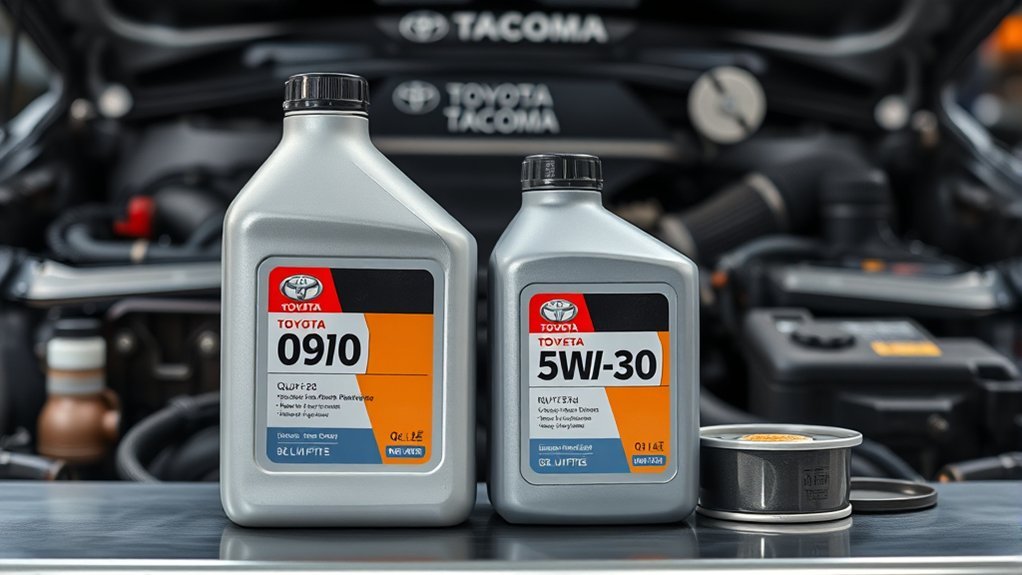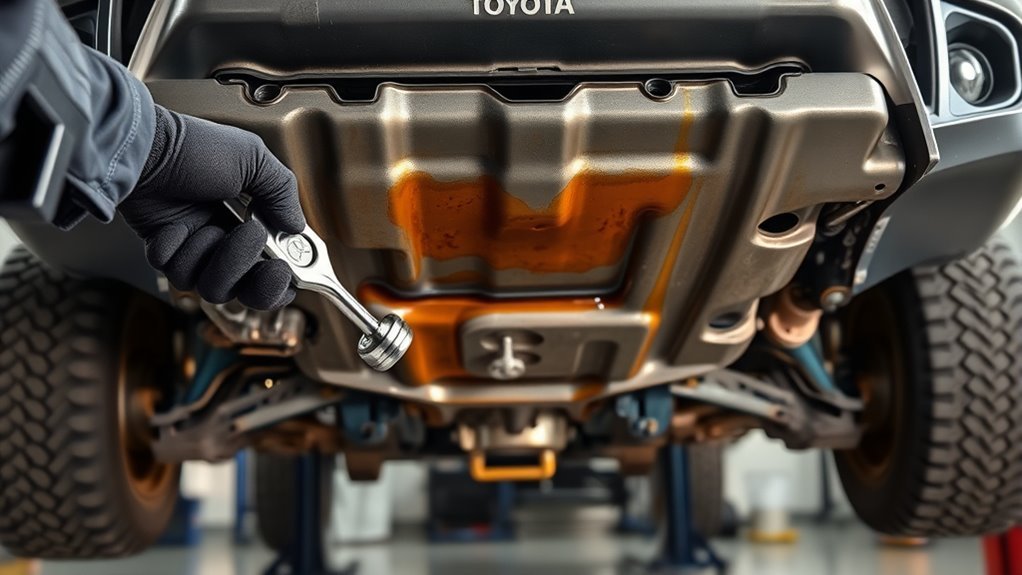
You can often diagnose a Toyota Tacoma oil leak at home by cleaning the engine, checking the common leak points, and watching where fresh oil returns. Start with the simple areas first: the oil filter, drain plug, oil pan, valve cover gaskets, timing cover seams, and any oil cooler or filter housing area your model uses. If the leak is not obvious after cleaning, a UV dye test can help trace the oil back to the true source before you spend money on parts.
Quick Answer
To find a Tacoma oil leak, clean the suspected area, run the engine, take a short drive, and look for fresh wet oil, droplets, or dye trails. The most common checks are the oil filter, drain plug, valve covers, timing cover, oil pan seams, and oil cooler area.
Key Takeaways
- A fresh drip or wet droplet is different from light oil seepage; Toyota’s oil leak guidance treats pooling, droplets, and dripping as a verified leak.
- Always clean first. Old grime can travel along brackets, skid plates, and airflow paths, making the leak look like it starts somewhere else.
- Simple leaks at the filter, drain plug, or crush washer may be DIY-friendly; timing cover and oil pan reseals can be labor-heavy.
- If the truck is still within Toyota’s warranty window, document the leak with photos and ask a dealer to inspect it before attempting a repair.
At a Glance
| Time Required | 15 minutes for a basic inspection; 1–2 hours for cleaning and dye tracing; longer for repairs |
| Difficulty | Easy for diagnosis; moderate to advanced for gasket or seal repairs |
| Tools Needed | Flashlight, inspection mirror, gloves, brake cleaner, rags, cardboard, torque wrench, UV dye kit, black light |
| Cost | About $10–$60 for cleaning and dye tools; repair cost depends on the failed part and labor time |
Warning: Never crawl under a Tacoma supported only by a jack. Park on level ground, let hot exhaust parts cool, wear eye protection, and use properly rated jack stands before inspecting underneath.
Quick Diagnosis: Find a Tacoma Oil Leak in 5 Minutes
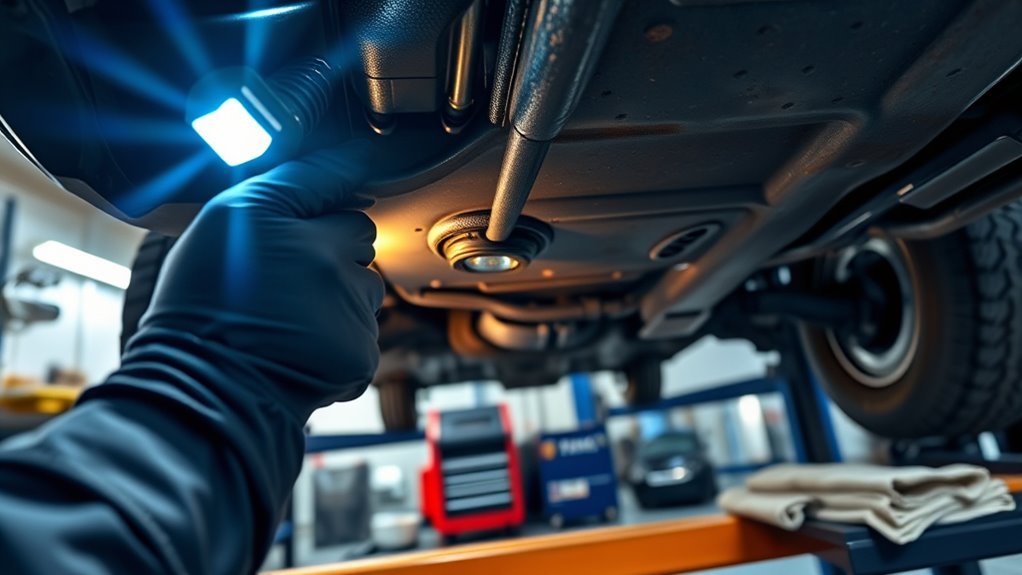
For a fast first check, slide a clean piece of cardboard under the engine overnight. Note the location of any drip in relation to the front axle, oil pan, transmission bellhousing, and wheels. A spot near the front of the engine often points you toward the filter area, timing cover, or front crank seal. A spot directly under the pan may come from the oil pan seam, drain plug, or oil running down from above.
Next, open the hood and inspect from the top down with a flashlight. Look around the valve covers, front timing cover, oil filler cap, oil filter housing, oil cooler lines if equipped, dipstick tube, and the area below the power steering or accessory brackets. Oil usually travels downward, so the highest fresh wet area matters more than the biggest puddle.
Then check the oil level. Toyota’s current Tacoma owner information says to warm the engine, turn it off, wait about 8 minutes, and check the dipstick level with the oil between the low and upper marks. Use the oil type listed for your exact model year in the owner’s manual or Toyota Owners manual page, not a generic chart.
Note: If the oil pressure warning light comes on, the oil level is below the safe range, or oil is smoking on the exhaust, stop driving and have the truck inspected. Driving with low oil can damage the engine.
Leak vs. Seep: How to Tell How Serious It Is
Not every dark spot means the engine needs to come apart. Toyota’s oil leak diagnosis bulletin separates a leak from a seep. A leak has pooling fluid, droplets, or active dripping. A seep is a thin oil film or damp-looking area that may collect dust but is not wet enough to drip.
| What You See | Likely Severity | What to Do |
|---|---|---|
| Dry dust with no wet oil | Usually not an active leak | Clean and recheck at the next oil change |
| Dark damp film at a gasket seam | Light seepage | Photograph it, monitor it, and check oil level regularly |
| Fresh wet oil or droplets forming | Confirmed leak | Trace the source and repair the failed seal, gasket, plug, or part |
| Oil dripping onto the exhaust, belts, or skid plate | Higher risk | Do not ignore it; inspect promptly or take it to a shop |
The goal is not to find the lowest oil spot. The goal is to find the highest fresh wet point after the engine has been cleaned and run.
Pinpoint the Leak: Clean, UV Dye, and Tracing Steps
Once you know oil is present, clean the area before you diagnose. Spray brake cleaner only on cool, safe surfaces, wipe away sludge, and let everything dry. Remove skid plates if needed because they can catch oil and make the leak look farther back than it really is.
- Clean the suspected area. Focus on the filter, drain plug, pan seam, valve cover edges, timing cover seam, and any oil cooler area.
- Mark clean zones. Use tape or chalk near the dry edges so new oil is easy to spot.
- Run the engine. Let it idle, then raise rpm briefly only if it is safe and the oil level is correct.
- Take a short drive. A 10–20 minute drive is often enough for a moderate leak. Very slow leaks may need several heat cycles.
- Inspect from top to bottom. Follow the first fresh oil trail upward to its starting point.
- Use UV dye if needed. Add engine-oil-safe UV dye according to the product label, drive briefly, then scan in a dark area with a black light.
Pro Tip: Photograph the leak before and after cleaning. Dealers and warranty administrators often want clear photos that show the affected component and the active leak, not just a close-up of wet oil.
[Products Worth Considering]

This 6-pack engine oil filter set is designed for Toyota applications and compatible cross-reference part numbers, helping support clean oil flow and dependable engine protection. Built from quality materials and featuring 99% multi-pass efficiency, it is made to help extend engine life and maintain performance between service intervals. The included six filters make it a practical choice for routine maintenance and multiple oil changes.

This tire repair rubber nail kit offers a fast, simple way to seal punctures in tubeless tires without removing the wheel. Designed for reliable grip and effective sealing, it helps reduce air loss and keep vehicles moving across a wide range of everyday repair needs. The assorted sizes provide versatility for minor and larger punctures on cars, trucks, motorcycles, tractors, and more.

The EcoNour foldable car windshield sun shade helps block UV rays and reduce interior heat, keeping your vehicle cooler while protecting the dashboard and seats from sun damage. Its compact, collapsible design makes it easy to install, remove, and store, and the broad coverage is ideal for many cars and SUVs.
Most Likely Culprits: Valve Cover, Timing Cover, Oil Pan
The most likely Tacoma oil leak source depends on the model year, engine, mileage, repair history, and where the oil appears. Start with simple, external parts before assuming the engine needs a major reseal.
| Component | Typical Clue | DIY Difficulty |
|---|---|---|
| Oil filter or filter housing | Oil starts after an oil change; wetness around the filter seal or housing | Easy to moderate |
| Drain plug or crush washer | Drop forms at the plug; washer reused, damaged, or missing | Easy |
| Valve cover gasket | Oil high on the engine, along the cylinder head or dripping onto exhaust heat shields | Moderate |
| Timing cover or timing chain cover | Oil at the front of the engine or where the head, block, and cover meet | Advanced |
| Oil pan seam | Wet seam around the pan or drops forming at the mating surface | Moderate to advanced |
| Front or rear crankshaft seal | Oil behind pulley area or between engine and transmission | Advanced |
On some older 4.0L V6 Tacoma engines, oil can appear near the timing cover junction where the cylinder head, block, and cover meet. On newer Tacomas, the oil filter housing, oil cooler area, and front cover area may be more relevant. Because Tacoma engines changed across generations, confirm your engine and repair procedure before ordering gaskets or sealant.
[Products Worth Considering]
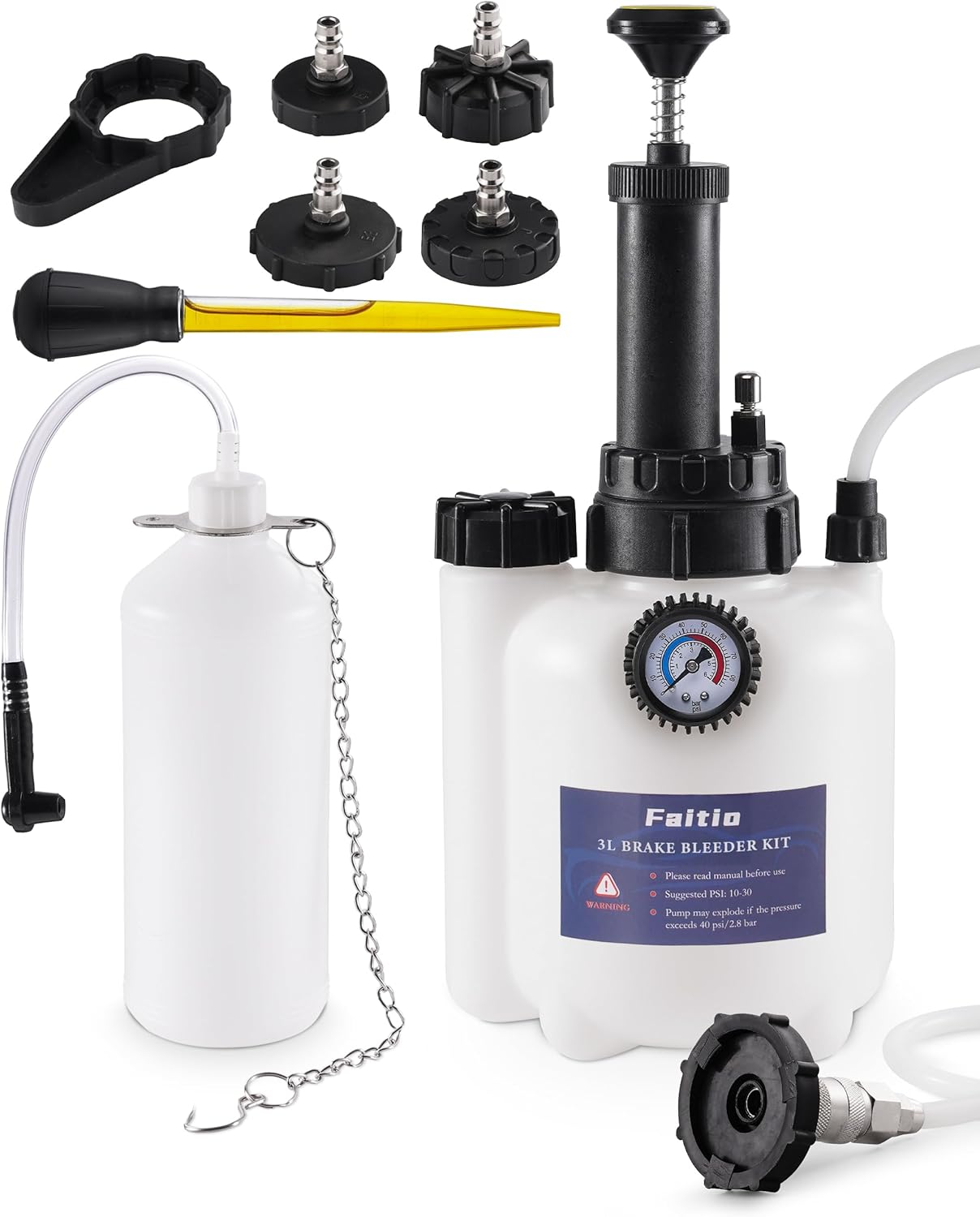
This one-man brake bleeding kit helps flush old brake fluid and remove trapped air for firmer, more responsive braking without the hassle of a second person. Its improved sealing and translucent catch bottle help prevent leaks while making fluid level checks easy during use. With multiple adapter sizes for many vehicle makes, it is a practical tool for clean, efficient brake system maintenance.

This smart color coded tire tread depth gauge makes it easy to check tread wear at a glance with clear red, yellow, and green ranges. Calibrated from 0 to 1 inch in 1/32 inch increments, it helps you quickly assess tire condition for safer driving and timely replacements. The pocket clip design makes it convenient to carry and use on trucks, motorcycles, cars, and other passenger vehicles.

Sets to form an elastic body which is not affected by vibration or impact
Fix Tacoma Oil Leaks Yourself: Safe DIY and Temporary Tricks
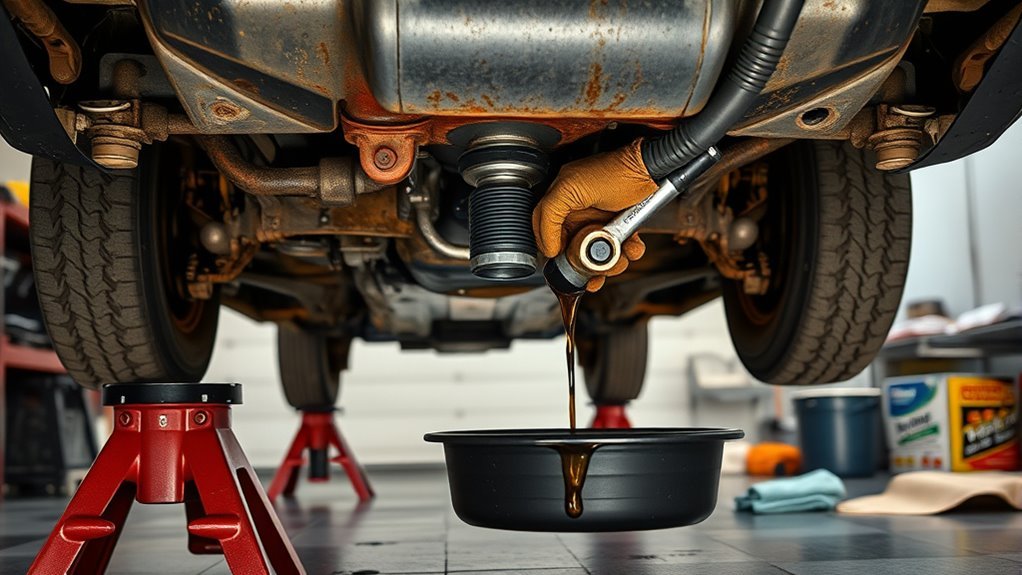
After you confirm the exact source, match the repair to the failure. Do not smear RTV over the outside of an oily gasket seam and expect a lasting fix. Toyota’s oil leak repair guidance calls for clean, dry sealing surfaces, removed old sealant, inspection for surface defects, and correct reassembly.
- Oil filter leak: Verify the old filter gasket did not stick to the engine, install the correct filter, lubricate the new gasket, and tighten it according to the filter instructions.
- Drain plug leak: Replace the crush washer, inspect the plug threads, and tighten to the specification for your exact model. Do not overtighten a damaged pan.
- Loose accessible fasteners: Use a torque wrench and the factory sequence where available. Overtightening can warp covers or split gaskets.
- Valve cover gasket leak: Replace the gasket and related spark plug tube seals or grommets if your engine uses them. Clean mating surfaces before reassembly.
- Oil pan or timing cover leak: Use the repair manual procedure and Toyota-compatible FIPG or seal packing where specified. These jobs often require more teardown than they first appear.
- Temporary monitoring: For a light seep, keep the oil level correct, clean the area, photograph it, and recheck at each fuel stop or every few days until repaired.
Warning: Be careful with stop-leak additives. They may swell rubber seals slightly, but they will not repair a torn gasket, cracked housing, stripped drain plug, or failed FIPG joint. Do not use an additive as a substitute for fixing an active drip.
[Products Worth Considering]

COMPATIBILITY — Fits 2003-2024 Toyota 4Runner; 2005-2014 Toyota Tundra; 2005-2015 Toyota Tacoma; 2007-2014 Toyota FJ Cruiser.

Suitable for:for Toyota 4Runner 1996-2001 SR5B4 Cyl 2.7L, for Toyota Previa 1991-1997 DX LE4 Cyl 2.4L, for Toyota T100 1993-1998 STD4 Cyl 2.7L, for Toyota Tacoma 1995-2001 DLX4 Cyl 2.4L 4 Cyl 2.7L.

Compatible with petroleum, semi-synthetic, and full synthetic motor oils
When to See a Shop: Warranty, Cost Estimates, and What to Demand
Take the Tacoma to a shop or dealer if the leak is active, the oil level drops between checks, oil reaches the exhaust, the leak is near the timing cover or rear main seal, or the repair requires removing major components. Also stop DIY work if you cannot safely lift the truck or verify the source.
Warranty coverage depends on the failed component, the truck’s age and mileage, maintenance records, and whether the issue is a defect rather than damage or wear. Toyota’s general coverage information lists Basic Coverage at 36 months/36,000 miles and Powertrain Coverage at 60 months/60,000 miles, whichever comes first. If your Tacoma is inside those limits, document the leak and ask a Toyota dealer to inspect it before you clean everything again or add sealers.
Before approving a repair, ask for a written estimate that includes:
- The confirmed leak source, not just “engine oil leak.”
- Photos or dye-test findings showing where the leak starts.
- Labor hours, labor rate, parts list, and sealant or gasket type.
- Whether the repair uses Toyota-compatible seal packing, FIPG, or a replacement gasket.
- A test-drive and reinspection after the repair.
- Whether related parts should be replaced while access is open.
Is There a Toyota Tacoma Oil Leak Recall?
There is no single universal Toyota Tacoma oil-leak recall that applies to every model year and engine. Recalls and service campaigns are VIN-specific, so the safest answer is to check your exact truck through the Toyota recall lookup and the NHTSA recall lookup. A Tacoma may also have a technical service bulletin, warranty policy, or dealer repair guidance that is not the same thing as a safety recall.
If your truck is under warranty and the leak is active, ask the service advisor to document whether the condition is a leak or a seep, what component failed, and whether the repair is covered. Keep your oil-change records, inspection photos, and dealer paperwork.
Prevent Repeat Leaks: Maintenance Checks and Monitoring Tips
Preventing repeat oil leaks is mostly about clean inspections, correct oil level, proper torque, and catching small problems before they become major repairs. Build a quick check into every oil change and before long trips.
- Check the oil level correctly. Use the procedure and oil specification for your model year in the Toyota owner’s manual.
- Inspect from the top down. Look at valve covers, timing cover edges, oil filler cap, filter housing, and oil cooler areas.
- Inspect underneath. Check the drain plug, pan seam, skid plate, bellhousing area, and crossmembers.
- Replace one-time-use washers. A cheap drain plug gasket can prevent a messy and frustrating drip.
- Use a torque wrench. Too loose leaks; too tight can strip threads, crush gaskets, or warp covers.
- Recycle used oil and filters. The EPA recommends recycling used motor oil and used oil filters through proper collection centers or participating shops.
Pro Tip: After any oil leak repair, clean the whole area, drive for 15–30 minutes, park over cardboard, and inspect again the next day. A clean post-repair check is the easiest way to confirm the fix worked.
Frequently Asked Questions
Why is my Toyota Tacoma leaking oil?
A Tacoma usually leaks oil because a gasket, seal, drain plug washer, oil filter seal, oil pan seam, or timing cover joint is no longer sealing. Start by cleaning the engine and tracing fresh oil from the highest wet point.
Is there a recall on Tacoma oil leaks?
There is no universal Tacoma oil-leak recall for all trucks. Recalls are VIN-specific, so check Toyota’s recall lookup and NHTSA’s recall lookup. Also ask the dealer whether a warranty policy or technical service bulletin applies to your model year.
Can I drive my Tacoma with an oil leak?
You may be able to drive briefly with a minor seep if the oil level stays correct, but do not drive with an active drip, oil smoke, belt contamination, low oil, or an oil pressure warning light. Those symptoms need prompt inspection.
Are Toyotas prone to oil leaks?
Toyotas are generally known for strong reliability, but any engine can develop oil leaks as gaskets age, fasteners loosen, seals harden, or past repairs leave poor sealing surfaces. Routine inspection is still necessary.
Does UV dye hurt the engine?
Engine-oil-safe UV dye is designed for leak diagnosis when used according to the product directions. Use the correct dye for engine oil, add only the recommended amount, and change the oil on schedule.
Should I use RTV to stop a Tacoma oil leak?
Use RTV or Toyota-compatible FIPG only where the repair manual calls for seal packing. The surfaces must be clean, dry, and properly prepared. Smearing RTV over an oily exterior seam is usually temporary and often fails.
Conclusion
A Tacoma oil leak is easiest to fix when you slow down and prove the source before buying parts. Clean the engine, inspect from the top down, separate seepage from active dripping, and use UV dye if the path is unclear. Simple filter and drain plug leaks can often be corrected quickly, while timing cover, oil pan, and crank seal leaks deserve careful documentation, correct sealant, and sometimes professional repair. Keep the oil level correct, take photos, and act early so a small leak does not turn into a costly engine problem.
Sources
- Toyota Warranty Coverage — basic and powertrain warranty time and mileage coverage.
- Toyota Tacoma Owner’s Manual: Maintenance Data — engine oil level checking and oil selection guidance.
- Toyota Technical Service Bulletin T-SB-0008-20: Oil Leak Diagnosis and Repair — leak vs. seep definitions, documentation, and sealing-surface preparation.
- Toyota Recall Lookup — official Toyota safety recall and service campaign lookup by VIN.
- NHTSA Recalls — federal vehicle recall lookup and safety recall information.
- U.S. EPA: Managing, Reusing, and Recycling Used Oil — used oil and oil filter recycling guidance.