By: [VERIFY: add real author name and relevant automotive credentials] · Published: [VERIFY: add original publication date] · Last updated: July 31, 2026
For most Toyota Camrys used for commuting, an application-specific ceramic brake pad is the best comfort-first starting point. Ceramic formulations are commonly engineered for quieter stops and lighter, less visible dust. Choose a catalog-approved semi-metallic or heat-rated street pad when repeated downhill or hard braking, firmer initial bite, or a manufacturer-documented cold-temperature response matters more than low dust and low noise.
Material name alone does not prove stopping distance, safety, quality, or fit. Match the pad to your exact Camry by VIN, model year, trim, powertrain, axle, rotor or caliper package, and intended use. A different compound also will not fix rotor runout, a sticking caliper, worn hardware, a hydraulic fault, or poor tire grip.
Editorial method: This is a source-based technical comparison, not a hands-on brake-pad test. It reviews Toyota owner and maintenance information, SAE J866 marking guidance, the EPA copper-reduction initiative, and installation or material guidance from established brake manufacturers. No instrumented stopping-distance, temperature, noise, dust, or long-term wear tests were performed. Brand-specific performance statements are identified as manufacturer claims.
Quick Answer
Choose an application-specific ceramic pad for a Camry used mainly for commuting, school runs, and ordinary highway driving. It usually favors low visible dust, reduced noise, and a smooth street feel. Consider a catalog-approved semi-metallic or heat-rated street pad when long descents, repeated hard stops, or firmer initial bite matter more. Verify the exact part by VIN, model year, trim, powertrain, axle, rotor or caliper package, and manufacturer catalog.
| Camry Use or Priority | Best Starting Point | Reason |
|---|---|---|
| Quiet commuting and school runs | Application-specific ceramic | Usually prioritizes low noise, light dust, and smooth everyday response. |
| Cleaner-looking wheels | Ceramic | Dust is commonly lighter and less visible than dust from many metallic compounds. |
| Long descents or repeated hard stops | Semi-metallic or heat-rated street formulation | The specific product may maintain a more consistent response as brake temperature rises. |
| Firmer initial bite | Compare approved semi-metallic and performance-street formulas | Initial feel is formula-specific; the category name alone does not guarantee stronger braking. |
| Severe cold | Compare the exact product guidance | Cold response varies by formula, so use the manufacturer’s temperature and application guidance. |
| Factory-like behavior | OEM or OE-equivalent application | This is the conservative path when the original noise, dust, and pedal feel were acceptable. |
| Grinding, pulling, pulsation, or uneven wear | Diagnose before choosing a compound | Pad material will not correct rotor, caliper, hardware, hydraulic, tire, or suspension faults. |
| Fitment is uncertain | Do not order yet | Verify the VIN, axle, drivetrain, rotor or caliper package, production details, and manufacturer catalog. |
Key Takeaways
- Ceramic pads are the comfort-first default for most Camry commuters who value quiet stops and cleaner-looking wheels.
- Semi-metallic or heat-rated street pads can suit repeated heat and a firmer initial feel, but some formulas create more noise, darker dust, or rotor wear.
- Material is not a quality or safety grade. Product formula, fitment, rotor condition, tires, and the complete brake system still control the result.
- Replace pads as a complete axle set. Never mix different left and right pad sets on the same axle.
- Verify the VIN, model year, trim, powertrain, axle, brake package, included hardware, and installation procedure before ordering.
Are Ceramic or Semi-Metallic Brake Pads Better for a Toyota Camry?
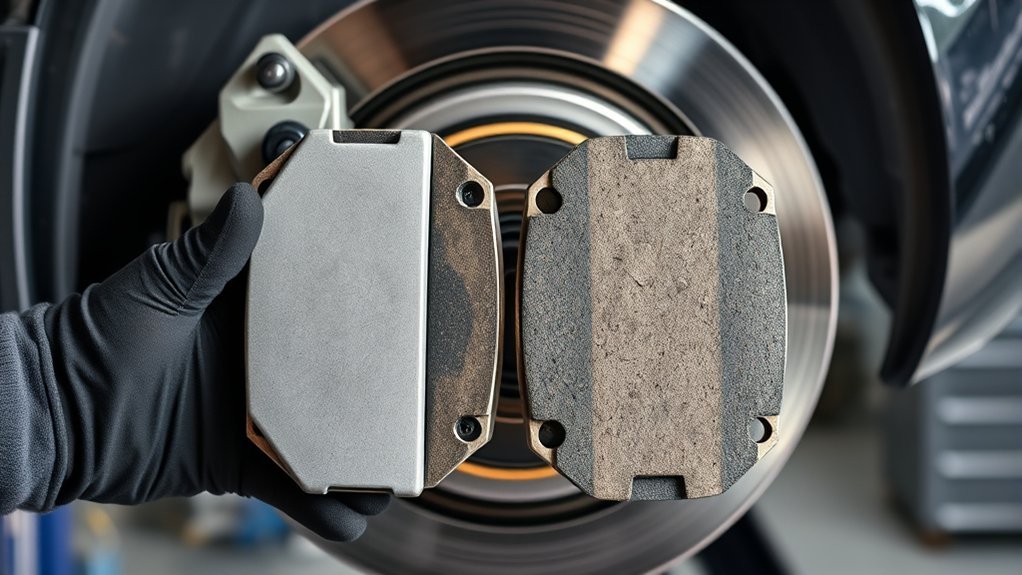
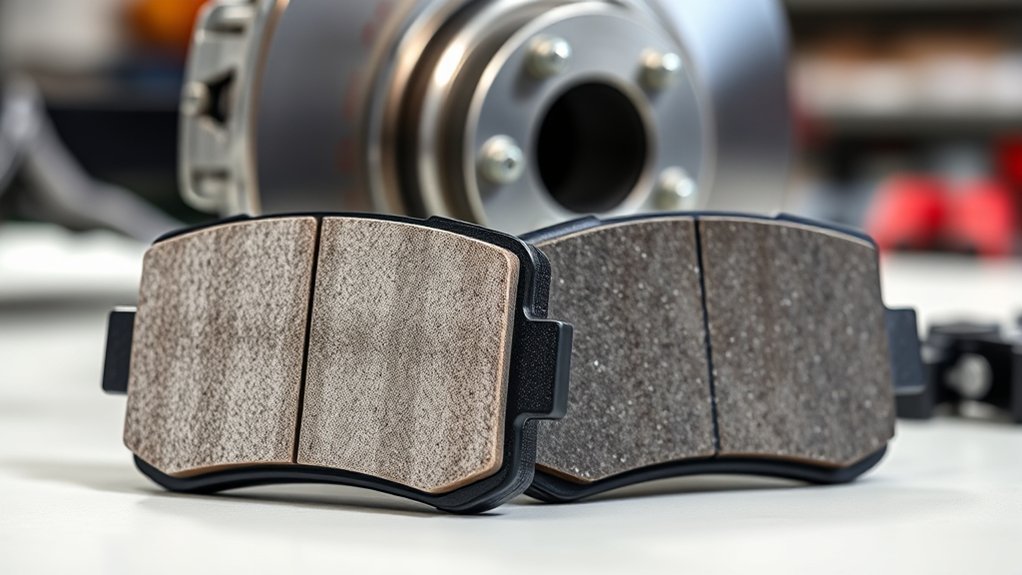
For most Camry drivers, ceramic brake pads are the better everyday starting point. They fit common Camry use such as commuting, school runs, highway cruising, and stop-and-go traffic. Brembo and other manufacturers position application-specific ceramic lines around low visible dust, reduced noise, and street-driving comfort.
Semi-metallic brake pads become more attractive when the selected formula is designed for repeated heat or a firmer initial response. They may suit steep grades, repeated hard stops, or spirited street use within the vehicle’s limits. Depending on the formula and hardware, tradeoffs can include darker dust, more audible operation, and more aggressive rotor interaction.
Neither category guarantees a shorter stopping distance. A high-quality, vehicle-specific pad from either family can outperform a poor product carrying the “preferred” material label. Confirm that the manufacturer lists the pad for your exact Camry and intended street use.
Warning: Do not choose brake pads to exceed your Camry’s design limits. As one model-year example, Toyota’s 2025 U.S.-market Camry owner information says trailer towing is not recommended. Check the owner’s manual for your exact model year and market before towing, adding a hitch, or carrying unusually heavy loads.
[Products Worth Considering]

TOVASTY rear brake pads are designed for a wide range of Toyota and Lexus models, delivering dependable braking performance with a carbon ceramic formula. They help reduce brake dust, promote quieter operation, and support consistent stopping power with improved heat resistance for everyday driving confidence.

PowerStop Z17 Evolution Ceramic Brake Pad Set is an OE replacement solution built for dependable everyday braking and consistent value. Designed with chamfered, slotted surfaces and rubberized shims, it helps deliver quiet stopping performance with reduced brake dust and cleaner wheels. The kit includes stainless steel installation hardware for an easy bolt-on install and comes backed by a limited warranty.
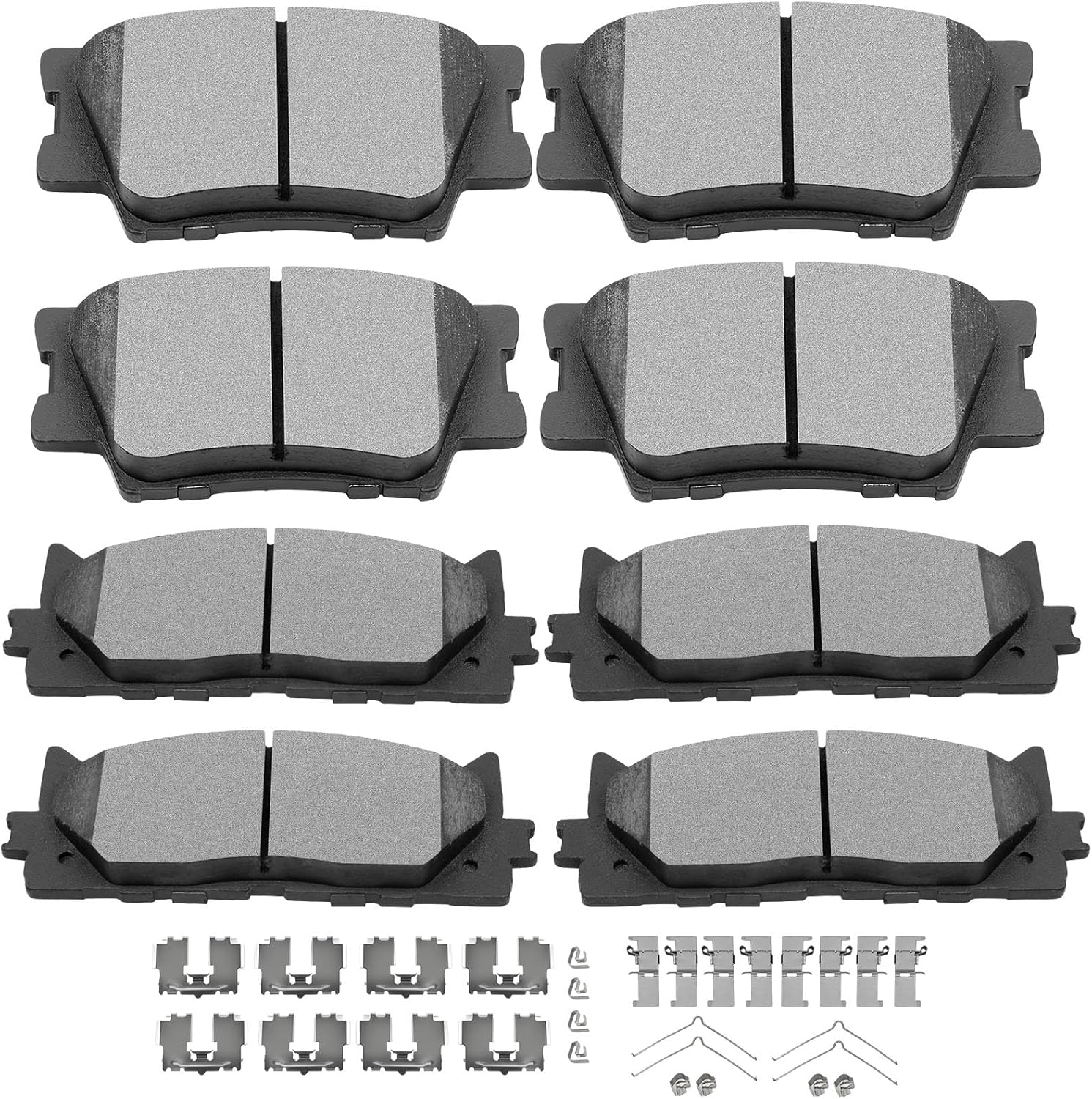
This ceramic front and rear brake pad set is designed as a direct replacement for select Lexus and Toyota models, helping restore reliable stopping performance. The pads feature a scorch-treated friction surface for quicker break-in and consistent wear, while the included gasket design helps reduce vibration and noise for quieter braking. Built for easy installation, this kit comes ready to fit compatible vehicles without modification.
A Three-Step Camry Brake-Pad Decision Rule
- Lock down the application first. Confirm the VIN, model year, trim, powertrain, axle, rotor or caliper package, and required hardware.
- Choose the behavior you need. Start with ceramic for comfort and low visible dust. Compare semi-metallic or heat-rated street formulas for repeated heat or a firmer initial feel.
- Inspect the rest of the system. Correct rotor, caliper, hardware, hydraulic, tire, or suspension faults before expecting a new compound to solve noise, pulling, pulsation, or uneven wear.
What pad material can change: dust appearance, noise tendency, initial feel, heat behavior, and rotor interaction. What it cannot change: vehicle ratings, tire grip, brake-system condition, or incorrect fitment.
What the Material Label Does Not Tell You
“Ceramic” and “semi-metallic” describe broad friction-material families. They do not provide a complete performance grade. Pads with the same category label can use different binders, fibers, fillers, shims, slots, chamfers, and friction modifiers. Those design choices affect noise, pedal feel, dust, temperature behavior, and rotor interaction.
An SAE J866 edge code can identify the manufacturer, friction formula, hot and cold friction classifications, and environmental marking. However, SAE J866 states that its friction codes do not establish overall brake-performance requirements and cannot reliably predict vehicle-level performance. The Washington Department of Ecology marking guide explains the edge-code fields. Use the code as supporting information, not as proof of fit, quietness, or stopping distance.
How Do Ceramic Brake Pads Work on a Camry?
Ceramic pads use a ceramic-based friction compound blended with fibers, resins, fillers, and friction modifiers. The exact formula varies by brand and product line. The material category alone does not reveal the pad’s full temperature range, friction behavior, or compatibility with a specific rotor.
Older descriptions often present copper fibers as a defining ceramic-pad ingredient. That is no longer a reliable blanket description. Under the EPA-supported voluntary Copper-Free Brake Initiative, participating states and industry groups targeted less than 0.5% copper by weight in friction material by 2025. That target does not mean every current pad uses the same formula or that every product is copper-free.
Heat Management and Pedal Feel
On a Camry used for normal street driving, a suitable ceramic pad can provide steady and predictable braking without an aggressive initial feel. Its main appeal is balanced daily performance: low visible dust, reduced noise, and smooth operation.
The limitation is compound-specific heat capacity. Repeated hard stops or long downhill braking may push some comfort-oriented ceramic pads outside their preferred temperature range. A heat-rated street ceramic or semi-metallic pad may feel more consistent in those conditions. Check the product’s stated application rather than assuming every ceramic formulation behaves the same way.
Dust and Noise Reduction
Ceramic pads are popular on commuter sedans because their dust is commonly lighter in color and less noticeable on wheels. Many ceramic lines also use application-specific shims, chamfers, and slots to control noise, vibration, and harshness.
No pad is guaranteed to remain silent. Worn clips, dry or seized slide pins, rotor runout, uneven deposits, corrosion, incorrect lubrication, or poor bedding can cause noise even when the friction compound is designed for quiet operation. For symptom-specific diagnosis, see the guide to Toyota Camry brake squeal causes and fixes.
What Should You Check Before Buying Ceramic Pads?
Do not buy only by the word “ceramic” on the box. Use this order-checking list:
- VIN and model year: Confirm the exact generation and production details.
- Trim and powertrain: Check for Hybrid, V6, TRD, AWD, or other generation-specific differences where applicable.
- Axle: Front and rear pads normally use different part numbers.
- Brake package: Confirm rotor diameter, caliper type, and any package variation listed by the catalog.
- Hardware: Check whether shims, clips, wear indicators, or other required pieces are included.
- Rotor condition: Inspect thickness, scoring, runout, corrosion, hot spots, and surface finish.
- Service procedure: Confirm whether the vehicle requires a specific parking-brake, caliper, or electronic service procedure.
Camry-specific fitment note: Toyota identifies the 2025 U.S. Camry and 2026 U.S. Camry as hybrid-only, but that does not make every pad interchangeable. Front and rear axles, FWD and AWD, grade, rotor size, caliper package, and production details can still change the required part. Older generations add gas-only, V6, TRD, Hybrid, and AWD variations. Use your VIN and a trusted manufacturer or parts catalog before ordering.
How Do Semi-Metallic Pads Work on a Camry?
Semi-metallic pads use a friction compound containing metal fibers or powders, which may include steel, iron, graphite, or other conductive materials. The amount and blend vary by product. Their main advantage is often heat management. Semi-metallic brake-pad technical guidance commonly emphasizes heat tolerance, heat dissipation, and fade resistance.
On a Camry, a catalog-approved semi-metallic pad may make sense if you drive steep grades, regularly create repeated braking heat, prefer a firmer initial response, or need a product whose published guidance covers severe cold. Depending on the formula, it may also produce darker dust, transmit more sound, or wear the rotor more aggressively than a comfort-oriented ceramic pad.
| Property | Typical Effect | What It Means for a Camry |
|---|---|---|
| Conductive material content | Can transfer heat efficiently | Useful during repeated high-energy braking |
| Friction behavior | May provide stronger initial bite | Can feel more immediate under firm pedal input |
| Compound and backing design | May transmit more vibration or sound | Hardware and rotor condition become especially important |
| Dust and abrasiveness | Darker dust and rotor wear may increase | Expect more wheel cleaning and rotor monitoring |
Choose semi-metallic pads because their specific application and behavior suit your use, not because the category is automatically “stronger.” If your Camry is mainly a quiet commuter, a quality ceramic pad will usually feel more refined.
How Do Noise, Dust, Heat, Rotor Wear, and Lifespan Compare?
Your Camry’s pad choice affects five characteristics you are likely to notice. These are broad category tendencies, not guarantees for every product or every brake package.
- Noise: Street ceramic pads commonly favor quiet operation. Some semi-metallic formulas may be more audible, but shims, chamfers, clips, lubrication, rotor condition, and bedding can matter as much as the compound family.
- Dust: Ceramic dust is commonly lighter and less visible. Semi-metallic dust is often darker and may make wheels look dirty sooner.
- Heat: Semi-metallic pads commonly offer strong heat transfer and fade resistance during repeated hard braking. Heat-rated ceramic street compounds also exist.
- Rotor wear: Many comfort-oriented ceramic pads are designed for balanced rotor interaction. Some semi-metallic compounds can be more abrasive, but rotor quality and pad formula matter more than the category name alone.
- Lifespan: No material label guarantees a mileage figure. Some ceramic formulations provide long commuter life, while an application-specific semi-metallic pad may last longer under the conditions it was designed to handle.
Driving style, hills, traffic, corrosion, rotor condition, seized slide pins, hardware condition, and braking temperature can shorten service life. Hybrid regenerative braking may reduce friction-brake use during light deceleration, but it does not eliminate the need to inspect the pads, rotors, calipers, and fluid.
Do not use the material label to predict a guaranteed stopping distance. Tire grip, vehicle load, ABS and brake-system tuning, pad formula, rotor condition, temperature, road surface, and installation quality all affect the result.
The material label helps narrow the choice, but inspection and exact application matter more. Toyota’s maintenance guidance calls for recurring brake pad and disc inspections rather than one universal replacement mileage for every driver.
If the pedal or steering wheel pulses, changing pad material may not solve the cause. Rotor runout, thickness variation, uneven deposits, wheel installation, or other faults may need attention. See the guide to Toyota Camry brake pedal pulsation for a separate diagnosis process.
Can You Switch or Mix Brake-Pad Materials on a Camry?
You can switch from semi-metallic to ceramic pads, or from ceramic to semi-metallic pads, when the replacement is listed for your exact Camry and suits your driving. The rotor surface must also be inspected and prepared or replaced as required by the pad and rotor manufacturers.
Never mix different pad sets on the left and right sides of the same axle. Replace pads as a complete axle set so both wheels use matching friction material, hardware, and installation procedures. Front and rear axles do not necessarily use the same formula because Toyota and the brake supplier may tune each axle differently.
When changing compounds, follow the new pad manufacturer’s bedding instructions. Do not reuse a stop sequence from an unrelated product. The goal is to establish the correct, even friction interface for that specific pad and rotor combination.
Which Brake-Pad Material Matches Your Driving?
- Daily commuting: Start with an application-specific ceramic pad when quiet operation and cleaner-looking wheels are the priorities.
- Stop-and-go city driving: Ceramic remains the practical first choice for most owners. A Camry Hybrid may use regenerative braking during lighter deceleration, but its friction brakes still require scheduled inspection.
- Mountain roads or repeated hard stops: Compare a semi-metallic pad with a heat-rated performance street ceramic. Use the vehicle’s recommended downhill-driving technique rather than riding the brakes continuously.
- Cold-weather driving: A quality application-specific ceramic pad can suit ordinary winter commuting. For severe cold, compare the exact product’s published temperature and application guidance.
- Frequent passenger or cargo loads: Stay within the vehicle’s payload limits and choose a pad approved for the exact application. Better pads do not increase vehicle, tire, cooling, suspension, or chassis ratings.
- Towing: Start with the owner’s manual, not the pad box. Better pads cannot create a tow rating or override a towing prohibition.
- Spirited street driving: A semi-metallic formula may favor repeated heat, while a performance street ceramic may offer a quieter compromise. Neither should be treated as a track pad unless the manufacturer specifically approves that use.
[Products Worth Considering]
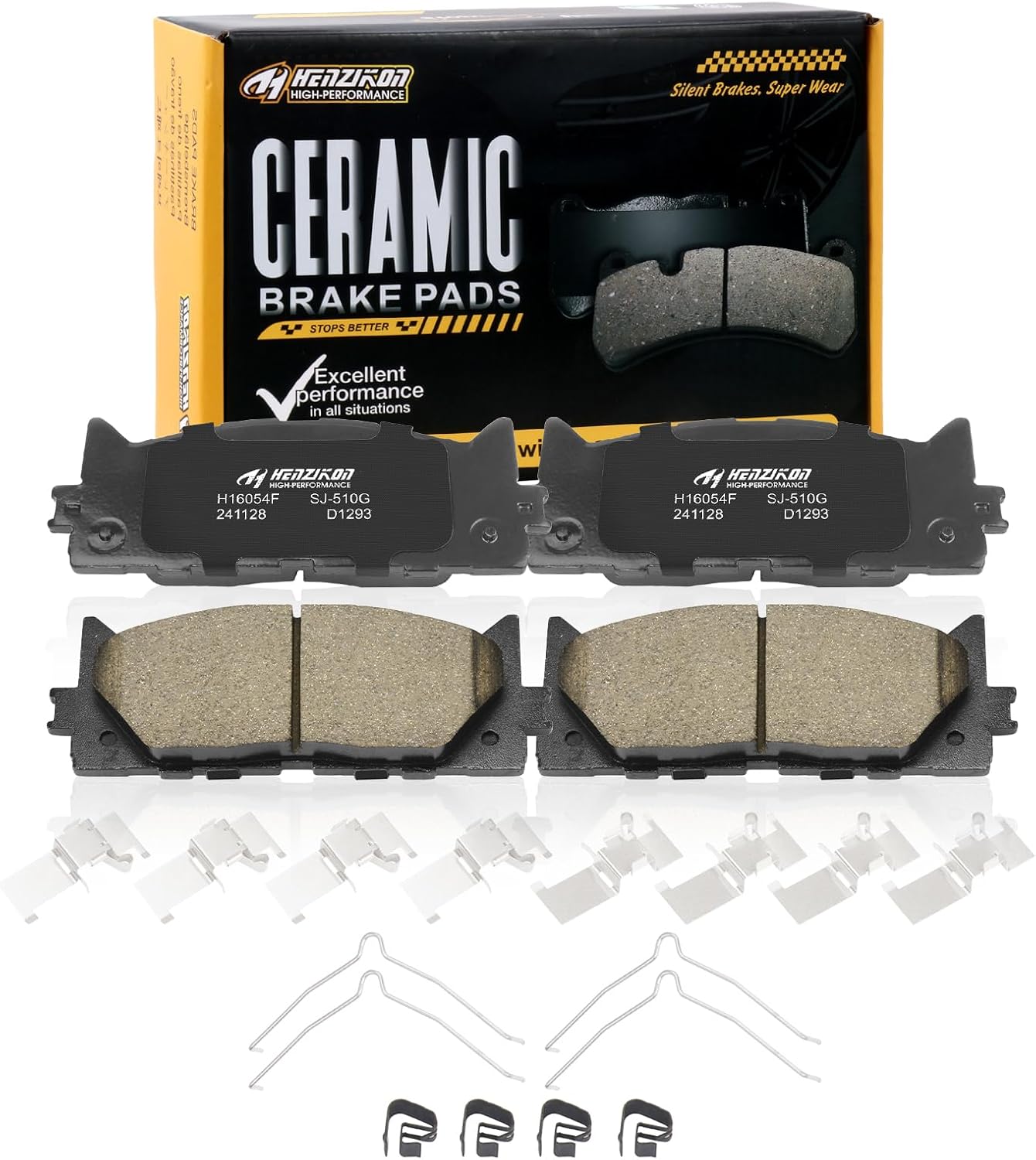
These ceramic front brake pads are designed for compatible Toyota Avalon, Camry, and Lexus ES-series vehicles, offering dependable stopping power and smooth, consistent braking performance. Built with included hardware for easier installation, they help reduce squealing and brake dust while supporting long-term durability for everyday driving.

Bosch QuietCast premium ceramic rear brake pads are engineered for quiet, reliable stopping power with low dust performance. Featuring pre-attached multilayer shims, corrosion-resistant backing plates, and OE-style slots and chamfers, this set is designed for smooth fitment and long-lasting durability. It includes pads for one axle, plus hardware and lubricant where available, making installation easier for compatible Lexus, Pontiac, and Toyota vehicles.

Designed for Toyota Avalon models from 1995 to 1997, this front ceramic brake pads kit delivers dependable stopping power with a quiet, smooth braking feel. The ceramic construction helps reduce brake dust for cleaner wheels while supporting consistent performance and easier maintenance. Built to fit properly with compatible rotors, it offers a practical replacement solution for everyday driving.
How Should You Buy and Install Camry Brake Pads?
The safest buying path is to match the pad to your exact Camry first, then compare compounds. Use your VIN, model year, trim, powertrain, axle, rotor or caliper package, and production details. Do not rely only on “fits Toyota Camry” in a marketplace title, and do not assume a pad listed for one axle or drivetrain fits another.
- OEM or OE-equivalent pads: A conservative choice when you want factory-like fit and braking behavior.
- Ceramic aftermarket pads: Commonly positioned for quiet braking, low visible dust, and daily street use.
- Semi-metallic aftermarket pads: Commonly positioned around bite, heat control, or harder-use applications.
- Price positioning: Ceramic lines are often positioned at a higher price, but price does not prove fit, quality, or braking performance. Compare the complete axle kit, included hardware, warranty terms, and application listing.
- Brand examples: Application-specific ceramic lines such as Akebono ProACT are marketed around smooth, quiet street operation and low dust. Treat those as manufacturer claims, and treat the brand name as secondary to confirmed fitment and application requirements.
- Hardware kits: Replace clips, shims, springs, and other worn hardware when required. Old hardware can cause noise, sticking, or uneven wear.
- Rotors: Inspect thickness, runout, scoring, corrosion, hot spots, and surface finish. New pads installed against unsuitable rotors may squeal, pulse, or wear unevenly.
- Brake fluid: Use only the fluid grade specified for your vehicle. U.S. brake-fluid performance and labeling requirements are covered by FMVSS No. 116.
Use the correct Toyota Camry maintenance schedule for your model year. Drivers who regularly face unusual heat, dust, short trips, heavy loading, or other demanding conditions should also review the Camry severe-driving maintenance schedule.
Pro Tip: If the old pads wore unevenly, do not install new pads and assume the problem is fixed. Check caliper slide pins, piston movement, hose condition, rotor surface, hardware, and wheel-end condition. Uneven wear usually points to another fault or service issue.
[Products Worth Considering]

Bendix Premium Ceramic Front Brake Pads are engineered to match original equipment fit, form, and function for a straightforward replacement. Built with durable materials to help resist wear and corrosion, they support consistent braking performance and reduced brake fade for everyday driving. These pads are a dependable choice for compatible Pontiac, Scion, Toyota, and related vehicles.

These ceramic front brake pads are designed for smooth, quiet braking and dependable stopping power across a range of compatible Toyota and Lexus vehicles. The chamfered, multi-layer construction helps reduce noise and brake dust while supporting stable performance in demanding driving conditions. Built for consistent braking response, they offer confident pedal feel and long-lasting reliability.
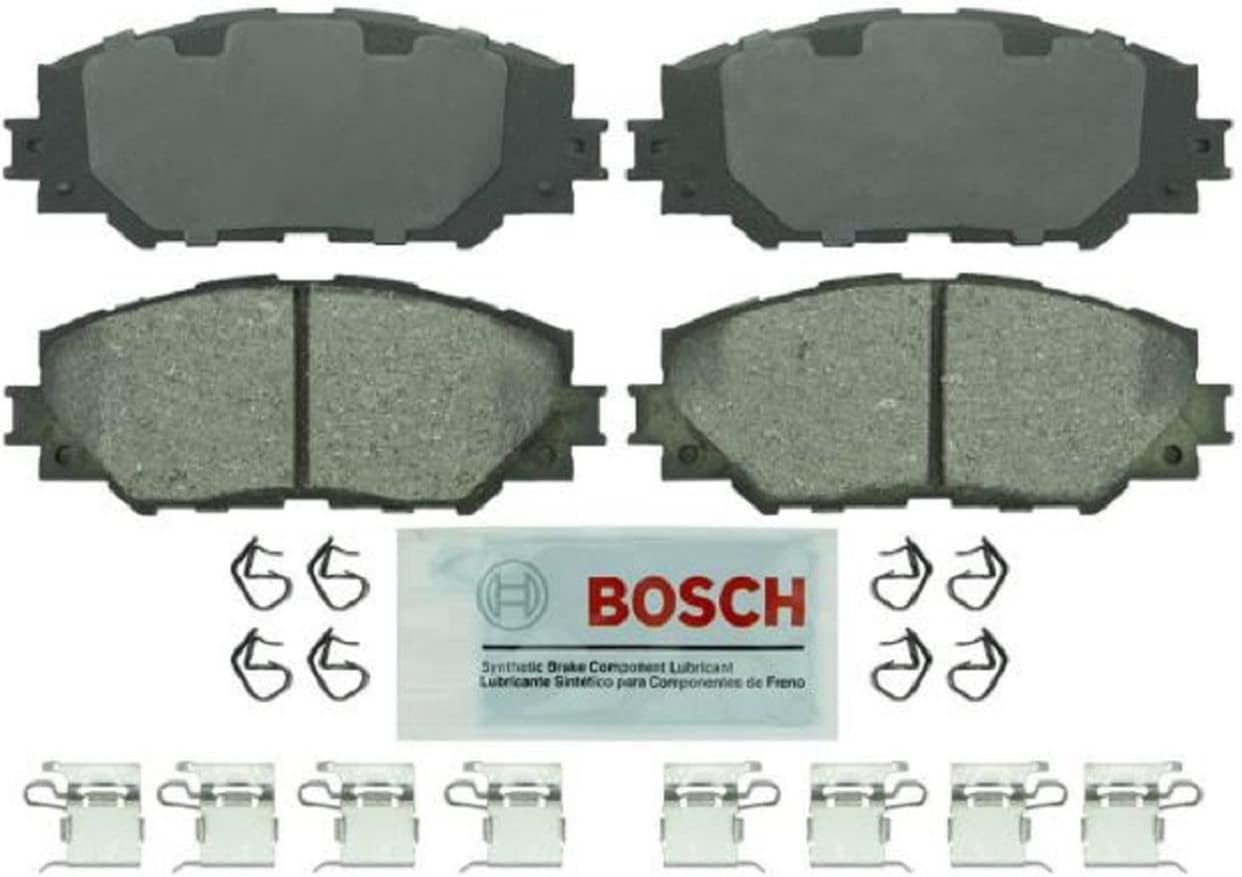
Bosch Blue ceramic front brake pads deliver dependable stopping power with platform-specific friction material designed for select Lexus, Pontiac, Scion, and Toyota vehicles. OE-style shims, slots, and chamfers help promote quiet braking, while the rust-inhibitive coating supports long-lasting performance and cleaner operation. The set includes hardware and synthetic lubricant for easier installation on one axle.
Basic Installation Safety
Brake work is safety-critical. Use wheel chocks, properly rated jack stands, correct torque specifications, suitable brake cleaner, and high-temperature brake lubricant only in the locations approved by the vehicle or component manufacturer. Never put grease on the pad friction surface or rotor face.
Replace pads on both sides of the same axle with one matching set. Complete and verify one side at a time where the manufacturer’s procedure permits, then repeat the same installation steps on the other side. Confirm whether your Camry requires a special electronic parking-brake or caliper service procedure.
Follow the bedding procedure supplied with the exact pad or rotor product. Bedding helps establish an even transfer layer, but stop counts and speeds vary by product. Do not copy a procedure intended for a different pad or rotor kit.
Before normal driving, pump the pedal as required to establish a firm pedal, confirm the fluid level, inspect for leaks, and perform the manufacturer’s low-speed checks. If the pedal remains soft, the warning light stays on, fluid leaks, or the car pulls while braking, stop driving and have the system inspected by a qualified technician. See the separate guide if your Camry brake warning light stays on.
When Should You Replace Camry Brake Pads?
Inspect the pads if you hear grinding, feel vibration, see uneven wear, notice longer stopping distance, smell overheated brakes, or receive a brake warning. A visual and measured inspection is more reliable than replacing pads at a generic mileage.
Toyota’s 2025 Camry maintenance guide uses 5,000-mile or six-month service checkpoints and includes recurring brake pad and disc inspections. At specified higher-mileage checkpoints, it also calls for pad or lining thickness and disc-runout checks. Treat that as a model-year example, not a universal schedule. Use the guide for your exact Camry, and see the separate Toyota Camry brake pad and rotor lifespan guide for wear-based replacement triggers.
Frequently Asked Questions
Are ceramic brake pads better for a Toyota Camry?
Ceramic pads are usually the better comfort-first choice for a Camry used for normal commuting. They commonly favor low noise, lighter visible dust, and smooth street operation. They are not automatically safer or higher quality, so confirm that the specific pad fits your exact Camry and suits your driving.
Do ceramic brake pads stop as well as semi-metallic pads?
A vehicle-specific ceramic pad can provide appropriate street braking on a Camry, but the material label alone cannot guarantee equal or shorter stopping distance. Some semi-metallic formulas offer a firmer initial response or more consistent behavior during repeated heat. Tires, rotor condition, brake-system tuning, temperature, road surface, and installation also affect stopping performance.
What lasts longer, ceramic or semi-metallic brake pads?
The material name alone cannot predict pad life. Some ceramic formulations deliver long service life in commuter use, while an application-specific semi-metallic pad may last longer under repeated heat. Driving style, rotor condition, hills, corrosion, caliper operation, and bedding all affect lifespan.
Are semi-metallic pads bad for Camry rotors?
Not automatically. A suitable semi-metallic pad can work well on a Camry, especially when heat control matters. Some formulations are more abrasive than comfort-oriented ceramic pads, so rotor thickness, surface finish, hardware, and bedding need careful attention.
Do Camry Hybrid models need different brake pads?
They may. Hybrid models can use different part numbers, hardware, rotor or caliper packages, and service procedures than gas-only Camrys from other model years. Regenerative braking may reduce friction-pad use during light deceleration, but the friction brakes still need regular inspection.
Can semi-metallic pads make my Camry safe for towing?
No. Brake pads cannot change the vehicle’s tow rating, payload rating, cooling capacity, chassis limits, or owner-manual restrictions. If the manual says towing is not recommended, a different pad material is not a workaround.
Can I switch from semi-metallic to ceramic pads on a Camry?
Yes, when the ceramic replacement is approved for your exact Camry and the rotors are suitable for the new pad. Replace the pads as a complete axle set and follow the new pad or rotor manufacturer’s installation and bedding procedure.
Can I mix ceramic and semi-metallic pads on the same axle?
No. Do not install different pad sets on the left and right sides of the same axle. Both sides should use one matching axle set so the friction material, hardware, and installation procedure remain consistent.
Do the front and rear Camry pads need the same material?
Not necessarily. Front and rear brakes may use different pad formulas and part numbers because each axle has a different braking role. Use an application-specific set for each axle and do not assume the front pad material or part number should be copied to the rear.
Are ceramic pads suitable for cold weather?
A quality application-specific ceramic pad can suit ordinary winter street driving. Some semi-metallic formulations may provide stronger initial bite in severe cold. Compare the specific pad’s application guidance instead of choosing from the material name alone.
Conclusion
Choose an application-specific ceramic pad for a Toyota Camry when quiet operation, low visible dust, and smooth daily braking are your priorities. Compare a semi-metallic or heat-rated street pad when repeated heat or a firmer initial response matters more than dust and noise.
Your next step is fitment and inspection, not material shopping alone. Confirm the VIN, model year, trim, powertrain, axle, rotor or caliper package, included hardware, rotor condition, and required service procedure. Replace pads as a complete axle set, correct any underlying brake fault, and follow the exact installation and bedding instructions supplied with the components.
Sources
- Toyota 2025 Camry Warranty & Maintenance Guide — scheduled maintenance and brake pad and disc inspection guidance.
- Toyota 2025 Camry Hybrid Owner’s Manual: Trailer Towing — model-year-specific towing guidance.
- Toyota USA Newsroom: 2025 Camry — ninth-generation hybrid-only lineup and FWD/AWD context.
- Toyota USA Newsroom: 2026 Camry — current U.S. hybrid-only lineup and FWD/AWD context.
- SAE J866: Friction Coefficient Identification and Environmental Marking System — scope and limits of edge-code interpretation.
- U.S. EPA Copper-Free Brake Initiative — voluntary copper-reduction targets for friction material.
- Washington Department of Ecology: Guidance for Marking Brake Friction Material — SAE J866 edge-code fields and environmental marking.
- Brembo Prime Ceramic Brake Pads — manufacturer information on ceramic-pad dust, noise, comfort, and accessories.
- Goodyear Brakes: Semi-Metallic Brake Pads — manufacturer information on semi-metallic heat behavior, noise, dust, and rotor interaction.
- ADVICS: Pros and Cons of Ceramic Brake Pads — application-focused ceramic-pad advantages and limitations.
- Brembo Brake-Pad Installation Instructions — same-axle replacement and general installation precautions.
- PowerStop Brake-Pad Break-In Procedure — explanation of bedding and establishing an even transfer layer.
- 49 CFR 571.116: Motor Vehicle Brake Fluids — U.S. brake-fluid performance and labeling requirements.