What’s in This Article
Sport mode in your Toyota Camry helps when you need quicker response, firmer steering feel, and more confident acceleration. Use it for highway merges, short passes, hills, or curvy roads where sharper control helps you drive with more precision. For daily city traffic or long steady trips, Normal or Eco mode usually makes more sense because Sport mode can raise fuel use when you drive aggressively.
When Sport Mode Helps Most: Quick Answer
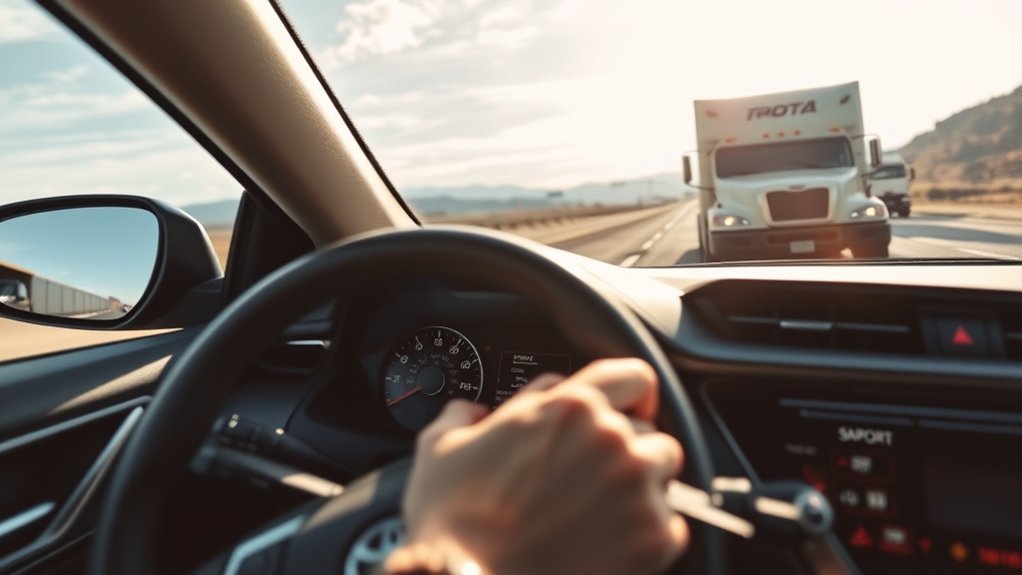
Use Sport mode in your Toyota Camry when you want sharper throttle response, firmer steering feel, and more eager power delivery. It helps most during highway merging, safe passing, hill climbs, and curvy roads where quick response matters. Toyota says Sport mode changes control settings for throttle response, transmission behavior, and Electric Power Steering (EPS) assist, so the car feels more alert than it does in Normal mode.
Key Takeaways
- Use Sport mode when you need faster response for merging, passing, hills, or winding roads.
- Choose Normal mode for most daily driving because it gives you smoother response and better balance.
- Expect lower fuel economy if you use Sport mode with hard acceleration often.
- Avoid Sport mode on slick roads, heavy traffic, or any place where gentle inputs matter more.
- Check your owner’s manual because Sport mode behavior can vary by Camry model year and trim.
How Sport Mode Changes Throttle, Shifts, and Steering
Sport mode does not add new engine power. It changes how your Camry responds to your right foot and steering input. Toyota explains that Sport mode adjusts transmission lockup and shifting, throttle response, and Electric Power Steering assist.
That means the car can feel more eager without changing the hardware. You may feel quicker acceleration response, more direct steering, and a powertrain that stays ready for stronger acceleration. The exact feel depends on your Camry’s model year, trim, and powertrain.
Sharper Throttle Response
Sport mode makes the accelerator feel more sensitive. A smaller pedal movement can give you a quicker response than the same movement in Normal or Eco mode. This helps when you need to match highway speed or leave a slow corner with more confidence.
You still need smooth pedal control. Sport mode can make jerky inputs feel stronger, especially in traffic. Use gentle pressure first, then add more throttle only when the road gives you enough space.
Quicker Transmission Shifts
On Camry models with a traditional automatic transmission, Sport mode may hold lower gears longer and shift more assertively. That keeps the engine closer to the stronger part of its power range. You feel this most during passing, merging, and short uphill pulls.
On hybrid Camry models with an electronic continuously variable transmission (eCVT), the feel works differently. The system can still respond more eagerly, but it does not shift like a traditional stepped automatic. Think of Sport mode as a response setting, not a hidden power upgrade.
Heavier Steering Feel
Sport mode can make the steering feel firmer. This added weight can help you make smoother lane changes and cleaner corner inputs. It may also make the car feel more stable on winding roads.
- Firmer steering feel can help you place the car more precisely.
- Sharper throttle response can help you accelerate into safe gaps faster.
- More eager powertrain behavior can help during short passing moves.
Sport mode does not create extra tire grip. Your tires, speed, road surface, and weather still set the limit.
Note: Sport mode changes response feel, but it does not turn a Camry into a performance car.
How Sport Mode Feels in Real Driving
When you switch a late-model Camry into Sport mode, the first thing you usually notice is the accelerator. The car reacts faster when you press the pedal. You may also notice firmer steering and less delay before the powertrain responds.
Those changes make the car feel more alert in short bursts. They help when you need to merge into traffic, pass a slower vehicle, or keep steady power through a bend. The car still rewards calm inputs, so avoid treating Sport mode like a reason to rush.
Sport mode can also make the engine run at higher revs during stronger acceleration. That sound and response can feel more engaging, but it can also use more fuel. Use your trip display to compare fuel use across Normal, Eco, and Sport on your own route.
Best Times to Use Sport Mode (Merging, Passing, Hills, Turns)

Sport mode works best when you use it with a clear purpose. It gives you the most value during short driving moments where quick response and better steering feel help you stay smooth and decisive. It does not need to stay on for every mile.
Use Sport mode for short moments when sharper throttle response, firmer steering, and stronger power delivery help you drive more confidently.
- Highway merging: Use Sport mode before the ramp opens so you can match traffic speed smoothly.
- Safe passing: Engage it before a legal passing move, then return to Normal after the pass.
- Hill climbs: Use it when you want stronger response and steadier power on an uphill grade.
- Curvy roads: Use it when firmer steering feel helps you guide the car with more care.
Do not use Sport mode just because the button sits there. Pick moments where the sharper response helps you make a safer, cleaner move.
Normal vs Sport: Everyday Driving Examples for the Camry
Normal mode suits most Camry driving because it balances smooth response, comfort, and fuel use. Sport mode suits shorter moments when you need faster response. Eco mode can help when you want gentler acceleration and better efficiency in stop-and-go driving.
The Toyota quick reference guide describes Normal mode as suitable for normal driving. It describes Eco mode as helpful for trips with frequent acceleration and braking. It describes Sport mode as useful when you want a higher level of response, such as on roads with many curves.
Commuting and Efficiency
Use Normal mode for commuting, errands, and steady highway driving. It gives you a calmer pedal feel and keeps the car easier to manage in traffic. It also avoids the higher-rev feel that Sport mode can bring during daily driving.
- Use Normal for steady traffic, school runs, errands, and long highway trips.
- Use Eco when you want gentler response and better fuel use in frequent stops.
- Use Sport briefly when you need quicker response for a clear driving reason.
This simple habit gives you control without wasting fuel. It also keeps Sport mode useful when you truly need it.
Passing and Merging
Sport mode can help when you need to enter faster traffic or pass a slower vehicle. The sharper throttle feel makes the car respond with less hesitation. This can help you commit to a safe gap with more confidence.
Plan the move before you press the accelerator. Check mirrors, signal early, and make sure you have enough space. After the merge or pass, switch back to Normal so the car settles into a calmer rhythm.
Fuel Economy & Wear: What to Expect When Using Sport Mode
Sport mode usually uses more fuel when you pair it with hard acceleration. The mode favors quick response, so the engine and hybrid system may work harder during spirited driving. You can see the effect by checking your trip fuel economy after repeated Sport mode use.
- Expect more fuel use if you accelerate hard from stoplights or in heavy traffic.
- Expect more noise and higher revs during strong acceleration.
- Expect more heat and stress if you drive aggressively often.
Sport mode itself does not damage your Camry when you use it as intended. Aggressive driving habits cause the real wear risk. Use Sport mode for short needs, then return to Normal for daily driving.
Pro tip: Compare the same route in Normal and Sport mode to learn your real fuel difference.
Switching Modes Safely (When Not To) and Practical Tips
You should switch modes only when you can keep full attention on the road. Choose a steady moment, keep the wheel straight when possible, and avoid making the change during hard acceleration. This helps you avoid abrupt response changes when the car already needs smooth control.
Avoid Sport mode on wet, icy, snowy, or loose roads. Sharper throttle response can make it harder to apply power gently. Use a calmer mode when traction matters more than quick response.
Heavy traffic also makes Sport mode less useful. Frequent stop-and-go driving can make the car feel jumpy and can raise fuel use. Save Sport mode for open roads, safe passes, hills, and curves where the extra response helps.
Warning: Do not use Sport mode to drive faster than road, weather, traffic, or legal limits allow.
Frequently Asked Questions
What does Sport mode do in a Camry?
Sport mode changes how your Camry responds to throttle, steering, and transmission input. You feel quicker response, firmer steering, and a more alert driving feel. It does not add extra engine power.
Is Sport mode better for gas mileage?
No, Sport mode usually does not improve gas mileage during normal driving. It can make you use more fuel because it encourages quicker response and stronger acceleration. Use Normal or Eco mode when fuel economy matters more.
What are the disadvantages of Sport mode?
Sport mode can lower fuel economy, raise engine noise, and make the car feel less smooth in traffic. It can also make throttle inputs feel too sharp on slick roads. Use it only when the sharper response gives you a clear benefit.
Can you switch to Sport mode while driving?
Many Toyota models let you change drive modes while driving, but you should choose a steady and safe moment. Avoid switching during sharp turns, hard braking, or hard acceleration. Check your Camry owner’s manual for exact guidance for your model year.
Should you use Sport mode every day?
You can use Sport mode daily if road conditions suit it, but most drivers do not need it all the time. Normal mode gives you a better balance for errands, commuting, and highway cruising. Sport mode works best as a short-use tool.
Conclusion
Sport mode helps most when you need quick response for merging, passing, hills, or curvy roads. Use it with a clear purpose, then return to Normal or Eco when the road no longer demands sharper response. This habit protects fuel economy, keeps the car smoother, and still gives you confident control when you need it. Let Sport mode support your driving, not replace good judgment.
References
- How does Sport mode change my vehicle’s driving characteristics? — Toyota Customer Support
- 2025 Toyota Camry Quick Reference Guide — Toyota, 2025
- 2025 Toyota Camry Hybrid Owner’s Manual — Toyota Owners
- 2026 Toyota Camry — Toyota