Last updated: July 16, 2026
Use Toyota Camry Sport mode when you need quicker accelerator response for a highway merge, a legal pass, an uphill grade, or a winding road. Normal mode remains the better choice for most commuting and steady cruising. Sport mode does not add horsepower or tire grip, and its exact effect depends on your Camry’s model year and powertrain.
The 2025-and-newer U.S. Camry is hybrid-only and uses an electronic continuously variable transmission (eCVT). Older gas-powered Camrys may use a stepped automatic transmission, so Sport mode can feel different between generations. For a broader explanation of Eco, Normal, Sport, and EV settings, see this guide to Camry drive modes.
What’s in This Article
When Sport Mode Helps Most: Quick Answer

Use Sport mode when you want a higher level of response for a short, specific driving need. Toyota lists curvy roads as an example. The mode can also help the Camry feel more immediate during a highway merge, a legal passing move, or an uphill section.
Toyota’s general Sport-mode guidance says the setting can change throttle response, transmission control, and Electric Power Steering assist. The exact combination depends on the Camry’s model year, trim, and powertrain. It does not increase the engine’s or hybrid system’s rated horsepower.
| Driving Situation | Best Starting Mode | Why |
|---|---|---|
| Daily commuting and steady cruising | Normal | Balances response, smoothness, quietness, and fuel use. |
| Frequent acceleration and braking | Eco or Normal | Gentler response can make smooth inputs easier. |
| Highway merge, legal pass, hill, or winding road | Sport | Provides a more immediate response to accelerator input. |
| Wet, icy, snowy, or loose surface | Normal or Eco | Smoother response may make available traction easier to manage. |
Key Takeaways
- Use Sport mode for short situations where quicker response gives you a clear benefit.
- Choose Normal mode for most commuting, errands, and steady highway driving.
- Sport mode changes response, but it does not add rated horsepower or tire grip.
- The 2025-and-newer U.S. Camry uses a hybrid system and eCVT, so it does not shift like an older stepped automatic.
- Sport mode and S or sequential shift mode are different controls with different purposes.
Three-question rule: Use Sport mode when you need quicker response now, the road is predictable, and you can use the extra sensitivity without exceeding a safe speed. If any answer is no, Normal mode is usually the better choice.
[Products Worth Considering]

Armor All Extreme Wheel and Tire Cleaner is a powerful spray designed to cut through stubborn dirt, grease, tar, and brake dust on wheels and tires. It is safe for use on factory and aftermarket finishes, including alloy, steel, chrome, and plastic wheel trims, while its fast-acting formula works in just seconds. The deep-cleansing action helps reach hard-to-clean areas and leaves wheels looking clean and shiny.

This Yangday steering wheel cover is designed for a custom fit on select Toyota models, helping improve grip, comfort, and control during everyday driving. Its breathable leather construction and non-slip inner lining offer a secure feel, while the sport-inspired design adds a stylish upgrade to the car interior. The cover is easy to install and helps protect the original steering wheel from heat, wear, and seasonal discomfort.

This coolant electric water pump is designed as a replacement for select Toyota vehicles, helping maintain proper engine cooling performance and reliable temperature control. Built to OE specifications, it offers fitment support for compatible Avalon, Camry, and RAV4 models with 2.5L L4 engines. It also includes cross-reference part numbers for easier matching and comes with after-sales support for covered defects.
How Sport Mode Changes Throttle, Shifts, and Steering
Sport mode does not install more power or change the Camry’s mechanical limits. It changes how quickly the car reacts to your accelerator and, on applicable models, can alter transmission control and Electric Power Steering assist.
Toyota describes Sport mode as the setting to use when you want a higher level of response. Because Camry powertrains have changed over time, the exact effect is not identical on every model year.
[Products Worth Considering]
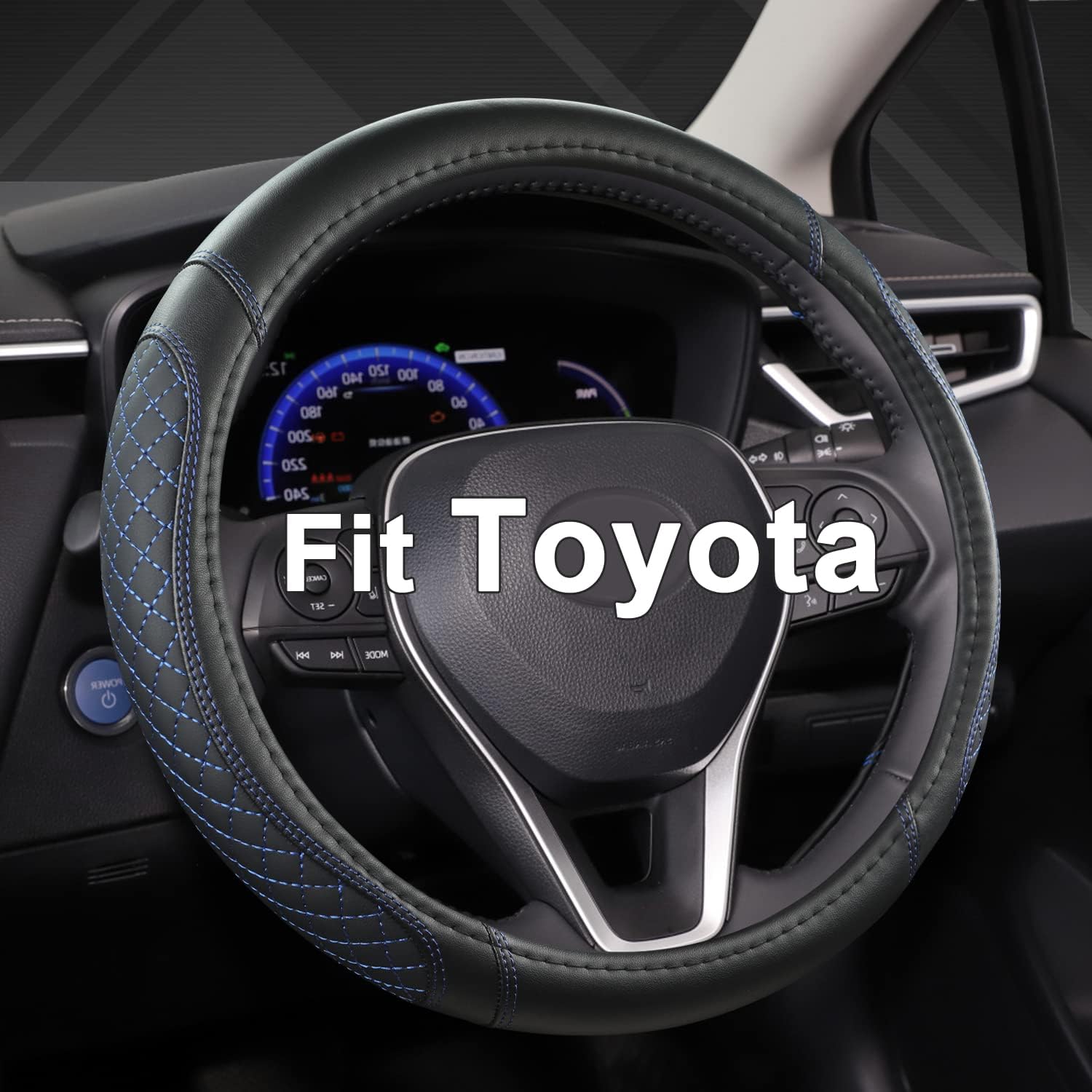
This custom-fit steering wheel cover is designed for select Toyota models and sized for standard steering wheels to help improve grip and comfort while driving. Made with soft microfiber leather and a non-slip rubber inner ring, it adds control, protects your wheel, and brings a stylish diamond-quilted look to your car interior. Installation is simple and tool-free, making it an easy upgrade for everyday driving.

KAX CA10171 premium engine air filter is designed as a direct replacement for select Toyota Camry and Venza models, helping maintain clean airflow to protect critical engine components. Its high-performance filter media delivers strong filtration efficiency and long service life for dependable everyday driving. With a precise rectangular fit and easy replacement design, it supports better acceleration, consistent performance, and improved fuel economy.

Upgrade your Toyota interior with this custom-fit steering wheel cover designed for a wide range of compatible models. Made from soft microfiber leather with an anti-slip lining, it enhances grip, adds comfort, and helps protect your steering wheel from everyday wear, dirt, fading, and scratches. The easy-to-install design makes it a practical way to refresh a worn steering wheel and improve your cabin’s look.
Sharper Throttle Response
Sport mode makes the accelerator feel more sensitive. A smaller pedal movement may request more immediate power than the same movement in Normal or Eco mode. This can reduce the sensation of hesitation when you need to match highway speed.
The sharper mapping does not mean the engine or hybrid system has gained horsepower. It changes how quickly the available output responds to your pedal input.
Transmission and eCVT Response
Gas-powered Camrys with a stepped automatic transmission may change transmission lockup and shifting behavior in Sport mode. This can keep the powertrain ready to respond during a pass, climb, or corner exit.
The 2025-and-newer U.S. Camry is hybrid-only and uses an eCVT. It does not make conventional stepped gear changes. On those models, Sport mode changes the response of the hybrid powertrain rather than revealing a hidden set of faster physical gears.
Steering Feel
Toyota’s general Sport-mode guidance says the setting can change Electric Power Steering assist. Depending on the Camry’s model year and trim, the steering may feel firmer or more deliberate.
- Sharper accelerator response can help the car react sooner during a planned merge.
- Adjusted steering assist may make corner inputs feel more deliberate.
- Powertrain calibration can make available power feel easier to access.
Sport mode does not create additional tire grip. Tire condition, pressure, temperature, speed, weather, and road surface still determine how much traction is available.
Note: Sport mode changes response characteristics. It does not turn off the Camry’s normal physical limits or make the car suitable for unsafe speeds.
Sport Mode vs S Mode: They Are Not the Same
Sport mode changes the car’s response calibration. The shifter’s S or sequential mode gives you more control over the selected shift range or simulated ratios. Selecting one does not automatically mean the other is active.
On the 2025 Camry, Toyota explains that selecting lower ranges in S mode can provide stronger uphill response or engine braking on a descent. Toyota also recommends the normal D position for the best fuel economy during ordinary driving.
- Use Sport mode when you want more immediate accelerator response.
- Use S or sequential mode when you need more control over shift range or engine braking.
- Use Normal D for most flat-road commuting and steady cruising.
See the separate guide to Camry manual shift mode for detailed uphill, downhill, and paddle-shifter guidance.
How Sport Mode Feels in Real Driving
Depending on the model year, you may notice the accelerator response before any other change. The Camry may react with less pedal movement, and some versions may also feel different through the steering wheel or powertrain.
On a hybrid eCVT model, stronger acceleration can raise engine speed without the distinct gear changes you would feel from a stepped automatic. That sound is not proof that the transmission is slipping. It reflects how an eCVT coordinates engine and electric-motor output.
How to Compare Normal and Sport Safely
- Choose a familiar route with predictable traffic and legal speeds.
- Drive the route in Normal mode, then repeat it in Sport mode under similar conditions.
- Before each run, reset the same trip display if you want to compare fuel economy.
- Note pedal sensitivity, engine sound, steering weight, and how easily you maintain a steady speed.
- Do not time acceleration runs, handle a phone, or create a traffic gap for the test.
A single trip cannot prove a permanent MPG difference because traffic, temperature, wind, and acceleration may change. Several similar trips give you a more useful comparison.
Best Times to Use Sport Mode (Merging, Passing, Hills, Turns)

Sport mode works best when you select it for a clear, short-term reason. It is most useful when faster response helps you make a planned move smoothly, not when it encourages unnecessary speed.
Use Sport mode when quicker response supports a planned driving task. Return to Normal when that task is complete.
- Highway merging: Select Sport before you need to accelerate so you can build speed smoothly along the ramp.
- Legal passing: Use it when you have a clear view, enough distance, and a legal passing zone.
- Hill climbs: Use it when the Camry feels slow to answer accelerator input on a grade.
- Curvy roads: Use it when more immediate response helps you maintain a smooth, controlled pace.
Sport mode cannot make an unsafe gap safe. Check mirrors, signal, confirm space, and leave enough distance to cancel a pass or merge if conditions change.
[Products Worth Considering]

This steering wheel cover is designed to fit a wide range of Toyota models and any standard-size wheel for a secure, comfortable upgrade. Made with nappa leather and a carbon fiber texture, it helps improve grip, reduce hand fatigue, and protect your original wheel from everyday wear, sun damage, and sweat. The anti-slip design and easy installation make it a practical interior accessory for daily driving.
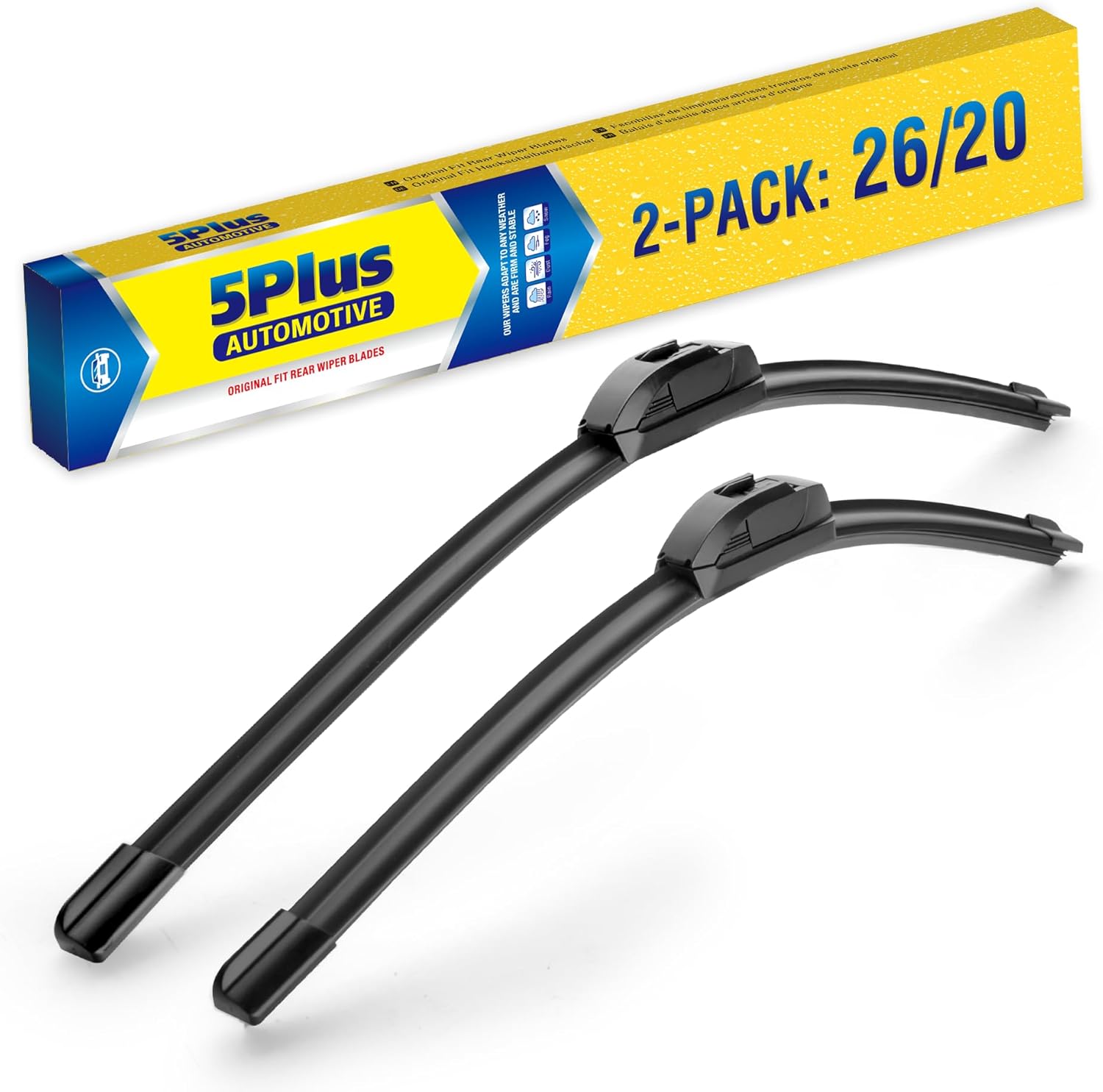
These custom-fit replacement wiper blades are designed for Toyota Camry models and select compatible vehicles, delivering a smooth, quiet wipe for clearer visibility in changing weather. Built with a metal base, dual steel springs, and PTFE-coated natural rubber, they help provide a secure fit, reduced streaking, and dependable performance for everyday driving.

These round blind spot mirrors add a wider viewing angle to help improve lane changes, passing, and everyday driving safety. The frameless convex HD glass design offers a slim, clear rear view while the adjustable swivel mount makes positioning quick and easy. Compatible with cars, SUVs, vans, and trucks, this two-pack is a simple upgrade for reducing blind spots.
Normal vs Sport: Everyday Driving Examples for the Camry
Normal mode is the default choice for most driving. It balances response, comfort, quietness, and fuel use. Sport mode prioritizes a more immediate response, while Eco mode moderates accelerator behavior for smoother, fuel-conscious driving.
Toyota’s 2025 quick-reference guide describes Normal as suitable for normal driving, Eco as helpful during trips with frequent acceleration and braking, and Sport as useful when a higher level of response is desired.
Commuting and Efficiency
Use Normal mode for commuting, errands, school runs, and steady highway travel. It gives the accelerator a more relaxed feel and avoids unnecessary sensitivity in stop-and-go traffic.
- Use Normal for daily driving and steady cruising.
- Use Eco when frequent stops make smooth accelerator control a priority.
- Use Sport when a specific merge, pass, hill, or winding section calls for quicker response.
Passing and Merging
Sport mode can make the Camry answer accelerator input more quickly, but you must still plan the move before adding power. Check mirrors, signal, confirm that the gap is large enough, and accelerate smoothly.
After the merge or pass, return to Normal if you no longer need the sharper response. Keeping Sport mode active provides little benefit during steady cruising.
Fuel Economy & Wear: What to Expect When Using Sport Mode
Toyota does not state a fixed Camry MPG penalty for Sport mode in the cited quick-reference material. Fuel use often rises when the sharper response leads to harder acceleration, higher speeds, or more frequent changes in speed.
- A smooth Sport-mode driver may use less fuel than an aggressive driver in Normal mode.
- Repeated hard acceleration and braking can increase fuel, tire, and brake use in any mode.
- Engine speed may rise more noticeably when you request strong acceleration from an eCVT hybrid.
Normal use of a factory drive mode is different from abusive driving. Sport mode does not add rated horsepower, disable normal engine protections, or require a special maintenance schedule. Follow the maintenance intervals and operating limits for your exact Camry.
Pro tip: Compare several similar trips instead of judging fuel economy from one short drive.
Switching Modes Safely (When Not To) and Practical Tips
On the 2025 Camry, the center-console drive-mode controls include ECO, NORMAL, and SPORT buttons. After selecting Sport, check the instrument display for the Sport-mode indicator. Controls and indicator placement can differ on earlier model years.
Make the selection only when you can keep your eyes and attention on the road. Avoid reaching for the control during hard acceleration, hard braking, a lane change, or a sharp turn.
Sport mode does not add traction. On wet, icy, snowy, or loose surfaces, Normal or Eco may make smooth accelerator input easier. Reduce speed, increase following distance, and keep the Camry’s stability and traction systems enabled.
Selecting Sport mode is not the same as pressing the VSC or TRAC OFF control. The drive-mode selector changes response characteristics, while the separate VSC/TRAC control changes how the stability and traction systems operate.
Warning: Do not use Sport mode to exceed road, weather, traffic, tire, visibility, or legal limits.
Frequently Asked Questions
What does Sport mode do in a Camry?
Sport mode gives the Camry a more immediate response to accelerator input. Depending on the model year and powertrain, it can also alter transmission control and Electric Power Steering assist. It does not change the car’s rated horsepower.
Does Sport mode make a Camry faster or add horsepower?
Sport mode does not add rated horsepower. It can make the Camry feel quicker because the accelerator requests more response with less pedal movement. Actual acceleration still depends on the engine or hybrid system, vehicle load, traction, and road conditions.
Is Sport mode better for gas mileage?
Sport mode is not designed as a fuel-saving setting. Fuel use may rise if the sharper response leads you to accelerate harder or drive faster. Normal or Eco mode is usually the better choice when efficiency is the priority.
What are the disadvantages of Sport mode?
Sport mode can make the accelerator feel too sensitive in traffic or on low-grip roads. It may also increase fuel use when paired with aggressive acceleration. Some drivers may prefer the smoother feel of Normal mode for everyday travel.
Can you switch to Sport mode while driving?
Camry drive-mode controls are designed for normal vehicle operation, but you should follow the instructions for your exact model year. Make the selection only when you can keep your attention on the road, and avoid changing modes during hard braking, hard acceleration, or a sharp turn.
Is Sport mode the same as S mode in a Toyota Camry?
No. Sport mode changes response calibration. S or sequential mode gives you more control over the selected shift range or simulated ratios and can help with uphill response or downhill engine braking.
Does Sport mode turn off traction control?
No. Selecting Sport mode is separate from using the VSC or TRAC OFF control. Sport mode changes driving response, while VSC and TRAC help manage stability and wheel slip unless you switch those systems off separately.
Should you use Sport mode every day?
You can select Sport mode whenever your owner’s manual permits it, but most daily driving does not require the sharper response. Normal mode provides a better all-around balance for commuting, errands, and steady highway travel.
Conclusion
Use Toyota Camry Sport mode when a planned merge, legal pass, hill, or winding road calls for quicker response. Choose Normal for most daily travel, and remember that Sport mode does not add horsepower, traction, or extra safety margin.
Check the guide for your exact model year because older stepped-automatic Camrys and current eCVT hybrids can feel different. Select the mode before the demanding part of the drive, use smooth inputs, and return to Normal when the extra response no longer helps.
References
- How does Sport mode change my vehicle’s driving characteristics? — Toyota Customer Support
- 2025 Toyota Camry Quick Reference Guide — Toyota
- Toyota Camry Goes Exclusively Hybrid Plus a New Look and More Technology — Toyota USA Newsroom
- 2025 Toyota Camry Owner’s Manual — Toyota Owners
- Toyota Camry — Toyota