Last updated: September 16, 2026
Use Normal mode for most driving in a 2025 Toyota Camry. It is the balanced everyday setting for commuting, errands, mixed city/highway trips, and steady cruising. Choose Eco when you specifically want gentler, efficiency-focused response, or Sport when you specifically want a higher-response driving feel.
Quick Answer
Use Normal mode for most 2025 Toyota Camry driving: daily commutes, stop-and-go traffic, mixed city/highway trips, errands, and relaxed cruising. Toyota identifies Normal as the regular-driving setting, while Eco is more fuel-focused and Sport provides a higher-response feel. Your actual Camry fuel economy still depends heavily on speed, traffic, weather, tires, climate use, and driving style.
Key Takeaways
- Normal mode is the everyday default when you want balanced response, quietness, comfort, and efficiency.
- Eco mode is the more fuel-focused setting and moderates vehicle response to make efficient driving easier.
- Sport mode provides a higher-response feel when you want the Camry to react more immediately.
- Drive mode does not guarantee a specific MPG. Speed, traffic, weather, terrain, tire condition, climate use, and accelerator input still matter.
- Normal mode does not create extra horsepower or traction. It changes how the Camry responds within the vehicle’s existing powertrain and grip limits.
At a Glance
| Best Use | Daily commuting, errands, mixed roads, city traffic, and relaxed highway driving |
| Difficulty | Easy |
| Tools Needed | Drive mode controls only |
| Cost | $0 |
When Should You Use Toyota Camry Normal Mode?

Use Normal mode whenever your drive does not call for Eco’s gentler efficiency-focused response or Sport’s higher-response feel. For most owners, that means Normal works well for the majority of everyday trips.
Toyota’s 2025 Camry Quick Reference Guide describes Normal mode as suitable for normal driving. It describes Eco as useful for lowering fuel consumption during trips with frequent acceleration and braking and Sport as the higher-response setting for roads with many curves.
Keep Normal mode selected when you want:
- Predictable everyday response in city and suburban traffic.
- A balanced accelerator feel without Eco’s more moderated response.
- Enough normal powertrain response for routine highway entry and changes in traffic speed.
- Balanced efficiency without treating fuel economy as the only priority.
- Normal climate-control behavior rather than Eco’s efficiency-focused HVAC operation.
Simple rule: If you do not have a specific reason to choose Eco or Sport, use Normal. It is the least complicated starting point for mixed everyday driving.
[Products Worth Considering]

These thickened silicone drink coasters feature a deep tray design that helps catch overflow from hot or cold beverages while protecting tables and countertops from marks and scratches. The non-slip, non-stick surface keeps glasses in place and releases easily, and the food-grade silicone construction is durable, heat resistant, dishwasher safe, and suitable for everyday use at home, in the office, or at a bar.

Perfect Compatibility: The ac blower switch compatible with Toyota Corolla CE LE S XLE XRS L 2009 2010 2011 2012 2013, Fit for Matrix S XRS XR 2009 2010. This ensures a proper fit and functionality in the specified vehicles
What Does Normal Mode Actually Do?
Normal mode is the Camry’s balanced response setting. It is not a maximum-power mode and it is not a maximum-MPG mode. Instead, it gives the hybrid powertrain an everyday calibration between Eco’s more moderated behavior and Sport’s higher-response behavior.
The 2025 Toyota Camry is hybrid-only in the U.S. Toyota pairs a 2.5-liter four-cylinder engine with its fifth-generation Toyota Hybrid System. Front-wheel-drive models are rated at 225 net-combined horsepower, while models with available Electronic On-Demand All-Wheel Drive are rated at 232 net-combined horsepower. All trims use an electronically controlled continuously variable transmission (eCVT).
Selecting Normal mode does not change those published power ratings. It changes the driving response you experience within the same hybrid powertrain. Normal also does not create additional tire grip or replace traction-control, stability-control, tire, or weather limitations.
How Do You Select Normal Mode on a 2025 Camry?
The 2025 Camry uses center-console drive mode controls for ECO, NORMAL, and SPORT, with a separate EV MODE control. If you are driving in Eco or Sport and want to return to the everyday setting, press the NORMAL control.
- Locate the ECO, NORMAL, and SPORT controls on the center console.
- Press NORMAL.
- Continue driving with smooth accelerator, steering, and braking inputs appropriate for traffic and road conditions.
Make any mode selection only when you can do so without taking unnecessary attention away from the road.
[Products Worth Considering]

【Universal XV80 Fitment】 Engineered specifically for 2024-2025 Toyota Camry (9th Gen). Fully compatible with all trims including LE, SE, XLE, XSE, and Hybrid models. No...
Normal vs. Eco vs. Sport Mode
The easiest way to choose among the three main drive modes is to decide what you want from the accelerator and powertrain response at that moment. For a broader overview, see the site’s Toyota Camry drive modes guide.
| Mode | Best Starting Point For | What You’ll Feel |
|---|---|---|
| Normal | Commuting, errands, mixed roads, steady cruising | Balanced everyday response |
| Eco | Fuel-conscious driving and frequent acceleration/braking | More moderated response and efficiency-focused climate operation |
| Sport | Situations where you want a higher-response feel | More immediate powertrain response |
Normal is the simplest choice when you do not need either extreme. Eco can make smooth, fuel-conscious inputs easier. Sport can make the Camry feel more immediate, but it does not increase the vehicle’s published system horsepower or create additional traction.
[Products Worth Considering]

Fitment: This Rear Light Switch Compatible with Toyota's new model, fits Tacoma 2024-2026, fits Tundra 2022-2026, fits 4Runner 2024-2026, fits Camry 2018-2026, fits Corolla 2020-2026, fits Sienna 2021-2026(Please check the following fitment list before purchasing)
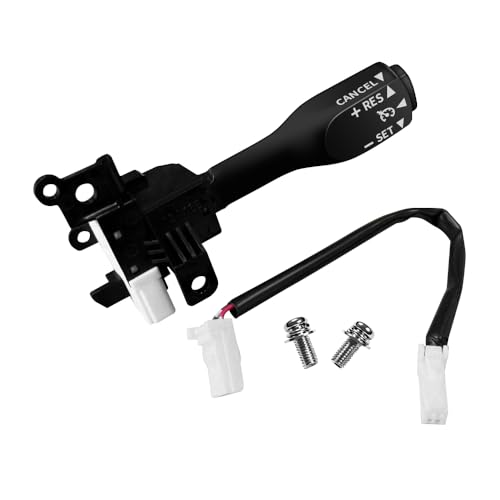
Note: This cruise control is for replacement only and Do Not fit 1.6L Toyota Corolla and Do Not fit all manual transmission cars!!!. Please make sure your original car has cruise control function and check your original part number, Reference Part Number: 84632-34017, 84632-08020, 84632-08021, 84632-0F010, 84632-34010, 84632-34011. If your original car is a hybrid, you need to use the original car wiring harness!!!
How Normal Mode Balances Power and Fuel Efficiency
Normal mode gives the 2025 Camry a balanced everyday response instead of prioritizing either Eco-style moderation or Sport-style immediacy. That makes it practical when one trip includes parking lots, traffic lights, highway ramps, and steady cruising.
Balanced Power Delivery
With gentle accelerator input, the Camry can move smoothly and let its hybrid system manage gasoline and electric power automatically. When traffic requires more acceleration, you can press farther into the accelerator without first changing modes.
Sport can still be useful when you specifically prefer a more immediate response. For more detail on that setting, see when to use Toyota Camry Sport mode.
Balanced Fuel Economy
Normal mode can deliver strong fuel economy, but Toyota does not assign separate EPA ratings to Normal, Eco, and Sport. Fuel-economy ratings are tied to the vehicle’s trim and drivetrain. Toyota’s 2025 figures range from 44 to 51 mpg combined depending on configuration.
Normal mode is best understood as the Camry’s balanced everyday setting: normal response, good efficiency potential, and no need to keep changing modes as traffic conditions change.
For better real-world mileage, focus on smooth acceleration, reasonable speed, early braking, correct tire pressure, and efficient climate use. Those factors can matter more than repeatedly changing drive modes.
Using Normal Mode in City Driving and Stop-and-Go Traffic
Normal mode works well when city traffic is unpredictable. It avoids Sport’s higher-response feel while giving a more direct everyday response than Eco’s efficiency-focused calibration.
Smooth Stop-and-Go Control
Use Normal when traffic repeatedly changes between stopped, crawling, and flowing speeds. The balanced response makes it suitable for parking-lot exits, traffic lights, short gaps, and ordinary urban acceleration without requiring constant mode changes.
For a short errand, there is usually no need to micromanage the selector. Normal lets the hybrid system handle the gasoline/electric balance automatically while you concentrate on traffic.
Balanced Fuel Efficiency
Eco is the more fuel-focused setting because Toyota calibrates it to encourage gentler accelerator behavior and efficiency-focused climate operation. It can help fuel economy, but it does not guarantee higher MPG on every trip.
Your actual mileage still depends on speed, traffic, terrain, temperature, tire condition, climate use, and how smoothly you accelerate and brake.
Comfortable Climate Response
Normal mode is also useful when you want the climate system to operate without Eco mode’s additional efficiency-focused control. Toyota’s Eco mode can modify heating, cooling, and fan operation to support fuel economy.
If Eco makes the cabin feel slower to reach your desired temperature, returning to Normal removes that Eco drive-mode priority. Always prioritize clear windows and safe visibility over small fuel savings.
When Should You Switch Back to Normal Mode?
Switch from Eco to Normal when you no longer need Eco’s more moderated response or when you simply prefer the Camry’s regular accelerator feel.
Switch from Sport to Normal after the situation that made the higher-response setting useful has passed. For steady cruising, ordinary commuting, errands, or congested traffic, Normal usually provides the more neutral response.
Warning: A drive mode cannot compensate for excessive speed, worn tires, poor visibility, low traction, or unsafe driving. Make mode changes only when doing so will not distract you.
How Normal Mode Affects AC, Heating, and Fan Behavior

Normal mode uses the Camry’s regular climate-control behavior rather than the extra efficiency focus associated with Eco drive mode.
Toyota’s owner guidance says Eco drive mode can control heating, cooling, and fan operation to enhance fuel efficiency. If you want the climate system to respond without that drive-mode priority, select Normal.
Normal can make sense when:
- The cabin is very hot or cold and comfort is the immediate priority.
- You need reliable defogging or airflow for visibility.
- You are carrying passengers and prefer standard climate behavior.
- You do not want Eco’s efficiency-focused HVAC operation.
Note: Heating and air-conditioning demand can affect real-world hybrid fuel economy. Use the climate settings needed for comfort and clear visibility first.
Quick Checklist: Keep Normal Mode or Switch?
Use this quick decision guide:
- Daily commute or mixed roads: keep Normal.
- Frequent starts and stops with fuel economy as the priority: consider Eco.
- Routine highway entry: Normal is usually sufficient; choose Sport only if you specifically want a higher-response feel.
- Steady highway cruise: Normal is an easy default.
- Curving road or situation where you want more immediate response: Sport may feel more responsive.
- Cabin comfort is the priority: Normal avoids Eco drive mode’s additional climate-efficiency focus.
- Rain or snow: Normal is acceptable, but no drive mode adds tire grip. Reduce speed, increase following distance, and use smooth inputs.
What About EV Mode?
EV drive mode is separate from Normal, Eco, and Sport. Toyota’s 2025 guidance describes it as a short-distance mode intended for situations such as quiet residential driving or indoor parking when operating conditions allow.
It is not a substitute for Normal mode during regular commuting or highway driving. For a deeper explanation, see the Toyota Camry Hybrid EV Mode guide.
Frequently Asked Questions
When should I drive in Normal mode?
Use Normal mode for everyday commuting, errands, mixed city/highway routes, traffic, and steady cruising. It is the regular balanced setting when you do not specifically need Eco’s fuel-focused response or Sport’s higher-response feel.
What does Normal mode do on a 2025 Toyota Camry?
Normal mode gives the 2025 Camry its regular balanced driving response. It sits between Eco’s more moderated efficiency-focused behavior and Sport’s higher-response feel while the hybrid system continues to manage gasoline and electric power automatically.
What is the difference between Normal and Eco mode on a Toyota Camry?
Normal provides the regular everyday response. Eco is more focused on helping fuel economy through moderated vehicle response and efficiency-focused climate operation. Eco can make efficient driving easier, but it does not guarantee a particular MPG result.
Does Normal mode save gas?
Normal mode can deliver good fuel economy, but Toyota positions Eco as the more fuel-focused setting. Actual MPG depends on speed, traffic, weather, terrain, tire condition, climate-control use, and how smoothly you accelerate and brake.
Should I use Normal mode on the highway?
Yes. Normal mode is a practical setting for steady highway cruising and ordinary changes in traffic speed. Sport is available if you specifically want a higher-response feel, but you do not need Sport simply to drive on the highway.
Does Normal mode change the Camry’s horsepower?
No separate Normal-mode horsepower rating is published. Toyota rates the 2025 Camry at 225 net-combined horsepower with front-wheel drive and 232 horsepower with available all-wheel drive. Drive modes change vehicle response rather than creating a different published maximum system-output rating.
Can I use Normal mode in rain or snow?
Yes, but Normal mode is not a traction mode and does not add tire grip. In rain, snow, or ice, reduce speed, increase following distance, use smooth steering and braking, and make sure your tires are appropriate for the conditions.
Conclusion
Normal mode is the practical everyday setting for a 2025 Toyota Camry. Use it for commuting, errands, mixed roads, city traffic, and steady highway cruising when you want the car’s regular balanced response.
Switch to Eco when you specifically want the more fuel-focused calibration, or to Sport when you specifically want a higher-response feel. Otherwise, there is little reason to keep changing modes: Normal is designed for normal driving.
Sources
- Toyota — 2025 Camry Quick Reference Guide — supports Normal, Eco, Sport, EV drive mode, and control-location guidance.
- Toyota USA Newsroom — 2025 Camry Hybrid Powertrain and Drive Modes — supports the hybrid-only U.S. powertrain, horsepower ratings, and standard selectable modes.
- FuelEconomy.gov — 2025 Toyota Camry MPG Estimates — supports official EPA fuel-economy figures by configuration.
- Toyota — 2025 Camry eBrochure — supports trim, drivetrain, powertrain, eCVT, drive-mode, and mileage specifications.
- NHTSA — Winter Weather Driving Tips — supports slower speeds, increased following distance, and tire-focused safety guidance for slippery conditions.