
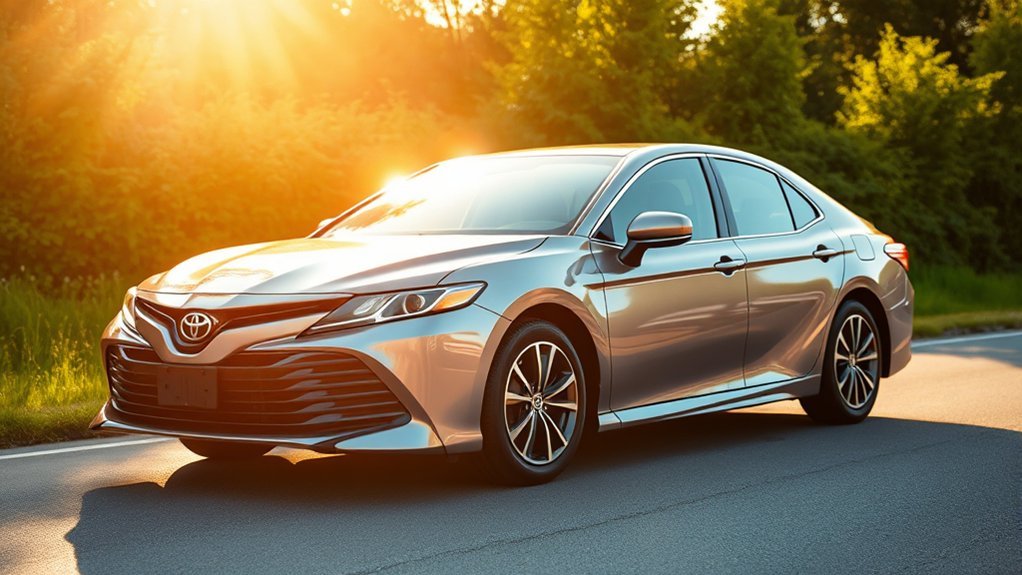
Your Toyota Camry can get better real-world fuel economy without bolt-on parts, tuning, or risky shortcuts. The biggest gains usually come from smoother driving, correct tire pressure, smart trip planning, lighter loads, and staying current with Toyota’s maintenance schedule. For the 2025 Camry, Toyota lists an EPA-estimated rating of up to 51 mpg combined on the LE FWD, but your actual mileage depends heavily on speed, weather, terrain, tire condition, traffic, and driving habits.
Quick Answer
To improve Toyota Camry fuel economy without modifications, drive smoothly, avoid hard acceleration and braking, use ECO mode when it fits the situation, keep tires inflated to the door-jamb PSI, reduce idling, remove unnecessary weight, combine errands, and follow Toyota’s maintenance schedule.
Key Takeaways
- Smooth acceleration, steady speeds, and early braking are the highest-impact habits for better MPG.
- Check tire pressure when tires are cold and use the pressure listed on your Camry’s tire and loading label, not the number printed on the tire sidewall.
- ECO mode can help by moderating throttle response and reducing air-conditioning load, but it works best when paired with calm driving.
- Remove unused roof racks, cargo boxes, and heavy trunk clutter because weight and aerodynamic drag both reduce fuel economy.
- Follow Toyota’s oil, filter, tire rotation, and inspection intervals to keep the hybrid system and engine working efficiently.
At a Glance
| Time Required | 10 minutes for basic checks; ongoing habit changes while driving |
| Difficulty | Easy |
| Tools Needed | Tire pressure gauge, fuel log or MPG app, optional OBD-II fuel monitor |
| Cost | Free to low cost; optional gauges or apps may cost extra |
How to Monitor Your Driving Habits for Fuel Efficiency

Before changing your driving style, measure your current fuel economy. Your Camry’s onboard MPG display is useful, but a simple manual calculation gives you a reliable baseline: fill the tank, reset the trip meter, drive normally, then divide miles driven by gallons added at the next fill-up.
For more detail, use a fuel log app, spreadsheet, or an OBD-II monitor such as UltraGauge or ScanGauge. FuelEconomy.gov notes that driver feedback devices can help the average driver improve fuel economy, especially when the driver actively uses the feedback to save fuel.
- Track MPG by tank: One short trip can skew the display, but several tanks show the real trend.
- Write down conditions: Note highway vs. city driving, weather, tire pressure, cargo, and air-conditioning use.
- Watch the power meter: In hybrid Camry models, use gentle pedal pressure to stay out of heavy power demand when traffic allows.
- Review your stops: Frequent hard braking usually means you are using extra energy that could have been avoided by easing off sooner.
Pro Tip: Compare MPG only after filling at the same pump angle and stopping at the first automatic click. Small fill differences can make one tank look better or worse than it really was.
Master Smooth Acceleration Techniques for Better MPG
Smooth acceleration is one of the easiest ways to improve a Toyota Camry’s fuel economy. The U.S. Department of Energy says aggressive driving, including speeding, rapid acceleration, and hard braking, can lower highway gas mileage by 15% to 30% and city mileage by 10% to 40%.
The best MPG habit is simple: accelerate like there is a full cup of coffee on the dashboard and brake early enough that you rarely need a hard stop.
Start gently from lights, build speed steadily, and leave extra room ahead so you can coast down instead of braking late. On a hybrid Camry, this also helps the system blend electric assist, engine power, and regenerative braking more efficiently.
- Use light, steady pedal pressure: Avoid jumping from no throttle to heavy throttle.
- Look farther ahead: If a light is red, ease off early instead of racing toward it.
- Keep highway speeds reasonable: Fuel economy drops quickly at higher speeds because aerodynamic drag rises sharply.
- Use cruise control on flat highways: It can help hold a steady speed when traffic and road conditions are safe.
Warning: Never coast in neutral, turn the vehicle off while moving, or follow too closely to save fuel. Those habits reduce control, can affect safety systems, and are not worth the risk.
Use ECO Mode to Boost Your Fuel Efficiency
ECO mode is useful, but it is not magic. In the 2025 Camry Hybrid owner’s manual, Toyota explains that Eco drive mode helps the driver accelerate in an eco-friendly manner through moderate throttle characteristics and by controlling heating and cooling operation.
[Products Worth Considering]

The JACO ElitePro Digital Tire Pressure Gauge delivers shop-grade accuracy with a clear digital readout, making it easy to maintain proper tire pressure for safer driving and better performance. Built with rugged brass and steel components, a protective guard, and a flexible air hose, it is designed for reliable use across cars, trucks, motorcycles, bikes, RVs, and trailers. The lock-on display, built-in bleeder valve, and bright backlit screen add convenience in any lighting condition.

This automotive circuit tester checks low-voltage DC systems from 3-65V, making it useful for diagnosing headlights, taillights, fuses, sockets, and other vehicle wiring issues. The digital backlit display provides clear voltage readings with fine accuracy, while the bidirectional polarity indicator helps you test from either ground or positive. Built with a durable probe, insulated tip, and extra-long spring wire, it is designed for dependable everyday use in automotive and household electrical work.

The KONNWEI KW208 is a versatile 12V battery tester designed to quickly analyze battery health, cranking performance, and charging system status for cars, trucks, boats, motorcycles, and more. It supports multiple battery types and provides clear guidance on whether a battery should be recharged or replaced, helping you diagnose issues before they become failures. With plug-and-play use, high accuracy, and multilingual support, it offers a convenient way to test batteries in-vehicle or out-of-vehicle.
Optimized Throttle Response
ECO mode softens throttle response, which makes it easier to avoid sudden acceleration. That can help in city driving, school zones, stop-and-go traffic, and relaxed commuting. If you press the pedal hard, however, the vehicle will still use the power needed to accelerate, so the biggest savings still come from your right foot.
Adjusted Air Conditioning
Air conditioning and heating can reduce efficiency, especially during short trips, very hot weather, or cold mornings. ECO mode can reduce climate-control demand, but comfort and visibility come first. Use defrost whenever needed, keep windows clear, and raise or lower the cabin temperature gradually when possible.
Smoother Power Delivery
The 2025 Camry Hybrid uses an electronically controlled hybrid system rather than a traditional step-shift automatic. For better MPG, focus less on “shift points” and more on smooth power delivery. Normal mode is fine for everyday use, while ECO mode can help when you want the car to respond more gently.
Note: Sport mode can make the Camry feel sharper, but it may encourage stronger acceleration. Use Normal or ECO mode when fuel economy is your priority.
Maintain Proper Tire Pressure for Fuel Efficiency
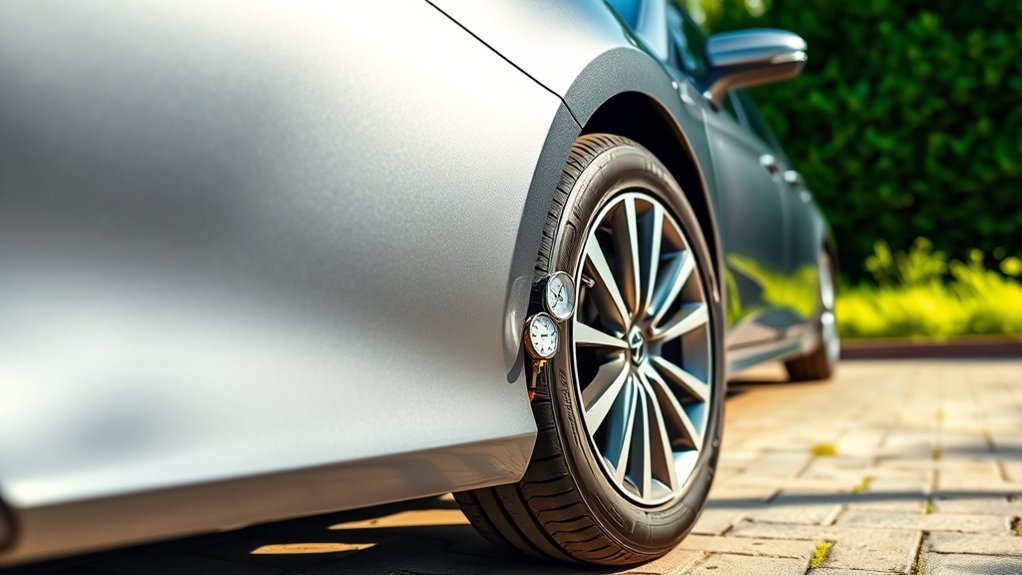
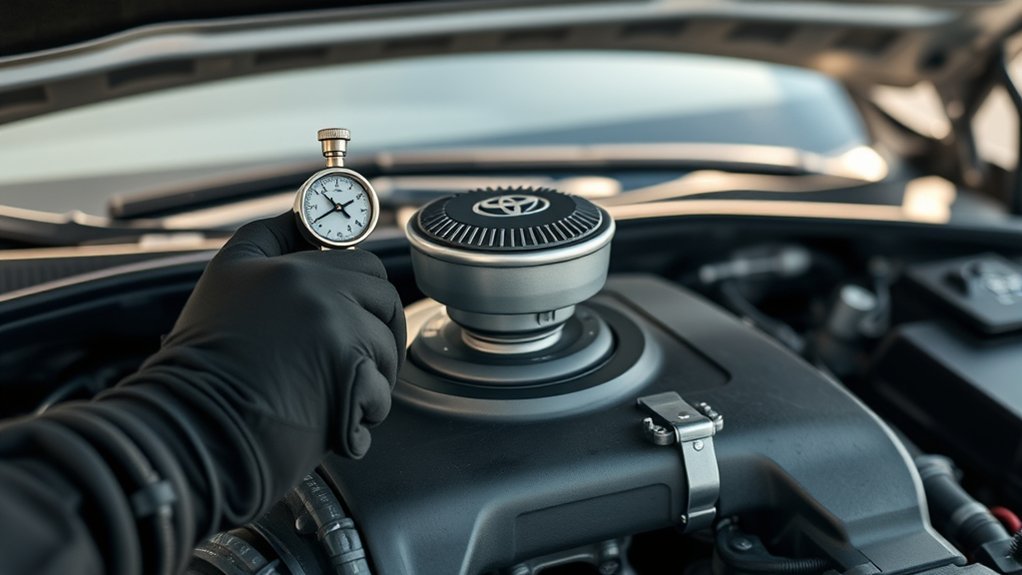
Proper tire pressure protects fuel economy, handling, braking, tire life, and safety. For a 2025 Camry Hybrid, Toyota says the recommended cold tire inflation pressure and tire size are shown on the tire and loading information label. That label is usually on the driver-side door jamb.
Many Camry models are around 35 PSI, but do not assume that number fits every year, trim, wheel size, or tire setup. Check the label on your own vehicle and measure pressure when the tires are cold. Do not use the maximum PSI printed on the tire sidewall; that is not the vehicle’s recommended pressure.
FuelEconomy.gov says properly inflated tires can improve gas mileage by 0.6% on average and up to 3% in some cases. It also notes that under-inflated tires can lower gas mileage by about 0.2% for every 1 PSI drop in the average pressure of all tires.
- Check monthly: Tire pressure changes with temperature and slow air loss.
- Check before long trips: Highway driving on low tires creates heat and wear.
- Replace valve caps: Toyota warns that missing valve caps can allow dirt or moisture into the valve and cause air leaks.
- Watch tire wear: Uneven wear can point to alignment, rotation, or inflation problems.
[Products Worth Considering]

This front windshield sunshade is designed to help keep your Toyota RAV4 cooler by reducing heat buildup after parking in direct sunlight. It blocks most UV rays to help protect your dashboard, seats, and steering wheel from sun damage, while the accordion folding design makes it easy to set up, store, and transport. Built with a durable triple-laminate construction and a silver reflective surface, it offers practical everyday sun protection for compatible RAV4 models.

This portable tire inflator delivers fast, reliable inflation with a high-pressure pump, digital pressure gauge, and automatic shut-off for safer use. Dual power support lets you run it from the built-in battery or a 12V car outlet, while the LED light and USB output make it a practical emergency tool for roadside and outdoor situations.
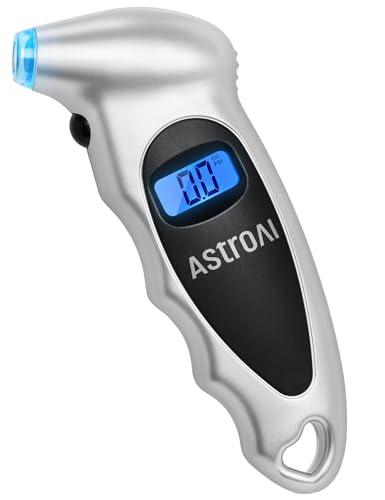
Accurate, Dependable Readings: Factory‑calibrated to ±1 PSI, so you can confidently match your vehicle’s recommended PSI (check the door jamb sticker). Ideal for monthly checks and road trips — consistent results every time, cold or warm.
Key Maintenance Practices for Better Fuel Economy
Keeping your Toyota Camry in good condition helps it deliver the MPG it was designed to achieve. For the 2025 Camry, Toyota’s Warranty & Maintenance Guide uses scheduled service intervals and states that the engine oil and oil filter should be replaced after 12 months or 10,000 miles since the last oil change, even if the maintenance reminder does not appear. Severe use, towing, heavy loading, or a car-top carrier may require additional service.
- Use the correct oil: For the 2025 Camry Hybrid, Toyota’s maintenance data explains the specified low-viscosity oil, including 0W-8 oil viscosity. Older Camrys may require different oil, so always follow your owner’s manual.
- Replace dirty filters on schedule: A clogged engine air filter can hurt performance, and a dirty cabin filter can make the climate system work harder.
- Rotate tires: Regular rotation helps tires wear evenly, which supports consistent rolling resistance and handling.
- Fix warning lights quickly: A check-engine light, hybrid-system warning, dragging brake, or low tire pressure warning can all hurt efficiency.
- Skip unnecessary fuel additives: Use the fuel grade recommended by Toyota. Additives are not a substitute for proper maintenance and should not be used unless they are approved for your vehicle.
Note: Maintenance intervals vary by model year, engine, driving conditions, and market. If you drive an older non-hybrid Camry, follow the manual for that exact year rather than copying 2025 Camry Hybrid specifications.
[Products Worth Considering]

GENUINE OEM: Original Toyota/Lexus factory oil filter part number 90915-YZZN1, ensuring perfect fit and optimal performance for your vehicle
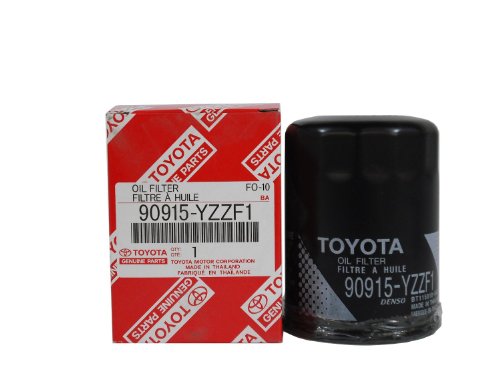
Item Package Dimension: 13.69L x 6.019W x 4.20H inches

And Vehicle Specific
Reduce Excess Weight in Your Camry for Improved Mileage
Extra weight makes the engine and hybrid system work harder, especially in city driving where the car repeatedly accelerates from a stop. Clean out the trunk, remove unneeded tools or sports gear, and avoid carrying heavy cargo unless you actually need it.
FuelEconomy.gov’s mobile tips state that an extra 100 pounds can lower gas mileage by about 1%. That may sound small, but it adds up over months of commuting.
Aerodynamic drag can be even worse at highway speeds. The Department of Energy notes that roof cargo can reduce fuel economy by up to 25% at interstate speeds, depending on the setup. If you use a roof rack, cargo box, bike rack, or ski carrier, remove it when the trip is over.
- Empty the trunk once a week: Keep emergency gear, but remove clutter.
- Remove roof accessories when unused: Drag matters more as speed rises.
- Keep the correct tire size: Oversized or non-recommended tires can change rolling resistance and MPG.
- Pack inside when possible: Cargo inside the trunk is usually more efficient than cargo on the roof.
Combine Trips to Maximize Fuel Savings
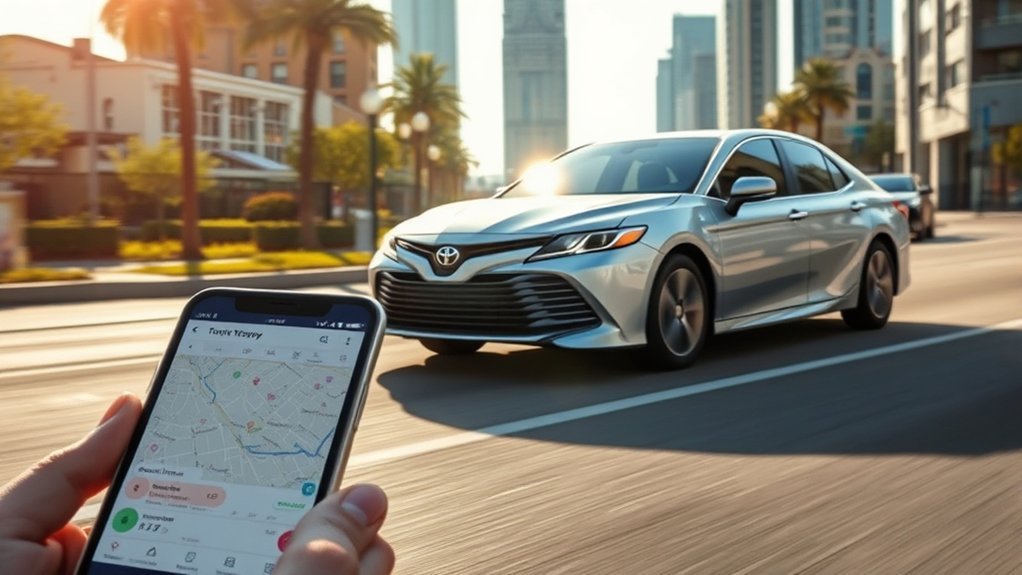
Short trips are hard on fuel economy because the engine, hybrid system, tires, and cabin all start cold. FuelEconomy.gov says several short trips from a cold start can use twice as much fuel as one longer multipurpose trip covering the same distance.
Instead of making three separate errands, group them into one route. Drive to the farthest stop first, then work your way back. That keeps the vehicle warmer for more of the trip and reduces total miles, idling time, and parking-lot maneuvering.
- Group errands by area: Put grocery, pharmacy, school, and appointment stops into one route when possible.
- Avoid peak traffic: Stop-and-go congestion wastes fuel through idling and repeated acceleration.
- Use navigation for traffic: A slightly longer moving route can be more efficient than a shorter route with long delays.
- Limit remote start idling: Pre-conditioning is convenient, but long warm-ups burn fuel before the trip begins.
Seasonal Driving Tips for Better Camry MPG
Weather can change your Camry’s fuel economy even if your driving stays the same. Cold weather can reduce fuel economy because the engine takes longer to warm up, tire pressure drops, winter fuel blends may contain less energy, and heaters or defrosters use extra energy. FuelEconomy.gov says hybrid fuel economy can drop about 30% to 34% in certain cold-weather city-driving tests.
- In winter: Check tire pressure more often, park in a garage when available, combine short trips, and avoid long idle warm-ups.
- In summer: Park in the shade, use recirculation after the cabin cools, and avoid setting the A/C colder than needed.
- In rain or snow: Drive safely first. Slower speeds, poor traction, and AWD use can reduce MPG, but control matters more than fuel savings.
Common Mistakes That Hurt Toyota Camry Fuel Economy
If your Camry’s MPG suddenly drops, look for simple causes before assuming something major is wrong. Many fuel economy problems come from habits, tires, or changing conditions.
- Relying only on the dashboard MPG: Use hand calculations over several tanks to confirm the trend.
- Ignoring tire pressure until the TPMS light appears: The tires may be below the ideal pressure before the warning light turns on.
- Using roof racks year-round: Empty racks and cargo boxes still add drag.
- Driving faster to “save time”: Higher highway speeds can erase the Camry’s efficiency advantage.
- Skipping maintenance: Old oil, dirty filters, worn tires, alignment issues, or dragging brakes can all reduce MPG.
- Assuming fuel additives will fix MPG: They rarely solve the real cause of poor mileage.
Frequently Asked Questions
What mods can I do to improve Toyota Camry fuel economy?
You do not need modifications to improve fuel economy. Start with smooth acceleration, correct tire pressure, less idling, lighter cargo, fewer roof accessories, and regular maintenance. When tires eventually need replacement, choose the correct OEM size and an efficient tire type that matches Toyota’s specifications.
What tire pressure is best for Toyota Camry MPG?
The best tire pressure is the cold PSI listed on your Camry’s tire and loading information label, usually on the driver-side door jamb. Many modern Camrys are around 35 PSI, but the exact number can vary by model year, trim, tire size, and market.
Does ECO mode really save gas in a Toyota Camry?
ECO mode can help because it moderates throttle response and controls climate-system operation for efficiency. It works best in normal commuting and stop-and-go driving. The real savings still depend on smooth pedal use, reasonable speeds, and avoiding unnecessary braking.
Why is my Toyota Camry getting lower MPG than the EPA rating?
EPA ratings are standardized estimates, not guarantees. Your MPG can be lower because of cold weather, short trips, high speeds, heavy traffic, low tire pressure, roof racks, extra cargo, aggressive acceleration, A/C or heater use, hills, winter fuel, or maintenance issues.
Should I use premium gas to get better Camry fuel economy?
Use the fuel grade specified in your owner’s manual. Most Camry models are designed for regular unleaded gasoline, and using premium fuel usually does not improve MPG enough to justify the extra cost unless Toyota specifically requires it for your vehicle.
Conclusion
You do not need expensive modifications to make your Toyota Camry more efficient. Treat fuel economy like a system: drive smoothly, keep speeds reasonable, use ECO mode wisely, maintain the correct tire pressure, remove weight and roof drag, combine errands, and follow Toyota’s service schedule. These small habits work together, helping your Camry travel farther on each tank while staying safe, comfortable, and reliable.
Sources
- Toyota 2025 Camry eBrochure — official EPA-estimated MPG ratings and 2025 Camry specifications.
- Toyota 2025 Camry Hybrid Owner’s Manual: Driving Mode Select Switch — ECO mode throttle and climate-control behavior.
- Toyota 2025 Camry Hybrid Owner’s Manual: Tire Inflation Pressure — tire pressure label guidance and tire inflation safety notes.
- Toyota 2025 Camry Warranty & Maintenance Guide — oil, filter, and scheduled maintenance guidance.
- FuelEconomy.gov: Driving More Efficiently — aggressive driving, driver feedback, speed, cargo drag, and fuel-saving behavior.
- FuelEconomy.gov: Keeping Your Vehicle in Shape — tire pressure and maintenance-related fuel economy guidance.


[…] setting, while Eco is more fuel-focused and Sport provides a higher-response feel. Your actual Camry fuel economy still depends heavily on speed, traffic, weather, tires, climate use, and driving […]