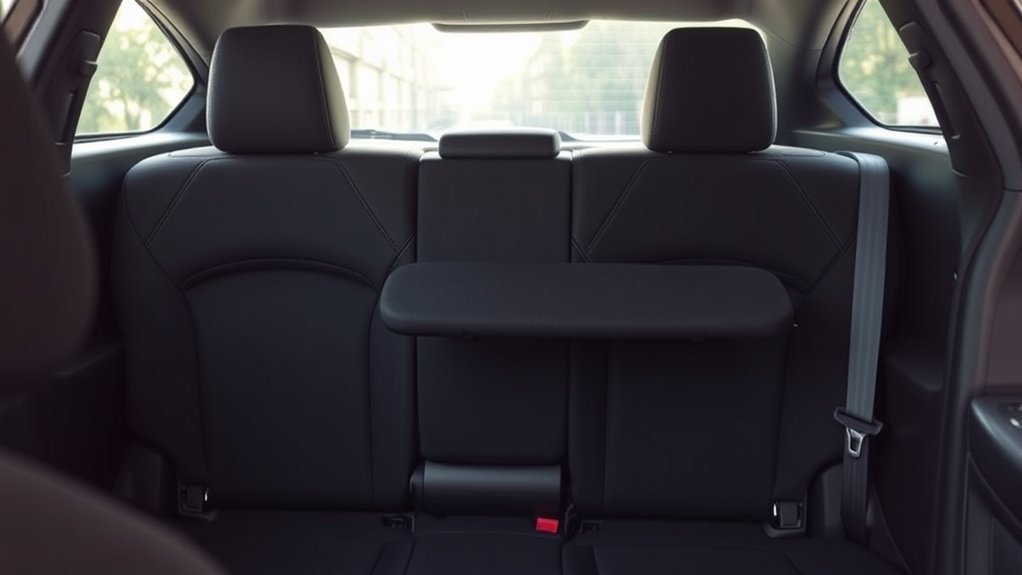
To fold the rear seats in a Toyota Camry, park the car, open the trunk, pull the release lever for the seatback section you want to lower, and guide that seatback forward from the cabin. Many recent U.S.-market Camry models use trunk-mounted release levers, but the exact hardware varies by model year, trim, and market. Check your owner’s manual before forcing a handle, cable, or latch.
Last updated: July 14, 2026 · Reviewed against Toyota owner information and NHTSA cargo-safety guidance.
Quick Answer
Clear the trunk and rear-seat area, pull the left or right seatback release lever in the trunk, then fold that seatback forward. When you raise it again, move the seat belt out of the latch path, push the seatback firmly until it locks, and tug it lightly to confirm it is secure.
Key Takeaways
- Many recent Toyota Camry rear seatbacks fold using release levers inside the trunk.
- Clear cargo, child restraints, people, pets, and loose items before moving a seatback.
- Never let anyone sit on a folded seatback or ride in the trunk.
- After raising a seatback, confirm the belt is clear and the latch holds firmly.
- Secure long cargo so it cannot slide forward, shift sideways, or strike an occupant during sudden braking.
At a Glance
| Typical Time | 1–3 minutes |
| Difficulty | Easy when the release works normally |
| Tools Needed | None for normal folding; a flashlight can help with inspection |
| Stop and Inspect If | The lever bends, feels loose, or the seatback needs heavy force |
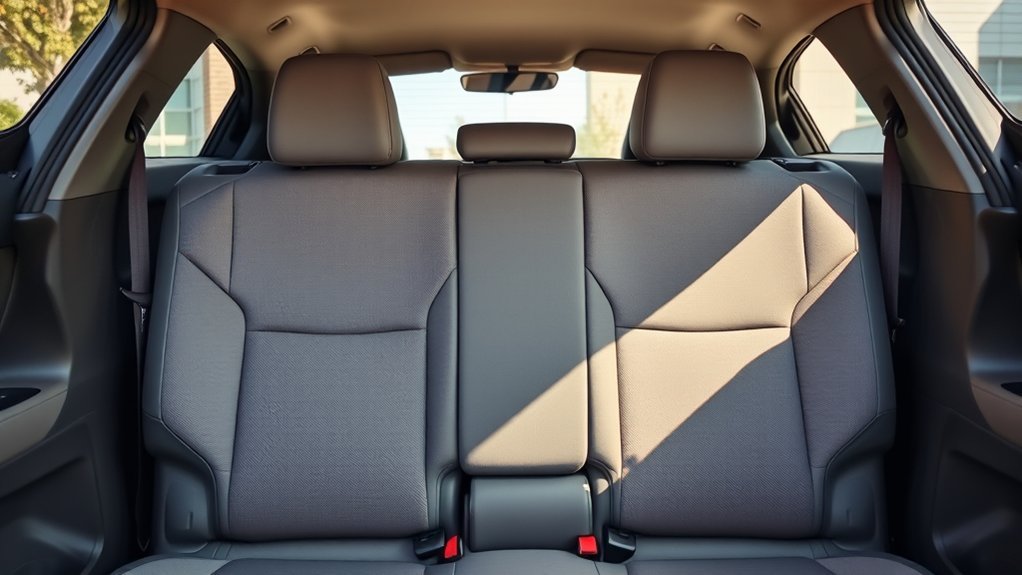
Check Your Camry’s Rear-Seat Release Type
Toyota’s digital owner information for the 2025 Camry directs the owner to pull the seatback lever in the trunk and then fold the selected seatback down. Other Camry years, trims, or markets may use different release hardware. Confirm your exact vehicle through the Toyota Manuals and Warranties page before pulling an unfamiliar handle.
| What You See | What It Usually Means | Next Step |
|---|---|---|
| Two levers inside the trunk | Each lever releases a matching seatback section | Pull one lever, then guide that seatback forward |
| Release knobs near the seatback top | Your vehicle may use a cabin-side release | Follow the exact sequence in your owner’s manual |
| Lever moves but the seat stays locked | The latch may be loaded or obstructed | Remove pressure, clear the belt path, and try gently again |
| Lever has little or no resistance | A cable, clip, or linkage may be disconnected | Stop pulling and arrange an inspection |
Warning: Stop the vehicle, shift to Park, set the parking brake, and make sure the area is clear before folding the seatbacks. Never fold a rear seat while driving, and never allow a passenger to ride on a folded seatback or in the trunk.
Where Are the Toyota Camry Rear-Seat Release Levers?
Open the trunk and look near the upper left and right sides of the trunk opening or the side trim panels. On Camry models with trunk-release folding seats, each lever normally releases the matching rear seatback section.
Do not pull from the top of the seatback unless your owner’s manual shows that your Camry uses seat-mounted release knobs. Toyota’s general 60/40 split-seat guidance notes that release locations and features can vary by vehicle and grade. If you do not find trunk levers, check the rear-seat shoulder area and the manual before forcing anything.
Note: Release hardware can vary by model year, trim, and market. A newer Camry may look different from an older one, even when both have a 60/40 split rear seat.
How to Fold Toyota Camry Rear Seats From the Trunk
Before pulling a release lever, remove anything that could block the seatback, scrape the upholstery, or jam the latch. Check the trunk, rear floor, seat creases, seat belts, and cargo path.
| Step | Action | Tip |
|---|---|---|
| 1 | Park safely | Shift to Park and set the parking brake |
| 2 | Clear the area | Remove cargo, child restraints, pets, and loose items |
| 3 | Pull the trunk lever | Use a steady pull; do not yank or bend it |
| 4 | Fold the seatback forward | Guide it down from the cabin side if needed |
| 5 | Load carefully | Keep long cargo low, centered, padded, and secured |
Once the lever releases, the seatback should move forward without heavy force. If it moves only a little, stop and check for pressure on the latch, a trapped belt, a child-seat strap, debris near the hinge, or cargo blocking the folding path.
How to Return the Seatbacks Upright and Check the Lock
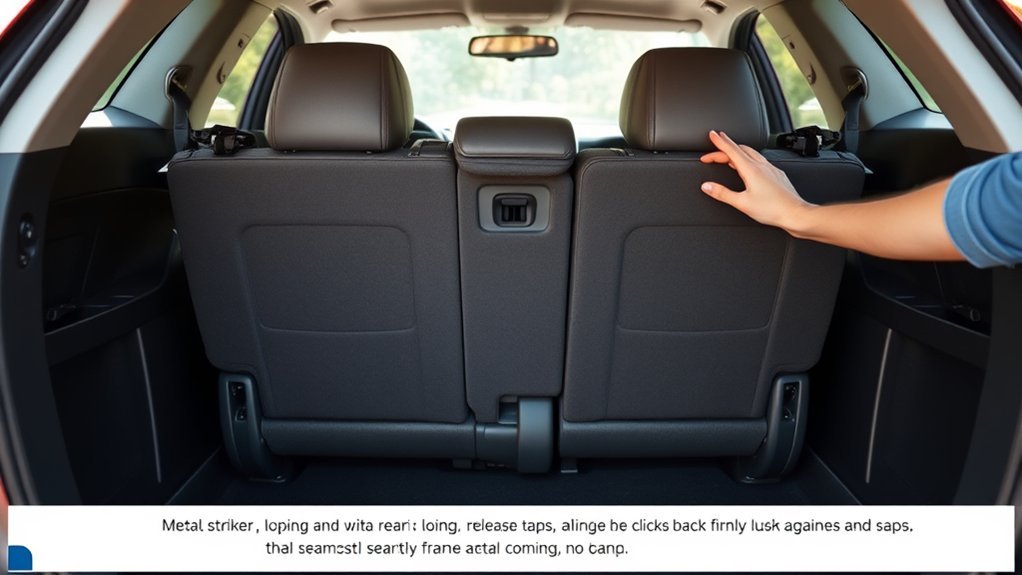
Lift each seatback until it clicks or feels fully seated in the latch. Then push it rearward and tug the top forward lightly. The seatback should remain firmly upright without wobbling or popping loose.
- Make sure the seat belt is not caught between or behind the seatback.
- Check any lock indicator shown for your model, if equipped.
- Push the seatback rearward, then pull it forward lightly to test the latch.
- Do not let passengers use that seat until the seatback is fully locked.
Pro Tip: Pull the seat belt forward before raising the seatback. Keeping the belt visible and outside the latch path reduces the chance of pinching it behind the seat.
How to Use the Folded Seats for Long Cargo
With one or both rear seatbacks folded, a Camry can carry longer items such as skis, curtain rods, boxed shelving, small furniture pieces, or sports gear. Slide items in gently, keep them low and centered, and protect the upholstery and trim from sharp edges.
Do Toyota Camry Rear Seats Fold Completely Flat?
The seatbacks fold forward to extend usable cargo length, but the surface may not be perfectly level. The final angle depends on the model, trim, seat cushions, and anything resting in the folding path. Do not force a seatback lower to make the floor flatter.
How Should You Load Longer Items Safely?
Place the heaviest end in the trunk when practical. If an item extends into the cabin, pad contact points with a towel or moving blanket. Keep the driver’s view, shifter, pedals, mirrors, airbags, and front-seat movement unobstructed.
- Center long cargo so it cannot swing hard during turns.
- Use straps, rope, or cargo netting when an item can slide.
- Do not stack heavy cargo high against a folded seatback.
- Stay within the vehicle-load limits shown in the owner’s manual and door-jamb labels.
Why secure the load: NHTSA advises drivers to tie cargo down with rope, netting, or straps and double-check it before driving. The agency reports that crashes involving objects in the road kill about 850 people and injure almost 19,000 each year. Review NHTSA’s secure-load guidance.
When Can Passengers Use the Rear Seats Again?
Return the seatbacks upright and lock them before anyone uses the rear seating positions. After unloading, raise each seatback, confirm the seat belt moves freely, and perform the push-and-tug latch check.
Toyota Camry Rear-Seat Folding Safety Checklist
Run through these checks whenever you lower or raise a seatback. They protect the latch mechanism, the upholstery, the cargo, and the people in the car.
Before Folding the Seatback
- Remove loose items from the trunk and rear floor.
- Remove child restraints or straps that block the folding path.
- Check for people and pets before moving the seatback.
- Move seat belts away from the hinges and latch openings.
- Confirm the cargo path is clear before sliding an item through.
After Raising the Seatback
Each seatback should sit evenly and lock firmly. If it wobbles, pops loose, or fails the tug test, do not carry a passenger in that position until the problem is fixed.
| Check | What to Do |
|---|---|
| Seat belt position | Confirm the belt is not trapped behind the seatback |
| Seatback lock | Push rearward and tug forward after raising it |
| Latch area | Remove dirt, fabric, or cargo blocking the opening |
| Cargo movement | Tie down or brace anything that can slide |
| Passenger use | Allow passengers only after the seatback is locked upright |
How to Keep the Release Handles and Latches Working
The rear-seat release system should move smoothly without crunching, excessive looseness, or binding. During routine cleaning, inspect the trunk levers, visible cable ends, latch openings, hinges, and seat creases. Dirt, pet hair, spilled cargo, and small objects can interfere with latch movement.
- Vacuum around the trunk trim, latch openings, and rear-seat creases.
- Use a flashlight to look for bent trim, frayed cable ends, rust, or broken plastic.
- Wipe latch areas dry if moisture or spilled liquid is present.
- Use lubricant only when the owner’s manual or a Toyota service department specifies the correct product and location.
- Keep spray products away from seat-belt webbing, buckles, electrical connectors, and upholstery.
Note: Repeated hard pulling can stretch a cable or break a plastic handle. Clear obvious obstructions first, then arrange service if the release still does not move normally.
[Products Worth Considering]

These silicone center console cup holder inserts are designed to fit the refreshed 2026 Toyota RAV4 left-hand drive hybrid and plug-in hybrid models with a precise, factory-like match. They help protect the console from scratches, spills, and scuffs while making cleanup quick and easy with a simple wipe or rinse. Built from durable silicone and shaped to blend seamlessly with the interior, they offer a practical upgrade for everyday driving.

Replace worn or broken rear exterior door handles with this OEM-style fit designed for a wide range of Toyota, Pontiac, and Scion vehicles. Built from reinforced plastic with a textured finish for dependable use and weather resistance, it helps restore smooth entry and a clean factory look. This handle is made for rear left or rear right installation without a keyhole and includes support backed by a warranty.

This custom-fit cargo liner is designed for Toyota RAV4 hybrid and gas models from 2019 through 2025, delivering seamless coverage for the trunk and rear seat backs. Made from all-weather TPE, it helps protect against spills, dirt, pet hair, scratches, and everyday cargo wear while staying odorless and easy to clean. The integrated one-piece design with double fixation helps keep the mat securely in place for dependable use.
Why Won’t My Toyota Camry Rear Seat Fold or Lock?
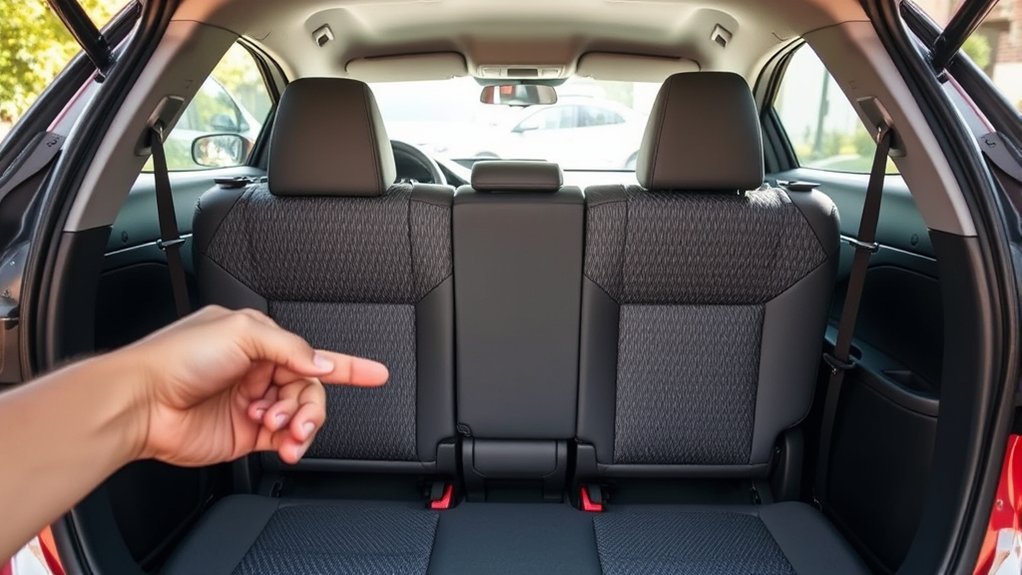
Use the symptom below to narrow the problem before assuming the latch or cable has failed. Stop whenever a part bends, grinds, pops, or needs heavy force.
[Products Worth Considering]

Custom-designed for Toyota RAV4 gasoline models from 2013 to 2018, this full-coverage interior protection set includes front and rear floor mats, a cargo liner, seat back protectors, and door sill guards. Built with odorless TPE and 3D laser fit precision, it helps block spills, dirt, pet hair, and daily wear while staying securely in place for a clean, family-friendly cabin.

These universal seat belt pads add cushioned comfort to reduce rubbing and irritation from seat belts during daily drives and long trips. Made with soft foam lining and durable polyester fiber, they help protect the neck, shoulders, chest, and collarbones while adding a clean, stylish look to your vehicle interior. The easy Velcro closure makes installation quick, and the versatile design works with many straps beyond car seat belts.

This custom-fit cargo net is designed for the 2026 Toyota RAV4 to help keep your trunk organized and secure during everyday driving. It helps hold groceries, tools, and smaller items in place while reducing rolling and shifting, and the heavy-duty carabiners support reliable installation. The net also offers convenient storage and easy access for SUVs and other compatible vehicles.
The Seatback Will Not Fold Down
- Confirm you are pulling the release for the seatback section you want to lower.
- Remove cargo pressing against the back of the seat.
- Look for a trapped seat belt, child-seat strap, blanket, or small object.
- Have one person hold the release while another gently guides the seatback forward.
- Stop if the lever bends, the cable feels loose, or the seatback remains locked.
The Seatback Will Not Lock Upright
- Move the seat belt out of the latch path.
- Check the latch opening for dirt, fabric, or debris.
- Confirm cargo, floor mats, or trim are not blocking alignment.
- Raise the seatback firmly until it seats, then perform the tug test.
- Do not carry a rear passenger in that position until it locks securely.
The Release Handle Feels Loose or Broken
A loose trunk handle can indicate a stretched cable, disconnected linkage, broken clip, or damaged latch. Avoid forcing it. A Toyota dealer or qualified repair shop can remove the trim and identify the failed part without damaging surrounding panels.
When Should You Get Professional Service?
Arrange service if the seatback will not latch, the release lever has no resistance, the seatback moves after it appears locked, or you hear grinding, popping, or metal-on-metal sounds. A seatback latch is a safety-related restraint component, so temporary ties or improvised repairs are not appropriate.
- Get service if the latch does not hold after the area is clean and unobstructed.
- Replace damaged cables, handles, clips, or latch parts with the correct vehicle-specific parts.
- Check for open safety recalls through NHTSA’s recall lookup or Toyota’s owner portal.
- Bring the VIN so the repair shop can confirm the correct parts for your Camry.
[Products Worth Considering]

This custom-designed cargo net helps keep the rear trunk of a 2026 Toyota RAV4 neat, secure, and organized. Its stretchable elastic mesh construction helps prevent groceries, tools, and sports gear from sliding around, while the built-in bottom pocket and smart clips add extra storage control. A top pull tab makes installation and removal quick and easy for everyday convenience.
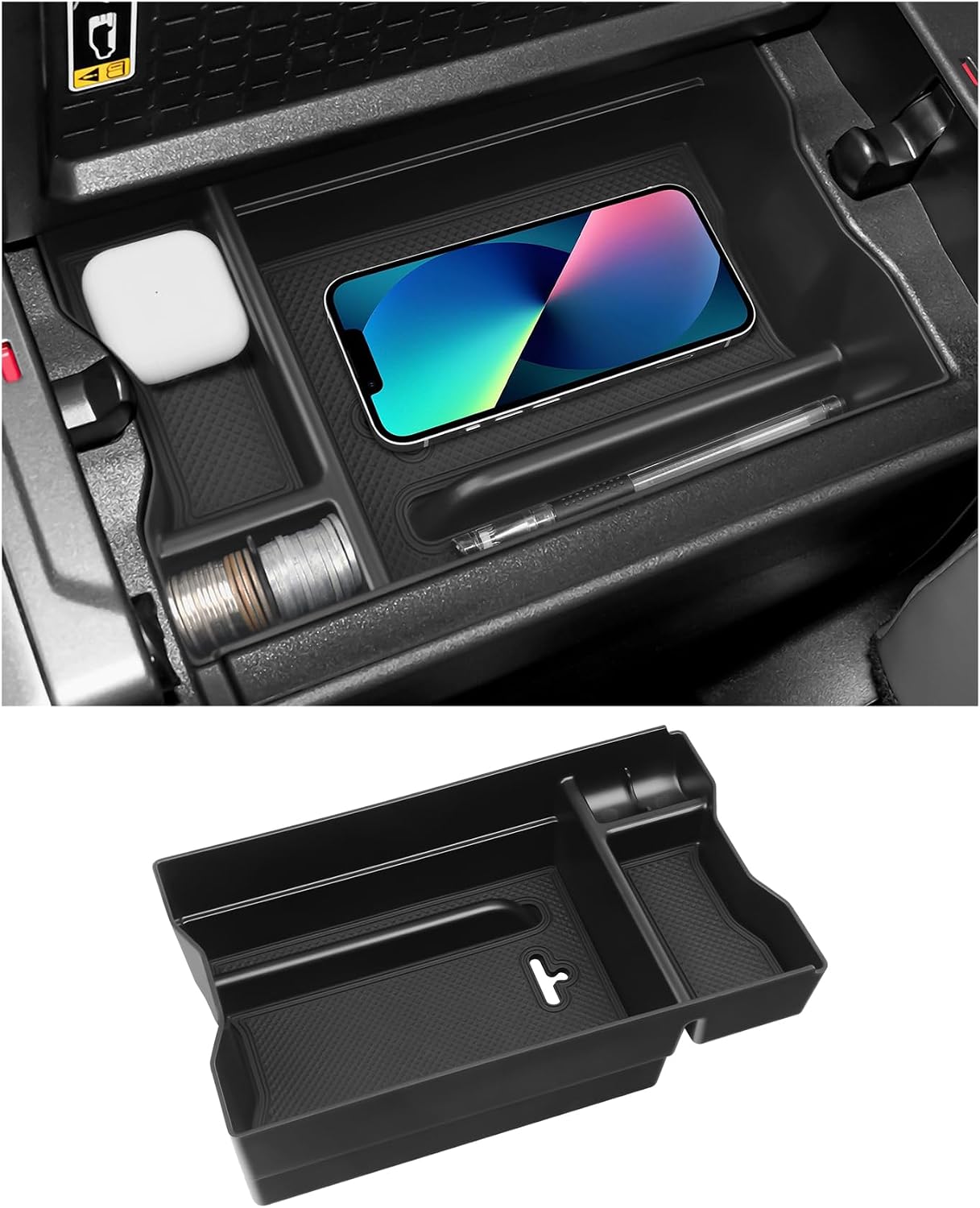
This center console organizer adds a convenient secondary storage layer to compatible Toyota RAV4 hybrid models, helping keep sunglasses, keys, coins, phones, and other small items neatly arranged. Built from durable ABS plastic with a matte finish, it fits directly into the armrest area for quick, tool-free installation and easy removal. Non-slip rubber mats help reduce sliding and noise while maximizing usable storage space inside the console.

This auto emergency escape tool is designed specifically for vehicle rescue situations, helping drivers and passengers respond quickly during collisions, rollovers, or flooding. It combines a concealed seat belt cutter with a high-strength glass-breaking tip for fast escape support, while the compact protective design makes it easy to store in multiple vehicles for everyday preparedness.
Frequently Asked Questions
Can I fold Toyota Camry rear seats from inside the cabin?
On many recent Camry models, you must first pull a release lever inside the trunk and then guide the seatback forward from the cabin. Some years or trims may use a different release location, so check the owner’s manual if you do not see trunk levers.
Do all Toyota Camry rear seats fold down?
No single answer covers every Camry year, trim, and market. Many models have folding rear seatbacks, while some configurations may use different equipment or a limited pass-through. Confirm your vehicle’s setup in the exact owner’s manual before forcing the seat.
Where are the Camry rear-seat release handles?
On many recent U.S.-market Camry models, the release levers are inside the trunk, with one lever for each folding seatback section. Other Toyota 60/40 rear seats may use release knobs near the top of the seatbacks, so verify the location for your model year.
Can I drive with the Camry rear seats folded down?
You can drive with the seatbacks folded for cargo, but nobody should sit on a folded seatback or ride in the trunk. Secure the load so it cannot slide into the passenger area, block the driver, or interfere with seat belts and airbags.
What should I do if a rear seatback will not latch upright?
Check for a trapped seat belt, cargo, dirt, fabric, or debris in the latch path. Raise the seatback again and push firmly until it locks, then perform the tug test. If it still does not hold, do not use that seating position until a qualified repair shop inspects it.
Conclusion
To fold a Toyota Camry rear seat, clear the area, pull the correct release, and guide the seatback forward without forcing it. After carrying cargo, move the seat belt clear, raise the seatback until it locks, and confirm the latch with a light tug. If a lever feels loose or the seatback will not stay locked, stop using that rear seating position and arrange an inspection.
Sources
- Toyota Owners Digital Manual: 2025 Camry Hybrid Rear Seats — supports trunk-lever operation for folding the rear seatbacks.
- Toyota Manuals and Warranties: Camry — supports checking the exact owner’s manual for model-specific instructions.
- Toyota Customer Support: 60/40 Split Rear Seat Operation — supports the note that release locations and equipment can vary.
- NHTSA: Drive Safe, Secure Your Load — supports cargo tie-down and double-check guidance.
- NHTSA Recalls Lookup — supports checking recalls by VIN when a safety-related part may be involved.