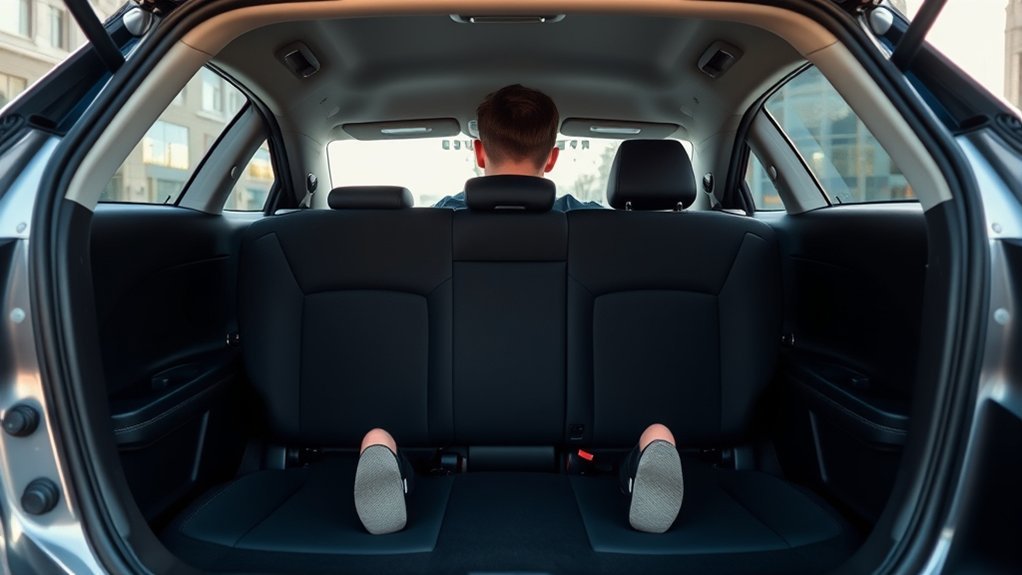
The 2025 and 2026 Toyota Camry provide 38.0 inches of rear legroom and 37.6 inches of rear headroom. Toyota also lists 55.7 inches of rear shoulder room and 15.1 cubic feet of trunk space. Those figures make the Camry practical for most adults, families, and rideshare use, although tall passengers and rear-facing child seats should be tested behind your normal front-seat position.
Last updated: July 14, 2026
Quick Answer
The current Toyota Camry gives rear passengers 38.0 inches of legroom and 37.6 inches of headroom. Most adults should have usable space behind a normally positioned front seat. However, a tall passenger, a long-torso passenger, or a large rear-facing child restraint may require a careful in-person fit check.
Key Takeaways
- The 2025 and 2026 Toyota Camry has 38.0 inches of published rear legroom and 37.6 inches of rear headroom.
- Toyota does not publish additional rear-seat space for higher Camry trims, so choose a trim based on materials, features, ride, and budget.
- The Honda Accord provides more rear legroom, while the Camry offers a balanced combination of passenger space, trunk capacity, and hybrid efficiency.
- A rear-facing child seat may fit, but compatibility depends on the restraint, required recline angle, and front-seat position.
How this guide was checked: Current Toyota, Honda, Nissan, and NHTSA pages were reviewed on July 14, 2026. Comfort guidance below interprets published dimensions; it does not replace sitting in the exact trim or installing your specific child restraint.
How Much Rear Legroom and Headroom Does the Camry Have?
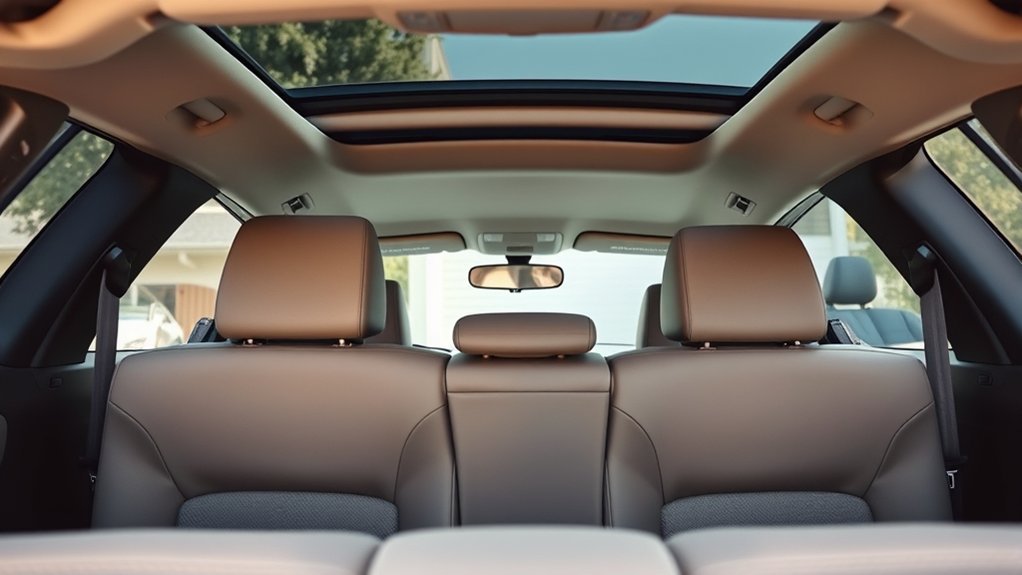
Toyota’s current comparison data lists the Camry with 38.0 inches of rear legroom, 37.6 inches of rear headroom, and 55.7 inches of rear shoulder room. Toyota also lists a 15.1-cubic-foot trunk. You can review the current figures in Toyota’s official Camry comparison data.
| Measurement | 2025–2026 Toyota Camry | What It Means |
|---|---|---|
| Rear legroom | 38.0 in. | Useful knee space for most adults behind a normal front-seat position |
| Rear headroom | 37.6 in. | Suitable for many adults, but worth testing if you are tall or have a long torso |
| Rear shoulder room | 55.7 in. | Comfortable for two adults; three passengers will have less personal space |
| Trunk volume | 15.1 cu ft | Practical space for groceries, luggage, or compact stroller gear |
Choose the Camry when you want balanced rear space in an efficient midsize sedan. Test head clearance carefully if a tall adult will ride in back, and compare the Accord when maximum rear leg stretch is the deciding factor.
Do Camry Trims Have Different Rear-Seat Dimensions?
Toyota’s current Camry lineup includes LE, SE, Nightshade, XLE, and XSE trims. Toyota publishes model-level rear-seat dimensions rather than a larger set of measurements for higher trims. As a result, you should not pay more expecting extra published rear legroom or headroom. Your trim decision should focus on upholstery, front-seat equipment, ride character, styling, and budget.
| Trim | Published Rear-Space Difference | What Changes for the Shopper |
|---|---|---|
| LE | No published increase or reduction | Value-focused trim; Toyota lists rear-seat air vents on the base model |
| SE | No published increase or reduction | Sport-oriented styling, seating details, wheels, and ride tuning |
| Nightshade | No published increase or reduction | Appearance-focused 2026 trim with distinctive exterior details |
| XLE | No published increase or reduction | Comfort-focused materials and additional convenience features |
| XSE | No published increase or reduction | Higher equipment level combined with sport-oriented styling and tuning |
The 2026 model year adds the Nightshade to the main trim lineup, but Toyota does not publish a larger rear-seat dimension for it. This makes shopping simpler: compare how the seat material, ride, front-seat adjustment, and cabin equipment feel instead of expecting a dimensional advantage from a higher trim.
Note: Published headroom cannot describe every passenger’s posture. Seat shape, torso length, hairstyle, optional roof equipment, and how upright you sit can all affect real clearance. Sit in the exact trim you plan to buy.
What Do 38.0 Inches of Legroom and 37.6 Inches of Headroom Feel Like?
Based on the published dimensions, the Camry should provide practical rear space for many adults behind a normally positioned front seat. The 38.0-inch legroom figure is suitable for commuting, school trips, rideshare use, and road travel. The 37.6-inch headroom figure is more likely to become the limiting measurement for a tall passenger or someone with a long torso.
The rear bench is most comfortable for two adults. Three adults can use the seat for shorter drives, but 55.7 inches of shoulder room means each person has less space. The center passenger must also share foot space and work around the center seating position and buckles.
| Use Case | What the Numbers Suggest | What to Test in Person |
|---|---|---|
| One adult behind the driver | Likely workable with a normal driving position | Knee clearance, foot space, and front-seatback angle |
| Tall adult or long-torso passenger | Headroom may matter more than legroom | Sit upright and check roof clearance without slouching |
| Rear-facing child restraint | Front-seat adjustment may be necessary | Required recline angle and safe front-seat position |
| Three rear passengers or three restraints | Width and buckle access may be restrictive | Exact seat widths, buckle access, anchors, and tether routing |
The front-seat position can change the result more than a brochure suggests. A driver who sits far back reduces rear knee clearance, while a driver who can move forward safely creates more usable space. Always set the driver’s seat first and then sit directly behind it.
How Does Front-Seat Position Change Camry Rear Space?
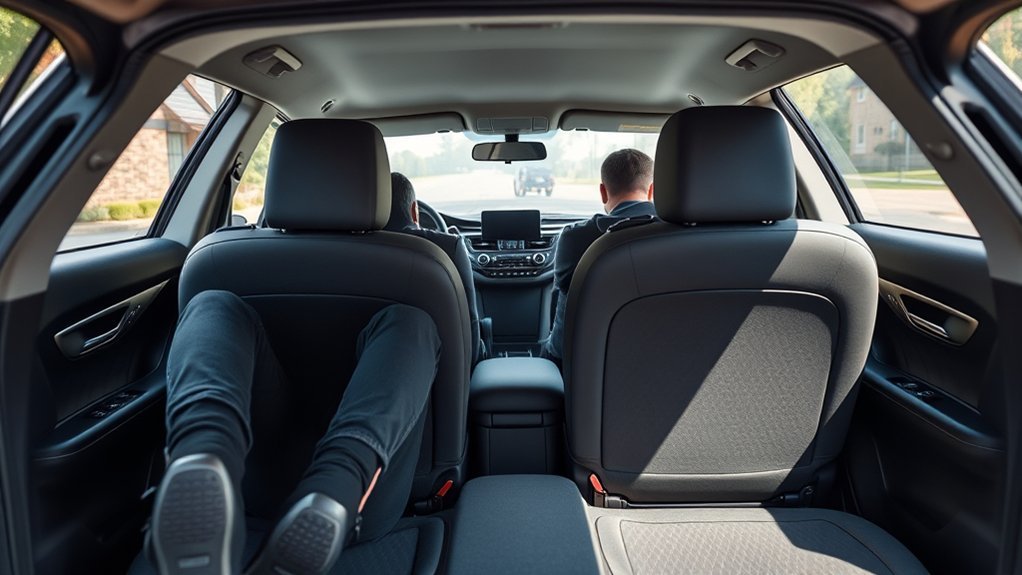
Published legroom is measured under a standardized method, but it cannot describe every driver-and-passenger combination. Actual knee clearance depends on the front seat’s fore-and-aft position, seatback angle, seatback thickness, and the rear passenger’s leg length.
Front Seat Fore/Aft Impact
Set the driver’s seat for safe pedal control, steering-wheel reach, and visibility before judging the rear seat. Then sit behind that position and check whether your knees touch the seatback. Do not move the driver dangerously close to the wheel simply to create rear space.
- Set the front seat to the driver’s normal safe position before judging rear comfort.
- Keep the front seatback reasonably upright when an adult or child restraint is behind it.
- Check whether the rear passenger can place both feet naturally on the floor.
- Test both outboard rear seats because the driver and front passenger may use different settings.
Passenger Height Effects
Many average-height adults should find the published rear space usable. Taller adults should check both roof clearance and knee angle. Sit upright in a normal posture, because slouching can reduce thigh support and make a long drive less comfortable.
Children and shorter adults generally need less knee and head clearance. Taller teens and adults may prefer an outboard position because the center seat is narrower and shares foot space with the center tunnel and nearby passengers.
Seat Recline And Cushion
The rear seatback has a fixed everyday seating angle rather than a lounge-style recline. A thin lumbar support may help some passengers, but a thick cushion raises the seating position and can reduce available head clearance.
- Use only a low-profile support that does not interfere with the seat belt.
- Avoid thick adult cushions when roof clearance is already limited.
- Keep bags out of the footwell so passengers can place their feet naturally.
- Adjust the front passenger seat before loading the cabin for a long trip.
How Does the Camry Compare With the Accord and Altima?
The Camry’s 38.0 inches of rear legroom places it between two major midsize-sedan alternatives. The current Honda Accord provides more legroom and trunk space. The current Nissan Altima provides less published rear legroom but slightly more trunk volume.
| Current Model | Rear Legroom | Trunk Volume | Clear Decision Point |
|---|---|---|---|
| Toyota Camry | 38.0 in. | 15.1 cu ft | Balanced passenger space and hybrid-focused lineup |
| Honda Accord | 40.8 in. | 16.7 cu ft | Best choice here when maximum rear leg stretch is the priority |
| Nissan Altima | 35.2 in. | 15.4 cu ft | Less rear legroom than the Camry but a slightly larger published trunk |
The Accord gives rear passengers 2.8 more inches of published legroom than the Camry and provides 1.6 more cubic feet of trunk space. The Camry gives 2.8 more inches of published rear legroom than the Altima, while the Altima’s trunk is 0.3 cubic feet larger.
These figures come from current Toyota comparison data, the Honda Accord specifications, and the Nissan Altima specifications. Choose the Accord when rear legroom dominates the decision. Choose the Camry when 38.0 inches is sufficient and you prefer its overall package.
[Products Worth Considering]

These custom-fit seat covers are tailored for Toyota RAV4 gasoline models from 2019 through 2025, giving your SUV a refined interior upgrade with a precise OEM-inspired look. The spill-resistant faux leather surface helps protect against daily messes, scuffs, and pet wear while staying easy to clean, and the reinforced airbag-compatible stitching supports safety without sacrificing style. A secure strap, zipper, and Velcro installation system helps keep the covers in place for a stable, comfortable fit in all seasons.

Replace worn or broken rear exterior door handles with this OEM-style fit designed for a wide range of Toyota, Pontiac, and Scion vehicles. Built from reinforced plastic with a textured finish for dependable use and weather resistance, it helps restore smooth entry and a clean factory look. This handle is made for rear left or rear right installation without a keyhole and includes support backed by a warranty.

These universal seat belt pads add cushioned comfort to reduce rubbing and irritation from seat belts during daily drives and long trips. Made with soft foam lining and durable polyester fiber, they help protect the neck, shoulders, chest, and collarbones while adding a clean, stylish look to your vehicle interior. The easy Velcro closure makes installation quick, and the versatile design works with many straps beyond car seat belts.
Will Child Seats and Boosters Fit in a Camry?
The Camry can accommodate many rear-facing seats, forward-facing seats, and boosters, but no published cabin measurement guarantees compatibility with every restraint. Seat shell depth, required recline, front-seat position, buckle access, and anchor location all affect the result.
NHTSA recommends reading both the vehicle owner’s manual and the child-restraint manual before installation. Set the front seat first, install the restraint using the permitted method, and then confirm that the front occupant can still sit and operate the vehicle safely.
Warning: Do not assume that a rear-facing restraint will fit safely behind every driver. Test your exact restraint at its required recline angle and confirm that the front seat remains in a safe, usable position.
- Use the lower anchors or vehicle seat belt exactly as the vehicle and child-restraint manuals direct.
- Do not combine installation methods unless both manufacturers explicitly permit it.
- Attach the top tether for a forward-facing restraint when the instructions require or permit it.
- Check buckle access and tether routing before assuming that multiple restraints will fit together.
- Use the trunk for stroller gear and bags instead of filling the rear footwell.
- Visit a child-passenger-safety inspection station when you are uncertain about the installation.
For a booster, check the belt path after the child sits in it. The lap belt should lie low across the upper thighs, while the shoulder belt should cross the middle of the shoulder and chest rather than the neck or face. Try another approved seating position or booster design if the belt does not fit correctly.
[Products Worth Considering]

Custom-designed for Toyota RAV4 gasoline models from 2013 to 2018, this full-coverage interior protection set includes front and rear floor mats, a cargo liner, seat back protectors, and door sill guards. Built with odorless TPE and 3D laser fit precision, it helps block spills, dirt, pet hair, and daily wear while staying securely in place for a clean, family-friendly cabin.

This custom-fit cargo liner is designed for Toyota RAV4 hybrid and gas models from 2019 through 2025, delivering seamless coverage for the trunk and rear seat backs. Made from all-weather TPE, it helps protect against spills, dirt, pet hair, scratches, and everyday cargo wear while staying odorless and easy to clean. The integrated one-piece design with double fixation helps keep the mat securely in place for dependable use.

This multifunctional car seat back organizer combines a cup holder, phone holder, and purse hook in one compact accessory to help keep rear-seat essentials neatly arranged. Designed for easy headrest installation, it adds convenient storage for drinks, phones, bags, and other everyday items while helping reduce clutter during travel. The universal fit and durable construction make it a practical upgrade for most vehicles.
How Can You Make the Camry Rear Seat More Comfortable?
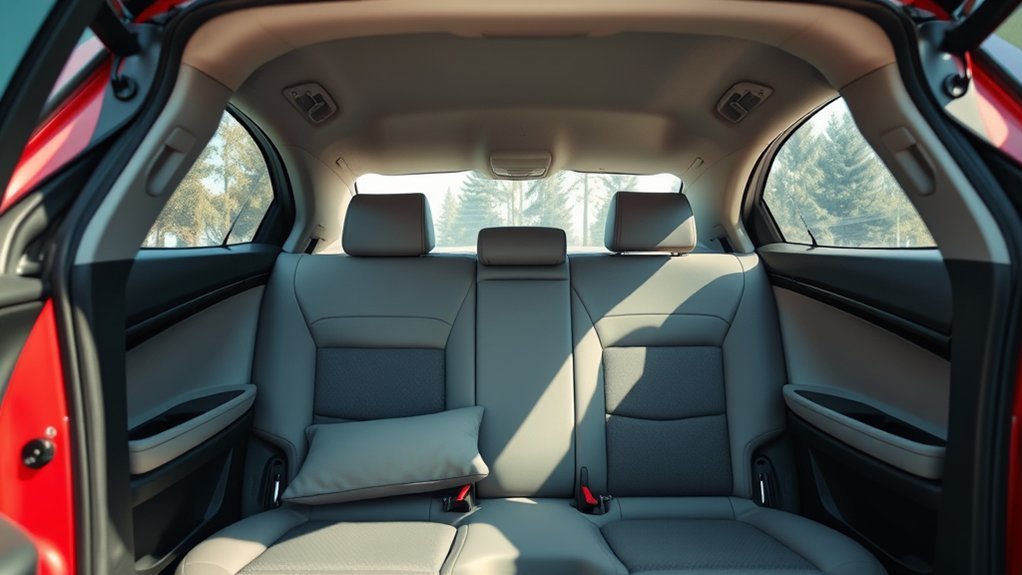
You can make the rear seat feel more usable without changing the vehicle. Set the front seats carefully, keep the footwells clear, use thin comfort accessories, and place luggage in the trunk rather than around passengers’ legs.
[Products Worth Considering]

This multifunctional rear seat organizer combines a cup holder, phone mount, and hook to help keep passengers' essentials secure and within reach. Made from durable ABS plastic, it is designed for long-lasting use and helps reduce clutter while maximizing back-seat space. Its universal fit and simple tool-free installation make it a practical upgrade for everyday driving, road trips, and family travel.

These curved headrest hooks add convenient rear-seat storage for bags, coats, and groceries, helping keep your car interior neat and organized. Designed to fit matching headrest posts, they install quickly without removing the headrest and provide reliable support for everyday items in cars, SUVs, trucks, and more.

This center console armrest cover is designed to fit the 2026 Toyota RAV4 for added comfort and a cleaner interior look. Made with breathable vegan leather and a thick cushioned feel, it helps reduce arm fatigue on long drives while protecting the console from pet paws, dirt, and sticky fingerprints. The band-secured design installs easily with no tools required and blends with the OEM-style interior.
Seat Positioning Tips
Start with the driver’s safe position. The front passenger can move slightly forward when appropriate, but that passenger must still have safe legroom and airbag clearance. A reasonably upright front seatback usually preserves more rear knee space than a heavily reclined one.
- Move the front passenger seat forward only when the front occupant remains comfortable and safe.
- Keep the front seatback reasonably upright for better rear knee clearance.
- Use the rear center armrest when only two passengers are sitting in back.
- Store backpacks, bottles, and chargers outside the footwell.
Cushion & Support Choices
Choose thin support items instead of bulky pads. A slim lumbar pillow may improve lower-back support on a long drive, while a thick seat cushion can move the passenger closer to the roof. Any accessory must leave the seat belt and child-restraint installation path unobstructed.
Pro Tip: Load the 15.1-cubic-foot trunk before passengers enter the car. Keeping bags out of the footwell makes the published rear legroom more usable and reduces loose items in the cabin.
How Should You Check Rear-Seat Fit on a Test Drive?
A brief showroom sit may miss the problems that appear with your normal driving position, passengers, and child-restraint setup. Use this checklist in the exact Camry trim you are considering.
- Set the driver’s seat first: Place it in your normal safe driving position before checking rear space.
- Sit behind yourself: Check knee clearance, foot space, thigh support, and seatback contact.
- Check headroom: Sit upright and note whether your head or hair touches the roof liner.
- Test entry and exit: Get in and out more than once, especially if older passengers will use the seat.
- Bring your child restraint: Test it behind both front seating positions when family use is important.
- Inspect buckle access: Confirm that adjacent passengers or restraints do not cover the needed buckles.
- Try the center position: Check shoulder space, foot placement, belt fit, and comfort if three people will ride in back.
- Open and load the trunk: Confirm that the 15.1-cubic-foot cargo area fits the stroller, luggage, sports gear, or grocery containers you normally carry.
Record the front-seat settings that work. A small difference in seat position, roof clearance, or child-restraint angle can be more important than the brochure measurement during everyday use.
Frequently Asked Questions
Are Toyota Camrys good for tall passengers?
The Camry works well for many tall passengers in the front. In the rear, 38.0 inches of legroom is useful, but 37.6 inches of headroom may be the limiting measurement for a very tall passenger or someone with a long torso. Test the exact trim before buying.
How big is the back seat of a Toyota Camry?
The current Camry has 38.0 inches of rear legroom, 37.6 inches of rear headroom, and 55.7 inches of rear shoulder room. It has three rear seating positions, but two adults will have more personal space than three.
Which has more rear legroom, the Camry or Accord?
The current Honda Accord has more published rear legroom. Honda lists 40.8 inches, while Toyota lists 38.0 inches for the Camry, giving the Accord a 2.8-inch advantage.
Does the Camry have enough room for rear-facing child seats?
Many rear-facing child seats can fit, but compatibility depends on the restraint’s shell, required recline angle, and the front seat position. Install your exact restraint according to both manuals and confirm that the front seat remains safe and usable.
Do higher Camry trims have more rear-seat space?
Toyota does not publish additional rear legroom or headroom for higher Camry trims. LE, SE, Nightshade, XLE, and XSE shoppers should choose based on features, materials, styling, ride, and budget rather than expecting more published rear space.
Does the 2026 Camry have more rear-seat room than the 2025 Camry?
Toyota does not publish a rear-seat dimension increase for the 2026 Camry. The 2026 lineup adds the Nightshade trim, but it does not receive a published rear-space advantage over the other current trims.
Conclusion
The 2025 and 2026 Toyota Camry gives rear passengers 38.0 inches of legroom, 37.6 inches of headroom, and 55.7 inches of shoulder room. That is a practical balance for commuting, family travel, and everyday passenger use, although the Accord provides more rear legroom.
Before deciding, complete three checks: set the driver’s seat to your normal position, sit directly behind it, and install any child restraint you plan to use. Those checks will tell you more about real fit than the specification sheet alone.
Sources
- Toyota Camry — current trim lineup and feature information.
- Toyota Camry vs. Honda Accord — Toyota comparison data for Camry dimensions, seating, and cargo volume.
- Honda Accord Specifications and Features — current Accord dimensions and cargo volume.
- Nissan Altima Specifications and Trims — current Altima rear-legroom and cargo figures.
- NHTSA Car Seats and Booster Seats — child-restraint selection, installation, tether, and belt-fit guidance.