Last updated: September 1, 2026 · Editorial Team · Reviewed for accuracy
Use Toyota GR Supra launch control only on a dry, legal, closed course after the break-in period. For the factory automatic-transmission routine, Toyota requires an uninterrupted drive of at least 6 miles/10 km before launch control is available. Select SPORT and TRACTION, choose D, hold the brake firmly, press the accelerator fully to kickdown, then wait for the flag indicator and the vehicle-adjusted launch speed. Release the brake within three seconds. After the run, allow approximately five minutes for the transmission to cool before another attempt.
Skip launch control on public roads, wet or dirty pavement, worn or damaged tires, during break-in, during the cooldown period, or when warning lights, wheel hop, pulling, or abnormal behavior appear. The feature can improve the repeatability of a standing start, but Toyota warns that it places a very heavy load on the vehicle and causes premature component wear.
Quick Answer
For the U.S.-market automatic GR Supra procedure, wait until the 1,200-mile/2,000-km break-in period is complete, then use launch control only on a dry closed course with good traction. Complete an uninterrupted drive of at least 6 miles/10 km, select SPORT and TRACTION, choose D, hold the brake firmly, and press the accelerator fully to kickdown. When the flag indicator appears and the car adjusts launch speed, release the brake within three seconds. Wait approximately five minutes before another attempt.
Key Takeaways
- Launch control is intended for controlled performance driving, not public-road use.
- Do not use it during the first 1,200 miles/2,000 km.
- Toyota requires an uninterrupted drive of at least 6 miles/10 km before the automatic launch routine is available.
- Release the brake within three seconds after the launch indicator appears and the engine speed is adjusted.
- Allow approximately five minutes of transmission cooling before another attempt.
- The automatic routine manages launch engine speed, so do not force an arbitrary RPM target from a forum post.
- The D/kickdown sequence in this guide is specific to the automatic-transmission procedure; do not apply it unchanged to a manual-transmission Supra.
Launch-Control Decision Guide
| Procedure covered | U.S.-market automatic-transmission routine; confirm your exact manual and production date |
| Break-in | Wait until at least 1,200 miles/2,000 km |
| Warm-up | Complete an uninterrupted drive of at least 6 miles/10 km |
| Correct surface | Dry, straight, legal closed course with good traction |
| Launch window | Release the brake within three seconds after launch speed is set |
| Repeat interval | Wait approximately five minutes for transmission cooling |
| Skip immediately | Public road, wet surface, damaged tires, warning messages, wheel hop, or abnormal behavior |
What Is Launch Control in the Toyota Supra?
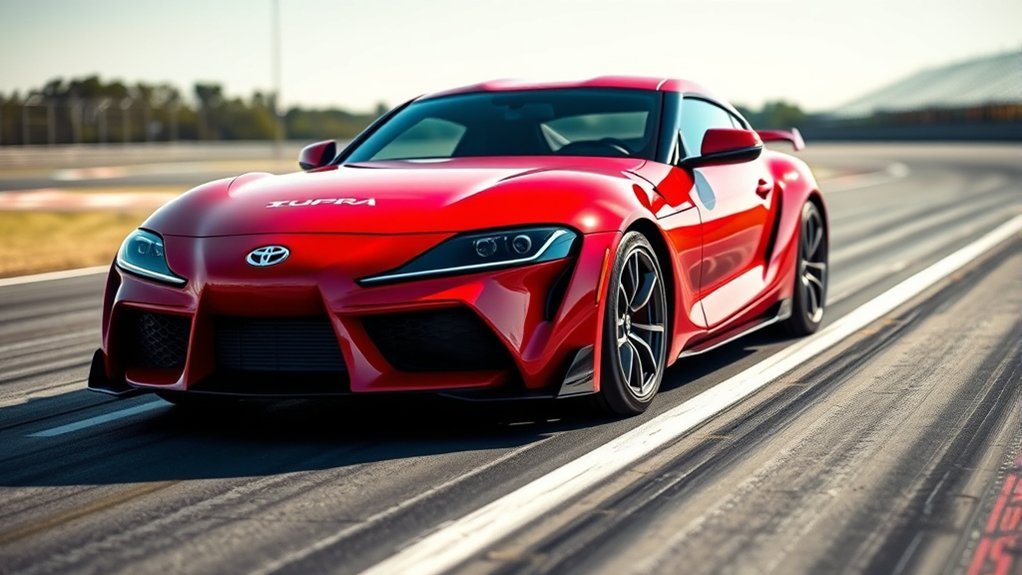
Launch control is a performance function that helps an automatic Toyota GR Supra accelerate consistently from a standstill on a dry surface with good traction. The driver selects the required modes and pedal positions, while the vehicle adjusts engine speed for the launch. Toyota describes the feature as a way to achieve optimum acceleration when traction and surrounding conditions are suitable.
Toyota’s owner’s manual warns that the function places a very heavy load on the vehicle and causes premature component wear. Toyota also states that launch control should not be used during break-in, while current model literature says the feature is not intended for public roads or repeated short-interval use.
The seven-step routine in this guide applies to the automatic-transmission procedure that uses selector position D and accelerator kickdown. Do not assume that another model year, transmission, production date, or market uses an identical sequence. Toyota lists multiple 2026 Supra owner’s manuals by production timing, so match the manual to your exact vehicle before attempting launch control. Start with Toyota’s 2026 GR Supra manuals page.
Current U.S. model information is available through the Toyota USA Newsroom GR Supra page.
Source note: This is a manual-based guide that translates Toyota’s published procedure into plain language. It does not claim independent launch testing, and it does not replace the owner’s manual supplied for your exact vehicle.
Does the Manual-Transmission Supra Use the Same Launch-Control Procedure?
No. The procedure documented here requires selector position D, left-foot braking, and full accelerator kickdown, so it is an automatic-transmission sequence. Do not copy these steps to a six-speed manual GR Supra. Check the owner’s manual for your exact model year, market, transmission, and production date for the controls and limitations that apply to your car.
Warning: Do not use launch control on a public road. Traffic, pedestrians, intersections, surface contamination, limited runoff, and legal restrictions make street launches unsafe even when the road appears empty.
How Do You Activate Launch Control in an Automatic GR Supra?
The exact dashboard wording or control layout may vary by model year, production date, and market. The factory automatic-transmission procedure follows the sequence below. Stop if your exact owner’s manual gives different instructions.
| Step | Action | Factory Requirement or Purpose |
|---|---|---|
| 1 | Confirm the break-in period is complete | Do not use launch control during the first 1,200 miles/2,000 km |
| 2 | Drive continuously for at least 6 miles/10 km | Toyota uses this uninterrupted trip as the operating-temperature requirement |
| 3 | Stop on a straight, dry closed-course surface | The surface must provide good traction and adequate stopping space |
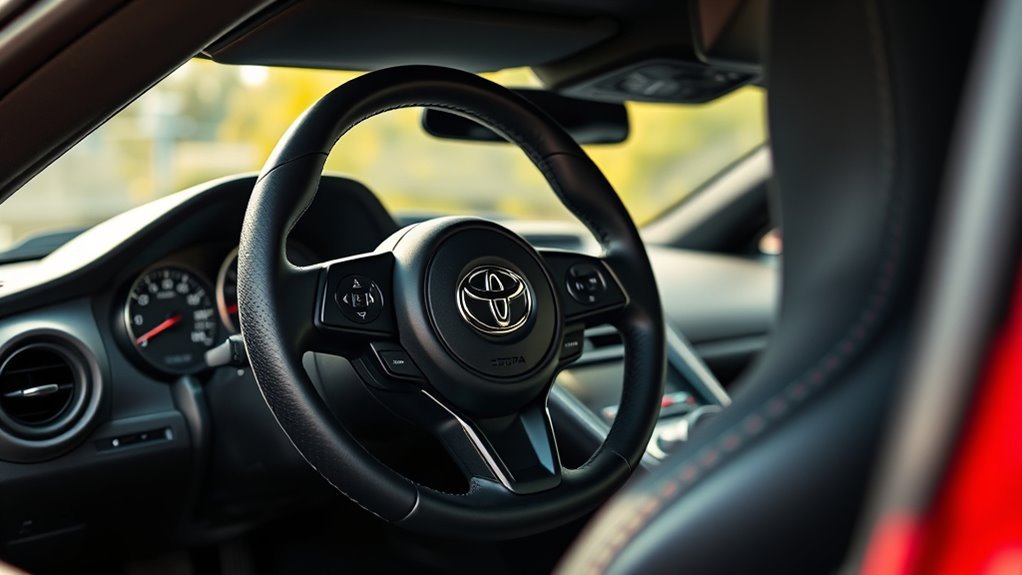
| 4 | Switch on SPORT mode | Confirm that SPORT appears in the instrument cluster |
| 5 | Press the VSC/Traction control as specified in the manual | Confirm that TRACTION appears and the VSC OFF indicator illuminates as described in the manual; do not substitute a different VSC mode |
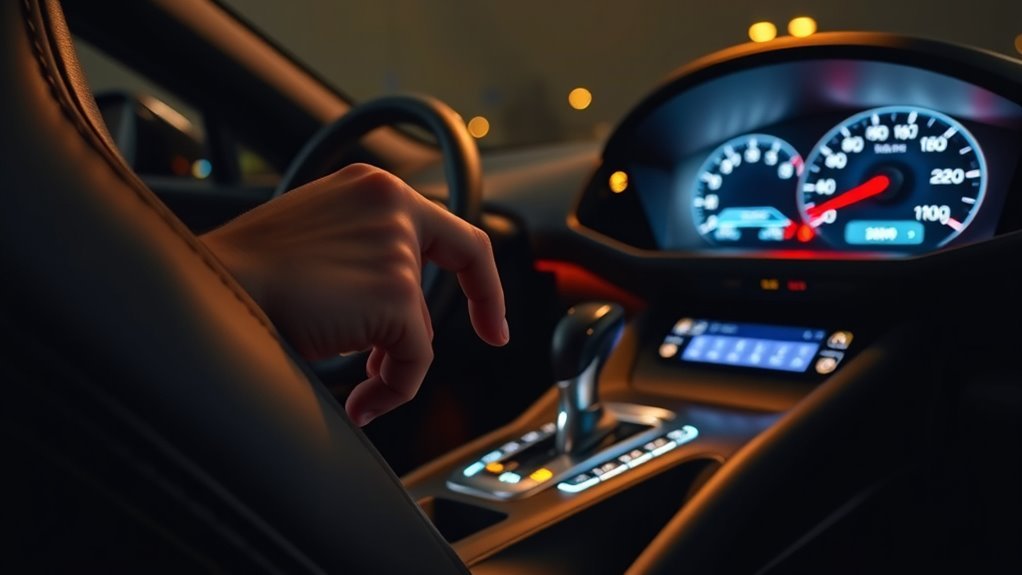
| 6 | Select D, hold the brake firmly with your left foot, and fully press the accelerator to kickdown | A flag symbol should appear and the car will adjust engine speed for launching |
| 7 | Release the brake within three seconds | Keep the steering wheel straight as the vehicle launches |
Do not chase a universal 1,500, 1,700, 2,000, or 2,200 RPM target. Toyota’s procedure says the engine speed is adjusted for launching, so the correct target is the launch condition selected by the vehicle for the circumstances. The important confirmations are SPORT mode, TRACTION mode, selector position D, firm brake pressure, full accelerator input at kickdown, and the flag indicator.
After the run, reactivate Vehicle Stability Control as soon as practical. Toyota also calls for approximately five minutes of transmission cooling before launch control is used again.
Pro Tip: Do not release the brake merely because the accelerator is down. Wait for the flag symbol and the adjusted launch speed, then release within the three-second window.
When Should You Use Supra Launch Control?
Use launch control only when the vehicle, surface, event rules, and driver are ready. A permitted drag-strip run or a controlled acceleration session is more suitable than an ordinary road-course lap because launch control is designed for a standing start.
All of these conditions should be present:
- Break-in is complete: The engine, transmission, and axle-drive break-in period extends to 1,200 miles/2,000 km.
- The warm-up requirement is complete: Drive continuously for at least 6 miles/10 km before attempting the automatic routine.
- The pavement is dry and clean: Avoid rain, standing water, dust, gravel, sand, oil, painted lines, and uneven pavement.
- The tires are safe: Inspect for damage and adequate tread. Use the pressure specified for your vehicle and setup rather than copying another driver’s track pressure.
- The steering wheel is straight: Toyota specifically warns against steering while driving off with launch control.
- You have acceleration and braking space: Plan where you will lift and slow down before starting the procedure.
- The organizer permits standing launches: Follow track, drag-strip, instructor, and event rules.
For tire-pressure and condition guidance, review the NHTSA TireWise guide.
Note: Tire temperature alone does not prove that a tire is safe. Check pressure, tread, age, damage, and suitability for the weather and event.
[Products Worth Considering]

Compatible with 2020-up Toyota Supra A90; also compatible with 2019-up BMW G29 Z4


【APPLICABLE MODELS】: The rear and front emblems trim cover compatible with Toyota Supra GR A90 A91 MK5 2019-2026. The size of the original car is customized.
What Does Launch Control Improve?
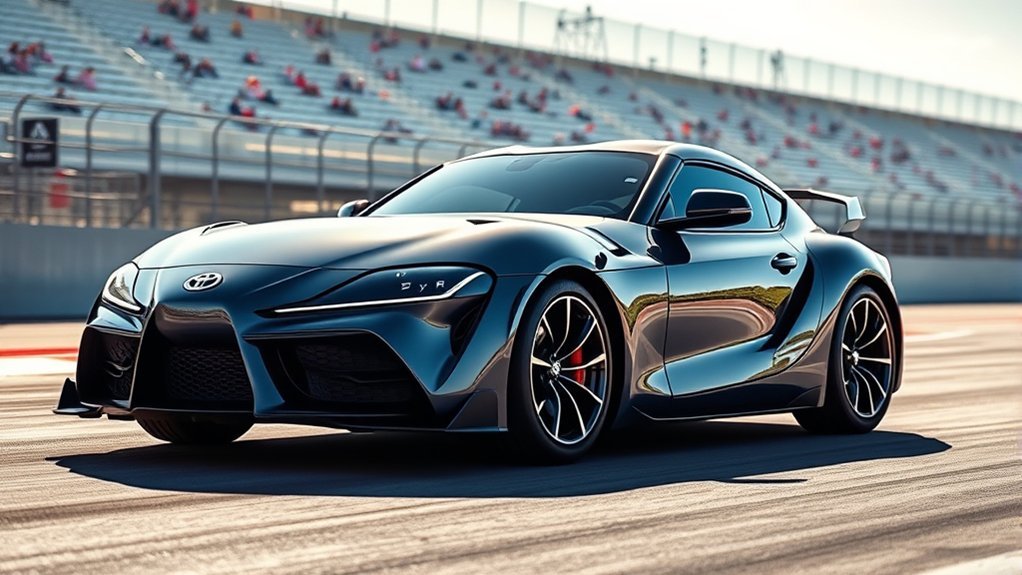
Launch control improves the repeatability of a standing start. It reduces the number of variables the driver must manage in the first moment of acceleration, but it cannot create grip where the surface or tires provide too little traction.
[Products Worth Considering]

There are input and output high quality and strictly controlled system for durable and highly performed use.12V - 24V DC

MADE FOR 2020-2026 TOYOTA GR SUPRA: For supported Toyota GR Supra 2020-2026 applications; verify your exact year, trim and configuration before ordering

It allows you to boost up turbo vehicles that use electric or negative pressure controlled actuators that cannot be controlled with conventional Boost Controllers. The overall power and torque are improved, so you can experience a more spacious run
Can Launch Control Improve Acceleration?
It can improve standing-start acceleration when the surface has enough grip. The car prepares a consistent launch condition and manages engine speed, reducing errors such as an incomplete accelerator input or an inconsistent starting RPM.
The feature does not guarantee a faster time. Cold pavement, contamination, incorrect tire pressure, worn tread, wheel hop, or poor steering control can still produce a slower and less stable start.
How Does It Help Manage Traction?
Launch control helps the vehicle begin from a repeatable powertrain state. It does not replace the tire’s contact with the road, and it does not make an unsuitable surface safe.
- It reduces guesswork about launch engine speed.
- It creates a repeatable setup for comparing closed-course runs.
- It lets the driver concentrate on keeping the car straight and using the available stopping space.
Why Is Repeatability Important?
Repeatability lets a driver compare runs without changing several variables at once. If the vehicle setup, tire condition, surface, and starting sequence remain consistent, changes in the result are easier to interpret.
| Launch-Control Function | Practical Benefit |
|---|---|
| Managed launch engine speed | Removes the need to force an arbitrary RPM target |
| Defined mode sequence | Creates a consistent starting routine |
| Dashboard flag confirmation | Shows when the launch condition is ready |
| Three-second release window | Provides a clear timing requirement |
| Required cooldown | Limits immediate repeated use |
The practical advantage is repeatability. A straight launch that preserves grip is more useful than a smoky start that wastes traction and adds unnecessary heat.
What Launch-Control Mistakes Should You Avoid?
The system may appear simple, but small setup errors can prevent activation or add unnecessary stress.
- Using it during break-in: Wait until the vehicle has passed 1,200 miles/2,000 km.
- Skipping the uninterrupted warm-up drive: A warm temperature gauge alone does not replace Toyota’s 6-mile/10-km requirement.
- Trying it on a public road: Public streets do not provide controlled access, runoff, or predictable surfaces.
- Using the wrong VSC setting: Confirm that TRACTION and the required VSC indicator appear.
- Selecting the wrong transmission position: The documented automatic routine uses D.
- Stopping short of kickdown: The accelerator must be fully depressed and held at the kickdown position.
- Releasing before the flag appears: Wait for the launch indicator and adjusted engine speed.
- Missing the three-second window: Release the brake within three seconds after the system sets the launch condition.
- Turning the steering wheel: Keep it straight during the launch.
- Repeating the procedure immediately: Wait approximately five minutes for transmission cooling.
Warning: Stop if the vehicle shows a warning message, hops, pulls sideways, smells unusually hot, or behaves abnormally. Do not repeat the launch in an attempt to force the system to work.
Does Launch Control Increase Wear?
Yes. Toyota’s owner’s manual states that launch control causes premature component wear because the function places a very heavy load on the vehicle. Toyota does not provide a fixed number of “safe” launches or a percentage showing how much component life each launch consumes.
What Parts Experience Additional Load?
A hard standing start can increase load on the tires, automatic transmission, differential, axle drive, engine mounts, and related driveline components at the same time. That component list is a mechanical explanation, not a Toyota estimate of part life. The exact wear depends on grip, temperature, vehicle condition, modifications, frequency, and whether wheel hop occurs.
Performance tires also wear faster under aggressive acceleration. Toyota’s 2026 GR Supra brochure warns that performance tires are expected to experience greater wear than conventional tires and that tire life can be substantially shorter depending on driving conditions.
How Can You Limit Unnecessary Stress?
- Use launch control only when the surface has good traction.
- Stop immediately if the rear tires hop or the car pulls off line.
- Wait approximately five minutes between launch-control attempts.
- Reactivate VSC after the run.
- Keep tire pressures and maintenance within the correct specifications.
- Avoid repeated launches when the vehicle is already hot.
What About Track Use and Warranty Coverage?
Toyota’s owner’s manual states that racetrack operation creates higher mechanical and thermal loads and increases wear. It also states that this wear is not covered by the warranty and recommends having the vehicle checked before and after racetrack driving.
Review your current warranty documents, event insurance requirements, and ordinary insurance coverage before participating. Track-related damage may not be handled like a normal road-use failure.
Why Won’t Supra Launch Control Activate?
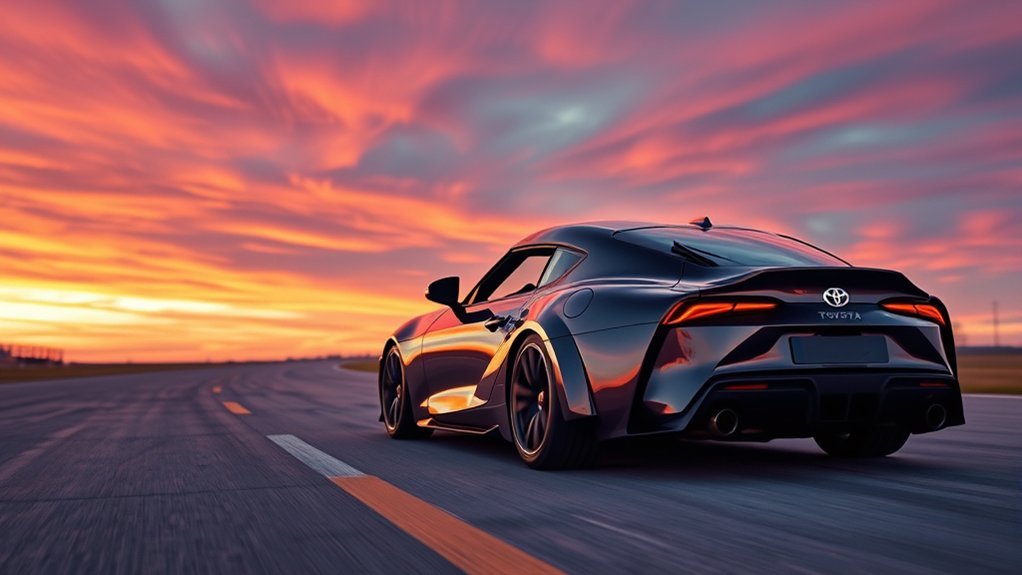
When launch control does not activate, check the factory requirements in order. Do not start by changing tire pressure, forcing a different RPM, or disabling additional safety systems.
| Symptom | Likely Cause | What to Check |
|---|---|---|
| No flag indicator | A functional requirement is incomplete | Break-in, 6-mile drive, SPORT, TRACTION, D, firm brake pressure, and full kickdown |
| Engine revs but launch is not set | Accelerator, brake, mode, or selector input is incorrect | Repeat the manual’s sequence from a complete stop |
| Rear tires begin spinning before confirmation | Incorrect mode or sequence | Release the pedals, stop, and verify the TRACTION setting |
| Launch control worked once but is unavailable again | Transmission cooldown is incomplete | Wait approximately five minutes |
| The controls do not match this guide | Different model year, production date, market, or transmission | Use the owner’s manual supplied for that exact vehicle and production period |
| Warning message appears | The vehicle has detected a condition that prevents operation | Stop and follow the warning or arrange diagnosis |
One commonly overlooked requirement is the uninterrupted 6-mile/10-km trip. Toyota defines operating temperature for launch-control availability using that drive, not merely the coolant gauge or time spent idling. If the flag still does not appear after every listed requirement is met, stop repeating the procedure and follow any vehicle message or diagnostic guidance in the manual.
Do You Need Modifications for Better Launch Control?
No modification is required to use the factory feature. Before adding power, make sure the stock car can complete the factory sequence cleanly on suitable tires and a prepared surface. Added power does not fix an activation problem caused by an unmet factory requirement.
- Tire condition: Correct pressure, adequate tread, no damage, and a compound suitable for the weather matter more than added engine output.
- Alignment: A correct alignment helps the car track straight. Aggressive settings can increase tire wear.
- Maintenance: Inspect the transmission, differential, brakes, tires, and cooling system before repeated closed-course use.
- Transmission service: Follow the correct fluid and inspection guidance rather than assuming launch control creates a universal shortened interval. See the related Supra transmission fluid service guide.
- Power modifications: Added torque can make wheelspin, heat, and driveline shock harder to manage.
Note: ECU tuning and emissions-related modifications may affect reliability, emissions compliance, warranty decisions, and insurance. Confirm the legal and mechanical consequences before modifying the vehicle.
[Products Worth Considering]

High-Quality Materials:The TOYOTA Supra die-cast car is made of zinc alloy,plastic parts and rubber tires,making it safe for children to play with.It features detailed interior and exterior trim, and is very sturdy.
What Should You Check Before and After a Launch?
A calm checklist is more useful than changing the setup after every run. Keep the factory procedure constant before evaluating tires, pavement, or driver timing.
Before the Launch
- Confirm that the first 1,200 miles/2,000 km are complete.
- Read the launch-control instructions for the exact vehicle.
- Complete the uninterrupted 6-mile/10-km drive.
- Inspect the tires and confirm the correct pressure.
- Check for fluid leaks, warning lights, or unusual noises.
- Use a dry, straight, permitted launch area.
- Identify the lift point and braking area before accelerating.
- Keep both hands ready and the steering wheel straight.
After the Launch
- Reactivate VSC as soon as practical.
- Allow approximately five minutes for transmission cooling.
- Inspect for wheel hop, vibration, pulling, warning messages, or unusual smells.
- Do not make another run merely to correct an embarrassing first attempt.
- Record the surface and vehicle conditions if you are comparing track runs.
| Mistake | Possible Result | Better Choice |
|---|---|---|
| Ignoring break-in | Unnecessary early component stress | Wait until 1,200 miles/2,000 km |
| Skipping the 6-mile drive | Launch control may remain unavailable | Complete the uninterrupted warm-up requirement |
| Using a random RPM target | Incorrect procedure and inconsistent results | Let the vehicle adjust launch engine speed |
| Missing the flag indicator | The launch condition is not confirmed | Check the modes and pedal inputs |
| Repeating immediately | Additional transmission heat | Wait approximately five minutes |
When Should You Skip Launch Control?
Skip launch control whenever one part of the vehicle, environment, or procedure is not ready.
- During the first 1,200 miles/2,000 km: Follow the engine, transmission, and axle-drive break-in guidance.
- Before the 6-mile/10-km warm-up drive: The factory functional requirement has not been met.
- On public roads: Toyota does not intend the feature for public-road use.
- In rain, snow, ice, dust, gravel, sand, or standing water: These surfaces reduce predictable traction.
- With worn, damaged, or unsuitable tires: Tire condition is a safety requirement.
- With the steering wheel turned: The manual instructs the driver not to steer while launching.
- During the five-minute cooldown: Give the transmission the required time before another attempt.
- After several hard runs: Powertrain, tire, and brake temperatures may already be elevated.
- If a warning light or message appears: Diagnose the condition before another attempt.
- If the car hops, pulls sideways, or behaves abnormally: Stop rather than trying to power through the problem.
- If you cannot identify a safe stopping area: A launch plan must include braking space.
Skipping launch control is often the correct decision. Normal acceleration is safer, easier on the vehicle, and more appropriate for nearly all public-road driving.
Frequently Asked Questions
Does launch control make a Toyota Supra faster?
Launch control can improve standing-start acceleration when the surface has enough grip because it creates a repeatable starting condition and lets the vehicle adjust launch engine speed. It cannot overcome wet pavement, worn tires, surface contamination, or wheel hop.
Can I use launch control before the 1,200-mile break-in period?
No. Toyota instructs drivers not to use launch control during the engine, transmission, and axle-drive break-in period, which extends to 1,200 miles/2,000 km.
Does every Toyota Supra use the same launch-control procedure?
No. The factory routine described in this guide uses the automatic transmission’s D position. Model year, market, equipment, and transmission can affect availability and operation. Use the launch-control section of the owner’s manual for your exact vehicle.
How warm must a GR Supra be before launch control works?
Toyota states that launch control is available when the engine is at operating temperature. For this feature, the manual defines operating temperature as an uninterrupted drive of at least 6 miles/10 km.
How long should I wait between Supra launch-control runs?
Wait approximately five minutes. Toyota states that the transmission must cool for about five minutes after launch control has been used before the feature is used again.
Why will my Supra launch control not activate?
Check that break-in is complete, the vehicle has completed the uninterrupted 6-mile/10-km drive, SPORT and TRACTION modes are confirmed, the automatic transmission is in D, the brake is held firmly, and the accelerator is fully pressed to kickdown. The system may also remain unavailable during the five-minute cooldown after a previous launch.
Is launch control bad for the Supra?
Toyota warns that launch control places a very heavy load on the vehicle and causes premature component wear. Occasional correct use does not remove that wear, so use the feature sparingly, follow the cooldown, and stop if the vehicle behaves abnormally.
What RPM does factory Supra launch control use?
Toyota does not instruct the driver to force one universal launch RPM in the documented automatic procedure. After SPORT, TRACTION, D, firm brake pressure, and full accelerator kickdown are set, the vehicle adjusts engine speed for launching. Use the flag indicator and the factory sequence rather than copying a fixed RPM from another car or setup.
Does a manual-transmission GR Supra use these same launch-control steps?
No. The procedure in this guide requires selector position D and accelerator kickdown, so it is specific to the automatic-transmission routine. For a six-speed manual Supra, use the owner’s manual for the exact model year, market, and production date rather than adapting the automatic sequence.
Conclusion
Use Toyota GR Supra launch control only after break-in, after the uninterrupted 6-mile/10-km warm-up drive, and on a dry legal closed course with good traction. For the automatic procedure covered here, confirm SPORT, TRACTION, D, firm brake pressure, full kickdown, and the flag indicator; then release the brake within three seconds and allow approximately five minutes before another attempt.
Skip it on public roads, in poor weather, with unsafe tires, during cooldown, or whenever the car shows a warning or abnormal behavior. Launch control is a specialized track tool that improves repeatability, not a routine method for leaving every stop.
Sources
- Toyota 2026 GR Supra Manuals and Warranties — Toyota’s current 2026 manual hub, including owner’s manuals for different production periods.
- Toyota 2026 GR Supra Brochure — current model-year launch-control disclosure, specifications, and tire-wear information.
- Toyota USA Newsroom: 2026 Toyota GR Supra — current model-year information.
- NHTSA TireWise — tire-pressure, tread, condition, and safety guidance.