Last updated: August 31, 2026
On a 2018 Toyota Tacoma, turn traction control off only when the truck is stuck or TRAC is cutting the power needed to move through fresh snow, mud, sand, or another low-speed, low-traction situation. In 2WD mode—including a 4WD Tacoma set to 2WD—pressing the overhead VSC OFF switch turns on the Auto LSD mode. In 4WD mode, a quick press turns TRAC off. To disable TRAC, VSC, and Trailer Sway Control together, stop the truck and hold the switch for more than 3 seconds until the TRAC OFF and VSC OFF indicators appear. Keep these systems on for normal pavement, rain, ice, packed snow, highway travel, towing, and emergency maneuvers.
Quick Answer
Locate the overhead TRAC/VSC OFF switch near the dome-light controls. In 2WD mode, a brief press turns on Auto LSD; the AUTO LSD and VSC OFF indicators illuminate. In 4WD mode, a brief press turns TRAC off and the TRAC OFF indicator illuminates. To turn off TRAC, VSC, and Trailer Sway Control together, stop the Tacoma and hold the switch for more than 3 seconds. Press the switch again when the truck is free. Restarting the engine also reactivates systems that were switched off.
Key Takeaways
- In 2WD mode, the VSC OFF switch activates Auto LSD; in 4WD mode, a quick press turns TRAC off.
- Holding the switch for more than 3 seconds while stopped disables TRAC, VSC, and Trailer Sway Control.
- When VSC or TRAC is switched off, the 2018 Tacoma’s pre-collision brake assist and pre-collision braking are also disabled, and the PCS warning appears.
- Restore normal operation before road driving; leave the electronic stability and traction systems on for rain, ice, packed snow, highway travel, and towing.
How Do You Turn Off Traction Control on a 2018 Tacoma?

The 2018 Tacoma Quick Reference Guide identifies the roof-console control as the TRAC/VSC OFF switch and shows the TRAC OFF, VSC OFF, and AUTO LSD indicators associated with it. The 2018 Tacoma Owner’s Manual then separates the operating logic by drive mode: Auto LSD in 2WD mode, TRAC OFF in 4WD mode, and a broader TRAC/VSC/Trailer Sway Control OFF mode when the switch is held for more than 3 seconds while stopped.
| Situation | Best Initial Setting | Switch Action | What to Confirm |
|---|---|---|---|
| Normal pavement, rain, ice, or packed snow | TRAC and VSC on | Do not press the switch | No driver-selected TRAC OFF or VSC OFF mode |
| 2WD mode, including a 4WD Tacoma set to 2WD | Auto LSD when one rear wheel is spinning in a ditch or on a rough surface | Briefly press and release | AUTO LSD and VSC OFF indicators appear |
| 4WD mode when TRAC intervention is preventing recovery | TRAC OFF only | Briefly press and release | TRAC OFF indicator appears |
| Truck stuck and broader intervention must be disabled | TRAC, VSC, and Trailer Sway Control off | While stopped, hold for more than 3 seconds | TRAC OFF and VSC OFF indicators appear |
| Equipped 4WD truck using 4L, Multi-Terrain Select, A-TRAC, Crawl Control, or the rear locker | Use the drivetrain feature specified for the terrain | Follow the mode-specific owner’s-manual procedure | Correct drive-mode indicator; some modes change VSC/TRAC status automatically |
- Stop the truck in a safe, controlled position. Do not search for or hold the switch while steering through traffic.
- Locate the overhead TRAC/VSC OFF switch. It is in the roof console near the Tacoma’s dome-light controls.
- Choose the mode that matches the drivetrain setting. In 2WD mode, briefly press and release the switch to turn on Auto LSD; confirm the AUTO LSD and VSC OFF indicators. In 4WD mode, a brief press turns TRAC off; confirm the TRAC OFF indicator.
- For the broader OFF mode, hold the switch for more than 3 seconds while stopped. This turns off TRAC, VSC, and Trailer Sway Control; confirm the TRAC OFF and VSC OFF indicators.
- Apply smooth, measured throttle. Use only enough wheelspin to clear the obstruction or maintain momentum. Stop if the tires dig deeper or the truck moves sideways.
- Restore normal operation immediately afterward. Press the switch again when the Tacoma is free. If you used the broader OFF mode, restarting the engine also reactivates the systems. Confirm the warning indicators have cleared before normal road driving.
Warning: Do not treat the TRAC/VSC OFF switch as a performance button for street driving. Disabling these systems makes tire spin, fishtailing, and loss of directional control more likely. On a 2018 Tacoma, switching VSC or TRAC off also disables pre-collision brake assist and pre-collision braking, so restore normal mode as soon as the recovery maneuver is complete.
[Products Worth Considering]

These replacement support brackets are designed to secure the spring bars on a trailer frame for CURT TruTrack weight distribution hitches. Their adjustable mounting holes help achieve precise leveling while the rigid construction supports integrated sway control for a steadier towing experience. A durable powder coat finish adds long-lasting protection, and the package includes two replacement brackets.

These off-road traction boards are designed to help vehicles recover from mud, sand, and snow with reliable grip and easier ramp-up. Their double-sided diamond construction, cross-shaped teeth, and contoured ramps improve traction while the durable polypropylene build stays flexible in harsh conditions. Convenient mounting points, ergonomic handles, and a visible leash make them practical to carry, store, and retrieve when recovery is needed.

These short off-road traction boards are designed to help ATV and UTV drivers recover from mud, sand, and snow with added convenience and portability. Built with strengthened teeth and a stable bottom channel design, they help prevent wheel slip and improve traction in tough terrain. Made from durable automotive-grade polypropylene, they are lightweight, easy to clean, and suited for year-round use in extreme temperatures. Built-in shovels, ergonomic handles, and nesting storage make them practical for compact vehicle setups.
When Should You Disable Traction Control?
Toyota specifically notes that TRAC/VSC/Trailer Sway Control can reduce engine power when a Tacoma is stuck in fresh snow or mud, and that switching the systems off may be necessary to rock the truck free. The same principle can apply to another short, loose-terrain recovery where TRAC is stopping needed momentum. Keep the systems on for normal travel over wet roads, ice, packed snow, maintained gravel, and other situations where stability support matters more than controlled wheelspin.
Deep Snow
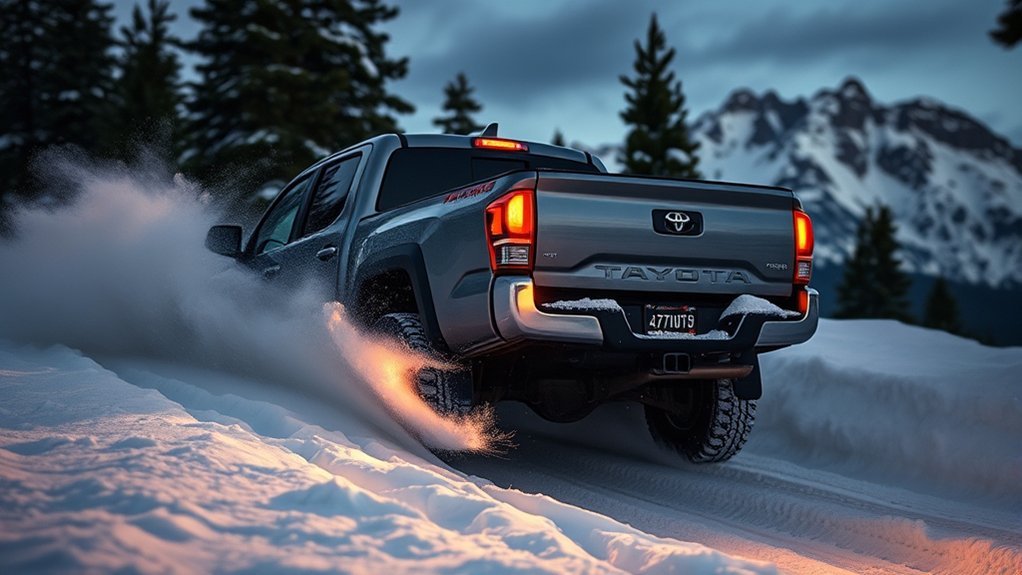
Leave TRAC and VSC on for normal snow-covered roads. Consider turning them off only when the truck is buried in loose snow and power reduction prevents you from rocking or moving it. Use low speed and gentle throttle, then restore the systems before driving on a plowed or packed surface. See the dedicated Tacoma snow-driving guide for 2WD, 4H, Auto LSD, and winter-tire guidance.
Mud
Some wheelspin can clear mud from the tread and help the tire reach firmer ground. Stop if spinning lowers the truck toward the frame or fills the tread without forward movement. The Tacoma mud-driving guide covers drive modes, line selection, and recovery planning in more detail.
Sand
Soft sand rewards smooth momentum rather than abrupt throttle. Traction intervention may stop progress when a tire begins to spin, but excessive wheel speed can bury the truck quickly. Disable the system only for the problem section, avoid sharp steering, and restore it when you reach firm ground.
Loose Gravel or Steep Loose Climbs
Use a low gear, choose the line before starting, and hold a steady throttle. Stop the attempt if the rear of the truck steps sideways or the tires spin without climbing. Stability support is more valuable than extra wheelspin once the truck is moving at normal road speed.
Pro Tip: Clear packed snow, mud, or sand from in front of the tires before adding throttle. A few minutes with a shovel or traction board often works better than faster wheelspin.
When Should You Keep Traction Control On?
Keep TRAC and VSC on for most driving. These systems help control excessive wheelspin and support vehicle stability when the truck begins to deviate from the driver’s intended path.
| Situation | Best Choice | Why |
|---|---|---|
| Normal pavement driving | Leave it on | You want stability support, not additional wheelspin. |
| Rain, ice, or packed snow on roads | Leave it on | Electronic intervention can help control wheelspin and sliding. |
| Highway driving | Leave it on | A small loss of stability can become serious at speed. |
| Towing or hauling on pavement | Leave it on | The added mass makes stability support more important. |
| Emergency steering or braking | Leave it on | You want the truck’s available stability systems operating during a sudden maneuver. |
How Does Turning TRAC Off Change Wheelspin?
TRAC monitors drive-wheel speed and limits excessive spin by reducing engine torque and applying brake control when needed. VSC also considers the truck’s direction and can reduce power or brake selected wheels when the vehicle begins to slide away from the intended path. Turning these systems off removes some of that intervention, allowing more wheelspin but reducing the electronic support available to the driver.
Auto LSD and A-TRAC are different from simply switching every traction aid off. In 2WD mode, Auto LSD uses engine and brake control when one rear wheel spins, so a brief press of the VSC OFF switch is a traction-aid selection rather than a full electronic shutdown. A-TRAC uses brake control on equipped 4WD configurations. Choose the system that matches the terrain instead of assuming that less electronic intervention always means more usable traction.
The goal is not more wheelspin. The goal is the smallest amount of wheelspin needed to keep moving without digging a hole or losing steering control.
| Situation | Action |
|---|---|
| Mud or sand | Use measured spin only while the truck continues moving |
| Steep loose climb | Use a low gear, steady throttle, and a planned line |
| Rocky uneven ground | Prefer the correct equipped off-road mode and controlled wheel placement |
| Deep snow | Use gentle rocking and stop before the chassis becomes buried |
| Obstacle resistance | Use only enough throttle to pass the obstruction safely |
Keep speeds low and stop if the Tacoma begins sliding sideways instead of moving along the intended line. Do not continue spinning the tires while the truck remains stationary.
What Do TRAC, VSC, Auto LSD, A-TRAC, and the Rear Locker Do?
A 2018 Tacoma may have different traction features according to drivetrain, transmission, trim, and optional equipment. The dashboard indicator and owner’s manual are the final references for the system your truck has selected.
| System | Main Purpose | Typical Use | Important Limit |
|---|---|---|---|
| TRAC | Limits excessive drive-wheel spin | Normal road driving and slippery surfaces | May reduce the wheelspin needed to free a stuck truck |
| VSC | Supports directional stability during a slide or cornering loss | Normal driving, rain, snow, ice, and emergency maneuvers | Disabling it removes stability support |
| Auto LSD | Uses brake and engine control as a limited-slip aid | 2WD models and 4WD models in 2WD mode when one rear wheel spins in a ditch or on a rough surface | AUTO LSD and VSC OFF indicators come on; VSC and TRAC reactivate automatically as vehicle speed increases |
| A-TRAC | Uses brake control to limit wheelspin on equipped 4WD configurations | Low-speed off-road traction where equipped | Availability and operating requirements depend on configuration |
| Multi-Terrain Select or Crawl Control | Manages throttle and braking for selected low-speed terrain | Equipped off-road models in specified conditions | Follow the owner’s manual for drive range, speed, and surface limits |
| Rear differential lock | Locks the rear axle so both rear wheels turn together | Specified low-speed trouble spots on equipped models | Do not use it on normal high-traction pavement; unlock it after clearing the obstacle |
Note: Shifting into 4L or selecting an equipped off-road system can change the indicator logic automatically. Toyota states that VSC turns off automatically in 4L, and Multi-Terrain Select prevents the VSC OFF switch from changing VSC while that system is operating. Follow the 2018 Tacoma owner’s manual for the exact drivetrain and equipment rather than assuming every TRAC OFF or VSC OFF light came from a button press.
[Products Worth Considering]

BUNKER INDUST off-road traction boards help vehicles regain grip in mud, sand, and snow with a double-sided diamond array and cross-shaped teeth for improved bite and stability. Built from upgraded automotive-grade polypropylene, they resist UV damage, cold-weather brittleness, and wheel-spin heat while remaining flexible enough to handle demanding recovery situations. Contoured ramps, ergonomic handles, and multiple mounting points make them practical to use, store, and retrieve when adventure turns into recovery.
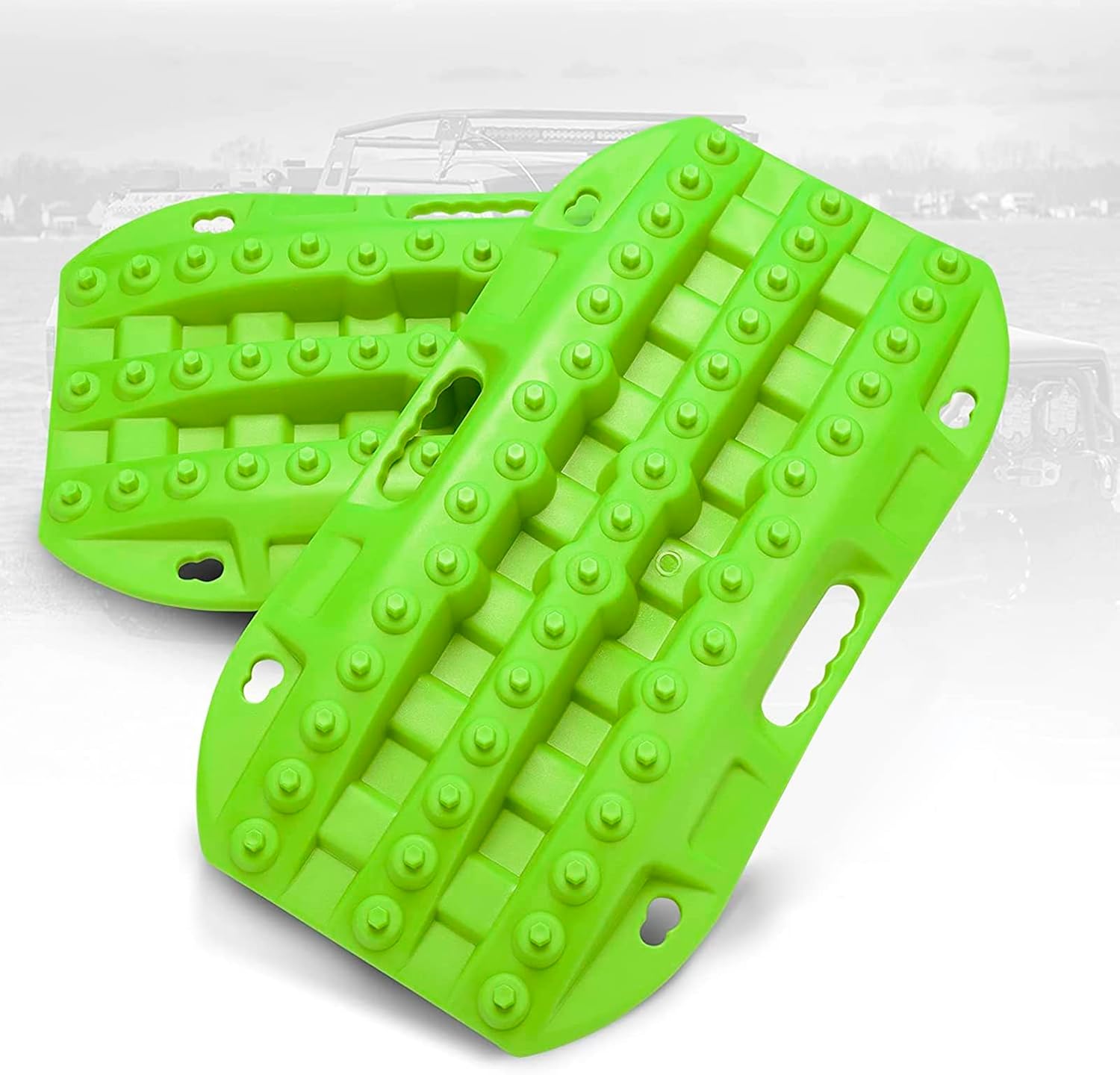
These short recovery traction boards are designed to help ATVs, UTVs, and other off-road vehicles regain grip in mud, sand, and snow. Built with strengthened teeth and a durable polypropylene construction, they provide reliable traction, easy handling, and year-round performance in tough conditions. Their nested, space-saving design and integrated shovels make them practical for carrying and using on remote adventures.

This plug-and-play AC button switch is designed to replace a faulty factory air conditioner switch in compatible Toyota vehicles. It installs easily without tools and is made to match the original part for a seamless fit and reliable operation. Built from durable ABS plastic, it offers a dependable replacement backed by warranty support and fitment guidance.
How Can You Improve Traction Without Using the Rear Locker?
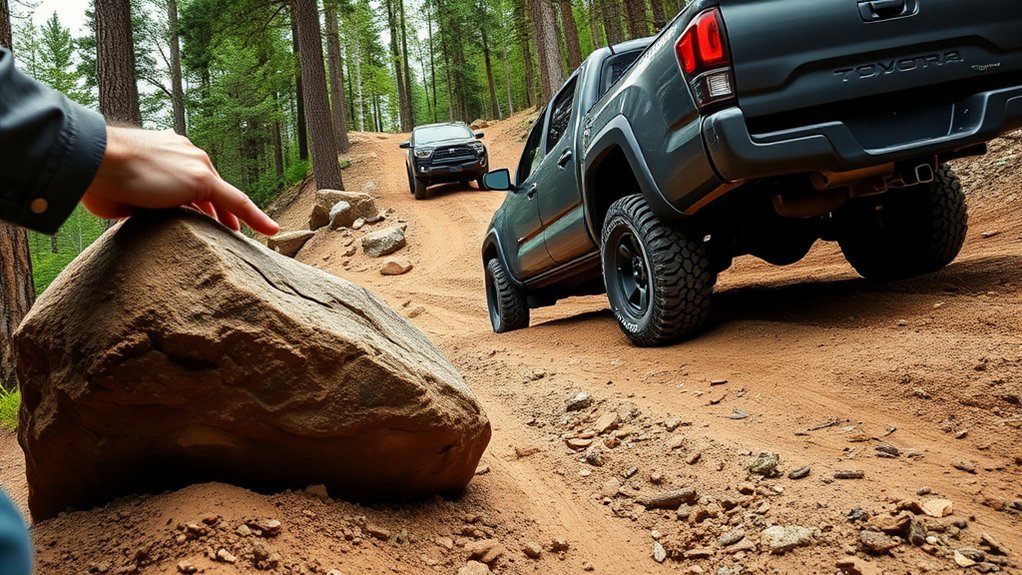
A rear locker is useful in specific low-speed situations, but tires, pressure, line choice, and throttle control often determine whether the Tacoma moves without digging itself deeper.
- Match the tire to the surface. Highway, all-terrain, mud-terrain, and winter tires provide different levels of grip, tread clearing, steering response, and road comfort.
- Use the correct road pressure. The driver-door placard lists the proper cold pressure for normal road use. It does not provide a universal off-road air-down setting. Reinflate before sustained pavement or highway travel.
- Choose a clean line and use smooth throttle. Avoid deep ruts, buried rocks, abrupt steering, and wheelspin that produces no forward movement.
- Carry suitable recovery equipment. A shovel, traction boards, a properly rated recovery strap, and verified recovery points can prevent a traction problem from becoming vehicle damage.
[Products Worth Considering]

These X-BULL recovery traction tracks help drivers get unstuck from sand, snow, mud, or ice with a stable U-shaped elastic design and a wavy ramp that makes tire entry easier. Built from reinforced nylon, they are flexible, impact-resistant, and designed to perform in extreme temperatures while providing reliable emergency traction for a wide range of vehicles.

This Andersen Hitches weight distribution hitch kit is designed to improve towing stability with a grease-free friction cone and tension chain system that helps reduce sway and bounce. It features a universal setup with a 2-inch ball and 4-inch drop/rise to suit many bumper-pull trailer applications, while making hitching and unhitching faster and easier than traditional spring bar systems. Built in the USA, it offers dependable performance for travelers, workers, and outdoor enthusiasts who need confident towing control.

These heavy-duty running boards are designed to improve access to your 2024-2026 Toyota Tacoma while preserving off-road clearance. Built for Double Cab and Crew Cab models, they provide a sturdy step for daily entry, loading roof gear, and rugged trail use. With a no-drill installation and durable construction, they deliver dependable support and long-lasting convenience.
What Are the Risks of Driving With Traction Control Off?
Driving with TRAC or VSC off increases the chance of excessive tire spin, fishtailing, and loss of directional control. Holding the switch for the broader OFF mode also disables Trailer Sway Control. The risk is greatest on wet pavement, ice, packed snow, loose gravel over a hard surface, roads shared with other traffic, and any situation where a sudden steering correction may be needed.
Increased Skid Risk
Without normal wheelspin control, abrupt throttle can break rear-tire traction and move the back of the Tacoma sideways. This is especially risky in 2WD or when the road surface changes from loose material to firm pavement.
Emergency Maneuver Preparedness
TRAC and VSC should be active for road driving so the truck retains its available electronic stability support. If a slide begins, look toward the safe path, use smooth steering, and avoid adding abrupt throttle.
What Happens to Pre-Collision Braking When TRAC or VSC Is Off?
The 2018 Tacoma includes Toyota Safety Sense P across the lineup. Toyota’s owner’s manual states that when VSC or TRAC is turned off with the VSC OFF switch, pre-collision brake assist and pre-collision braking are also disabled. The PCS warning light comes on and a message appears in the multi-information display. This does not mean every Toyota Safety Sense function is switched off, but it is another reason to restore TRAC and VSC immediately after the low-speed recovery is complete.
Tire Pressure and Heat
If you reduce tire pressure for a controlled off-road situation, reinflate before highway driving. The National Highway Traffic Safety Administration advises drivers to use the cold inflation pressure on the vehicle placard and to monitor pressure, tread, condition, and load. Underinflation can increase heat buildup, worsen handling, and raise the risk of tire failure.
What Should You Do if a New Noise Starts After Changing the Mode?
Some motor sounds, brake-pedal pulsation, and body or steering vibration can occur while Toyota’s ABS, TRAC, VSC, or related brake-control systems are operating. A persistent mechanical clunk, grinding sound, repeated banging, or vibration that continues outside normal system intervention needs a different diagnosis. Do not keep spinning the tires or repeating the switch sequence simply to reproduce the noise.
| Step | Action | Why It Matters |
|---|---|---|
| 1 | Stop if handling feels unstable | Prevents a possible fault from becoming a crash or larger failure |
| 2 | Record speed, gear, drive mode, and surface | Helps identify when the symptom occurs |
| 3 | Check TRAC, VSC, ABS, brake, and check-engine indicators | Multiple warning lights can indicate a fault rather than a selected mode |
| 4 | Inspect the tires, underbody, brakes, and visible driveline parts | Mud, rocks, damaged boots, or loose components can create new symptoms |
| 5 | Arrange professional diagnosis if the symptom continues | Persistent clunks, grinding, vibration, or warning lights need inspection |
When Should You Re-Enable Traction Control?
Restore TRAC and VSC as soon as the Tacoma is free or has crossed the short loose section. Press the VSC OFF switch again to cancel the selected mode. If the broader TRAC/VSC/Trailer Sway Control OFF mode was selected, turning the engine off and restarting it automatically reactivates those systems. Auto LSD also turns off after an engine restart, and VSC/TRAC reactivate automatically as vehicle speed increases.
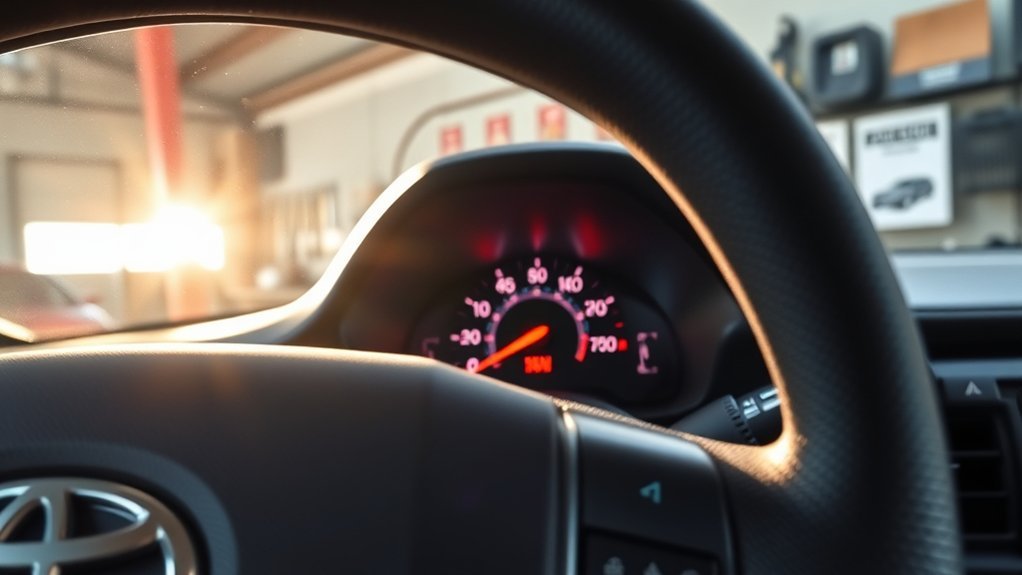
If the TRAC OFF indicator comes on even though you did not press the VSC OFF switch, Toyota states that TRAC and hill-start assist cannot operate and the truck should be inspected. Likewise, if an OFF indicator remains after you cancel the mode or restart the engine, especially with an ABS, brake, PCS, or check-engine warning, stop treating it as a normal driver-selected state and arrange diagnosis.
After mud, sand, deep snow, or rocky terrain, complete a quick post-drive inspection:
- Remove mud or packed snow from around the wheels, brakes, exhaust, and underbody.
- Check tire pressure and return it to the correct cold road setting if it was reduced.
- Look for tire damage, missing wheel weights, bent skid plates, or leaking fluids.
- Listen for new clunks, grinding, scraping, or vibration during low-speed driving.
- Confirm that no unexplained warning light remains before highway travel.
Frequently Asked Questions
When should I drive with traction control off?
Drive with traction control off only when controlled wheelspin is needed to free the Tacoma or cross a short section of deep snow, mud, soft sand, or loose terrain. Restore the system before normal road driving.
How do I turn traction control off on a 2018 Toyota Tacoma?
Use the overhead TRAC/VSC OFF switch. In 2WD mode, briefly press it to turn on Auto LSD. In 4WD mode, briefly press it to turn TRAC off. To turn off TRAC, VSC, and Trailer Sway Control together, stop the truck and hold the switch for more than 3 seconds. Confirm the selected mode on the dashboard.
Where is the traction-control switch on a 2018 Tacoma?
Toyota’s 2018 Tacoma Quick Reference Guide shows the TRAC/VSC OFF switch in the overhead switch panel near the dome-light controls.
What happens when I briefly press the TRAC/VSC OFF switch?
In 2WD mode—including a 4WD Tacoma set to 2WD—a brief press turns on Auto LSD and the AUTO LSD and VSC OFF indicators illuminate. In 4WD mode, a quick press turns TRAC off and the TRAC OFF indicator illuminates.
Does restarting a Toyota Tacoma turn traction control back on?
Yes. Turning the engine off after the TRAC/VSC/Trailer Sway Control systems have been switched off automatically reactivates them. Auto LSD also turns off after an engine restart. Confirm that the driver-selected OFF indicators have cleared before normal driving.
Should I turn traction control off in rain or ice?
No. Leave TRAC and VSC on for rain, ice, packed snow, and normal winter road driving. Turn them off only for a specific stuck-vehicle or low-speed loose-terrain problem.
How does traction control work on a Toyota Tacoma?
TRAC monitors drive-wheel spin and can reduce engine torque or apply brake control to limit excessive spinning. VSC also helps the truck follow the driver’s intended direction when it begins to slide.
What should I do if the TRAC OFF light stays on?
If you selected an OFF mode, press the switch again or restart the engine. If the TRAC OFF light appears without a switch press, Toyota states that TRAC and hill-start assist cannot operate and the truck should be inspected. Persistent ABS, brake, PCS, or check-engine warnings also warrant diagnosis.
Does turning off traction control disable pre-collision braking?
On the 2018 Tacoma, Toyota states that using the VSC OFF switch to turn VSC or TRAC off also disables pre-collision brake assist and pre-collision braking. The PCS warning light and a message appear while those functions are unavailable.
Conclusion
Use the 2018 Tacoma’s TRAC/VSC OFF switch only for a short, specific low-traction problem. In 2WD mode, a brief press selects Auto LSD; in 4WD mode, a brief press turns TRAC off; holding the switch for more than 3 seconds while stopped disables TRAC, VSC, and Trailer Sway Control. Confirm the dashboard indicators, use the least intervention needed to free the truck, and restore normal operation before pavement driving so stability support and pre-collision braking are available again.
Sources
- Toyota Support: When should I use the VSC OFF button? — switch operation, stuck-vehicle use, reactivation, and restart behavior.
- Toyota Owners: 2018 Tacoma manuals and warranties — official model-specific manual access.
- Toyota 2018 Tacoma Quick Reference Guide — switch location, TRAC/VSC/Auto LSD relationship, A-TRAC, rear differential lock, and indicator information.
- Toyota Owners: Dashboard Warning Lights — dashboard-indicator reference.
- NHTSA Tire Safety — cold inflation pressure, tread, condition, and load guidance.
- Toyota USA Newsroom: 2018 Tacoma Toyota Safety Sense P — confirms Toyota Safety Sense P was standard across the 2018 Tacoma lineup.