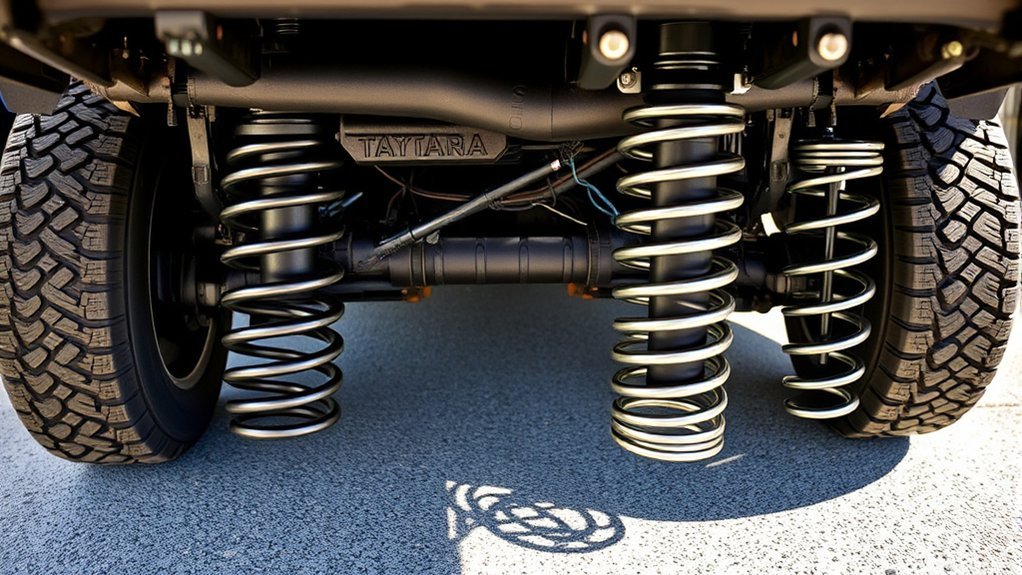
Choosing between leaf springs and coil springs for a Toyota Tacoma comes down to how you use the truck. Leaf springs are still the better fit for frequent hauling, towing, work gear, and simple durability. Coil springs are the better fit for daily comfort, smoother handling, and trail articulation. The right choice is not about which suspension is “best” overall; it is about whether your Tacoma spends more time loaded down or riding light.
Quick Answer
Choose leaf springs if your Tacoma regularly hauls heavy cargo, tows, carries bed racks, or runs constant overlanding weight. Choose coil springs if ride comfort, handling, and off-road articulation matter more than maximum load stability. For 2024 and newer Tacomas, Toyota uses coil-spring multi-link rear suspension on most trims, while leaf springs remain on select utility-focused grades.
Key Takeaways
- Leaf springs are best for heavy payloads, towing stability, simple construction, and budget-friendly durability.
- Coil springs give the Tacoma a smoother ride, better compliance over rough roads, and improved axle articulation.
- Toyota introduced an available rear coil-spring multi-link setup on the redesigned 2024 Tacoma, and it remains a key fourth-generation feature.
- Your door-jamb payload sticker, owner’s manual, and actual truck weight matter more than generic payload claims online.
- A lift, camper shell, bumper, rooftop tent, drawer system, or trailer tongue weight can change which spring setup is best.
Comparing Leaf Springs and Coil Springs for the Tacoma
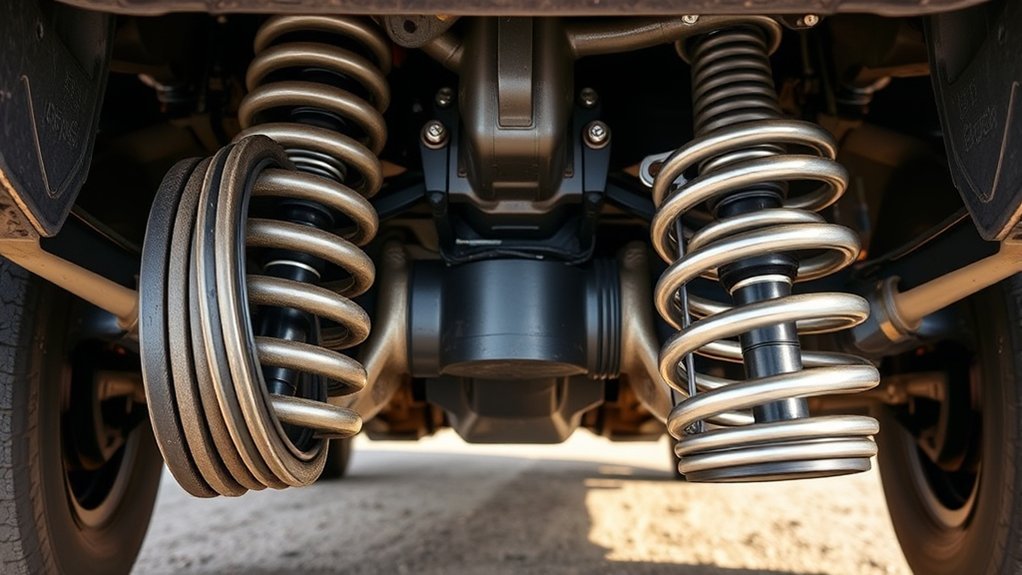
Leaf springs and coil springs do the same basic job: they support the truck’s weight and help control how the suspension moves. They do it in different ways, which is why they feel different on the road and behave differently under load.
A leaf spring uses stacked steel strips that flex under weight. On many trucks, the leaf pack supports the vehicle and helps locate the rear axle. This makes leaf springs strong, simple, and naturally suited for hauling and towing.
A coil spring uses a wound steel spring that compresses and rebounds. On the fourth-generation Tacoma, Toyota pairs the coil springs with a multi-link rear suspension on most grades. Toyota says this setup improves ride comfort and handling on and off road, while leaf springs remain available on SR, SR5 XtraCab, and TRD PreRunner grades in the 2024 launch information from Toyota USA Newsroom.
For the 2026 Tacoma, Toyota lists a maximum towing capacity of 6,500 pounds and payload of up to 1,705 pounds, but the exact rating depends on trim, cab, drivetrain, powertrain, options, and the vehicle’s own payload label.
Key Differences Between Leaf Springs and Coil Springs
The biggest differences are load control, ride quality, articulation, cost, and upgrade path. This table gives you the practical version before we go deeper.
| Factor | Leaf Springs | Coil Springs |
|---|---|---|
| Best use | Hauling, towing, work trucks, constant bed weight | Daily driving, ride comfort, off-road articulation |
| Ride feel unloaded | Usually firmer and bouncier | Usually smoother and more controlled |
| Heavy-load stability | Strong natural support | Good when properly rated, but may need load-support upgrades |
| Off-road flex | Durable, but articulation can be more limited | Better articulation and tire contact over uneven terrain |
| Cost and simplicity | Simple, proven, and widely supported | More refined, but the full multi-link system is more complex |
Load Capacity Comparison
Leaf springs generally handle heavy static loads better because the spring pack spreads weight across multiple leaves and naturally resists rear-end sag. That is why pickups have used leaf springs for decades. If you carry tools, firewood, motorcycles, a slide-in drawer system, a bed rack, a rooftop tent, or a trailer with heavy tongue weight, leaf springs are often the easier setup to live with.
Coil springs can still tow and haul when the truck is engineered for it, and Toyota’s newer Tacoma coil-spring models are built as real trucks, not soft crossovers. The difference is that coils rely more on the full suspension design, spring rate, links, shocks, bump stops, and load-leveling support to manage weight.
Warning: Never use airbags, helper springs, or heavier coils to justify exceeding your Tacoma’s GVWR, GAWR, payload rating, tire rating, or towing rating. Suspension upgrades can improve stance and control, but they do not legally or mechanically increase every factory limit.
For real-world towing, count more than cargo in the bed. Passengers, fuel, accessories, hitch hardware, recovery gear, and trailer tongue weight all eat into payload. The safest number to trust is the Tire and Loading Information label on your Tacoma’s driver-side doorjamb. The National Highway Traffic Safety Administration also recommends using the vehicle’s tire and loading label or owner’s manual for the correct load and tire-pressure information.
Ride Quality Differences
Leaf springs can feel stiff when the bed is empty because they are designed to support load. That firmness can make small bumps, washboard roads, and potholes more noticeable. Add weight, and many leaf-sprung trucks settle down and feel more planted.
Coil springs usually ride better when the truck is lightly loaded. They compress more freely over small bumps, and the multi-link layout can control axle movement with more precision. This is why the 2024-and-newer Tacoma coil-spring models feel more refined on pavement and more flexible on uneven trails.
Articulation and Trail Control
Off road, articulation is the suspension’s ability to move while keeping the tires on the ground. More tire contact usually means better traction and control. Coil-spring multi-link setups are often better at this because the links locate the axle while the springs handle vertical movement.
Leaf springs can still be excellent off road, especially for durability and predictable behavior under weight. They are also common on long-distance overland builds because they tolerate constant cargo well and are easy to service. The tradeoff is that a stiff leaf pack can limit flex unless the system is tuned carefully.
Which Tacoma Trims Use Leaf Springs or Coil Springs?
For older Tacomas, especially third-generation models, rear leaf springs are the familiar factory setup. For the redesigned fourth-generation Tacoma that launched for 2024, Toyota changed the picture: most trims moved to an available coil-spring multi-link rear suspension, while select work-oriented or utility-focused grades kept leaf springs.
According to Toyota’s 2024 Tacoma launch details, the coil-spring multi-link rear suspension replaced the previous generation’s leaf springs on most models, while leaf springs remained available on SR, SR5 XtraCab, and TRD PreRunner. Toyota’s 2026 Tacoma information continues to describe the coil-spring multi-link rear suspension as a fourth-generation highlight available on most trims through Toyota USA Newsroom.
Note: Trim availability can change by model year and market. Before buying parts, confirm your exact Tacoma year, trim, cab, bed length, drivetrain, and rear suspension type.
[Products Worth Considering]

Uncompressed Arch (in): 6.29 | Length (in): 55.11

Innovative Two-Tier Step Design: Our 2024-2027 Toyota Tacoma truck bed step go beyond a single step, the extra side step provides an additional, more convenient foothold (Only for 2WD & 4WD models, Not for models with rear leaf springs)(Include Hybrid)

Fitment: This BALOCEO leaf spring is compatible with 2005-2023 Toyota Tacoma 2WD/4WD. ONLY compatible with models with 3.5" of suspension lift. Please carefully check your vehicle’ s model and year before placing the order
Benefits of Leaf Springs for Heavy Towing and Off-Road Performance
Leaf springs make the most sense when your Tacoma is expected to work. They are simple, strong, and well understood by truck owners, mechanics, and aftermarket suspension companies.
- Better support for constant weight: A camper shell, drawer system, steel bumper, tools, spare tire carrier, or rooftop tent can make the rear of a Tacoma sit low. A properly rated leaf pack handles that constant weight well.
- Stable towing feel: Leaf springs resist squat and side-to-side movement under tongue weight, which can make towing feel more predictable.
- Simple serviceability: Leaf packs, bushings, shackles, and U-bolts are straightforward parts compared with a full multi-link rear suspension.
- Strong aftermarket support: Tacoma leaf packs are available in stock-height, lift, add-a-leaf, heavy-duty, and overland-load versions.
- Durability in rough use: For work trucks and heavily loaded trail trucks, leaf springs tolerate abuse and are easier to inspect visually.
The downsides are ride comfort and articulation. An unloaded Tacoma with heavy leaf springs can ride harshly. A poorly matched add-a-leaf can also make the truck sit too tall in the rear or feel stiff over small bumps.
Advantages of Coil Springs for Tacoma Suspension Comfort and Handling
Coil springs are the better fit when you want your Tacoma to feel smoother, more modern, and more composed in mixed driving. Toyota’s fourth-generation coil-spring multi-link design was introduced specifically to improve ride and handling compared with the previous leaf-spring-only generation.
Enhanced Ride Quality
Coil springs usually absorb small bumps better than leaf springs. On pavement, this can make the Tacoma feel less jittery. On dirt roads, it can help the rear tires stay more settled instead of skipping over washboard surfaces.
Because the spring does not also have to locate the axle the way a leaf pack often does, the links and shocks can do more of the axle-control work. That separation can improve comfort and handling when the system is tuned well.
Improved Articulation Flexibility
Coil-spring rear suspension can provide better axle movement on uneven terrain. That means a tire is more likely to stay in contact with the ground when the trail gets crossed up. Toyota also offers trim-specific suspension tuning, including Bilstein, FOX, Old Man Emu, and Adaptive Variable Suspension setups depending on grade and model year.
| Feature | Coil Springs | Leaf Springs |
|---|---|---|
| Articulation Benefits | Greater flexibility when paired with a multi-link design | Durable but often more limited |
| Terrain Adaptability | Strong on rough surfaces and uneven trails | Strong under load, firmer when unloaded |
| Ride Comfort | Smoother for daily driving | Can feel stiff without cargo |
| Load Adjustment | May need rated coils or load support for added weight | Easy to tune with leaf packs, add-a-leafs, or helpers |
How to Choose the Right Suspension for Your Tacoma
Use your actual driving habits, not just internet opinions. A Tacoma that commutes five days a week and hits trails on weekends needs a different setup from one carrying 600 pounds of tools every day.
[Products Worth Considering]

Fitment: 2024+ Toyota Tacoma 4WD. Does NOT fit Trailhunter or TRD Pro models. Does NOT fit models equipped with Adaptive Variable Suspension (AVS).

Brand New Suspension Coil Spring Rubber Insulator 2-Pack

Vehicle Compatibility: Fits 2016-2023 Tacoma & 2016-2024 Frontier (For 2022-2023, fits King Cab models only). Adds up to 1800 lbs of load-leveling capacity at 50% compression
Choose Leaf Springs If
- You tow often or carry trailer tongue weight regularly.
- You keep permanent weight in the bed, such as drawers, tools, a topper, a rack, or overlanding gear.
- You want a simple, proven, durable setup with broad aftermarket support.
- You care more about load stability than unloaded ride softness.
- You drive an older Tacoma that already has leaf springs and want a straightforward upgrade path.
Choose Coil Springs If
- You want the smoothest daily-driving ride from a newer Tacoma.
- You spend more time on rough roads and trails than towing near the limit.
- You want better articulation and more refined handling.
- You drive a 2024-or-newer trim already equipped with the coil-spring multi-link rear suspension.
- Your cargo load is occasional rather than constant.
Pro Tip: Before choosing springs, add up the real weight of your accessories. A steel bumper, winch, bed rack, rooftop tent, fridge, skid plates, larger spare, tools, and recovery gear can turn a “light” build into a heavy one quickly.
How to Upgrade Your Tacoma’s Suspension
Upgrading your Tacoma’s suspension should start with a goal. Do not buy springs only because they add lift. Buy springs because their spring rate, load rating, and height match how the truck is used.
[Products Worth Considering]

Direct replacement - these leaf springs are designed to match the fit and function of the original leaf springs on specific vehicles or trailers

Direct replacement - these leaf springs are designed to match the fit and function of the original leaf springs on specific vehicles or trailers
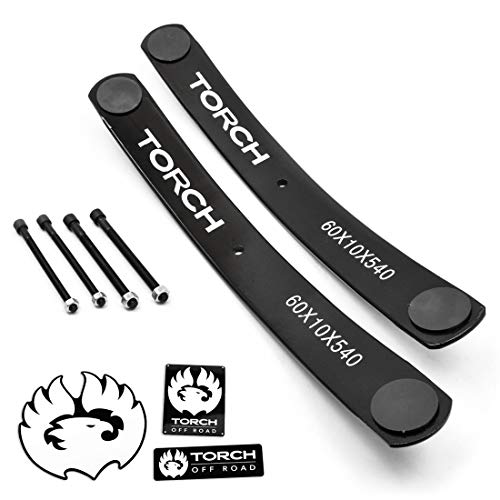
FITS: 1995-2023 Toyota Tacoma 2WD 4WD TRD SR5
Leaf Spring Upgrade Options
- Replacement leaf packs: Best for worn-out stock springs, sagging, or a planned constant-load build.
- Add-a-leaf kits: Useful for moderate lift and extra support, but they can make the ride firmer.
- Helper springs: Helpful for occasional loads while keeping the main leaf pack closer to stock behavior.
- Extended shackles: Can add height, but they change suspension geometry and should be matched carefully.
- New bushings and U-bolts: Often overlooked, but important when replacing or reworking leaf packs.
Coil Spring Upgrade Options
- Stock-height replacement coils: Best for restoring ride height or correcting mild sag.
- Lift coils: Good for tire clearance and off-road stance when matched with proper shocks.
- Constant-load coils: Designed for Tacomas carrying permanent extra rear weight.
- Air helper springs: Useful for leveling occasional loads, but they should not be treated as a payload-rating increase.
- Matched shocks: Critical for ride quality, especially after lifting or changing spring rates.
Suspension Upgrade Checklist
- Confirm your Tacoma’s year, trim, cab, bed length, drivetrain, and rear suspension type.
- Read the door-jamb payload sticker before adding constant weight.
- Measure current ride height at all four corners before replacing parts.
- List permanent accessory weight and occasional cargo weight separately.
- Choose shocks that match your spring height and intended use.
- Get an alignment after suspension changes.
- Re-torque hardware after the first short break-in period recommended by the part manufacturer.
If you tow near the upper rating, remember that modern towing ratings follow structured testing methods. SAE J2807 establishes minimum performance criteria and calculation methodology for determining tow-vehicle trailer weight ratings for light-duty vehicles up to 14,000 pounds GVWR.
Maintenance Tips for Leaf and Coil Springs
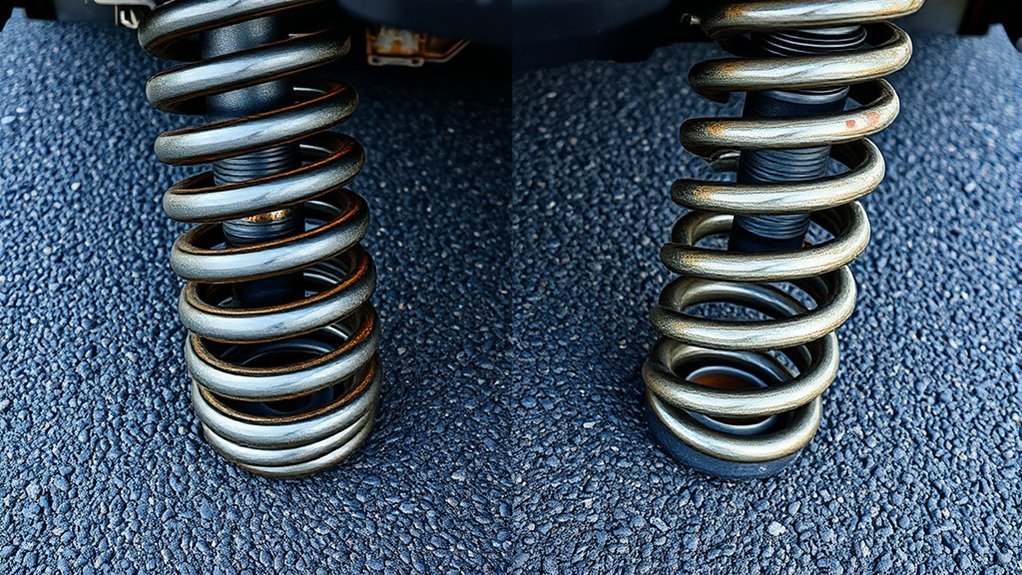
Suspension maintenance is simple, but it matters. Springs, shocks, bushings, links, shackles, and mounting hardware all work together. A good spring with worn shocks or loose bushings will still ride poorly.
Leaf Spring Maintenance
- Inspect the leaf packs for cracks, broken leaves, rust swelling, or uneven gaps.
- Check shackle and hanger bushings for cracking, looseness, or squeaking.
- Look for shiny rub marks, clunks, or movement around U-bolts and axle plates.
- Replace badly rusted or flattened springs instead of trying to overload them further.
- Keep the spring area clean after mud, salt, or beach driving to slow corrosion.
Coil Spring Maintenance
- Check for sagging, uneven ride height, cracked coils, or chipped coating.
- Inspect spring seats, isolators, bump stops, and control-arm bushings.
- Look for leaking shocks, because weak dampers can make good coils feel unstable.
- Listen for clunks that may point to worn links, loose hardware, or damaged bushings.
- After off-road use, rinse mud and grit from the coil seats and links.
Common Symptoms of Worn or Wrong Springs
Bad springs do not always fail dramatically. Often, the first signs are small changes in stance, control, and tire wear.
- Rear-end sag: The truck sits low in the back when empty or drops too far with normal cargo.
- Uneven ride height: One side sits lower than the other on level ground.
- Bottoming out: The suspension hits the bump stops over dips or small loads.
- Excessive bouncing: Often caused by worn shocks, but weak springs can contribute.
- Clunks or squeaks: Common around leaf-spring bushings, shackles, control arms, or spring seats.
- Poor towing control: Wandering, sway, nose-high stance, or rear squat can mean the setup is overloaded or poorly matched.
- Harsh unloaded ride: The spring rate may be too heavy for how the truck is actually used.
Choosing the Right Suspension for Your Tacoma
The best Tacoma suspension is the one that matches your weight, terrain, and comfort expectations. A light daily driver benefits from coil-spring comfort. A loaded work truck or overland build often benefits from leaf-spring simplicity and support.
For a mostly stock Tacoma used for commuting, camping, and weekend trails, coil springs are hard to beat. For a Tacoma that carries constant bed weight or tows frequently, leaf springs or carefully selected heavy-duty spring upgrades make more sense. Either way, do not ignore shocks. Springs hold the truck up; shocks control the movement.
Use this simple decision rule: if your complaint is ride comfort and articulation, look toward coils or softer, better-matched springs. If your complaint is sag, squat, towing control, or constant load, look toward heavier-rated springs, helper support, or a more load-focused setup.
Frequently Asked Questions
What are the downsides of leaf springs on a Tacoma?
Leaf springs can ride stiff when the truck is unloaded, and they may offer less articulation than a well-tuned coil-spring multi-link setup. They can also squeak when bushings wear out or when rust and dirt build up between components. Their main strength is load control, not maximum comfort.
Are coil springs better than leaf springs for a Tacoma?
Coil springs are better for ride comfort, handling, and articulation. Leaf springs are better for simple durability, towing stability, and constant heavy loads. Neither is automatically better for every Tacoma owner.
What is the smoothest type of suspension for a Tacoma?
For factory-style Tacoma setups, a coil-spring multi-link rear suspension generally gives the smoothest ride. For modified trucks, the smoothest setup depends on matched spring rates, quality shocks, tire pressure, tire load rating, and how much weight the truck carries.
How can I tell if my Tacoma leaf springs are bad?
Look for cracked leaves, a flattened spring pack, uneven rear ride height, rust damage, broken center pins, worn shackles, loose U-bolts, clunking, or rear sag when the truck is empty. If the truck bottoms out easily or leans to one side, inspect the springs and shocks together.
Do airbags increase Tacoma payload capacity?
No. Airbags can help level the rear of the truck and improve control with occasional loads, but they do not increase the Tacoma’s GVWR, GAWR, tire ratings, brake capacity, frame rating, or legal payload rating. Always stay within the factory limits shown on your vehicle labels and owner’s manual.
Should I upgrade springs or shocks first?
If your Tacoma sags or carries constant weight, start with springs rated for that load. If the truck sits correctly but feels floaty, bouncy, or uncontrolled, start with shocks. The best result usually comes from matching springs and shocks as a system.
Conclusion
Leaf springs and coil springs both work well on the Tacoma when they match the job. Leaf springs are the practical choice for heavy towing, bed cargo, utility use, and constant overlanding weight. Coil springs are the comfort choice for daily driving, rough-road compliance, and trail articulation.
For most Tacoma owners, the smartest decision starts with weight. Check your payload sticker, list your accessories, think about towing frequency, and be honest about how often the truck is loaded. Once you know that, the choice becomes clear: leaf springs for load-first capability, coil springs for comfort-first control, and carefully matched upgrades for anything in between.
Sources
- Toyota USA Newsroom: All-New 2024 Toyota Tacoma — backs up the 2024 Tacoma coil-spring multi-link introduction, leaf-spring trim availability, towing, and payload claims.
- Toyota USA Newsroom: 2026 Toyota Tacoma — backs up current fourth-generation suspension, towing, payload, and trim-related updates.
- Toyota Owners: Tacoma Manuals and Warranties — supports using official Toyota owner resources for model-specific limits and service information.
- NHTSA TireWise — backs up checking the Tire and Loading Information label and manufacturer-recommended tire pressure.
- SAE J2807 Tow-Vehicle Rating Standard — backs up standardized towing-rating methodology for light-duty vehicles.