
By: [VERIFY: add the real author name and relevant towing or automotive credentials] · Last updated: July 31, 2026 — model-year compatibility, 2024 factory-controller setup, wiring cautions, troubleshooting, internal links, references, and FAQ schema were reviewed.
A Tacoma trailer brake controller sends adjustable braking output to a trailer with compatible electric or electric-over-hydraulic brakes. On a 2024–2026 Tacoma equipped with Toyota’s integrated controller, select the trailer’s brake type, begin with the owner-manual gain procedure, and test the manual slider on a dry, level, traffic-free road. On older Tacomas or a fourth-generation truck without the factory controller, first identify whether the truck has an approved plug-in connection or needs a manufacturer-confirmed aftermarket installation. A basic 4-pin lighting connector does not carry the normal electric-trailer-brake output circuit.
What’s in This Article
- Which Tacoma Brake Controller Setup Do You Have?
- What a Tacoma Trailer Brake Controller Does
- How Your Tacoma Brake Controller Works
- How to Install a Tacoma Trailer Brake Controller
- Tacoma Brake Controller Compatibility and Limits
- How to Troubleshoot Common Tacoma Brake Controller Issues
- How to Adjust Tacoma Trailer Brake Gain
- Tacoma Pre-Tow Brake Controller Checklist
- Proportional vs. Time-Delay Brake Controllers
- When to Get Professional Help
- Frequently Asked Questions
Quick Answer
For a factory-equipped 2024 Tacoma, Toyota’s owner-manual procedure starts at gain 5.0, then uses the manual trailer-brake slider at about 20–25 mph on a dry, level, traffic-free surface. Adjust to just below trailer-wheel lockup. For other Tacoma years or aftermarket controllers, use the starting value and test method in that exact controller’s instructions. Increase gain if the trailer does not contribute enough braking. Reduce it if the trailer brakes grab or lock. Retest after a trailer, load, brake-service, road, or weather change.
Key Takeaways
- A controller operates compatible electric or electric-over-hydraulic trailer brakes, not basic hydraulic surge brakes.
- Factory-controller availability and aftermarket wiring differ sharply between 2005–2023 and 2024–2026 Tacomas.
- Gain is a load- and condition-specific output limit, not a permanent number for every trip.
- A working 4-pin lighting connection does not prove that a trailer-brake output circuit is present or working.
- Do not add a third-party controller alongside an active Toyota integrated controller.
- Stop towing if the trailer brakes fail, lock repeatedly, drag, overheat, or show recurring connection faults.
Which Tacoma Brake Controller Setup Do You Have?
Start with the truck’s model year, rear connector, factory tow equipment, and visible in-cab controls. Do not buy a controller or adapter only because a listing says “Tacoma.” Toyota changed the truck’s wiring and factory-controller options across generations.
| Tacoma Model Years | Likely Controller Path | What to Verify Before Buying |
|---|---|---|
| 1995–2004 | Aftermarket controller and model-specific wiring work are commonly required | Existing 4-pin or 7-pin connector, brake-output wire, fused power, ground, stop-lamp signal, and controller instructions |
| 2005–2015 | Many factory-7-way trucks have an under-dash brake-controller connection, but harness details vary | Exact year, factory 7-way, tow package, connector location, adapter part number, and any separate ground requirement |
| 2016–2023 | Factory-7-way trucks commonly support a controller-specific plug-in adapter | Factory 7-way, approved adapter for the controller brand, connector behind the driver-side kick-panel area, and installation instructions |
| 2024–2026 | Toyota integrated controller on selected trims/packages; trucks without it do not use the same assumed plug-in path as 2016–2023 | Whether the factory controller is present, 7-pin power and brake circuits, controller-maker fitment, and a fourth-generation-specific installation plan |
For 2024–2026 trucks, Toyota lists the integrated trailer brake controller as available equipment rather than a universal feature on every Tacoma. If your truck has the Toyota controller, use it as designed and do not install a second controller in parallel. If it does not, confirm the aftermarket installation with the controller manufacturer or a qualified installer instead of searching for the older under-dash plug.
Warning: A rear 7-pin connector does not by itself prove that every required brake-controller circuit is present, powered, or compatible. Test and identify the approved circuits before connecting an aftermarket unit.
What Does a Tacoma Trailer Brake Controller Do?
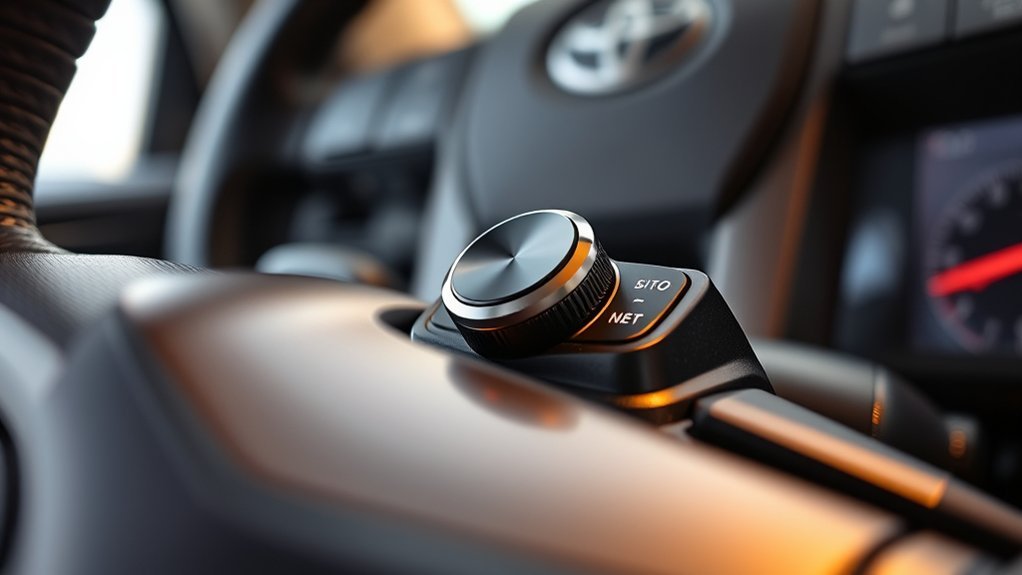
A Tacoma trailer brake controller manages the electrical signal that applies a compatible trailer’s brakes. When you press the Tacoma’s brake pedal, the controller sends braking output through the trailer connection so the trailer helps slow the combination instead of relying only on the truck’s service brakes.
Toyota’s 2024 Tacoma owner information describes an equipped integrated controller that works through the 7-pin connector, supports electric and electric-over-hydraulic selections, displays gain and trailer status in the Multi-Information Display, and includes a manual brake slider. Treat that manual as a model-year-specific source, not a universal wiring guide for every Tacoma.
An integrated brake controller is built into the truck and communicates with factory displays and vehicle systems. An aftermarket brake controller is added separately and may use a plug-in adapter, hardwired installation, rear-connector-mounted module, or other controller-specific method. Either type must match the trailer’s braking system and the truck’s approved wiring path.
What the Controller Does Not Replace
A brake controller is only one part of a safe towing setup. It does not replace correct hitch selection, secure coupler and safety-chain connections, proper trailer loading, adjusted trailer brakes, suitable tires, or a breakaway system when one is required. It also cannot correct damaged wiring, worn magnets, seized brake hardware, a weak ground, or a failing electric-over-hydraulic actuator.
Before towing, confirm the Tacoma’s actual payload and towing limits instead of relying only on a headline maximum. See the site’s guides to Tacoma GVWR, GCWR, and towing terms and Tacoma towing capacity versus payload.
How Does a Tacoma Brake Controller Work?
After you connect a trailer with a compatible braking system, the controller responds when you press the truck’s brake pedal. It sends electrical output to the trailer brakes through the brake-output circuit in the trailer connector. Most controllers also include a manual control that can apply trailer-brake output without pressing the truck’s brake pedal. Use that control only as the Toyota and controller manuals direct.
The trailer brake gain setting limits how much output the controller can send. More gain allows stronger trailer braking. Less gain limits trailer braking. The target is firm, balanced braking without wheel lockup, jerking, or the trailer pushing the Tacoma.
Some controllers also have sensitivity, boost, response, or profile settings. Those controls affect how quickly output builds or how aggressively it begins, while gain sets the output limit. Names and behavior vary by controller, so do not copy another driver’s settings without testing your own truck, trailer, load, tires, and road conditions.
How Is the Manual Brake Control Different?
The manual control commands trailer braking independently of the truck’s brake pedal. Its common uses are checking brake response, setting gain, and making a smooth trailer-only correction when the controller and vehicle manuals permit it. It is not a parking brake and should not be used to hide a wiring, adjustment, sway, or brake-hardware problem. For a deeper explanation, see the guide to using a trailer brake controller manual override.
How Do You Install a Tacoma Trailer Brake Controller?
If your Tacoma already has a Toyota integrated controller, do not install a separate in-cab unit alongside it. Select the correct trailer-brake type and adjust the factory controls according to the owner’s manual. If the Tacoma does not have an integrated controller, the installation path depends on model year, factory connector, controller design, and tow equipment.
Read the Toyota manual and the controller manufacturer’s instructions before removing trim or connecting wires. If the harness guide does not identify your exact Tacoma model year and configuration, stop and use a qualified installer.
Warning: Do not tap into, open, or modify the Tacoma’s hydraulic brake system to install an electric trailer brake controller. Do not route wiring where it can interfere with pedals, steering, airbags, sharp edges, heat sources, or moving parts.
[Products Worth Considering]

The CURT Venturer NEXT is a compact, time-delay electric trailer brake controller designed for dependable braking control from inside your vehicle. Its low-profile design, adjustable power and ramp time, and plug-and-play friendly setup make it a practical choice for towing with confidence. Built for 12-volt systems and compatible with electric over hydraulic brakes, it offers flexible installation without leveling or internal moving parts.

This proportional trailer brake controller provides smooth, responsive braking by automatically matching your tow vehicle’s stopping force for safer trailer control. The bright LED digital display makes it easy to monitor voltage output in real time, while adjustable braking and sync settings help tailor performance to different trailers and road conditions. Designed for quick installation and broad compatibility, it supports 1 to 4 axle trailers for dependable towing confidence.

This proportional electric brake controller automatically applies trailer brakes based on your vehicle's braking force and speed for smoother, more responsive stopping. It is compatible with a wide range of tow vehicles and trailer setups, and includes an LED display for easy setup, diagnostics, and manual braking control. The included mounting hardware and plug-and-play port help make installation simple and convenient.
Required Tools and Materials
The exact parts depend on the Tacoma and controller. A confirmed plug-in installation may need only a compatible controller, vehicle-specific adapter, mounting hardware, and basic hand tools. A hardwired installation may also require circuit protection, correctly sized wire, terminals, a controller-specific diode or module, and electrical test equipment specified by the manufacturer.
Common installation items include:
- Compatible brake controller and mounting hardware
- Vehicle-specific wiring adapter, when the controller maker confirms one
- Socket set, trim tool, and screwdriver
- Multimeter or approved 12V circuit tester
- Wire-routing clips or zip ties
- Wire, terminals, circuit protection, and any required module only when the approved instructions call for them
A plug-in adapter can reduce splicing, but it does not guarantee compatibility. Match it to the controller brand, Tacoma model year, trim, rear connector, and factory tow equipment.
Wiring Connection Guide
The factory connector location and available circuits vary across Tacoma generations and equipment packages. Use the exact owner’s manual, controller instructions, or adapter guide instead of assuming a connector location or matching wires by color alone.
- Identify the truck and trailer systems. Confirm Tacoma model year, factory tow equipment, rear connector, trailer brake type, number of braked axles, and controller requirements.
- Confirm the installation path. Determine whether the truck uses the Toyota integrated controller, an approved plug-in adapter, a hardwired controller, or a rear-connector-mounted solution.
- Prepare the truck. Park on a level surface, set the parking brake, switch off the ignition, and follow the controller maker’s power-disconnection instructions.
- Locate and test the approved connection point. Use the model-specific manual or harness guide. Do not probe airbag, data-network, or unidentified circuits.
- Connect the harness. Install the plug-in adapter or complete the hardwired connections exactly as the controller instructions show, including required circuit protection and grounding.
- Mount the controller safely. Keep it within reach without blocking knees, pedals, steering movement, trim operation, or airbag deployment areas. Follow any mounting-angle limits.
- Secure and inspect the wiring. Protect it from sharp edges, heat, moisture, abrasion, and moving parts.
- Connect and test the trailer. Verify trailer detection, brake output, stop lamps, turn signals, running lights, and manual-control operation in a safe area before road-speed towing.
Do not tow on public roads until the controller detects the trailer consistently and the trailer brakes respond smoothly. A loose ground, corroded connector, damaged wire, blown fuse, low supply voltage, wrong controller mode, or misadjusted trailer brake can cause weak or intermittent output.
What Is Different on a 2024–2026 Tacoma Without the Factory Controller?
Do not assume the 2016–2023 plug-in adapter and under-dash port carry over to the fourth-generation Tacoma. Fitment sources for 2024–2025 trucks report that a universal hardwired or rear-connector-mounted controller may be required when the Toyota integrated controller is absent. Because brake-switch, factory-module, and trailer-output wiring are safety-critical, use a controller manufacturer’s fourth-generation instructions or a qualified installer.
Which Trailer Brakes Work With a Tacoma Brake Controller?
Compatibility depends on the trailer brake system and the controller’s supported modes. Toyota’s integrated controller information for the 2024 Tacoma includes electric and electric-over-hydraulic selections. The 2024 owner manual describes compatibility with most such systems up to three axles and 24 amps of trailer-brake output. An aftermarket controller may have different axle, current, and actuator limits, so check its specifications before connecting the trailer.
| Trailer Brake System | Uses a Brake Controller? | What to Confirm |
|---|---|---|
| Electric trailer brakes | Yes | Controller, wiring, connector, gain, current capacity, and brake adjustment are compatible |
| Electric-over-hydraulic brakes | Yes, with a compatible mode | The controller and hydraulic actuator are approved to work together and the actuator responds at low output |
| Hydraulic surge brakes | No standard electric-brake output | The coupler-operated surge system is serviced and adjusted correctly |
Trailer brake laws, weight thresholds, breakaway requirements, and axle rules vary by jurisdiction. Follow the Tacoma manual, trailer manual, controller instructions, and the laws that apply where you tow. Do not use a gain setting or a working controller as proof that the complete towing setup is legal or within the truck’s ratings.
[Products Worth Considering]
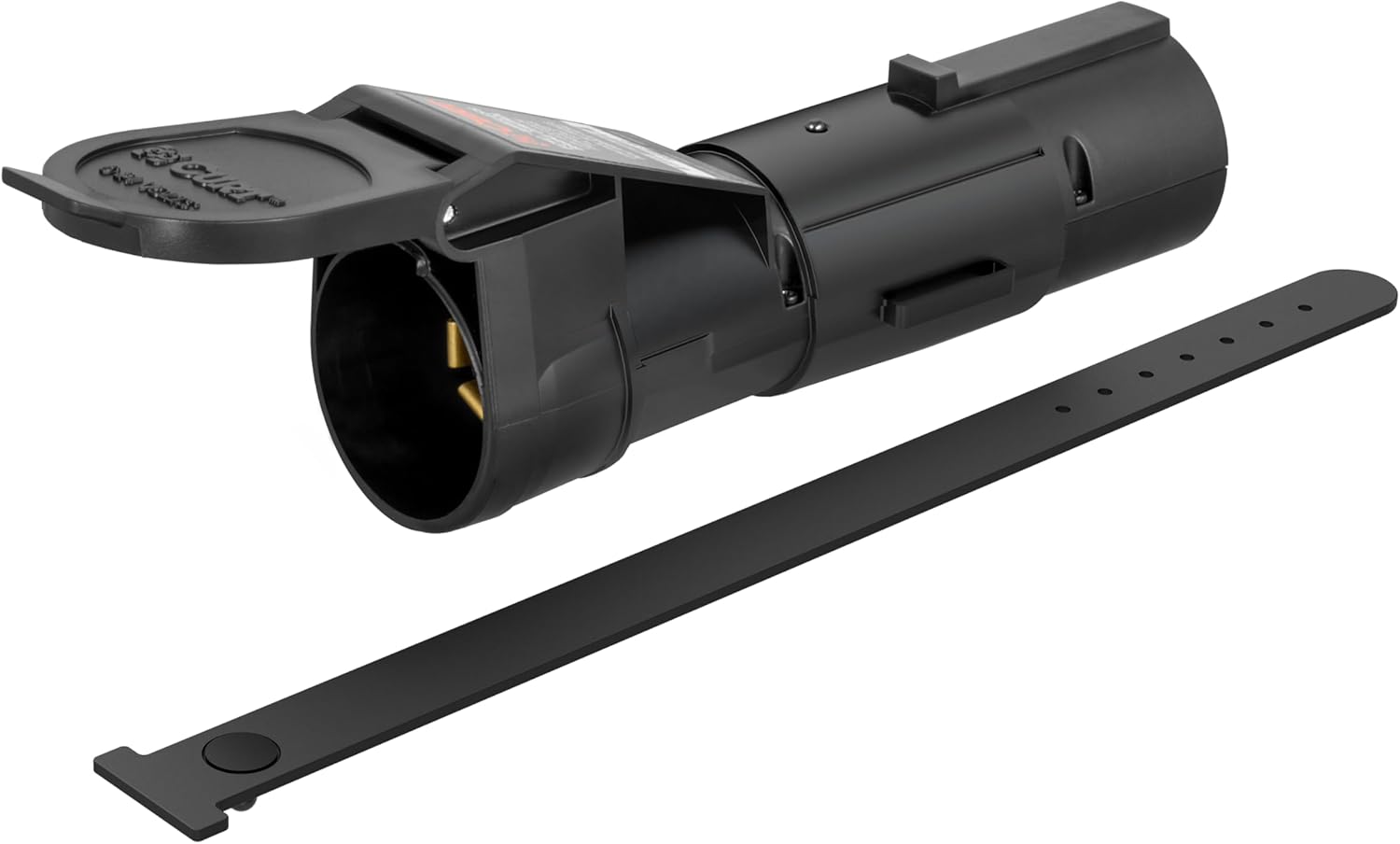
The CURT Echo mobile trailer brake controller offers smart, smartphone-based brake control with a simple plug-and-play design that connects between your vehicle and trailer 7-way plugs. Its portable construction makes it easy to transfer between compatible towing setups, while the durable potted enclosure helps protect against weather and vibration. With proportional braking support and app-based profile management, it delivers a modern, responsive towing experience.

The CURT 52010 Trailer Breakaway Switch helps keep towing safer by automatically engaging trailer brakes if the trailer disconnects from the tow vehicle. It features silver contact points for a dependable electrical connection, plus a nylon case and pull pin assembly designed to handle outdoor use and secure activation. The included metal mounting tab makes installation simple on trailers with electric brakes.
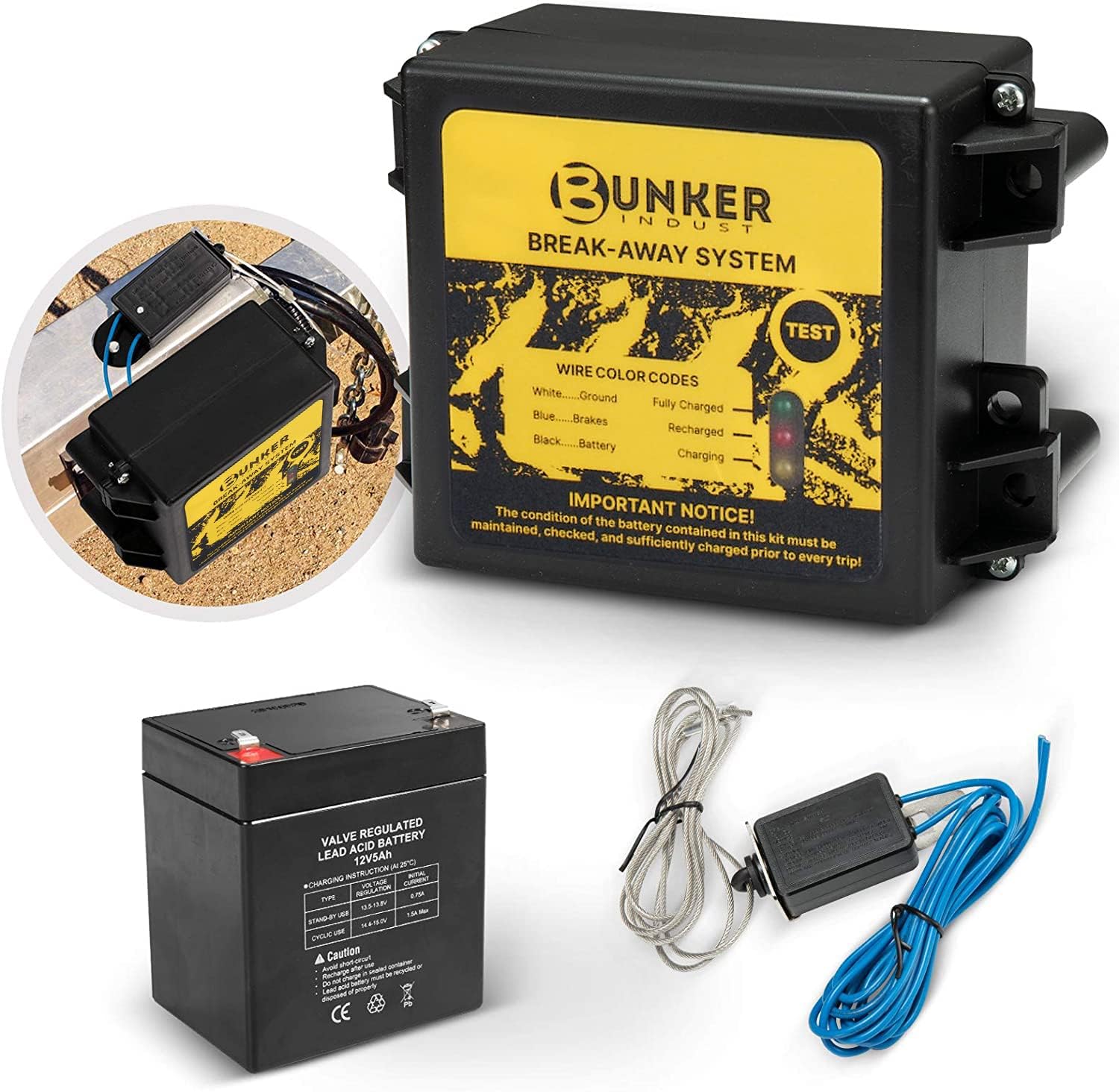
This trailer breakaway kit is designed for trailers with an existing electric brake system, helping activate the brakes if the trailer separates from the tow vehicle. It includes a battery, breakaway switch, and charger with an LED display for easy status checks, making it a practical safety upgrade for caravans and trailers. The side-mount design supports quick installation, while weather and corrosion resistance help it stand up to outdoor use.
How Do You Troubleshoot Tacoma Brake Controller Problems?
Start with the controller display, selected brake type, trailer plug, connector pins, ground connection, relevant fuses, supply voltage, gain setting, and trailer brake condition. Test one change at a time. If the problem returns, stop towing until the fault is found.
Use this guide for initial checks:
| Issue | Possible Cause | Safe First Check |
|---|---|---|
| Weak trailer brakes | Gain too low, wrong brake type, poor ground, voltage loss, worn magnets, actuator issue, or brakes out of adjustment | Confirm mode, inspect the connector and ground, then retest gain in small steps |
| Trailer brakes lock or grab | Gain or response too high, light load, slippery surface, wrong mode, or brake fault | Reduce output, move to a safe dry surface, and inspect if locking continues |
| No trailer detected or intermittent warning | Loose plug, corrosion, spread pins, damaged wiring, poor ground, or controller/connector fault | Disconnect safely, inspect and clean the connector, check pin tension, then inspect the harness |
| Lights work but trailer brakes do not | Brake-output circuit, controller power, fuse, ground, blue wire, or trailer brake hardware fault | Do not assume the lighting circuits prove brake output; test the brake circuit using the approved diagnostic procedure |
| Manual control does not apply trailer brakes | No power, zero gain, controller fault, wiring fault, wrong mode, or trailer brake problem | Verify controller power, gain, mode, and trailer connection, then follow the diagnostic manual |
| Trailer brakes drag after release | Brake adjustment, actuator, shorted output wire, breakaway switch, wiring, or controller fault | Stop towing and have the system inspected before the brakes, bearings, or tires overheat |
| Gain changed after battery service | Stored gain was reset when battery power was disconnected | Re-enter the correct trailer profile or gain and repeat the safe setup test before towing |
Do not keep raising gain to compensate for damaged wiring, worn magnets, poor grounds, low voltage, a weak actuator, or misadjusted trailer brakes. A controller can command output, but it cannot repair a mechanical or electrical fault at the trailer.
How Do You Adjust Tacoma Trailer Brake Gain?
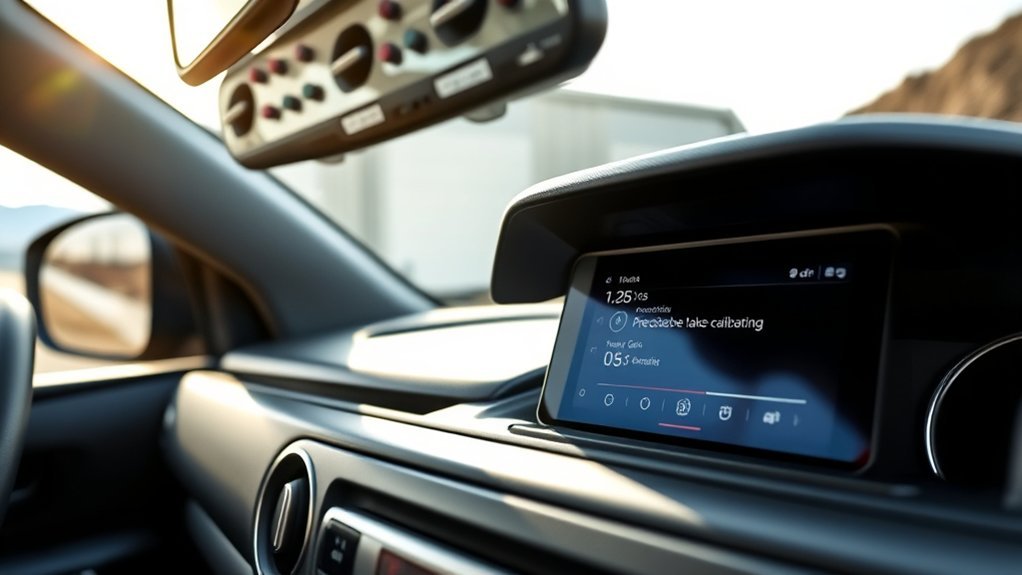
Gain adjustment aims for balanced braking: the trailer should help slow the combination without pushing the Tacoma, jerking, or locking its wheels. The exact procedure depends on the controller. For Toyota’s factory-equipped 2024 Tacoma, the owner manual directs the driver to confirm the trailer brakes are working, select the correct brake type, test on a level traffic-free road at about 20–25 mph, start at gain 5.0, fully apply the manual slider, and adjust to just below wheel lockup.
For an aftermarket controller, use the starting value, speed, mounting, and calibration instructions supplied with that unit. CURT’s brake controller guide likewise recommends setting output for the current load and testing in a safe, open area.
- Inspect first. Confirm the trailer brakes, tires, wheel bearings, breakaway system, connector, and wiring are in serviceable condition.
- Select the correct brake type. Choose Electric or Electric-Over-Hydraulic only when it matches the trailer.
- Use the manual’s starting value. For the 2024 Toyota factory controller, that value is 5.0. Other controllers may specify a different starting point.
- Test in the specified safe area. Keep the truck and trailer straight on dry, level pavement with no traffic and enough stopping room.
- Apply the manual control as directed. Increase gain if braking is weak. Reduce it if the trailer wheels lock, grab, or skid.
- Confirm with repeated controlled stops. Stop testing if warnings appear, braking becomes unpredictable, or components overheat.
- Retest after adding or removing cargo, changing trailers, servicing brakes, disconnecting the battery, or moving onto a substantially different road surface.
- Adjust response or boost only after gain is close, and only if your controller provides that setting.
- Do not reduce a serious braking fault to a settings problem. Weak output at high gain needs electrical and mechanical diagnosis.
Note: Do not treat a previous gain number as permanent. Trailer weight, brake condition, tire grip, road surface, weather, and battery-service history can change the result.
What Should You Check Before Towing?
A short functional test catches more problems than staring at the gain number. Complete these checks with the truck and trailer fully coupled and loaded for the trip:
- Confirm the coupler, hitch pin, safety chains, breakaway cable, jack, and load are secure.
- Verify the trailer plug is fully seated and the cable cannot drag, pull tight, or contact the exhaust.
- Check running lights, turn signals, brake lights, and hazard lights.
- Confirm the controller detects the trailer and shows the correct brake type or profile.
- Use the manual control as directed to verify that the trailer brakes respond.
- Make a controlled low-speed stop and confirm the trailer does not push, grab, lock, or pull sideways.
- Recheck the connector and brake temperatures after the first short part of the trip when practical.
If the combination sways, pulls, smells hot, shows a warning, or brakes differently from the setup test, slow down safely and stop to inspect it. Do not use extra gain as a substitute for correcting cargo balance, hitch setup, tire pressure, or brake faults.
Proportional vs. Time-Delay Brake Controllers for a Tacoma
Both controller types can operate compatible electric trailer brakes, but they build output differently. A proportional controller responds to measured vehicle deceleration. A time-delay controller increases output according to programmed timing and settings. The better choice depends on Tacoma compatibility, installation limits, trailer use, terrain, and the controller manufacturer’s instructions.
| Decision Factor | Proportional Controller | Time-Delay Controller |
|---|---|---|
| How output builds | Responds to measured vehicle deceleration | Builds toward a preset output over time after a brake signal |
| Stop feel | Usually matches changing brake effort more closely | May feel delayed or aggressive if timing and gain do not match the load |
| Setup focus | Correct mounting or calibration, gain, and response settings | Correct gain, timing, and response settings |
| Best fit | Frequent towing, varied loads, hills, and drivers who want braking tied to deceleration | Compatible basic installations where preset timing is acceptable |
| Main caution | Some units have mounting-angle or calibration requirements | Preset ramp can create push-pull feel or extra brake wear if poorly adjusted |
A proportional controller is not automatically safe because of its design. It still needs correct installation, compatible trailer brakes, proper gain, and a low-speed test before normal towing.
[Products Worth Considering]

The REDARC Tow-Pro Liberty delivers smooth proportional braking for confident everyday towing on roads and highways. Its compact remote design helps preserve cabin space while supporting 1 to 2 axle trailers and integrating with compatible vehicle wiring harnesses for a factory-style fit. Built for demanding towing conditions, it offers reliable control for RVs, campers, trailers, and boats.

This automotive test light combines a bright LED voltage display with quick polarity indication for fast, accurate circuit checks in a wide range of vehicle systems. It helps diagnose battery, charging, lighting, and fuse issues with a sharp stainless probe, long spring wire, and easy-to-use alligator clip for efficient troubleshooting.

This custom-fit 4-pin trailer wiring harness adds reliable towing light connectivity for compatible Toyota RAV4 and RAV4 Prime models, with plug-and-play installation into the vehicle's rear wiring. It powers trailer tail lights, brake lights, and turn signals, while the included dust cover helps protect the connector when not in use. Built with durable bonded wire and corrosion-resistant terminals, it is designed for dependable performance on everyday towing setups.
When Should You Get Professional Help?
Use a qualified trailer technician, controller installer, or Toyota service center if the trailer brakes do not respond, lock repeatedly, drag, overheat, pull to one side, or trigger recurring connection faults. Get help if wiring instructions conflict, the approved connector cannot be identified, the 2024–2026 installation lacks a model-specific plan, or the work would require modifying an unknown circuit.
Professional diagnosis is also appropriate when raising gain does not improve weak braking. The fault may be in the trailer ground, wiring, magnets, actuator, brake adjustment, drums, bearings, breakaway circuit, connector, or controller supply rather than the setting itself.
Frequently Asked Questions
What Should My Tacoma Trailer Brake Controller Be Set To?
There is no universal final gain number for every Tacoma and trailer. For the factory-equipped 2024 Tacoma, Toyota’s procedure begins at 5.0 and tests at about 20–25 mph with the manual slider. Adjust to just below wheel lockup. For aftermarket units, start with the controller manufacturer’s value and test method.
Does Every Tacoma Have a Built-In Trailer Brake Controller?
No. Integrated-controller availability depends on the Tacoma model year, trim, options, and tow equipment. Toyota lists it as available on selected 2024–2026 configurations. Check the physical controls, window sticker, exact owner’s manual, or Toyota vehicle specifications.
Where Is the Tacoma Brake Controller Plug?
The location depends on model year and factory equipment. Many 2005–2023 Tacomas with a factory 7-way have an under-dash connection near the driver-side kick-panel area, but the adapter varies. A 2024–2026 Tacoma without the factory controller should not be assumed to have the same plug-in port.
Can a Tacoma Brake Controller Work Through a 4-Pin Connector?
Not through a basic 4-pin lighting connection alone. A standard 4-pin carries lighting functions but not the normal dedicated electric-trailer-brake output and auxiliary power circuits. A compatible 7-way installation or controller-specific solution is normally required.
Can a Tacoma Brake Controller Work With Surge Brakes?
A standard electric-brake output does not operate basic hydraulic surge brakes because the trailer coupler activates that system mechanically. Electric-over-hydraulic brakes are different and require a controller mode compatible with the hydraulic actuator.
Why Do My Trailer Brakes Lock Up When I Stop?
Gain or response may be too high for the load or road surface, or the wrong brake mode may be selected. Reduce the setting in small steps and retest safely. If locking continues, stop towing and inspect the trailer brakes, wiring, controller mode, tire grip, and mechanical adjustment.
Should I Adjust Brake Gain Every Time I Tow?
Check the gain whenever you change trailers, load weight, cargo placement, brake condition, tires, road conditions, or weather. You may not need a large change, but a controlled low-speed test confirms that the current setting still works.
Why Does My Tacoma Say the Trailer Is Disconnected?
The truck may be losing the electrical connection to the trailer brakes. Common causes include a loose plug, dirty or corroded pins, spread terminals, damaged wiring, a poor ground, or a trailer-side fault. Stop safely and do not continue towing if brake output remains intermittent.
Why Do the Trailer Lights Work but the Brakes Do Not?
The lighting circuits can work while the dedicated brake-output circuit has a separate fuse, wire, ground, controller, connector-pin, or trailer-brake fault. Test the brake-output path using the controller and vehicle diagnostic instructions instead of assuming the plug is fully functional.
Does a Brake Controller Need Calibration?
It depends on the controller. Some aftermarket proportional controllers self-calibrate, others have mounting-angle or setup requirements, and time-delay controllers may not calibrate at all. Follow the exact controller instructions and complete any required setup before towing.
Safety Disclaimer: This article provides general towing information. It does not replace the Toyota owner’s manual, trailer manual, brake controller instructions, applicable towing laws, or hands-on inspection by a qualified technician. Stop towing if braking is weak, intermittent, locked, dragging, overheated, or otherwise unpredictable.
Conclusion
A Tacoma trailer brake controller helps the trailer share the work of slowing the truck-trailer combination. The safe setup depends on three decisions: identify the Tacoma’s model-year wiring path, match the controller mode to the trailer brake type, and set gain for the current trailer and load.
Before each tow, inspect the connector and breakaway system, confirm trailer detection, test the manual control as directed, and make a controlled braking check in a safe area. Do not tow until the trailer brakes respond smoothly and consistently.
References
- 2024 Tacoma Trailer Brake Controller – Toyota Owners
- 2024 Tacoma Owner’s Manual, OM04041U – Toyota
- The 2026 Toyota Tacoma: Adventure Awaits – Toyota USA Newsroom
- How to Use a Trailer Brake Controller – CURT Manufacturing
- Brake Controller Install Harness for 2023 Toyota Tacoma – etrailer
- Brake Controller Options for a 2024 Toyota Tacoma Without the Factory Port – etrailer



[…] Set the controller gain for the trailer’s current loaded weight. Start with the value or procedure in the controller manual, then test on a dry, level, traffic-free surface. Increase output in small steps until the trailer brakes feel firm without jerking or wheel lockup. Recheck the setting after a major load change, brake service, road-condition change, or trailer swap. For a vehicle-specific example, see our Tacoma trailer brake controller guide. […]