
Last updated: July 15, 2026
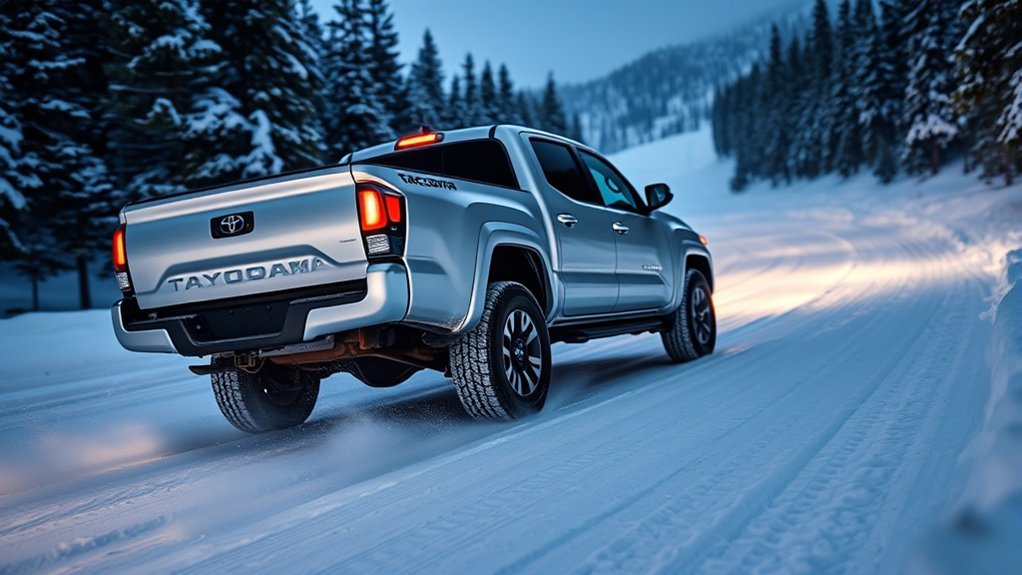
For normal snowy-road driving in a 2018 Toyota Tacoma, leave TRAC and VSC on. On a 4WD model, select 4H before the road becomes consistently snow-covered or loose enough for the tires to slip. On an equipped 2WD model, use Auto LSD only for a short low-traction problem when one rear tire spins. Winter-capable tires, lower speed, smooth inputs, and secured cargo matter more than any single dashboard switch.
Scope: This guide centers on U.S.-spec 2018 Tacoma controls. Switch behavior, available drive modes, and operating limits can differ by model year, trim, transmission, and drivetrain, so confirm the procedure in your own Owner’s Manual.
Source basis: Toyota’s 2018 Tacoma Quick Reference Guide plus NHTSA, U.S. Tire Manufacturers Association, AAA, and National Safety Council winter-driving guidance. No instrumented vehicle or tire testing is claimed.
Quick Answer
Keep TRAC and VSC on for normal snow driving. In a 2018 4WD Tacoma, use 4H on consistently snow-covered, icy, muddy, or loose surfaces, but avoid dry high-traction pavement. In an equipped 2WD Tacoma, use Auto LSD only when a rear drive wheel is spinning in a short low-traction section. Reserve 4L and the rear locker for slow recovery situations. Start with tires, speed, and smooth inputs before changing electronic settings.
Key Takeaways
- Leave traction control and stability control on for normal winter driving; turn them off only briefly if you are stuck and need controlled wheelspin.
- Auto LSD is not a snow mode. On an equipped 2018 2WD Tacoma, it is a short-term aid for a spinning rear drive wheel.
- Use 4H for most snowy roads in a 4WD Tacoma; reserve 4L and the rear locker for slow, difficult off-road recovery situations.
- Dedicated winter tires give the strongest cold-weather margin. A Three-Peak Mountain Snowflake mark confirms a standardized packed-snow traction test, not guaranteed ice braking.
- For 2WD Tacomas, use only secured ballast placed low over or slightly ahead of the rear axle. No single weight fits every cab, bed, tire, and payload setup.
2018 Tacoma Snow Settings at a Glance
| Normal Snowy Road | TRAC and VSC on; slow speed and smooth inputs |
| 4WD Tacoma | 4H on consistently slippery or loose surfaces; not dry high-traction pavement |
| 2WD Tacoma | Auto LSD only for a short section where one rear drive wheel spins |
| Slow Recovery | 4L or rear locker only where equipped and allowed by the Owner’s Manual |
| First Priority | Correct cold tire pressure and winter-capable tires on all four corners |
Quick Steps: What to Do in Snowy Driving With a Tacoma
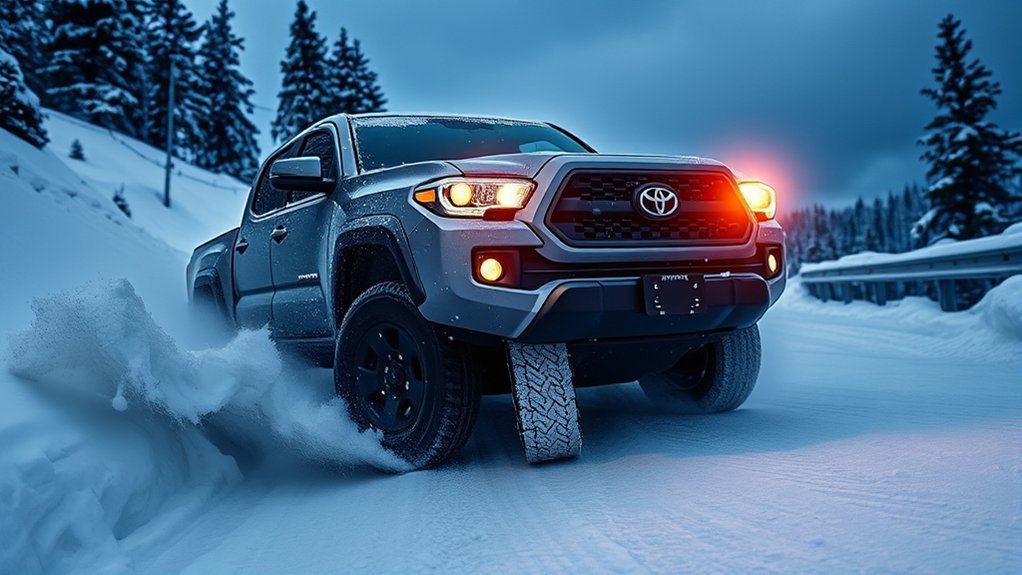
Before you drive a Tacoma in snow, set the truck up for traction instead of waiting until it slides. The right order is simple: tires first, speed second, drivetrain mode third, recovery gear last.
- Check the tires cold. Use the pressure listed on the driver-side door placard, not the maximum pressure molded into the tire sidewall. The National Highway Traffic Safety Administration also recommends checking tire tread, sidewalls, pressure, and the spare before winter trips.
- Use winter-capable tires. Dedicated winter tires are designed for cold conditions. A Three-Peak Mountain Snowflake-marked all-weather tire has passed a standardized packed-snow test, but model-specific ice and braking performance still varies.
- Leave traction control on for normal roads. Toyota’s TRAC and VSC systems are designed to reduce wheelspin and help maintain control when the tires start to slip.
- Shift to 4H before wheelspin on a 2018 4WD model. Toyota’s 2018 Quick Reference Guide says you can shift into 4H below 62 mph. Use 4H only where the surface is slippery or loose enough to allow tire slip.
- Use Auto LSD only when it fits the situation. On equipped 2WD models, Auto LSD is for a brief low-traction problem where a rear drive wheel spins. It is not a replacement for 4WD or winter tires.
- Add secured ballast for 2WD only if needed. Use the lightest secured load that improves rear traction. Place it low and centered over or slightly ahead of the rear axle, and stay within the truck’s payload and tire limits.
- Drive smoothly. Accelerate gently, brake early, and steer slowly enough that the tires stay within their available grip.
Warning: Traction control, ABS, Auto LSD, 4WD, and lockers cannot create traction if the tires have no grip. Slow down for the road surface, leave extra following distance, and avoid sudden throttle, brake, or steering inputs.
How Toyota Tacoma Traction Control and ABS Work in Snow
Tacoma traction control and Vehicle Stability Control are safety aids, not snow-driving shortcuts. TRAC responds during acceleration when a drive wheel spins. VSC helps when the truck begins to yaw or slide. ABS cycles brake pressure during hard braking so the wheels are less likely to lock, which helps you keep steering control.
You may feel these systems working. Traction control can feel like the engine suddenly stops responding to your throttle, and ABS can feel like rapid pulsing through the brake pedal. That feedback is normal during activation.
- Traction control helps during acceleration. It reduces excessive wheelspin when you start from a stop or climb a slick grade.
- ABS helps during braking. If ABS activates, keep firm, steady pressure on the brake pedal and steer where you want the truck to go.
- VSC helps with stability. Vehicle Stability Control can reduce engine output and apply individual braking when the truck begins to yaw or slide.
- Your inputs still matter most. Smooth throttle, gentle steering, and early braking give the systems a better chance to help.
Driving rule: Make every input predictable: slow throttle, slow steering, early braking, and plenty of space.
What Auto LSD Does and When to Use It
Auto LSD stands for Automatic Limited Slip Differential, but it is not a mechanical locker. On an equipped 2018 2WD Tacoma, it is an electronic traction aid for a spinning rear drive wheel. It does not physically lock both rear axle shafts together.
Toyota’s 2018 Quick Reference Guide identifies Auto LSD as one of the modes controlled by the TRAC/VSC OFF switch and directs owners to the full Owner’s Manual for operating limits. Use it as a short-term aid in a low-traction trouble spot, not as a high-speed snow mode or a substitute for winter-capable tires.
[Products Worth Considering]

This front windshield sunshade is designed to help keep your Toyota RAV4 cooler by reducing heat buildup after parking in direct sunlight. It blocks most UV rays to help protect your dashboard, seats, and steering wheel from sun damage, while the accordion folding design makes it easy to set up, store, and transport. Built with a durable triple-laminate construction and a silver reflective surface, it offers practical everyday sun protection for compatible RAV4 models.

This 9-piece torque wrench set gives DIYers and professionals a versatile way to tighten fasteners with confidence across bikes, motorcycles, cars, trucks, and industrial equipment. It includes three click torque wrenches, multiple adapters, dual-scale measurement, and clear audible feedback to help prevent overtightening. Built with durable materials and stored in a portable case, it is designed for precise, organized, and reliable use.

This ignition coil and spark plug set is designed to restore smooth starting, stronger acceleration, and more reliable engine performance for a wide range of Toyota, Scion, Lexus, and Pontiac models. Built with quality materials and engineered to match OE fitment, it helps address common misfire, shaking, and fuel economy issues when your ignition system is worn. It is an ideal replacement choice for drivers looking to refresh their tune-up with dependable components.
When To Use Auto LSD
Use Auto LSD when a 2WD Tacoma needs help getting moving because one rear tire is spinning and the other has more grip. It is most useful at low speeds and in short problem areas.
- Snow-covered driveways where one rear tire is on ice and the other is on packed snow
- Rutted tracks where one rear wheel unloads and spins
- Short, slippery inclines where steady momentum matters
- Loose dirt, shallow mud, or sand where one rear wheel breaks traction
Note: Auto LSD is mainly a 2WD traction aid. If your Tacoma is 4WD and the road is consistently snowy or icy, 4H is usually the better first choice for normal travel.
How Auto LSD Works
When one rear drive wheel spins, Auto LSD changes the traction-control response to limit wasted wheelspin and help the truck keep moving. The system may reduce engine response or use brake control, so gentle throttle works better than flooring the accelerator.
Auto LSD does not physically lock the rear axle. It also does not create front-tire grip or shorten stopping distance. Your front tires still need traction to steer, and all four tires still need traction to brake.
Turn On Auto LSD and Traction Control on a 2018 Tacoma: Step-by-Step
The 2018 Tacoma uses the TRAC/VSC OFF switch to change modes related to TRAC, VSC, and Auto LSD. Toyota’s 2018 Tacoma Quick Reference Guide points owners to the full Owner’s Manual for limits and complete instructions, so always confirm the procedure for your trim and drivetrain.
[Products Worth Considering]
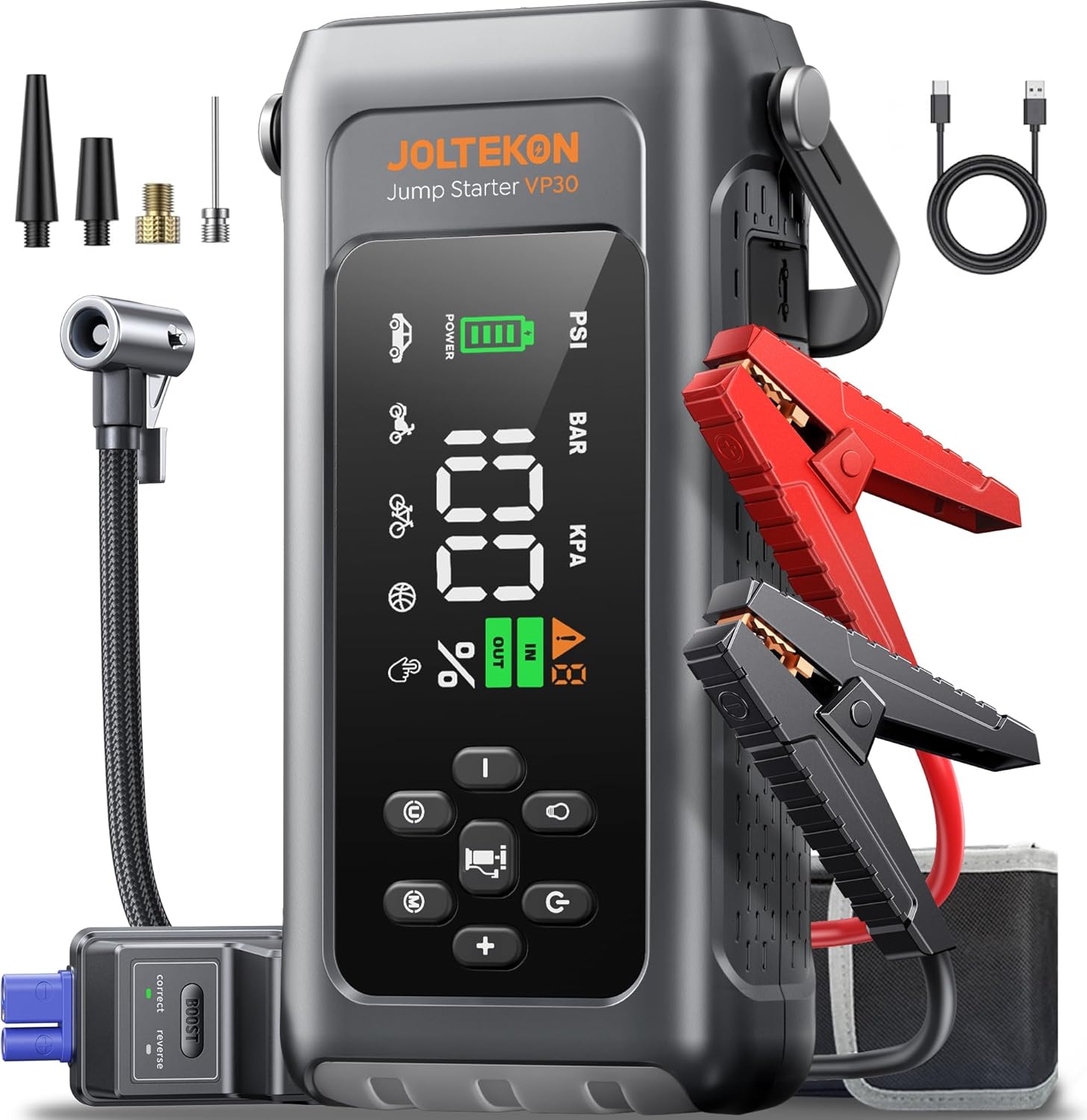
This all-in-one jump starter combines a powerful vehicle booster, tire inflator, portable power bank, and emergency light into a compact tool for roadside readiness. With strong starting power, automatic air shutoff, and multiple safety protections, it helps you handle dead batteries, low tires, and nighttime emergencies with confidence. It's built for cars, trucks, motorcycles, boats, and other 12V vehicles, making it a versatile companion for travel and daily use.

This all-in-one roadside emergency kit is designed to help drivers handle common breakdowns, minor repairs, and first aid needs with confidence. It includes a portable air compressor with tire pressure measuring and memory settings, safe jumper cables, and a versatile 14-in-1 pliers tool set, all organized for easy trunk storage. With a wide range of emergency supplies packed into one compact case, it is a practical choice for new drivers, daily commuters, and anyone preparing for unexpected roadside situations.

Master Window Switch LED Illumination with Auto Down/Up for Toyota Tacoma 4dr 2005 2006 2007 2008 2009 2010 2011, NOT Fit 2dr, Not Suitable for Access Cab
Keep Traction Control On for Normal Snow Driving
For everyday snowy roads, do nothing special: leave TRAC and VSC on. These systems normally reset to their default active state when the truck is restarted. You should see a slip indicator flash only when the system is actively correcting wheelspin or a slide.
Activate Auto LSD on Equipped 2WD Models
On an equipped U.S.-spec 2018 2WD Tacoma, the following sequence is commonly used when one rear tire spins. Confirm the exact switch behavior and indicator lights in your Owner’s Manual because the procedure varies by drivetrain and operating condition:
- Slow down and keep the truck under the system’s operating speed range.
- Briefly press and release the TRAC/VSC OFF switch.
- Confirm that the Auto LSD indicator comes on.
- Use gentle throttle and let the system work; do not floor the accelerator.
- Press the switch again to return to normal mode after you clear the trouble spot.
Pro Tip: Do not confuse a quick press with a long press. The TRAC/VSC OFF switch controls different functions depending on drivetrain and conditions. Use the indicator lights and your Owner’s Manual to confirm the selected mode before applying throttle.
Turn Off TRAC or VSC Only If You Are Stuck
If the Tacoma is buried in fresh snow or mud, TRAC and VSC may cut engine power when you need a small amount of controlled wheelspin to rock the truck free. In that specific situation, you may need to turn the system off briefly, use gentle forward-and-reverse rocking, and then turn it back on as soon as the truck is moving again.
Do not drive at road speed with stability control disabled in winter conditions. You are removing an electronic safety net at the exact time you are most likely to need it.
Best Tires for Tacoma in Snow: Winter vs. All-Season
Tires matter more than any dashboard button. A Tacoma with average all-season tires can still struggle to start, stop, and steer on snow. A Tacoma with proper winter tires can feel much more predictable because the rubber compound, tread blocks, and siping are built for cold, slippery surfaces.
For winter use, look for the Three-Peak Mountain Snowflake symbol. The U.S. Tire Manufacturers Association severe-snow definition requires a traction index of at least 110 in a standardized medium-packed-snow test. The mark is more specific than a basic M+S label, but it does not guarantee short braking on glare ice or equal performance in every winter condition.
| Tire Type | Best Use | Snow/Ice Confidence |
|---|---|---|
| All-season | Mild climates, occasional light snow | Lowest |
| All-weather with 3PMSF | Year-round use where winter is moderate | Good |
| Dedicated winter tire | Frequent snow, ice, mountain passes, deep cold | Best |
Fit winter-capable tires on all four corners. Mixing winter tires with all-seasons can create a large grip difference between the axles. Inspect tread depth and damage regularly. NHTSA lists 2/32 inch as the minimum tread depth, but that minimum is not a promise of strong snow or slush performance.
[Products Worth Considering]

Three Peak Mountain Snowflake certified

Three Peak Mountain Snowflake certified

How Truck-Bed Weight Affects Tacoma 2WD Traction
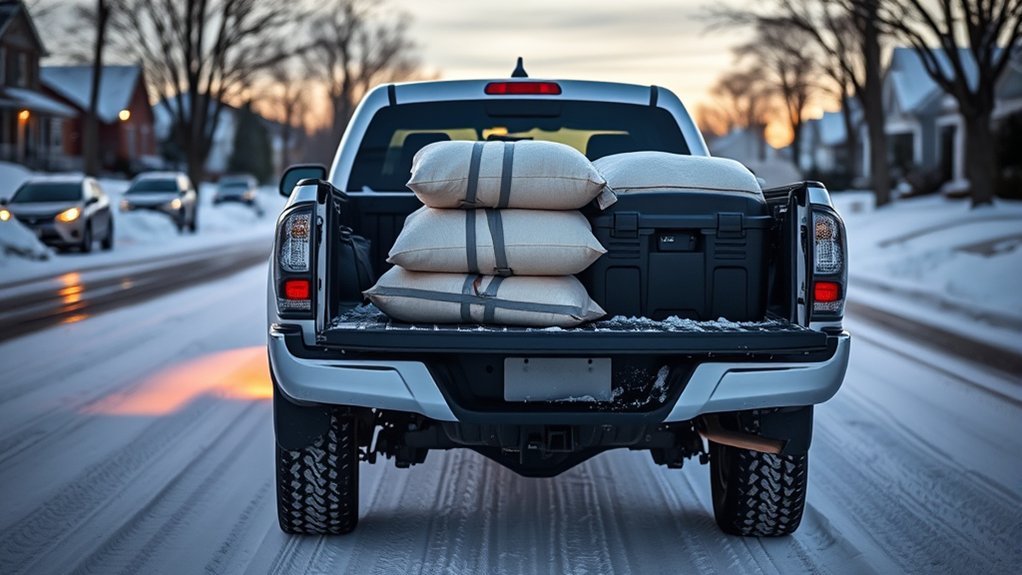
A 2WD Tacoma is rear-wheel drive, and an empty pickup bed places less vehicle weight over the drive tires than a loaded bed. Secured ballast can help launch traction in some conditions. It cannot replace winter tires, and too much weight can change steering, braking, payload, and tire loading.
The cited 2018 Toyota Quick Reference Guide does not give one universal ballast amount. Use the lightest secured load that produces a useful improvement. Place it low and centered over or slightly ahead of the rear axle. Do not stack weight at the tailgate, and do not exceed the payload or tire limits shown for your truck.
| Ballast Type | Placement | Main Caution |
|---|---|---|
| Sandbags or traction tubes | Low and secured over or slightly ahead of the rear axle | Restrain each item so it cannot slide or become a projectile |
| Coarse sand or gravel | Inside sealed, tied-down containers | Loose material shifts and creates cleanup and cargo-control problems |
| Existing winter cargo | Low, centered, and tied to rated bed anchors | Count all cargo and passengers against payload capacity |
Warning: Never use loose concrete blocks, unsecured tools, or heavy objects that can slide in the bed. In a sudden stop or crash, unsecured cargo can damage the truck or injure people nearby.
Driving Techniques That Make Traction Systems Work
Electronic traction systems work best when you give them small problems to solve. If you jab the throttle, slam the brakes, or snap the steering wheel, the tires may exceed available grip before the system can help.
- Start gently. Use light throttle from a stop and let the truck build momentum slowly.
- Brake early. Begin slowing sooner than usual so ABS does not need to work as hard.
- Look far ahead. Scan for shiny ice, wind-packed snow, slush ridges, shaded bridges, and untreated intersections.
- Keep steering smooth. Sudden steering can overload the front tires and cause understeer.
- Increase following distance. National Safety Council guidance cites an 8–10 second following gap for wintry conditions.
- Avoid cruise control. On slick roads, you want direct control over throttle and speed changes.
The AAA winter driving guidance emphasizes smooth, deliberate inputs on snow and ice. That advice fits the Tacoma: keep the tires below their grip limit so the electronic systems have a manageable problem to correct.
Gear to Carry: Shovel, Chains, Sand, Straps, and Boots
A Tacoma can still get stuck, especially if the snow is deep enough to lift the chassis or pack under the skid plates. Carry a basic winter recovery kit so you can solve small problems before they become roadside emergencies.
- Compact shovel: A folding or telescoping shovel helps clear snow from around tires, under the frame, and behind the tailpipe.
- Traction material: Coarse sand, gravel, or traction boards can help a tire bite on glare ice or packed snow.
- Tire chains or cables: Use chains only where legal, only on approved tire sizes, and only according to the Owner’s Manual and chain manufacturer’s instructions.
- Rated tow strap: Carry a proper recovery strap, not a random rope. Know your rated recovery points before you need them.
- Winter boots and gloves: Keep dry footwear and insulated gloves in the cab so you can dig or install chains safely.
- Blanket, flashlight, water, and phone charger: These matter if traffic stops or weather strands you longer than expected.
Note: If you are stranded, the National Safety Council advises staying with the vehicle in unfamiliar areas and making sure the exhaust pipe is not blocked by snow, mud, or objects.
Troubleshooting Noises, Unexpected Slips, and Warning Lights
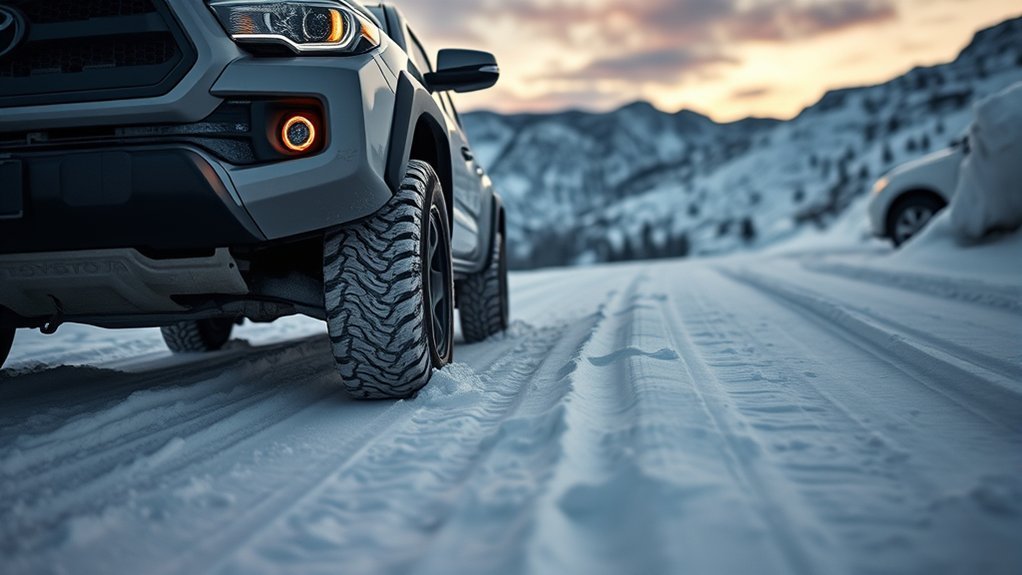
Some sounds and sensations are normal in snow. ABS brake pulsing, traction-control power reduction, and light wheel slip can all happen on slick surfaces. Persistent warning lights, grinding, clunks, or sudden repeated slides are different. Those need attention.
Normal Snow-Driving Sensations
- Brake pedal pulsing: Often means ABS is active during hard braking.
- Engine power reduction: Often means traction control is limiting wheelspin.
- Slip indicator flashing: Usually means TRAC or VSC is actively intervening.
- Light clicking or buzzing: May occur when brake-control systems activate.
Warning Signs That Need Diagnosis
- TRAC OFF or VSC light stays on without pressing the switch: The system may be disabled by a fault.
- ABS warning light stays on: ABS may not function correctly, especially during panic stops.
- Check engine light appears with traction lights: Some engine or drivetrain faults can disable traction-control functions.
- Persistent clunks or grinding: Inspect tires, driveline components, brakes, wheel bearings, and suspension parts.
- Truck slides unexpectedly despite good tires: Check tire pressure, tread depth, alignment, bed load, and whether stability systems are turned off.
If warning lights remain on, scan for diagnostic trouble codes and have the truck inspected. Do not assume traction control is available just because the truck still drives normally on dry pavement.
When to Switch to 4WD or Consider Lockers for Extreme Winter Conditions
On a 2018 4WD Tacoma, use 4H when the surface is consistently snow-covered, muddy, gravelly, or otherwise loose enough to allow tire slip. Avoid 4H on dry high-traction pavement. Four-wheel drive improves launch traction, but it does not shorten braking distance or create extra cornering grip.
How Do You Shift a 2018 Tacoma Into 4H?
Toyota’s 2018 Quick Reference Guide identifies 4H as high-speed four-wheel drive and says to shift into it below 62 mph. For 4L, the same guide says to shift into neutral while stopped, or depress the clutch at speeds below 2 mph on a manual-transmission truck. Confirm the full procedure and indicator behavior in your Owner’s Manual before winter travel.
Use 4L only for slow, difficult situations where you need maximum torque control: deep snow, steep low-speed climbs, crawling out of ruts, or careful off-road recovery. 4L is not for normal road speed.
If your Tacoma has a rear differential locker, save it for low-speed off-road recovery when one rear tire is unloaded or buried. A locked rear differential can improve straight-line traction, but it can also make turning less predictable on slick surfaces. Unlock it as soon as you are out of the trouble spot.
| Mode | Best For | Avoid When |
|---|---|---|
| 2WD | Dry pavement and light winter conditions with proper tires | Deep snow, steep slippery grades, or repeated rear-wheel spin |
| Auto LSD | Equipped 2WD models when one rear wheel spins | High-speed winter driving or as a replacement for 4WD |
| 4H | Most snowy roads and loose surfaces | Dry, high-traction pavement where drivetrain binding can occur |
| 4L | Slow, steep, deep, or difficult off-road recovery | Normal road speed |
| Rear locker | Low-speed off-road recovery when a rear tire has little or no grip | Normal snowy-road cornering or higher-speed travel |
Frequently Asked Questions
Should I use traction control when driving a Tacoma in snow?
Yes. Keep TRAC and VSC on for normal snowy-road driving. They help limit wheelspin and support stability. Turn them off only briefly if the truck is stuck and the system is cutting the controlled wheelspin needed for recovery. Turn the systems back on as soon as the truck is moving.
Does the 2018 Tacoma have a snow mode?
The 2018 Tacoma does not use one universal Snow Mode button. Depending on trim and drivetrain, it may have TRAC, VSC, Auto LSD, 4H, 4L, A-TRAC, Crawl Control, Multi-Terrain Select, or a rear differential lock. Choose the system that matches the surface, speed, and recovery need.
Is 4L or 4H better for snow in a Tacoma?
Use 4H for normal travel on consistently snowy or loose roads. Use 4L only at low speed when you need extra torque control, such as deep snow, a steep off-road climb, or recovery from ruts. Avoid both modes on dry high-traction pavement unless your exact Owner’s Manual says otherwise.
How do I turn on Auto LSD in a 2018 Tacoma?
On an equipped 2018 2WD Tacoma, briefly press and release the TRAC/VSC OFF switch and confirm the Auto LSD indicator. Switch behavior can vary with drivetrain and operating conditions, so verify the procedure in the Owner’s Manual for your truck before relying on it in snow.
How fast can I shift a 2018 Tacoma into 4H?
Toyota’s 2018 Quick Reference Guide says to shift into 4H below 62 mph. Use 4H only on a slippery or loose surface, and confirm the complete shift procedure and indicator behavior in the Owner’s Manual.
Does four-wheel drive help a Tacoma stop faster in snow?
No. Four-wheel drive can improve acceleration because more tires receive engine torque, but braking still depends on tire grip, road conditions, speed, and ABS. Winter-capable tires and extra following distance matter more for stopping.
How much ballast should I put in a 2WD Tacoma bed for snow?
No single weight fits every Tacoma. Use the lightest secured load that improves rear traction, place it low over or slightly ahead of the rear axle, and stay within the payload and tire limits for your truck. Remove weight if steering or braking feels worse.
Conclusion
For a 2018 Tacoma, the safest default is simple: keep TRAC and VSC on, use winter-capable tires, reduce speed, and leave more space. Select 4H on a 4WD truck before a consistently slippery surface causes wheelspin. Use Auto LSD only for a brief low-traction problem on an equipped 2WD truck. Save 4L and the rear locker for slow recovery. Before the next storm, check the door-placard tire pressure, review the switch procedure in your Owner’s Manual, and secure every item in the bed.
Sources
- Toyota Owners: 2018 Tacoma Manuals and Warranties — official source for Tacoma owner information and manuals
- Toyota 2018 Tacoma Quick Reference Guide — TRAC/VSC switch, 4WD, A-TRAC, rear differential lock, and owner-manual limitations
- NHTSA Winter Weather Driving Tips — tire pressure, tread inspection, snow tires, ABS use, and winter vehicle preparation
- U.S. Tire Manufacturers Association Severe Snow Tire Definition — Three-Peak Mountain Snowflake severe-snow traction standard
- AAA Winter Driving Safety Tips — smooth, deliberate driving technique for snow and ice
- National Safety Council Winter Driving — stranded-driver guidance and winter safety precautions


[…] throttle, then restore the systems before driving on a plowed or packed surface. See the dedicated Tacoma snow-driving guide for 2WD, 4H, Auto LSD, and winter-tire […]