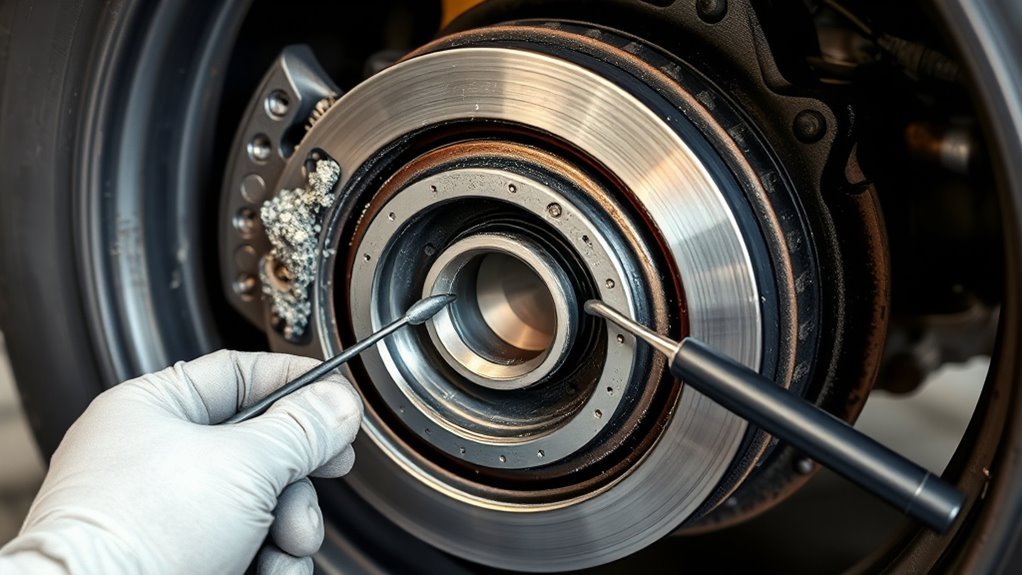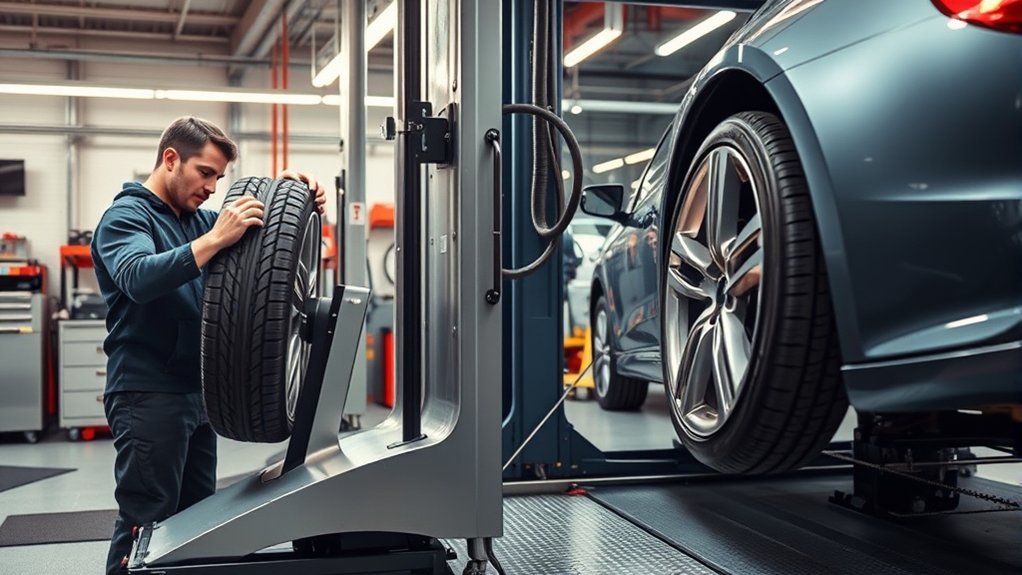
Wheel balancing and wheel alignment fix different problems. Balancing corrects uneven weight in the tire-and-wheel assembly and is the better first check for vibration that appears at certain road speeds. Alignment adjusts wheel and suspension angles and is the better first check for a steady pull, an off-center steering wheel, or one-sided tire wear. You may need both, but one service does not substitute for the other.
Last updated: August 31, 2026. This revision updates alignment-cost guidance, clarifies service intervals, adds ADAS considerations, and strengthens symptom-based diagnosis.
How this guide was prepared: This guide synthesizes NHTSA tire-safety guidance with Michelin, Bridgestone, Kelley Blue Book, Hunter Engineering, and I-CAR service guidance. It does not claim hands-on testing; vehicle-specific alignment specifications and calibration requirements should come from the manufacturer’s service information.
Quick Answer
Choose wheel balancing first when the main symptom is vibration that changes with road speed. Choose wheel alignment first when the vehicle consistently pulls on a flat road, the steering wheel sits crooked while driving straight, or the tires show one-sided or feathered wear. Check tire pressure and visible tire damage before either service because those problems can mimic alignment or balance faults.
Key Takeaways
- Wheel balancing fixes uneven weight distribution in the tire-and-wheel assembly and is most often linked to vibration.
- Wheel alignment adjusts suspension angles so the tires point and contact the road correctly.
- Speed-related vibration usually points first to balance, tire, or wheel condition; steady pulling, a crooked steering wheel, or edge wear points more strongly to alignment.
- New tires should be balanced when installed. Check alignment when old tires wore unevenly, the vehicle pulls, the steering wheel is off-center, or a pothole/curb impact or suspension repair may have changed wheel angles. See these tire wear patterns for additional clues.
- These services need professional equipment; they are not reliable DIY driveway jobs for most drivers.
At a Glance
| Time Required | Varies by vehicle and shop; worn/seized parts, difficult vibration diagnosis, or required ADAS procedures can extend the visit |
| Difficulty | Professional service recommended |
| Tools Needed | Wheel balancer, alignment rack, sensors, lift, torque tools, and vehicle-specific specifications |
| Typical Cost | Balancing may be charged per tire or bundled with tire installation; Kelley Blue Book lists typical alignment service at about $100–$200, with price varying by vehicle and location |
Wheel Balancing vs. Wheel Alignment: The Main Difference
The easiest way to separate the two is this: balancing fixes how the tire spins, while alignment fixes how the tire points and contacts the road. A vehicle can be perfectly aligned and still vibrate because a wheel is out of balance. It can also have freshly balanced tires and still pull to one side because the alignment is off.
| Service | What It Fixes | Most Common Symptoms | How It Is Corrected |
|---|---|---|---|
| Wheel balancing | Uneven weight in the tire-and-wheel assembly | Vibration in the steering wheel, seat, or floor; cupped or patchy tire wear | A technician spins the assembly on a balancing machine and adds small weights where needed |
| Wheel alignment | Incorrect suspension and wheel angles | Vehicle pulls left or right, steering wheel is off-center, tires wear unevenly on the inner or outer edges | A technician adjusts camber, caster, and toe to match manufacturer specifications |
Quick Diagnosis: Balance, Alignment, or Another Problem?
| What You Notice | Best First Check | Why |
|---|---|---|
| Vibration that appears or peaks at certain road speeds | Tire/wheel inspection and balancing | Imbalance, tire damage, wheel runout, or a bent wheel can create speed-related shake |
| Steady pull on a flat, straight road | Tire pressure and tire condition, then alignment | Pressure differences, tire behavior, road crown, brake drag, and alignment can all affect tracking |
| Steering wheel is off-center while the vehicle tracks straight | Alignment and steering-centering check | Toe, thrust angle, or steering centering may be outside specification |
| Vibration mainly while braking | Brake, hub, tire, and suspension inspection | A brake-related shake is not automatically a wheel-balance problem |
| One-sided or feathered tread wear | Alignment, tire pressure, and suspension inspection | Toe/camber errors and worn parts can scrub the tread unevenly |
| Severe vibration, bulge, exposed cords, or sudden strong pull | Stop normal driving and inspect for damage | These can indicate a tire, wheel, steering, suspension, or brake safety problem |
What Is Wheel Balancing, and How Does It Work?
Tire balancing, also called wheel balancing, corrects uneven weight distribution in the tire-and-wheel assembly. An imbalance can create a shake or wobble that becomes noticeable as wheel speed changes. NHTSA says balancing helps wheels rotate properly and helps prevent vehicle shake or vibration. Persistent vibration still needs inspection because tire damage, a bent wheel, brakes, hubs, steering, suspension, or drivetrain faults can feel similar.
During balancing, a technician mounts the tire-and-wheel assembly on a balancing machine. The machine spins the assembly, measures the imbalance, and shows where small weights should be added. This is the same basic process described by the National Highway Traffic Safety Administration, which explains that balance is achieved by positioning weights on the wheel to counterbalance heavy spots.
Static, Dynamic, and Road-Force Balancing
Static balancing corrects imbalance on one plane, while dynamic balancing corrects imbalance across two planes. Some shops also offer road-force balancing, where a load roller presses against the tire while it rotates. Hunter Engineering uses a diagnostic load roller plus wheel/runout measurements to help technicians identify vibration problems that a standard balance may not fully explain.
Pro Tip: If a vibration remains after normal balancing, ask the shop whether road-force balancing, bent wheel inspection, or tire runout measurement makes sense before replacing parts.
How Do You Know If Your Wheels Need Balancing?
Balance problems usually show up as vibration. The exact location of the shake can give the technician useful clues, but the vehicle still needs a proper inspection because tire damage, bent wheels, worn suspension parts, and brake problems can feel similar.
- Steering wheel vibration at highway speed: Often linked to front tire-and-wheel imbalance.
- Seat or floor vibration: Often linked to rear tire-and-wheel imbalance.
- Vibration that gets stronger as speed rises: A classic balance-related pattern, especially if it appears in a certain speed range.
- Cupped or patchy tire wear: May come from imbalance, worn shocks/struts, or suspension issues.
- New vibration after tire repair or rotation: The wheel may need to be rebalanced or inspected for a lost weight.
Have your tires balanced when new tires are installed, when a tire is removed and remounted for repair, when a wheel weight falls off, or when you feel vibration that was not there before. Many drivers also pair balancing with tire rotation because it is convenient and helps catch tire wear problems early.
What Is Wheel Alignment, and How Does It Work?
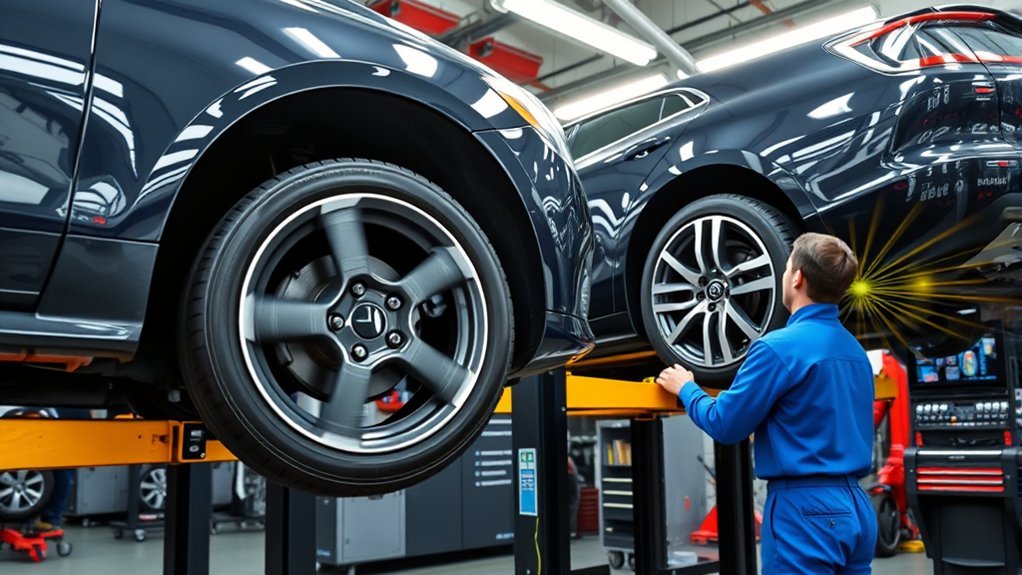
Wheel alignment adjusts the angles of the wheels so the tires contact the road the way the vehicle manufacturer intended. NHTSA explains that alignment positions the wheels correctly relative to the vehicle frame, helping maximize tire life and prevent the vehicle from veering left or right on a straight, level road. Alignment is done on a professional alignment rack using vehicle-specific specifications.
The most important alignment angles are:
- Camber: The inward or outward tilt of the tire when viewed from the front of the vehicle. Too much positive or negative camber can cause inner- or outer-edge wear.
- Caster: The forward or backward tilt of the steering axis. Caster affects straight-line stability and steering return.
- Toe: Whether the tires point slightly inward or outward when viewed from above. Incorrect toe is a common cause of rapid feathered tire wear.
Why Proper Alignment Matters
Proper alignment helps the tires roll straight instead of scrubbing across the pavement. That improves steering feel, reduces irregular tire wear, and can reduce unnecessary rolling resistance. Michelin notes that misalignment can accelerate tire wear and affect vehicle stability, especially when the vehicle pulls left or right, the steering wheel is not centered, or the tire edges wear unevenly.
Common Signs of Misalignment
Alignment problems usually feel more like drifting, pulling, or steering inconsistency than simple vibration. If the vehicle pulls on a flat road, the steering wheel is crooked when driving straight, or one side of the tread is wearing faster than the rest, schedule an alignment inspection.
| Sign of Misalignment | What It May Mean | Why It Matters |
|---|---|---|
| Vehicle pulls to one side | Toe, camber, tire pressure, or suspension issue | Can reduce control and wear tires unevenly |
| Crooked steering wheel | Steering wheel is not centered after alignment angles shifted | Makes straight driving less comfortable and can hide tire wear problems |
| Inner- or outer-edge tire wear | Camber or toe outside specification | Can shorten tire life significantly |
| Squealing during normal turns | Tire scrub, underinflation, or alignment issue | Needs inspection before tread damage gets worse |
When Should You Schedule a Wheel Alignment Check?
Use symptoms and recent repair history instead of assuming every tire service needs an alignment. Schedule a check when any of these conditions apply:
- The vehicle consistently pulls or drifts on a flat road after tire pressure and visible tire damage have been checked.
- The steering wheel stays off-center while the vehicle travels straight.
- The tread shows one-sided or feathered wear.
- A hard pothole, curb, or road-debris impact may have changed wheel or suspension geometry.
- Steering or suspension parts were replaced, or ride height/suspension geometry was changed.
- You are installing new tires after the old set wore unevenly.
Warning: Do not ignore a sudden strong pull, severe vibration, tire bulge, exposed cords, or visible tire damage. Slow down safely and have the vehicle inspected before continuing normal driving.
[Products Worth Considering]

The FOXWELL NT301 is a plug-and-play OBD2 code reader designed to help drivers and home mechanics diagnose check engine light issues with ease. It reads fault codes, clears emissions-related warnings, displays live sensor data in graph form, and shows I/M readiness so you can quickly check vehicle status before an emissions test. With broad compatibility across many OBD2 vehicles and a clear color screen, it offers a practical, user-friendly way to monitor and troubleshoot engine performance.
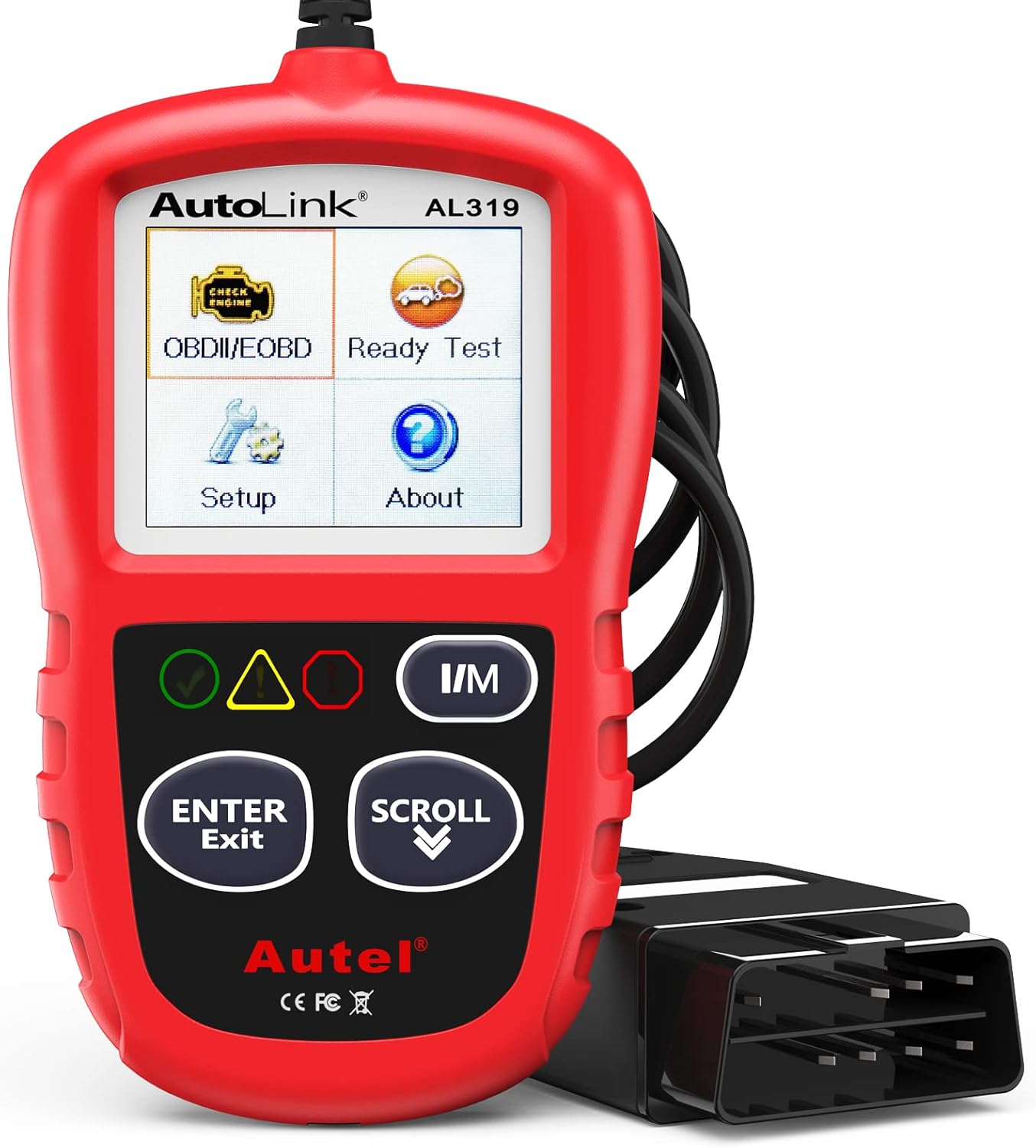
The Autel AL319 is a user-friendly OBD2 scan tool designed to help drivers quickly diagnose check engine light issues and understand vehicle fault codes. It supports reading and clearing DTCs, live data, freeze frame, I/M readiness, and vehicle information, making it a practical choice for DIYers and everyday car owners. With plug-and-play operation, a color display, built-in speaker, and broad vehicle compatibility, it delivers fast, reliable diagnostics without complicated setup.

The ANCEL AD410 helps drivers quickly read and clear engine-related fault codes, view live data, and understand why the check engine light is on before heading to a repair shop. With built-in code definitions, readiness checks, and support for common OBD2 functions, it makes basic diagnostics straightforward for beginners and DIY users. Powered directly from the vehicle and easy to use with no app required, it offers practical value for everyday vehicle troubleshooting.
Benefits of Regular Tire Balancing and Wheel Alignment
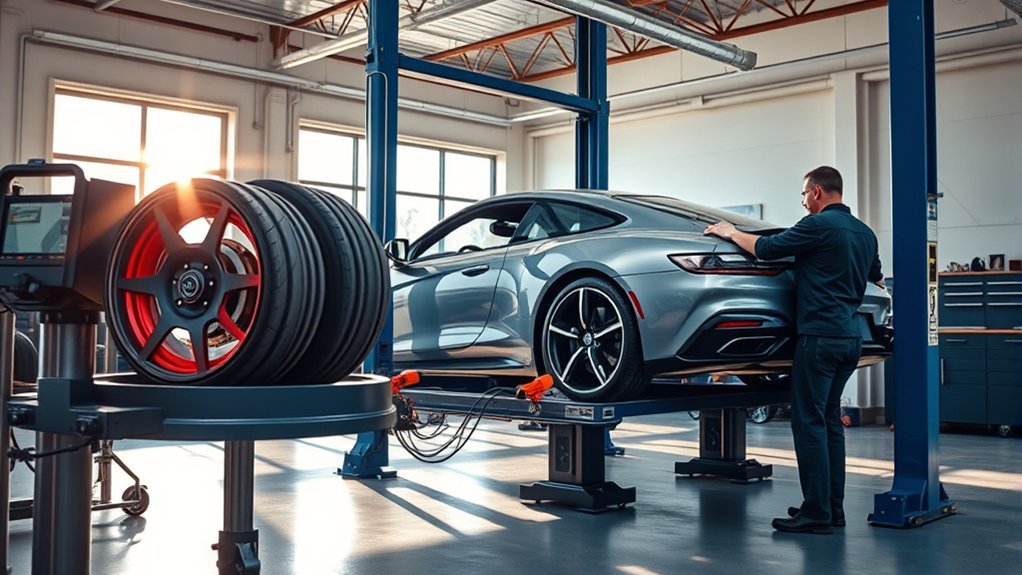
Balancing and alignment are not just comfort services. They help the tire maintain steady contact with the road, reduce irregular wear, and make the vehicle easier to control. The NHTSA TireWise program recommends regular tire maintenance inspections that include tire pressure, treadwear, damage, rotation, balancing, and alignment services.
Enhanced Tire Longevity
Balanced wheels reduce vibration-related tread wear. Proper alignment reduces scrubbing and edge wear. Together, they help your tires wear more evenly, which can delay premature replacement and make tire rotations more effective.
Improved Vehicle Handling
A balanced tire-and-wheel assembly rotates smoothly. A properly aligned suspension keeps the tires pointing where they should. That combination improves steering response, straight-line stability, and ride comfort.
Reduced Rolling Resistance When Alignment Is Off
Misalignment can make tires scrub instead of roll cleanly, which increases drag. Kelley Blue Book lists improved fuel efficiency among the benefits of correct wheel alignment. Do not treat an alignment as a guaranteed MPG upgrade, though: the effect depends on how far the vehicle was out of specification, tire pressure, tire design, road conditions, and driving style.
A smooth ride is not the only goal. Proper balance and alignment help tires wear evenly, keep steering predictable, and reduce unnecessary stress on suspension parts.
How Often to Schedule Balancing and Alignment?
There is no single interval that fits every vehicle, so start with your owner’s manual and tire warranty recommendations. Driving on rough roads, frequent potholes, heavy loads, aggressive cornering, and low-profile tires can all increase how often service is needed.
- Balance tires when installing new tires, after tire repair or remounting, when rotating tires if the shop recommends it, or whenever you feel vibration.
- Check alignment after hitting a curb or pothole, when replacing suspension or steering parts, when installing new tires, or when the vehicle pulls, wanders, or wears tires unevenly.
- Routine check: Use the owner’s manual and tire maker as the primary schedule. Some tire-service providers recommend checking balance around rotation intervals, while alignment is often checked when symptoms, tire wear, impacts, or repair work justify it.
Bridgestone says having tires aligned and balanced every 5,000 to 6,000 miles can help maximize tire life and performance, while NHTSA tells drivers to follow the vehicle owner’s manual for tire-maintenance timing. Treat 5,000–6,000 miles as one provider’s maintenance rhythm, not a universal requirement to buy both services at every rotation.
Note: If a shop recommends alignment, ask for the before-and-after alignment printout. It should show camber, caster, and toe readings compared with the manufacturer’s specifications.
What Happens During a Balancing or Alignment Service?
Knowing what the shop does helps you understand the invoice and ask better questions.
During Wheel Balancing
- The technician removes the wheel from the vehicle.
- The tire-and-wheel assembly is mounted on a balancing machine.
- The machine spins the assembly and measures imbalance.
- The technician adds clip-on or adhesive weights in the needed locations.
- The assembly is rechecked until the imbalance is corrected.
During Wheel Alignment
- The technician checks tire pressure, tread condition, steering, and suspension parts.
- The vehicle is placed on an alignment rack.
- Sensors measure camber, caster, and toe.
- The technician adjusts the angles that are adjustable on your vehicle.
- The shop may provide a printout and road test the vehicle.
If suspension parts are worn or bent, an alignment may not hold until those parts are repaired. That is why a trustworthy shop inspects steering and suspension components before making final adjustments.
Does Wheel Alignment Affect ADAS Calibration?
On some vehicles, yes. Lane-keeping, adaptive-cruise, collision-warning, and stability systems can depend on steering angle, thrust angle, camera, or radar references. I-CAR notes that calibration requirements after alignment vary by manufacturer, and modern alignment guidance from Kelley Blue Book also links accurate wheel geometry with ADAS operation. Ask the shop to check the manufacturer procedure for your exact year, make, model, and installed systems; do not assume every alignment needs the same reset or calibration.
Debunking Myths: What You Need to Know About Tire Balancing and Wheel Alignment
Several common myths lead drivers to buy the wrong service or ignore warning signs. Here is what to know:
- Myth: Balancing and alignment are the same.
Fact: Balancing corrects weight imbalance; alignment corrects suspension angles. - Myth: Vibration always means alignment.
Fact: Vibration at speed is more often a balance, tire, wheel, brake, or suspension issue. Pulling and edge wear are stronger alignment clues. - Myth: Alignment is only needed after an accident.
Fact: Potholes, curbs, worn parts, and normal road impacts can shift alignment over time. - Myth: New tires automatically fix pulling.
Fact: A steady pull can come from tire pressure, tire characteristics, road crown, brakes, steering/suspension, or alignment. New tires do not correct an alignment angle that is outside specification. - Myth: If the steering wheel feels fine, the tires are fine.
Fact: Some tire wear problems develop slowly and may show up during inspections before you feel them.
Frequently Asked Questions
How much does it cost to balance a wheel?
Wheel balancing is usually charged per tire, although some tire purchases include lifetime rebalancing. The final price depends on tire size, wheel type, shop labor rate, whether the tires are already off the vehicle, and whether road-force balancing is needed. Ask whether the quote includes rotation, valve stems, TPMS service, mounting, and disposal fees.
How much does a wheel alignment cost?
Alignment cost varies by vehicle, location, shop type, and the adjustments or related repairs required. Kelley Blue Book’s current wheel-alignment guide lists typical service at about $100–$200 and cites an average dealership price of $183, while noting that independent shops may charge less.
Do I need balancing or alignment if my steering wheel shakes?
A steering wheel shake at highway speed often points to wheel balancing, but it can also come from tire damage, bent wheels, brake issues, or worn suspension parts. If the vehicle also pulls or the tires show edge wear, ask the shop to inspect alignment too.
Should I get an alignment after installing new tires?
It is smart to check alignment when installing new tires, especially if the old tires wore unevenly or the vehicle pulls. New tires should be balanced when installed, while an alignment adjustment should be based on symptoms, inspection, and measured wheel angles.
Can I do wheel balancing or alignment at home?
Most drivers should not rely on DIY balancing or alignment. Accurate service requires specialized machines, vehicle specifications, and a safe lift setup. NHTSA recommends having balancing and alignment performed by a qualified technician.
Can a bad wheel alignment cause vibration?
It can contribute to poor road feel or uneven tire wear, but a vibration that changes strongly with vehicle speed points first toward tire/wheel balance, tire damage, wheel runout, brakes, hubs, steering, suspension, or drivetrain issues. If vibration and alignment symptoms appear together, have the whole tire, wheel, steering, and suspension system inspected.
Do I need both balancing and alignment with new tires?
New tires should be balanced when they are installed. An alignment check is especially useful when the old tires wore unevenly, the vehicle pulls, the steering wheel is off-center, or recent impacts or suspension work may have changed wheel angles. You do not need to assume that every new-tire installation requires an alignment adjustment.
Does a wheel alignment require ADAS calibration?
Some vehicles require a steering-angle reset, camera/radar calibration, or another manufacturer-specified procedure after alignment; others do not. The correct requirement depends on the exact vehicle and installed ADAS. Ask the shop to follow the current manufacturer service procedure rather than a one-size-fits-all rule.
Conclusion
Wheel balancing fixes uneven weight in the tire-and-wheel assembly; wheel alignment corrects wheel and suspension angles. If your vehicle shakes at certain speeds, start with tire/wheel condition and balancing. If it consistently pulls on a flat road, the steering wheel sits off-center, or the tread shows one-sided or feathered wear, check tire pressure and then schedule an alignment inspection. If symptoms are severe or include visible tire damage, treat the problem as a safety inspection rather than a routine balance-or-alignment decision.
Sources
- NHTSA Tire Safety Brochure — supports tire-balance and wheel-alignment definitions plus qualified-technician guidance.
- NHTSA TireWise — supports new-tire balancing, tire-maintenance inspection, treadwear, and alignment guidance.
- Michelin: Wheel Alignment and Balancing — supports the symptom differences between imbalance and misalignment.
- Bridgestone: Tire Alignment — supports static/dynamic balance concepts and its published 5,000–6,000-mile maintenance rhythm.
- Kelley Blue Book: What Is Wheel Alignment? — supports current alignment-cost context, four-wheel alignment guidance, and ADAS/alignment considerations.
- Hunter Engineering: Road Force Elite — supports road-force balancing as a diagnostic tool for loaded tire/wheel variation.
- I-CAR: ADAS Calibrations After Wheel Alignment — supports manufacturer-specific ADAS calibration considerations following alignment.