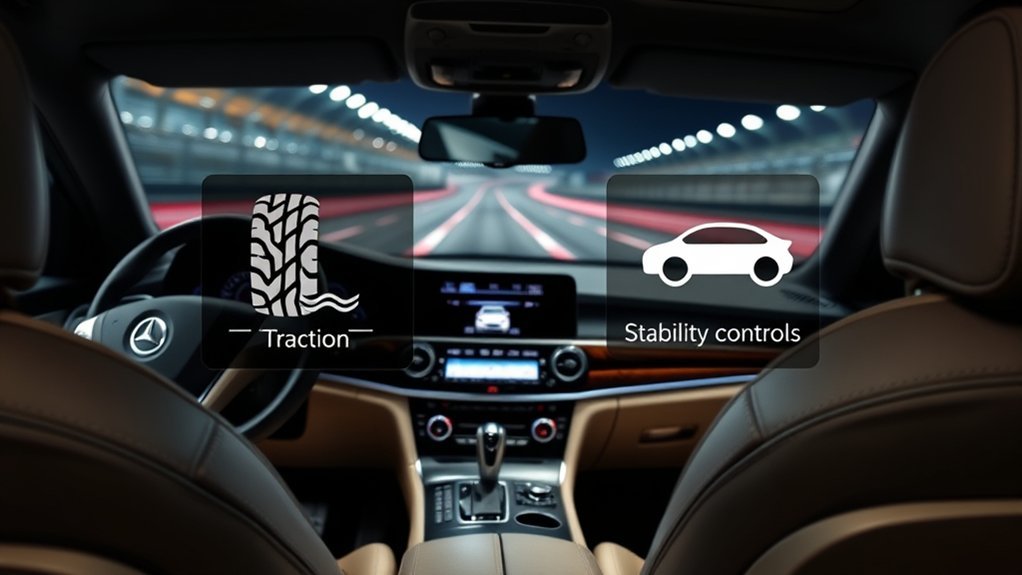
Traction control and electronic stability control both help when your tires lose grip, but they solve different problems. Traction control limits drive-wheel spin when you accelerate. Stability control, often called ESC, helps correct skids so the vehicle follows your steering input. For everyday driving, both systems should stay on unless your owner’s manual says a temporary off-road, snow, or performance mode is appropriate.
Quick Answer
Traction control helps your vehicle accelerate without spinning the drive wheels. Stability control helps your vehicle stay pointed where you are steering during skids, sharp turns, or emergency maneuvers. Traction control manages wheelspin; stability control manages vehicle direction.
Key Takeaways
- Traction control works mainly during acceleration to limit drive-wheel spin on wet, icy, sandy, or loose surfaces.
- Electronic stability control works during cornering, swerving, or skidding to help reduce understeer and oversteer.
- Both systems use ABS-related sensors and braking hardware, but ESC uses more vehicle-motion data, including steering input and yaw.
- Leave both systems on for normal road driving. Temporarily turning traction control off is mainly useful when you are stuck in deep snow, mud, or sand.
Traction Control vs Stability Control: The Simple Difference
The easiest way to remember the difference is this: traction control helps you get moving, while stability control helps you stay in control once the vehicle starts sliding or turning differently than intended.
| Feature | Traction Control (TCS) | Stability Control (ESC) |
|---|---|---|
| Main job | Limits wheelspin during acceleration | Helps keep the vehicle on the driver’s intended path |
| Common trigger | One or more drive wheels spin faster than they should | Vehicle starts to understeer, oversteer, fishtail, or skid |
| Typical response | Reduces engine power and/or applies brake force to a spinning wheel | Applies individual wheel braking and may reduce engine torque |
| Best example | Pulling away from a stop on a wet hill | Swerving or cornering too quickly on a slippery road |
| Should you turn it off? | Rarely, such as when stuck in deep snow, mud, or sand | Almost never on public roads; use only approved modes as your manual allows |
What Is Traction Control and How Does It Work?
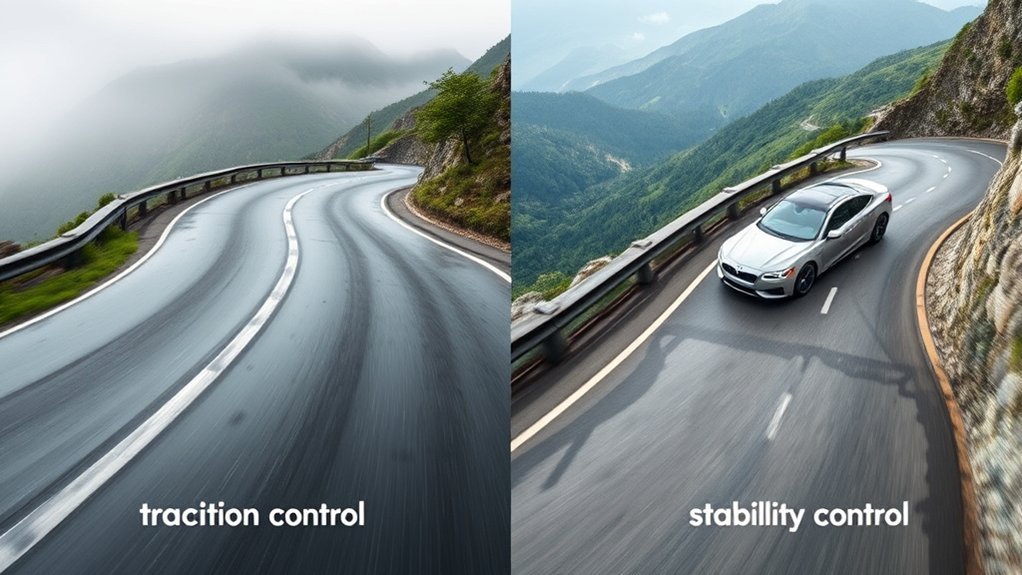
Traction control, often shortened to TCS, is an active safety system that helps stop the drive wheels from over-spinning when you press the accelerator. The National Safety Council’s MyCarDoesWhat traction control guide describes it as a system that works in the background to help acceleration and prevent wheel slippage on slippery surfaces.
Most traction control systems compare wheel-speed sensor data. If a drive wheel spins faster than the others, the system may:
- reduce engine power;
- close the electronic throttle slightly;
- apply brake force to the spinning wheel;
- work with the anti-lock braking system (ABS) hardware to manage brake pressure.
This is most helpful when pulling away from a stop, accelerating uphill, or driving on rain, ice, packed snow, loose gravel, or sand. It does not create traction by itself, though. Your tires, speed, road surface, and steering inputs still matter.
Pro Tip: If the traction control light flashes briefly while you accelerate, ease off the throttle and steer smoothly. That flash usually means the system is helping because one or more tires are starting to slip.
What Is Stability Control and How Does It Work?
Electronic stability control, or ESC, is a broader safety system. It compares where you are steering with how the vehicle is actually moving. If the vehicle begins to rotate, slide, plow wide, or fishtail, ESC can brake individual wheels and reduce engine torque to help bring the vehicle back toward your intended path.
Under Federal Motor Vehicle Safety Standard No. 126, an ESC system must be able to apply brake torques individually, monitor driver steering input, determine yaw rate, and modify engine torque as needed. In plain English, that means ESC watches both your steering wheel and the vehicle’s body motion.
- Understeer happens when the front tires lose grip and the vehicle turns less than you intended.
- Oversteer happens when the rear of the vehicle swings outward and the vehicle turns more than you intended.
- Yaw is the vehicle’s rotation around its vertical centerline, like the body beginning to spin left or right.
The National Safety Council’s electronic stability control guide explains that ESC helps prevent loss of control in curves and emergency steering maneuvers by stabilizing the car when it begins to veer off its intended path.
Note: Automakers use different names for stability control. You may see ESC, ESP, VSC, DSC, AdvanceTrac, Vehicle Stability Assist, or StabiliTrak. The name changes, but the core job is the same: help the vehicle stay stable.
Why Stability Control Matters for Safety
Stability control matters because it can react faster and more precisely than a driver during the first moments of a skid. It is especially useful during sudden lane changes, emergency swerves, wet-road cornering, black ice, gravel, and quick steering corrections.
NHTSA’s July 2007 analysis found that ESC reduced fatal rollover involvements by 70% in passenger cars and 88% in light trucks and vans.
That is why ESC became a required safety technology on covered U.S. light vehicles. FMVSS No. 126 applies to passenger cars, multipurpose passenger vehicles, trucks, and buses with a gross vehicle weight rating of 10,000 pounds or less, according to the standard’s scope.
Common Faults That Trigger the Stability Control Light
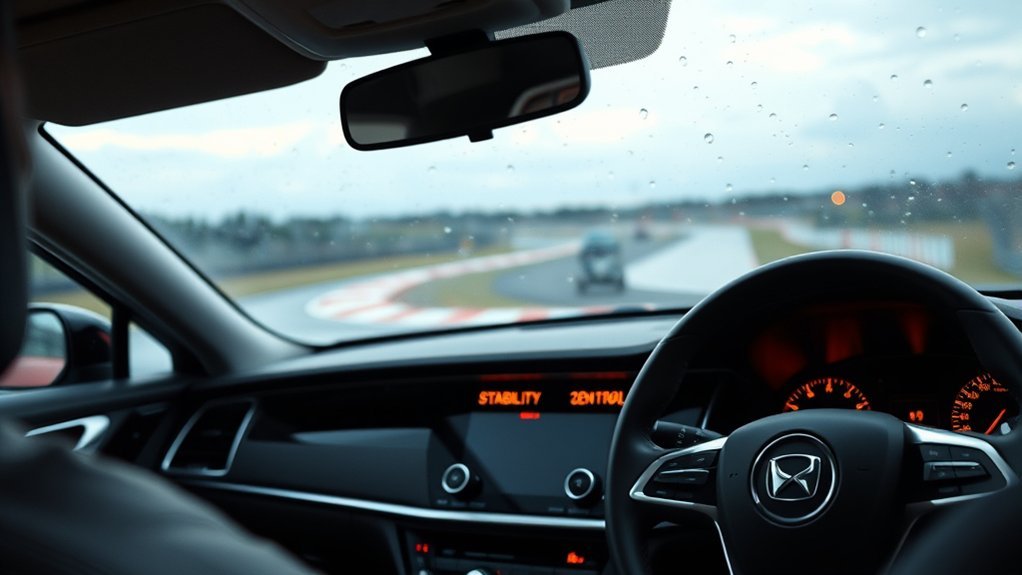
A stability control or traction control light does not always mean the same thing. The meaning depends on whether the light flashes, stays on, or appears with an “Off” or “Service” message.
- Flashing light: The system may be actively working because the tires are slipping or the vehicle is beginning to skid.
- Steady ESC/TCS light: The system may be off, limited, or storing a fault code.
- ESC Off or TCS Off light: A driver-selected mode, terrain mode, or button press may have reduced or disabled part of the system.
- ABS light plus ESC/TCS light: Get the vehicle checked soon, because ABS faults can affect stability and traction systems.
Common causes include a wheel-speed sensor fault, damaged sensor wiring, a steering-angle or yaw-sensor issue, low system voltage, mismatched tire sizes, poor tire condition, or an ABS-related fault. If the warning stays on after restarting the vehicle and turning the system back on, have the codes scanned by a qualified technician.
Warning: Do not ignore a steady stability control, traction control, ABS, or brake warning light. The vehicle may still drive, but key crash-avoidance functions may be reduced or unavailable.
Situations to Disable Traction or Stability Control
For normal public-road driving, leave traction control and stability control on. They are designed to help in exactly the situations where drivers often need assistance: rain, ice, snow, gravel, emergency swerves, and sharp curves.
There are a few situations where temporarily reducing traction control may help:
- Stuck in deep snow, mud, or sand: Some wheelspin can help the tires dig and help you rock the vehicle free.
- Using tire chains: Some owner’s manuals recommend switching traction control off or using a specific snow mode if chains interfere with the system.
- Off-road driving: Low-range 4WD, sand, mud, rock, or trail modes may change how much wheelspin the vehicle allows.
- Closed-course performance driving: Some performance vehicles offer sport or track modes that reduce ESC intervention. These modes are not for normal traffic.
Stability control is different from traction control here. Some vehicles allow ESC to be reduced or temporarily switched off, but federal rules require proper ESC Off telltales and default restoration in most normal ignition cycles. In everyday driving, keep ESC on.
How Traction and Stability Control Work With ABS, AWD, and Tires
Traction control, stability control, and ABS are closely related, but they are not the same system.
- ABS helps prevent wheel lockup during hard braking so you can still steer.
- Traction control limits drive-wheel spin during acceleration.
- Stability control helps correct the vehicle’s direction during skids, understeer, or oversteer.
All-wheel drive and four-wheel drive can help a vehicle accelerate on low-grip surfaces, but they do not replace traction control or stability control. AWD may help you move; ESC helps when the vehicle is not going where you are steering.
Tires are just as important. If the tires are worn, underinflated, mismatched, or not suited for winter conditions, these systems have less grip to work with. Traction control is helpful, but it is not a substitute for good tires or slower driving.
[Products Worth Considering]

GM-recommended replacement part for your GM vehicle’s original factory component

What to Do When the Traction or Stability Control Light Comes On
- If the light flashes briefly: stay calm, ease off the accelerator, avoid sudden steering, and give the tires time to regain grip.
- If the Off light is on: press the TCS/ESC button or select the normal drive mode if you did not intend to disable it.
- If the light stays on: restart the vehicle once in a safe place. If the warning returns, schedule diagnosis.
- If ABS or brake warnings appear too: drive cautiously and get service promptly, because braking and stability functions may be affected.
- If the warning appears after tire work or alignment: confirm tire size, tire pressure, wheel-speed sensor wiring, and steering-angle calibration.
Because every vehicle is different, the owner’s manual is the best source for the exact meaning of your dashboard icon, button, and drive modes.
[Products Worth Considering]


ACCURATE ABS PERFORMANCE – Delphi ABS Wheel Speed Sensors are built to meet or exceed OE requirements and testing and engineered to deliver precise wheel speed data, helping maintain proper anti-lock braking system functionality and vehicle stability. Manufactured to meet or exceed OEM specifications for dependable braking performance, consistent digital output for maximum signal to noise ratio, and long-lasting durability.

ACCURATE ABS PERFORMANCE – Delphi ABS Wheel Speed Sensors are built to meet or exceed OE requirements and testing and engineered to deliver precise wheel speed data, helping maintain proper anti-lock braking system functionality and vehicle stability. Manufactured to meet or exceed OEM specifications for dependable braking performance, consistent digital output for maximum signal to noise ratio, and long-lasting durability.
Enhancing Vehicle Safety With Traction and Stability Control
Traction control and stability control are not magic, but they are two of the most useful electronic safety aids in modern vehicles. Traction control helps you accelerate with less wheelspin. Stability control helps correct a developing skid before it becomes a full loss-of-control event. Together with ABS and good tires, they give the vehicle more tools to respond when grip is limited.
The best way to get the most from these systems is simple: keep them on, maintain your tires and brakes, slow down when traction is poor, and treat warning lights as a sign to check the system rather than something to ignore.
Frequently Asked Questions
What is the difference between TCS and ESC?
TCS, or traction control, limits drive-wheel spin during acceleration. ESC, or electronic stability control, helps correct a skid or loss of directional control by comparing your steering input with the vehicle’s actual movement and braking individual wheels as needed.
What is the difference between traction control and StabiliTrak?
Traction control is the general system that limits wheelspin. StabiliTrak is General Motors’ name for its electronic stability control system. In many GM vehicles, traction control and StabiliTrak work together, but StabiliTrak is the broader stability system that helps with skids and path control.
Should traction control be on or off in snow?
Keep traction control on for normal snowy-road driving. Turn it off only temporarily if the vehicle is stuck in deep snow and you need controlled wheelspin to rock it free. Turn it back on once you are moving again.
Can I drive with the stability control light on?
If the light flashes briefly, the system may be working normally. If it stays on, the system may be off or malfunctioning. Drive gently, avoid slippery or high-speed maneuvers, and have the vehicle inspected if the warning does not clear.
Does traction control help with braking?
Traction control mainly helps during acceleration, not braking. ABS is the system designed to help prevent wheel lockup during hard braking. Stability control may use braking at individual wheels to correct a skid, but it is not a substitute for safe braking distance.
Is stability control the same as ABS?
No. ABS helps prevent wheel lockup when braking. Stability control uses ABS-related sensors and braking hardware, but it also monitors steering input and vehicle motion to help correct understeer, oversteer, and skids.
Conclusion
Traction control and stability control work together, but they are not interchangeable. Traction control helps manage wheelspin when you accelerate. Stability control helps manage the vehicle’s direction when it starts to slide or rotate away from your intended path. Keep both systems active for normal driving, maintain your tires and brakes, and only use reduced-control modes when your owner’s manual and driving conditions call for it.
Sources
- 49 CFR §571.126, Federal Motor Vehicle Safety Standard No. 126 — ESC system definition, scope, required functions, telltales, and default mode rules.
- NHTSA DOT HS 810 794: Statistical Analysis of the Effectiveness of ESC Systems — ESC crash-reduction and rollover-reduction statistics.
- NHTSA Final Regulatory Impact Analysis for FMVSS No. 126 — ESC regulatory background and technical safety rationale.
- National Safety Council: Traction Control — driver-facing explanation of traction control use and limitations.
- National Safety Council: Electronic Stability Control — driver-facing explanation of ESC operation, ABS relationship, and warning guidance.
- IIHS-HLDI: Life-saving benefits of ESC continue to accrue — independent safety research summary on ESC benefits.