
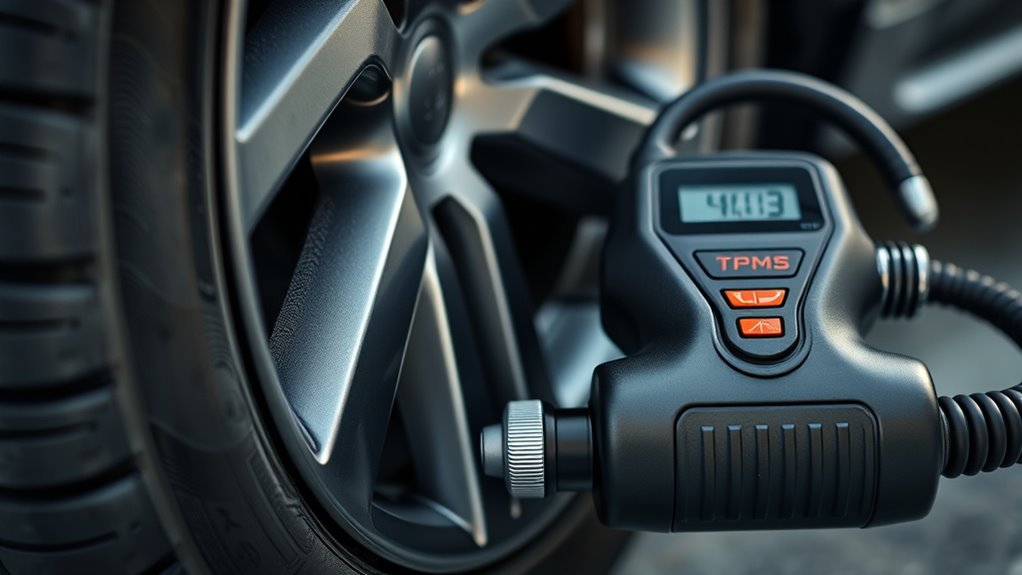
TPMS, or Tire Pressure Monitoring System, alerts you when tire pressure drops below 25% of the recommended level, preventing blowouts and enhancing safety. There are two types: direct, which provides real-time data, and indirect, which estimates pressure based on wheel speed. When the TPMS light activates, it’s vital to check your tires for damage and inflation. Using tire inflators correctly helps maintain proper pressure. Stick around to discover essential TPMS maintenance tips for a safer driving experience.
Understanding the Importance of TPMS for Vehicle Safety

When you drive, the Tire Pressure Monitoring System (TPMS) plays an essential role in guaranteeing your safety on the road. It alerts you when tire pressure drops below about 25% of the recommended level, preventing blowouts and enhancing vehicle safety. Properly inflated tires not only improve handling but also boost fuel efficiency by up to 3.3%, saving you money while reducing your environmental impact. Since the TREAD Act made TPMS mandatory for vehicles after September 2007, maintaining this system has never been more vital. Ignoring TPMS warning lights can lead to low tire pressure, jeopardizing your safety and increasing accident risks. Regular maintenance of your TPMS guarantees accurate readings, allowing for ideal tire pressure and effective tire maintenance.
How TPMS Works: Direct vs Indirect Monitoring Systems
Understanding how TPMS operates is essential for maintaining tire safety, as it can greatly impact your driving experience. TPMS comes in two types: direct and indirect.
| Type | Functionality |
|---|---|
| Direct TPMS | Uses sensors in each tire for accurate readings. |
| Indirect TPMS | Estimates pressure via ABS wheel speed data. |
| Alerts Drivers | Notifies when tire pressure drops 25% below specs. |
| Vehicle Safety | Enhances performance by ensuring ideal tire pressure. |
Direct TPMS offers real-time data and immediate alerts, while indirect TPMS may lag in detection. Both systems aim to keep you informed about tire pressure, ensuring compliance with manufacturers’ specifications and improving overall vehicle safety.
Common Reasons Your TPMS Warning Light Activates
The TPMS warning light can activate for several reasons, signaling potential issues with your tire pressure. Most commonly, it indicates insufficient tire pressure due to natural air loss or temperature drops, especially in colder months. Slow leaks and under-inflation often precede roadside flats, highlighting the importance of monitoring your tire pressure regularly. If you’ve recently installed new tires, the TPMS may briefly activate as it recalibrates to recognize the new readings. Additionally, a malfunction within the tire pressure monitoring system can trigger the warning light, necessitating diagnostic attention. Ignoring the TPMS warning light jeopardizes vehicle safety, as low tire pressure contributes to numerous accidents annually. Always check with a tire pressure gauge to maintain recommended pressure.
What to Do When Your TPMS Light Comes On?
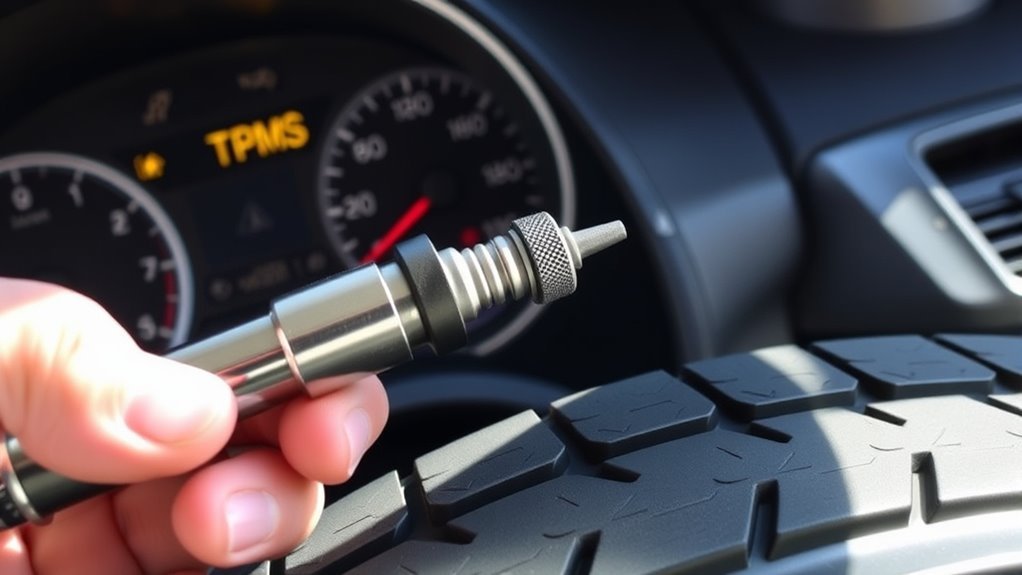
When your TPMS light comes on, pull over safely to inspect your tires for any visible damage or deflation. Use a tire pressure gauge to check the pressure and inflate any tires that are below the recommended PSI. If the light stays on after addressing the pressure, seek professional help, as it may indicate a malfunctioning sensor or another issue.
Safely Pull Over
If your TPMS light comes on, it’s essential to pull over safely and inspect your tires immediately. This alert indicates at least one tire is considerably under-inflated, which can compromise vehicle handling and increase the risk of blowouts. Check each tire for visible damage or deflation. Use a tire pressure gauge to measure tire pressure and inflate any tires below the recommended levels specified in your vehicle’s manual. If you can’t safely inflate a low tire, drive cautiously to the nearest service station, monitoring your vehicle’s handling. After correcting the tire pressure, the TPMS light should reset automatically. If it remains illuminated, seek professional attention to address potential issues.
Check Tire Pressure
A illuminated TPMS light signals that at least one tire is considerably under-inflated, so you need to act quickly. Safely pull over and check each tire’s air pressure using a reliable gauge. Look for visible damage or deflation before using a tire inflator to restore proper tire inflation. Remember, the TPMS alerts when tire pressure drops below about 25% of the recommended levels, highlighting the need for regular monitoring of tire pressures. This practice enhances safety, fuel efficiency, and vehicle performance. If the TPMS light stays on after inflating the tires correctly, it might indicate a malfunction in the TPMS system, which requires professional diagnosis. Don’t ignore this vital aspect of vehicle maintenance.
Seek Professional Help
Although the TPMS light is designed to alert you of potential issues, it can also indicate a malfunction in the system itself. If the light comes on, first check for low tire pressure and inflate tires as needed. Use a tire pressure gauge to verify accuracy. If the TPMS light remains illuminated after adjustments, it’s time to seek assistance from a qualified mechanic for further diagnosis. Ignoring this warning can jeopardize vehicle safety and lead to tire damage.
| Action Required | When to Perform | Benefits |
|---|---|---|
| Check Tire Pressure | TPMS light illuminates | Guarantees ideal tire inflation |
| Inspect Tires | Regularly | Prevents tire damage |
| Monitor Sensors | Routine maintenance | Guarantees accurate readings |
| Seek Professional Help | If issues persist | Guarantees safety and reliability |
TPMS and Tire Inflators: Their Role in Tire Pressure Maintenance
Maintaining proper tire pressure is essential for safety and efficiency, and that’s where TPMS and tire inflators come into play. You need to understand the types of tire inflators available and adopt best practices for maintenance to guarantee peak performance. By keeping your tires properly inflated, you enhance fuel economy and extend their lifespan.
Importance Of Tire Pressure
Proper tire pressure plays an essential role in ensuring your vehicle’s safety and performance, as under-inflated tires can greatly impair handling and increase the risk of blowouts. Your tire monitoring system, or TPMS, alerts you when tire pressure drops below approximately 25% of the recommended level, helping you avoid potential accidents. Regularly checking tire pressure, in conjunction with TPMS, enhances fuel efficiency, saving you money on fuel costs. By using tire inflators, you can quickly adjust tire pressure to the manufacturer’s recommended PSI. Maintaining TPMS functionality through checks and sensor replacements not only extends tire life but also improves overall vehicle efficiency, contributing to safer driving conditions and a more liberated driving experience.
Types Of Tire Inflators
Tire inflators are crucial tools for maintaining ideal tire pressure, especially when your TPMS alerts you to low pressure. There are three main types: portable, electric, and manual inflators. Electric tire inflators are user-friendly, often equipped with built-in pressure gauges and automatic shut-off features to prevent over-inflation. Portable inflators are compact, making them important for on-the-go emergencies when you need to restore tire pressure quickly. Manual inflators, while less common, can be useful in specific situations. Regular use of tire inflators, paired with TPMS monitoring, helps guarantee optimal tire pressure, extending tire life and improving fuel efficiency. Remember to check pressure with a reliable gauge before and after inflating to follow best practices for tire maintenance.
Best Practices For Maintenance
Making sure your tires are properly inflated requires more than just having the right inflators; it involves consistent maintenance and monitoring of your TPMS. Start by regularly checking and calibrating your TPMS according to manufacturer’s specifications to guarantee accurate tire pressure monitoring. Keep a tire pressure gauge and mobile inflator handy for quick adjustments, as properly inflated tires can boost fuel efficiency and extend tire life. Don’t forget to monitor the battery life of TPMS sensors, typically lasting 5-10 years, to avoid unexpected warning lights. Conduct routine tire inspections for damage, especially during seasonal temperature changes, since tire pressure can drop 1 PSI for every 10°F decrease. If the TPMS warning light stays on, consult professionals for diagnostics and potential repairs.
Using Tire Inflators: Best Practices
While you may be enthusiastic to get back on the road, it’s essential to use tire inflators correctly for best safety and performance. Always consult your vehicle’s manual for the recommended tire pressure (PSI) to guarantee proper inflation. Use a reliable tire pressure gauge for manual checks before and after inflating to avoid over-inflation and potential tire damage. Inflate tires when they’re cold to get accurate readings. Regularly maintain your tire inflator to make sure it functions correctly and check for leaks. Keeping a portable tire inflator in your vehicle helps address tire pressure issues promptly, reducing the risk of underinflated tires, which can impact your fuel economy and overall vehicle safety.
| Action | Importance |
|---|---|
| Check manual | Guarantees recommended level |
| Use a gauge | Prevents over-inflation |
| Inflate when cold | Guarantees accurate tire pressure |
| Maintain inflator | Ensures consistent performance |
Essential TPMS Maintenance Tips
To maintain excellent performance of your Tire Pressure Monitoring System (TPMS), regularly checking and calibrating the system according to the manufacturer’s specifications is crucial. Monitor the battery life of your TPMS sensors, as they typically last between 5-10 years. Replace them when necessary to avoid false alerts. Conduct visual inspections of your tires for damage or wear, since well-maintained tires enhance TPMS accuracy and overall safety. Adjust tire pressures during extreme seasonal temperature changes, as fluctuations can impact tire pressure readings and vehicle handling. If the TPMS warning light stays on after correcting tire pressure issues, consult professionals for diagnostics. Maintaining your TPMS guarantees superior performance and safeguards your driving experience.
When to Call a Mechanic for TPMS Problems?
When should you call a mechanic about TPMS problems? If your tire pressure light stays on after adjusting the tire pressure, there’s likely a malfunction requiring professional diagnosis. Unusual alerts, like frequent warnings or a flashing light, often signal sensor issues needing repair.
Additionally, if you see signs of tire damage—bulges or punctures—consult a mechanic immediately; these can affect the TPMS’s performance. Also, if your TPMS sensors have aged beyond 5-10 years, it’s wise to have them checked for accuracy and possible replacement. Persistent TPMS issues after tire changes may indicate recalibration needs, which a qualified technician should handle.
| Warning Signs | Action Needed |
|---|---|
| Tire pressure light on | Consult a mechanic |
| Frequent alerts | Inspect sensors |
| Signs of tire damage | Immediate inspection |
Frequently Asked Questions
Can TPMS Sensors Be Reset After Tire Rotation?
Yes, you can reset TPMS sensors after tire rotation. Follow tire rotation tips and use DIY reset methods to guarantee proper sensor calibration. Check for warning light indicators and maintain accuracy for ideal tire pressure monitoring.
How Often Should I Check My Tire Pressure?
You should check your tire pressure at least once a month and during seasonal changes. Use a pressure gauge, inspect tread depth, and consider driving habits for ideal tire maintenance and to avoid wear indicators.
What Tire Pressure Is Recommended for My Vehicle?
Your vehicle’s recommended pressure typically ranges from 30-35 PSI. Check your owner’s manual or tire placard for specifics. Adjust for seasonal changes and load capacity to maintain ideal tire performance and safety. Regular tire maintenance matters.
Do Winter Tires Require Different TPMS Settings?
Yes, winter tires often require different TPMS settings due to varying pressure settings for ideal tire performance in cold weather. Ascertain sensor compatibility and make seasonal adjustments to maintain effective pressure monitoring and enhance vehicle safety.
Can Low Tire Pressure Affect My Vehicle’s Handling?
Yes, low tire pressure can considerably impact your vehicle’s handling. It affects tire stability, steering response, and cornering performance, increasing braking distance and wear patterns, while compromising traction control and fuel efficiency, leading to safety concerns.
Conclusion
Maintaining proper tire pressure is essential for your safety and vehicle performance. Ignoring the TPMS light can lead to dangerous situations, like blowouts or reduced fuel efficiency. By understanding how your TPMS works and following best practices for tire inflators, you can stay ahead of potential issues. Remember, a well-maintained tire isn’t just about convenience; it’s about protecting you and your loved ones on the road. Don’t take chances—stay vigilant and proactive with your tire care.


