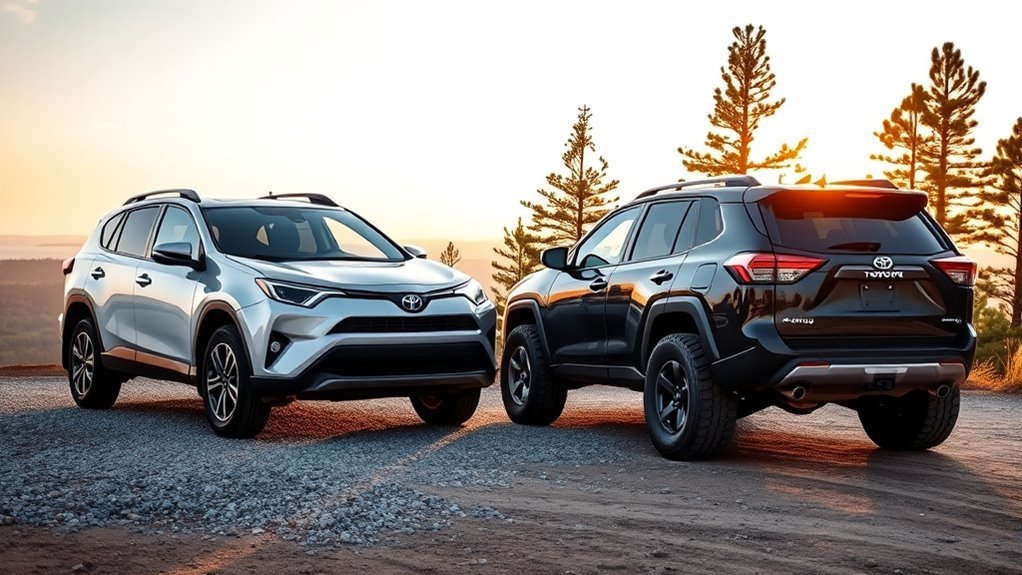
The Toyota RAV4 is best understood as a crossover SUV: it has the seating position, cargo space, available all-wheel drive, and rugged styling many shoppers associate with an SUV, but it is built on a unibody platform instead of a truck-style body-on-frame chassis. That makes it better suited to commuting, family trips, bad-weather driving, and light outdoor use than serious towing or hard off-roading.
Quick Answer
The RAV4 is a crossover, not a traditional truck-based SUV. It uses unibody construction for smoother handling, better fuel efficiency, and easier everyday driving. Toyota still markets it within its SUV/crossover lineup because it offers SUV-like cargo space, ride height, available AWD, and light-trail capability.
Key Takeaways
- The RAV4 is technically a crossover SUV because it uses a unibody platform rather than a separate truck frame.
- For the current 2026 lineup, Toyota has moved the RAV4 to a fully electrified range with hybrid and plug-in hybrid powertrains.
- The RAV4 is strong for daily driving, fuel economy, passenger comfort, and light-duty AWD use.
- It is not the best choice for heavy towing, repeated high-load hauling, or difficult rock-crawling trails.
- Towing capacity depends heavily on trim and equipment, so always check the specific vehicle’s owner’s manual and towing label.
Is the RAV4 a Crossover or an SUV?
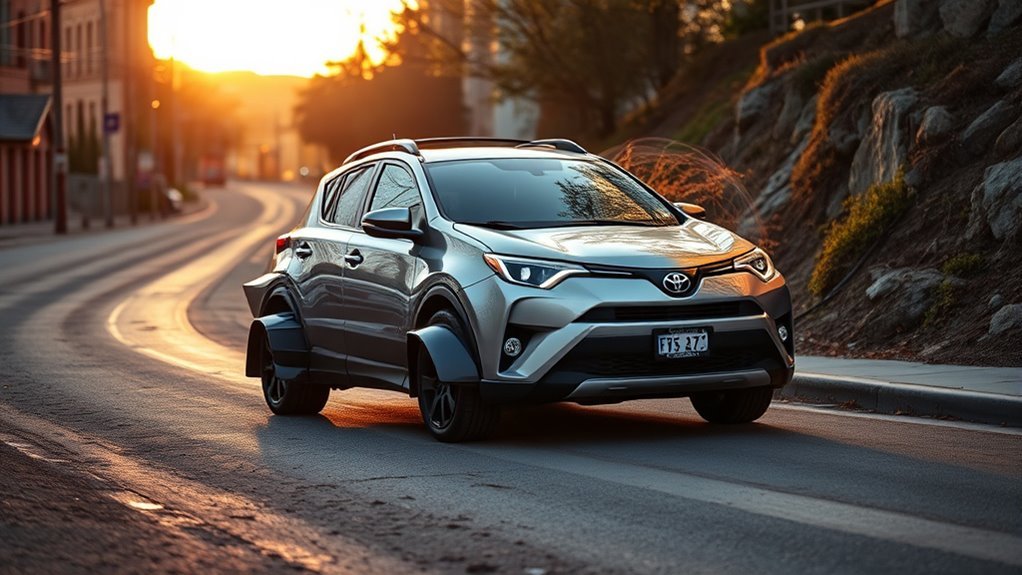
The RAV4 sits in the overlap between the two terms. In everyday shopping language, many people call it a compact SUV. In engineering terms, it is a crossover because its body and frame are integrated into one unibody structure. That layout is closer to a car platform than a truck platform.
This matters because the RAV4’s strengths are comfort, efficiency, maneuverability, and flexible interior space. It is easier to park than a full-size SUV, rides more smoothly than many truck-based models, and is more efficient in normal driving. Toyota’s current 2026 RAV4 specifications list up to an estimated 47 city/40 highway MPG, up to 37.8 cubic feet of cargo room behind the rear seats, and up to 3,500 pounds of towing capacity when properly equipped.
So the simple answer is this: the RAV4 is a crossover SUV. It gives you many SUV benefits without the weight, fuel use, and heavy-duty focus of a body-on-frame SUV.
How the RAV4’s Unibody Platform Affects Ride, Fuel, and Towing
The RAV4’s unibody construction is the main reason it feels more carlike than a traditional SUV. Instead of mounting the body on a separate ladder frame, Toyota integrates the body and structure together. That design usually reduces weight, improves interior packaging, and makes the vehicle feel more responsive on pavement.
Ride Comfort and Handling
The biggest benefit is daily comfort. The RAV4 feels stable on highways, easy to steer in town, and less bulky in parking lots than larger truck-based SUVs. That is exactly why crossovers became so popular: most drivers want SUV space and visibility, but they spend most of their time on paved roads.
Compared with a body-on-frame SUV, the RAV4 generally feels lighter, quieter, and easier to place in traffic. It is a better fit for commuters, parents, road-trippers, and anyone who wants utility without the heavy-truck feel.
Fuel Efficiency and Economy
Fuel economy is another major crossover advantage. For 2025 models, the U.S. Department of Energy and EPA list the RAV4 Hybrid AWD at 39 MPG combined, while several gasoline RAV4 configurations range from 28 to 30 MPG combined depending on drivetrain and trim. The 2025 RAV4 Plug-in Hybrid is listed at 94 MPGe combined when using gas and electricity, with 42 miles of electric range. You can compare these figures in the official FuelEconomy.gov RAV4 listings.
For 2026, Toyota has made a bigger shift: the RAV4 lineup is now fully electrified, with hybrid and plug-in hybrid versions. Toyota says the 2026 hybrid can reach up to a manufacturer-estimated 43 MPG combined in front-wheel-drive form, while the plug-in hybrid can offer up to a manufacturer-estimated 52 miles of all-electric range on select grades.
Note: MPG, towing, ground clearance, and cargo figures vary by model year, trim, drivetrain, tires, and equipment. If you are shopping a specific RAV4, use that model year’s window sticker, owner’s manual, and Toyota spec sheet rather than relying on a single headline number.
Towing Limits and Capacity
The RAV4 can tow light loads, but it is not built like a towing-first SUV. Current Toyota materials list up to 3,500 pounds of towing capacity on properly equipped 2026 RAV4 trims, while some trims are rated lower. Toyota’s 2026 RAV4 announcement lists 1,750 pounds for certain AWD hybrid configurations and 3,500 pounds for others, including XLE Premium AWD and Woodland-grade setups.
That is enough for some small utility trailers, lightweight campers, personal watercraft, or small boats, but it is not enough for large travel trailers or frequent heavy hauling. If towing is central to how you use your vehicle, a 4Runner, Land Cruiser, Sequoia, Tacoma, or Tundra may be a better fit.
Warning: Never tow based only on a marketing maximum. Confirm the exact tow rating for your trim, drivetrain, hitch, payload, passengers, cargo, and trailer tongue weight. Toyota also advises owners not to exceed published towing capacities and to follow the owner’s manual.
RAV4 Features That Favor Crossover Buyers: Comfort, Tech, and Efficiency
The RAV4 works best for buyers who want practical space without moving into a large SUV. Its five-passenger cabin, upright cargo area, fold-flat rear seats, and available AWD make it useful for grocery runs, school drop-offs, road trips, pets, bikes, luggage, and bad-weather driving.
The current 2026 RAV4 also brings important technology updates. Toyota’s newsroom notes that every 2026 RAV4 includes Toyota Safety Sense 4.0, an updated active safety suite with improved hardware and detection capability. Depending on trim, available features can include a 10.5-inch Toyota Audio Multimedia screen, a 12.3-inch digital gauge cluster, panoramic view monitoring, traffic jam assist, lane change assist, and front cross-traffic alert.
For many shoppers, that mix is the point of a crossover. You get an efficient vehicle that is still tall enough, roomy enough, and capable enough for most everyday adventures.
How the RAV4 Compares to Truck-Based SUVs: Towing, Off-Roading, and Durability

The RAV4’s biggest tradeoff is that it does not have the same heavy-duty foundation as a truck-based SUV. Models like the Toyota 4Runner, Land Cruiser, and Sequoia are designed with more towing, trail, and load-carrying focus. They are heavier, often less efficient, and usually more expensive, but they are better suited to demanding use.
[Products Worth Considering]

This universal roof rack basket adds secure extra cargo space for SUVs, trucks, cars, and RVs with a large open design that helps free up room inside your vehicle. Built with powder-coated steel and a wind deflector, it is designed to handle outdoor travel, reduce wind resistance, and keep cargo more stable on the road. Easy to install with universal U-bolts, it offers dependable transport for camping gear, luggage, and other oversized items.

The XINDELL Interior Windshield Cleaner Tool makes it easy to clean car glass inside and out with an extendable handle and 180° pivoting head for better reach and streak-free results. Designed for auto detailing and home windows, it includes reusable microfiber pads and a wash sponge for dry or wet cleaning, helping remove dust, fog, grime, and smudges with less effort.

This smart color coded tire tread depth gauge makes it easy to check tread wear at a glance with clear red, yellow, and green ranges. Calibrated from 0 to 1 inch in 1/32 inch increments, it helps you quickly assess tire condition for safer driving and timely replacements. The pocket clip design makes it convenient to carry and use on trucks, motorcycles, cars, and other passenger vehicles.
Towing Capacity Limits
A properly equipped RAV4 can tow up to 3,500 pounds, but Toyota lists the 2026 4Runner at up to 6,000 pounds and the 2026 Sequoia at up to 9,500 pounds. Toyota’s vehicles-for-towing guide also emphasizes checking the owner’s manual, vehicle loading, trailer compatibility, and required equipment before towing.
| Vehicle Type | Example Toyota Model | Best For | Typical Tradeoff |
|---|---|---|---|
| Crossover SUV | RAV4 | Commuting, family use, efficiency, light towing | Lower towing and trail limits |
| Body-on-frame midsize SUV | 4Runner | Off-road use, higher towing, rugged trips | Heavier and less efficient |
| Full-size SUV | Sequoia | Large families, heavy towing, long-distance hauling | Higher cost, larger size, more fuel use |
Off-Road Capability Comparison
The RAV4 is capable enough for gravel roads, snowy commutes, wet boat ramps, forest-service roads, and mild trails when equipped properly. The 2026 RAV4’s ground clearance varies by trim: Toyota lists 8.1 inches on several core and sport grades, 8.5 inches on Woodland, and 7.5 inches on GR SPORT.
But a RAV4 is not a rock crawler. It does not offer the same off-road hardware as a 4Runner or Land Cruiser, such as a truck-style frame, low-range transfer case, locking differentials, or long-travel off-road suspension. If your trails involve deep ruts, large rocks, repeated underbody hits, or remote overlanding with heavy gear, choose a purpose-built SUV.
Long-Term Durability
For normal use, the RAV4 has the right kind of durability: it is designed for commuting, errands, road trips, winter weather, and weekend recreation. It should not be treated like a heavy-duty tow rig, though. Repeatedly hauling near the limit, carrying excessive cargo, or driving rough trails too often can increase wear on tires, brakes, suspension, cooling systems, and drivetrain parts.
Truck-based SUVs generally tolerate hard towing and rugged terrain better because their frames, suspension components, and drivetrains are built around those jobs. The tradeoff is that they cost more to buy, fuel, insure, park, and maintain.
RAV4 Trims: Hybrid, Woodland, Plug-In Hybrid, and Towing-Friendly Options
For the current generation, Toyota no longer treats the RAV4 Hybrid as a side option. The 2026 RAV4 lineup is fully electrified, with hybrid and plug-in hybrid choices. That is a major freshness point if you are comparing new, used, and outgoing models.
- Hybrid models: Best for most buyers. They balance fuel economy, everyday power, and available AWD while keeping the RAV4 easy to live with.
- Woodland grade: Best for light outdoor use. Toyota lists standard AWD, more rugged equipment, all-terrain tires, higher ground clearance, and a tow hitch receiver on Woodland configurations.
- Plug-in hybrid models: Best for drivers who can charge at home or work and want electric-only driving for short trips. Toyota says select 2026 plug-in hybrid grades can reach up to a manufacturer-estimated 52 miles of electric range.
- Towing-friendly configurations: Best for small trailers and light recreational towing. Look for the exact factory tow rating, hitch setup, payload, and trailer-sway features for the specific trim.
Pro Tip: If you are buying used, separate 2025-and-older RAV4 information from 2026 information. Earlier model years included gasoline-only, hybrid, and plug-in hybrid versions; the 2026 RAV4 is hybrid-only or plug-in hybrid, depending on trim.
[Products Worth Considering]

The XTOOL TP150 is a universal TPMS service tool designed to activate, relearn, program, diagnose, and reset tire pressure sensors with ease. It supports dual-frequency sensors and multiple relearn modes, helping DIY users and professionals quickly clear DTCs, reset warning lights, and verify sensor health across a wide range of vehicles. Built with physical buttons and lifetime updates, it is a practical solution for efficient TPMS maintenance in the garage or on the road.

This plug-and-play OBD2 scanner helps drivers quickly read and clear engine error codes while providing live data, freeze frame information, I/M readiness, and MIL status for more confident troubleshooting. It adds a built-in voltage test and clear status indicators to support electrical checks and faster diagnostics, making it a practical choice for home users, car enthusiasts, and repair professionals. Compatible with most OBDII vehicles since 1996 and designed with an easy-to-use interface, it offers broad coverage and simple operation in one compact tool.
Which Should You Choose: Daily Driving, Family Trips, or Serious Towing?
Choose the RAV4 if your priority is a practical, efficient daily vehicle that still feels ready for weekend plans. It is a strong match for commuting, small families, road trips, grocery runs, dog owners, light camping, snowy roads, and buyers who want SUV usefulness without full-size SUV bulk.
Choose a truck-based SUV or pickup if your plans involve heavy trailers, steep boat ramps, remote trails, high payloads, or frequent towing. A Toyota 4Runner offers more towing and trail hardware, while a Sequoia gives you far more towing capacity and passenger-hauling strength.
Here is the easiest way to decide:
- Buy the RAV4 if you drive mostly on pavement and want efficiency, comfort, safety tech, and flexible cargo room.
- Consider the Woodland or AWD trims if you want more confidence on dirt roads, snow, campsites, and mild trails.
- Buy a 4Runner, Land Cruiser, Sequoia, Tacoma, or Tundra if towing, payload, and off-road toughness matter more than fuel economy and compact size.
[Products Worth Considering]

18 cubic foot (510 L) internal cargo capacity

【Compatibility】Compatible with Toyota Rav4 2026 (with flush side rails), including LE & SE & XSE & Limited & XLE Premium & GR Sport & LE Plug-in Hybrid & SE Plug-in Hybrid. Please check your vehicle's Year, Make and Model before purchase.

[Package Includes] The package includes 4 stainless steel U-bolts, 4 rubber washers, 4 back plates, 8 lock nuts, and 2 bandages and 1 hole sealing sticker.
Common Mistakes When Comparing Crossovers and SUVs
One mistake is assuming every vehicle called an SUV is built the same way. It is not. A compact crossover and a full-size body-on-frame SUV may both sit in the SUV aisle, but they are engineered for different jobs.
Another mistake is comparing only horsepower. Towing and durability depend on cooling, brakes, frame or body structure, payload, wheelbase, hitch equipment, trailer brakes, tires, and weight distribution. A vehicle can have plenty of power and still be the wrong tool for a heavy trailer.
A third mistake is overlooking trim differences. The RAV4’s MPG, towing capacity, ground clearance, tires, AWD system, and cargo features change by year and trim. Always compare the exact version you plan to buy.
The RAV4 is not trying to be a mini-Sequoia. Its real strength is giving everyday drivers SUV usefulness with crossover comfort and efficiency.
Frequently Asked Questions
Is the RAV4 considered an SUV or a crossover?
The RAV4 is best described as a crossover SUV. It has SUV-like space, height, available AWD, and cargo flexibility, but it uses a unibody platform instead of a separate truck frame.
Why is the RAV4 called a crossover?
It is called a crossover because it blends passenger-car-style unibody construction with SUV-style ride height, cargo space, and available all-wheel drive. That design improves comfort and efficiency compared with many traditional SUVs.
What are the disadvantages of a crossover like the RAV4?
The main disadvantages are lower towing capacity, less extreme off-road ability, and less heavy-duty durability under repeated high-load use compared with truck-based SUVs. For normal commuting, family use, and light recreation, those tradeoffs are usually acceptable.
Can a Toyota RAV4 tow a camper?
A properly equipped RAV4 may tow a small lightweight camper, but not every trim has the same rating. Some configurations are rated below 3,500 pounds. Always confirm the exact rating, loaded trailer weight, tongue weight, payload, hitch, and owner’s manual guidance before towing.
Is the RAV4 good for off-road driving?
The RAV4 is good for light off-road use, gravel, snow, dirt roads, and campsites, especially with AWD or the Woodland grade. It is not designed for severe rock crawling, deep ruts, or repeated heavy trail abuse.
Conclusion
The RAV4 is a crossover SUV, and that is a strength rather than a weakness. Its unibody design gives it the comfort, fuel economy, maneuverability, and packaging most drivers need every day. It also offers useful SUV traits such as available AWD, generous cargo space, higher ride height, and light towing ability.
Pick the RAV4 if you want an efficient compact SUV for commuting, family trips, bad weather, and weekend escapes. Choose a body-on-frame SUV or truck if your mission involves heavy towing, rugged trails, large payloads, or repeated high-stress use. The right answer depends less on the badge and more on how hard you plan to work the vehicle.
Sources
- Toyota 2026 RAV4 official page — current RAV4 specs, cargo capacity, estimated MPG, and maximum towing figure.
- Toyota USA Newsroom: 2026 RAV4 announcement — electrified lineup, trims, powertrains, Toyota Safety Sense 4.0, towing, and ground clearance details.
- FuelEconomy.gov 2025 Toyota RAV4 listings — official EPA/DOE fuel economy data for gasoline, hybrid, and plug-in hybrid RAV4 models.
- Toyota Vehicles for Towing — Toyota towing guidance and comparison context for Toyota trucks and SUVs.
- Toyota USA Newsroom: 2026 4Runner — 4Runner towing, off-road, and body-on-frame comparison details.
- Toyota 2026 Sequoia brochure — Sequoia towing capacity and full-size SUV comparison context.