A portable tire inflator is a simple roadside tool, but using it safely takes more than clipping on the hose and pressing power. The right process is to find the vehicle’s cold PSI, inspect the tire first, attach the nozzle firmly, inflate in short monitored bursts, and verify the final pressure with a gauge.
Quick Answer
To use a portable tire inflator, park safely, check the recommended cold tire pressure on the driver’s door placard or owner’s manual, inspect the tire for damage, attach the hose to the valve stem, set the target PSI, inflate, then confirm the pressure with a separate gauge before replacing the valve cap.
Key Takeaways
- Use the vehicle manufacturer’s recommended cold PSI, not the maximum PSI printed on the tire sidewall.
- Do not inflate a tire with major sidewall damage, a bulge, exposed cords, or a tire that has come off the rim.
- A portable inflator can top off low tires, but it does not repair punctures or make a damaged tire safe.
- Let the inflator cool if the manual lists a duty-cycle limit, especially when filling a very low tire or more than one tire.
At a Glance
| Time Required | About 5–15 minutes, depending on how low the tire is and the inflator’s airflow rating. |
| Difficulty | Easy, as long as the tire is not damaged and the inflator matches your vehicle’s tire size. |
| Tools Needed | Portable tire inflator, tire pressure gauge, owner’s manual or door-jamb placard, and valve caps. |
| Cost | No cost per use after purchase; replacement valve caps or a separate gauge are usually inexpensive. |
Why You Need a Portable Tire Inflator for Quick Repairs
When tire pressure drops, a portable inflator lets you add air without hunting for a gas-station compressor. That is useful before a commute, during a road trip, or when your tire pressure monitoring system warns you that a tire is low.
It is important to treat the inflator as a pressure-maintenance tool, not a full tire repair kit. If the tire has a nail, a damaged valve stem, a sidewall cut, or a slow leak, the inflator may help you reach a safer location, but the tire still needs inspection and repair by a qualified tire professional.
NHTSA reports that proper tire pressure affects safety, tire durability, and fuel consumption, and that tire pressure should be checked when tires are cold.
Keeping tires at the proper pressure can also help with operating cost. FuelEconomy.gov says properly inflated tires can improve gas mileage by 0.6% on average and up to 3% in some cases.
[Products Worth Considering]
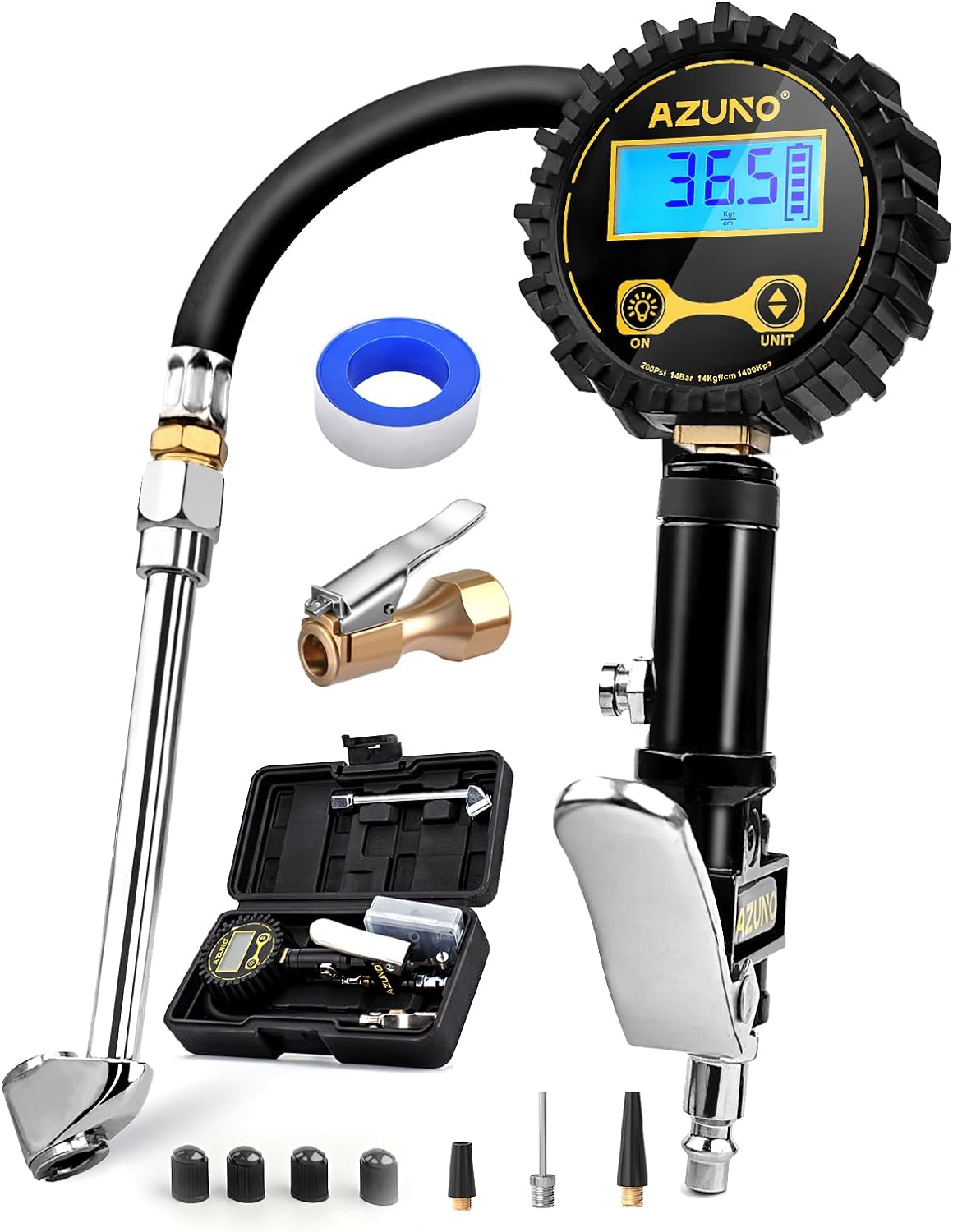
This digital tire inflator delivers accurate, easy-to-read pressure measurements with a bright backlit LCD and precise 0.1 resolution for confident inflation. Designed for single-handed use, it makes it simple to inflate or deflate tires while staying organized in the included portable carrying box. Built for a wide range of vehicles, it is a practical air compressor accessory for cars, trucks, SUVs, motorcycles, and more.

The Drymate XL Oil Spill Mat is designed to trap and contain messy liquid leaks while protecting your garage floor from stains and damage. Its absorbent surface wicks away moisture, and the waterproof, slip-resistant backing helps keep motor oil, brake fluid, gasoline, and coolant from soaking through. Reusable, durable, and easy to clean, it offers a practical long-term solution for garage and shop spill protection.

This all-in-one roadside emergency kit is designed to help drivers handle common breakdowns, minor repairs, and first aid needs with confidence. It includes a portable air compressor with tire pressure measuring and memory settings, safe jumper cables, and a versatile 14-in-1 pliers tool set, all organized for easy trunk storage. With a wide range of emergency supplies packed into one compact case, it is a practical choice for new drivers, daily commuters, and anyone preparing for unexpected roadside situations.
Before You Start: Check the Right PSI and Tire Condition
Before connecting the inflator, find the recommended tire pressure. On most vehicles, it is listed on the Tire and Loading Information Label on the driver’s side door edge or door jamb, or in the owner’s manual. NHTSA warns drivers to use the vehicle manufacturer’s recommended pressure, not the maximum pressure printed on the tire sidewall.
Warning: Do not inflate a tire that has a bulge, exposed cords, deep sidewall cut, severe cracking, or a bead that has separated from the rim. Install the spare, use roadside assistance, or have the tire inspected instead.
For the most accurate reading, check tires cold. NHTSA defines cold tires as tires that have not been driven on for at least three hours. If you must inflate a warm tire on the road, fill it to the recommended cold pressure as a temporary step, then recheck it later when the tire is cold.
Tire pressure changes with time and temperature. Bridgestone’s tire maintenance manual notes that tires can lose about 1 PSI per month under normal conditions and about 1 PSI for every 10°F temperature drop.
Key Features of a Portable Tire Inflator
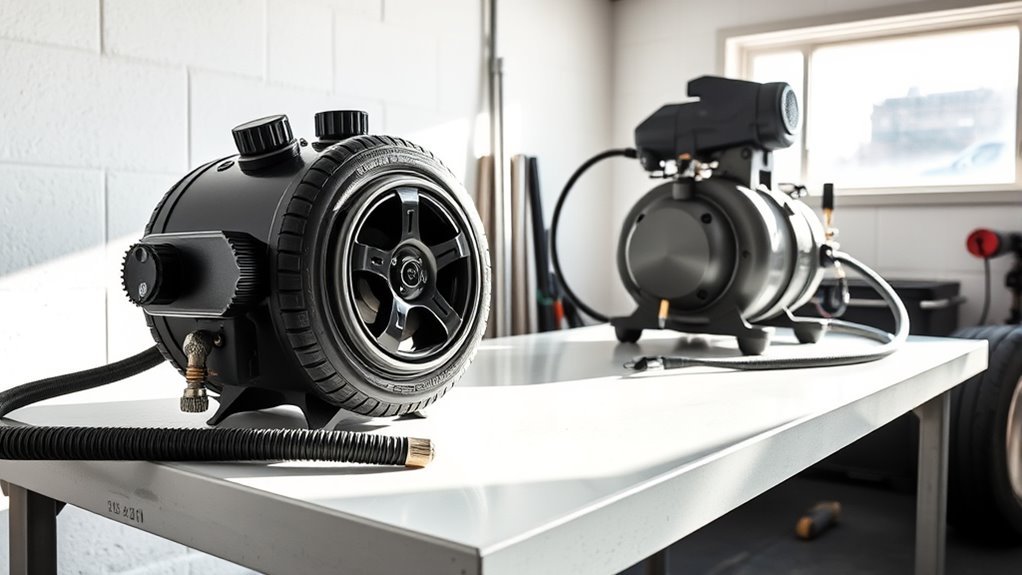
Not every portable tire inflator is built for the same job. A compact cordless model may be ideal for topping off passenger-car tires, while a larger 12-volt or battery-clamp compressor may be better for SUVs, trucks, or repeated use.
[Products Worth Considering]

This tire repair rubber nail kit offers a simple self-service solution for punctures in cars, motorcycles, trucks, and more. The spiral rubber design helps create a firm seal that supports quick repairs without removing the tire, while the two included sizes make it easier to match different puncture types. Built for broad vehicle compatibility, it is a practical emergency repair option for roadside and garage use.

This heavy-duty tire repair kit provides a convenient way to fix tubeless punctures on the road or in the garage. It includes durable T-handle tools, two plug sizes, and a compact storage bag for easy carrying and quick access. Designed for a wide range of vehicles, it helps make emergency tire repairs simpler and more reliable.

【Powerful Inflation】Delivers up to 150 PSI on CUSTOM MODE, inflating a 195/65 R15 tire from 30–36 PSI in under 1 minute—fast, reliable performance for roadside emergencies.
Compact and Lightweight Design
A compact inflator is easier to keep in the trunk, glove box, or roadside emergency kit. Look for built-in hose storage, a clear display, a long enough power cord to reach all four tires, and a sturdy carry case so the hose and nozzle are not damaged between uses.
Digital Pressure Monitoring
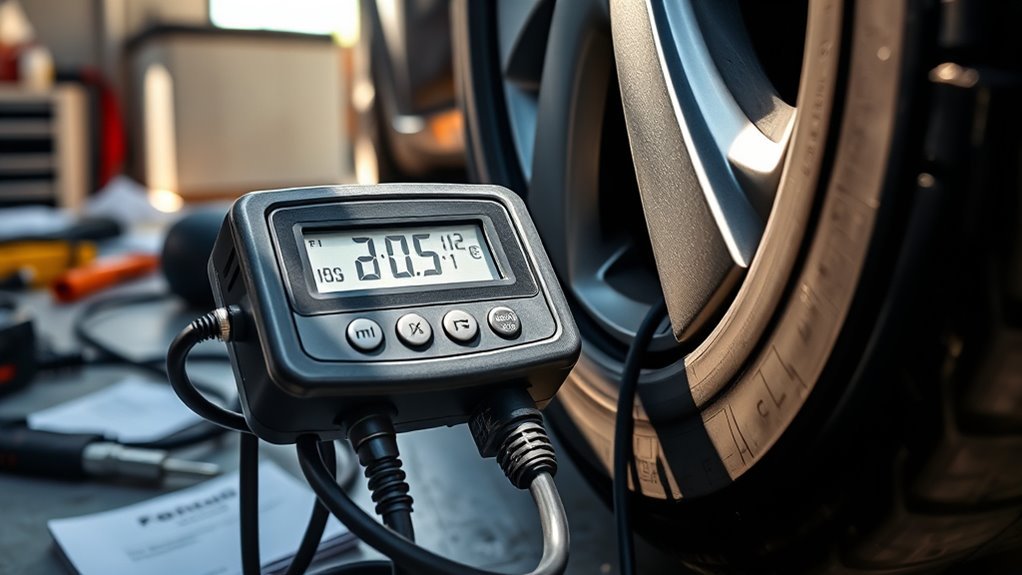
Digital inflators usually let you set a target PSI and watch the pressure on-screen. Many also include auto shutoff, which stops inflation when the preset pressure is reached. Even with a digital display, it is smart to keep a separate tire pressure gauge in the vehicle because built-in gauges can vary in accuracy.
Multiple Power Options
Common power options include a 12-volt vehicle outlet, a rechargeable battery, an AC wall plug, or direct battery clamps. For roadside use, make sure the inflator can run from a power source you will actually have available. Some 12-volt models require the vehicle to be in accessory mode or running; follow the inflator manual and use the vehicle outdoors to avoid exhaust hazards.
Duty Cycle and Tire Size Rating
The duty cycle tells you how long the inflator can run before it needs to cool. A small inflator may handle a quick top-off easily but overheat when filling a nearly flat tire. Check the manual for maximum run time, cooling time, maximum PSI, and whether the unit is rated for your tire size.
| Feature | Why It Matters |
|---|---|
| Auto shutoff | Helps prevent overinflation when the target PSI is set correctly. |
| Long hose and power cord | Makes it easier to reach all four tires without repositioning the vehicle. |
| Built-in light | Helps you see the valve stem during nighttime or low-light use. |
| Replaceable fuse or overload protection | Useful if the inflator stops working from a blown plug fuse or overheating. |
Step-by-Step Guide to Using Your Tire Inflator
- Park safely. Move away from traffic, turn on hazard lights if needed, set the parking brake, and work on level ground.
- Find the correct PSI. Check the driver’s door placard or owner’s manual. If front and rear tires use different pressures, note each value.
- Inspect the tire. Look for cuts, bulges, exposed cords, a damaged valve stem, or a tire that has separated from the rim.
- Remove the valve cap. Put it in a pocket or cup holder so it does not roll away.
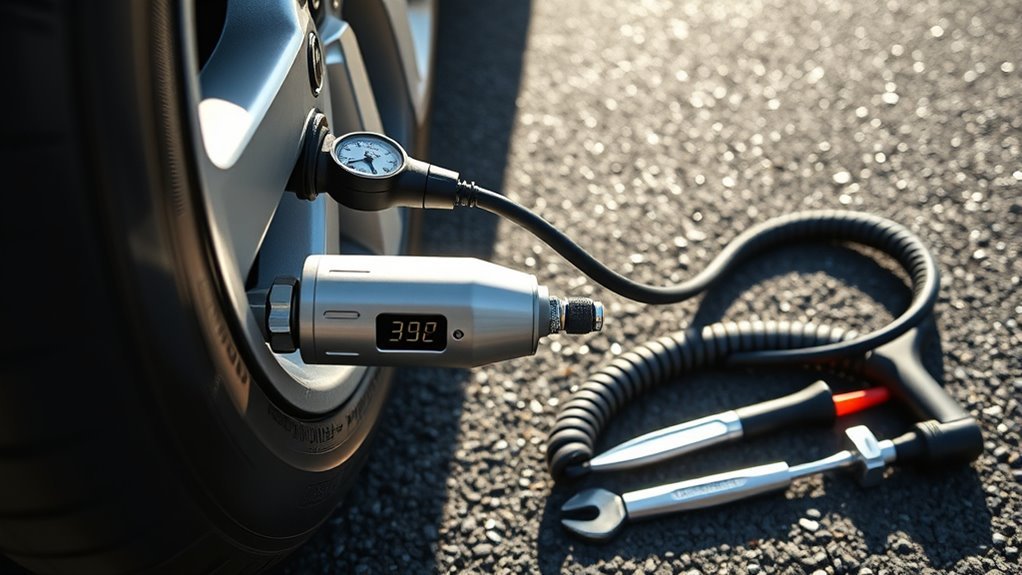
- Attach the inflator nozzle. Press or thread it onto the valve stem until it seals. If you hear a loud hiss, reseat the nozzle.
- Connect power. Plug into the 12-volt outlet, attach battery clamps, connect AC power, or confirm the cordless battery is charged.
- Set the target pressure. Use PSI unless your vehicle placard lists another unit. Set the recommended cold pressure, not the tire sidewall maximum.
- Inflate and monitor. Start the inflator and watch the pressure. Stop if the hose gets extremely hot, the inflator sounds strained, or the tire shape looks abnormal.
- Confirm the final pressure. Disconnect quickly, check with a separate gauge, add or release air as needed, and replace the valve cap.
- Recheck later. If the tire was warm or very low, check it again cold. If it loses pressure again, have it inspected.
Pro Tip: Check all four tires and the spare once a month. NHTSA recommends monthly cold-pressure checks, and TPMS should not replace regular tire maintenance.
[Products Worth Considering]

RAPID INFLATION & ROAD-READY PORTABILITY: Powerful 120W motor delivers up to 35L/min airflow—inflates a standard car tire (195/65 R15) from 30 to 36 PSI in under 1 minute under ideal operating conditions. Weighs only 2.2 lbs and fits glove compartments or trunks for daily commutes, road trips, and emergencies. Plugs into standard 12V DC car outlet with 15A fuse protection. AIRUN H features its cordless counterpart H2 Pro.

CLEAR DIGITAL PRESSURE DISPLAY: Inflate with confidence using this air pump for car tires. The large LCD screen displays clear, real-time PSI readings, allowing you to accurately monitor tire pressure during inflation without the guesswork of traditional dial gauges. Use the “+” and “–” buttons to easily set your desired pressure for precise tire maintenance at home, on the road, or during emergencies.
Avoid These Common Mistakes When Inflating Tires
Most tire-inflation problems come from using the wrong PSI, ignoring tire damage, or pushing a small inflator beyond its limits. Avoid these mistakes to keep the process safer and more accurate.
Ignoring Recommended Pressure Levels
Never use the tire sidewall’s maximum PSI as your normal target. That number is the tire’s maximum pressure, not the vehicle’s recommended operating pressure. Use the vehicle placard or owner’s manual instead.
Neglecting Tire Condition Check
Do not inflate first and inspect later. If the tire has a puncture, valve leak, or sidewall damage, adding air may only hide the problem for a short time. If the tire loses more than a small amount of air repeatedly, have the tire, valve, and wheel checked.
Relying Only on TPMS
A tire pressure monitoring system is helpful, but it is not a substitute for a gauge. NHTSA says newer vehicles have TPMS, but drivers should still conduct monthly tire pressure checks because TPMS warnings appear only when a tire is significantly underinflated.
Overworking the Inflator
Small portable compressors can overheat during long inflation jobs. Follow the duty cycle in the manual, pause when filling multiple tires, and let the unit cool before storing it.
Forgetting the Valve Cap
The valve cap helps keep dirt and moisture out of the valve stem. Replace it after every inflation check. If a cap is missing or cracked, replace it with a new one.
Troubleshooting Your Portable Tire Inflator
If your portable tire inflator does not work as expected, stop and check the simple causes before assuming it has failed. Many issues come from power supply, nozzle seal, blown plug fuses, low battery charge, or overheating.
| Problem | Likely Cause | What to Do |
|---|---|---|
| Inflator will not power on | Dead battery, bad outlet, loose plug, or blown fuse | Try another outlet, check the plug fuse, recharge the battery, or consult the manual. |
| Air leaks at the valve | Nozzle is crooked or not fully tightened | Turn the unit off, remove the nozzle, then reconnect it squarely to the valve stem. |
| Pressure rises very slowly | Low airflow rating, large tire, leak, or weak power source | Check for leaks, verify the inflator is rated for the tire, and pause for cooling as needed. |
| Inflator shuts off early | Auto shutoff setting, overheating, or low battery | Confirm the target PSI, recharge if cordless, and let the compressor cool. |
| Gauge reading seems wrong | Built-in gauge variance or warm tire pressure | Verify with a separate gauge and recheck when the tire is cold. |
How to Keep Your Tire Inflator Running Smoothly
Store your portable tire inflator in a dry, clean place where the hose will not be crushed. After each use, let the unit cool before putting it back in its case, wipe dirt from the hose and nozzle, and check that the power cord is not frayed.
For cordless models, recharge the battery on the schedule recommended in the manual. For 12-volt plug-in models, check whether the plug has a replaceable fuse and keep a spare if the manufacturer recommends one. If the unit has adapters for balls, bike tires, or inflatables, store them in the case so they do not get lost.
Note: A tire that keeps losing pressure is not a normal inflator problem. It may have a puncture, leaking valve stem, rim leak, or other damage that needs tire-service inspection.
Frequently Asked Questions
How do you operate a portable tire inflator?
Park safely, find the recommended cold PSI, remove the valve cap, attach the nozzle firmly, connect the inflator to power, set the target pressure, inflate, verify with a gauge, and replace the valve cap.
Why is my portable tire inflator not working?
Common causes include a dead cordless battery, a weak 12-volt outlet, a loose power plug, a blown plug fuse, overheating, a blocked hose, or a nozzle that is not sealed on the valve stem. Let the unit cool and check the manual before trying again.
Can I use a portable air compressor for the first time without a separate gauge?
You can use the built-in display if your inflator has one, but a separate tire pressure gauge is still recommended. It helps confirm the final pressure and catches inaccurate readings from the inflator’s gauge.
How do you use a 12-volt digital tire inflator?
Plug it into the vehicle’s 12-volt outlet, attach the hose to the valve stem, set the correct PSI on the digital display, start inflation, and let auto shutoff stop the unit if your model has that feature. Follow the manual for whether the vehicle should be in accessory mode or running.
Should I inflate tires when they are hot or cold?
Cold is best. NHTSA defines cold tires as tires that have not been driven on for at least three hours. If you must inflate a warm tire during a trip, treat it as temporary and recheck the pressure when the tire is cold.
Can a portable tire inflator fix a flat tire?
No. A tire inflator only adds air. If the tire is punctured, leaking, off the rim, or damaged, it needs repair or replacement. Use a spare tire, approved sealant kit, or roadside assistance when inflation does not hold.
Conclusion
A portable tire inflator is worth keeping in your vehicle because it helps you correct low tire pressure quickly and avoid driving on an underinflated tire. Use the correct cold PSI, inspect the tire first, follow the inflator’s duty cycle, and confirm the final pressure with a gauge. If the tire keeps losing air, do not keep topping it off and hoping for the best—get the tire, valve, and wheel inspected.
Sources
- NHTSA TireWise: Tire Safety Ratings and Awareness — supports cold tire pressure checks, placard PSI, TPMS guidance, tread and damage warnings.
- FuelEconomy.gov: Keeping Your Vehicle in Shape — supports the fuel-economy benefit of proper tire inflation.
- AAA Club Alliance: How to Check and Correct Tire Pressure — supports monthly checks and cold-pressure procedure.
- Bridgestone Tire Maintenance and Safety Manual — supports pressure loss, temperature effects, valve caps, and safe inflation cautions.
- AAA Newsroom: 2024 Roadside Service Calls — supports current roadside-breakdown context and avoids unsupported flat-tire statistics.