
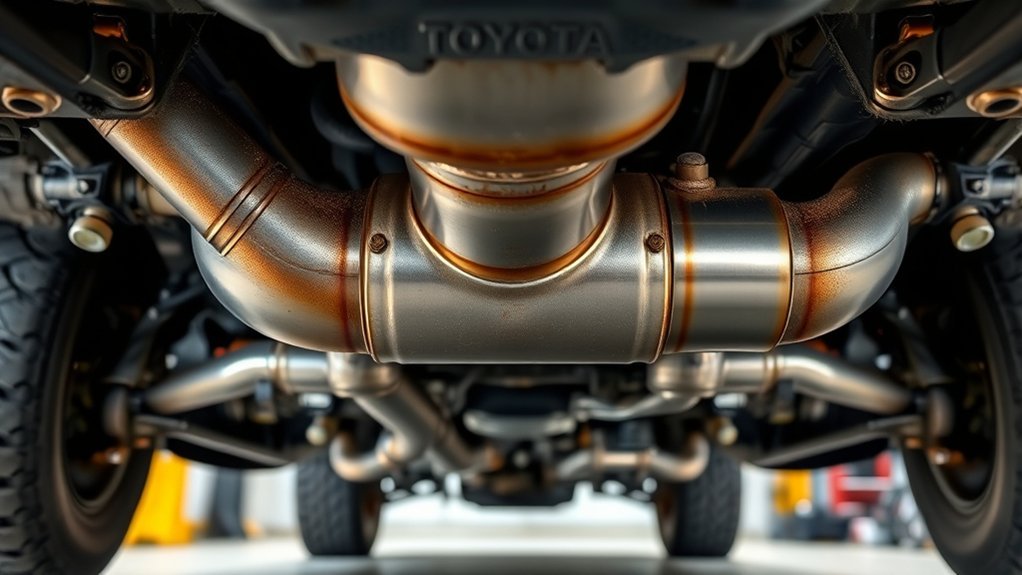
Your Toyota Tacoma’s catalytic converter is one of the most important parts of the emissions system. It uses precious-metal catalyst surfaces to turn carbon monoxide, unburned hydrocarbons, and nitrogen oxides into less harmful exhaust gases before they leave the tailpipe. When it works correctly, you usually do not notice it. When it fails, you may see a check engine light, smell sulfur, hear rattling, lose power, or fail an emissions inspection.
Quick Answer
A Toyota Tacoma catalytic converter cleans exhaust by using platinum, palladium, and rhodium-coated surfaces to reduce NOx and oxidize carbon monoxide and hydrocarbons. It sits in the exhaust system between the engine and muffler, works with oxygen sensors and the ECM, and must stay installed and emissions-compliant for legal road use.
Key Takeaways
- A Tacoma catalytic converter changes toxic exhaust pollutants into less harmful gases through reduction and oxidation reactions.
- Converter location varies by model year, engine, and emissions package, but Tacoma converters are usually close to the engine and/or under the front-to-mid section of the truck.
- Codes such as P0420 or P0430 point to low catalyst efficiency, but the root cause can also be an exhaust leak, oxygen sensor issue, misfire, fuel trim problem, or oil/coolant contamination.
- Do not ignore a flashing check engine light, sulfur smell, severe power loss, or glowing-hot exhaust parts because misfires and overheating can ruin the converter quickly.
- Removing or bypassing a catalytic converter is illegal under federal anti-tampering rules, and California requires CARB-approved replacement converters for covered vehicles.
What the Toyota Tacoma Catalytic Converter Does
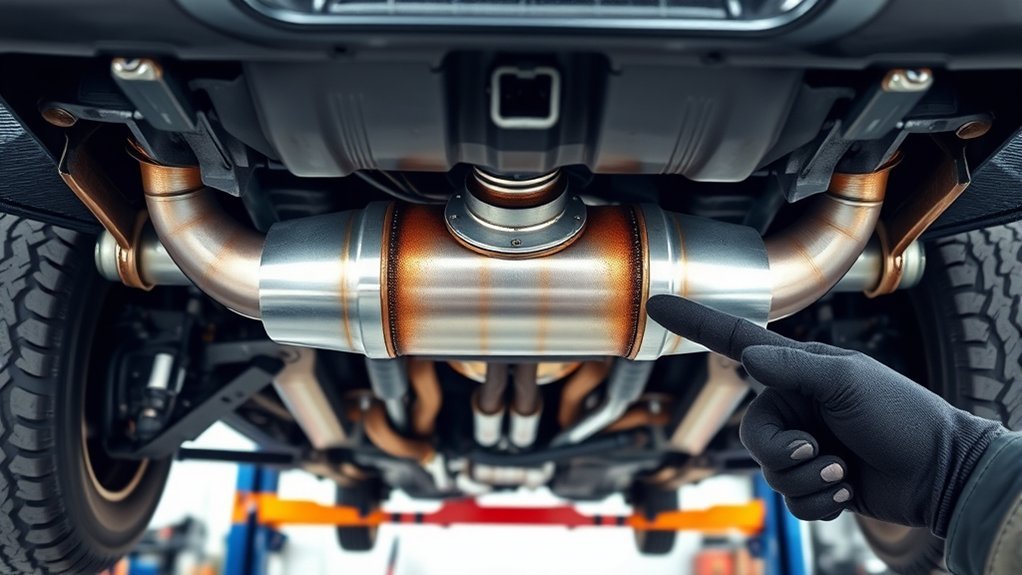
The catalytic converter on a Toyota Tacoma is an exhaust emissions-control device. Its job is to reduce the amount of harmful pollutants in the exhaust before those gases exit the tailpipe. The main pollutants it targets are carbon monoxide (CO), unburned hydrocarbons (HC), and nitrogen oxides (NOx).
Inside the converter is a ceramic or metallic honeycomb substrate coated with a washcoat and small amounts of precious metals, usually platinum, palladium, and rhodium. These metals do not “filter” exhaust like a screen. Instead, they speed up chemical reactions on the surface of the honeycomb so the exhaust can be converted while it passes through.
The U.S. Environmental Protection Agency explains that modern emissions standards limit pollutants such as carbon monoxide, hydrocarbons, nitrogen oxides, and particulate matter from vehicles and engines. The catalytic converter is one of the key parts that helps a gasoline Tacoma meet those standards during normal operation. You can read EPA’s overview of vehicle emission standards here: EPA vehicle emissions standards guide.
Note: A catalytic converter does not fix a poorly running engine. If the Tacoma is misfiring, running too rich, burning oil, leaking coolant into the combustion chamber, or has faulty sensors, the converter can be damaged even if it was healthy before.
Where the Converter Sits in the Tacoma’s Exhaust System
On a Toyota Tacoma, the catalytic converter is part of the exhaust system between the engine and the muffler. The exact layout depends on the model year, engine, drivetrain, and emissions certification. Some Tacomas use close-coupled converters near the exhaust manifold so they heat up quickly. Others may also have underbody converters farther downstream.
Because converters need high exhaust temperature to work efficiently, they are usually placed close enough to the engine to warm up fast. Oxygen or air-fuel ratio sensors are mounted before and after the converter so the engine computer can manage the air-fuel mixture and monitor catalyst performance.
| Location | What It Means | Why It Matters |
|---|---|---|
| Near exhaust manifold | Close-coupled converter | Warms quickly and improves cold-start emissions control |
| Front underbody | Underfloor converter | More exposed to road debris and theft attempts |
| Near O2 or A/F sensors | Monitored catalyst section | Sensor readings help the ECM detect low efficiency |
| Mid-pipe area | Separate canister on some layouts | Easier to inspect but also easier to access from below |
The safest way to identify your Tacoma’s exact converter layout is to check the emissions label under the hood, the factory parts diagram for your VIN, or a service manual for your specific model year.
The Reduction and Oxidation Reactions Inside the Converter
A gasoline Tacoma uses a three-way catalytic converter design. “Three-way” means it handles three main pollutant groups: NOx, carbon monoxide, and hydrocarbons. The converter does this with two types of reactions.
- Reduction: Nitrogen oxides are reduced into mostly nitrogen and oxygen.
- Oxidation: Carbon monoxide is oxidized into carbon dioxide.
- Oxidation: Unburned hydrocarbons are oxidized into carbon dioxide and water vapor.
The honeycomb design matters because it gives the exhaust a large catalyst-coated surface area without blocking flow too much. If the honeycomb melts, breaks apart, becomes contaminated, or clogs with deposits, the converter can no longer do its job well.
A catalytic converter is not a muffler or a simple filter. It is a chemical reactor built into the exhaust system.
How Oxygen Sensors and the ECM Support Converter Function
Your Tacoma’s oxygen sensors or air-fuel ratio sensors help the engine control module (ECM) manage the fuel mixture. The upstream sensor measures exhaust before the catalytic converter. The downstream sensor measures exhaust after the converter. By comparing the two signals, the ECM can estimate whether the converter is storing oxygen and converting pollutants properly.
Toyota’s owner information explains that the OBD system monitors the operation of the emissions control system and that a malfunction indicator lamp can mean the vehicle may need repair before it can pass an inspection and maintenance test. Toyota also notes that a loose fuel tank cap can trigger a temporary malfunction. See Toyota’s official OBD and I/M readiness information here: Toyota Tacoma OBD system information.
Oxygen Sensor Role
The upstream sensor helps the ECM adjust fuel delivery. The downstream sensor helps confirm that the catalytic converter is changing the oxygen content of the exhaust. If the downstream sensor pattern looks too similar to the upstream pattern, the ECM may set a catalyst efficiency code such as P0420 or P0430.
| Sensor Location | Main Job | Common Diagnostic Clue |
|---|---|---|
| Upstream | Air-fuel feedback | Fuel trims, mixture control, sensor response speed |
| Downstream | Catalyst monitoring | Converter efficiency and oxygen storage behavior |
| Both sensors | Emissions control | Used together to separate sensor faults from catalyst faults |
ECM-Air/Fuel Management
The ECM tries to keep the engine near the correct air-fuel ratio for clean combustion and converter efficiency. If the mixture is too rich, excess fuel can overheat the converter. If the mixture is too lean, NOx control may suffer and the engine may misfire under certain conditions. Fuel trim data, oxygen sensor response, and freeze-frame data help a technician find the root cause instead of replacing parts blindly.
Pro Tip: A P0420 or P0430 code does not automatically mean “replace the catalytic converter.” Check for misfires, exhaust leaks, sensor problems, fuel trim issues, and oil or coolant contamination before approving a costly replacement.
Common Signs Your Tacoma’s Catalytic Converter Is Failing
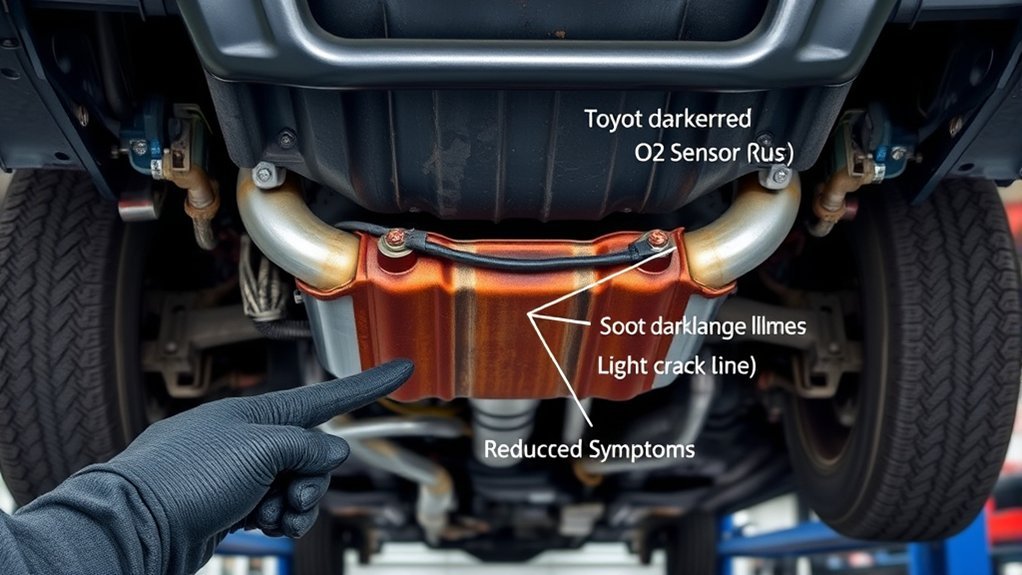
A failing or restricted catalytic converter can create drivability, odor, heat, and emissions problems. Watch for these symptoms, but treat them as clues rather than final proof.
- Check engine light: Catalyst efficiency codes such as P0420 or P0430 may appear, often with freeze-frame data showing when the fault occurred.
- Rotten egg or sulfur smell: A sulfur odor can happen when the converter is not processing exhaust gases correctly or the engine is running too rich.
- Poor acceleration: A clogged converter can restrict exhaust flow and make the Tacoma feel weak, especially at higher rpm or under load.
- Rattling under the truck: Broken internal substrate can rattle during startup, idle, or light throttle.
- Excessive underbody heat: A converter that is overheating or restricted can make the floor area unusually hot.
- Dark exhaust smoke: Smoke usually points to a rich-running engine, oil burning, or another upstream issue that can damage the converter.
- Failed emissions test: A weak converter, unset readiness monitors, sensor fault, or exhaust leak can prevent a pass.
Warning: Never touch a catalytic converter or nearby exhaust parts after driving. Converters run extremely hot and can cause severe burns. If the exhaust is glowing red or the check engine light is flashing, stop driving and have the truck inspected.
Immediate Steps If Your Check Engine Light or Performance Changes
If your check engine light comes on or the Tacoma suddenly loses power, take a careful, step-by-step approach. The goal is to catch problems early before they damage the converter.
At a Glance
| Time Required | 10–30 minutes for basic checks; longer for shop diagnostics |
| Difficulty | Beginner for code reading; intermediate to advanced for sensor and backpressure testing |
| Tools Needed | OBD-II scanner, flashlight, gloves, infrared thermometer, and professional scan tool if available |
| Cost | Free to low cost for basic checks; professional diagnosis varies by shop and location |
- Check the fuel cap first. A loose cap can trigger emissions-related warnings on many vehicles.
- Scan the codes. Record stored, pending, and permanent codes before clearing anything.
- Save freeze-frame data. Note engine load, speed, temperature, and rpm when the code set.
- Watch how the light behaves. A steady light usually means the truck needs diagnosis soon. A flashing light can indicate a severe misfire and should be treated as urgent.
- Avoid heavy towing or hard acceleration. Extra load can increase exhaust heat and make a weak converter worse.
- Schedule diagnosis if symptoms persist. Do not keep clearing codes without fixing the cause.
[Products Worth Considering]

This replacement gas cap is designed to restore a tight fuel-tank seal, helping reduce vapor leaks, prevent check engine light issues, and maintain proper fuel system performance. Built in OE-style form for a wide range of Toyota and Lexus vehicles, it offers a direct DIY fix with durable materials for reliable, long-lasting use.

This replacement gas cap is designed for a wide range of Toyota and Lexus models, offering a direct-fit solution for restoring a proper seal at the fuel tank. It helps address check engine light issues related to the fuel cap while providing easy installation and dependable performance. Built from durable materials and rigorously tested before shipping, it is a practical replacement for worn or damaged fuel caps.

This OEM replacement fuel tank gas cap is designed for a wide range of Toyota, Lexus, and Scion vehicles, helping restore a proper seal for reliable everyday driving. It helps reduce fuel vapor leakage, may prevent check engine light issues caused by a faulty cap, and offers durable construction for long-lasting performance. Installation is simple with a direct-fit design that twists into place quickly.
Diagnostic Steps for Tacoma Owners: Codes and Simple Inspections
Good diagnosis starts with data. A catalytic converter is expensive, so confirm the failure before replacing it. A technician may need live scan data, smoke testing, temperature checks, or backpressure testing to separate a bad converter from another problem.
[Products Worth Considering]

Walker 36454 is a spring bolt kit designed to help secure exhaust components and maintain a tight, leak-resistant connection. It is made for ball and socket joint applications and uses durable materials for long-lasting performance. This hardware is a practical choice for exhaust repairs and compatible replacement needs on select vehicles.

This oxygen O2 sensor set is designed for select Toyota Camry and RAV4 models with 2.4L engines, providing upstream and downstream replacement coverage in one package. Built to OEM specifications for plug-and-play installation, it helps improve fuel efficiency, support accurate air-fuel monitoring, and restore reliable engine performance. The stainless steel and heat-resistant construction is made for long-lasting durability and stable operation.

This plug-and-play OBD2 scanner helps drivers quickly read and clear engine error codes while providing live data, freeze frame information, I/M readiness, and MIL status for more confident troubleshooting. It adds a built-in voltage test and clear status indicators to support electrical checks and faster diagnostics, making it a practical choice for home users, car enthusiasts, and repair professionals. Compatible with most OBDII vehicles since 1996 and designed with an easy-to-use interface, it offers broad coverage and simple operation in one compact tool.
Read and Interpret Codes
Plug in an OBD-II scanner and write down every code. Do not focus only on P0420 or P0430. Misfire codes, lean codes, rich codes, oxygen sensor heater codes, EVAP codes, and fuel trim codes can all change the diagnosis.
- P0420: Catalyst system efficiency below threshold, usually Bank 1.
- P0430: Catalyst system efficiency below threshold, usually Bank 2 on V-engine layouts.
- P0300–P0306: Misfire codes that can overheat and damage the converter.
- P0171 or P0174: Lean condition that may point to vacuum leaks, fuel delivery issues, or sensor errors.
- P013x/P014x/P015x/P016x: Oxygen or air-fuel sensor circuit and performance codes.
Codes are not a final verdict. They tell you which system failed a monitor. The repair still depends on the actual cause.
Visual and Performance Checks
Next, inspect what the scanner cannot see. Look for dents, missing heat shields, cracked welds, loose hangers, scraped converter shells, damaged oxygen sensor wiring, and exhaust leaks around flanges or gaskets. Listen for rattles at idle and light throttle.
During a safe test drive, note whether the truck struggles more as rpm rises. A severely restricted converter may idle normally but lose power under load. A shop can confirm this with exhaust backpressure testing or other professional diagnostic methods.
Checks Before Replacing the Converter
Before installing a new converter, confirm and repair anything that could damage the replacement. That includes:
- Engine misfires
- Rich or lean fuel trims
- Oil burning
- Coolant entering the combustion chamber
- Exhaust leaks before the downstream sensor
- Faulty oxygen or air-fuel ratio sensors
- Wrong or contaminated fuel
- Aftermarket exhaust changes that move sensors or alter flow incorrectly
Replacing the converter without fixing the root cause can lead to another failed converter and another repair bill.
Causes of Converter Damage in Tacomas: Misfires, Towing, Impacts
The converter is durable, but it is not indestructible. Most premature failures happen because something upstream overheats, contaminates, or physically damages it.
- Misfires: Unburned fuel can enter the exhaust and burn inside the converter, creating extreme heat.
- Rich fuel mixture: Leaking injectors, bad sensors, or fuel control problems can overheat the catalyst.
- Oil or coolant contamination: Worn engine parts, failed gaskets, or internal leaks can coat the catalyst and reduce its activity.
- Excessive towing load: Towing beyond the truck’s rating can raise engine and exhaust temperatures. Toyota warns that towing can affect handling, performance, braking, durability, and fuel consumption, and that you must not overload the vehicle or trailer. See Toyota’s official trailer towing guidance here: Toyota Tacoma trailer towing information.
- Road impacts: Rocks, trail obstacles, curb strikes, and bottoming out can dent the shell or break the internal honeycomb.
- Incorrect repairs: Wrong converter part numbers, poor welding, sensor wiring damage, or exhaust leaks can create new emissions problems.
Repair vs. Replace: Choosing the Right Catalytic Converter for Your Tacoma
There is no reliable “pour-in” cleaner that can repair a melted, cracked, contaminated, or missing catalytic converter. However, not every catalyst-related code requires a new converter. The right choice depends on what failed.
| Problem Found | Best Next Step | Why |
|---|---|---|
| Loose fuel cap or EVAP issue | Fix EVAP concern | Not a converter failure |
| Exhaust leak before sensor | Repair leak and retest | Leaks can confuse oxygen sensor readings |
| Misfire or rich condition | Repair engine fault first | A new converter can be damaged quickly |
| Broken internal substrate | Replace converter | Physical damage is not repairable |
| Stolen converter | Replace with legal, vehicle-specific part | The truck is louder, noncompliant, and unsafe to leave unrepaired |
| Confirmed low catalyst efficiency | Replace after root-cause checks | The catalyst is no longer performing correctly |
When replacement is required, choose an OEM or approved aftermarket catalytic converter that matches your Tacoma’s year, engine, emissions label, and vehicle application. In California and states that follow California emissions rules, use a CARB-approved converter with the correct Executive Order coverage for your vehicle. CARB explains that aftermarket converters must be exempted from California anti-tampering laws and approved for specific emissions-controlled vehicles: CARB aftermarket catalytic converter requirements.
[Products Worth Considering]

The FOXWELL NT301 is a plug-and-play OBD2 code reader designed to help drivers and home mechanics diagnose check engine light issues with ease. It reads fault codes, clears emissions-related warnings, displays live sensor data in graph form, and shows I/M readiness so you can quickly check vehicle status before an emissions test. With broad compatibility across many OBD2 vehicles and a clear color screen, it offers a practical, user-friendly way to monitor and troubleshoot engine performance.

FOXWELL NT201 is an easy-to-use OBD2 scanner designed to help drivers quickly read and clear check engine codes, view live engine data, and check emissions readiness. Its color screen, one-key I/M readiness test, and broad compatibility with most gasoline vehicles since 1996 make it a practical tool for everyday diagnostics and maintenance. With plug-and-play operation and lifetime free updates, it offers a simple way to understand vehicle issues without expensive shop visits.

The ANCEL AD410 PRO combines engine diagnostics and 12V battery testing in one easy-to-use tool, helping you read and clear check engine codes while checking battery health, cranking, and charging performance. It also provides live data, freeze frame details, and I/M readiness checks to help you diagnose issues faster and prepare for emissions testing. With plug-and-play operation, a clear screen, and broad vehicle compatibility, it is a practical solution for home mechanics and everyday drivers.
Legal Requirements and Maintenance Tips to Extend Converter Life
Do not remove, hollow out, bypass, or install a noncompliant converter on a road-driven Tacoma. The EPA states that tampering with a vehicle’s emissions control system is illegal under the Clean Air Act and can cause excess emissions. You can review EPA’s anti-tampering guidance here: EPA tampering and aftermarket defeat device guidance.
To help the converter last as long as possible:
- Fix misfires immediately.
- Replace worn spark plugs, coils, and ignition parts as needed.
- Repair oil burning or coolant loss instead of topping off fluids indefinitely.
- Investigate abnormal fuel trims before they damage the catalyst.
- Use the correct fuel and avoid leaded race fuel or fuel additives not approved for emissions systems.
- Repair exhaust leaks promptly.
- Keep oxygen sensor wiring away from heat, sharp edges, and trail damage.
- Stay within your Tacoma’s towing and payload limits.
- Use the correct converter for your emissions label and state requirements.
How to Reduce Catalytic Converter Theft Risk on a Tacoma
Tacomas can be attractive to catalytic converter thieves because trucks sit high enough for easier underbody access. A shield cannot make theft impossible, but it can make the job slower, louder, and less appealing.
- Install a catalytic converter shield or cage. Choose a design that does not trap excess heat or interfere with sensors, wiring, or service access.
- Park in a garage when possible. If you park outside, choose well-lit areas with cameras or regular foot traffic.
- Etch or mark the converter. VIN marking can make the part easier to identify if recovered.
- Use motion lights or alarms. Thieves usually prefer quick, quiet access.
- Check insurance coverage. Comprehensive coverage may help with theft, depending on your policy and deductible.
Note: If your converter is stolen, do not replace it with a used, unknown, or universal part unless it is legal for your state and exact Tacoma application. A cheap wrong-fit converter can cause inspection failure, codes, poor fitment, and repeat repairs.
Frequently Asked Questions
What is the purpose of the catalytic converter in a Tacoma?
The catalytic converter reduces harmful exhaust pollutants before they leave the tailpipe. It helps convert carbon monoxide, hydrocarbons, and nitrogen oxides into less harmful gases so the Tacoma can meet emissions requirements and run cleanly.
What are the three functions of the catalytic converter?
A three-way catalytic converter performs three main jobs: it reduces nitrogen oxides into mostly nitrogen and oxygen, oxidizes carbon monoxide into carbon dioxide, and oxidizes unburned hydrocarbons into carbon dioxide and water vapor.
Can a Toyota Tacoma run without a catalytic converter?
The engine may physically run, but driving without a catalytic converter is not legal for normal road use in the United States. It can also make the truck loud, trigger check engine lights, increase pollution, fail inspection, and expose wiring or exhaust parts to damage.
Can thieves steal a Tacoma catalytic converter even if it has a shield?
Yes. A shield is a deterrent, not a guarantee. A good shield or cage can make theft slower and harder, but determined thieves may still attempt it. Combine a shield with smart parking, lighting, cameras, VIN marking, and insurance coverage.
Does a P0420 code always mean the catalytic converter is bad?
No. P0420 means the catalyst efficiency monitor detected performance below the expected threshold. A bad converter is one possible cause, but exhaust leaks, oxygen sensor issues, misfires, fuel trim problems, and contamination should be checked before replacement.
How long should a Tacoma catalytic converter last?
A converter can last many years when the engine is maintained and the exhaust system stays intact. Premature failure is usually caused by misfires, overheating, oil or coolant contamination, physical impact, theft, or incorrect repairs.
Conclusion
Your Tacoma’s catalytic converter protects air quality, keeps the truck emissions-compliant, and helps the engine management system do its job. The best way to avoid expensive converter replacement is to fix misfires, fuel mixture problems, oil or coolant contamination, exhaust leaks, and sensor faults early. If replacement is required, use a legal converter that matches your exact Tacoma and emissions label.
Sources
- U.S. EPA — Emission Standards Reference Guide — supports the discussion of regulated vehicle pollutants and emissions standards.
- U.S. EPA — Tampering and Aftermarket Defeat Devices — supports the legal warning about removing or disabling emissions controls.
- California Air Resources Board — Aftermarket Catalytic Converters — supports CARB-approved replacement converter requirements.
- Toyota Owners — Tacoma OBD System and I/M Test Information — supports OBD, malfunction indicator, readiness, and fuel cap guidance.
- Toyota Owners — Tacoma Trailer Towing Information — supports towing load and durability cautions.
- U.S. Department of Energy — Catalytic Converters for Cleaner Vehicles — supports the explanation of converters reducing CO, HC, and NOx.


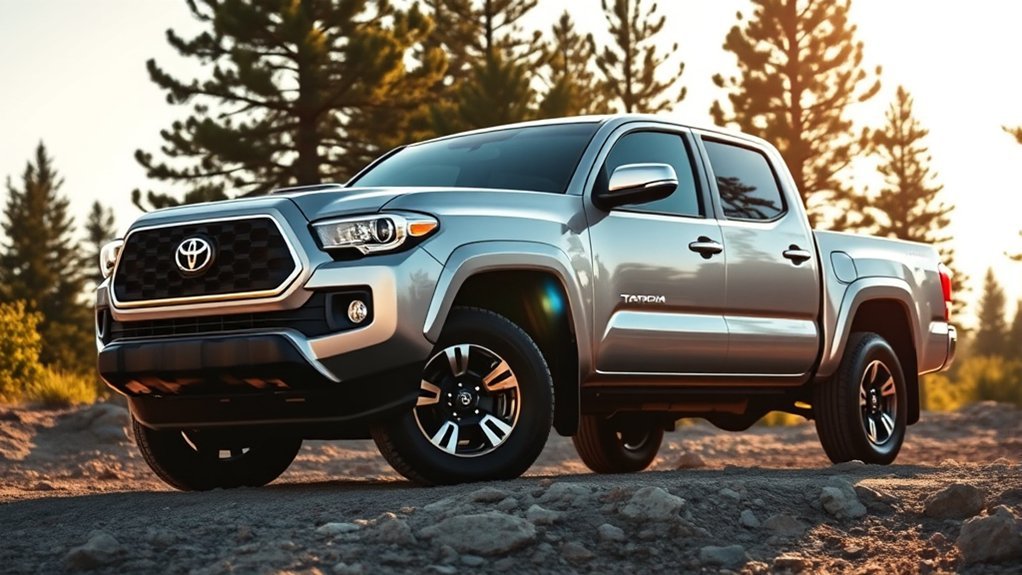
[…] If you need a deeper explanation of converter operation, sensor roles, and diagnostic codes before starting the repair, see how a Toyota Tacoma catalytic converter works. […]