
Low tire pressure can make your Toyota Tacoma feel loose, wear tires faster, and waste fuel. You can avoid most pressure problems with a five to ten minute check, a reliable gauge, and the cold PSI listed on your truck’s driver-side door placard or owner’s manual.
This guide shows you how to check Tacoma tire pressure, adjust air safely, respond to a Tire Pressure Monitoring System (TPMS) light, and spot tire damage before it becomes a road problem. Last updated: August 19, 2026.
Quick Answer
Check your Toyota Tacoma tire pressure at least once a month, before long trips, and when temperatures change. Use a gauge when the tires are cold, then match each tire to the PSI on your driver’s door placard or owner’s manual. Do not use the maximum PSI printed on the tire sidewall as your target.
Key Takeaways
- Check Tacoma tire pressure when the tires are cold, ideally before driving or after the truck sits for at least three hours.
- Use the driver-side door placard or owner’s manual for the correct PSI, not the tire sidewall maximum.
- Treat the TPMS light as a warning, not as your only tire pressure check.
- Add air in short bursts and recheck often so you do not overinflate the tire.
- Inspect tread, sidewalls, valve caps, and uneven wear during every pressure check.
At a Glance
| Time Required | 5 to 10 minutes for all four tires; a few extra minutes if you add air or check the spare. |
| Difficulty | Easy. You only need to read the placard, use a gauge, and adjust air slowly. |
| Tools Needed | Tire pressure gauge, valve caps, and a portable compressor or air-station hose if pressure is low. |
| Cost | Usually free if you already own a gauge and compressor. A basic gauge is inexpensive, and some stations may charge for air. |
Before You Begin: Tools, Timing, and Safety
Gather a quality tire pressure gauge, a portable compressor or air-station access, and your Tacoma’s recommended cold PSI. Toyota says the correct pressure specs appear on the driver’s door jamb sticker, in the owner’s manual, and through model-specific online manuals.
- Use a digital, dial, or pencil gauge that reads at least 0 to 60 PSI.
- Check tires before you drive or after the truck sits for at least three hours.
- Keep valve caps clean and reinstall them after each reading.
- Use the placard PSI for normal driving unless your manual gives different load guidance.
- Check the spare tire if your Tacoma carries one.
Warning: Do not keep driving at highway speed on a tire with visible damage, a rapid leak, a bulge, exposed cords, or a TPMS warning that returns after inflation.
[Products Worth Considering]

The JACO ElitePro Digital Tire Pressure Gauge delivers shop-grade accuracy with a clear digital readout, making it easy to maintain proper tire pressure for safer driving and better performance. Built with rugged brass and steel components, a protective guard, and a flexible air hose, it is designed for reliable use across cars, trucks, motorcycles, bikes, RVs, and trailers. The lock-on display, built-in bleeder valve, and bright backlit screen add convenience in any lighting condition.

Turn your iPhone, Android device, or Windows PC into a professional-grade diagnostic scan tool with this Bluetooth OBD2 adapter. It is designed for broad vehicle compatibility and supports popular apps for deeper diagnostics, live data, and code clearing. Built-in protections and firmware updates help keep your vehicle and scanner safe while delivering reliable performance.
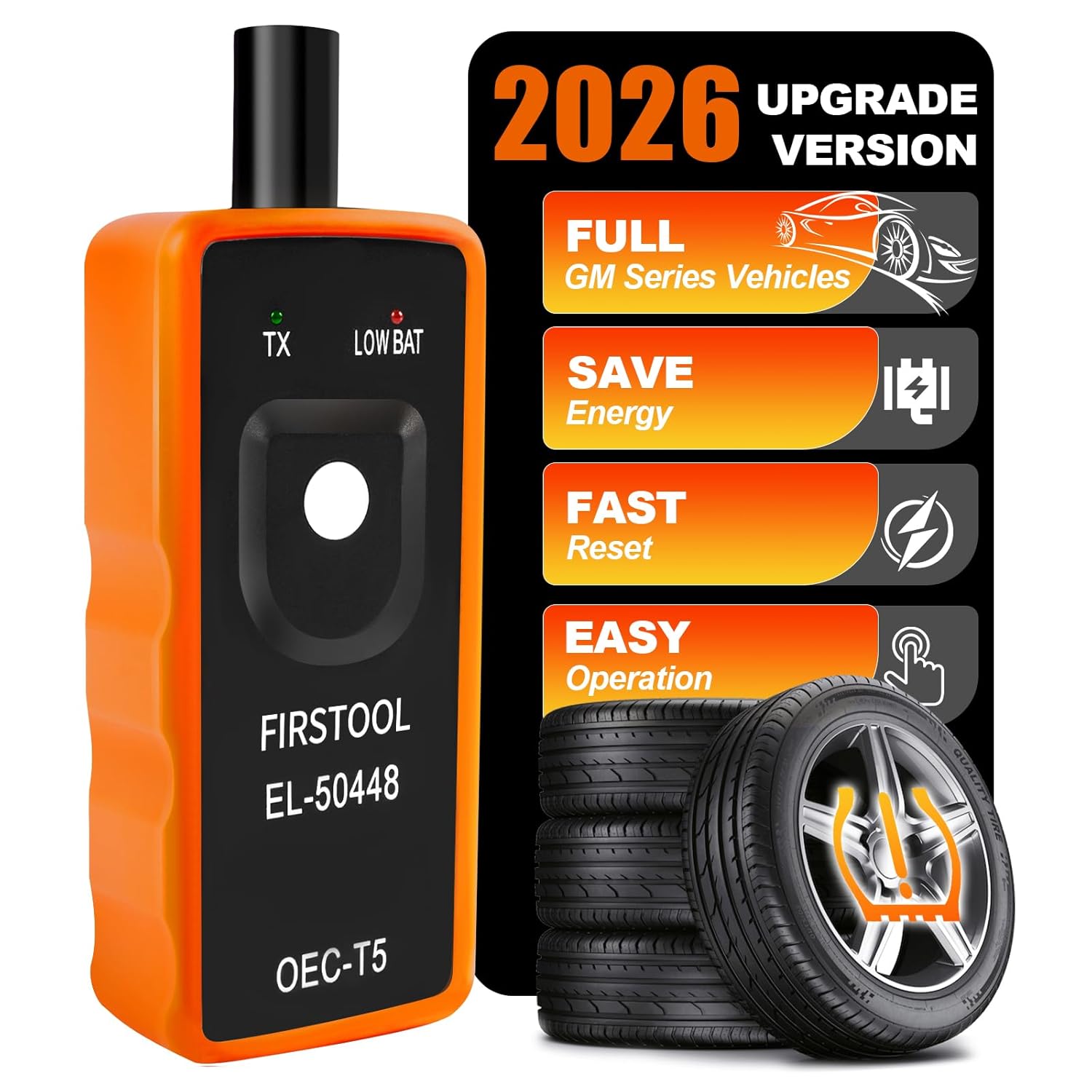
This EL-50448 TPMS relearn tool helps quickly activate and reset tire pressure sensors so your vehicle’s monitoring system stays accurate after tire rotations, sensor replacement, or seasonal tire changes. Designed for many GM-related vehicles and compatible with common 315 and 433 MHz TPMS systems, it offers simple one-button operation and reliable performance for clearing warning lights and relearning sensor positions.
How to Check Toyota Tacoma Tire Pressure in 6 Steps
- Park the Tacoma on a level surface. Let the tires cool before you take readings, since driving heat raises PSI and skews the number.
- Find the recommended cold PSI. Read the Tire and Loading Information Label on the driver-side door area or check the owner’s manual.
- Inspect each tire first. Look for cuts, bulges, bald spots, nails, cracked rubber, missing valve caps, or uneven tread wear before you touch the valve stem.
- Press the gauge firmly onto the valve stem. Hold it straight, wait for the reading, and record the PSI for each tire.
- Add or release air slowly. Use short compressor bursts if pressure reads low, then recheck with your gauge after each adjustment.
- Reinstall the valve caps and confirm the TPMS light. Drive a short distance if your manual requires it, or reset the system only after the tires match the placard PSI.
Repeat this process every month and before long trips. NHTSA says Tire Pressure Monitoring Systems warn you only when a tire is significantly underinflated, so you still need manual pressure checks.
[Products Worth Considering]

This all-in-one recovery kit provides a reliable towing solution for roadside emergencies and off-road adventures. It includes a heavy-duty tow strap, two D-ring shackles, and a storage bag for convenient transport and quick access. Built for demanding recovery tasks, it is designed to help with towing trucks, SUVs, ATVs, UTVs, and boats in tough weather conditions.

This heavy-duty car ramp set provides a stable, reliable lift for routine maintenance like oil changes, tire rotations, brake work, and undercarriage inspections. Built from high-impact poly with a non-skid tread and rubber feet, it helps keep vehicles secure while offering a lightweight, corrosion-resistant alternative to steel ramps. The wide, gradual design supports a broad range of vehicles, from compact cars to trucks, SUVs, and vans.
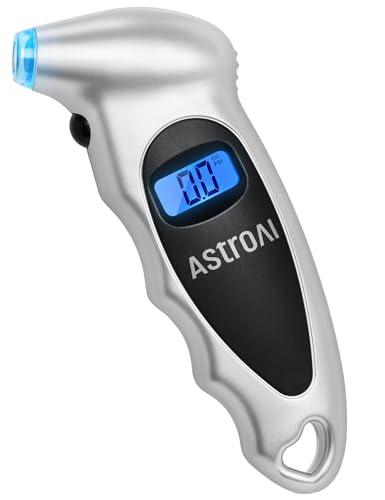
Accurate, Dependable Readings: Factory‑calibrated to ±1 PSI, so you can confidently match your vehicle’s recommended PSI (check the door jamb sticker). Ideal for monthly checks and road trips — consistent results every time, cold or warm.
Find the Correct PSI for Your Tacoma
You need the exact PSI for your Tacoma’s model year, trim, tire size, and load. Do not rely on a broad Tacoma PSI range from another truck, forum post, or tire listing. Your driver-side door placard or owner’s manual gives the number you should follow.
Do not inflate to the maximum PSI printed on the tire sidewall. That number shows the tire’s maximum pressure under its rated load, not your truck’s target cold pressure.
Correct PSI helps your Tacoma handle predictably, brake better, wear tires evenly, and use fuel more efficiently. FuelEconomy.gov says underinflated tires can lower gas mileage by about 0.2% for every 1 PSI drop in the average pressure of all tires.
General PSI Range by Tacoma Generation
These figures come from third-party tire-pressure references and owner reports, not directly from Toyota’s factory manual, and they vary by trim, tire size, and load. Your own door placard always overrides this table.
| Generation | Typical Placard PSI | Notes |
| 2nd Gen (2005–2015) | ~29 PSI front / 29–32 PSI rear | Varies by trim and OE tire size. |
| 3rd Gen (2016–2023) | ~29–33 PSI | Trim and tire-size dependent; front and rear can differ. |
| 4th Gen (2024+) | ~30 PSI on Type C configurations | Some 4th-gen trucks ship with a higher factory TPMS warning threshold than the placard PSI, which can cause nuisance cold-weather alerts. |
- Verify the exact PSI from your Tacoma’s door placard or owner’s manual.
- Check front and rear values separately if the placard lists different numbers.
- Use cold-tire readings before you adjust air.
- Follow load guidance in the manual when you tow or carry heavy cargo.
- Ask a tire professional if you changed tire size, wheel size, load range, or suspension setup.
Best Time and How Often to Check Tire Pressure
Check tire pressure at least once a month, before long trips, and when temperatures change quickly. You get the best reading in the morning before you drive.
Cold-tire pressure means the tire has not warmed from road use. Toyota recommends measuring before driving or after the vehicle sits for three hours.
Check more often when you tow, haul heavy cargo, drive off-road, or see a TPMS warning. A short check can help you avoid poor handling, faster tread wear, and preventable roadside delays.
Note: If you air down for off-road driving, reinflate to the placard PSI before you return to highway speeds.
Which Gauge, Compressor, or TPMS App to Use
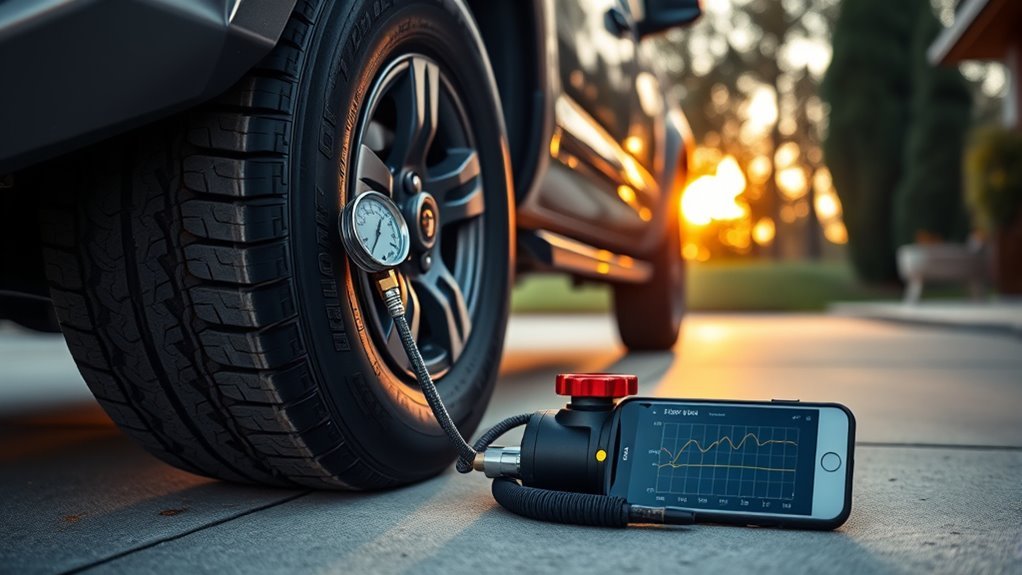
Choose tools that help you measure and correct pressure without guesswork. A digital tire gauge gives fast readings, but a strong dial gauge also works well if you store it safely.
A portable compressor helps you fix low pressure at home, on a trip, or after off-road driving. Your factory pressure display or an aftermarket TPMS sensor kit can help you monitor trends, but you should still confirm readings with a handheld gauge.
[Products Worth Considering]

PROCESS LEVEL ACCURACY: Each ETENWOLF’s digital tire pressure gauge is calibrated manually to ANSI B40.7 Grade 2A(plus-minus 1 PSI).Presta valve adapter not included, if used for bicycles, it must be purchased separately

HIGH ACCURACY: Every ETENWOLF's pencil tire gauge is calibrated to ANSI B40.1 Grade B, it is accurate to 2% of span in the middle 50% of range and 3% of span in the lower and upper 25% of range. Each ETENWOLF pencil tire pressure gauge is manually calibrated and has its unique calibration number printed on the pencil

RUGGED DESIGN: The stainless steel components prevent rust and corrosion while the precision-crafted nozzle seamlessly seals onto the valve stems for highly accurate readings (±2% span). We also provide 4 valve stem caps for convenient replacement.
Digital Versus Analog Gauges
Pick the gauge that matches your habits. Digital gauges often show precise readings in small increments, while analog gauges need no batteries and can handle rough storage better.
- Digital: Choose it for quick readings and easy low-light use.
- Dial: Choose it for a sturdy tool with a clear needle display.
- Pencil: Choose it as a small backup, but compare it against a better gauge.
- Range: Choose a gauge that reads at least 0 to 60 PSI.
Portable Compressors and TPMS Displays
Pair your gauge with a compressor that has a secure hose, auto shutoff, and thermal protection. These features help you add air in short bursts without overheating the unit.
Use a TPMS display or app only if it supports your Tacoma’s system or an external sensor kit you trust. Compare alert settings, sensor battery life, and connection reliability before you rely on it during trips.
Pro Tip: Keep your tire gauge in the glove box or door pocket, not loose in the bed. Drops, moisture, and dirt can make a gauge read poorly over time.
How to Read a Tire Pressure Gauge Correctly
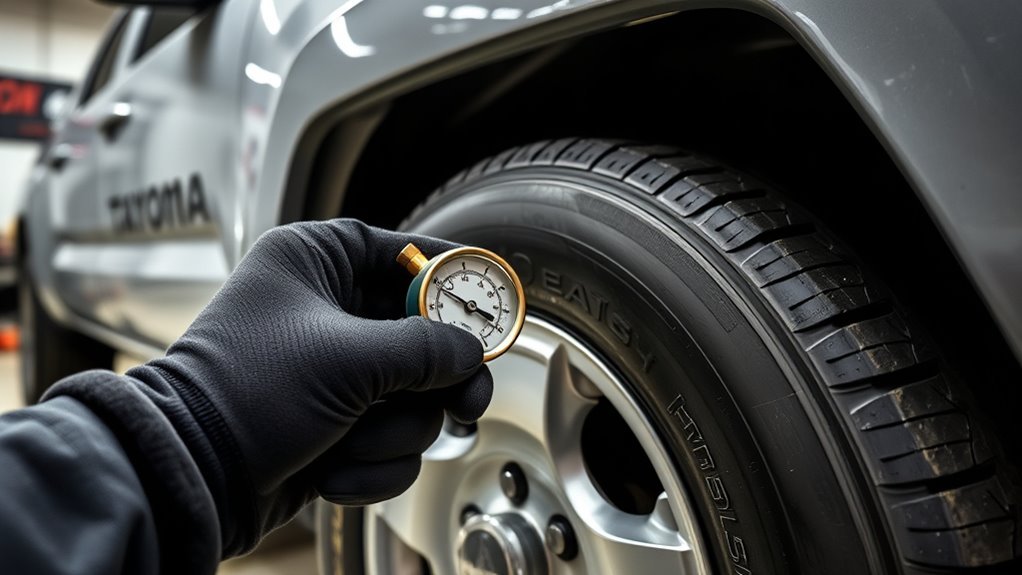
Remove the valve cap, press the gauge straight onto the valve stem, and hold it firmly. A brief hiss can happen as you seat the gauge, but a long hiss means air is leaking around the seal.
Read the dial, stick, or digital screen after the number settles. Record each tire so you can spot one tire that loses air faster than the others.
- Use steady pressure so the gauge seals against the valve.
- Compare the reading with your Tacoma’s placard PSI.
- Recheck after you add or release air.
- Store the gauge dry and protected from drops.
If one tire keeps reading lower than the others, do not just keep topping it off. Look for a puncture, valve-stem leak, rim leak, or tread damage.
TPMS Light for Tacoma: Immediate Steps and Safety
If your Tacoma’s TPMS light comes on, slow down when safe and check all tires with a gauge. Inflate any low tire to the cold PSI listed on your door placard or owner’s manual.
NHTSA explains that TPMS warnings activate only when a tire is significantly underinflated. Cold mornings can also trigger a warning when pressure falls below the system threshold overnight.
If the light turns off after you correct pressure, keep monitoring that tire for slow leaks. If the light stays on, your Tacoma may need a reset, sensor service, or professional diagnosis.
How to Reset the Tacoma TPMS Light After Adjusting Pressure
Once every tire matches the placard PSI, the light should usually clear on its own after a few minutes of driving. If it does not, the reset method depends on your Tacoma’s generation:
- Older, button-based systems: With the ignition on and the engine off, press and hold the TPMS reset button — commonly located under the steering wheel — until the light blinks three times. Start the engine and drive above 25 mph for about 10 minutes to let the system relearn.
- Newer, touchscreen-based systems: Open the vehicle settings menu and look for a “Tire Pressure” or “TPMS” option, then follow the on-screen reset prompts.
If the light will not clear after a correct reset, treat that as a possible sensor fault rather than a pressure problem, and follow the service guidance later in this article.
Warning: Do not ignore a TPMS light because the tires “look fine.” A radial tire can look normal while it is still several PSI low.
How to Adjust Tire Pressure Safely at Home or a Station
Before you add or release air, check the recommended PSI on your Tacoma’s door jamb and measure each tire cold. Use your own gauge when you can, since public air-station gauges can be damaged or inaccurate.
Add air slowly with a compressor or station hose. Recheck often so you do not overshoot the target.
Confirm Pressure Against the Placard
Insert the gauge firmly on the valve stem and read the PSI. Compare the number to the sticker or owner’s manual, then adjust only as needed.
- Bring a portable compressor or use a station with steady air flow.
- Recheck after each small amount of added air.
- Adjust to manufacturer PSI, not tire sidewall PSI.
- Inspect valve caps and tires for damage.
Use a Proper Gauge
Start with a reliable gauge, preferably one you have compared against a shop gauge. Replace any gauge that gives inconsistent readings or shows damage.
Seat the gauge straight on the valve stem to prevent leaks. Read the pressure right away, then record it before you move to the next tire.
Add Air Slowly
Add air in brief bursts of three to five seconds. Pause after each burst and check pressure again with your gauge.
If you overshoot, press the valve core gently to release air, then recheck. Small adjustments help you reach the target without bouncing above and below it.
- Start with cold tires and the recommended PSI.
- Attach the hose firmly and add short bursts.
- Recheck with your gauge after each burst.
- Release excess air if you overshoot.
Warning: Do not bleed air from a hot tire just to reach the cold placard number. The pressure can drop too low after the tire cools.
How Temperature and Seasons Affect Tire Pressure
Outdoor temperature changes the air pressure inside your tires. AAA says tire pressure can rise or fall about 1 to 2 PSI for every 10°F temperature change.
Cold weather can lower pressure enough to trigger the TPMS light. Heat can raise pressure and make a tire read higher after driving.
A 30°F temperature swing can change tire pressure by several PSI, even when the tire has no leak.
Set pressure to the vehicle placard when tires sit cold, then recheck when seasons change. This habit keeps handling, tread wear, and fuel use more predictable.
Spotting Uneven Wear or Tire Damage During Checks
When you check pressure, scan for uneven tread wear, bulges, cuts, cracks, nails, missing valve caps, or bald spots. These signs can point to low pressure, overinflation, alignment trouble, suspension wear, or road damage.
Use the penny test for a quick tread check. NHTSA says tires are not safe and should be replaced when tread depth reaches 2/32 of an inch. You can check this by placing a penny into the tread with Lincoln’s head upside down; if you can see the top of his head, replace the tire.
- Compare all four tires for matching tread wear patterns.
- Check tread depth and pressure during the same monthly routine.
- Inspect sidewalls after pothole hits, curb strikes, or road debris.
- Stop using a tire with a bulge, exposed cords, or deep sidewall damage.
Address tire damage quickly so your Tacoma stays safe, stable, and ready for the next drive.
Troubleshooting Common Tacoma Tire Pressure Problems
If pressure problems keep returning, use the pattern to narrow down the cause. One low tire often points to a puncture, valve leak, or rim leak. Multiple low tires usually point to weather changes, delayed maintenance, or a recent load change.
| Problem | Likely Cause | What to Do |
| One tire keeps losing air | Puncture, valve-stem leak, bead leak, or rim damage | Inspect the tread and valve, then visit a tire shop if the leak returns. |
| All tires read low | Temperature drop or skipped monthly checks | Set all tires to placard PSI when cold and recheck the next morning. |
| TPMS light stays on | A tire is still low, the system needs reset, or a sensor has failed | Check every tire with a gauge, then follow your owner’s manual or get service. |
| Center tread wears faster | Possible overinflation or tire/load mismatch | Confirm placard PSI and ask a tire professional if wear continues. |
When to Visit a Service Center for Tire Help
Visit a Toyota service center, tire shop, or qualified technician when the TPMS light stays on, one tire keeps losing air, or tread wear looks uneven. A technician can inspect for leaks, sensor faults, alignment issues, tire damage, or suspension problems.
You should also get help if your Tacoma has aftermarket wheels, non-stock tire sizes, heavy towing use, or repeated pressure loss after inflation. Those situations can require load guidance beyond a basic driveway pressure check.
| Service trigger | What they check |
| TPMS light stays on | Pressure, reset need, or sensor fault |
| Uneven tread wear | Rotation need, alignment, or suspension issue |
| Repeated low pressure | Valve stem, puncture, rim leak, or tire damage |
| Poor fuel economy or loose handling | Inflation, tire condition, alignment, and suspension basics |
Get help promptly when a tire problem keeps returning. A quick inspection can protect your tires, your fuel budget, and your control on the road.
Frequently Asked Questions
How often should you check Tacoma tire pressure?
Check Tacoma tire pressure at least once a month. You should also check it before long trips, after major temperature changes, and before towing or hauling heavy loads.
What PSI should you keep Tacoma tires at?
Use the PSI on your Tacoma’s driver-side door placard or owner’s manual. Tacoma tire pressure can vary by model year, tire size, load, and configuration, so do not copy another truck’s PSI without checking your own placard.
Is 40 PSI good tire pressure for a Toyota Tacoma?
Do not use 40 PSI unless your door placard, owner’s manual, tire load chart, or tire professional supports that pressure for your setup. Too much pressure can reduce ride comfort, change traction, and increase center tread wear.
Should you check Tacoma tire pressure hot or cold?
Check pressure when the tires sit cold. If you must add air after driving, add only enough to address a clearly low tire, then recheck and adjust again after the tires cool.
Why does the TPMS light stay on after adding air?
The light may stay on if one tire still reads low, the system needs a reset, or a sensor has a fault. Check all tires with a gauge first, then follow your owner’s manual or visit a service center.
Safety Disclaimer: This article helps you handle basic tire checks and does not replace your Toyota owner’s manual, tire placard, or a qualified technician’s inspection. If you see tire damage, unsafe handling, a rapid leak, or a TPMS warning that keeps returning, stop driving when safe and get professional help.
Conclusion
Your Tacoma’s correct tire pressure starts with the door placard, a cold-tire reading, and a gauge you trust. Check pressure monthly, before trips, and when the weather changes.
Fix low pressure in small steps, inspect tire wear during the same routine, and treat the TPMS light as an early warning. This simple habit helps your Tacoma drive safer, use fuel better, and stay ready for the road ahead.
Sources


[…] a trail run, after off-road use, before buying a used Tacoma, or whenever you see rust, leaks, uneven tire wear or pressure loss, clunks, or steering looseness. Confirm the model year, rear-suspension layout, and hybrid or […]