Last updated: August 30, 2026 · Reviewed for accuracy against current Toyota Technical Information System (TIS) & Scheduled Maintenance Guides · Byline: Vance Ashford
A Toyota Tacoma break-in oil change is not listed as a mandatory first service in Toyota’s official factory maintenance schedule. For a 2026 Tacoma equipped with the 2.4-liter turbocharged i-FORCE engine, Toyota schedules standard engine oil and filter replacement at 10,000 miles or 12 months under normal highway driving. The factory interval shortens to 5,000 miles or 6 months only under special operating conditions, such as driving mainly on dirt or dusty roads. Performing a voluntary break-in oil change at 500 to 1,000 miles is an owner preference for peace of mind, not a factory requirement to preserve warranty coverage.
Quick Summary: Tacoma Break-In Oil Guidelines
- Factory Schedule: 10,000 miles or 12 months (normal driving); 5,000 miles or 6 months (dirt/dusty roads or heavy commercial use).
- Break-In Driving Protocol: Toyota specifies driving restrictions for the first 1,000 miles (no towing for 500 miles; avoid sudden stops, constant engine speeds, and wide-open throttle).
- 1,000-Mile Voluntary Change: Optional. Recommended by many engine builders to remove manufacturing debris and assembly paste, but not required by Toyota.
- ToyotaCare Coverage: Complimentary factory maintenance covers services at 10,000-mile intervals; a 1,000-mile voluntary oil change is paid out-of-pocket.
How this guide was prepared: This analysis compares Toyota factory owner manuals, Warranty & Maintenance Guides, Toyota Technical Information System (TIS) bulletins, API/ILSAC engine oil standards, and U.S. FTC Magnuson-Moss Warranty Act provisions.
Key Takeaways
- Toyota does not require an early 500-mile or 1,000-mile break-in oil change for new Tacomas.
- Factory break-in rules focus on driving behavior (speed variation, brake seating, towing delays) rather than early fluid flushes.
- The 2024–2026 2.4L Turbo (T24A-FTS) uses SAE 0W-20 ILSAC GF-6A oil with a 5.9-quart refill capacity (with filter).
- Early factory oil flushes test high in molybdenum and silicon due to assembly lubes and gasket curing, which is normal and not a sign of engine failure.
- Under the Magnuson-Moss Warranty Act, performing your own oil change or doing an early service does not void your factory warranty provided correct specifications and receipts are documented.
What’s in This Article
- Tacoma Break-In Oil Change Decision Table
- What Does Toyota Require During the Break-In Period?
- Tacoma Oil Specifications by Generation & Engine
- What Are the Risks of Changing Oil Too Early or Too Late?
- Why Does Factory-Specified Oil Matter for Turbocharged Engines?
- Does Toyota Use Special Break-In Oil or Additives?
- When Should You Inspect the Engine Instead of Waiting?
- Step-by-Step Post-Break-In Service Checklist
- ToyotaCare vs. DIY: Early Oil Change Realities
- References and Verification Notes
- Frequently Asked Questions
- Conclusion
Tacoma Break-In Oil Change Decision Table
Use this decision framework to distinguish between mandatory Toyota warranty services and optional owner maintenance preferences across different driving conditions.
| Driving Situation | Recommended Action | Factory Classification |
|---|---|---|
| New Tacoma, normal highway/city commuting | Complete 1,000-mile driving restrictions; service oil and filter at 10,000 miles or 12 months. | Toyota Normal Schedule. (1,000-mile change is strictly optional). |
| Tacoma operated primarily on unpaved, dusty, or gravel roads | Replace engine oil and filter every 5,000 miles or 6 months. | Toyota Special Operating Condition (Mandatory for warranty compliance). |
| Frequent towing, heavy bed loads, or extended low-speed idling | Inspect chassis fasteners, propeller shafts, and differential oil at 5,000 miles; inspect engine oil condition. | Toyota Special Operating Condition (Component-specific service). |
| Enthusiast / Long-term ownership baseline (10+ years planned) | Perform an optional out-of-pocket oil and filter change at 1,000 miles, then follow 5,000-mile severe intervals. | Owner Preference (Peace-of-mind maintenance). |
| Active warning light, low oil level, or metallic ticking sound | Check dipstick immediately, top off with specified 0W-20 oil, and arrange dealer diagnostic before driving. | Immediate Condition-Based Action. |
[Products Worth Considering]

Effectively removes contaminants

100% Genuine Oil Filters: These oil filters are designed specifically for select Toyota/Lexus vehicles and is manufactured to meet all OEM specifications for quality and performance. These are the latest version of this filter.
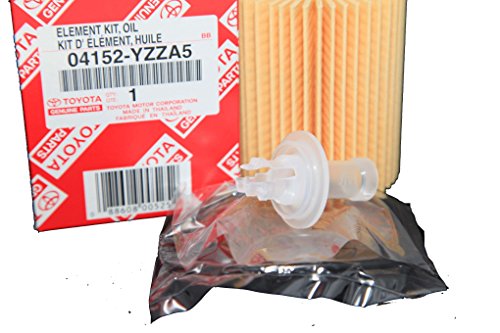
Item Package Dimension: 16.09L x 6.60W x 5.23H inches
What Does Toyota Require During the Break-In Period?
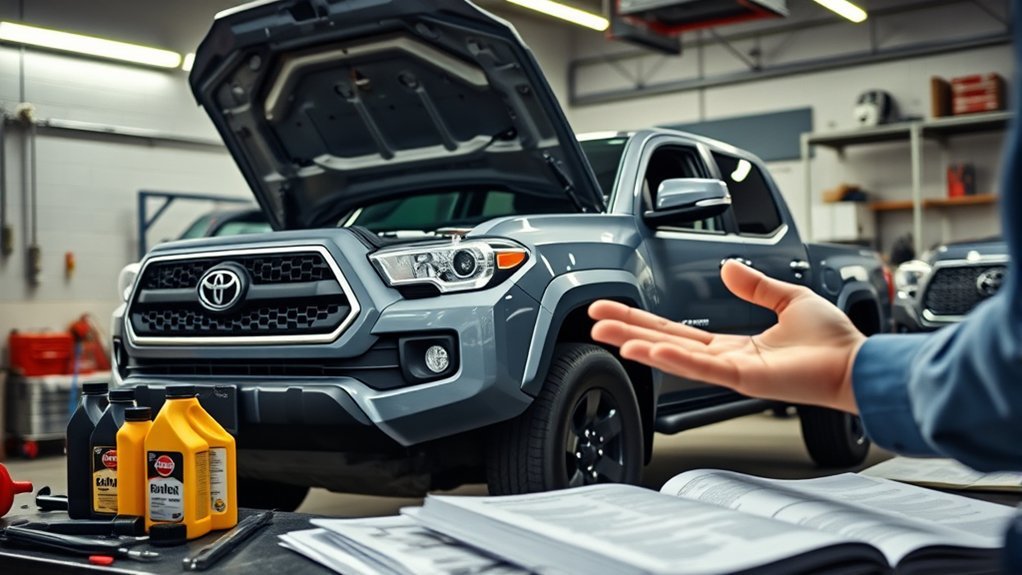
Modern Toyota owner manuals define break-in strictly as a mechanical bedding-in procedure for the engine, piston rings, transmission gears, and brake pads—not as a trigger for an early oil change. To allow internal components to mate smoothly, follow the mileage thresholds outlined in the Toyota Tacoma maintenance schedule.
| Break-In Mileage | Factory Driving Restrictions | Mechanical Purpose |
|---|---|---|
| First 200 miles (300 km) | Avoid sudden stops and aggressive emergency braking where conditions permit. | Evenly beds brake pads and rotors to prevent glazing and rotor hotspots. |
| First 500 miles (800 km) | Do not tow any trailer, camper, or heavy trailing load. | Prevents excessive cylinder pressure and differential gear hypoid scuffing. |
| First 1,000 miles (1,600 km) | Avoid wide-open throttle (sudden acceleration), high engine RPM, driving long periods at a single constant speed (cruise control), and continuous low-gear crawling. | Varies combustion chamber pressures to seat compression rings evenly against the cylinder walls. |
Reaching 1,000 miles marks the completion of mechanical break-in precautions. It allows you to tow up to the vehicle’s rated capacity and use standard cruise control. It does not mean the factory oil is depleted or requires immediate disposal.
Tacoma Oil Specifications by Generation & Engine
Oil viscosity, performance standards, and sump capacities differ across Tacoma generations. When completing any maintenance, verify the requirements for your specific powertrain rather than applying rules from older trucks.
| Generation & Engine | Required Viscosity | Oil Standard | Refill Capacity (w/ Filter) |
|---|---|---|---|
| 4th Gen (2024–2026) 2.4L Turbo i-FORCE (T24A-FTS) |
SAE 0W-20 | ILSAC GF-6A / API SP (Resource Conserving) | 5.9 U.S. Quarts (5.6 L) |
| 4th Gen Hybrid (2024–2026) 2.4L Turbo i-FORCE MAX Hybrid |
SAE 0W-20 | ILSAC GF-6A / API SP | 5.9 U.S. Quarts (5.6 L) |
| 3rd Gen (2016–2023) 3.5L V6 (2GR-FKS) |
SAE 0W-20 | ILSAC GF-5 / GF-6A | 6.1–6.2 U.S. Quarts (5.9 L) |
| 3rd Gen (2016–2023) 2.7L 4-Cyl (2TR-FE) |
SAE 0W-20 | ILSAC GF-5 / GF-6A | 5.8–6.2 U.S. Quarts (5.5–5.9 L) |
[Products Worth Considering]

Advanced protection against the four main causes of engine breakdown: wear friction heat and deposits


6X better wear protection on critical engine parts than industry standards**
What Are the Risks of Changing Oil Too Early or Too Late?
A voluntary early oil change performed using genuine parts and correct procedures poses no mechanical danger to your truck. The potential benefit is flushing initial wear particulates and assembly residues from the crankcase sooner. However, Toyota’s powertrain engineering tests confirm that the factory oil filter efficiently traps abrasive particles down to 20 microns, which is sufficient to protect bearing surfaces under standard intervals.
The real hazard of unnecessary early service stems from human error during the procedure:
- Incorrect Oil Viscosity or Grade: Pouring non-GF-6A oils into turbocharged 4th Gen Tacomas can accelerate low-speed pre-ignition (LSPI) risks.
- Overfilling or Underfilling: Adding a flat 6 quarts without checking the dipstick can lead to crankshaft aeration or oil starvation.
- Improper Filter Torque: Overtightening the spin-on or cartridge housing risks cracking the seal, leading to rapid oil loss on the road.
Conversely, waiting past the recommended 10,000-mile or 12-month interval—especially if your driving profile qualifies as severe service—leads to thermal breakdown, soot accumulation, and premature turbocharger bearing wear.
Maintenance Minder Warning: The dashboard “Maintenance Required” light triggers automatically every 5,000 miles. On modern Tacomas, the 5,000-mile prompt indicates tire rotation and fluid level inspections—it is not an indicator that the oil has degraded under normal driving conditions.
Why Does Factory-Specified Oil Matter for Turbocharged Engines?
With the 4th Generation Tacoma utilizing the turbocharged T24A-FTS powertrain, motor oil requirements are stricter than on previous naturally aspirated V6 models. Turbocharger center bearings operate at speeds exceeding 150,000 RPM and experience extreme exhaust temperatures. Using an approved ILSAC GF-6A / API SP 0W-20 formulation provides specific detergency to prevent Low-Speed Pre-Ignition (LSPI) and resist turbocharger oil coking.
You are not legally obligated to use Toyota Genuine Motor Oil (TGMO) to maintain your warranty. Any major brand (Mobil 1, Pennzoil Platinum, Valvoline Advanced, Castrol Edge) meeting API SP and ILSAC GF-6A certifications provides equal protection. For deeper technical specifications, refer to our detailed Tacoma oil viscosity guide and Tacoma oil capacity guide.
Does Toyota Use Special Break-In Oil or Additives?
A common myth in the Tacoma community is that Toyota installs a dedicated “break-in oil” containing proprietary friction modifiers that must remain in the engine for the full 10,000 miles. Toyota’s technical documentation confirms the factory fill is standard full-synthetic motor oil meeting ILSAC standards.
However, used oil analysis (UOA) of factory-drained oil frequently reveals two distinct characteristics:
- Elevated Molybdenum Levels: Factory test reports often show molybdenum concentrations above 500–700 ppm (compared to ~80 ppm in standard off-the-shelf oil). This is caused by high-moly assembly pastes used on camshaft lobes, wrist pins, and main bearings during engine manufacturing.
- Elevated Silicon and Copper: High initial silicon readings originate from the curing of liquid engine gaskets (RTV silicone), while copper readings reflect initial thrust-washer bedding.
These elevated elements in the first drain are completely normal. Draining the oil at 1,000 miles does not harm the engine or strip away vital coatings, but leaving it until 5,000 or 10,000 miles does not damage components either.
When Should You Inspect the Engine Instead of Waiting?

You should never rely on oil color alone to judge engine health. Modern synthetic oils contain aggressive dispersants that darken within the first 500–1,000 miles of operation. Dark amber or brown oil simply indicates that the oil is holding microscopic soot particles in suspension.
Immediate mechanical inspection is required if you observe any of the following critical symptoms:
- Low Oil Pressure Warning: Persistent illumination of the dashboard oil pressure warning light. Stop the engine immediately to prevent catastrophic bearing seizure.
- Visible Metallic Shavings on Dipstick: Microscopic glitter inside the pleats of the oil filter is normal during initial machining wear. Visible flakes or chunks of metal on the dipstick indicate severe component failure.
- Rapid Level Consumption: A drop from the “Full” to “Low” dipstick mark within less than 1,000 miles.
- Persistent Valve Ticking or Rod Knock: Heavy, rhythmic knocking that intensifies with engine RPM under load.
Check the dipstick regularly following the steps in our Tacoma oil level checking guide.
Step-by-Step Post-Break-In Service Checklist
If you choose to perform a voluntary 1,000-mile break-in oil change or tackle your regular 5,000/10,000-mile service at home, follow this standardized garage procedure:
- Warm the Engine: Idle the engine for 3–5 minutes to warm the oil to ~100°F (38°C). Warm oil suspends contaminants and drains faster.
- Inspect the Drain Plug: Remove the 14 mm drain plug. Always replace the crush washer (gasket) with a new genuine Toyota crush washer (Part # 90430-12031 or equivalent) to prevent leaks. Torque to 30 ft-lbs (41 Nm).
- Replace the Filter and O-Rings: Install an approved OEM or high-efficiency aftermarket filter from our reviewed Tacoma oil filter guide. Lubricate the rubber O-ring with fresh motor oil prior to installation.
- Initial Sump Refill: Add 5.5 quarts of approved 0W-20 oil. Do not pour the full 5.9-quart capacity immediately to avoid overfilling.
- Run and Verify Pressure: Start the engine, verify the dashboard oil light extinguishes within 3 seconds, and inspect the drain plug and filter housing for weeping.
- Final Dipstick Adjustment: Shut off the engine, wait 5 minutes on level ground for oil to drain back into the pan, pull the dipstick, wipe clean, reinsert fully, and top off until the level sits squarely between the two hash marks.
- Document the Service: Save your oil and filter purchase receipts, record the date and mileage in your maintenance log, and update your online Toyota Owners account portal.
ToyotaCare vs. DIY: Early Oil Change Realities
Every new Toyota Tacoma includes ToyotaCare, which provides complimentary factory-scheduled maintenance for 2 years or 25,000 miles (whichever comes first). However, owners should understand how dealership billing applies to early service:
- ToyotaCare 10k Intervals: ToyotaCare covers standard oil and filter changes at the 10,000-mile and 20,000-mile marks. Dealerships will perform 5,000-mile tire rotations and multi-point inspections for free under the program.
- Voluntary 1,000-Mile Changes are Out-of-Pocket: If you request an oil change at 1,000 or 5,000 miles without meeting severe operating criteria, ToyotaCare will not cover the cost. You must pay out-of-pocket (typically $85 to $130 at a dealership, or $35 to $50 if doing it yourself in your driveway).
- Warranty Protection Under Magnuson-Moss: Under the U.S. Magnuson-Moss Warranty Act (15 U.S.C. § 2302(c)), vehicle manufacturers cannot void warranty coverage simply because maintenance was performed by an independent shop or done by the owner at home. You only need to retain dated receipts showing the purchase of certified API SP 0W-20 oil and matching filters.
[Products Worth Considering]

And Vehicle Specific
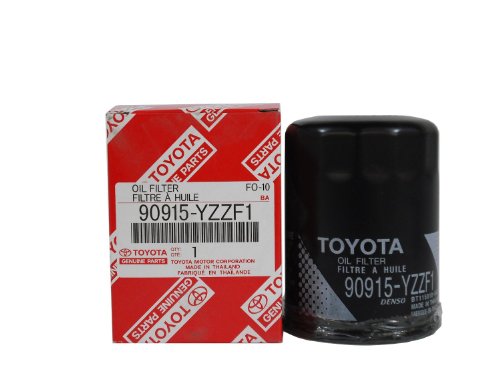
Item Package Dimension: 13.69L x 6.019W x 4.20H inches

100% Genuine Oil Filters: These oil filters are designed specifically for select Toyota/Lexus vehicles and is manufactured to meet all OEM specifications for quality and performance. These are the latest version of this filter.
References and Verification Notes
The maintenance recommendations and technical specifications in this article are verified against the following official sources:
- Toyota 2026 Tacoma Warranty & Maintenance Guide – Official factory service schedule and operating condition definitions.
- Toyota 2025 Tacoma Owner’s Manual – Break-in driving precautions and vehicle towing restrictions.
- Toyota 2024 Tacoma Maintenance Specifications – Factory engine oil capacities, viscosity ratings, and ILSAC GF-6A requirements.
- API Engine Oil Licensing & Certification System (EOLCS) – Standards for API SP and ILSAC GF-6A passenger car lubricants.
- U.S. Federal Trade Commission (FTC) Auto Warranty Guidance – Legal provisions regarding consumer rights, aftermarket parts, and Magnuson-Moss warranty protections.
Frequently Asked Questions
Do you really need a break-in oil change on a Tacoma?
No, Toyota does not require an early 500- or 1,000-mile break-in oil change. Under normal driving conditions, the factory schedule mandates your first oil and filter replacement at 10,000 miles or 12 months. An early change is strictly an optional practice for owners seeking peace of mind.
Does ToyotaCare pay for a 1,000-mile oil change?
No. ToyotaCare only covers oil changes at factory-scheduled intervals (10,000 and 20,000 miles under normal use). If you request an oil change at 1,000 miles, the dealership will charge you out-of-pocket as customer-pay service.
What mileage is best for the first Tacoma oil change?
If you follow Toyota’s factory recommendations, the first service is at 10,000 miles (normal use) or 5,000 miles (severe/dusty road use). If you prefer a conservative enthusiast baseline, completing your first change between 1,000 and 1,500 miles is the standard recommendation among mechanical specialists.
Should you change Tacoma oil every 5,000 or 10,000 miles?
For standard highway driving, the 10,000-mile interval is factory-approved. However, if you regularly tow trailers, carry heavy bed loads, idle extensively, drive in sub-freezing temperatures, or travel on unpaved dirt roads, Toyota officially prescribes the 5,000-mile or 6-month severe service interval.
Does an early oil change void a Toyota warranty?
No. Under the U.S. Magnuson-Moss Warranty Act, routine maintenance performed outside a dealership or ahead of schedule does not void your warranty. Keep all receipts showing API SP / ILSAC GF-6A 0W-20 oil and OEM-spec filter purchases as proof of proper service.
What oil should you use in a 2024–2026 Toyota Tacoma?
The 4th Gen 2.4L Turbo i-FORCE engine requires full-synthetic SAE 0W-20 meeting ILSAC GF-6A and API SP specifications. Refill capacity with a filter change is 5.9 U.S. quarts.
Should you change the oil filter during a break-in oil change?
Yes. If you choose to perform an early oil change, always replace the filter. The filter captures manufacturing shavings, casting flash, and assembly paste; leaving an old filter in place defeats the primary purpose of an early drain.
Can you tow during the Tacoma break-in period?
No. Toyota explicitly instructs owners not to tow any trailer during the first 500 miles (800 km) of ownership to avoid severe stress on the new ring packs, transmission clutches, and differential gears.
Conclusion
A break-in oil change on a Toyota Tacoma is an optional owner choice rather than a mandatory factory obligation. By adhering strictly to Toyota’s 1,000-mile driving restrictions (avoiding sudden stops, wide-open throttle, constant cruising speeds, and towing for the first 500 miles), your engine will bed in properly. For ongoing maintenance, follow the 10,000-mile normal interval or 5,000-mile severe service schedule for your exact model year, always using certified 0W-20 ILSAC GF-6A synthetic oil and documenting your service records.