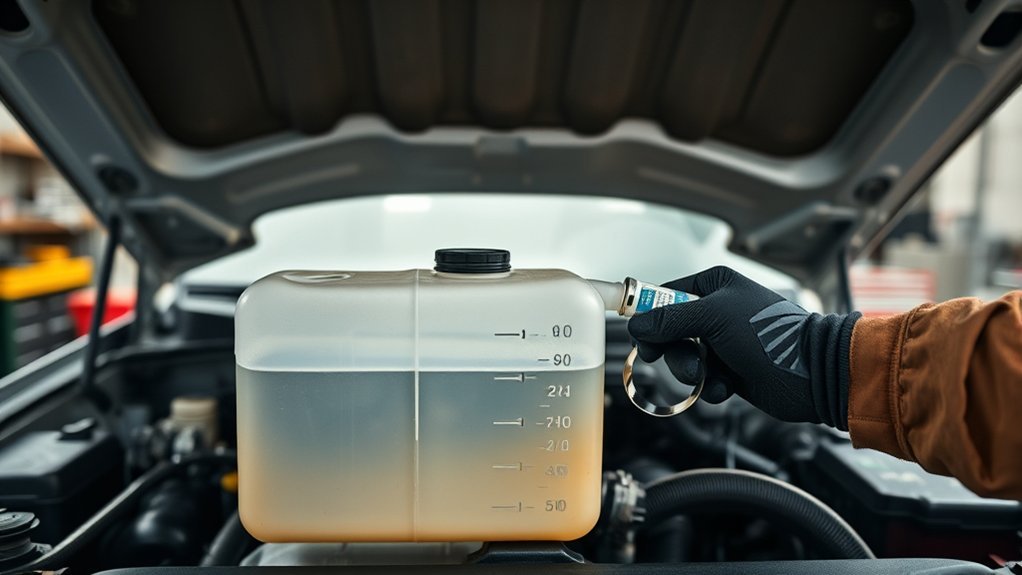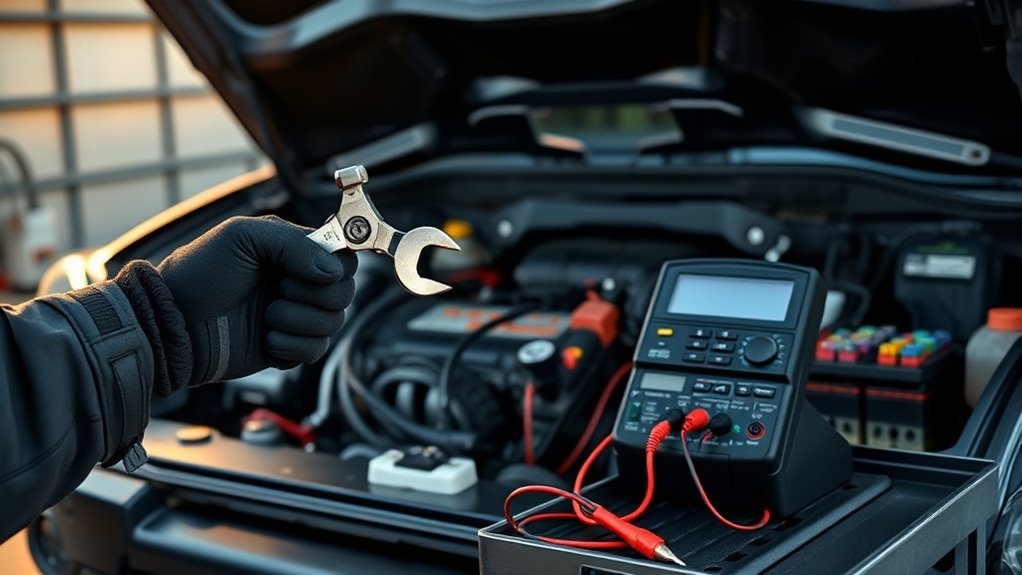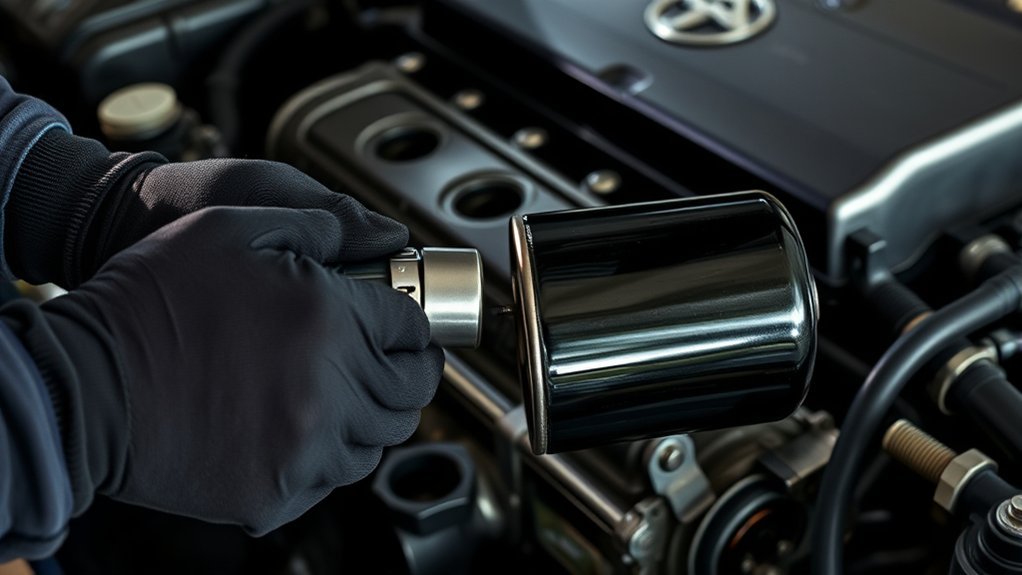
To change the oil filter on a 2016–2023 Toyota Tacoma with the 3.5L 2GR-FKS V6, drain the cartridge housing, remove the cap with a 64.3 mm 14-flute Toyota-style wrench, replace the filter element and both O-rings, then torque the housing to 18 ft-lb and the center drain plug to 10 ft-lb. This cartridge procedure does not apply to the 2.7L 2TR-FE four-cylinder, which uses a spin-on filter.
Last updated: July 31, 2026. The engine/filter split, torque values, and model-year refill references were rechecked against Toyota parts and owner-manual data.
Quick Answer
For a 2016–2023 Tacoma 3.5L V6, remove the small filter-cap drain plug, use the supplied plastic adapter to empty the housing, loosen the cartridge cap with a 64.3 mm 14-flute wrench, and replace the 04152-YZZA1 filter element plus both O-rings. Lubricate the new O-rings with clean oil, torque the housing to 18 ft-lb, torque the center plug to 10 ft-lb, refill with the model-year amount listed in the owner’s manual, and verify the final level on the dipstick.
Key Takeaways
- Confirm the engine first: this guide covers the 3.5L V6 cartridge filter, not the 2.7L four-cylinder spin-on filter.
- Use a 64.3 mm 14-flute Toyota/Lexus cap wrench and a cartridge element that matches your VIN; Toyota lists 04152-YZZA1 for the third-generation V6.
- Replace the small drain-plug O-ring and the large housing O-ring at every filter service.
- Torque the cartridge housing to 18 ft-lb and the small center drain plug to 10 ft-lb.
- Toyota’s normal oil-and-filter interval is commonly 10,000 miles or 12 months with the specified 0W-20 oil; qualifying special operating conditions call for 5,000 miles or six months.
Check Your Engine Before Starting
| Engine | Factory Filter Type | Toyota Filter Reference | Use This Guide? |
|---|---|---|---|
| 3.5L V6, 2GR-FKS | Replaceable cartridge element | 04152-YZZA1 | Yes |
| 2.7L I4, 2TR-FE | Spin-on filter | 90915-YZZD1 | No; follow the four-cylinder procedure |
At a Glance
| Vehicle Scope | 2016–2023 Toyota Tacoma with the 3.5L 2GR-FKS V6 |
| Time Required | 30–60 minutes |
| Difficulty | Beginner to moderate DIY |
| Filter Wrench | 64.3 mm, 14-flute Toyota/Lexus cartridge-cap wrench |
| Main Torque Values | Filter housing: 18 ft-lb; center drain plug: 10 ft-lb |
| Tools Needed | Cap wrench, ratchet, extensions, torque wrench, 14 mm socket for a full oil change, drain pan, funnel, gloves, ramps or jack stands |
| Cost | Usually low for the filter alone; higher if replacing the engine oil at the same time |
How Often Should You Change a Tacoma Oil Filter?

For normal service with the specified 0W-20 oil, Toyota’s third-generation Tacoma maintenance schedule commonly calls for engine oil and filter replacement at 10,000 miles or 12 months. The truck still receives scheduled inspections and tire rotation at 5,000-mile or six-month intervals.
Replace the oil and filter at 5,000 miles or six months when the truck is primarily used under Toyota’s listed special operating conditions. These include driving on dirt or dusty roads, towing or heavy loading, repeated trips of less than five miles in temperatures below 32°F (0°C), and extensive idling or low-speed operation. Follow the maintenance guide for your exact model year because the schedule is based on both time and mileage.
A clean oil filter removes particles before they circulate through bearings, camshaft surfaces, timing components, and other close-clearance parts. A damaged or severely restricted filter can contribute to abnormal oil-pressure behavior or bypass operation, but warning lights and engine noise can have many causes and should not be blamed on the filter without diagnosis.
Scope Note: This article is for the 2016–2023 Tacoma 3.5L 2GR-FKS V6 cartridge-filter setup. The 2.7L 2TR-FE uses a spin-on filter, and 2024+ Tacoma models use a different powertrain family. Use your VIN and owner’s manual when ordering parts.
What Tools Do You Need for a Tacoma V6 Oil Filter Change?
The correct cap wrench helps prevent rounded wrench flats, cracked housings, and oil spills. Do not use pliers or a universal strap wrench on the cartridge cap. A close-fitting 64.3 mm 14-flute wrench distributes force around the housing.
| Tool or Supply | Purpose |
|---|---|
| 64.3 mm 14-flute Toyota/Lexus filter cap wrench, such as the Motivx Tools MX2320 | Fits the 3.5L V6 cartridge-style oil filter housing |
| 3/8-inch drive ratchet and extensions | Removes the center housing plug and operates compatible cap wrenches |
| 24 mm socket, if required by your cap wrench | Provides an alternate drive point on some Toyota-style filter wrenches |
| Torque wrench | Tightens the housing to 18 ft-lb and center plug to 10 ft-lb |
| New filter element and both O-rings | Replaces the cartridge and seals the housing |
| 14 mm socket and new drain-plug gasket | Needed when performing a complete engine-oil change |
| Drain pan, funnel, gloves, eye protection, and rags | Keeps the work area cleaner and reduces exposure to hot oil |
| SAE 0W-20 engine oil that meets the manual-listed specification | Refills the engine and lubricates the new O-rings |
A Genuine Toyota replaceable element oil filter is an appropriate reference for the 3.5L V6 when fitment is confirmed by VIN. Quality aftermarket filters can also work, but the kit must include the correct large housing O-ring, small center-plug O-ring, and drain adapter.
[Products Worth Considering]

ECOGARD X5608 is a premium cartridge oil filter designed for a wide range of Toyota, Lexus, and Scion vehicles. It helps protect your engine by screening out harmful contaminants and is built for use with both synthetic and conventional oils. Included O-rings support a proper housing seal for dependable maintenance between oil changes.

FOCUSFILTER 04152-YZZA1 OEM grade oil filter is designed to help protect your engine with reliable filtration and 10K mile protection. It cross references multiple OE part numbers and fits a wide range of Toyota and Lexus applications, making it a practical replacement for routine maintenance. Built for compatible vehicles including Camry, Avalon, Highlander, Tacoma, RAV4, Sienna, ES 350, and RX 350.

This upgraded aluminum oil filter housing cap is designed as a direct replacement for compatible Toyota and Lexus models, helping restore a secure, reliable seal for the oil filter housing. Built from durable aluminum, it offers improved strength and heat resistance over factory plastic covers, while the included gasket and plug support straightforward installation and dependable leak-free performance.
How Do You Prepare the Tacoma Safely?
Work on a flat surface, set the parking brake, and chock the rear wheels. If you raise the truck, use quality ramps or properly rated jack stands on approved lifting points. Never work under a vehicle supported only by a jack.
Warning: Hot oil can burn skin, and an unsupported vehicle can cause severe injury. Let the engine cool until the oil is warm rather than dangerously hot, wear gloves and eye protection, and support the Tacoma securely before crawling underneath.
Confirm the 3.5L V6 Cartridge Filter
Check the emissions label under the hood, the owner’s manual, or a VIN-based parts catalog for the 2GR-FKS 3.5L V6. If the truck has the 2TR-FE 2.7L four-cylinder, stop here and use a spin-on-filter procedure instead.
Gather the Correct Oil and Refill Amount
The 2016–2023 Tacoma 3.5L V6 specifies SAE 0W-20 engine oil. Use oil that meets the API or ILSAC category listed in the owner’s manual for your year. The American Petroleum Institute explains current gasoline-engine oil categories.
Do not assume one refill quantity covers every third-generation V6. Toyota’s reference capacity changed across the model run, and 2016–2020 trucks also distinguish between vehicles with and without the towing package. The model-year table later in this guide gives the relevant starting amounts.
Remove the Skid Plate If Needed
The V6 filter housing is underneath the front of the engine, near the driver side and behind the sway bar. Factory and aftermarket skid plates can block access. Support the plate while removing its fasteners, keep the hardware organized, and reinstall it only after the leak check is complete.
How Do You Remove the Tacoma V6 Oil Filter?
Remove the engine oil filler cap and lift the dipstick slightly. If you are completing a full oil change, drain the engine oil first, install a new drain-plug gasket, and torque the oil-pan drain plug to 30 ft-lb. Then move the drain pan under the filter housing.
- Remove the small filter-housing drain plug. Insert a 3/8-inch drive tool into the center plug and turn it counterclockwise.
- Drain the filter housing. Insert the plastic drain adapter supplied with the filter kit into the open port. Keep upward pressure on the adapter as required and let the housing empty into the pan.
- Fit the cap wrench fully. Seat the 64.3 mm 14-flute wrench squarely on the housing before applying force.
- Remove the filter housing. Turn the housing counterclockwise with steady pressure. Keep it level because some oil will remain inside.
- Remove the old cartridge. Pull the filter element straight out and let excess oil drain into the pan.
- Remove both old O-rings. Take off the small center-plug O-ring and the large housing O-ring without scratching their sealing surfaces.
Pro Tip: The large O-ring belongs in the machined groove above the threads, not against the bottom flange. An O-ring installed on the wrong land can leak even when the cap reaches its stop.
[Products Worth Considering]

This 12-pack oil filter and drain plug washer set is designed for a wide range of Toyota and Scion vehicles, helping support clean oil flow and dependable engine performance. It replaces several common OE part numbers and offers an easy-fit solution for routine maintenance. Built with corrosion-resistant materials and efficient filtration, it helps keep engine contaminants out and supports longer service life.

This oil filter housing cap assembly is designed as a direct replacement for a wide range of Toyota and Lexus vehicles, helping restore a secure seal for proper oil filtration. It is made for easy installation and tested for compatibility with multiple part numbers and model years. The package includes the cap, plug, and gasket for a complete replacement solution.

COMPATIBLE WITH ALL TOYOTA CARTRIDGE STYLE OIL FILTERS - The Motivx Tools 64.3mm 14 flute oil filter wrench is compatible with all Toyota and Lexus cartridge style oil filter caps from 1.8L - 5.7L engines. This includes popular models like Camry, Tundra, Tacoma, 4Runner, RAV4, Corolla, Highlander, Prius and more that use a cartridge style filter where you remove a plastic cap to expose the paper filter element inside.
How Do You Replace the Oil Filter Housing O-Rings?
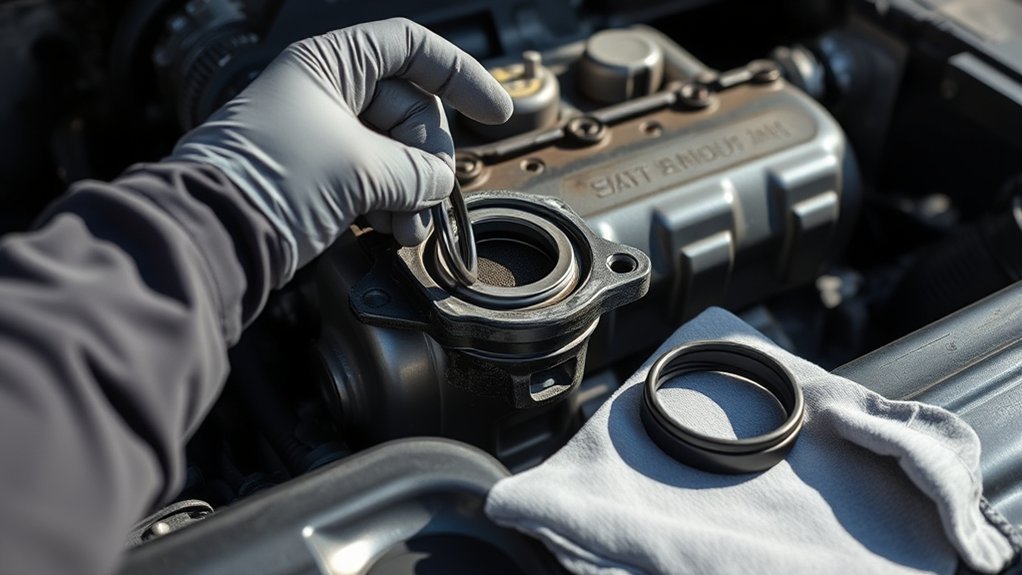
Replace both O-rings every time the cartridge is changed. Wipe the housing clean, remove grit from both grooves, and inspect the cap for cracks, rounded wrench flats, damaged threads, or a distorted sealing surface.
Coat each new O-ring with a thin film of clean engine oil. Install the large ring in its machined groove and the small ring on the center drain plug. Do not roll, stretch, or twist either seal. Install the new cartridge element into the housing, then thread the housing into the engine by hand.
Once the cap turns smoothly by hand and seats against the filter bracket, torque it to 18 ft-lb (25 N·m). Install the small drain plug with its new O-ring and torque it to 10 ft-lb (13 N·m). More torque does not improve the seal; it increases the risk of cap damage and difficult removal at the next service.
[Products Worth Considering]

[ELIMINATE OIL LEAKAGE RISK] Engineered to replace factory part numbers 15620-31060, 1562031060, 15643-31050, 1564331050. Features a high-grade pre-installed rubber O-ring seal that ensures a tight, leak-proof barrier, maintaining optimal engine oil pressure and preventing costly drips.

【OIL FILTER HOUSING CAP ASSEMBLY COMPATIBLE WITH】15620-31060, 1562031060, 15643-31050, 1564331050, Oil Filter Housing Cap Assembly Is 100% Rigorously Tested Before Shipping. Check The Part Number To Confirm The Compatibility Before Purchase.

SUPERIOR ENGINE PROTECTION: Designed for severe driving conditions including stop-and-go traffic, towing, and dusty environments
What Should You Inspect While the Filter Is Out?
Use the open housing as a quick inspection point. The goal is to catch a sealing problem, damaged component, or unusual contamination before refilling the engine.
- Old O-rings: Look for flattening, cuts, brittleness, swelling, or evidence that the large ring was installed in the wrong groove.
- Filter housing: Check for cracks, cross-threading, rounded wrench flats, or damaged sealing grooves.
- Filter bracket: Wipe away old oil and grit, then confirm the bracket clip and sealing surface are intact.
- Used filter media: A small amount of dark residue is normal. Glitter-like metal, large fragments, heavy sludge, or a strong fuel odor warrants further diagnosis.
- Oil drain plug and gasket: During a full oil change, install a new gasket and inspect the plug and pan threads.
How Do You Install and Torque the New Filter?
Start every threaded part by hand. If the housing binds, rocks, or does not turn smoothly, back it out and inspect the threads and O-ring position. The cap seals at the O-ring; it does not need extra torque beyond the service specification.
| Step | Action | Specification |
|---|---|---|
| 1 | Install the new cartridge filter in the clean housing | Seat fully |
| 2 | Lubricate and install the large housing O-ring | Machined groove above threads |
| 3 | Thread the housing into the bracket by hand | No cross-threading or visible O-ring |
| 4 | Torque the filter housing | 18 ft-lb (25 N·m) |
| 5 | Install the center plug with a new small O-ring | 10 ft-lb (13 N·m) |
| 6 | Refill, start the engine, and inspect for leaks | Shut off immediately if the oil-pressure light stays on |
Warning: Do not force the filter housing or place the large O-ring against the flange. A cracked cap or pinched seal can release oil quickly after startup and cause loss of oil pressure.
How Much Oil Does a 2016–2023 Tacoma 3.5L V6 Take?

Toyota lists the following drain-and-refill reference quantities with a new filter for the 2GR-FKS V6. These are starting points, not a substitute for the dipstick.
| Model Years | Configuration | Reference Capacity With Filter |
|---|---|---|
| 2016–2020 | Without towing package | 6.1 US qt (5.8 L) |
| 2016–2020 | With towing package | 6.2 US qt (5.9 L) |
| 2021–2023 | 2GR-FKS V6 | 5.9 US qt (5.6 L) |
If you replaced only the filter, add only enough oil to restore the correct dipstick level. For routine maintenance, replacing the oil and filter together is simpler and follows Toyota’s scheduled service wording.
- Confirm the oil-pan drain plug, filter housing, and center plug are installed.
- Add slightly less than the model-year reference quantity through a clean funnel.
- Reinstall the oil cap and dipstick.
- Start the engine and verify that the oil-pressure warning light goes out promptly.
- Let the engine idle briefly, then shut it off and inspect the housing, center plug, and oil-pan drain plug for leaks.
- Wait more than five minutes on level ground, check the dipstick, and add oil in small amounts until the level is correct.
Note: Do not pour in a generic “Tacoma capacity” without checking the year and configuration. Overfilling and underfilling are both harmful; the rested dipstick reading is the final authority.
How Do You Reset the Tacoma Maintenance Reminder?
Reset the maintenance reminder after completing the required service. The control sequence varies by model year and instrument cluster: some third-generation Tacomas use the trip meter and ignition switch, while others use steering-wheel controls and the vehicle-settings menu.
Use the procedure in the owner’s manual for your exact year through Toyota’s official manuals page. A maintenance reminder is mileage-based; it is not the same as an oil-pressure warning. If the red oil-pressure light stays on after startup, shut the engine off immediately and inspect the oil level and service area.
What Should You Check After the Oil Filter Change?
After the first warm-up and short drive, park on level ground and inspect the filter housing, center plug, and oil-pan drain plug again. Fresh oil can spread across a skid plate and make the source difficult to identify, so wipe any service spills before the test drive.
Check the Oil Level Regularly
Check the engine-oil level about once a month and before towing or long trips. Use the same level surface and wait several minutes after shutdown so readings are consistent. A falling level, fresh drips, or a burning-oil smell after service should be investigated promptly.
Inspect the Housing and Skid Plate
Confirm the cartridge cap is dry, the center plug is dry, and the skid-plate hardware is secure. Listen for abnormal ticking or rattling on startup. If the oil-pressure warning light appears, stop the engine rather than waiting to see whether the noise clears.
How Should You Dispose of Used Oil and the Filter?
Never pour used motor oil on the ground, into a storm drain, or into household trash. The U.S. Environmental Protection Agency recommends storing used oil in a clean, leak-proof container and taking it to a recycling or collection location. Drain the cartridge and package it according to local requirements. Many auto-parts stores, repair shops, and municipal collection centers accept DIY used oil.
What Can Go Wrong After a Tacoma Oil Filter Change?
| Problem | Likely Cause | What to Do |
|---|---|---|
| Oil dripping from filter housing | Large O-ring in the wrong groove, pinched seal, reused O-ring, cracked cap, or damaged sealing surface | Shut off the engine, remove the cap, inspect the groove and housing, and reinstall with new seals |
| Oil leaking from center plug | Small O-ring omitted, pinched, or damaged; plug loose or over-tightened | Replace the small O-ring and torque the plug to 10 ft-lb |
| Filter cap will not loosen | Wrong wrench, poor wrench engagement, or prior over-tightening | Use a close-fitting 64.3 mm 14-flute wrench and steady force; do not hammer or crush the cap |
| Housing will not seat smoothly | Cross-threading, debris, or large O-ring installed against the flange | Back it out immediately, clean the threads, and place the O-ring in the machined groove |
| Oil-pressure light stays on | Low oil level, major leak, incorrect installation, or loss of oil circulation | Turn off the engine immediately and diagnose before restarting |
| Maintenance reminder still appears | Reset sequence not completed for that instrument cluster | Repeat the owner-manual procedure for the exact model year |
Frequently Asked Questions
Does every 2016–2023 Toyota Tacoma use a cartridge oil filter?
No. The 3.5L 2GR-FKS V6 uses a replaceable cartridge element, while the 2.7L 2TR-FE four-cylinder uses a spin-on filter. Confirm the engine or VIN before buying parts or following a removal procedure.
What size oil-filter wrench fits the third-generation Tacoma V6?
Use a close-fitting 64.3 mm 14-flute Toyota/Lexus cartridge-cap wrench. It is commonly advertised as a 64 mm 14-flute wrench. Confirm that the tool is listed for the 2GR-FKS housing.
What are the Tacoma V6 oil-filter housing torque specs?
Torque the cartridge housing to 18 ft-lb (25 N·m) and the small center drain plug to 10 ft-lb (13 N·m). Start both parts by hand and make sure neither O-ring is pinched.
How often should I change the oil filter on a Tacoma?
For normal driving with the specified 0W-20 oil, Toyota commonly schedules engine oil and filter replacement at 10,000 miles or 12 months. Qualifying special operating conditions can shorten the interval to 5,000 miles or six months. Follow the maintenance guide for your exact model year and use.
Can I reuse the old O-rings?
No. Replace both O-rings at every cartridge service. Heat and compression flatten the seals, and a reused ring is more likely to leak. Lubricate the new rings with clean oil and install them in their correct grooves.
How much oil does a 2016–2023 Tacoma 3.5L V6 take with a new filter?
Toyota lists 6.1 quarts for 2016–2020 V6 trucks without the towing package and 6.2 quarts with the towing package. For 2021–2023 V6 models, Toyota lists 5.9 quarts. These are reference quantities; wait more than five minutes after shutdown and confirm the final level on the dipstick.
Can I change the oil filter without changing the oil?
Yes, but oil will drain from the cartridge housing and the engine level must be checked and corrected afterward. For routine scheduled maintenance, replacing the oil and filter together follows Toyota’s service wording and makes the refill amount easier to verify.
What should I do if the oil-pressure light stays on after the change?
Turn the engine off immediately. Check the dipstick, filter housing, center plug, and oil-pan drain plug for low oil or a major leak. Do not keep idling or driving while the oil-pressure warning remains on.
Conclusion
Changing the cartridge oil filter on a 2016–2023 Toyota Tacoma 3.5L V6 is straightforward once the engine is correctly identified. Use the 64.3 mm 14-flute cap wrench, replace both O-rings, torque the housing to 18 ft-lb and the center plug to 10 ft-lb, then refill according to the model-year manual and verify the dipstick. Before driving, complete a leak check and make sure the oil-pressure warning light goes out normally.
Sources
- Toyota Owners Manuals and Warranties — official access point for model-year Tacoma owner and warranty/maintenance manuals
- Toyota 2023 Tacoma Warranty & Maintenance Guide — scheduled service and special-operating-condition intervals
- Toyota Genuine Parts 2023 Oil Filter Application Chart — engine-specific filter types and Toyota part references
- Toyota Replaceable Element Oil Filter 04152-YZZA1 — cartridge-element reference
- Toyota Technical Information System — official service-information access for repair procedures and torque specifications
- American Petroleum Institute Oil Categories — current API and ILSAC gasoline-engine oil information
- U.S. EPA Used Oil Recycling Guidance — storage and recycling guidance for used motor oil