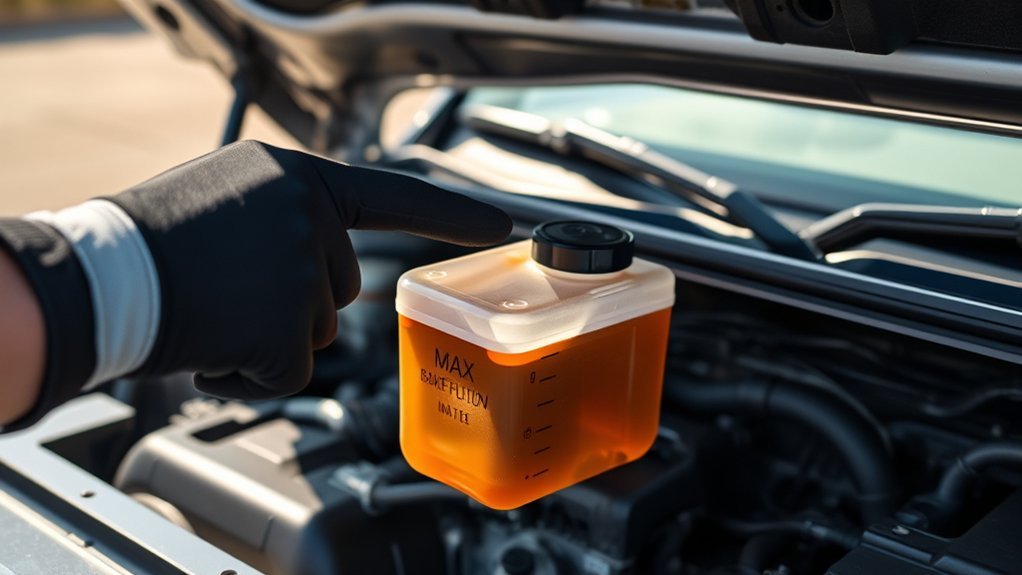
Checking the brake fluid level in your Toyota Tacoma is a simple safety check that can help you catch leaks, worn brake components, or contaminated fluid before they affect stopping performance. You usually do not need to open the reservoir to check the level; just inspect the fluid through the translucent reservoir and compare it with the MIN and MAX marks.
Quick Answer
To check the brake fluid level in a Toyota Tacoma, park on level ground, open the hood, find the brake fluid reservoir near the rear of the engine bay, and confirm the fluid sits between the MIN and MAX lines. If it is below MIN, check for leaks or worn brake pads before adding the correct fluid.
Key Takeaways
- Check the brake fluid with the Tacoma parked on a level surface and the engine off.
- The fluid should stay between the MIN and MAX marks on the reservoir.
- Use only the brake fluid type listed in your owner’s manual or on the reservoir cap.
- Dark, cloudy, low, or fast-dropping fluid means the brake system needs closer inspection.
- Brake fluid can damage paint and irritate skin or eyes, so handle it carefully.
At a Glance
| Time Required | 5 to 10 minutes |
| Difficulty | Easy |
| Tools Needed | Flashlight, clean rag, gloves, safety glasses, and a clean funnel if adding fluid |
| Cost | Free to check; a small bottle of brake fluid is usually inexpensive if topping off is needed |
Locate the Brake Fluid Reservoir
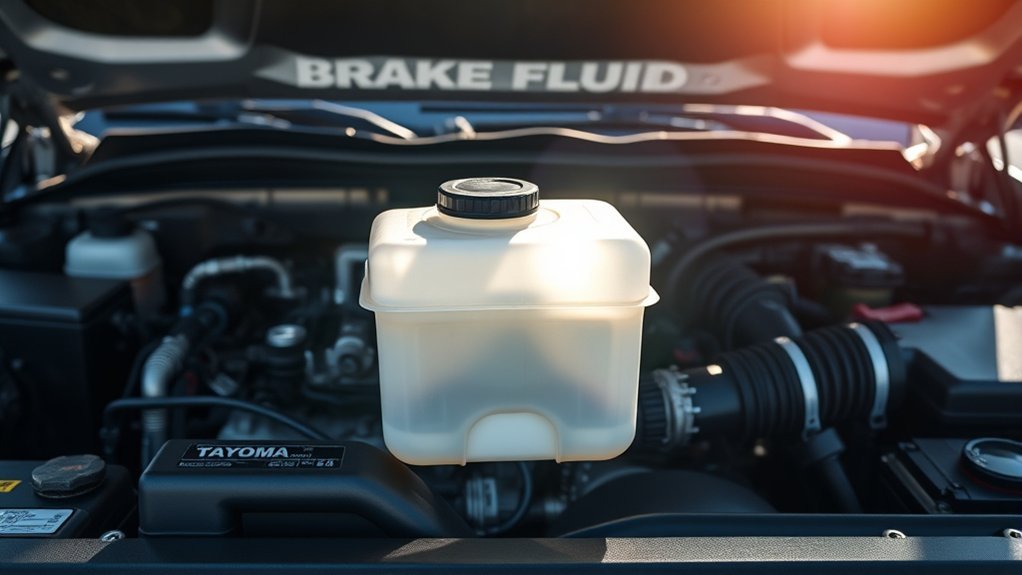
Open the hood and look near the back of the engine bay, usually on the driver-side firewall area. The brake fluid reservoir is a small translucent plastic tank mounted above the brake master cylinder. It normally has a cap marked with brake fluid information and warning text.
Before touching the cap, wipe dirt and dust away from the top and surrounding area. Federal brake-system labeling rules require vehicles with hydraulic brakes to warn drivers to clean the filler cap before removing it and to use the recommended fluid from a sealed container.
Note: On many Tacomas, you can check the fluid level through the side of the reservoir without opening the cap. Only open the reservoir if you need to add fluid or inspect the condition more closely.
Prepare Your Tacoma Before Checking
For the most accurate reading, park your Tacoma on level ground. Shift into Park or set the parking brake if your truck has a manual transmission, turn the engine off, and let the engine bay cool enough to work safely.
Use a flashlight if the reservoir is hard to see. Do not shake the truck, pump the brake pedal, or remove the cap unless your specific owner’s manual gives a special procedure for your model year.
Check Brake Fluid Level Between Minimum and Maximum
Look for the MIN and MAX marks molded into the reservoir. The correct level is between those two marks. A fluid level near MAX is normal after brake service or when brake pads are newer. A slow drop over time can happen as brake pads wear, because the brake caliper pistons extend farther and more fluid stays in the lines and calipers.
What If the Level Is Low?
If the fluid is below the MIN line, do not ignore it. Low brake fluid can point to worn brake pads, a leak, or another brake-system issue. Add only the correct fluid if needed to bring the level back within range, but also inspect for the reason the level dropped.
- Check the ground under the truck for oily-looking stains near the wheels or under the engine bay.
- Look around the brake fluid reservoir, brake master cylinder, brake lines, hoses, and calipers for wetness.
- Pay attention to a soft, spongy, or sinking brake pedal.
- Take a brake warning light seriously and have the system inspected before driving farther than necessary.
Warning: If the brake pedal feels soft, the brake warning light is on, or the fluid level drops quickly after topping off, do not treat it as a normal maintenance issue. Have the brake system inspected right away.
Why the MIN and MAX Marks Matter
Brake fluid is part of the hydraulic system that transfers pedal force to the brakes. Keeping the level between MIN and MAX helps ensure the system has enough fluid for safe operation while leaving room for expansion. Overfilling can cause fluid to spill, especially during future brake pad replacement when caliper pistons are compressed.
Assess Brake Fluid Color and Condition
Fresh brake fluid is usually clear to light amber. If the fluid in your Tacoma looks dark brown, black, cloudy, or has particles floating in it, the fluid may be contaminated or old enough to need service.
Brake fluid absorbs moisture from the air over time. The National Highway Traffic Safety Administration notes that moisture absorption can lower brake fluid’s boiling point, increase the chance of vapor lock, and contribute to corrosion inside brake-system components.
Dark or cloudy brake fluid is not just cosmetic. It can be a warning sign that the fluid’s condition has changed and the brake system should be inspected.
Add Brake Fluid Safely
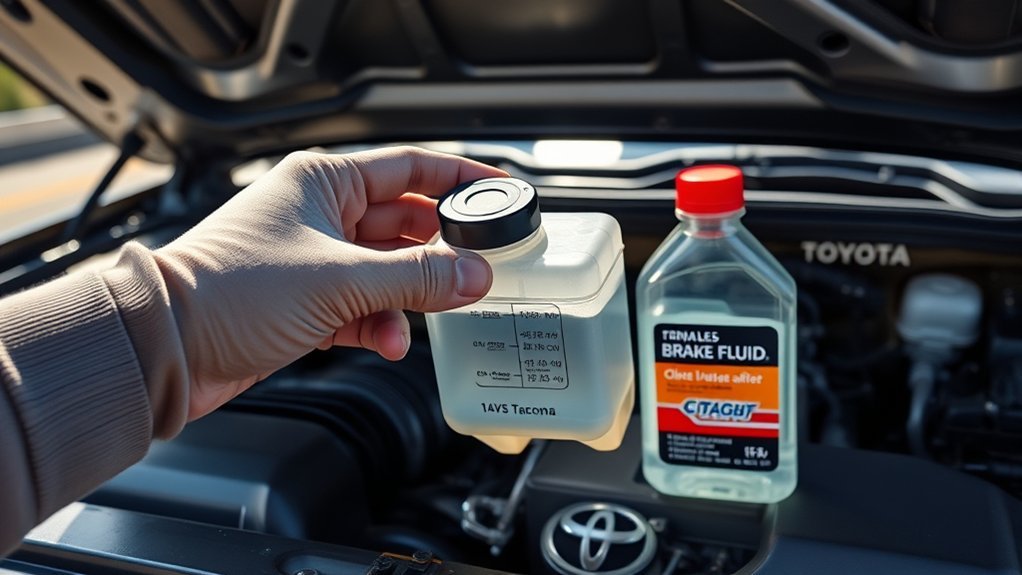
If the level is below MIN and you need to top it off, first confirm the correct brake fluid specification. For example, Toyota’s 2025 Tacoma owner information lists FMVSS No.116 DOT 3 or SAE J1703 brake fluid and FMVSS No.116 DOT 4 or SAE J1704 brake fluid for that model year. Older model years may differ, so always verify your own manual, reservoir cap, or Toyota dealer guidance.
[Products Worth Considering]
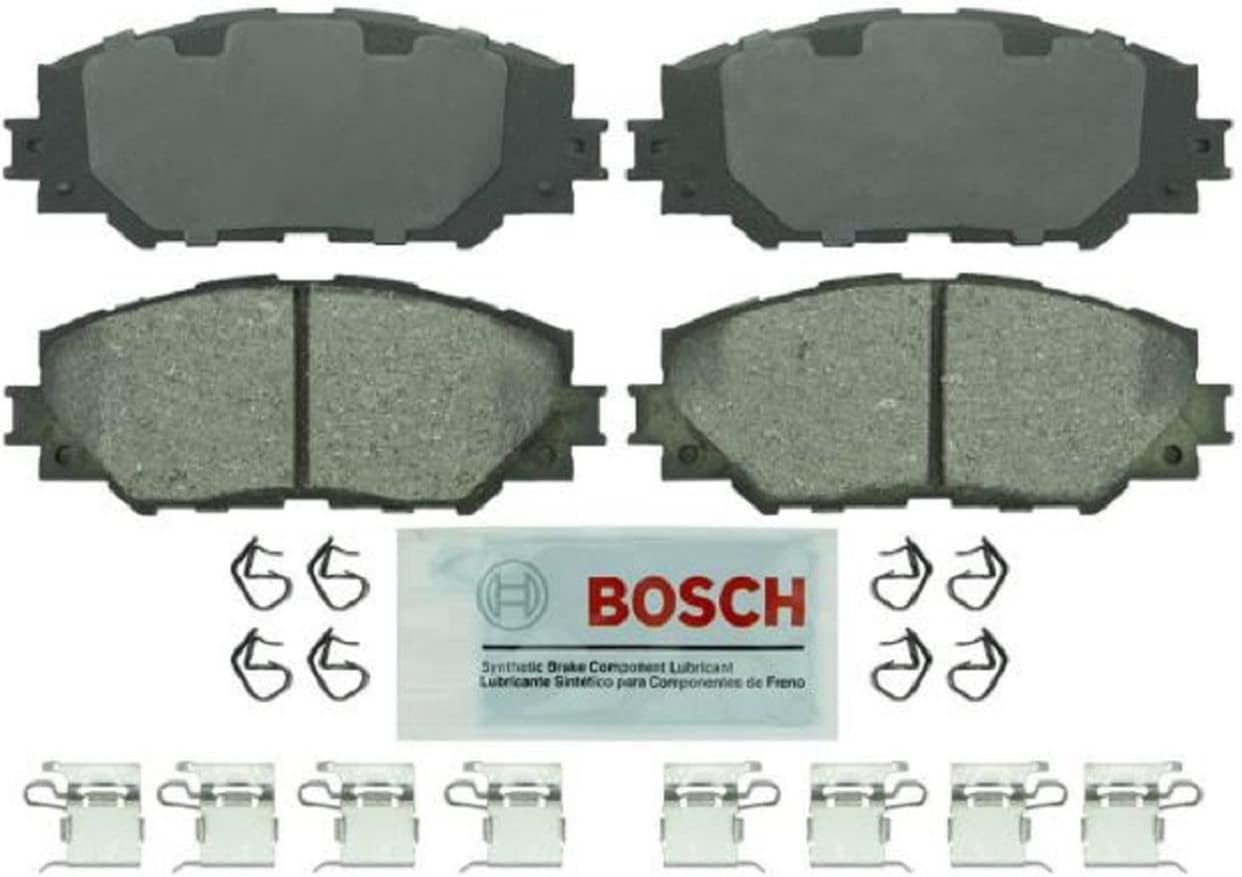
Bosch Blue ceramic front brake pads deliver dependable stopping power with platform-specific friction material designed for select Lexus, Pontiac, Scion, and Toyota vehicles. OE-style shims, slots, and chamfers help promote quiet braking, while the rust-inhibitive coating supports long-lasting performance and cleaner operation. The set includes hardware and synthetic lubricant for easier installation on one axle.

Provides an extra margin of safety in extreme braking conditions (packaging may vary)

Mixes well with conventional fluids
Proper Fluid Type Selection
Use brake fluid only from a new, sealed container. Toyota warns that brake fluid can absorb moisture from the air and that excess moisture can cause a dangerous loss of braking efficiency. Do not use old fluid from a bottle that has been sitting open in your garage.
| Brake Fluid Type | Composition | Use in a Tacoma |
|---|---|---|
| DOT 3 | Glycol-based | Common Toyota brake fluid specification; verify by model year. |
| DOT 4 | Glycol-based | Listed for some newer Tacomas; verify your manual before using. |
| DOT 5 | Silicone-based | Do not use unless your manual specifically requires it; it is not the normal Tacoma specification. |
Pro Tip: Keep the brake fluid bottle capped until you are ready to pour, use a clean funnel, and stop at the MAX line. More fluid is not better.
Safe Handling Practices
Brake fluid can irritate your skin and eyes and can damage painted surfaces. Wear gloves and safety glasses, keep a clean rag nearby, and rinse spills immediately with water. Avoid touching the inside of the cap, the reservoir opening, or the funnel tip with dirty hands or tools.
- Clean the reservoir cap and surrounding area.
- Remove the cap carefully.
- Place a clean funnel in the reservoir opening.
- Add the correct fluid slowly until it reaches between MIN and MAX.
- Reinstall the cap securely.
- Wipe away any spilled fluid and recheck the level.
Disposal of Old Fluid
Used brake fluid should be handled as hazardous automotive waste. Do not pour it onto the ground, into a storm drain, or into household plumbing. Put old fluid in a sealed, labeled container and take it to a local hazardous-waste collection site, recycling center, or repair shop that accepts used automotive fluids.
Know Your Brake Fluid Types
The safest rule is simple: match the fluid specification in your Tacoma owner’s manual or on the reservoir cap. DOT 3 and DOT 4 are common glycol-based brake fluids, but they are not a reason to guess. Different model years and brake systems can have different approved specifications.
Do not mix in DOT 5 silicone brake fluid. It is chemically different from DOT 3 and DOT 4 and is not the normal fluid for a Toyota Tacoma hydraulic brake system.
Spotting Brake Fluid Leaks
Brake fluid leaks can reduce braking ability and should be repaired promptly. Brake fluid often feels slick or oily, but it is usually thinner than engine oil. It may appear clear, amber, or brown depending on age and contamination.
- Inspect the brake fluid reservoir and master cylinder for wet areas.
- Check brake lines and hoses for corrosion, cracks, rubbing, or damp spots.
- Look behind each wheel for fluid near the caliper or wheel cylinder area.
- Watch for a brake warning light, soft pedal, or pedal travel that suddenly changes.
- Compare the fluid level after several drives; a fast drop is not normal.
Follow Recommended Maintenance Intervals
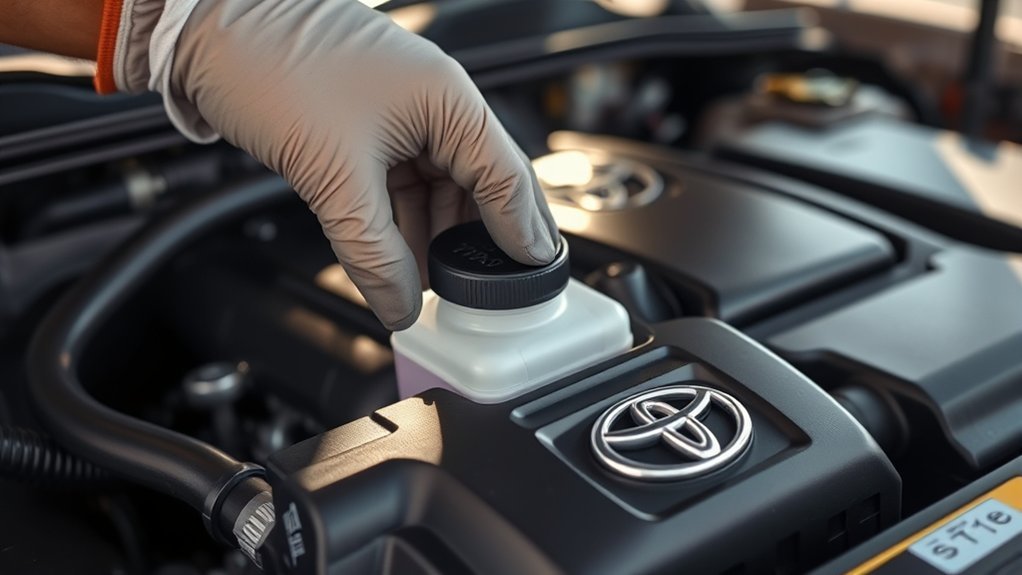
Check your brake fluid level regularly as part of routine vehicle care. A monthly visual check is a practical habit, especially before towing, off-road driving, long road trips, or heavy stop-and-go use.
Toyota maintenance information for recent Tacomas includes inspecting brake fluid level and condition during scheduled maintenance. Your exact service interval can vary by model year, driving conditions, and dealer recommendations, so use your owner’s manual and maintenance guide as the final source.
| Maintenance Task | Suggested Timing | What to Look For |
|---|---|---|
| Check brake fluid level | Monthly and before long trips | Fluid between MIN and MAX |
| Inspect fluid condition | During routine checks and scheduled service | Clear to light amber, not cloudy or dirty |
| Inspect for leaks | Any time the level is low or the pedal changes | Wet fittings, stains, warning lights, or soft pedal |
| Brake fluid exchange | When your manual, dealer, or fluid condition calls for it | Dark fluid, moisture contamination, or brake service recommendation |
Consult Your Owner’s Manual for Details
Your owner’s manual is the best source for your specific Tacoma because brake fluid specifications can vary by model year. Check it for the reservoir location, approved fluid type, maintenance schedule, and any special inspection steps.
- Find the exact brake fluid specification for your model year.
- Confirm whether DOT 3, DOT 4, or a specific SAE/FMVSS standard is required.
- Follow Toyota’s maintenance schedule for fluid level and condition checks.
- Use a Toyota dealer or qualified mechanic if the brake system needs bleeding, flushing, or leak repair.
Frequently Asked Questions
Will AutoZone check your brake fluid?
Some parts stores may help with a visual fluid check, but services vary by location and staff availability. AutoZone’s published store-services page says in-store services vary by location, so call your local store first. For brake-system concerns, a Toyota dealer or qualified brake technician is the safer choice.
Can I drive my Tacoma with low brake fluid?
You should avoid driving with brake fluid below the MIN line. Low fluid can mean worn brake pads, a leak, or loss of hydraulic pressure. If the brake warning light is on or the pedal feels soft, stop driving and have the truck inspected.
What color should Toyota Tacoma brake fluid be?
Good brake fluid is usually clear to light amber. Dark brown, black, cloudy, or gritty-looking fluid can signal age, moisture, or contamination and should be checked by a qualified technician.
Can I just top off the brake fluid?
You can top off with the correct fluid if the level is low, but you should also find out why it dropped. Brake fluid does not get consumed like fuel or engine oil. A low level may be caused by brake pad wear or a leak.
What brake fluid does a Toyota Tacoma use?
Check your specific owner’s manual or reservoir cap. Some newer Tacoma owner information lists FMVSS No.116 DOT 3 or SAE J1703 and FMVSS No.116 DOT 4 or SAE J1704 brake fluid, but older model years may have different wording.
Conclusion
Regularly checking your Toyota Tacoma’s brake fluid level is one of the easiest ways to protect braking performance. Keep the fluid between MIN and MAX, use only the correct sealed brake fluid, and treat dark fluid, leaks, warning lights, or a soft pedal as signs that the brake system needs professional attention. When in doubt, follow your owner’s manual and have the truck inspected before small brake-fluid issues become safety problems.
Sources
- Toyota Owners — 2025 Tacoma Engine Compartment — brake fluid reservoir, MIN/MAX lines, approved fluid types, sealed-fluid warning, and handling cautions.
- Toyota Warranty & Maintenance Guide — Tacoma Hybrid — scheduled maintenance reference for brake fluid level and condition inspections.
- 49 CFR § 571.135 — Light Vehicle Brake Systems — federal requirements for brake fluid reservoir labeling and level indication.
- 49 CFR § 571.116 — Motor Vehicle Brake Fluids — federal brake fluid standard referenced by DOT brake fluid labeling.
- NHTSA Brake Fluid Labeling Interpretation — explains why moisture absorption can reduce brake fluid performance and safety.
- AutoZone Store Services — confirms that in-store services vary by location.