

Choosing between 0W-20 and 5W-30 for a Toyota Tacoma is not just a “thinner versus thicker” decision. The right oil depends first on your Tacoma’s model year, engine, owner’s manual, climate, towing load, mileage, and warranty status. For most late-model U.S.-market Tacomas, Toyota’s factory recommendation is the safest starting point. Use thicker oil only when your specific manual, service advisor, or operating conditions support it.
Quick Answer
Use 0W-20 if your Tacoma manual calls for it, especially on newer trucks, cold starts, and warranty-sensitive maintenance. Use 5W-30 only if your Tacoma’s manual allows it, your engine is older, or a qualified technician recommends it for high heat, heavy load, or oil consumption.
Key Takeaways
- 0W-20 flows better when cold and is the factory choice for many newer Tacomas, including the 2024 Tacoma, where Toyota lists SAE 0W-20 ILSAC GF-6A oil.
- 5W-30 is thicker at operating temperature and may suit some older Tacoma engines or severe-use cases only when the manual or a technician supports it.
- Do not assume Toyota approves every grade from 0W-20 to 15W-40 for every Tacoma. Oil grades vary by year, engine, market, and manual.
- For topping up, use the same grade already in the engine when possible, and never overfill past the dipstick’s upper mark.
- If your Tacoma is under warranty, stay with the exact viscosity and oil standard printed in the owner’s manual or on Toyota’s official manual page.
Quick Pick for Tacoma Owners: Which Oil to Use Now (0W-20 vs 5W-30)
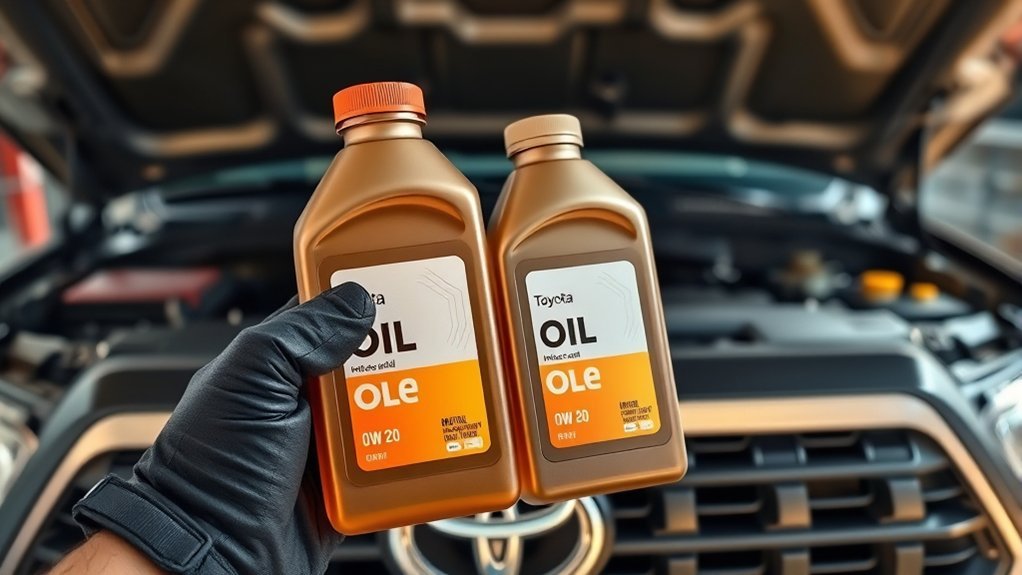
If your Tacoma’s owner’s manual says SAE 0W-20, use 0W-20 as your default. Toyota’s 2024 Tacoma maintenance data lists ILSAC GF-6A multigrade engine oil with SAE 0W-20 as the recommended viscosity. Toyota also states that SAE 5W-20 may be used only if 0W-20 is unavailable, and it should be replaced with 0W-20 at the next oil change.
Pick 0W-20 when you want the safest factory-match choice for newer Tacoma engines, better cold-start flow, and the best chance of maintaining fuel economy and warranty compliance. It is especially appropriate for daily driving, cold climates, short trips, and modern engines with tight oil-control systems.
Pick 5W-30 only when it is correct for your specific Tacoma or when a qualified technician recommends it. It is thicker at high temperature than 0W-20, so it can help maintain oil film strength in some older engines, high-mileage engines, or engines that see heavy heat and load. That does not mean it is automatically better for a newer Tacoma that was engineered for 0W-20.
Warning: Do not switch to 5W-30, 10W-40, or 15W-40 just because you tow, drive in summer heat, or read an owner forum recommendation. If your manual does not approve that grade, the thicker oil can reduce cold-start flow, affect fuel economy, and create warranty risk.
[Products Worth Considering]

These genuine Toyota oil drain plug gaskets are designed to help maintain a reliable seal during oil changes, reducing the chance of leaks and supporting proper engine maintenance. With an OEM fit and trusted Toyota quality, they are a practical choice for routine service on compatible vehicles. The convenient quantity pack is ideal for keeping multiple maintenance intervals covered.

This 12-pack oil filter and drain plug washer set is designed for a wide range of Toyota and Scion vehicles, helping support clean oil flow and dependable engine performance. It replaces several common OE part numbers and offers an easy-fit solution for routine maintenance. Built with corrosion-resistant materials and efficient filtration, it helps keep engine contaminants out and supports longer service life.

The Funnel King 32950 Oil Drain Pan is a compact fluid catch basin designed for clean, easy draining during routine maintenance. Its open shape and pour edge help transfer used oil, coolant, and other shop fluids with less mess, while the lightweight polypropylene construction stands up to common automotive chemicals. Sized to fit under many cars and small engines, it is a practical choice for garages, workshops, and DIY oil changes.
What Oil Viscosity Numbers Mean for Your Tacoma
Oil grades such as 0W-20 and 5W-30 come from the SAE J300 engine oil viscosity classification. The first number with the “W” describes cold-temperature performance. The second number describes viscosity at high operating temperature.
- 0W flows better in cold-start conditions than 5W.
- 5W is still a winter-grade oil, but it is not as cold-flow focused as 0W.
- 20 is thinner at operating temperature than 30.
- 30 gives a thicker hot oil film than 20, but that does not make it the right choice for every engine.
- Oil quality matters too: use the API or ILSAC performance standard required by the manual, not just the viscosity number.
The first number tells you how the oil behaves during cold starts. The second number tells you how thick it remains when hot. For a Tacoma, the owner’s manual still decides which grade is correct.
The American Petroleum Institute explains that current gasoline-engine categories such as API SP and ILSAC GF-6A are designed for modern protection needs, including timing-chain wear, deposits, and low-speed pre-ignition protection. For Tacoma owners, that means the bottle should match both the viscosity and the oil standard your manual requires.
Factory vs. Real-World: When to Deviate From 0W-20?
Factory oil recommendations are not random. Toyota sets them around engine clearances, variable valve timing, emissions systems, fuel economy, cold-start wear, testing, and warranty requirements. For many newer Tacomas, 0W-20 is the baseline because it supports quick lubrication during startup and efficient operation once warm.
Real-world use still matters. A Tacoma used for mountain towing, off-road crawling, desert heat, or high-mileage work may place more thermal stress on oil than a commuter truck. In those cases, a thicker oil such as 5W-30 may be considered only after checking your exact manual and, ideally, confirming with a Toyota service department or an experienced technician.
Note: Toyota oil recommendations can change by model year and market. A 2005-2015 Tacoma, a 2020 Tacoma, and a 2024 Tacoma may not share the same oil grade. Use your VIN, owner’s manual, oil cap, or Toyota’s official manuals page before buying oil.
Deviating from 0W-20 makes the most sense when you have evidence, not guesswork. Watch for oil consumption, low hot-idle oil pressure, abnormal engine noise, or oil analysis results. If none of those issues exist and your manual specifies 0W-20, staying with the factory grade is usually the smarter move.
Tacoma Oil Grade by Model Year and Engine
Use this table as a planning guide, not as a replacement for the manual. Toyota’s official manuals and warranty pages remain the final source for your exact Tacoma.
| Tacoma type | Common factory direction | Best owner action |
|---|---|---|
| Many 2016-2023 U.S.-market Tacomas | Often specified for SAE 0W-20, depending on engine and manual. | Use 0W-20 unless your exact manual says otherwise. |
| 2024+ Tacoma with 2.4L turbo engine | Toyota lists SAE 0W-20 ILSAC GF-6A; 5W-20 is temporary if 0W-20 is unavailable. | Use 0W-20 and replace temporary 5W-20 at the next oil change. |
| Older Tacoma engines | Some older manuals specify 5W-30 or list a temperature-based viscosity chart. | Follow the year-specific manual, especially for high-mileage engines. |
| Modified, high-mileage, or severe-use trucks | Needs may differ if the engine has wear, oil consumption, turbo heat, or sustained load. | Confirm with a technician before moving thicker than factory spec. |
[Products Worth Considering]

Castrol EDGE 0W-20 advanced full synthetic motor oil is engineered for drivers seeking strong wear protection, excellent viscosity control, and thermal stability. It delivers superior performance in critical engine areas, including fuel economy, high-temperature protection, sludge control, and wear defense. Designed for extended oil-change intervals, it helps keep modern engines running smoothly under demanding conditions.

Castrol GTX Full Synthetic 5W-30 motor oil is designed to deliver maximum engine protection in severe driving conditions. It helps fight wear, control sludge, and resist viscosity breakdown while supporting longer intervals between oil changes. Formulated to meet or exceed key industry and vehicle manufacturer specifications, it offers dependable performance for modern engines.
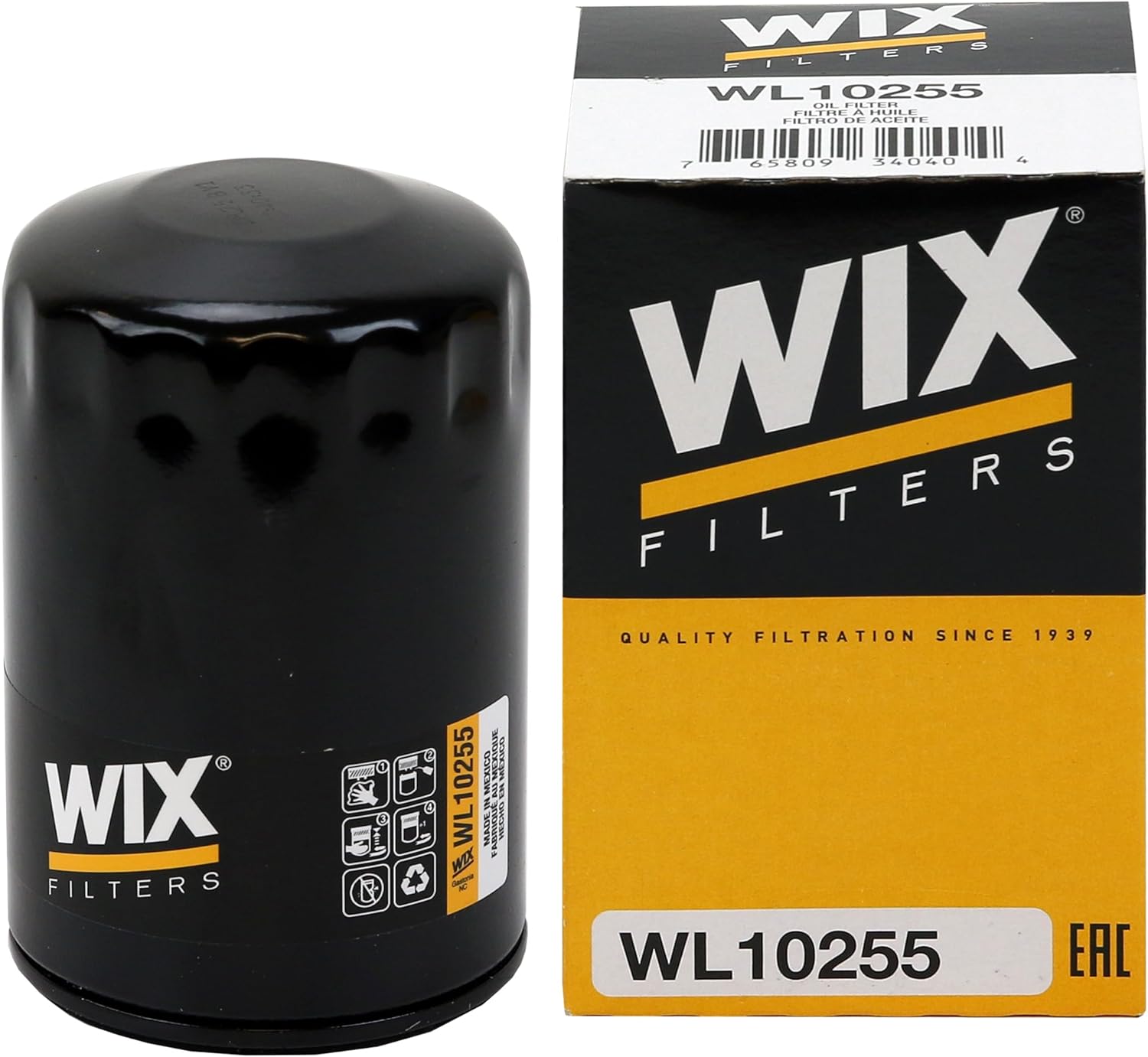
WIX WL10255 is a premium oil filter designed for synthetic and high-mileage oils, delivering reliable protection in everyday driving, towing, stop-and-go traffic, and long highway trips. Its advanced blended media captures fine contaminants with high efficiency, while the silicone anti-drainback valve helps prevent dry starts and supports dependable engine performance over extended service intervals.
Use Cases by Climate & Driving: Which Viscosity to Choose
Climate and driving style should refine your oil choice, but they should not override the manual without a good reason. Start with the grade Toyota lists for your Tacoma, then consider these use cases:
- Cold weather daily driving: Choose 0W-20 when specified. Its 0W cold-flow rating helps the oil move quickly at startup.
- Normal commuting and mixed use: Use the factory grade. For many newer Tacomas, that means 0W-20.
- Hot weather and long highway climbs: Stay with the manual first. If oil temperature, pressure, consumption, or noise becomes a real issue, ask a technician whether 5W-30 is appropriate.
- Towing and payload: Do not jump straight to a heavier grade. Follow Toyota’s maintenance schedule and severe-service guidance before changing viscosity.
- Older or high-mileage engines: 5W-30 may help some worn engines maintain a stronger hot oil film, but only if it fits the engine’s specification and condition.
- Off-road use: Heat, low-speed airflow, dust, and engine load matter more than viscosity alone. Use the correct oil, shorten service intervals when needed, and keep the cooling system healthy.
Pro Tip: If your Tacoma tows, idles off-road, or runs dusty trails, the bigger win is often a shorter oil-change interval, a quality filter, and regular level checks—not automatically thicker oil.
[Products Worth Considering]

This BETOOLL oil filter wrench kit makes removing and installing oil filter caps faster and cleaner with a complete set of sockets, a ratchet, and a ring wrench. It includes multiple metric sizes to match many popular vehicle makes and models, helping users quickly find the right fit for routine oil changes. Built from heavy-duty aluminum with a corrosion-resistant finish, it is designed for reliable use on tight oil filter caps.
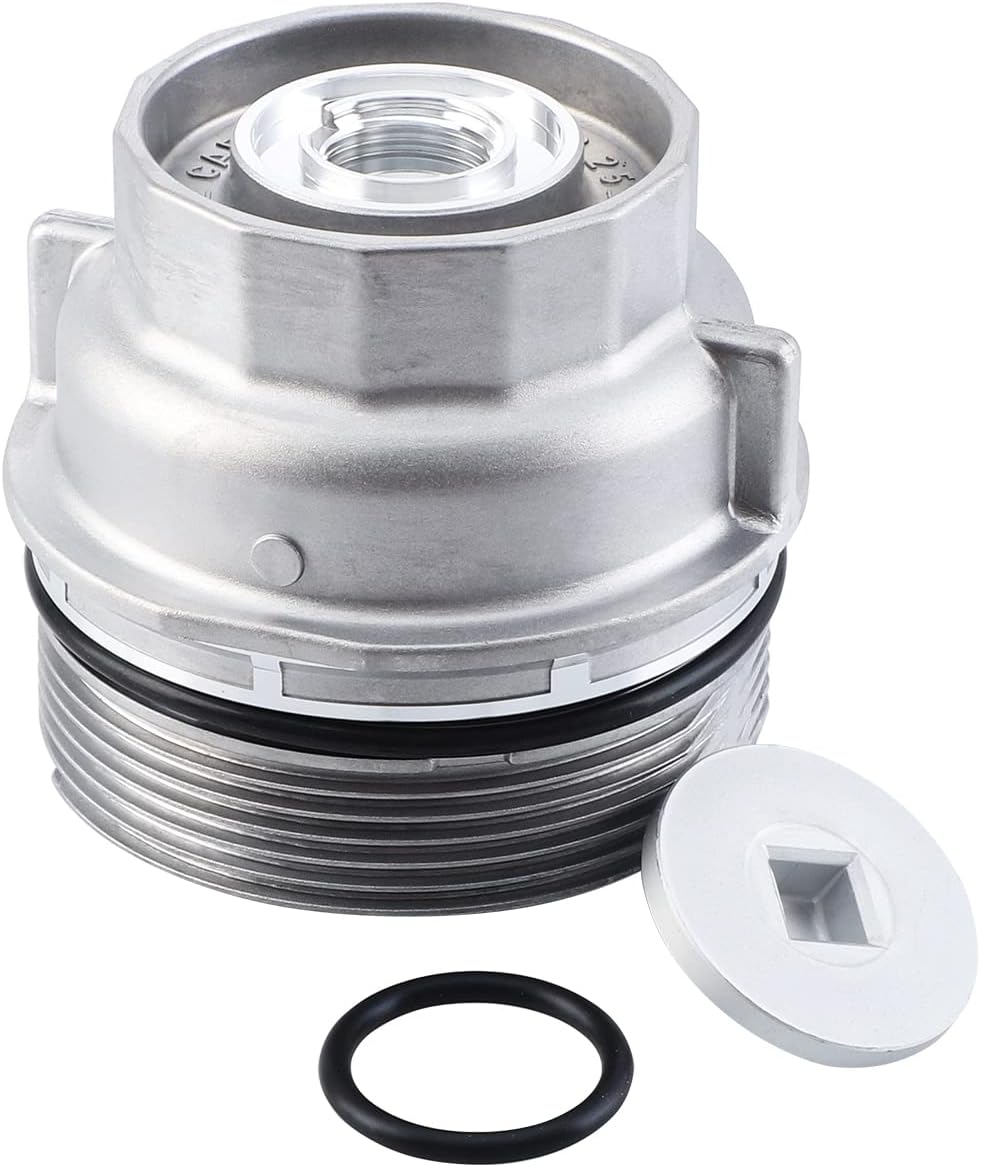
This oil filter housing cap assembly is designed as a replacement for select Toyota and Lexus vehicles, helping restore proper sealing and reliable oil filter function during routine maintenance. Built to meet OEM standards, it supports leak-free performance and long-lasting durability while fitting a wide range of popular models across multiple years.
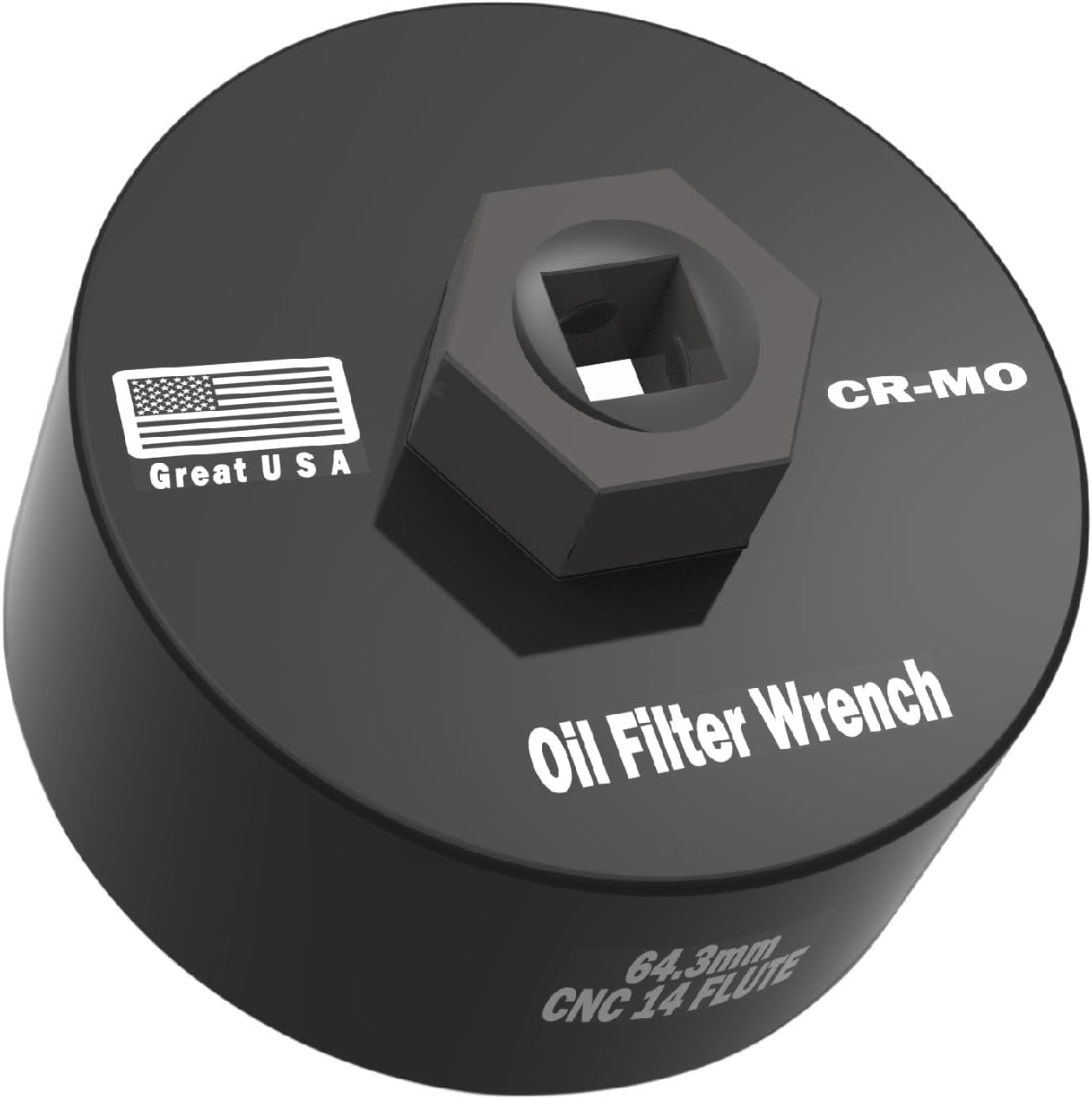
This precision oil filter wrench is designed for Toyota and Lexus cartridge-style filters, delivering a secure 14-flute fit for smooth removal and installation without slipping. Made from hardened chrome-molybdenum steel with a low-profile design, it works well in tight engine spaces and pairs with common drive tools for easier oil changes.
How to Change, Top Up, and Verify the Correct Oil Grade
At a Glance
| Time Required | 30-60 minutes for a careful DIY oil and filter change |
| Difficulty | Moderate; easier with proper ramps or a safe lift point |
| Tools Needed | Drain pan, socket set, oil filter wrench or cap tool, funnel, gloves, rags, torque wrench, new drain-plug gasket, correct oil, correct filter |
| Cost | Usually about the cost of oil, filter, gasket, and disposal supplies; shop pricing varies by location |
Before changing oil, verify three things: the viscosity grade, the oil performance standard, and the fill capacity for your exact Tacoma. The oil cap, owner’s manual, and Toyota’s digital manual are better sources than a generic chart.
- Park level and secure the truck. Use a flat surface, set the parking brake, and support the vehicle safely if you need extra clearance.
- Warm the engine briefly. Warm oil drains faster, but do not work around dangerously hot oil or exhaust parts.
- Drain the old oil. Place a drain pan under the plug, remove the plug, and let the oil drain fully.
- Replace the filter. Remove the old oil filter, confirm the old gasket came off, lightly oil the new gasket, and install the new filter correctly.
- Install the drain plug with a new gasket. Tighten it to the torque listed in your manual or service data. Do not guess if you do not know the specification.
- Add oil slowly. Use a clean funnel and add slightly less than the full capacity first.
- Check the dipstick. Start the engine briefly, shut it off, wait a few minutes, then check the level. Toyota’s 2024 Tacoma instructions say to keep the level between the low mark and refill upper limit mark and not exceed the upper mark.
- Inspect for leaks. Check the drain plug and oil filter area before driving.
- Reset the maintenance reminder. Toyota notes that the engine oil maintenance data should be reset after changing the oil.
- Record the service. Note the date, mileage, oil grade, oil standard, filter used, and any unusual oil consumption.
Warning: Used motor oil should never go down a drain, into soil, or into regular trash. The U.S. EPA recommends recycling used oil and oil filters through proper collection centers.
Can You Mix 0W-20 and 5W-30 in a Tacoma?
For an emergency top-up, mixing small amounts of compatible gasoline-engine oils is usually better than driving with a low oil level. But it is not ideal as a planned maintenance strategy. Mixing 0W-20 and 5W-30 changes the final viscosity and may move the oil away from what Toyota tested for your engine.
If you must top up on the road, add the closest approved oil you can find, drive gently, and return to the correct oil grade at the next oil change. For a newer Tacoma that specifies 0W-20, do not keep running a mixed or thicker fill longer than necessary.
Signs Your Tacoma May Not Like the Oil You Used
After changing viscosity, pay attention to how the engine behaves. One symptom alone does not prove the oil is wrong, but these signs deserve a closer look:
- Longer start-up noise after cold starts
- Lower fuel economy after switching thicker
- Oil pressure changes compared with your normal baseline
- Higher oil consumption or a burnt-oil smell
- Check-engine lights related to variable valve timing or oil-control systems
- Leaks after an oil change, especially near the filter or drain plug
If symptoms appear after a viscosity change, do not keep experimenting. Return to the manual-specified oil and inspect the level, filter, drain plug, gasket, and service records.
Frequently Asked Questions
Which oil, 0W-20 or 5W-30, has a lower viscosity?
0W-20 is the lower-viscosity oil. The 0W rating gives better cold-start flow than 5W, and the 20 hot-viscosity rating is thinner than 30 at operating temperature.
Is a higher oil grade always better for a Tacoma?
No. A higher hot-viscosity number can create a thicker oil film, but it can also reduce cold-start flow and fuel economy if the engine was designed for thinner oil. The best grade is the one specified for your Tacoma’s year, engine, and conditions.
What oil viscosity does a 2020 Toyota Tacoma use?
Many U.S.-market 2020 Tacoma models specify SAE 0W-20, but you should confirm with your owner’s manual, VIN-specific Toyota manual page, or oil cap. Do not rely on a forum post or a different model year because Toyota oil recommendations vary by year and engine.
Can I use 5W-30 instead of 0W-20 in a Tacoma?
Only use 5W-30 if your Tacoma manual allows it or a qualified technician recommends it for your engine condition. If your manual specifies 0W-20, 5W-30 is not the best default choice for normal driving.
Does towing mean I should switch from 0W-20 to 5W-30?
Not automatically. Towing may justify shorter oil-change intervals, more frequent level checks, and closer temperature monitoring. A viscosity change should come only after checking your manual or getting professional guidance.
What oil standard should I look for on the bottle?
Use the standard your manual lists. For newer gasoline Tacoma engines, that commonly means an ILSAC GF-6A or API SP oil in the correct viscosity. The front and back labels should show the certification marks and service category.
Conclusion
For most newer Toyota Tacoma owners, 0W-20 is the safest default when the manual specifies it. It supports cold starts, fuel economy, and factory-tested lubrication requirements. 5W-30 can be useful in the right engine, especially some older or worn engines, but it should not be treated as a universal upgrade.
The best rule is simple: match your Tacoma’s year, engine, oil cap, manual, oil standard, and driving conditions. If you are towing, off-roading, or dealing with high mileage, focus first on oil level, service interval, temperature control, and accurate records. Change viscosity only when the evidence supports it.
Sources
- Toyota 2024 Tacoma Maintenance Data — supports SAE 0W-20, ILSAC GF-6A, and Toyota’s explanation of oil viscosity numbers.
- Toyota 2020 Tacoma Manuals and Warranties — supports using Toyota’s official manual source for model-specific maintenance details.
- Toyota Oil Change Interval Support — supports Toyota’s synthetic oil interval guidance and the importance of following the manual.
- SAE J300 Engine Oil Viscosity Classification — supports the explanation of SAE viscosity grades.
- American Petroleum Institute Oil Categories — supports API SP and ILSAC GF-6A oil-standard guidance.
- U.S. EPA Used Oil Recycling Guidance — supports safe used motor oil and filter recycling.

[…] For 2024, Toyota specifies ILSAC GF-6A SAE 0W-20. The manual permits SAE 5W-20 temporarily when 0W-20 is unavailable and says to return to 0W-20 at the next oil change. For a 2020-2023 truck, check the oil cap and the exact model-year manual before applying that exception. For a more detailed viscosity comparison, see the Toyota Tacoma oil grade guide. […]
[…] Do not copy these specifications to another model year. Tacoma engines and refill quantities changed over time. For broader year coverage, see the Tacoma oil-capacity guide and the Tacoma oil-grade guide. […]
[…] provides equal protection. For deeper technical specifications, refer to our detailed Tacoma oil viscosity guide and Tacoma oil capacity […]