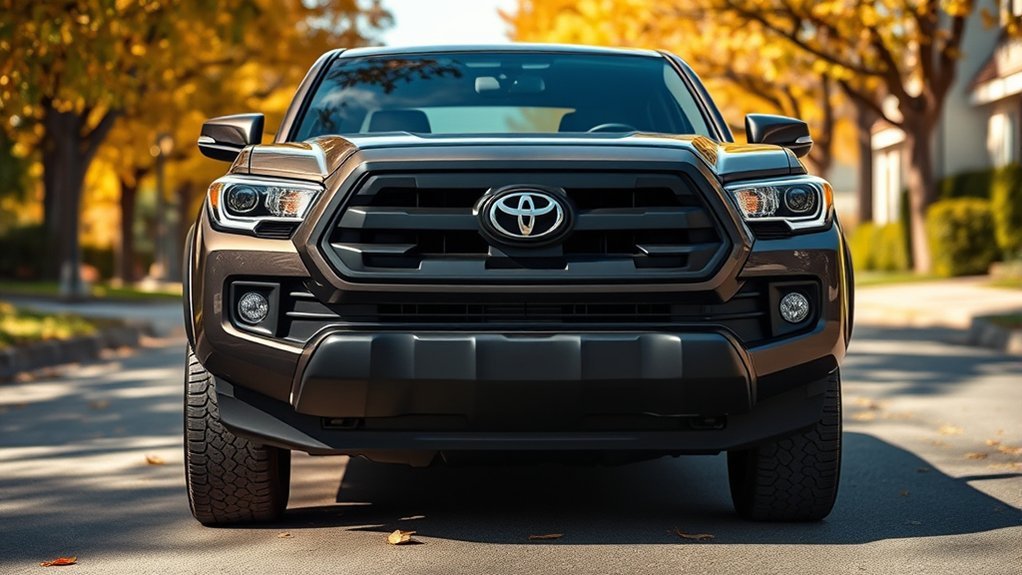
The Toyota Tacoma i-FORCE MAX hybrid system combines a 2.4-liter turbocharged four-cylinder engine, a 48-hp electric motor integrated into an 8-speed automatic transmission, and a 1.87-kWh nickel-metal hydride battery. The motor adds torque during acceleration, the engine handles sustained power demands, and the motor-generator recovers some energy while the truck slows. Toyota rates the system at up to 326 horsepower and 465 lb-ft of torque. It charges itself while you drive, requires no external plug, and is tuned mainly to improve truck performance rather than deliver economy-car fuel mileage.
By: Auto Review Nest Editorial Team · Last updated: July 15, 2026
How this article was verified: Powertrain specifications were checked against Toyota’s current Tacoma model information, Toyota USA Newsroom materials, Toyota owner information, and FuelEconomy.gov. This is a technical explainer based on published information, not an independent teardown or road-test report.
Quick Answer
The Toyota Tacoma i-FORCE MAX hybrid works by pairing a 2.4-liter turbocharged gas engine with a 48-hp motor inside the 8-speed automatic transmission. The motor supplies quick torque during acceleration, the engine carries sustained loads, and regenerative braking returns some deceleration energy to the 1.87-kWh battery. The system is self-charging, not plug-in, and produces up to 326 horsepower and 465 lb-ft of torque.
Key Takeaways
- Tacoma i-FORCE MAX uses a 2.4-liter turbocharged four-cylinder hybrid powertrain, not the Tundra’s 3.5L twin-turbo V6 system.
- Toyota rates the Tacoma system at up to 326 horsepower and 465 lb-ft of torque.
- The 48-hp motor is integrated into the 8-speed automatic transmission and assists during acceleration, climbing, towing, and other high-demand situations.
- The 1.87-kWh battery charges through engine operation and regenerative braking. The Tacoma i-FORCE MAX is not a plug-in hybrid.
- FuelEconomy.gov lists the referenced 2026 Tacoma Hybrid 4WD configuration at 23 mpg combined, 22 city, and 24 highway.
- The system prioritizes torque, response, towing, and off-road capability over maximum fuel economy.
How Does the Tacoma i-FORCE MAX Work at a Glance?
The Tacoma’s hybrid controller automatically changes the balance between engine power, motor assistance, battery charging, and energy recovery. You do not manually select which power source moves the truck.
| Driving Situation | What the Hybrid System Does | What You Notice |
|---|---|---|
| Starting and low-speed movement | The electric motor can assist the engine and smooth the initial response. The engine may stop or restart automatically when conditions allow. | Prompt response without selecting a separate hybrid mode. |
| Acceleration or climbing | The turbo engine and electric motor can provide power together. | Strong low-rpm torque for merging, grades, trails, or added load. |
| Steady cruising | The engine handles most sustained demand while the system varies assistance and charging. | Conventional stepped shifts from the 8-speed automatic. |
| Coasting and braking | The motor-generator recovers some energy and returns it to the battery. | Regenerative and friction braking work together. |
| Towing or prolonged high demand | The engine provides sustained power while motor assistance varies with charge, temperature, speed, and demand. | Hybrid assistance is automatic rather than a manually controlled boost. |
What Is the Toyota Tacoma i-FORCE MAX Hybrid System?

The Tacoma i-FORCE MAX is Toyota’s performance-focused hybrid powertrain for the fourth-generation Tacoma. It combines a 2.4-liter turbocharged inline-four engine with a 48-hp electric motor integrated into the 8-speed automatic transmission. The hybrid controller changes engine output, motor assistance, and battery charging automatically as driving conditions change.
According to Toyota, the i-FORCE MAX system produces up to 326 horsepower and 465 lb-ft of torque. The high torque output supports acceleration, climbing, off-road driving, and load-carrying situations where low-rpm response matters.
The system also uses a 1.87-kWh nickel-metal hydride battery. You do not plug it in. The truck manages battery charge through engine operation and regenerative braking, which converts part of the truck’s deceleration energy into electricity.
What Are the Main i-FORCE MAX Components?
The Tacoma i-FORCE MAX system is easier to understand when you separate its five main elements. Each component has a specific role, while the control system coordinates them automatically.
| Component | What It Does |
|---|---|
| 2.4L turbocharged four-cylinder engine | Provides sustained power for cruising, towing, climbing, and higher-speed driving. |
| 48-hp electric motor | Adds immediate torque, assists acceleration, recovers braking energy, and helps smooth power delivery. |
| 1.87-kWh NiMH hybrid battery | Stores recovered energy and supplies electricity when motor assistance is available. |
| 8-speed automatic transmission | Contains the integrated electric motor and provides conventional stepped gear changes. |
| Hybrid control system | Coordinates engine power, motor assistance, battery charge, regeneration, and transmission operation. |
Note: Toyota uses the i-FORCE MAX name on more than one truck, but the Tacoma does not use the Tundra’s larger 3.5L twin-turbo V6 hybrid system. The Tacoma version is based on a 2.4L turbocharged four-cylinder engine.
How Does the Tacoma Hybrid System Work While Driving?
The Tacoma i-FORCE MAX control system continually considers accelerator input, vehicle speed, battery charge, temperature, traction demand, transmission operation, and other conditions. It then determines how much engine power, motor assistance, or energy recovery to use.
Starting and Low-Speed Driving
At low speeds, the electric motor can assist the gasoline engine and smooth the initial response. The gas engine may stop and restart automatically when operating conditions permit, but Toyota does not list a driver-selectable EV mode among the Tacoma’s published drive modes.
Any engine-off operation is controlled by the truck rather than selected by the driver. The Tacoma should not be treated as an electric truck or a plug-in hybrid capable of extended battery-only travel.
Acceleration and Passing
When you request more power, the turbocharged engine and electric motor can work together. The motor responds quickly, while the engine supplies the sustained output needed as speed and load increase.
Toyota rates peak system torque at 465 lb-ft and says the powertrain delivers its strong response from low engine speeds. This is useful for merging, passing, climbing, towing, and maintaining controlled momentum off-road.
Cruising
During steady driving, the gasoline engine normally carries most of the sustained load. The hybrid system can vary electric assistance or battery charging according to speed, terrain, temperature, battery charge, and driver demand.
The 8-speed automatic provides stepped gear changes rather than the continuously varying engine sound associated with many economy-focused hybrid systems.
Regenerative Braking
When you release the accelerator or apply the brakes, the electric motor can operate as a generator. Toyota’s owner information explains that during regenerative braking, the rotating wheels help drive the motor-generator and return electricity to the hybrid battery.
Regeneration does not replace the conventional friction brakes. The two systems work together. Light deceleration may allow greater energy recovery, while harder stops require more friction-brake force.
Why Does the Tacoma Hybrid Use a 2.4L Turbo Four?
The Tacoma i-FORCE MAX uses a 2.4-liter turbocharged four-cylinder engine rather than a V6. Toyota combines turbocharging and electric assistance to produce high torque from a comparatively compact engine.
The electric motor can respond before the engine reaches higher rpm, while the turbocharged engine provides continuing power as load and speed rise. This pairing supports the broad, low-rpm output expected from a midsize truck.
| Feature | Tacoma i-FORCE MAX Specification |
|---|---|
| Gas engine | 2.4L turbocharged inline-four |
| Electric motor | 48 hp, integrated into the 8-speed transmission |
| Hybrid battery | 1.87-kWh nickel-metal hydride battery |
| Combined output | Up to 326 hp and 465 lb-ft of torque |
| Transmission | 8-speed automatic |
| Plug-in charging | No; battery charge is managed automatically while driving |
What Does the Electric Motor Add During Acceleration?
The electric motor is important because it can deliver torque without waiting for the gasoline engine to build more rpm and turbocharger boost. This gives the control system another source of power when the driver requests quick acceleration.
Motor assistance can be useful when:
- Pulling away with passengers or cargo
- Climbing a steep driveway, grade, or trail section
- Moving through slow technical terrain
- Merging or passing at moderate speeds
- Maintaining momentum with a trailer or added load
The amount of assistance is not fixed. It can change with battery charge, component temperature, vehicle speed, traction conditions, and driver demand. The gasoline engine remains responsible for sustained power when a load continues.
Why Does the Tacoma Hybrid Use an 8-Speed Automatic?
The Tacoma i-FORCE MAX uses an 8-speed automatic transmission with the electric motor integrated into the transmission assembly. This layout allows Toyota to add motor assistance while retaining the stepped shifting behavior expected from a conventional truck automatic.
Why the 8-Speed Automatic Matters
The transmission selects lower ratios for launching, climbing, and low-speed control, then uses higher ratios for more relaxed cruising. Because the motor is integrated into the transmission system, its output can be coordinated with the engine before power reaches the driveline.
How Is Torque Managed?
The hybrid control system coordinates engine output, electric assistance, transmission operation, and available traction. Its goal is to deliver the requested power while protecting the battery, motor, transmission, and driveline.
This coordination matters because truck loads change quickly. The powertrain may move from low-speed trail driving to highway acceleration or from unloaded cruising to towing without requiring the driver to manage the hybrid system manually.
How the System Responds to Different Demands
| Strategy | Benefit | Driver Impact |
|---|---|---|
| Electric assistance at low rpm | Adds responsive torque | Quicker initial response under load |
| 8-speed gear spacing | Keeps the engine within a useful operating range | Conventional acceleration and highway shifting |
| Regenerative braking | Recovers part of the truck’s deceleration energy | Helps maintain battery charge without plugging in |
| Hybrid torque blending | Coordinates gas and electric output | Automatic response as load and traction change |
Which Tacoma Drive Modes Affect the Hybrid System?

The Tacoma i-FORCE MAX has two kinds of operating modes worth separating: automatic hybrid operating states and driver-selectable vehicle settings. Hybrid operating states change automatically. Driver-selectable settings can adjust throttle, transmission, steering, suspension, traction, or off-road behavior, depending on the trim.
[Products Worth Considering]

The DEWALT 20V MAX XR 1/2-inch high torque impact wrench delivers powerful fastening and breakaway performance for demanding jobs like wheel lugs, pipe flanges, and anchor setting. Its 4-mode control, variable speed trigger, and precision wrench mode help improve accuracy and reduce overtightening, while the on-tool LED light boosts visibility in dark work areas. Built with a brushless motor, battery guard, and durable housing, it is designed for tough jobsite use.

This replacement bed cleat tie down anchor kit restores secure cargo management for compatible Toyota truck bed rail systems. Designed to match OEM dimensions and fit, these anchors help keep gear, tools, and luggage firmly in place during daily hauling. Built for dependable use in demanding pickup truck conditions, the kit offers a practical replacement for worn factory tie-downs.

This dual filter kit helps keep your vehicle running and riding cleaner by replacing both the engine air filter and cabin air filter at the same time. It is designed for a range of Toyota and Lexus hybrid models, helping support engine performance while reducing odors and airborne particles inside the cabin. Built with high-quality filtration materials, it offers a convenient maintenance solution for routine filter replacement.
Automatic Hybrid Operating States
During normal driving, the Tacoma can move through several operating states without requiring a selection from the driver:
- Electric assistance: The motor contributes torque during launch or acceleration.
- Engine drive: The gas engine supplies most sustained power during steady or demanding driving.
- Combined drive: Engine and motor output are coordinated when additional response is available and required.
- Regeneration: The motor-generator recovers some energy during deceleration.
- Engine-supported charging: The system can use engine operation to help maintain the battery’s target charge range.
Driver-Selectable Modes
Toyota lists Normal, Eco, and Sport among the standard i-FORCE MAX drive modes. Other settings vary by trim and may include Sport S+, Comfort, Custom, Tow/Haul, Multi-Terrain Select, Crawl Control, or additional off-road systems.
These settings do not convert the Tacoma into a different type of hybrid. They adjust vehicle response for economy-minded driving, towing, performance, comfort, or low-traction terrain. Toyota does not list a driver-selectable EV mode for the Tacoma i-FORCE MAX.
What Can Owners Know About the Transmission Clutches?
Toyota’s public consumer materials confirm that the 48-hp electric motor is integrated into the 8-speed automatic transmission. They do not provide a service-level description of every internal clutch, gearset, or clutch-application state.
At the owner level, the important point is that the transmission and hybrid controller coordinate engine power, motor assistance, gear changes, and regenerative operation. Detailed diagnosis of internal clutch behavior requires Toyota service information and appropriate hybrid-transmission training.
| Publicly Confirmed Function | Why It Matters |
|---|---|
| Motor integrated into the transmission | Allows electric torque to be coordinated with the gasoline engine and selected gear. |
| Stepped 8-speed shifting | Retains a conventional automatic-transmission driving character. |
| Regenerative operation | Allows the motor-generator to recover some energy while the truck slows. |
| Electronic torque coordination | Adjusts output as battery, traction, temperature, and load conditions change. |
Pro Tip: Progressive acceleration and early, smooth braking give the control system more opportunities to use measured electric assistance and regenerative braking. Sudden inputs are sometimes necessary, but they usually demand more engine power and friction braking.
What Practical Benefits Does the Hybrid Layout Provide?
Integrating the motor into an automatic transmission allows the Tacoma to gain electric assistance without becoming a plug-in hybrid or fully electric truck. The layout preserves mechanical four-wheel-drive hardware and conventional transmission behavior while adding an electrified torque source.
For owners, the practical benefits include:
- Low-rpm assistance: The motor can contribute torque before the engine reaches higher rpm.
- Familiar shifting: The 8-speed automatic retains distinct gear changes.
- Automatic charging: The control system maintains the battery without an external charging cable.
- Energy recovery: Regenerative braking captures some energy that would otherwise be lost as heat.
- Usable external power: Toyota equips current hybrid Tacoma models with a standard 2,400-watt AC power supply serving the cabin and bed.
The result is a performance-oriented hybrid that keeps the Tacoma’s body-on-frame truck layout while adding electric assistance and onboard electrical utility.
How Should Owners Maintain the i-FORCE MAX System?

The i-FORCE MAX system operates automatically, but the truck still requires the correct scheduled maintenance, fluids, inspections, and response to warning messages. Owners should use the Warranty and Maintenance Guide for their exact model year rather than applying a generic hybrid schedule.
Keep any hybrid-battery cooling intake identified in the owner’s manual clear of cargo, covers, dust, and pet hair. Toyota’s Tacoma owner-information portal provides model-year manuals and maintenance documents. Follow the exact manual procedure before attempting to inspect or clean a cooling intake.
Warning: Never attempt to service orange high-voltage cables, the hybrid battery, inverter, or related high-voltage components yourself. Hybrid systems can carry dangerous voltage. Use a Toyota dealer or qualified hybrid technician for diagnosis and repair.
[Products Worth Considering]

This coolant thermostat is a direct replacement designed for a wide range of Toyota, Lexus, and Scion vehicles. It helps maintain proper engine temperature, supports reliable cooling system performance, and installs easily without special tools or programming. Built to meet OEM standards, it offers durable, stable operation and dependable fitment for compatible models.
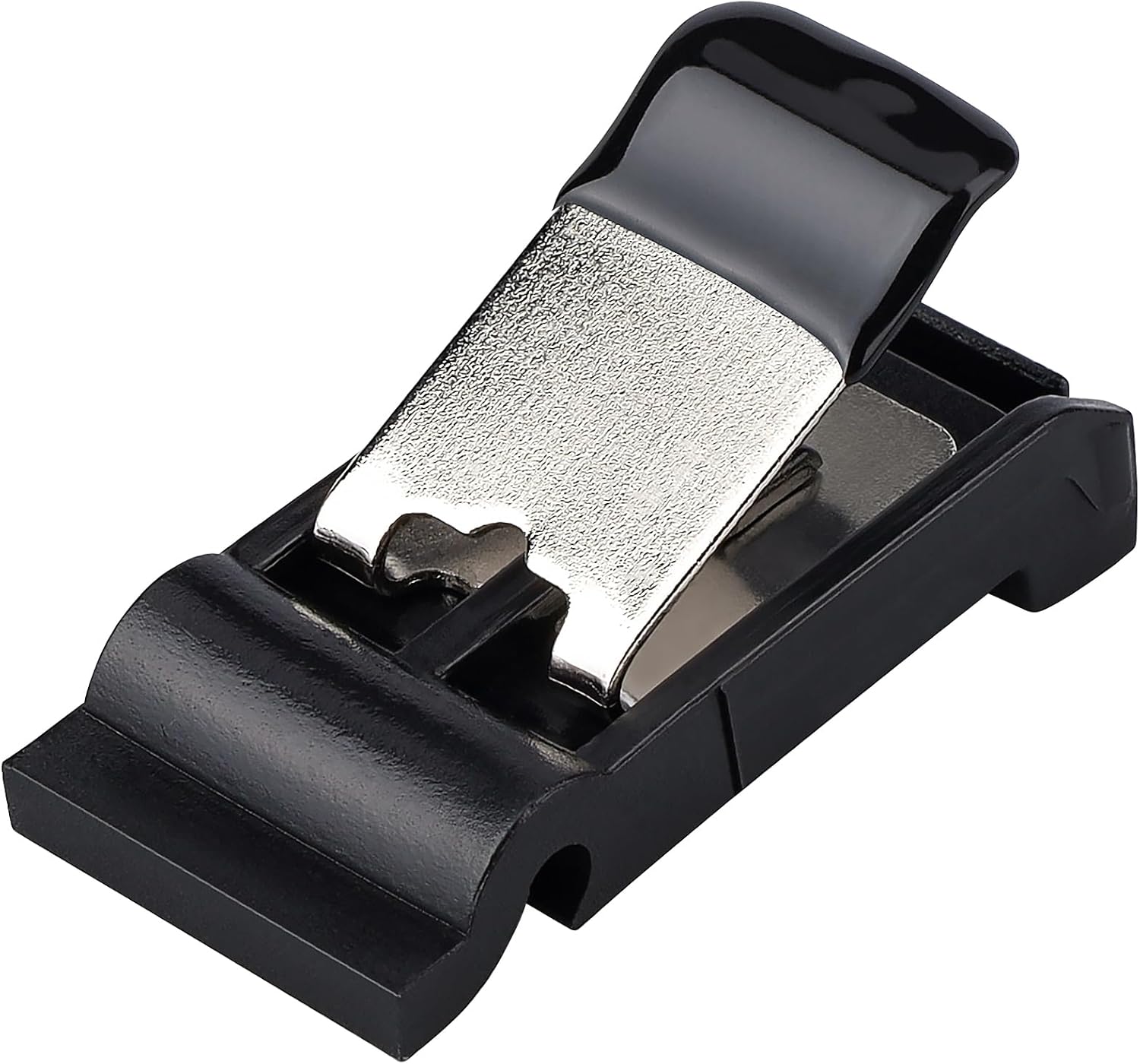
This fuel door spring clip is designed to restore proper gas tank door operation on a wide range of Toyota, Lexus, and Scion vehicles. It helps fix common issues like a stuck fuel door or one that opens too quickly, making refueling smoother and more convenient. Built as a direct replacement for compatible part numbers, it offers a practical repair solution for worn or broken clips.

This replacement gas cap is designed for a wide range of Toyota and Lexus models, offering a direct-fit solution for restoring a proper seal at the fuel tank. It helps address check engine light issues related to the fuel cap while providing easy installation and dependable performance. Built from durable materials and rigorously tested before shipping, it is a practical replacement for worn or damaged fuel caps.
Maintenance Items Owners Should Watch
- Keep any labeled hybrid-battery cooling intake unobstructed.
- Follow Toyota’s model-year maintenance guide for oil, coolant, transmission inspections, brakes, and other scheduled items.
- Do not ignore hybrid-system warnings, dashboard messages, or unusual powertrain behavior.
- Use the fuel, oil, coolant, fluids, and replacement parts specified for the exact model year.
- Arrange a qualified inspection after collision damage, deep-water exposure, or a serious underbody impact.
Toyota states that every Toyota hybrid battery is supported by a 10-year/150,000-mile limited warranty, whichever comes first. Warranty terms and market coverage can vary, so the applicable Warranty and Maintenance Guide remains the final authority.
What Performance and Fuel Economy Should You Expect?
The Tacoma i-FORCE MAX is best understood as a performance-oriented truck hybrid. Its electric hardware primarily increases torque, response, and powertrain flexibility rather than turning the Tacoma into a high-mpg commuter vehicle.
FuelEconomy.gov lists the referenced 2026 Toyota Tacoma Hybrid 4WD at 23 mpg combined, 22 mpg city, and 24 mpg highway. Actual results vary with trim, tires, accessories, vehicle speed, payload, towing, weather, terrain, and driving habits.
The mileage gain remains moderate because the Tacoma is a body-on-frame four-wheel-drive truck designed to carry loads, tow, travel off-road, and produce strong acceleration. Vehicle mass, tire drag, aerodynamic resistance, ground clearance, and performance calibration still require substantial energy even when regenerative braking and electric assistance improve efficiency.
Bottom line: The Tacoma i-FORCE MAX uses hybrid hardware mainly to deliver up to 465 lb-ft of torque in a midsize truck. Fuel savings are a secondary benefit rather than the system’s only purpose.
| Expectation | What You Should Know |
|---|---|
| Acceleration | The electric motor can add torque before the engine reaches higher rpm. |
| Towing | Toyota rates the i-FORCE MAX Tacoma to tow up to 6,000 lbs when properly equipped. |
| Fuel economy | The referenced 2026 Hybrid 4WD configuration is rated at 23 mpg combined. |
| Off-road use | Low-rpm assistance can support controlled movement, while capability still varies by trim and equipment. |
| Daily driving | Power-source changes and battery charging are managed automatically. |
[Products Worth Considering]

This engine and cabin air filter combo is designed to help keep your vehicle’s air cleaner while supporting reliable engine performance. It includes HEPA cabin filtration for finer particle capture, a pre-filter and reinforced mesh for added engine air protection, and a removal tool to make replacement easier in tight spaces. Built for a wide range of Toyota and Lexus hybrid and gas models, it lets you replace both filters at once for added convenience.

This compact car power inverter converts 12V DC to 110V AC and provides dual AC outlets along with USB-C and USB-A fast charging for road trips, camping, and everyday travel. Built-in protection features and an intelligent cooling fan help keep devices and the inverter operating safely and efficiently. Its portable size and plug-in design make it a convenient power solution for laptops, phones, tablets, and other essential electronics on the go.

This A-Premium engine air filter is designed to help maintain clean airflow for compatible Lexus and Toyota vehicles, supporting better engine performance and efficiency. It uses fine filtration media to capture debris while minimizing airflow restriction, making it a practical replacement for routine maintenance. With fitment for multiple popular models and a convenient boxed single-pack design, it offers a straightforward solution for keeping your engine protected.
What Do Drivers Commonly Misunderstand About i-FORCE MAX?
Toyota uses related hybrid branding across several vehicles, so the Tacoma i-FORCE MAX can be confused with other Toyota and Lexus powertrains. These distinctions matter when comparing specifications or service information.
It Is Not a 3.5L V6 Hybrid
The Tacoma’s system uses a 2.4L turbocharged four-cylinder engine. The 3.5L twin-turbo V6 i-FORCE MAX system is used in larger Toyota trucks such as the Tundra.
It Is Not a Plug-In Hybrid
You do not charge the Tacoma i-FORCE MAX from a wall outlet. The system manages its battery charge through engine operation and regenerative braking.
It Is Not Only About Fuel Savings
The system can improve efficiency in some conditions, but its main purpose is to increase torque, response, and truck capability. The 2026 Hybrid 4WD rating of 23 mpg combined reflects that performance-focused calibration.
The Battery Does Not Need Manual Charging
The hybrid controller maintains the battery within its operating range. Available motor assistance can change with charge, temperature, vehicle speed, and demand, but the driver does not manually recharge the traction battery.
It Does Not Have a Driver-Selectable EV Mode
The gasoline engine may stop automatically in suitable conditions, but Toyota does not list a driver-selectable EV mode for the Tacoma i-FORCE MAX. It is not intended for extended battery-only driving.
Frequently Asked Questions
How does the Tacoma hybrid system work?
The Tacoma hybrid combines a 2.4L turbocharged engine with a 48-hp electric motor inside the 8-speed automatic transmission. The motor adds torque, the engine supplies sustained power, and regenerative braking helps return energy to the 1.87-kWh battery.
What is i-FORCE MAX on the Tacoma?
i-FORCE MAX is Toyota’s name for the Tacoma’s performance-oriented hybrid powertrain. It pairs a turbocharged 2.4L engine with an electric motor and NiMH battery to produce up to 326 horsepower and 465 lb-ft of torque.
Does the Toyota Tacoma i-FORCE MAX use a V6 engine?
No. The Tacoma i-FORCE MAX uses a 2.4-liter turbocharged four-cylinder engine. The larger Toyota Tundra i-FORCE MAX system uses a 3.5L twin-turbo V6.
Is the Tacoma i-FORCE MAX a plug-in hybrid?
No. The Tacoma i-FORCE MAX is a self-charging hybrid. The system manages battery charge through engine operation and regenerative braking, so it has no external charging requirement.
Can the Tacoma i-FORCE MAX drive on electric power alone?
The engine may stop automatically when operating conditions allow, but Toyota does not list a driver-selectable EV mode for the Tacoma. Any engine-off operation is controlled automatically and is not intended for extended electric-only travel.
Why does the Tacoma hybrid get about 23 mpg instead of economy-car mileage?
The i-FORCE MAX system is calibrated mainly for torque and truck performance. Four-wheel drive, vehicle mass, ground clearance, tires, aerodynamics, payload capability, and towing requirements limit the fuel-economy gain. FuelEconomy.gov rates the referenced 2026 Tacoma Hybrid 4WD at 23 mpg combined.
How long is the Toyota Tacoma hybrid battery warranty?
Toyota states that every Toyota hybrid battery is supported by a 10-year/150,000-mile limited warranty, whichever comes first. Check the Warranty and Maintenance Guide for the exact model year and market because terms and conditions apply.
Conclusion
The Toyota Tacoma i-FORCE MAX uses a turbocharged 2.4L engine for sustained power, a transmission-integrated motor for responsive torque, and a 1.87-kWh battery that charges automatically. Regenerative braking recovers some energy, while the 8-speed transmission preserves conventional truck shifting.
The system’s main advantage is performance rather than dramatic fuel savings. Before towing, servicing the vehicle, or cleaning a battery-cooling intake, check the owner’s manual, towing guide, and Warranty and Maintenance Guide for your exact Tacoma model year and configuration.
Sources
- Toyota Tacoma official model page — current 2026 Tacoma output, powertrain availability, fuel-economy estimates by trim, and standard hybrid power-supply information.
- Toyota USA Newsroom: 2024 Tacoma i-FORCE MAX — engine, 48-hp motor, 1.87-kWh NiMH battery, transmission, output, drive modes, and towing information.
- Toyota Owners: Tacoma hybrid-system information — owner-facing hybrid operation and regenerative-braking guidance.
- FuelEconomy.gov: 2026 Toyota Tacoma Hybrid 4WD — EPA fuel-economy data for the referenced 2026 Hybrid 4WD configuration.
- Toyota hybrid battery warranty — current Toyota hybrid-battery limited-warranty information.