Toyota Tacoma Battery CCA: What Rating Do You Need?
Editorial Team · Reviewed for accuracy · Last updated: July 15, 2026
Most Toyota Tacomas need somewhere between about 550 and 725 CCA, and the 2024-and-newer 4th generation runs higher, around 689 CCA — but the exact number depends on your generation, engine, and whether you have the i-FORCE MAX hybrid . Choose the battery specified for your exact model year, engine, trim, and hybrid status, and do not go below the approved CCA rating. Use the original battery label, a VIN-based Toyota parts lookup, or a reputable fitment catalog to confirm before you buy.
A fitment-approved battery with higher CCA can provide more cold-start margin. Extra CCA does not solve every electrical problem, though. Reserve capacity and amp-hours matter more for engine-off accessories, while frequent short trips may require battery testing, charging-system diagnosis, or a compatible maintainer.
Quick Answer
Reference ranges by generation run roughly 550–650 CCA (1st/2nd gen, Group 35), 575–725 CCA (3rd gen, Group 24F), and around 689 CCA (4th gen non-hybrid, Group H7/94R) . Match or exceed the CCA rating approved for your exact configuration — don’t rely on a generic range alone. Confirm the group size, terminal orientation, battery type, hold-down, venting, and reserve capacity at the same time. For a 2024 or newer i-FORCE MAX hybrid, the 12V starting battery is a different part in a different location — follow the hybrid-specific fitment and service procedure below.
What’s in This Article
- How Many CCA Does a Toyota Tacoma Need?
- What Are Tacoma Battery Specs by Generation?
- How Should You Pick CCA by Climate, Engine, and Use?
- What Do Reserve Capacity and Amp-Hours Tell You?
- What Is the Difference Between CCA, CA, and MCA?
- What Signs Point to a Weak Battery or Poor Connection?
- What Should You Check Before Replacing the Battery?
- How Do You Protect Tacoma Battery Life?
- Quick Tacoma Battery Selector Checklist
- Frequently Asked Questions
- Final Verdict
- Sources
Key Takeaways
- No single CCA number fits every Toyota Tacoma, but reference ranges by generation narrow it down fast.
- Match the original or verified fitment specification before comparing higher CCA options.
- Higher CCA helps cold starting but does not increase engine-off runtime by itself.
- Reserve capacity and amp-hours matter more for sustained accessory use.
- Do not assume AGM, EFB, and flooded batteries are interchangeable.
- The i-FORCE MAX hybrid’s 12V starting battery is a different part, in a different location, from the non-hybrid Tacoma’s battery.
[Products Worth Considering]
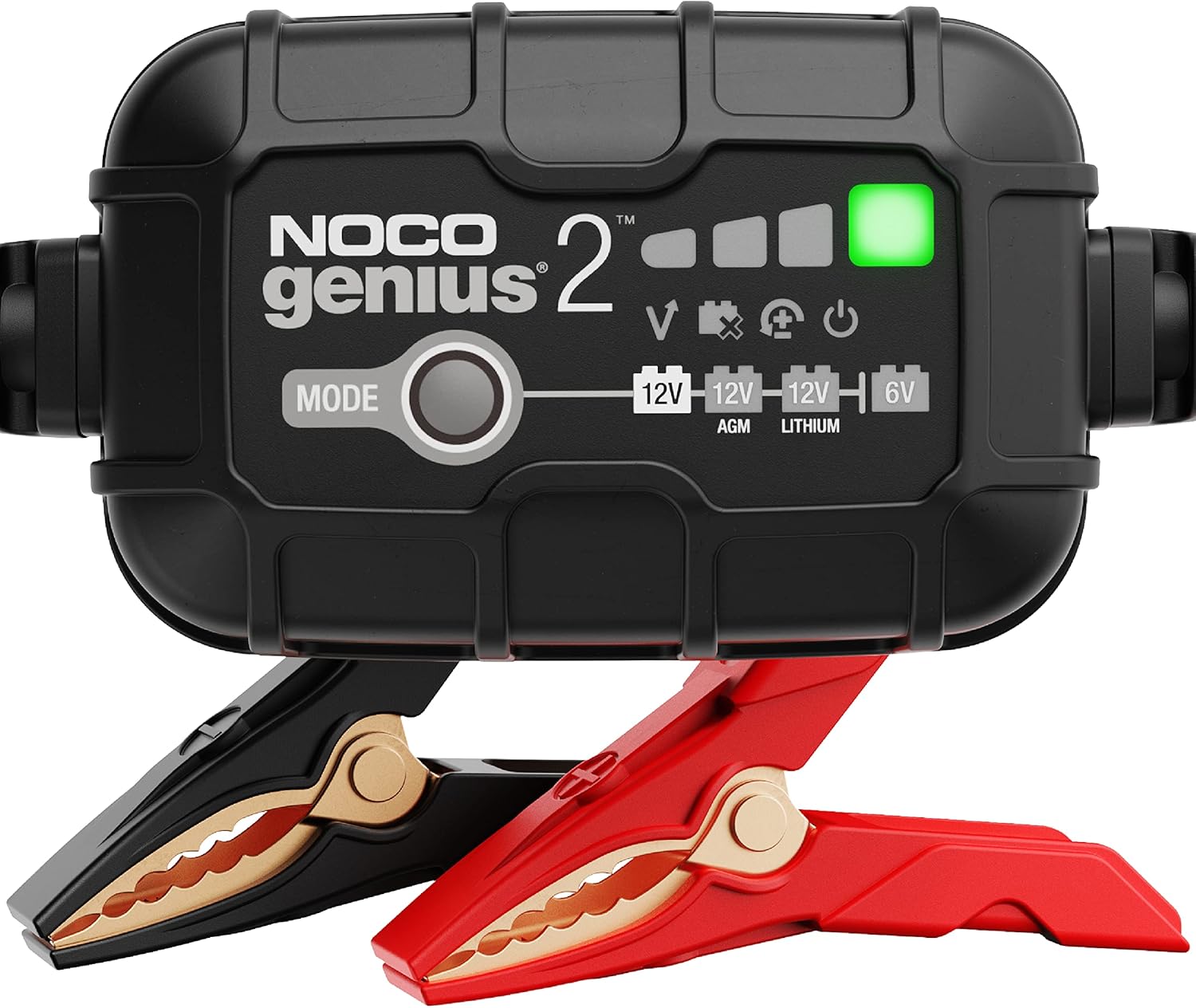
The NOCO GENIUS2 is a compact, all-in-one smart charger that automatically charges, maintains, and restores 6V and 12V lead-acid and lithium batteries. It features temperature compensation, overcharge protection, pulse desulfation, and Force Mode for reviving deeply discharged batteries, making it ideal for long-term battery care across many vehicle types. Designed for safe indefinite connection, it helps extend battery life and keep batteries ready to go.

The NOCO GENIUS5 is an all-in-one battery charging and maintenance solution for 6V and 12V lead-acid and lithium batteries. It features temperature compensation, dead-battery recovery, desulfation, and safe long-term maintenance to help extend battery life and performance. Compact and versatile, it works with a wide range of vehicles and comes with mounting accessories and a warranty.

The NOCO GENIUS10 is an all-in-one smart charger, maintainer, trickle charger, and desulfator designed to keep 6V and 12V batteries performing at their best. It supports lead-acid and lithium batteries, charges deeply discharged batteries, and uses temperature compensation for safer, more accurate charging in changing conditions. Compact and versatile, it is ideal for a wide range of vehicles and long-term battery maintenance.
How Many CCA Does a Toyota Tacoma Need?
Cold cranking amps measure a battery’s ability to supply starting current in low temperatures. Under the standard definition, CCA is the number of amps a fully charged 12-volt lead-acid battery can deliver for 30 seconds at 0°F while maintaining at least 7.2 volts.
A Tacoma’s correct rating depends on its model year, powertrain, equipment, battery group size, and factory electrical design. Replacement catalogs list several battery groups and ratings for different Tacoma configurations, so a broad range should not replace exact fitment — but the ranges below (see the generation table) give you a real starting point instead of a blank slate.
Use this verification order before purchasing:
- Record the truck configuration. Note the model year, engine, trim, transmission, and whether it is an i-FORCE MAX hybrid.
- Photograph the existing battery label. Capture its group size, CCA, chemistry, terminal positions, and any reserve-capacity or amp-hour rating.
- Confirm the application. Use a VIN-based Toyota parts lookup, Toyota parts counter, or reputable year-and-engine fitment catalog.
- Resolve conflicting results. Do not choose between two different group sizes or battery types by price alone.
- Meet or exceed the approved CCA. Select a higher rating only from batteries that otherwise match the verified application.
| Your situation | Prioritize | Why |
|---|---|---|
| Normal stock replacement | Exact fitment and approved CCA | Correct group size, terminals, chemistry, and hold-down matter before extra capacity. |
| Regular subfreezing starts | Higher CCA within approved fitment | Cold temperatures reduce available battery output and increase starting demand. |
| Fridge, lights, audio, or camping loads | Reserve capacity, amp-hours, and load management | CCA describes a short starting burst, not sustained engine-off runtime. |
| Frequent short trips or long storage | State-of-charge test and compatible maintainer | Extra CCA does not correct repeated undercharging or parasitic drain. |
| 2024 or newer i-FORCE MAX hybrid | Hybrid-specific fitment and service instructions | Battery access, location, and service precautions differ from a non-hybrid Tacoma. |
What Are Tacoma Battery Specs by Generation?
Group size and CCA both shift across Tacoma generations. Use this table as a reference starting point, then confirm against your own label or a VIN-based lookup — trim and options can move a given truck to a different group within its generation.
| Generation | Common group size | Typical CCA range | Notes |
|---|---|---|---|
| 1st gen (1995–2004) | Group 35 | ~550–650 CCA | 4-cylinder trucks commonly use Group 35; some owners report Group 24F swaps for higher CCA. |
| 2nd gen (2005–2015) | Group 24F or 35 | ~575–725 CCA | V6 trucks commonly use 24F; confirm which size your specific engine and trim shipped with. |
| 3rd gen (2016–2023) | Group 24F | ~575–725 CCA | OEM replacement listings for this range cluster around 585 CCA; some dealer swaps report lower CCA than the original label — confirm before accepting a warranty replacement. |
| 4th gen, non-hybrid (2024+) | H7 / 94R (labeled 395LN4-MF) | ~689 CCA, ~80 Ah | Owners have photographed and reported this label directly; some parts counters incorrectly offer a smaller Group 24 as a substitute — confirm physical fit before accepting one. |
| 4th gen, i-FORCE MAX hybrid (2024+) | Group 48 / LN3 / H6 (labeled 380LN3-MF) | EFB chemistry, not AGM | This is the separate 12V starting battery, located under the rear seat rather than under the hood; it is not the same as the truck’s 1.87-kWh NiMH hybrid traction battery, which also lives under the rear seat but powers the electric motor, not engine starting. |
Every figure above is reported by owners, parts catalogs, or aftermarket listings rather than confirmed directly against Toyota’s official parts system for this article, so treat it as a starting point and verify against your own label or a VIN-based lookup before buying.
How Should You Pick CCA by Climate, Engine, and Use?
Start with the verified factory-compatible specification. Climate and usage help you choose between approved options, but they should not override group size, terminal layout, battery type, venting, or mounting requirements.
[Products Worth Considering]

The NOCO GENIUS1 is an all-in-one smart charger, maintainer, trickle charger, and desulfator designed to help restore and keep batteries ready for use. It supports 6V and 12V lead-acid and lithium batteries, uses temperature compensation for safer charging, and can recover deeply discharged batteries with advanced charging modes. Compact and easy to leave connected, it is built for cars, motorcycles, ATVs, boats, and other vehicles that need reliable battery care.

The CRAFTSMAN CMXCESM258 is a versatile 4-in-1 battery charger and maintainer designed to charge, maintain, test, and restore a wide range of vehicle batteries. Its microprocessor-controlled operation, auto voltage detection, reverse hook-up protection, and multi-stage charging help support reliable starts and extend battery life for cars, motorcycles, ATVs, trucks, SUVs, and boats.
How Does Climate Affect CCA Selection?
Cold weather reduces available battery output and makes the engine harder to turn. If your Tacoma regularly sits outside below freezing, selecting the higher-CCA option among correctly fitted batteries can provide more starting margin.
Hot weather creates a different concern. Heat speeds battery degradation, so the highest CCA number is not automatically the best value in a hot climate. Battery construction, warranty, age, and heat resistance also matter.
- Warm climate: Meet the approved CCA and prioritize correct fitment, heat durability, and a fresh manufacturing date.
- Cold climate: Compare higher-CCA choices within the approved fitment list.
- Extreme cold: Keep the battery fully charged and use the approved chemistry. Do not assume AGM is compatible without verification.
- Seasonal truck: Use a compatible smart maintainer if the Tacoma sits for long periods.
Can You Choose CCA by Engine Size?
Do not estimate Tacoma battery requirements from cylinder count alone. A larger engine may require more starting current, but the installed battery also depends on the generation, electrical package, start-stop system, hybrid status, and factory battery location.
A V6 label from one model year should not be used as the specification for a 4-cylinder truck or a different generation. Check the original label and a year-, engine-, trim-, and VIN-specific fitment record.
Do Short Trips Mean You Need More CCA?
Not necessarily. A short trip can use more energy during startup than the charging system restores before shutdown. Repeating that pattern can leave a healthy battery undercharged.
A higher CCA label does not correct an alternator fault, DC-DC charging problem, loose connection, or parasitic draw. Test the battery’s state of charge and charging system before replacing it with a larger rating.
Pro tip: If your Tacoma sits for days or weeks, use a smart maintainer approved for the installed battery chemistry. Confirm the charger supports flooded, EFB, or AGM mode as required.
What Do Reserve Capacity and Amp-Hours Tell You?
CCA describes a short burst of cold-start power. Reserve capacity and amp-hours describe sustained energy, although they use different test methods and may not both appear on every automotive battery label.
What Is Battery Reserve Capacity?
Reserve capacity is commonly expressed as the number of minutes a fully charged battery can supply 25 amps before its voltage falls to the test cutoff. It helps compare how long batteries can support an electrical load when the charging system is not supplying power.
Higher reserve capacity can help when you operate lights, audio equipment, a refrigerator, or other accessories with the engine off. It does not make unlimited engine-off use safe. Deeply discharging a starting battery can shorten its life and may leave the truck unable to start.
How Are Amp-Hours Different From CCA?
Amp-hours describe stored charge over a stated discharge period. CCA describes a brief high-current test in cold conditions. A battery can have strong starting performance without offering the longest accessory runtime.
For cold starting, meet the approved CCA first. For sustained accessory use, compare reserve capacity or amp-hours and use low-voltage protection. Heavy camping loads may justify a properly designed auxiliary battery system instead of repeatedly deep-cycling the starter battery.
Important: Do not change from flooded, EFB, or AGM chemistry solely to obtain a higher CCA number. Match the factory battery type unless Toyota or a verified application guide approves the alternative.
What Is the Difference Between CCA, CA, and MCA?
Battery labels may show several starting-current ratings. They are not interchangeable because the tests use different temperatures.
- CCA, or cold cranking amps: Measured at 0°F for 30 seconds while a 12-volt lead-acid battery maintains at least 7.2 volts.
- CA, or cranking amps: Measured at 32°F, so the number is normally higher than the CCA rating for the same battery.
- MCA, or marine cranking amps: Also measured under warmer conditions and intended mainly for marine applications.
Use CCA when comparing cold-start capability for a Tacoma. Do not substitute a higher CA or MCA number for the vehicle’s required CCA. A marine battery should not be installed merely because its cranking number looks higher.
What Signs Point to a Weak Battery or Poor Connection?
A battery can lose starting performance before it fails completely. The following symptoms justify testing, but they do not prove low CCA by themselves:
- Slow cranking: The engine turns more slowly than it normally does.
- Hard cold starts: The truck struggles more as temperatures fall.
- Heavy light dimming: Interior or dashboard lights become much dimmer during startup.
- Terminal corrosion: White, green, or blue buildup increases resistance at the connection.
- Frequent jump starts: The battery is not retaining or receiving enough charge between drives.
- Repeated weakness after short trips: The battery may remain undercharged or the charging system may have a fault.
Loose cables, a failing starter, parasitic draw, poor grounds, and charging-system problems can create similar symptoms. A complete check should include terminal condition, state of charge, battery conductance or load performance, cranking behavior, and charging-system output.
A resting-voltage reading alone does not confirm starting health. A battery may show acceptable voltage without delivering enough current under load.
What Should You Check Before Replacing the Battery?
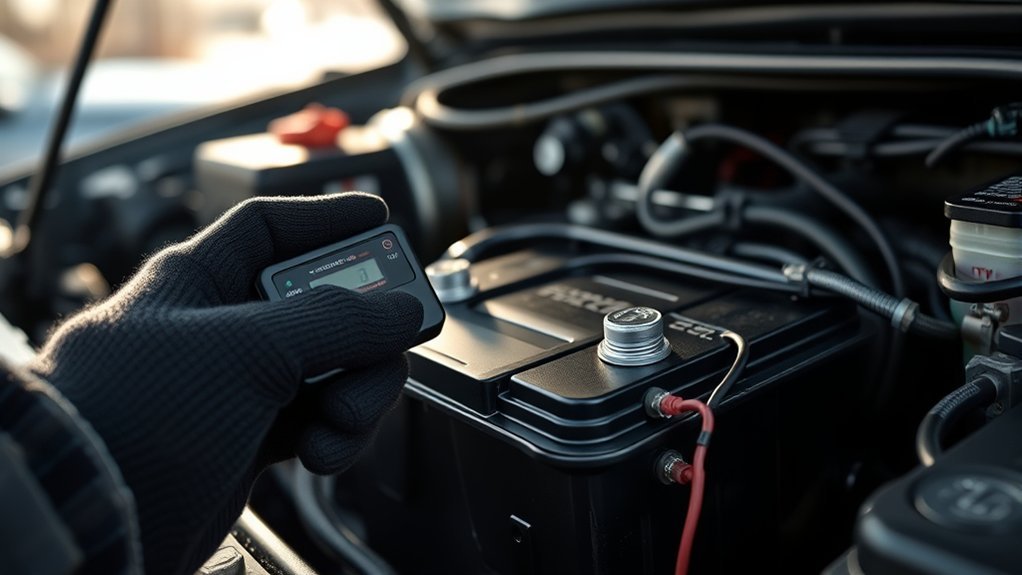
Confirm the replacement specification before removing anything. Match the battery group size, case dimensions, terminal orientation, hold-down design, chemistry, CCA, venting, and any battery sensor or terminal cover.
For a 2024 or newer i-FORCE MAX hybrid, do not assume that generic under-hood instructions apply — the 12V starting battery is located under the rear seat, not under the hood. Follow the hybrid-specific owner’s manual or have the battery serviced by a qualified technician.
For a conventional Tacoma with a normally accessible 12-volt battery, the general connection order is:
- Park on a dry, level surface, switch the truck off, engage the parking brake, and remove the key from the work area.
- Wear eye protection and gloves. Keep sparks, flames, cigarettes, jewelry, and loose metal tools away from the battery.
- Disconnect the negative cable first, then disconnect the positive cable.
- Remove the hold-down and lift the battery upright without tipping it.
- Clean the tray and cable ends, then secure the correctly fitted replacement battery.
- Reconnect the positive cable first, followed by the negative cable.
For a complete tool list, safety procedure, and model-specific cautions, read the Toyota Tacoma battery replacement guide.
Warning: A reversed connection can damage vehicle electronics. Stop if the battery is cracked, swollen, frozen, leaking, heavily corroded, or difficult to access safely.
How Do You Protect Tacoma Battery Life?
A battery loses performance faster when it remains partly discharged, overheats, vibrates in a loose tray, or repeatedly supplies deep accessory loads. Keep it charged, clean, and securely mounted.
AAA reports that battery life can reach five years or longer in cooler northern climates, while roughly three years is more typical in hotter southern climates. Battery age should therefore be considered with climate, usage, and test results rather than as a fixed replacement deadline.
- Test the battery at least annually once it reaches three years of age.
- Test sooner if you notice slow cranking, dim lights, corrosion, or repeated jump-starts.
- Clean corrosion from the battery posts and cable clamps.
- Keep the battery case and hold-down secure to limit vibration.
- Use a chemistry-compatible smart maintainer during long storage.
- Investigate repeated discharge instead of repeatedly jump-starting the truck.
- Avoid deep engine-off accessory use unless the electrical system is designed for it.
A maintainer can preserve charge during storage, but it cannot repair a worn battery, faulty alternator, DC-DC charging fault, parasitic draw, or damaged connection.
Quick Tacoma Battery Selector Checklist
Use this checklist before purchasing a Tacoma battery:
- Record the exact model year, engine, trim, transmission, and hybrid status.
- Photograph the existing battery label and terminal orientation.
- Confirm fitment through a VIN-based Toyota or reputable parts lookup.
- Match the approved group size, case height, and hold-down design.
- Meet or exceed the verified CCA requirement.
- Compare higher approved CCA options if you regularly start below freezing.
- Compare reserve capacity or amp-hours for sustained accessory use.
- Match the approved flooded, EFB, or AGM battery type.
- Check vent tubes, battery sensors, insulation sleeves, and terminal covers.
- Resolve conflicting fitment results before checkout.
- Check the battery’s manufacturing date and warranty terms.
- Use hybrid-specific service instructions when applicable.
[Products Worth Considering]

✅Batter dimensions: 10.75" L x 6.81" W x 8.98" H, Terminal: Tapered terminal (Left negative (-), Right positive (+)). ✅Please ensure to verify the dimensions and terminal position before making a purchase to guarantee compatibility with your vehicle to avoid any fitment issues.

✅Batter dimensions: 9.06" L x 6.89" W x 8.82" H, Terminal: Tapered terminal (Left negative (-), Right positive (+)). ✅Please ensure to verify the dimensions and terminal position before making a purchase to guarantee compatibility with your vehicle to avoid any fitment issues.
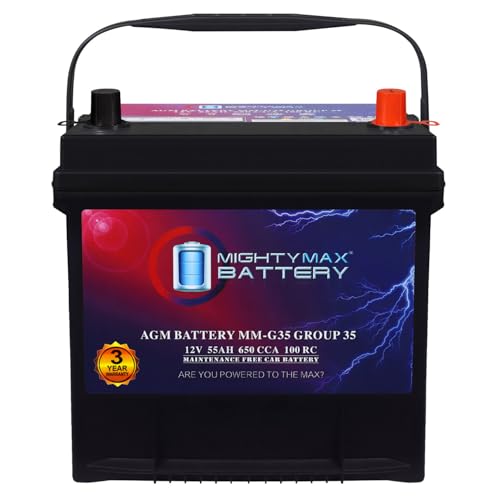
Fast Starting Power: This 12V 55Ah 650 CCA delivers strong, steady starts is ready for any weather in any season.
Frequently Asked Questions
How Many CCA Does a Toyota Tacoma Need?
Reference ranges run roughly 550–650 CCA for 1st/2nd-gen trucks, 575–725 CCA for 3rd-gen trucks, and around 689 CCA for the 2024+ 4th-gen non-hybrid . There is no single universal number, so use the original battery label or a verified year-, engine-, trim-, hybrid-, and VIN-specific fitment source, and choose a correctly fitted battery that meets or exceeds the approved rating.
Can I Use a Higher-CCA Battery in My Tacoma?
Usually, yes, when the battery is approved for the same application and matches the voltage, group size, terminal orientation, hold-down, chemistry, venting, and charging requirements. The starter draws the current it needs, but a physically or chemically incompatible battery can still cause problems.
Does a V6 Tacoma Need More CCA Than a 4-Cylinder?
Do not choose by cylinder count alone. Battery requirements vary across model years, generations, electrical packages, and hybrid systems. Use the specification for the exact truck rather than assuming every V6 requires more CCA.
Does Higher CCA Help Tacoma Accessories?
Higher CCA mainly improves short-duration starting performance. It does not directly provide longer engine-off runtime. For a refrigerator, lights, audio equipment, or camping loads, compare reserve capacity or amp-hours and consider low-voltage protection or a properly designed auxiliary battery system.
Is CCA More Important Than Reserve Capacity?
CCA matters most for cold starting. Reserve capacity matters more when the battery must support electrical loads for an extended period. A suitable Tacoma battery must first meet the verified fitment and starting requirements, then provide enough reserve capacity for the way you use the truck.
Does an i-FORCE MAX Tacoma Use the Same Battery Procedure?
No. The i-FORCE MAX hybrid’s 12V starting battery is a different part (reported as Group 48/LN3/H6, EFB chemistry) located under the rear seat rather than under the hood . Battery access, location, electrical architecture, and service precautions differ from a non-hybrid Tacoma — use the hybrid-specific owner’s manual, verified fitment information, or a qualified Toyota technician.
How Often Should I Test My Tacoma Battery?
Have it tested at least once a year after it reaches three years of age. Test it sooner if the truck cranks slowly, needs jump-starts, shows heavy light dimming, develops terminal corrosion, or repeatedly loses charge.
Final Verdict
The correct Toyota Tacoma battery CCA is the rating approved for your exact truck, not a universal number that applies to every generation — but as a starting point, expect roughly 550–650 CCA on 1st/2nd-gen trucks, 575–725 CCA on 3rd-gen trucks, and around 689 CCA on the 2024+ non-hybrid 4th gen, with the i-FORCE MAX hybrid using a separate 12V starting battery under the rear seat . Meet or exceed your truck’s verified rating, then compare reserve capacity, battery type, warranty, and cold-weather performance among batteries that share the correct fitment.
Before buying, photograph the old battery label, record the model year, engine, trim, and hybrid status, and confirm the result through a VIN-based fitment source. Diagnose repeated discharge or slow cranking instead of assuming that a larger CCA number will solve the problem.
Sources
- Toyota Owner’s Manuals and Warranties
- Toyota: How to Replace a Car Battery
- Interstate Batteries: Battery Glossary
- AAA: How Long Do Car Batteries Last?