

By Vance Ashford
Technical sources reviewed: Toyota owner guidance, U.S. EPA MVAC rules, and Toyota technical service bulletins hosted by NHTSA
Last updated: July 31, 2026
Toyota Tacoma AC problems are easiest to narrow down by separating airflow from cooling. If little or no air comes from the vents at any temperature, start with the cabin filter, blower speeds, model-specific fuses, and vent modes. If airflow is strong but warm, cold only while moving, or cold at first and then warm, inspect visible condenser blockage and record the exact conditions before arranging refrigerant, compressor, sensor, or actuator testing.
Do not add refrigerant because the vents feel warm or because a single-can gauge appears low. The correct refrigerant and charge depend on the truck, and several airflow, electrical, and mechanical faults can imitate an undercharge.
Quick Answer
Check the cabin filter, outside-air intake, condenser face, HVAC fuses, every blower speed, and whether cooling changes between idle and road speed. Note oily residue as a possible leak clue, but do not treat it as proof. Turn the AC off and seek prompt diagnosis for visible vapor during a sudden cooling loss or for harsh grinding, scraping, or repeated rattling from the compressor area.
Key Takeaways
- Weak airflow points first to the cabin filter, blower, fuse, speed control, vent door, or duct path.
- Strong but warm airflow points more toward condenser heat rejection, refrigerant, compressor, sensor, electrical, or blend-door problems.
- Certain Tacoma symptoms match Toyota service bulletins, but bulletin applicability must be confirmed by model, powertrain, build details, and diagnostic findings.
- Oily residue is a possible leak clue, not proof of an active refrigerant leak.
- Do not mix refrigerants or add charge by guess. Use the under-hood label and model-specific Toyota information.
What’s in This Article
- Match the Symptom to the Likely AC System
- Check Tacoma-Specific AC Service Bulletins
- Why Your Toyota Tacoma AC Feels Inconsistent
- How the Toyota Tacoma AC Cooling Cycle Works
- Top Causes of Toyota Tacoma AC Temperature Swings
- 5 Safe Checks for Toyota Tacoma AC Problems
- Before You Work on Refrigerant, Know the Safety Limits
- Step-by-Step Troubleshooting for Poor Cooling or No Airflow
- When to Stop DIY and Call a Pro
- What a Qualified AC Technician Will Check
- Maintenance Tips to Keep Your Tacoma’s AC Reliable
- Frequently Asked Questions
- Conclusion
- References
Match the Symptom to the Likely AC System
Your Tacoma’s symptom pattern can narrow the problem before any parts are removed. Use this table as a starting point, not as a final diagnosis.
| What You Notice | Possible System to Inspect | Safe Next Step |
|---|---|---|
| Weak airflow at every temperature | Cabin filter, blower motor, blower-speed control, fuse, vent door, or duct restriction | Inspect the filter, test every fan speed, and compare dash, floor, and defrost modes |
| Cold while moving but warm at idle | Condenser airflow, debris, marginal refrigerant condition, compressor performance, or a model-specific bulletin condition | Inspect the condenser face, record ambient temperature and idle time, and check bulletin applicability |
| Cold at first, then warm | Evaporator icing, pressure control, sensor input, compressor command, refrigerant fault, or high-heat idle shutdown | Record whether airflow also fades and request pressure, scan, and bulletin checks |
| One side warmer than the other | Blend door, air-distribution actuator, HVAC control, or uneven evaporator cooling from a refrigerant or airflow fault | Compare left, center, and right vent temperatures while changing the temperature setting |
| No airflow from the vents | Blower fuse, wiring, blower motor, resistor or control module, switch, vent door, or duct fault | Check whether heat also has no airflow, then use the correct fuse diagram and test all blower settings |
| Visible vapor during a sudden cooling loss | Possible sealed-system leak or compressor pressure-relief event | Turn off the AC, avoid touching the area, and arrange professional leak testing |
Check Tacoma-Specific AC Service Bulletins by Symptom
Toyota has issued at least two Tacoma AC technical service bulletins that match narrow symptom patterns. A bulletin is diagnostic and repair guidance for technicians. It is not a recall, and the model year alone does not prove that the bulletin applies.
| Toyota Bulletin | Vehicles and Symptom Pattern | What Confirms the Next Step |
|---|---|---|
| T-SB-0093-20 Rev1 | Certain 2016-2021 Tacoma V6/6-speed automatic vehicles that shut the AC off and stop cooling during extended idle in ambient temperatures above 100°F | A dealer or qualified shop must confirm the listed vehicle identifiers and that the complaint matches the bulletin; the repair procedure adds condenser cooling hardware and related wiring |
| T-SB-0052-22 | Certain 2021-2022 Tacoma vehicles built before listed production-change VINs with poor cooling, sometimes accompanied by refrigerant vapor under the vehicle | Toyota’s procedure requires evidence of dye at the compressor pressure-relief valve and a recovered refrigerant quantity below the bulletin threshold before the relief-valve repair applies |
| Neither pattern matches | Other model years, powertrains, build ranges, temperatures, or symptoms | Continue diagnosis with the repair information for the exact Tacoma instead of forcing the truck into a bulletin |
Ask the shop to document the bulletin number, vehicle applicability, and the test result that matched the procedure. To check for an actual safety recall or service campaign, use Toyota’s VIN-based recall lookup.
Why Your Toyota Tacoma AC Feels Inconsistent

Your Tacoma AC can feel inconsistent when the system cannot move enough cabin air, reject heat through the condenser, maintain the correct refrigerant conditions, or respond correctly to its sensors and controls.
Toyota’s AC troubleshooting guidance identifies low refrigerant, leaks, a dirty cabin filter, condenser restriction, compressor trouble, blower faults, and electrical problems as possible reasons for weak, warm, or missing output.
A dirty cabin filter mainly reduces air volume. It does not change the refrigerant charge, but restricted airflow can make properly cooled air feel ineffective inside the cab. See the Tacoma air filter vs cabin air filter guide for a closer explanation of the two filters.
A refrigerant leak, condenser problem, or compressor fault mainly affects air temperature. Depending on the fault and model year, you may notice poor cooling at idle, output that turns warm after several minutes, or cooling that changes with engine and road conditions.
Electrical and air-distribution faults can produce similar symptoms. A pressure sensor, evaporator sensor, connector, wiring circuit, HVAC control, or blend-door actuator can change compressor operation or mix heated air into the vent stream.
How the Toyota Tacoma AC Cooling Cycle Works
Your Tacoma’s AC transfers heat from the cabin to the outside air. The compressor moves refrigerant, the condenser releases heat, the expansion device reduces pressure, and the evaporator absorbs cabin heat.
The blower then moves cabin air across the cold evaporator and into the vents. Stable cooling depends on both the sealed refrigerant loop and the separate airflow and control systems.
Why Can the AC Be Colder While the Tacoma Is Moving?
The compressor raises refrigerant pressure and sends hot refrigerant toward the condenser at the front of the truck. Air passing through the condenser carries that heat away.
If debris blocks the condenser or low-speed airflow is inadequate, cooling may improve once the truck starts moving. A marginal refrigerant or compressor condition can produce a similar pattern. Certain 2016-2021 Tacoma V6/automatic vehicles also have a bulletin for cooling shutdown during extended idle above 100°F, so road-speed improvement does not prove one specific part has failed.
Use only the refrigerant type printed on the under-hood label and the exact charge specified for the vehicle. The Tacoma refrigerant basics guide explains why a universal Tacoma charge amount or single-can gauge is not reliable.
How Do the Evaporator and Cabin Airflow Affect Cooling?
The evaporator absorbs heat as the blower moves cabin air across its fins. A clogged cabin filter, weak blower, dirty evaporator surface, evaporator icing, or refrigerant-system fault can reduce cabin cooling.
A blocked condensate drain more often causes water on the passenger floor or a musty odor than weak cooling. Normal condensation may drip under the truck after AC use, but the presence or absence of a drip does not diagnose the entire system.
For odor, moisture, or drainage symptoms, use the separate Tacoma cabin odor guide.
How Can You Tell Whether the Compressor Is Being Commanded On?
Tacoma compressor controls vary by model year. The HVAC system may consider pressure, evaporator temperature, engine conditions, and driver settings before commanding cooling.
On some trucks you may hear a clutch or engine-load change. On others, sound alone is not a reliable test. A technician may need pressure readings, electrical tests, and scan data to determine whether the compressor and its controls are responding correctly.
Stop using the AC if the compressor area produces harsh grinding, scraping, or repeated rattling. Continuing to run a mechanically failing component can increase the repair scope.
Top Causes of Toyota Tacoma AC Temperature Swings
Temperature swings can come from unstable refrigerant conditions, poor condenser heat rejection, evaporator icing, a sensor or electrical fault, compressor-control trouble, a model-specific high-heat idle condition, or a blend-door problem.
Note whether the change affects only air temperature or also reduces airflow. That distinction helps separate a refrigeration or control problem from a blower, filter, duct, or icing problem.
What Signs Point to a Refrigerant Leak?
A leak can reduce the system’s ability to absorb cabin heat. Depending on the system and fault, cooling may weaken gradually, change with operating conditions, or stop when protective controls detect an abnormal condition.
Look for oily residue near visible hoses, fittings, service ports, condenser areas, and compressor components. Refrigerant oil may escape with refrigerant, but residue alone does not confirm an active leak. Old service residue or another nearby fluid can look similar.
A qualified shop can clean the suspect area and verify the source with appropriate pressure testing, an electronic leak detector, an approved dye procedure, or another suitable method.
Why Can One Tacoma Vent Blow Warmer Than Another?
A large left-to-right temperature difference can come from a blend-door actuator or HVAC control fault. It can also occur when the evaporator is cooling unevenly because of a refrigerant, airflow, or metering problem.
Clicking behind the dash, poor response to temperature adjustments, or a vent difference that changes as you move the temperature control can point toward an actuator or air-distribution problem. A temperature gradient that remains with both sides set the same may require refrigerant and evaporator testing as well.
A technician can compare requested settings, live sensor data, physical vent temperatures, and actuator response before replacing a part.
Why Does Airflow Fade After Several Minutes?
If the AC begins cold but airflow slowly fades, the evaporator may be icing. A restricted cabin filter, weak airflow, sensor fault, refrigerant problem, or control issue can contribute to that pattern.
Turn the AC off if airflow becomes very weak and note whether normal airflow returns after the system rests. That observation is useful, but it does not confirm icing without inspection and temperature or pressure testing.
What Electrical Faults Can Stop Tacoma AC Operation?
Electrical trouble can cause random warm air, missing blower speeds, total blower loss, or intermittent compressor operation. Start with model-specific power and fuse checks before replacing expensive AC components.
- Use the owner’s manual or fuse-box diagram for your exact model year.
- Check the listed HVAC and blower fuses for an open element or poor fit.
- Test every blower speed to identify a motor, resistor, module, or switch pattern.
- Inspect only visible and accessible wiring for loose plugs, corrosion, heat damage, or physical damage.
- Do not order or swap an AC relay based only on a generic Tacoma part number.
Record which settings work and which fail. A clear pattern can reduce unnecessary electrical and component testing.
Toyota Tacoma AC Problems: 5 Safe Checks Before Repair
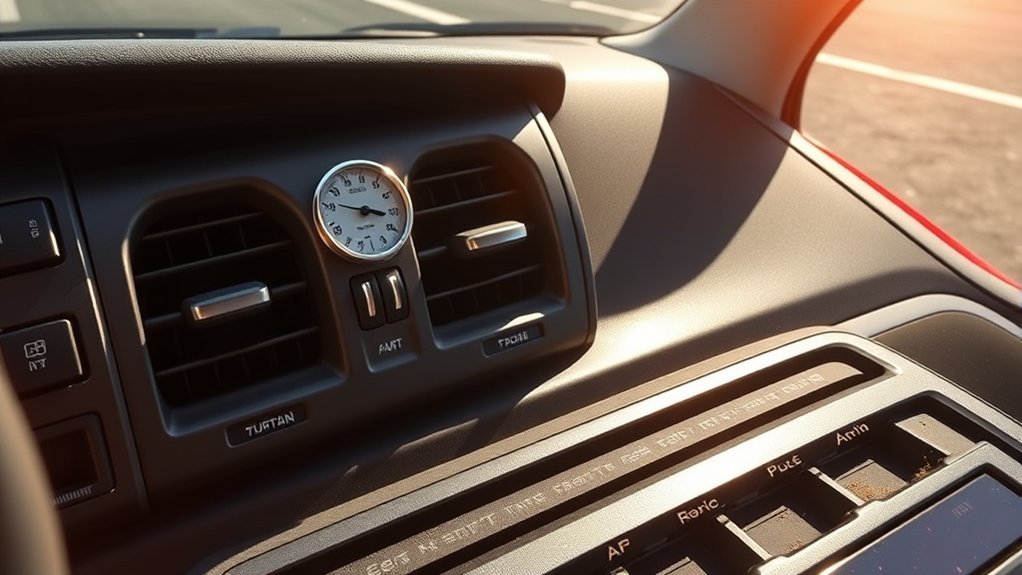
These five checks can identify basic airflow, heat-rejection, and power problems without opening the refrigerant system.
- Inspect the cabin air filter. Remove it according to the correct model-year procedure. Replace it if the media is heavily loaded, damaged, damp, or no longer seals correctly.
- Clear visible intake and condenser debris. Remove loose leaves and debris near the cowl intake and condenser face without bending fins or spraying electrical parts.
- Test every blower speed and vent mode. Note whether airflow is weak on every setting, missing only at certain speeds, or absent from one outlet mode.
- Compare stopped and moving operation. Record ambient temperature, how long the truck idled, and whether cooling returns after road speed increases.
- Look and listen without opening the system. Check for visible vapor during a cooling loss, oily residue, wet carpet, unusual odor, harsh compressor noise, or clicking behind the dash.
These checks do not measure refrigerant charge or prove that a compressor, sensor, or actuator has failed. They give you a safer starting point and a clearer description for the repair shop.
[Products Worth Considering]

This cabin air filter replacement helps keep the air inside your vehicle cleaner and fresher for driver and passengers. Designed for broad fitment across Toyota, Lexus, Subaru, and Mazda models, it supports improved HVAC performance and includes soda and carbon filtration for odor reduction. It is a practical maintenance part with a recommended replacement interval for continued cabin comfort.

This windshield sun shade is designed to fit Toyota RAV4 models from 2019 to 2025 and RAV4 Prime models from 2021 to 2024. It helps block UV rays, reduce interior heat buildup, and protect your dashboard, seats, and steering wheel from sun damage. The accordion-folding design makes it easy to set up, store, and carry, while the durable triple-laminate construction adds long-lasting performance.

This center console organizer tray is designed for a precise fit in the Toyota RAV4 2026, helping turn deep console space into practical everyday storage. It keeps small essentials like phones, cards, coins, and sunglasses neatly organized and easy to reach while reducing movement and noise with a non-slip mat. Built from durable ABS and made for simple tool-free installation, it offers a clean, convenient upgrade for your interior.
Record These Clues Before the Shop Visit
- Model year, engine, transmission, and whether the VIN falls within a bulletin build range
- Outside temperature and whether the truck was parked in direct sun
- Whether the symptom appeared while stopped, moving, or both
- How long the truck had been idling before cooling changed
- Fresh-air or recirculation mode
- Selected fan speed and temperature setting
- Whether airflow became weaker or only became warmer
- How many minutes passed before the symptom appeared
- Any warning light, clicking, grinding, odor, vapor, wet carpet, or oily residue
Intermittent AC problems may not appear during a short shop visit. These notes help the technician reproduce the same operating conditions and check the right Tacoma bulletin before replacing parts.
Before You Work on Refrigerant, Know the Safety Limits
In the United States, the EPA prohibits intentional venting of motor-vehicle refrigerants, with carbon dioxide refrigerant R-744 listed as the exception. Technicians who service an MVAC system for payment or barter must hold Section 609 certification and use approved refrigerant-handling equipment.
You may perform basic visual, filter, fuse, control, and airflow checks. Sealed-system work still carries pressure, frostbite, environmental, contamination, and equipment risks, even when a private owner is not performing the work for payment.
Warning: Do not vent refrigerant, mix refrigerants, bypass pressure protection, or charge the system by guess. Use only the refrigerant listed for the truck, and leave recovery, evacuation, leak repair, and measured charging to properly equipped personnel.
The correct refrigerant type and charge depend on the model year, market, engine, and AC configuration. Confirm the under-hood label and applicable Toyota repair information before any sealed-system service.
Bulletin reminder: Toyota T-SB-0093-20 Rev1 and T-SB-0052-22 cover different Tacoma AC conditions. Neither is a recall, and each requires its own vehicle-applicability and diagnostic checks.
Step-by-Step Troubleshooting for Poor Cooling or No Airflow
Use one troubleshooting path for weak airflow and another for air that moves normally but does not stay cold. This prevents a dirty filter or blower fault from being confused with a refrigerant problem.
[Products Worth Considering]

This assorted blade fuse kit provides a wide range of clearly color-coded replacements to help protect vehicle electrical systems from overloads and short circuits. It includes standard, mini, and low-profile mini fuses with amperages from 2A to 40A, making it a versatile choice for cars, RVs, boats, trucks, and other marine or automotive applications. A fuse puller is included for easier removal and replacement when needed.

Chemical Guys Swift Wipe Waterless Car Wash Spray lets you clean, shine, and protect your vehicle without a hose or bucket. Its high-lubrication formula lifts dirt and grime while helping reduce scratches and swirl marks, leaving a glossy, streak-free finish on paint, glass, wheels, chrome, and plastic. Ideal for quick detailing anywhere, it adds a protective layer that helps repel dust and keep your vehicle looking freshly washed longer.
What Should You Check When Airflow Is Weak or Missing?
- Compare AC and heat airflow. If neither hot nor cold air moves from the vents, focus on the blower, power supply, vent doors, and ducts rather than refrigerant.
- Inspect the cabin filter. Replace a clogged, damaged, damp, or poorly seated filter.
- Test every fan speed. Missing speeds can point toward a fuse, resistor or control module, switch, wiring, or blower problem.
- Listen to the blower. A loud fan with little vent output may indicate a filter, duct, door, or airflow restriction.
- Change vent modes. Compare dash, floor, and defrost output to identify an air-distribution problem.
- Watch for fading airflow. Airflow that starts strong and weakens may require evaporator-icing diagnosis.
What Should You Check When Airflow Is Strong but Not Cold?
- Compare idle and moving performance. Record ambient temperature and idle duration. Cooling that improves with road speed can expose a low-speed heat-rejection problem or a bulletin-specific condition.
- Inspect the condenser face. Look for loose debris or obvious external damage without bending fins.
- Check bulletin applicability. Compare the truck’s model year, powertrain, build details, and symptom pattern with Toyota T-SB-0093-20 Rev1 and T-SB-0052-22.
- Check for leak clues. Oily residue requires professional confirmation. Visible vapor during a sudden cooling loss calls for prompt diagnosis.
- Note compressor-area noise. Stop using the system for harsh grinding, scraping, or repeated rattling.
- Compare left, center, and right vents. A large difference may point toward air-distribution trouble or uneven evaporator cooling.
- Schedule pressure and control testing. A technician can compare high-side and low-side pressures, vent temperature, sensor data, compressor command, and recovered refrigerant quantity.
Do not use a low-side can gauge as proof that the system is undercharged. System pressure changes with temperature and operating conditions, and a correct diagnosis normally requires more than one reading.
When to Stop DIY and Call a Pro
Stop after the safe visual, filter, fuse, control, and airflow checks when the problem involves the sealed refrigerant loop, persistent electrical failure, bulletin-specific repair work, or mechanical compressor noise.
A properly equipped AC shop can use calibrated gauges, refrigerant identification and recovery equipment, leak-detection tools, electrical test equipment, and scan tools. Those tools can separate faults that create similar vent symptoms.
| Symptom | Possible Cause | Action |
|---|---|---|
| Constant warm air with strong airflow | Refrigerant leak, compressor fault, condenser problem, or control fault | Book pressure, leak, and command testing |
| Cold air that becomes warm | Icing, pressure control, sensor, compressor, electrical issue, or high-heat idle shutdown | Record timing, ambient temperature, and idle duration; request scan, pressure, and bulletin checks |
| Warm at idle but cooler while moving | Low-speed condenser airflow, debris, marginal refrigerant/compressor performance, or T-SB-0093-20 Rev1 condition | Inspect visible debris and arrange model-specific diagnosis |
| Weak or no airflow | Cabin filter, blower, fuse, speed control, wiring, vent door, or duct fault | Check whether heat also lacks airflow, then inspect the filter and model-specific fuses |
| One side stays warmer | Blend door, actuator, control, or uneven evaporator cooling | Request vent-temperature, actuator, and refrigerant-system testing |
| Visible vapor during cooling loss or harsh compressor noise | Leak, pressure-relief event, or mechanical fault | Turn off the AC and seek prompt diagnosis |
Ask the shop which test supports the recommended repair. Useful evidence may include verified leak location, pressure readings under stated conditions, recovered refrigerant quantity, electrical measurements, scan data, or the exact bulletin step that the truck met.
What a Qualified AC Technician Will Check

A complete AC diagnosis checks cabin airflow, condenser heat rejection, refrigerant containment, compressor response, electrical controls, sensors, air-distribution doors, and model-specific bulletin applicability.
The technician may identify the refrigerant, measure pressures under controlled conditions, inspect for leaks, compare commanded and actual operation, and recover and weigh the refrigerant when the diagnostic process requires opening or recharging the system.
- Confirm the complaint under conditions similar to those in your symptom notes.
- Record the VIN, model year, engine, transmission, ambient temperature, and idle duration.
- Check whether a Toyota bulletin applies and whether the truck meets every listed diagnostic condition.
- Measure vent output and compare left, center, and right vent temperatures.
- Inspect the cabin filter, blower operation, intake path, vent modes, and condenser airflow.
- Compare system pressures with ambient and operating conditions.
- Check compressor command, pressure-sensor data, evaporator-temperature data, and related circuits.
- Leak-test hoses, fittings, service ports, condenser, compressor, and other accessible components.
- Test blend-door and air-distribution actuator response when vent temperatures differ.
- Compare any recovered refrigerant amount with the correct model-specific charge specification.
A documented test result is more reliable than replacing the most commonly blamed part. Ask for the finding that connects the symptom to the proposed repair.
[Products Worth Considering]

Product Type: Auto Part
Maintenance Tips to Keep Your Tacoma’s AC Reliable
AC maintenance should protect airflow and catch performance changes early. Refrigerant is not a routine fluid that should be topped off at every service.
Inspect the cabin filter according to the owner’s manual and sooner when the truck operates in heavy dust, smoke, construction debris, or frequent off-road conditions. Keep loose debris away from the cowl intake and condenser face.
Use only cleaners labeled for the exact automotive HVAC application and follow their directions. Do not spray harsh chemicals into electrical components, dashboard openings, or the fresh-air intake.
| Task | When to Do It | Purpose |
|---|---|---|
| Cabin filter inspection | At the model-specific service interval or sooner in dusty use | Protects airflow and reduces debris entry |
| Cabin filter replacement | When dirty, damaged, damp, or required by the maintenance guide | Restores vent airflow |
| Cowl and condenser visual check | When debris builds up or cooling changes | Protects intake and heat-rejection airflow |
| Symptom and bulletin check | When cooling changes at idle, in extreme heat, or after several minutes | Helps reproduce the fault and avoids parts replacement by guess |
| AC performance diagnosis | When cooling, airflow, noise, odor, or control behavior changes | Finds the cause before more parts are affected |
| Refrigerant service | Only when testing shows a need | Restores the verified charge after diagnosis or repair |
If the system is low, ask why. The EPA notes that recharging can improve cooling but does not permanently repair a refrigerant leak.
Frequently Asked Questions
Why does my Tacoma AC blow cold and then warm?
Cold air that becomes warm can result from evaporator icing, unstable refrigerant conditions, compressor-control trouble, a pressure or temperature sensor fault, an electrical interruption, a blend-door problem, or a model-specific high-heat idle condition. Note whether airflow also becomes weaker, the outside temperature, how long the truck idled, and how many minutes passed before the change. Then request pressure, control, and bulletin testing.
Why is my Tacoma AC cold while driving but warm at idle?
Cooling that improves once the truck moves often points to weak heat rejection at low speed, but it can also involve refrigerant or compressor performance. Certain 2016-2021 Tacoma V6/6-speed automatic vehicles have Toyota bulletin T-SB-0093-20 Rev1 for AC shutdown during extended idle above 100°F. Check visible condenser debris, record ambient temperature and idle time, and have a shop confirm the exact truck and test results instead of assuming it only needs refrigerant.
Why does one side of my Tacoma blow warmer air?
A warmer vent on one side can come from a blend-door actuator or HVAC control problem. Uneven evaporator cooling from a refrigerant, airflow, or metering fault can produce a similar temperature gradient. Compare left, center, and right vent temperatures with the same settings, then request actuator and refrigerant-system testing before replacing parts.
Can a dirty cabin air filter make the AC feel warm?
A dirty cabin filter restricts air volume, so the cab may stay warm even when the evaporator is producing cool air. If airflow becomes strong after the filter is replaced but the air itself remains warm, the truck has another cooling or control problem.
Can I use a different refrigerant or a recharge kit?
Use only the refrigerant type shown on the Tacoma’s under-hood label and applicable service information. Do not mix refrigerants. A single-can gauge cannot verify the full system condition or exact charge weight, so warm air alone is not enough reason to add refrigerant.
Are Toyota Tacoma AC service bulletins recalls?
No. T-SB-0093-20 Rev1 and T-SB-0052-22 are technical service bulletins for specific Tacoma AC conditions. They are not recalls, and each requires vehicle and diagnostic confirmation. Use Toyota’s VIN-based recall and service-campaign lookup to check whether your truck has an open recall or campaign.
Can overcharging refrigerant improve cooling?
No. An incorrect charge can produce abnormal pressures and poor cooling and can place extra stress on the system. The correct procedure is to diagnose leaks and other faults, evacuate the system when required, and charge the exact specified amount by weight.
Safety Disclaimer: This article provides general information and does not replace model-specific Toyota service information or professional diagnosis. Refrigerant is stored under pressure and can cause injury. Follow applicable environmental rules and use qualified, properly equipped personnel for sealed-system service.
Conclusion
Start with the symptom split. Weak or missing airflow points first to the cabin filter, blower, fuses, speed controls, vent doors, and ducts. Strong airflow that stays warm or changes temperature points more toward condenser heat rejection, refrigerant, compressor, sensor, electrical, or blend-door testing.
Complete the five safe checks and record the truck’s model year, powertrain, ambient temperature, idle duration, and symptom timing. Ask the shop to check Toyota T-SB-0093-20 Rev1 or T-SB-0052-22 only when the truck and complaint match the bulletin.
Turn the AC off for visible vapor during a sudden cooling loss or for harsh compressor noise. Otherwise, bring your symptom notes to the shop and ask which test confirmed the repair. A verified leak, pressure result, electrical measurement, recovered refrigerant amount, scan-data fault, or matched bulletin step gives you a stronger basis for approving the work.
References
- Troubleshooting Common Car AC Issues, Toyota, accessed July 31, 2026
- Regulatory Requirements for MVAC System Servicing, U.S. Environmental Protection Agency, accessed July 31, 2026
- Options for Recharging Your Air Conditioner, U.S. Environmental Protection Agency, accessed July 31, 2026
- Toyota T-SB-0093-20 Rev1: Lack of A/C Performance at Idle in High Ambient Temperature, Toyota Motor Sales via NHTSA, January 12, 2021 revision
- Toyota T-SB-0052-22: Poor Air Conditioning Cooling Performance, Compressor Pressure Relief Valve Leak, Toyota Motor Sales via NHTSA, May 26, 2022
- Toyota Safety Recall and Service Campaign Lookup, Toyota, accessed July 31, 2026


[…] wet carpet, or fogging windows. For related HVAC diagnostic paths, consult our technical guides on Tacoma A/C performance problems and Tacoma heater-core symptoms. If you detect raw gasoline, exhaust, smoke, or hot electrical […]