
Last updated: July 31, 2026
How this guide was prepared: This guide synthesizes Toyota’s 2017 and 2024 Tacoma maintenance documentation, other Toyota owner resources, U.S. Department of Energy guidance, and manufacturer cleaning instructions. It does not claim hands-on testing across every Tacoma model year.
For a Toyota Tacoma air filter replacement, buy two separate exact-fit parts: an engine air filter for the under-hood air cleaner box and a cabin air filter for the HVAC housing behind the glove box. Replace one filter at a time, match the new part to the old one, and verify its seal or airflow marking before closing the housing.
The factory schedule varies by model year. For a 2017 U.S. Tacoma, Toyota lists cabin-filter inspection at 10,000 miles or 12 months, cabin-filter replacement at 20,000 miles or 24 months, and engine-air-filter replacement at 30,000 miles or 36 months. For a 2024 U.S. Tacoma, Toyota lists cabin-filter inspection at 15,000 miles or 18 months and replacement of both filters at 30,000 miles or 36 months. Use the maintenance guide for your exact truck rather than applying either example universally.
Quick Answer
The Tacoma engine air filter is replaced from the air cleaner box under the hood, while the cabin air filter is reached through an access door behind the glove box. Confirm the filter application and maintenance interval by exact model year. Replace either filter sooner when it is torn, damp, collapsed, deformed, oily, or heavily loaded with debris.
Key Takeaways
- The engine air filter protects the intake; the cabin air filter protects HVAC airflow and passenger comfort.
- Toyota’s 2017 and 2024 Tacoma schedules use different cabin-filter intervals, so one mileage rule does not fit every model year.
- Choose both filters by exact fitment first. A filter that does not sit flat or seal correctly can create new problems.
- An AIR FLOW arrow shows the direction air moves through the housing. An UP arrow shows which edge of the filter faces upward.
- On modern computer-controlled vehicles, replacing a clogged engine filter can restore acceleration, but it does not normally improve fuel economy.
At a Glance
| Estimated Time | About 10–30 minutes after confirming fitment |
| Difficulty | Beginner-friendly DIY maintenance |
| Tools Needed | Usually no tools; some model years may need a basic screwdriver |
| Parts Required | Exact-fit engine air filter and exact-fit cabin air filter |
Factory Schedule Examples
| U.S. Model Year | Cabin Filter Inspection | Cabin Filter Replacement | Engine Filter Replacement |
|---|---|---|---|
| 2017 Tacoma | 10,000 miles or 12 months | 20,000 miles or 24 months | 30,000 miles or 36 months |
| 2024 Tacoma | 15,000 miles or 18 months | 30,000 miles or 36 months | 30,000 miles or 36 months |
Important: These are model-year examples, not a universal Tacoma schedule. Check the U.S. or market-specific maintenance guide issued for your exact truck.
How Do You Replace Toyota Tacoma Engine and Cabin Air Filters?
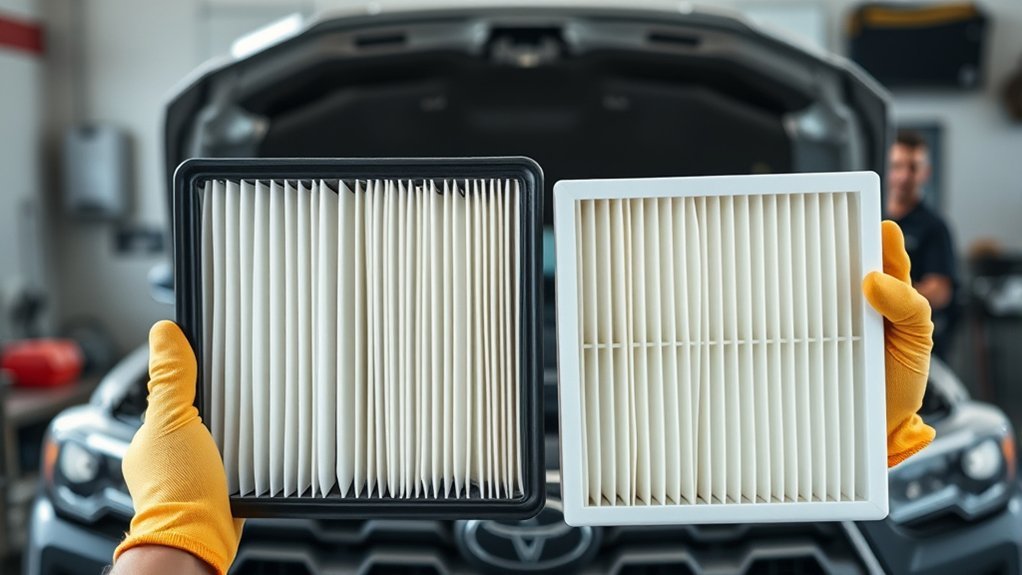
Replacing both filters is usually straightforward once you have the correct parts. The engine filter is serviced from the air cleaner housing under the hood. The cabin filter is serviced through an access door behind the glove box. Complete one job at a time so you do not mix up filter orientation or leave a housing open.
The basic locations are similar on many Tacomas, but glove-box hardware, damper arms, air-box fasteners, filter dimensions, and maintenance intervals can differ by model year. Stop and check the owner’s manual when a cover or glove box does not release with light pressure. Do not use force to make a procedure from another model year fit your truck.
Before buying or installing either filter, verify:
- Your Tacoma’s exact model year or VIN.
- The engine or powertrain listed for the replacement part.
- The filter manufacturer’s current vehicle-application listing.
- The new filter’s dimensions, gasket shape, locating tabs, and pleat layout against the removed filter.
For a 2017 Tacoma, Toyota’s factory maintenance guide lists cabin-filter inspection at 10,000 miles or 12 months, cabin-filter replacement at 20,000 miles or 24 months, and engine air filter replacement at 30,000 miles or 36 months. The 2024 schedule differs, which is why the guide for the exact model year must control the decision.
Warning: Never start or run the engine with the air cleaner housing open or the engine air filter removed. Keep loose dirt away from the clean side of the housing and intake tube.
What Is the Difference Between a Tacoma Engine Air Filter and Cabin Air Filter?
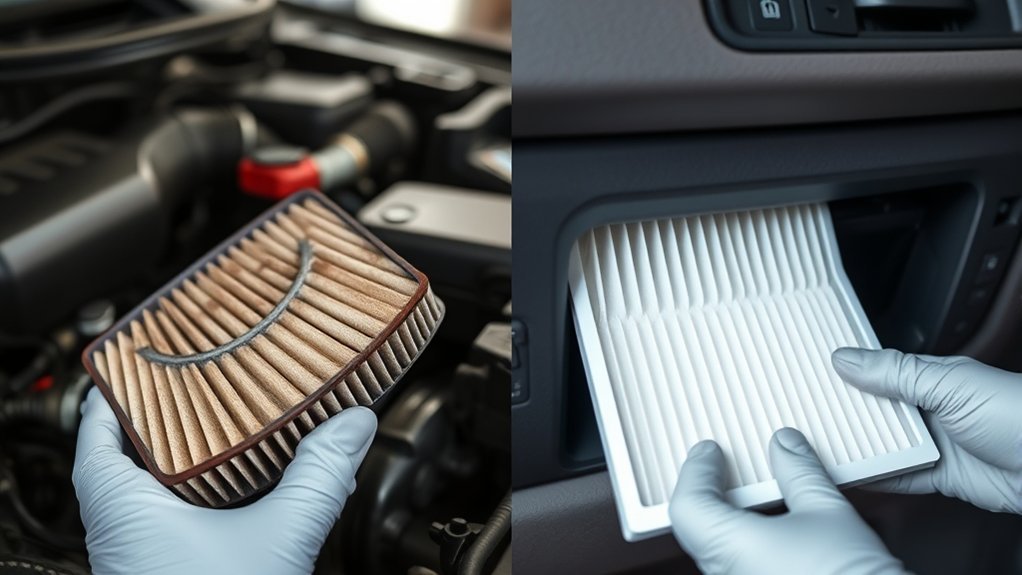
The engine air filter cleans air before it enters the engine. It traps dust, sand, leaves, and other debris before they reach the intake tract. A severely restricted filter can reduce airflow during acceleration and make the truck feel sluggish under load.
The cabin air filter cleans outside air before it reaches the dashboard vents. A clogged cabin filter does not reduce engine power, but it can weaken vent airflow, slow windshield clearing, and hold dust, leaves, moisture, or odor-causing debris.
| Filter | Location | Main Job | Common Dirty-Filter Symptom |
|---|---|---|---|
| Engine air filter | Under hood, inside air cleaner box | Protects the engine intake from dirt and debris | Sluggish acceleration under load |
| Cabin air filter | Behind glove box, in HVAC housing | Filters air entering the cabin vents | Weak airflow, odors, or slow defrosting |
The U.S. Department of Energy and EPA fuel-economy site says replacing a clogged filter on a modern computer-controlled gasoline or diesel vehicle can improve acceleration, but it does not improve fuel economy.
Where Are Toyota Tacoma Engine and Cabin Air Filters Located?
On the 2017 Tacoma, the engine air filter is inside the rectangular air cleaner housing under the hood. Release the housing clips or fasteners, lift the cover only as far as needed, and remove the old filter without dropping debris into the clean side of the box.
The cabin air filter is behind the glove compartment. Empty and lower the glove box, open the filter access door, and slide the old filter out. Access details can vary by model year, so stop and check the owner’s manual if the glove box does not lower with light pressure or if a damper arm blocks movement.
Do not rely on a memorized arrow direction. If the filter says AIR FLOW, point the arrow in the direction air travels through the housing. If it says UP, keep that edge facing upward. The two markings do not mean the same thing. Compare the removed filter, housing markings, and replacement instructions before closing the access door.
Pro Tip: Photograph the old cabin filter before removal. Capture the label, arrow, and how the pleats sit in the tray so you can compare the new filter before closing the access door.
How Often Should You Replace Tacoma Engine and Cabin Air Filters?
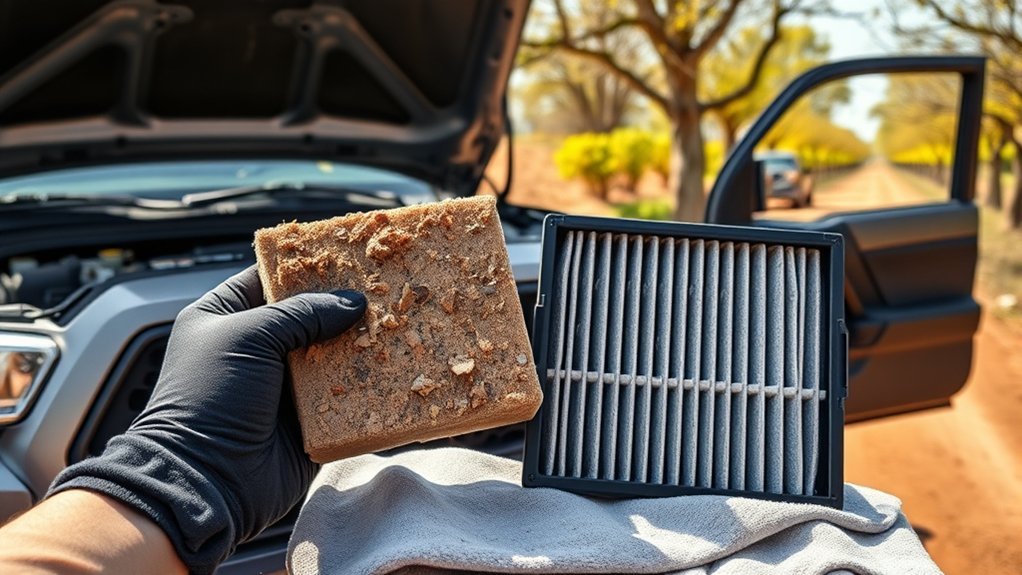
Use the maintenance guide for your exact model year as the baseline. Toyota’s 2017 U.S. schedule lists cabin-filter inspection at 10,000 miles or 12 months, cabin-filter replacement at 20,000 miles or 24 months, and engine-filter replacement at 30,000 miles or 36 months. Toyota’s 2024 U.S. schedule lists cabin-filter inspection at 15,000 miles or 18 months and replacement of both filters at 30,000 miles or 36 months.
Inspect sooner if the truck sees off-road trails, construction dust, gravel roads, wildfire smoke, farm use, or frequent stop-and-go traffic. Replace a filter that is torn, damp, collapsed, oily, deformed, or packed with debris even when the normal interval has not arrived.
| Condition | Engine Air Filter | Cabin Air Filter |
|---|---|---|
| Normal mixed driving | Follow the exact model-year schedule and inspect during routine service | Follow the model-year inspection and replacement schedule |
| Dusty roads or off-road use | Inspect more often and replace when visibly loaded or damaged | Inspect more often because dust can fill the pleats quickly |
| Heavy traffic or urban pollution | Follow the normal schedule unless inspection shows restriction | Inspect sooner; activated-carbon media may help with some odors |
| High pollen, smoke, or musty odor | Inspect according to dust exposure and the model-year schedule | Replace sooner if airflow falls or the filter is damp or loaded |
What Are the Symptoms of Dirty Tacoma Air Filters?
Suspect the engine air filter when the truck feels normal at light throttle but becomes sluggish during harder acceleration or under load. Inspect the filter and housing first, but do not assume every performance problem comes from the filter. Rough idle, misfires, warning lights, and persistent hesitation need code scanning and broader diagnosis.
Suspect the cabin air filter when airflow from every vent is weak, the windshield clears slowly, or a musty cabin smell appears when the fan starts. If a new filter does not restore airflow, inspect the filter door, blower area, blower motor, and HVAC doors.
Can a Dirty Engine Air Filter Cause Power Loss?
A heavily restricted engine filter can reduce available airflow and dull acceleration. The U.S. Department of Energy found improved acceleration with clean filters in its modern test vehicles, while fuel economy did not measurably improve. Treat restored performance and intake protection as the main benefits, not guaranteed fuel savings.
| Symptom | Most Relevant Filter | Next Check |
|---|---|---|
| Sluggish acceleration under load | Engine air filter | Inspect the filter, housing seal, and intake tube |
| Weak airflow from all vents | Cabin air filter | Check the filter door, blower area, and blower motor |
| Musty smell when the fan starts | Cabin air filter or HVAC moisture | Replace a damp or dirty filter; diagnose HVAC moisture if odor remains |
| Rough idle or check engine light | Not normally a filter-only diagnosis | Recheck the air box and intake, then scan diagnostic trouble codes |
Why Is Airflow From the Tacoma Vents Weak?
A clogged cabin air filter can restrict air passing through the HVAC housing, which weakens A/C output, heater airflow, and windshield defrosting. A dirty engine filter cannot cause weak dashboard vent airflow because it serves a separate system.
If the cabin filter is new and airflow is still poor, confirm that the filter is not installed backward or folded, the access door is latched, and no leaves block the blower inlet. If A/C airflow remains weak, the problem can involve the blower motor, resistor, wiring, evaporator airflow, or an HVAC door.
Should You Use a Dry or Reusable Engine Air Filter?
For most Tacoma owners, an OEM Toyota filter or a quality dry aftermarket filter is the simplest choice. The filter must match the exact application, sit flat in the housing, and seal evenly around every edge. Brand reputation does not compensate for incorrect dimensions or a distorted gasket.
A dry disposable filter requires little maintenance: inspect it and replace it when damaged, restricted, or due under the maintenance schedule. A reusable oiled filter can reduce repeated purchases, but it adds cleaning, rinsing, complete drying, and controlled oiling steps. Incorrect servicing can leave excess oil or contamination in the intake tract.
Before closing the housing, run a finger around the filter perimeter and check that the cover meets the lower box evenly. If a clip will not close with normal hand pressure, reopen the housing and correct the alignment instead of forcing it.
Note: Choose a reusable oiled filter only if you will follow its exact cleaning, drying, and oiling procedure every time. A correctly fitted dry filter is the lower-maintenance option.
Should You Choose a Standard or Charcoal Cabin Air Filter?
Fitment and acceptable airflow matter more than marketing labels. A standard pleated filter is a practical choice for dust, pollen, leaves, and road grit. An activated-carbon filter adds odor-adsorbing media and may suit frequent traffic, smoke, or strong outdoor smells, but it still needs replacement when airflow drops or the media becomes loaded.
A very dense filter can capture more fine particles while also adding airflow resistance. Do not choose solely by claims printed on the package. Confirm that the filter is listed for your exact Tacoma application and that vent airflow remains normal after installation.
[Products Worth Considering]

ACTIVATED CHARCOAL LAYER – Helps manage odors and capture gases, delivering fresh air inside your vehicle.
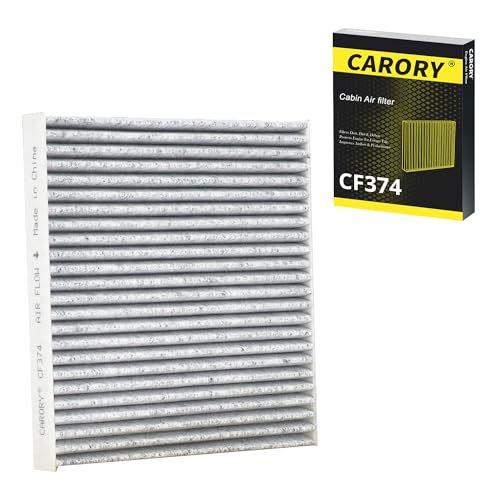
[Vehicle Fitment] Replacement for Toyota: Tacoma (2005-2023).

Compatible Auto List: Dodge: Dart (2013-2016), Pontiac: Vibe (2003-2008), Tacoma (2005-2023). Replacement for: CF10374, CP374, 87139-YZZ09, 88508-04010, Chrysler: 68164981AA, LUBER-FINER: CAF1765 and CAF7765.
When Is a Standard Pleated Filter the Better Choice?
A standard disposable cabin filter is usually the easiest option for owners who want predictable airflow and simple maintenance. It also makes sense in very dusty conditions where the filter may need frequent replacement.
Inspect the pleats for dust loading, leaves, moisture, and deformation. Do not wash or blow out a disposable paper or synthetic-media filter unless its manufacturer explicitly identifies it as washable or serviceable.
What Are the Tradeoffs of a Charcoal Cabin Filter?
Activated-carbon filters can reduce some odors and gaseous contaminants as air passes through the media. Their effectiveness falls as the carbon becomes saturated, and a heavily loaded filter can restrict airflow. Replace it when odor control fades, airflow weakens, or the filter becomes visibly dirty.
If the fan already feels weak, install the correct standard filter first and confirm normal system operation. A premium filter will not repair a weak blower motor, blocked evaporator, damaged filter door, or HVAC control problem.
Are Reusable K&N-Style Filters Worth It?
Reusable cabin filters and reusable oiled engine filters are different product types. A washable cabin filter requires its own cleaning and drying procedure. An oiled cotton engine filter requires cleaning, a low-pressure rinse, complete natural drying, and the correct amount of filter oil.
Follow the instructions for the exact product rather than applying one procedure to every reusable filter. K&N’s official cleaning instructions provide separate methods for oiled cotton engine filters, Dryflow filters, heavy-duty filters, and washable cabin filters. Never reinstall a filter while it is wet or improperly serviced.
How Do You Replace Both Filters and Troubleshoot Problems?
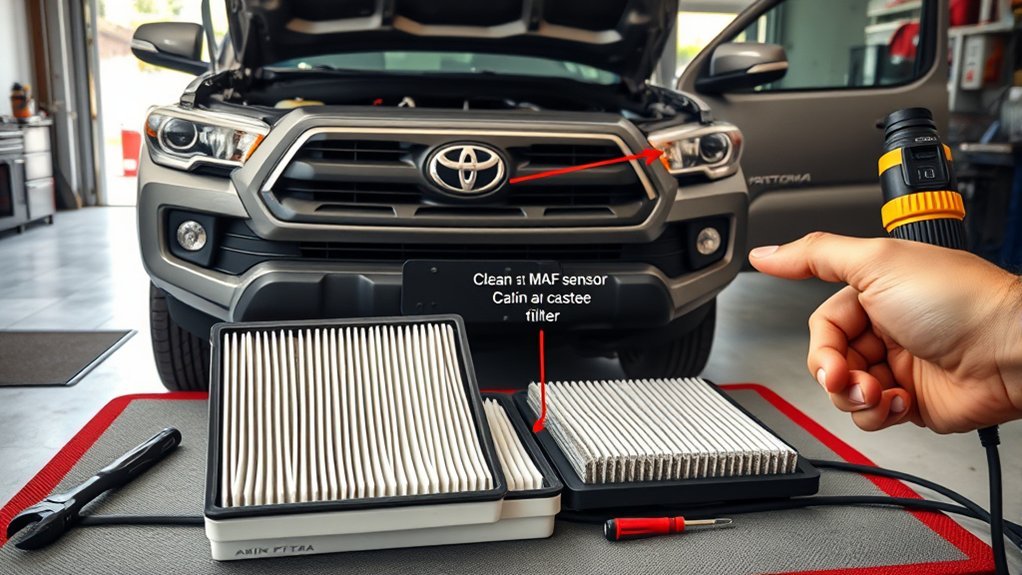
Start with exact-fit replacement filters, a clean work area, and a flashlight. Many Tacoma filter changes need no tools, although some model years or aftermarket housings may use screws. Keep dirt away from the intake opening and avoid forcing plastic clips in cold weather.
How to Replace the Engine Air Filter
- Park safely, turn the engine off, and set the parking brake.
- Open the hood and locate the rectangular air cleaner housing.
- Release the clips or fasteners holding the air box cover.
- Lift the cover only as much as needed and remove the old filter.
- Remove loose debris from the lower housing without pushing dirt into the intake tube.
- Compare the new filter with the old one, then seat it flat with the gasket even around the perimeter.
- Close the cover and secure every clip or fastener before starting the engine.
How to Replace the Cabin Air Filter
- Empty the glove box so items cannot fall behind the dashboard.
- Lower the glove box according to your Tacoma’s design, taking care with any damper arm.
- Remove the cabin filter access cover behind the glove box.
- Slide out the old filter and photograph its label and orientation.
- Remove loose leaves or debris from the filter slot without dropping material into the blower.
- Install the new filter according to its AIR FLOW or UP marking.
- Reinstall the access cover and return the glove box to its normal position.
What If the Engine Runs Poorly After the Filter Change?
A dirty engine filter is not the same as a failed mass airflow sensor or oxygen sensor. However, an improperly seated filter, unsecured air box, loose intake tube, disconnected sensor plug, or residue from an incorrectly serviced reusable filter can create symptoms that feel like sensor trouble.
If rough idle, hesitation, an intake whistle, or a check engine light appears immediately after the filter change, turn the engine off and recheck the installation. Confirm that the filter sits flat, the air box is latched, and every disturbed intake connection is secure. If the warning remains, scan the stored diagnostic trouble codes before replacing sensors.
Post-Installation Check
- The engine air-box cover sits evenly and every clip or fastener is secure.
- The intake tube and any connector moved during access are fully attached.
- The engine starts normally without a new whistle, rough idle, or warning light.
- The cabin-filter access door is latched and the glove box moves normally.
- Vent airflow feels normal at several fan speeds without rubbing or fluttering noise.
When to Call a Professional
Call a technician if the check engine light remains on, the truck misfires, the engine runs rough after the housing is correctly closed, air box clips are broken, the intake tube is cracked, or HVAC airflow stays weak after a correct-fit cabin filter is installed. Those symptoms can require electrical, sensor, vacuum-leak, blower, evaporator-airflow, or HVAC-door diagnosis.
Frequently Asked Questions
What is the difference between an air filter and a cabin air filter?
The engine air filter protects the engine by cleaning air before it reaches the intake. The cabin air filter cleans outside air before it comes through the HVAC vents. One affects engine breathing and intake protection; the other affects cabin airflow and comfort.
Which is more important: the cabin air filter or engine air filter?
They protect different systems and should not be treated as substitutes. The engine filter keeps abrasive debris out of the intake. The cabin filter supports vent airflow, windshield clearing, odor control, and reduced dust or pollen inside the cab.
Is a pollen filter the same as a cabin filter?
Yes. “Pollen filter” is another common name for the cabin air filter. Standard filters focus on particles, while some filters also include activated carbon for odor control.
How often should I replace a Toyota Tacoma engine air filter?
Use the maintenance guide for your exact model year. Toyota’s U.S. maintenance schedules list engine-air-filter replacement at 30,000 miles or 36 months for both the 2017 and 2024 Tacoma examples in this guide. Inspect sooner in dusty or off-road conditions and replace a damaged, deformed, or heavily loaded filter.
How often should I replace a Toyota Tacoma cabin air filter?
Use the schedule for your exact model year. Toyota’s 2017 U.S. Tacoma guide lists cabin-filter inspection at 10,000 miles or 12 months and replacement at 20,000 miles or 24 months. The 2024 U.S. guide lists inspection at 15,000 miles or 18 months and replacement at 30,000 miles or 36 months. Replace sooner when the filter is damp, damaged, heavily loaded, or restricting airflow.
Can a dirty engine air filter reduce gas mileage?
On modern computer-controlled vehicles, replacing a clogged filter can improve acceleration, but it does not normally improve fuel economy. U.S. Department of Energy testing found no measurable fuel-economy improvement in the modern vehicles it tested.
Which direction should the Tacoma cabin air filter arrow point?
Follow the wording on the filter. An AIR FLOW arrow points in the direction air moves through the housing, while an UP arrow marks the edge that faces upward. Compare the removed filter, housing markings, and replacement instructions instead of assuming both labels mean the same thing.
Conclusion
A Toyota Tacoma has two separate air filters with different jobs. Keep the engine filter correctly sealed to protect the intake, and keep the cabin filter clean to maintain vent airflow and passenger comfort. The replacement schedule and access details can vary, so identify the exact model year and use its Toyota maintenance documentation before buying parts.
After replacement, record the date and mileage, verify that every cover and fastener is secure, and test both engine operation and HVAC airflow. If a new warning light, rough idle, whistle, weak airflow, or odor remains, recheck the installation and diagnose the affected system instead of replacing sensors or HVAC parts at random.
Sources
- Toyota 2017 Tacoma Warranty & Maintenance Guide: factory cabin-filter inspection and replacement intervals and engine-air-filter replacement interval.
- Toyota 2024 Tacoma Warranty & Maintenance Guide: current-generation cabin-filter inspection and replacement intervals and engine-air-filter replacement interval.
- Toyota Owners Manuals and Warranties: 2017 Tacoma: official Toyota owner-documentation hub.
- Toyota Owners Manuals and Warranties: 2024 Tacoma: official Toyota owner-documentation hub.
- FuelEconomy.gov: Keeping Your Vehicle in Shape: performance and fuel-economy guidance for clogged air filters on modern vehicles.
- U.S. Department of Energy: Replacing an Air Filter Improves Performance, Not Fuel Economy: summary of Oak Ridge National Laboratory test findings.
- Toyota Genuine Engine Air Filter: Toyota parts information on engine air filter function.
- K&N Official Filter Cleaning Instructions: separate manufacturer procedures for reusable filter types.

[…] cycle, but restricted airflow can make properly cooled air feel ineffective inside the cab. See the Tacoma air filter vs cabin air filter guide for a closer explanation of the two […]