· Last updated: July 15, 2026
For most shoppers, the choice is straightforward: choose a 2023-or-older naturally aspirated Tacoma if you value a familiar powertrain, linear response, and a longer ownership history. Choose a current turbocharged Tacoma if you want stronger low-rpm torque, better performance at elevation, and Toyota’s newest platform and technology.
The turbo Tacoma does not win every specification. The 2026 lineup reaches up to 317 lb-ft with the standard i-FORCE engine or 465 lb-ft with i-FORCE MAX, but its maximum tow rating is 6,500 pounds. A properly equipped 2023 naturally aspirated V6 Tacoma was rated for up to 6,800 pounds. Compare the exact trim, drivetrain, transmission, and equipment instead of choosing by engine type alone.
Quick Answer
A naturally aspirated Tacoma is usually the better used-truck choice if you want simpler induction hardware, predictable power delivery, and a longer Tacoma ownership record. A turbocharged Tacoma is better if you want stronger low-rpm torque, better power retention at altitude, current safety and cabin technology, or the available i-FORCE MAX hybrid. For towing, compare the exact rating: stronger turbo torque does not automatically mean a higher maximum capacity.
Key Takeaways
- Current U.S.-market Tacomas no longer offer a naturally aspirated engine. The 2026 lineup uses Toyota’s 2.4-liter turbocharged i-FORCE or available i-FORCE MAX hybrid powertrain.
- The 2023 Tacoma’s available naturally aspirated 3.5-liter V6 produced 278 horsepower and 265 lb-ft of torque.
- The 2026 i-FORCE gas engine produces up to 278 horsepower and 317 lb-ft, while i-FORCE MAX reaches up to 326 horsepower and 465 lb-ft. Output depends on configuration.
- For towing feel, hills, and daily acceleration, the turbo Tacoma’s extra low-rpm torque is useful. However, the 2026 lineup tops out at 6,500 pounds of towing capacity, compared with up to 6,800 pounds for a properly equipped 2023 V6.
- A naturally aspirated engine has fewer forced-induction components, but engine type alone does not determine reliability.
- Condition, service history, modifications, cooling-system health, and the exact configuration can matter more than the turbo-versus-nonturbo label.
Turbo vs. Naturally Aspirated Tacoma: At-a-Glance Comparison
| Decision Factor | 2023-and-Older Naturally Aspirated Tacoma | 2026 Turbocharged Tacoma |
|---|---|---|
| How you buy it | Used market | New or nearly new |
| Reference output | 2023 3.5-liter V6: 278 hp and 265 lb-ft | i-FORCE: up to 278 hp and 317 lb-ft; i-FORCE MAX: up to 326 hp and 465 lb-ft |
| Maximum advertised towing | Up to 6,800 pounds for a properly equipped 2023 V6 | Up to 6,500 pounds for the 2026 lineup |
| Fuel-economy context | Varies substantially by engine, drivetrain, transmission, and model year | Selected gas configurations reach up to 23 mpg combined and 26 mpg highway; i-FORCE MAX reaches up to 23 mpg combined |
| Power delivery | Linear and increasingly strong as rpm rises | Stronger peak torque at lower engine speed |
| Long-term evidence | Longer Tacoma-specific high-mileage ownership history | Newer Tacoma-specific ownership record still developing |
| Best reason to choose it | Used-truck value, familiar design, and traditional response | Low-rpm torque, altitude performance, current platform, and hybrid availability |
Editorial Method: This comparison uses Toyota specifications, EPA fuel-economy data, Toyota warranty and maintenance documents, and practical ownership-risk factors. It does not claim instrumented acceleration, towing, sound, durability, or real-world fuel-economy testing.
[Products Worth Considering]

This set of ignition coil packs is designed as a reliable replacement for compatible Ford, Lincoln, and Mercury V8 applications. Built to meet or exceed OE specifications, these coils help deliver dependable performance, easy installation, and consistent engine operation across the full speed range. A lifetime warranty adds extra confidence for long-term use.

This ignition coil pack and pre-gapped spark plug set is designed for select 3.5L V6 Toyota and Lexus models, helping restore smooth engine performance and reliable starting. Built to meet or exceed OEM specifications, it can help fix common issues like misfires, rough idle, poor fuel economy, and reduced power. The complete 6-piece set offers a convenient replacement solution for compatible vehicles.

The TILIBOTE Tire Repair Kit provides a complete solution for repairing flats on cars, motorcycles, trucks, tractors, trailers, RVs, and ATVs. With 117 pieces, durable steel tools, and included pressure and tread gauges, it helps you handle punctures quickly and efficiently with confidence.
What Are Naturally Aspirated and Turbocharged Engines?
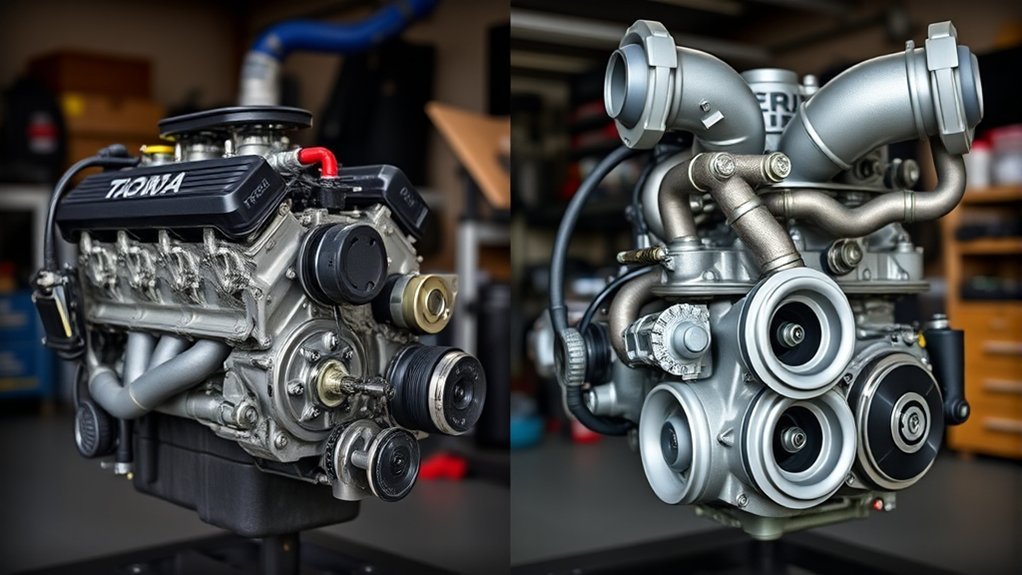
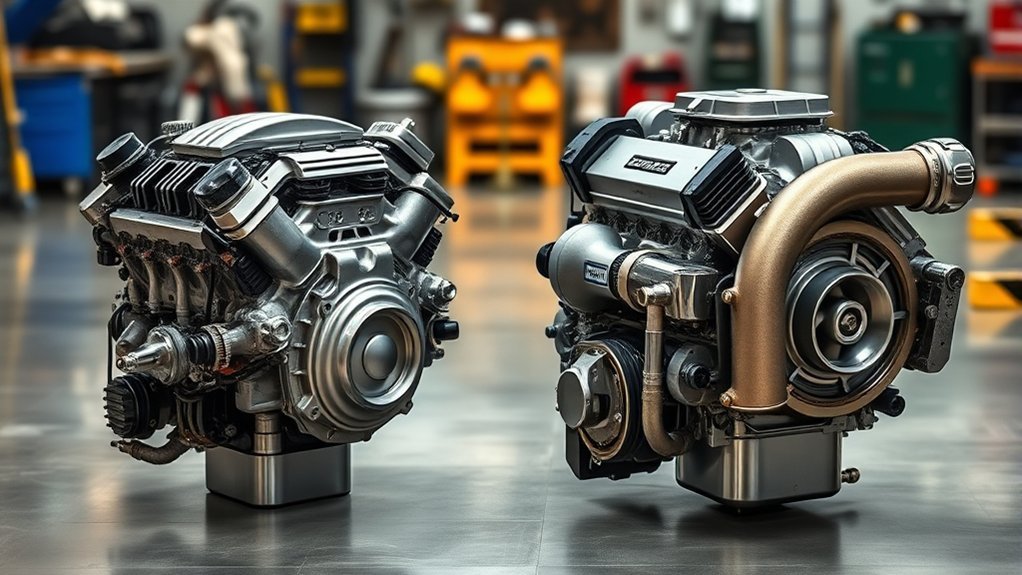
A naturally aspirated engine draws air into its cylinders through atmospheric pressure and the vacuum created as the pistons move. It does not use a turbocharger or supercharger to force additional air into the engine. In Tacoma terms, this category includes engines such as the previous 2.7-liter four-cylinder and 3.5-liter V6.
A turbocharged engine uses exhaust energy to spin a turbine connected to an intake compressor. The compressor forces more air into the engine, allowing the engine-management system to add fuel and produce more power from a smaller displacement. FuelEconomy.gov explains turbocharging and engine downsizing as a way to combine smaller-engine operation under light load with stronger output when boost is needed.
For Tacoma shoppers, the key dividing line is model generation. The 2023 Tacoma brochure lists an available naturally aspirated 3.5-liter V6 with 278 horsepower and 265 lb-ft of torque. Toyota’s 2026 Tacoma information lists an i-FORCE turbo engine with up to 278 horsepower and 317 lb-ft, plus an available i-FORCE MAX hybrid with up to 326 horsepower and 465 lb-ft.
Note: If you are shopping for a new Tacoma in the United States, your engine choices are turbocharged. The naturally aspirated decision mainly applies to used Tacomas from 2023 and earlier.
Turbo vs. Naturally Aspirated Tacoma Engines: Main Differences
The clearest difference is how the engines deliver torque. A naturally aspirated Tacoma generally builds power progressively as engine speed rises. A current turbo Tacoma reaches stronger peak torque lower in the rpm range, which can make it feel more responsive when leaving a stop, climbing a grade, or maintaining speed with a load.
That torque advantage should not be confused with a higher maximum tow rating. Vehicle-level ratings also depend on cooling, gearing, chassis design, brakes, drivetrain, body configuration, and installed equipment.
| Feature | Naturally Aspirated Tacoma | Turbocharged Tacoma |
|---|---|---|
| Power delivery | Linear, with output building as rpm rises | Stronger peak torque at lower rpm |
| Throttle feel | Predictable relationship between pedal input and engine speed | Strong early response, with feel affected by boost, transmission, and throttle calibration |
| Induction complexity | No turbocharger, intercooler, wastegate, or boost plumbing | Adds forced-induction, charge-air-cooling, boost-control, and heat-management components |
| High-altitude behavior | Loses more output as atmospheric air becomes thinner | Can compress intake air and mitigate more of the altitude-related power loss |
| Historical evidence | Longer Tacoma-specific ownership and high-mileage history | Current Tacoma application has a shorter long-term ownership record |
| Maximum towing reference | Properly equipped 2023 V6: up to 6,800 pounds | 2026 lineup: up to 6,500 pounds |
| Best fit | Used buyers prioritizing familiarity, condition, and traditional response | New buyers prioritizing low-rpm torque, altitude performance, and current technology |
Engine Design Complexity
Naturally aspirated engines use fewer forced-induction components. They do not need a turbocharger, wastegate, intercooler, charge pipes, or electronic boost controls. That reduces the number of induction-system parts an owner or technician must inspect.
Turbocharged engines add hardware and thermal-management demands, but those components support useful truck characteristics. The current Tacoma’s turbo powertrains are designed to deliver strong torque without requiring the engine to reach the higher rpm associated with peak output from the previous V6.
Complexity is not the same as unreliability. A simpler system has fewer related components, while an engineered turbo system can still deliver dependable service when operated and maintained according to Toyota’s requirements.
Performance and Drivability
The 2023 naturally aspirated Tacoma V6 produced 278 horsepower and 265 lb-ft of torque. Its power builds in a familiar way: pressing farther into the throttle and increasing rpm brings more performance.
The 2026 i-FORCE gas engine produces up to 278 horsepower and 317 lb-ft, with output varying by configuration. The i-FORCE MAX hybrid reaches up to 326 horsepower and 465 lb-ft. Those higher torque figures help explain why the current Tacoma can feel stronger before the engine has to rev hard.
However, towing feel and towing capacity are separate. Toyota rates the 2026 Tacoma lineup for up to 6,500 pounds, while a properly equipped 2023 V6 could reach 6,800 pounds. The current turbo truck may feel stronger at low rpm even when the older truck carries the higher maximum rating.
The biggest everyday difference is low-rpm torque, not maximum tow rating. The current Tacoma can pull strongly before revving hard, while the exact legal capacity still depends on the truck’s configuration.
Fuel Efficiency and Emissions
Turbocharging does not guarantee better real-world fuel economy in every situation. When the engine produces boost during heavy acceleration, climbing, off-road driving, or towing, it must add fuel to support that output. A smaller turbo engine’s efficiency advantage is most likely to appear during lighter operation.
Selected 2026 gas Tacoma configurations reach an EPA estimate of up to 23 mpg combined and 26 mpg highway. Toyota lists i-FORCE MAX at up to 23 mpg combined. Other configurations rate lower, so compare the exact cab, drivetrain, transmission, tires, and trim using the official 2026 Tacoma listings on FuelEconomy.gov.
When comparing a used naturally aspirated Tacoma, use the EPA listing for its exact model year and configuration. Do not compare the best current rating with an unrelated older drivetrain and treat the difference as an engine-only result.
Benefits and Drawbacks of Turbocharged Tacoma Engines
The current Tacoma’s turbo powertrains deliver their most useful advantage in the lower part of the rev range. That can improve everyday response and reduce how often the engine must rev aggressively when climbing or accelerating.
[Products Worth Considering]

These custom-fit floor mats are designed for compatible Toyota 4Runner models and provide dependable all-weather protection for the first and second rows. Made from durable TPE material, they help guard against water, mud, dirt, and debris while offering a non-slip surface and raised edges to keep messes contained. They are easy to remove and clean, making them a practical upgrade for maintaining a clean interior.

This Toyota navigation SD card provides updated North America maps and points of interest for compatible factory navigation systems. It is preloaded with recent road and location data to help drivers find destinations, services, and routes more easily across the U.S. and Canada. Designed for select Toyota models, it offers a simple plug-and-play replacement for the original navigation card.

【Good Substitute】: This air filter is cleverly designed, low drag, and allows for high volume of air flow volumes. Its filtration efficiency is increased from 70% to 80%, while it can highly prevent the entry of dust. This air filter fits for most 12mm (0.47 inches) air intakes, you can directly replace your worn or broken one.
Benefits of a Turbocharged Tacoma
- More peak torque: The i-FORCE engine reaches up to 317 lb-ft, while i-FORCE MAX reaches up to 465 lb-ft.
- Stronger low-rpm response: Useful torque arrives earlier than it did in the previous naturally aspirated V6.
- Better altitude compensation: The turbocharger can compress thinner intake air and reduce more of the power loss experienced at elevation.
- Current vehicle platform: A turbo Tacoma gives you access to Toyota’s latest chassis, cabin, safety systems, and available hybrid powertrain.
- Hybrid assistance: The i-FORCE MAX system combines turbocharged combustion power with electric-motor torque.
Drawbacks of a Turbocharged Tacoma
- More components: The induction system includes turbo, charge-air-cooling, boost-control, lubrication, and heat-management hardware.
- Greater sensitivity to improper modifications: Unsupported tuning, boost changes, sensor problems, or poorly designed intake parts can affect operation.
- Different sound and response: Some drivers prefer the progressive rpm build and sound of the older naturally aspirated V6.
- Shorter Tacoma-specific history: The fourth-generation turbo powertrain does not yet have the same quantity of high-mileage Tacoma examples as the previous V6.
- No automatic tow-rating win: The 2026 lineup’s maximum rating is lower than the properly equipped 2023 V6 maximum.
Warning: Do not judge a Tacoma’s reliability by the word “turbo” or “naturally aspirated” alone. Service history, oil-change records, cooling-system condition, modifications, towing use, accident history, and previous-owner behavior can outweigh the induction design.
Advantages of Naturally Aspirated Tacoma Engines
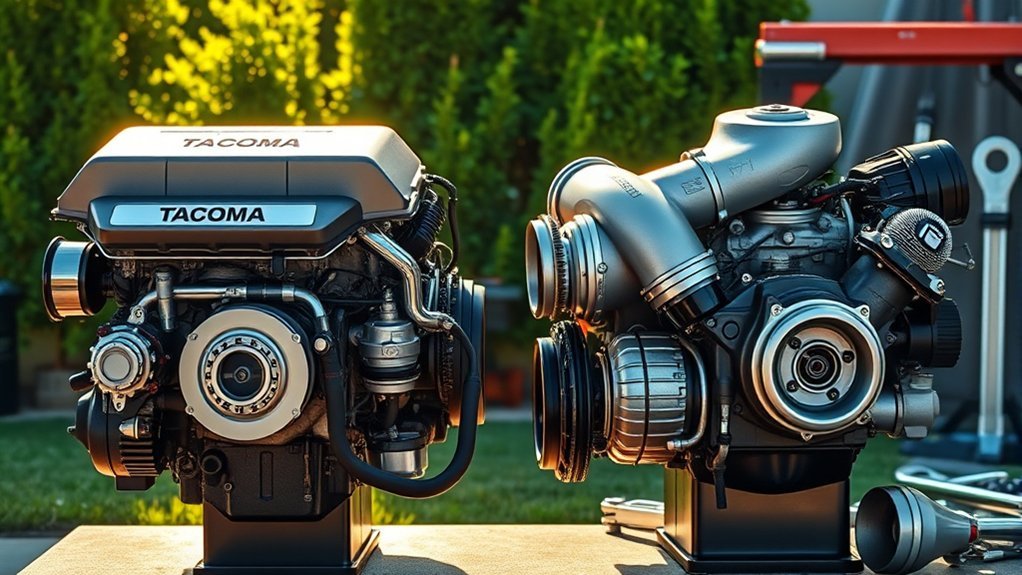
A naturally aspirated Tacoma appeals most to used-truck buyers who value a familiar design and progressive power delivery. Its main advantages are a simpler induction layout and a longer model-specific ownership history, not a guarantee that every older truck will be dependable.
Simplicity in Design
A naturally aspirated Tacoma does not need turbocharger bearings, boost-control hardware, an intercooler, or pressurized charge pipes. Fewer forced-induction components can simplify inspection and diagnosis.
The previous-generation V6 also has a longer Tacoma ownership history than the current turbo engine. That gives used buyers more high-mileage examples to compare, but an individual truck’s condition remains more important than its reputation.
For a deeper comparison of the engines offered within the third-generation truck, see the Tacoma V6 versus four-cylinder engine guide.
Immediate Throttle Response
A naturally aspirated engine does not wait for exhaust flow to build boost. Its response usually follows engine speed and throttle input in a progressive way, although transmission programming and electronic throttle calibration still affect how immediate the truck feels.
- Power builds progressively as rpm rises.
- Pedal inputs can feel easy to predict during low-speed driving.
- No boost transition is added to the response.
- Drivers accustomed to older Tacoma engines may find the behavior familiar.
Engine Sound and Driver Feel
Some drivers prefer the way a naturally aspirated engine’s sound rises with rpm. Because a turbocharger sits in the exhaust stream and uses exhaust energy, the current truck has a different sound and response character.
This is a test-drive preference, not an objective durability or capability advantage. Drive the truck in low-speed traffic, on a grade, and during a highway merge before deciding which response feels better to you.
How Do Turbochargers Enhance Tacoma Engine Performance?
A turbocharger compresses intake air so the engine can burn more fuel and make more output from its 2.4-liter displacement. In the Tacoma, the most noticeable result is stronger peak torque at lower rpm.
Toyota lists the standard i-FORCE turbo engine at up to 278 horsepower and 317 lb-ft of torque. The available i-FORCE MAX hybrid raises maximum output to 326 horsepower and 465 lb-ft. For a more detailed explanation of the current system, see the Tacoma i-FORCE engine guide.
- For acceleration: Low-rpm torque helps the truck gain speed without requiring as much engine speed.
- For hills: Boost lets the engine maintain stronger output when load increases.
- For altitude: Compressing intake air mitigates more of the power loss caused by lower air density.
- For towing feel: Earlier torque helps when starting or climbing, although the truck must still remain within its exact tow and payload ratings.
Pro Tip: During a test drive, use a route with a grade and stop-and-go traffic. These conditions reveal low-rpm response more clearly than steady cruising. Do not tow during a dealer test drive unless the dealer provides an approved setup.
How Do Intake Systems Affect Turbocharged Engine Performance?
The turbocharger depends on a stable supply of filtered air and accurate sensor readings. Toyota’s factory intake is the baseline for filtration, water protection, emissions compliance, noise control, and predictable calibration.
An aftermarket intake may change sound and airflow characteristics, but it does not automatically create a meaningful power gain. Poor fitment, exposed hot-air filters, contamination, leaks, or incorrect sensor placement can cause inconsistent operation or diagnostic codes.
| Intake Choice | Best For | Watch Out For |
|---|---|---|
| Factory intake | Filtration, emissions compliance, water protection, and predictable daily operation | Less intake sound and customization |
| Enclosed aftermarket intake | Owners primarily seeking different sound or a specific supported setup | Sensor placement, sealing, filtration, emissions legality, and documented compatibility |
| Open engine-bay intake | Primarily increased induction sound | Warmer intake air, water exposure, filter contamination, and inconsistent results |
Toyota does not require routine maintenance to be completed by a dealership. However, you should keep records, follow the specified procedures, and understand that damage caused by improper maintenance, alterations, or unsuitable parts may not be covered. Review the current Tacoma warranty and maintenance guide before modifying the intake or engine-management system.
Reliability Comparison: Turbocharged vs. Naturally Aspirated
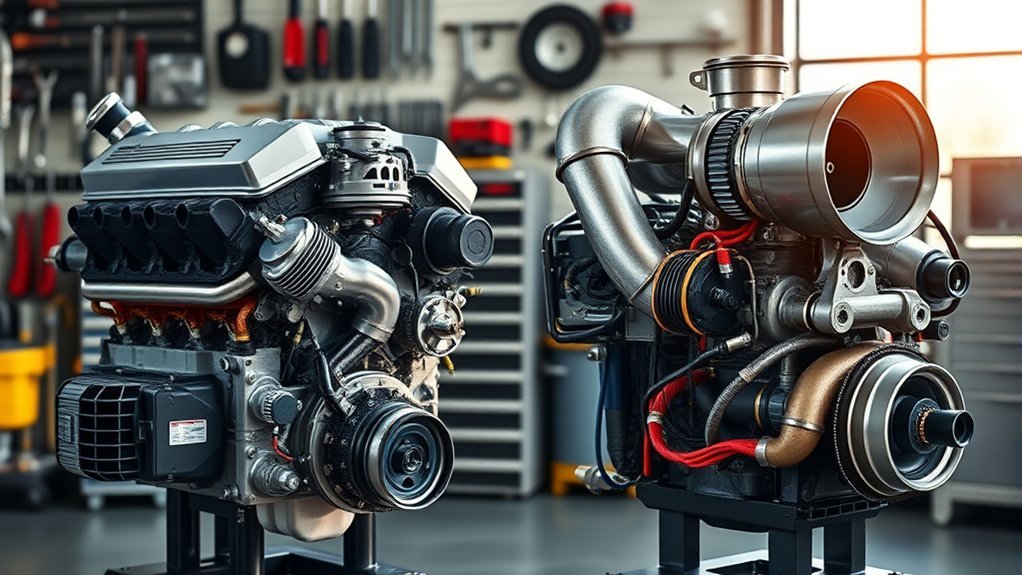
The naturally aspirated Tacoma has a simpler induction system and a longer Tacoma-specific high-mileage history. The current turbocharged Tacoma has more related components and a shorter ownership record, but those facts do not establish that it has a higher failure rate.
No credible apples-to-apples dataset yet compares decades of fourth-generation turbo Tacoma failures with the previous V6. A responsible purchase decision should therefore separate what is known from what is assumed:
- Known: The turbo system adds components, heat management, and lubrication demands.
- Known: The previous naturally aspirated engines have been used in Tacomas for longer.
- Not yet established: A long-term, model-specific failure-rate difference under comparable maintenance and use.
- Always relevant: Service history, modifications, operating conditions, and the condition of the individual truck.
For broader ownership context, see the guide to how long Tacoma engines can last. Treat mileage ranges as planning context rather than a guarantee for a particular truck.
What Matters Most for Long-Term Reliability?
- Correct engine oil: Use the viscosity and specification listed for the exact engine and operating conditions.
- Documented service: Keep receipts and mileage records instead of relying on verbal maintenance claims.
- Cooling-system health: Inspect coolant level, hoses, reservoirs, radiators, and related charge-air-cooling components where fitted.
- Cold-engine operation: Avoid heavy throttle before the engine reaches normal operating temperature.
- Modification quality: Unsupported tunes, boost changes, poor wiring, and badly fitted intake parts can increase risk.
- Use case: Repeated towing, dust, heat, short trips, and off-road use can change maintenance needs.
Toyota’s 2026 maintenance guide schedules engine-oil and filter replacement at 10,000 miles or 12 months under normal service. It specifies 5,000 miles or six months for certain severe-use patterns, including primary operation on dirt or dusty roads. Follow the schedule for your exact truck rather than applying one interval to every owner.
Used Tacoma Inspection Checklist
A well-kept naturally aspirated Tacoma can be a better purchase than a neglected newer truck. Before buying, complete these checks or pay an independent technician to do them:
- Confirm the engine and configuration: Match the VIN, build information, drivetrain, cab, and installed towing equipment to the seller’s claims.
- Request a cold start: Listen for abnormal rattles, misfires, exhaust smoke, warning lights, or unstable idle before the engine is warmed.
- Scan all control modules: Check for current, pending, and recently cleared diagnostic codes.
- Inspect for leaks: Look around the engine, transmission, cooling system, differential housings, and underbody.
- Review coolant condition: Check for low levels, contamination, staining, damaged hoses, or signs of repeated overheating.
- Identify modifications: Ask about tunes, intake systems, exhaust work, suspension changes, oversized tires, towing accessories, and removed emissions equipment.
- Verify service records: Compare dates and mileage instead of accepting an undocumented claim that maintenance was completed regularly.
- Check the VIN for recalls: Use the NHTSA recall lookup and confirm that any open safety recall is addressed.
Emissions and Fuel Efficiency: The Real Impact on Tacoma
Toyota’s switch to a smaller turbo engine supports a broader engine-downsizing strategy. Under light load, the engine operates with smaller displacement. When more output is requested, the turbocharger supplies additional intake air.
The result is not a fixed fuel-saving percentage. A driver who frequently uses boost, tows, climbs, idles, carries heavy accessories, or runs aggressive off-road tires may not reproduce the best EPA rating. Weather, trip length, speed, elevation, and drivetrain also affect fuel use.
Compare official EPA figures for the exact truck, then use owner-recorded fuel data only as secondary context. Different routes and driving patterns can make two owners’ results look far apart even when both trucks operate normally.
How to Pick the Best Engine for Your Tacoma
The best Tacoma engine depends on the truck you are actually buying, not only the engine family. Use these five questions in order:
- Are you buying new or used? A new U.S.-market Tacoma is turbocharged. A naturally aspirated engine means shopping older used inventory.
- What tow rating do you need? Compare the door labels, owner information, equipment, payload, hitch limits, and Toyota rating for the exact configuration.
- How often do you drive at elevation? Frequent mountain driving strengthens the case for turbocharging.
- Which risk do you prefer? An older naturally aspirated truck brings age and used-condition risk. A current turbo truck brings greater complexity and less long-term Tacoma-specific history.
- Which individual truck is better documented? Service records, inspection results, modifications, and condition should break a close tie.
Choose a Naturally Aspirated Tacoma If…
- You are shopping for a 2023-or-older used Tacoma.
- You prefer progressive power delivery and a traditional V6 or four-cylinder driving character.
- You value a simpler forced-induction-free intake design.
- You found a truck with strong service records and a clean independent inspection.
- You need the properly equipped 2023 V6 model’s maximum advertised 6,800-pound tow rating.
- You accept that age, mileage, rust, previous use, and deferred maintenance can outweigh engine-design simplicity.
Choose a Turbocharged Tacoma If…
- You are buying a new Tacoma.
- You want stronger peak torque at lower rpm.
- You frequently drive on steep grades or at higher elevations.
- You want the current Tacoma chassis, cabin, safety systems, or available hybrid.
- Your towing needs fit within the rating of the exact 2026 configuration.
- You are comfortable following the correct maintenance schedule and avoiding unsupported modifications.
Best Choice by Driver Type
| Driver Type | Better Fit | Why |
|---|---|---|
| Long-term used-truck shopper | Well-documented naturally aspirated Tacoma | Longer ownership history and simpler induction system, provided the individual truck passes inspection |
| New-truck buyer | Turbocharged Tacoma | The current U.S. lineup uses turbo powertrains |
| Driver prioritizing low-rpm pull | i-FORCE or i-FORCE MAX | Higher peak torque than the previous naturally aspirated V6 |
| Buyer needing the highest reference tow rating | Compare exact trucks; a properly equipped 2023 V6 may fit | Its maximum advertised rating was 6,800 pounds versus 6,500 pounds for the 2026 lineup |
| Mountain-state driver | Turbocharged Tacoma | Forced induction mitigates more of the output loss caused by thinner air |
| Driver prioritizing traditional sound | Naturally aspirated Tacoma | Its sound and power build may feel more familiar, subject to personal preference |
You can also review the Toyota Tacoma generation history to confirm which powertrains, chassis changes, and model years belong to each generation.
Frequently Asked Questions
What is better, a naturally aspirated or turbo engine?
Neither design is automatically better. A naturally aspirated Tacoma offers simpler induction hardware, progressive response, and a longer model-specific ownership history. A turbo Tacoma offers stronger low-rpm torque, better altitude compensation, and access to the current vehicle platform. The better purchase depends on configuration, condition, maintenance, and use.
Does the new Toyota Tacoma have a naturally aspirated engine?
No. Current U.S.-market Tacomas use Toyota’s 2.4-liter turbocharged i-FORCE engine or the available turbocharged i-FORCE MAX hybrid powertrain. Naturally aspirated Tacoma engines are found in older used models.
Does every 2026 Tacoma make 278 horsepower and 317 lb-ft?
No. Toyota describes 278 horsepower and 317 lb-ft as the maximum output of the i-FORCE gas powertrain. Output depends on the Tacoma’s trim and transmission, so verify the specifications for the exact truck you are considering.
Does the 2026 Tacoma tow more than the 2023 V6 Tacoma?
Not at the maximum advertised rating. Toyota lists the 2026 Tacoma lineup at up to 6,500 pounds, while a properly equipped 2023 V6 Tacoma was rated for up to 6,800 pounds. The 2026 turbo engine produces more low-rpm torque, but the exact tow rating still depends on the complete vehicle configuration.
How reliable is the Toyota 2.4-liter turbo engine?
The current 2.4-liter turbo powertrain is engineered for truck use, but its Tacoma-specific long-term record is shorter than that of the previous naturally aspirated engines. No comparable decades-long failure-rate record is available yet. Maintenance, cooling, driving conditions, modifications, and the condition of the individual truck remain important.
Why do naturally aspirated engines sound better to some drivers?
Some drivers prefer how the engine sound rises progressively with rpm. A turbocharger uses exhaust energy and changes the engine’s sound and response character. This is a personal test-drive preference rather than a reliability or capability advantage.
Do naturally aspirated engines last longer than turbo engines?
Not automatically. Naturally aspirated engines have fewer forced-induction components, but lifespan depends on engineering, maintenance, heat exposure, load, modifications, and operating conditions. A maintained turbo engine can outlast a neglected naturally aspirated engine.
Is the turbo Tacoma better for towing?
The current turbo Tacoma offers stronger low-rpm torque, which can improve how the truck feels when starting or climbing with a trailer. However, it does not have the higher maximum advertised rating: the 2026 lineup reaches up to 6,500 pounds, while a properly equipped 2023 V6 reached up to 6,800 pounds. Follow the rating and payload limits for the exact truck.
Conclusion
Choose a naturally aspirated Tacoma when you find a well-documented used truck and value progressive response, a simpler induction layout, and a longer Tacoma ownership history. Choose a current turbocharged Tacoma when low-rpm torque, elevation performance, modern technology, or the i-FORCE MAX hybrid matters more.
Do not assume the turbo truck tows more because it produces more torque. Before buying, verify the exact tow and payload ratings, compare the applicable EPA listing, inspect service records and modifications, check the VIN for recalls, and arrange an independent used-vehicle inspection. When possible, drive both powertrain styles under the conditions you encounter most often.
Sources
- Toyota USA Newsroom: 2026 Toyota Tacoma — current powertrain output, fuel-economy highlights, towing capacity, and payload information.
- Toyota Tacoma Official Page — current Tacoma powertrain and performance information.
- FuelEconomy.gov: 2026 Toyota Tacoma — EPA fuel-economy listings by configuration.
- FuelEconomy.gov: Advanced Engine Technologies — turbocharging and engine-downsizing explanation.
- Toyota 2023 Tacoma Brochure — previous-generation engine output and maximum towing information.
- Toyota 2026 Tacoma Warranty and Maintenance Guide — warranty terms, maintenance responsibilities, and service intervals.
- NHTSA Recall Lookup — VIN-based open safety-recall checks for used vehicles.