Editorial Team · Reviewed against Toyota 2026 U.S. Tacoma materials · Last updated: August 31, 2026
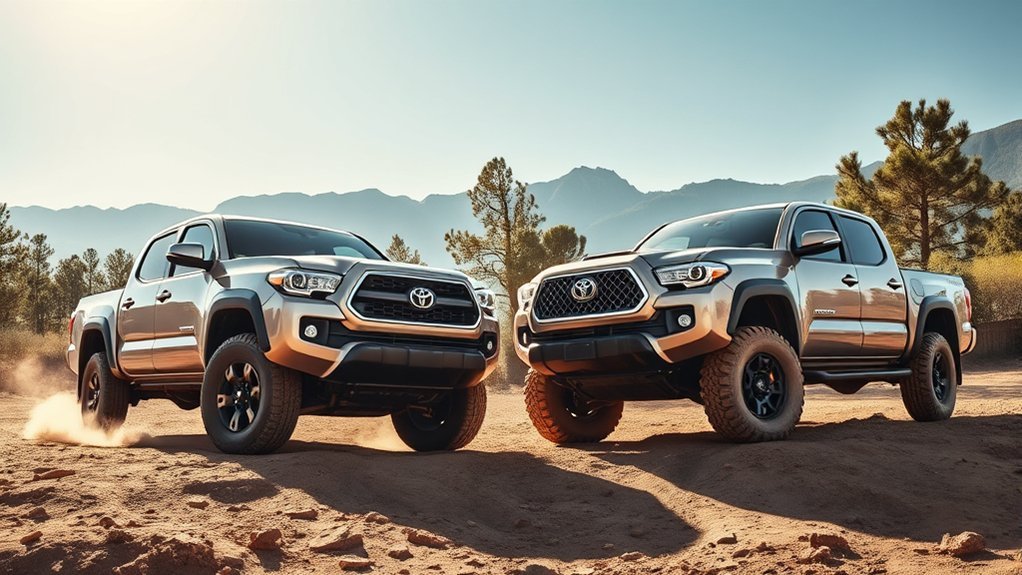
Choose a Toyota Tacoma 4×2 if nearly all your driving stays on paved roads and you do not routinely need extra traction. Choose a Tacoma 4×4 if snow, mud, sand, steep unpaved roads, slick boat ramps, or rough job sites are part of your normal use. Do not compare drivetrains alone. Toyota’s 2026 U.S. Tacoma materials list 2WD, part-time 4WD, and full-time 4WD across different configurations, while fuel economy, towing, ride, and price also change with the engine, trim, cab, bed, tires, and options.
Quick Answer
For most commuters in mild climates, the Tacoma 4×2 is the better-value choice. For drivers who regularly face low-traction surfaces, the 4×4 is worth the added cost and service complexity. Compare two trucks with the same model year, engine, cab, bed, trim, and tire type before you judge fuel economy or value. Also compare the equipment itself: a rear-drive Tacoma can still have useful traction hardware, while not every 4×4 has the same four-wheel-drive system or off-road features.
| Decision factor | Tacoma 4×2 | Tacoma 4×4 |
|---|---|---|
| Best normal use | Paved commuting, highway travel, and light hauling | Snow, mud, sand, gravel, trails, ramps, and rough access roads |
| Traction advantage | Adequate on dry pavement with suitable tires; some configurations add rear traction aids | Can send drive force to both axles when the system and mode allow |
| Low range | No 4WD low-range transfer case | Available on applicable part-time 4WD systems for slow, difficult terrain |
| Fuel and purchase cost | Often lower in a like-for-like comparison | Often higher, but the exact gap depends on configuration |
| Drivetrain service | Fewer 4WD-specific components | Adds front-drive and transfer-case components on applicable systems |
| Towing | Tow rating depends on the exact truck configuration | Extra traction can help on loose or slick launch surfaces, but does not automatically raise the tow rating |
| Best fit | You prioritize simple daily use and lower running costs | You need recurring traction capability, not just an off-road look |
Key Takeaways
- A 4×2 is usually enough when your weekly routes stay paved and your climate is mild.
- A 4×4 earns its cost when low-traction roads or work sites are routine rather than hypothetical.
- The 2026 Tacoma lineup includes 2WD, part-time 4WD, and full-time 4WD configurations.
- Drivetrain and off-road equipment are separate decisions; Toyota lists the 2026 TRD PreRunner with an electronically controlled locking rear differential.
- Compare matching engines, trims, cabs, beds, transmissions, and tires before judging fuel economy or price.
- Four-wheel drive can improve launch traction, but tires, speed, payload, and the published tow rating still control safety.
How this comparison was checked: This guide uses Toyota U.S. 2026 lineup information, Toyota owner documentation, and official fuel-economy labels. It does not claim a controlled back-to-back road test. Exact equipment can still vary by grade, powertrain, options, and market, so verify the VIN, window sticker, and owner’s manual before buying.
What’s in This Article
- What 4×2 and 4×4 Systems Does the 2026 Tacoma Offer?
- What Does 4×2 Mean on a Toyota Tacoma?
- What Does 4×4 Add?
- How Fuel Efficiency Affects Your Choice
- How Maintenance Differs by Drivetrain
- When Should You Choose 4×4 vs. 4×2?
- Choose Tacoma 4×2 When
- Choose Tacoma 4×4 When
- How Resale Value Can Differ
- Urban vs. Off-Road Driving Needs
- What to Check on a Test Drive
- Make the Final 4×2 or 4×4 Decision
- Frequently Asked Questions
- Conclusion
What 4×2 and 4×4 Systems Does the 2026 Tacoma Offer?
Toyota’s 2026 U.S. Tacoma information lists three drivetrain categories: 2WD, part-time 4WD, and full-time 4WD. Toyota specifically identifies Limited trims as using full-time 4WD with an electronic locking center differential, while other configurations can use 2WD or selectable part-time 4WD.
Toyota’s current-generation technical description explains that rear-wheel-drive Tacomas use an automatic limited-slip differential, while applicable part-time 4WD models use an electronically controlled two-speed transfer case with high and low ranges plus Active Traction Control. If you want more detail about the operating differences, see this Tacoma part-time vs. full-time 4WD guide.
Do not assume that 2WD means a base truck with no traction hardware. Toyota’s 2026 Tacoma page lists an electronically controlled locking rear differential on the TRD PreRunner. The Tacoma TRD PreRunner guide explains why that rear-drive configuration can be useful on dirt and mild trails while still lacking the front-axle drive and low-range capability of a 4×4.
What Does 4×2 Mean on a Toyota Tacoma?
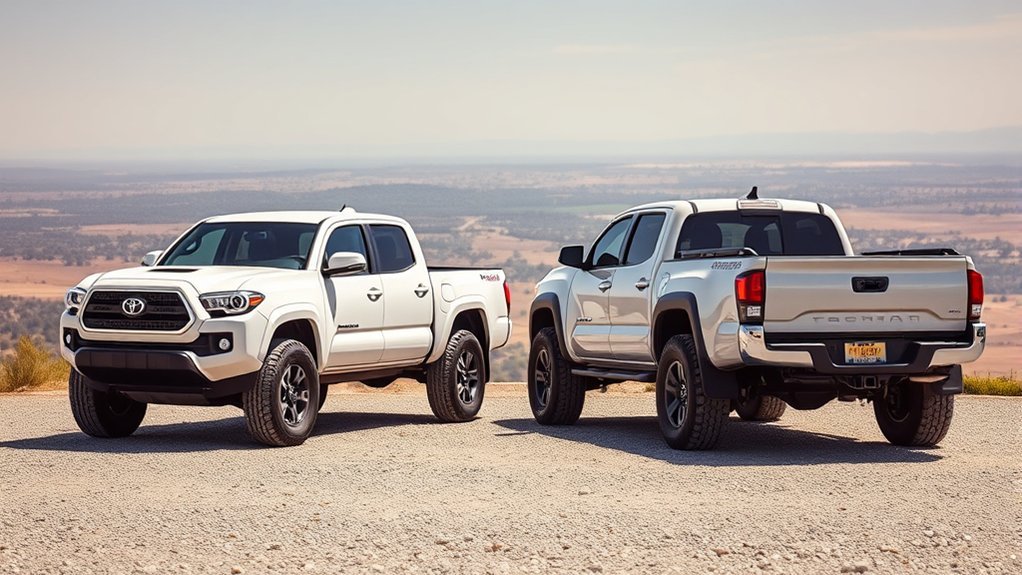
A Tacoma 4×2, also described as 2-wheel drive or rear-wheel drive, sends engine power to the rear wheels. It does not include the selectable front-axle drive hardware used by a part-time 4WD Tacoma.
That simpler layout can reduce purchase cost, drivetrain weight, and the number of 4WD-specific service items. It does not guarantee a certain fuel-economy advantage, because engines, transmissions, tires, axle ratios, cab and bed combinations, payload, and trim equipment also affect the result.
A 4×2 fits commuting, highway travel, errands, and hauling on maintained roads. It can also handle dry gravel or firm dirt when the route is mild and the tires suit the surface. The TRD PreRunner also shows that a rear-drive Tacoma can include additional rear traction hardware. Even so, a 4×2 remains a poor substitute for 4WD when deep snow, soft sand, mud, steep loose grades, or remote access roads are part of your routine.
What Does 4×4 Add?
A Tacoma 4×4 adds the ability to drive both axles when its four-wheel-drive system and selected mode allow. That extra driven axle can help the truck start moving and keep momentum on loose, slippery, or uneven ground.
The term “4×4” does not describe one identical system across every Tacoma. Toyota’s 2026 U.S. materials list 2WD, part-time 4WD, and full-time 4WD across the Tacoma lineup. Limited trims use full-time 4WD, while applicable part-time systems provide selectable four-wheel drive. Check the exact trim, powertrain, drive selector, and owner’s manual before assuming how its modes work.
- Low-traction roads: Four-wheel drive can help on snow, mud, sand, gravel, ruts, and steep unpaved grades.
- Low range: Applicable part-time 4WD systems add a low-range transfer-case setting for slow, difficult terrain where control and torque multiplication matter.
- Work and recreation: Four-wheel drive can reduce wheelspin on muddy job sites, campsites, trailheads, and loose boat ramps.
- Off-road features: Some Tacoma trims also add terrain modes, underbody protection, a locking rear differential, or suspension hardware. Those features come from the trim and options, not from the 4×4 badge alone.
Four-wheel drive does not create more tire grip for braking, and it does not replace suitable tires or safe speed. Treat it as a traction tool, not a guarantee.
Note: Use 4HI, 4LO, locking differentials, and full-time modes only as described in the manual for your exact Tacoma. Procedures and permitted surfaces can differ by system and model year. See the dedicated Tacoma 4HI guide if you need mode-specific guidance.
How Does Fuel Efficiency Affect the 4×2 vs. 4×4 Choice?
A comparable 4×2 often carries less drivetrain hardware than a 4×4, but you should not assume a fixed MPG gap. Toyota publishes different efficiency figures across Tacoma powertrains and configurations, and the official FuelEconomy.gov comparison tool separates vehicles by model year and configuration.
For context, Toyota’s 2026 Tacoma lineup page currently shows grade-level city/highway estimates ranging from 18/23 mpg on the TRD Off-Road listing to 23/24 mpg on the Limited i-FORCE MAX listing. That spread mixes different powertrains, tires, equipment, and drivetrains, so it is evidence for comparing exact configurations—not a valid 4×2-versus-4×4 MPG difference by itself.
Compare Like-for-Like Fuel Ratings
Match the model year, engine, transmission, cab, bed, trim, and drivetrain before you compare window stickers. A 4×2 on road-focused tires and a lifted 4×4 on aggressive all-terrain tires do not isolate the effect of drivetrain.
- Start with official ratings: Compare the exact vehicles on their EPA labels or FuelEconomy.gov.
- Account for your use: Towing, payload, short trips, cold weather, idling, speed, and tire pressure can change real-world fuel use.
- Convert MPG into your budget: Estimate annual gallons as annual miles divided by MPG, then multiply by your expected fuel price.
This calculation shows whether a small efficiency difference matters to your mileage. It is more useful than choosing 4×2 or 4×4 from a broad average.
What Changes in Daily Driving?
On dry pavement, the drivetrain badge may matter less than the truck’s tires, suspension, cab, bed, and trim. A road-focused 4×2 can feel easier to justify for commuting, while an off-road-oriented 4×4 may trade some efficiency and ride refinement for capability.
Do not buy for one imagined trip. List the conditions you face in a normal month. If low-traction roads rarely appear and you have another recovery plan, a 4×2 may cover your real needs.
How Should You Compare Long-Term Cost?
Compare the full ownership cost, not only fuel. Use actual quotes for the two trucks you are considering.
- Purchase and financing: Compare the same year and similar equipment.
- Insurance: Ask for quotes by VIN because trim and replacement cost can change the premium.
- Tires: Price the exact tire size and type fitted to each truck.
- Service: Check the maintenance guide for differential, transfer-case, and severe-use service.
- Resale: Review comparable local listings rather than relying on a national assumption.
How Does Maintenance Differ by Drivetrain?
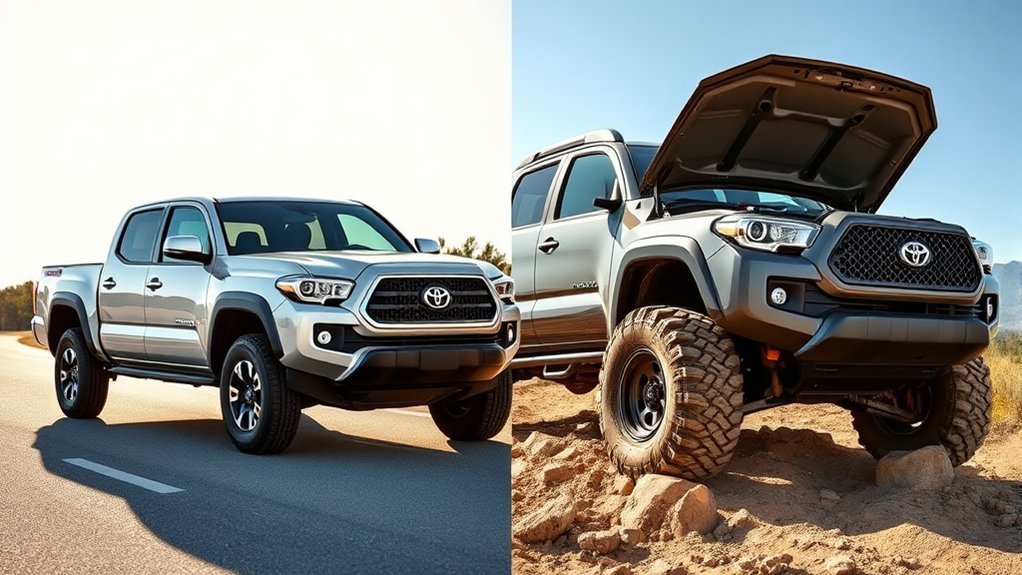
A part-time or full-time 4WD Tacoma has additional drivetrain components compared with a 2WD truck. Depending on the system, those can include a transfer case, front differential, front axle shafts, joints, seals, actuators, and related fluids.
Extra components create more inspection and repair points, but they do not mean every 4×4 will cost more each year. Service history, mileage, use, leaks, water exposure, modifications, and tire condition can matter more than the badge on a single used truck.
Follow the schedule and operating instructions for your model year. Toyota’s 2026 Tacoma manual and warranty page provides the current owner’s manual and Warranty and Maintenance Guide. Drivers who tow, off-road, or operate in mud, water, dust, or severe weather should also check whether special operating conditions change the service schedule.
Tire replacement deserves attention on any drivetrain. Use matching tire sizes and similar tread depth where the manual requires it, and correct the cause of uneven wear before fitting a new set.
Pro tip: For a used 4×4, ask for transfer-case and differential service records, check for leaks or warning lights, and confirm that each drive mode engages as the manual describes.
When Should You Choose 4×4 vs. 4×2?
Choose the 4×4 when extra traction solves a recurring problem in your normal driving. Choose the 4×2 when your routes stay maintained, your climate is mild, and the added hardware would spend most of its life unused.
Use three questions to make the choice:
- Frequency: Do you face snow, mud, sand, loose grades, slick ramps, or rough access roads several times a season?
- Consequence: Would losing traction leave you stranded, delay work, block a launch ramp, or require an expensive recovery?
- Alternative: Could suitable tires, route planning, chains where legal, a rear traction aid, or another vehicle cover those rare conditions?
If the need is frequent or the consequence is high, 4×4 is easier to justify. If both are low, 4×2 usually gives the cleaner value case. If you mainly drive pavement but want more rear traction for dirt or mild trails, compare a properly equipped 4×2 such as the TRD PreRunner before assuming that only a full 4×4 fits your use.
[Products Worth Considering]

These replacement support brackets are designed to secure the spring bars on a trailer frame for CURT TruTrack weight distribution hitches. Their adjustable mounting holes help achieve precise leveling while the rigid construction supports integrated sway control for a steadier towing experience. A durable powder coat finish adds long-lasting protection, and the package includes two replacement brackets.

This custom-fit Toyota Tacoma truck cover is designed to protect Access and Double Cab short bed models from rain, wind, sun, dust, snow, and everyday outdoor damage. Its multi-layer composite fabric offers waterproof, UV-resistant, breathable coverage, while practical details like a side zipper, wind straps, and reflective strips improve convenience and security. A storage bag and cleaning towel are included for easy care and transport.
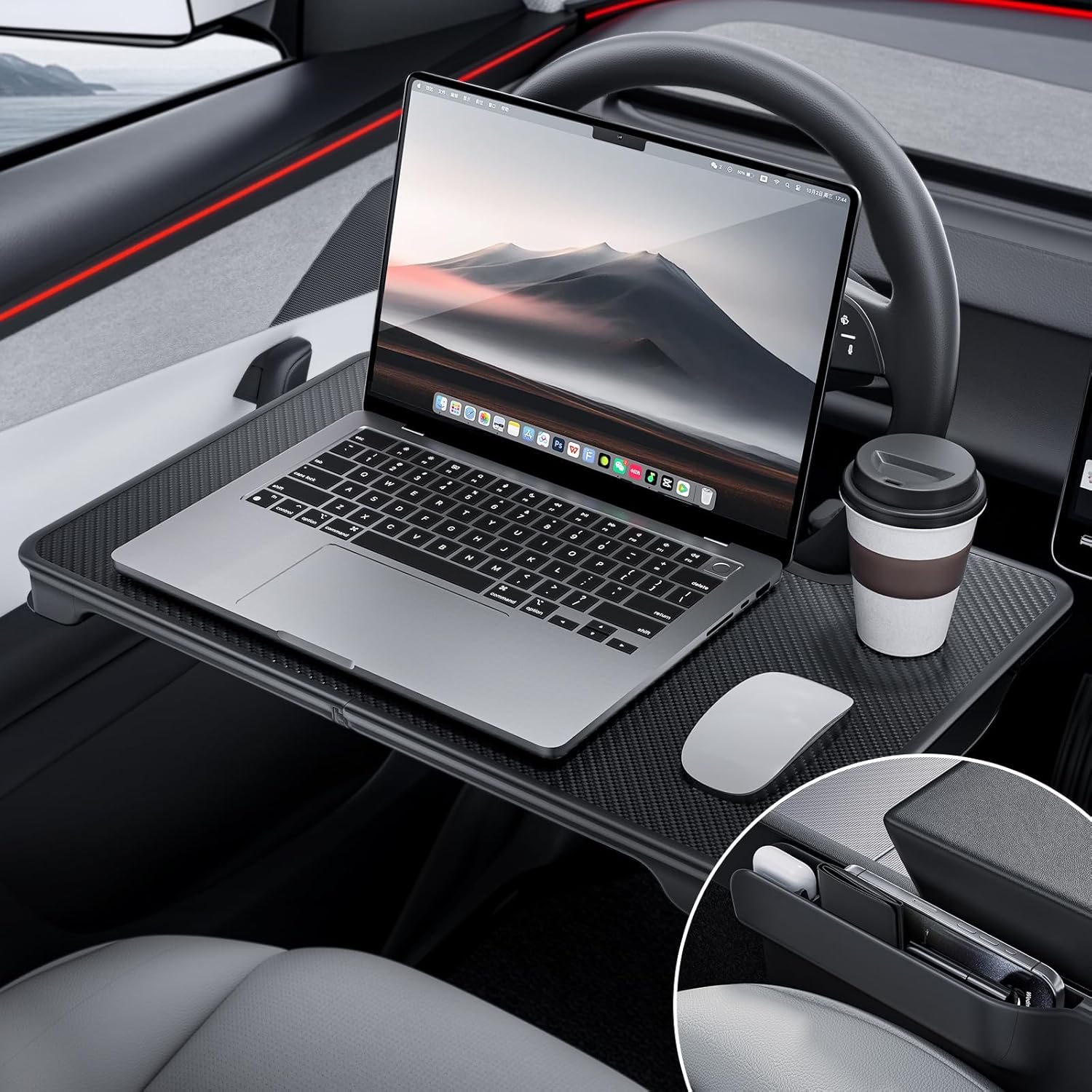
This 2-in-1 car accessory combines a foldable steering wheel desk and a seat gap filler organizer to make time in your vehicle more productive and organized. Use the tray for laptops, meals, or writing, while the gap filler helps keep phones, keys, and other small items from slipping between seats. Its sleek carbon fiber look adds a polished touch, and the tool-free design makes it easy to install in most vehicles.
Do You Need Off-Road Capability?
If you regularly leave maintained roads, a 4×4 gives you a meaningful traction advantage. It can help the truck keep moving when one axle has limited grip or the surface is loose and uneven.
Drivetrain is only one part of off-road capability. Ground clearance, tires, suspension travel, approach and departure angles, underbody protection, differential equipment, recovery points, and driver judgment also matter. Compare the whole configuration rather than assuming every 4×4 Tacoma has the same trail ability—or that every 4×2 has identical equipment.
What Does Your Driving Environment Demand?
A 4×2 fits warm climates, paved commutes, maintained construction access, and normal suburban or city use. A 4×4 fits recurring winter weather, unpaved rural routes, loose mountain roads, muddy fields, and remote recreation areas.
Suitable tires remain essential. A 4×4 on the wrong tires can be less useful than a well-prepared truck driven within the conditions.
How Much Capability Can Your Budget Support?
Compare the exact out-the-door price, financing cost, insurance quote, EPA rating, tire replacement cost, and maintenance schedule for the trucks on your shortlist. Avoid using a generic 4×4 price premium because trim and option differences can distort it.
Also price the consequence of choosing too little capability. If a 4×2 would regularly need recovery help or force you to cancel work, the cheaper purchase can become the costly choice.
Choose Tacoma 4×2 When
Choose the Tacoma 4×2 when paved-road value matters more than maximum traction capability.
- Your weekly routes stay on maintained pavement.
- You live in a warm or mild climate and can avoid rare severe-weather trips.
- You do not routinely cross mud, soft sand, loose grades, or rough work sites.
- You want fewer 4WD-specific components to inspect and service.
- You have compared matching configurations and the 4×2 gives a meaningful cost advantage.
- You understand that a rear locker or off-road-oriented 4×2 can add capability but still does not provide front-axle drive or 4WD low range.
Choose Tacoma 4×4 When
Choose the Tacoma 4×4 when extra traction supports your work, safety plan, or regular recreation.
- You routinely drive through snow, mud, sand, loose gravel, or steep unpaved roads.
- You launch or retrieve trailers on slick or unpaved ramps.
- You travel to remote campsites, trailheads, farms, or job sites where recovery may be difficult.
- You need front-axle drive or low-range capability rather than only a rear traction aid.
- You need 4WD-specific terrain features available on the configuration you are considering.
- Your local used-truck market strongly favors 4×4 and the higher purchase cost still fits your budget.
[Products Worth Considering]

FITS: 2005-2023 Toyota Tacoma 2WD RWD 4WD 4x4 6 Lug Models ONLY

TACOMA ACCESSORIES for 3rd GEN OWNERS – Add personality to your keys with a detailed truck keychain made for Tacoma fans. A great match with Tacoma 2016-2023 or even tacoma 2026 accessories, interior upgrades, decals, stickers, key fob accessories, and everyday truck gear, goes well with key fob.

TACOMA ACCESSORIES FOR 4TH GEN OWNERS – Add personality to your keys with a detailed truck keychain made for Tacoma fans. A great match with Tacoma 2026 accessories, interior upgrades, decals, stickers, key fob accessories, and everyday truck gear.
How Can Resale Value Differ Between Tacoma 4×2 and 4×4?
Resale demand is local. Buyers in snowy, rural, mountain, or recreation-focused regions may prioritize 4×4, while buyers in warm urban markets may value a lower-priced 4×2.
Measure the difference instead of assuming it. Search at least 10 local listings with similar model year, trim, cab, bed, mileage, condition, and service history. Separate 4×2 and 4×4 listings, then compare their median asking prices. Asking price is not the same as sale price, but this method gives you a more relevant local signal than a broad national claim.
A clean service history, original condition, good tires, and no accident or corrosion damage can outweigh drivetrain on an individual used Tacoma.
How Should Urban and Off-Road Drivers Choose?
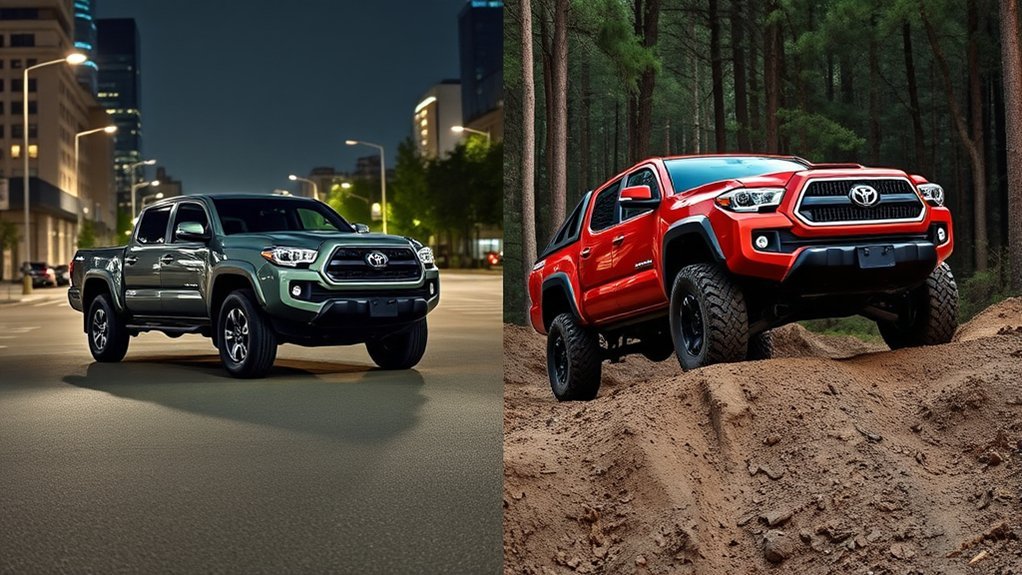
Your normal routes should decide the drivetrain, not the image attached to the truck.
Buy the drivetrain for the hardest condition you face regularly, not the hardest condition you can imagine.
- Mostly urban: Choose 4×2 when you commute on maintained roads, park frequently, and can postpone travel during rare severe weather.
- Mostly rural or off-road: Choose 4×4 when loose surfaces, steep access, winter roads, or remote destinations form part of your routine.
- Mixed use: Compare how often the difficult route appears, what happens if you cannot complete it, and whether suitable tires, a rear traction aid, or a recovery plan can cover it.
A test drive should use the roads you actually travel. A short loop around a dealership may hide the differences created by tires, suspension, cab length, and trim.
What Should You Check on a Tacoma Test Drive?
Drive comparable 4×2 and 4×4 trucks on the same route when possible. This separates drivetrain needs from differences caused by tires, suspension, and trim.
- Confirm the configuration: Record the model year, engine, transmission, cab, bed, trim, tire size, and drivetrain.
- Use your normal route: Include highway speed, broken pavement, a hill, tight parking, and any legal unpaved section you regularly use.
- Check control operation: On a 4×4, have the seller demonstrate each drive mode under conditions permitted by the owner’s manual.
- Inspect a used truck: Look for warning lights, leaks, damaged underbody parts, mismatched tires, uneven wear, and undocumented modifications.
- Review records: Confirm maintenance for the engine, transmission, differentials, transfer case, and any severe-use schedule that applies.
Do not claim a road-feel advantage from drivetrain alone. A Tacoma’s suspension package and tires can change steering, noise, braking, and ride more than 4×2 versus 4×4.
How Do You Make the Final 4×2 or 4×4 Decision?
Use this editorial decision check after you compare matching trucks. It is a buying aid, not Toyota operating guidance.
- Choose 4×2 when all normal routes are maintained, severe conditions are rare and avoidable, and the cost savings are meaningful.
- Compare 4×2 equipment and 4×4 closely when you face occasional dirt, winter weather, or unpaved access but have flexible timing, suitable tires, and a recovery plan.
- Choose 4×4 when front-axle traction or low range limits your work or travel several times a season, or when getting stuck would carry a high cost or safety consequence.
Before signing, compare the EPA labels, published towing and payload information, tire specifications, maintenance schedules, insurance quotes, and local resale listings for the exact trucks. Toyota’s 2026 Tacoma materials confirm that drivetrain systems and capability features vary by configuration, so the VIN and window sticker matter more than a generic badge comparison.
Frequently Asked Questions
Is There a Big Difference Between 4×2 and 4×4?
Yes, when traction is limited. A 4×2 drives the rear axle, while a 4×4 can drive both axles when its system and selected mode allow. Applicable 4×4 systems can also provide low range. On normal dry pavement, tires, suspension, engine, and trim may create a more noticeable daily-driving difference.
Can You Switch From 4×2 to 4×4 While Driving?
Some Tacoma part-time 4WD systems permit a shift between 2WD and 4HI while moving within specified conditions. The procedure for 4LO is different, and full-time systems operate differently. Follow the owner’s manual for your exact model year and drivetrain rather than using a universal speed or procedure.
What Is the Difference Between a 2-Wheel-Drive and 4-Wheel-Drive Tacoma?
A 2-wheel-drive Tacoma powers the rear wheels and suits maintained roads. A 4-wheel-drive Tacoma can power both axles in permitted modes, which helps it maintain momentum on snow, mud, sand, gravel, and rough terrain. Applicable part-time 4WD systems also provide low range for slow, difficult terrain.
What Are the Disadvantages of 4×2?
A 4×2 has less drive traction when the rear tires are on a slick, soft, steep, or uneven surface, and it lacks four-wheel-drive low range. It may struggle sooner in deep snow, mud, sand, loose grades, or unmaintained access roads.
Is a Tacoma 4×4 Worth It If You Don’t Off-Road?
It can be worth it when snow, steep unpaved roads, muddy work sites, loose ramps, or remote travel are part of your normal life. If your driving stays paved in a mild climate, a comparable 4×2 usually makes a stronger value case.
Does 4×4 Help When Towing With a Tacoma?
Four-wheel drive can help the truck start moving on a slick ramp, gravel road, mud, or loose grade. It does not automatically increase the tow rating. Check the exact truck’s model year, engine, cab, bed, axle, equipment, payload label, and published towing information.
Does a Tacoma 4×4 Use More Gas Than a 4×2?
A like-for-like 4×4 often carries more drivetrain hardware, but the actual EPA difference varies by model year and configuration. Compare exact listings on FuelEconomy.gov or the vehicles’ window stickers instead of applying one MPG estimate to every Tacoma.
Is Part-Time 4WD the Same as Full-Time 4WD?
No. Part-time and full-time systems manage front-to-rear drive differently and can have different operating rules. Toyota’s 2026 Tacoma lineup includes both types and identifies Limited trims as using full-time 4WD, so identify the exact system and follow its owner’s manual.
Is the 2026 Tacoma TRD PreRunner a 4×4?
No. The 2026 TRD PreRunner is a rear-wheel-drive Tacoma rather than a 4×4. It is important because it shows that 2WD does not necessarily mean basic equipment: Toyota lists the TRD PreRunner with an electronically controlled locking rear differential. It can suit dirt roads and milder off-pavement use, but it does not provide front-axle drive or 4WD low range.
Is a Tacoma 4×4 Safer in Snow?
A 4×4 can provide better acceleration traction and make it easier to keep moving in snow, but it does not automatically give the tires more braking or cornering grip. Winter-appropriate tires, slower speed, longer following distance, and smooth steering and braking remain essential. If winter roads are frequent rather than occasional, 4×4 plus suitable tires is usually the stronger Tacoma setup.
Conclusion
Choose the Tacoma 4×2 when your normal routes stay paved and lower ownership cost matters most. Choose the Tacoma 4×4 when snow, mud, sand, loose grades, slick ramps, or remote roads regularly demand front-axle traction or low-range capability.
For 2026 shoppers, also compare the actual drivetrain system and trim equipment instead of treating every 4×2 or 4×4 as identical. Your next step is to compare two closely matched trucks and check the VIN-specific equipment, EPA label, tire type, towing and payload information, maintenance schedule, insurance quote, and local resale listings. That comparison will give you a better answer than the drivetrain badge alone.