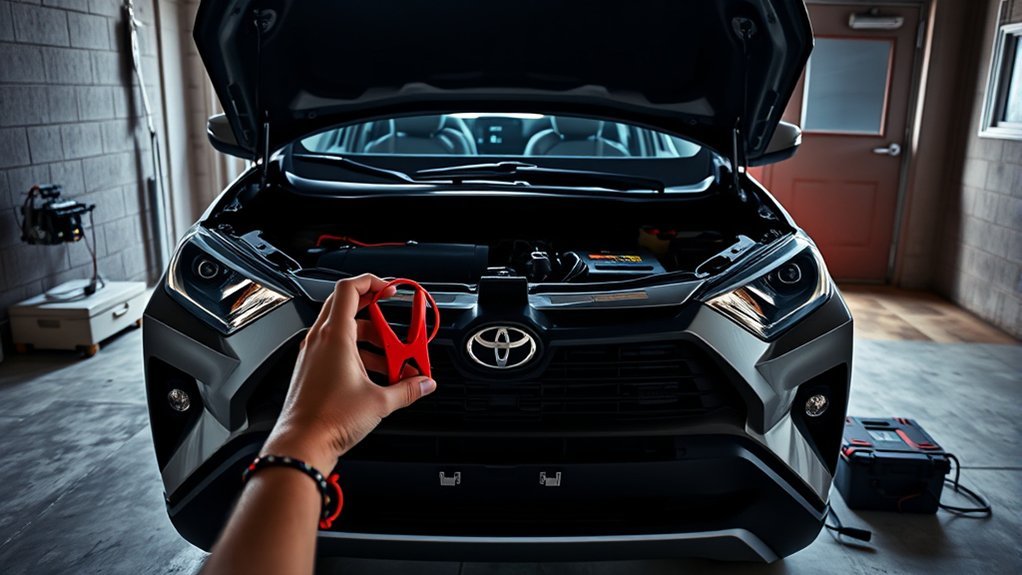
If your RAV4 won’t start, first check the battery—clean terminals, tighten clamps and confirm ~12.6V. Verify the gear is in Park and test the key fob battery. Watch the security light for immobilizer faults and scan OBD2 for codes. Inspect starter connections and listen for clicks; test the ignition relay and starter voltage. Check fuel pump prime, fuel pressure and spark at coils. Follow these steps and you’ll uncover likely causes and next repairs.
Quick Checklist: 6 Things to Try First When Your RAV4 Won’t Crank
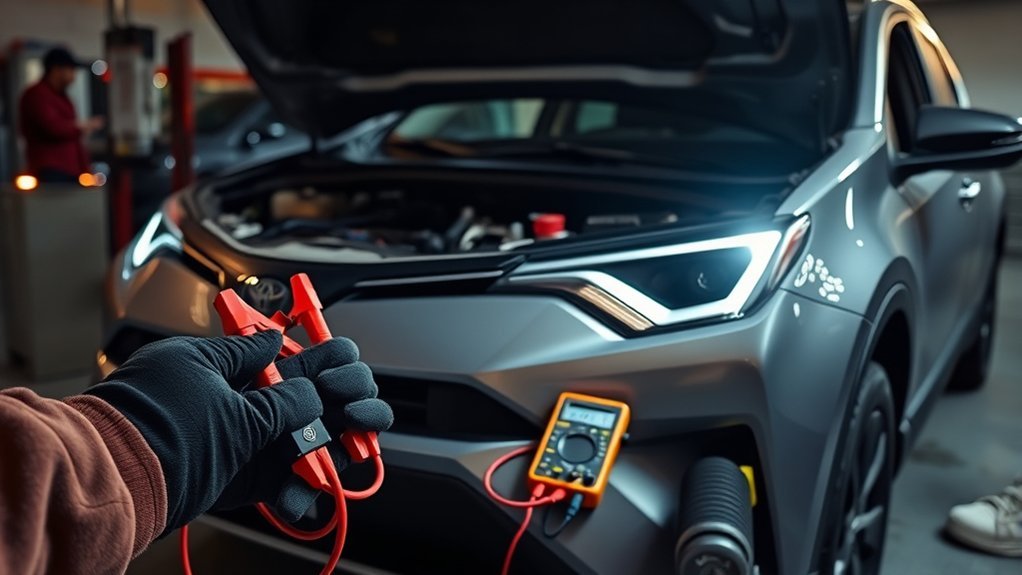
When your RAV4 won’t crank, start with these six quick checks to rule out the most common, easily fixed causes: 1) Inspect battery connections — make sure terminals are clean and tight; poor contacts stop power flow. 2) Perform basic battery maintenance — look for corrosion, torn cables, or loose clamps and address them before further diagnosis. 3) Verify gear position — confirm the shift is in Park (P); the starter won’t engage otherwise. 4) Test the key fob — replace a weak key battery so the immobilizer will recognize the key. 5) Observe warning lights — a blinking security indicator points to an immobilizer fault that can prevent cranking. 6) Inspect the ignition system — examine spark plugs and coils for visible wear or damage as part of ignition troubleshooting. Follow this sequence to free yourself from dependency on tow services; you’ll rule out the obvious causes quickly and choose the next diagnostic step with confidence.
Test the Battery and Terminals in 3 Steps
Before you call for a tow, check the battery and terminals in three quick steps: visually inspect for corrosion or loose clamps, measure the battery voltage with a multimeter (a healthy, fully charged battery should read about 12.6 V or higher), and tighten/clean the terminals if needed — use a baking-soda-and-water paste to remove corrosion, rinse, dry, and retest the voltage so you can decide whether to charge or replace the battery.
Follow this concise procedure to regain control and stay mobile:
Follow these steps: clean battery terminals, check voltage, and tighten clamps to restore vehicle power and mobility.
- Visually inspect battery top and terminal clamps for corrosion, cracks, or looseness.
- Use a multimeter: 12.6 V+ is healthy; below 12.4 V needs charging or testing.
- Tighten terminal clamps securely; avoid overtightening that can damage posts.
- Mix baking soda and water for terminal cleaning; apply paste, scrub with a brush, rinse, and dry fully.
- Retest voltage after cleaning and tightening to confirm improvement before deciding on battery maintenance or replacement.
Act deliberately—clean terminals, verify voltage, then choose charging or replacement.
Confirm the Immobilizer and Key Transponder Aren’t Blocking Start
Check the red security light when you insert the key — it should be off or only blink briefly, since constant blinking suggests an immobilizer fault. If the engine won’t crank, try a spare key to rule out a bad transponder. If that doesn’t help, inspect the antenna ring and read immobilizer fault codes with an OBD2 scanner or seek professional diagnostics.
Check Security Light
Watching the security light as you try to start the RAV4 will quickly tell you whether the immobilizer is blocking the engine: if it stays on or flashes, it may be stopping the start. Check these steps to free your ride.
- Observe: does the security light extinguish after you insert the key? If yes, immobilizer likely OK.
- Inspect key: damaged transponder chips can fail; look for physical damage.
- Test antenna ring: poor communication between key and ring causes faults.
- Use OBD2 scanner: read immobilizer-related codes to direct repairs.
- Verify key programming: confirm the key is correctly programmed to ECU; reprogram if needed.
Follow transponder troubleshooting and act deliberately to regain control and mobility.
Test Spare Key
Grab your spare key and try starting the RAV4 to see whether the immobilizer or the primary key’s transponder is at fault: Insert the spare, turn the ignition, and watch the red security light. If it goes out and the engine cranks, the problem’s likely your primary key’s transponder—seek key replacement or reprogramming to regain freedom. If the light stays on or blinks, the fault may lie with the immobilizer system or both keys; don’t assume a single bad fob. Use a diagnostic tool to read immobilizer fault codes and confirm which component failed. Test both keys methodically, document responses, and choose key replacement only after diagnostics rules out vehicle-side immobilizer issues.
Inspect Antenna Ring
Inspect the antenna ring around the ignition cylinder for damage or misalignment, since it must read the key’s transponder to release the immobilizer. You’ll want to confirm the antenna ring and key transponder are communicating before assuming other faults.
- Visually inspect antenna ring for cracks, corrosion, or loose mounting.
- Try a known-good key transponder to rule out a dead or damaged key.
- Use diagnostic equipment to verify the antenna ring transmits correct signals to the immobilizer.
- Check wiring and connectors between the antenna ring and body control module for continuity.
- If tests fail, replace the antenna ring or reprogram the key transponder as required.
Follow each step methodically to reclaim control and prevent unnecessary parts replacement.
Check Starter & Ignition Relay: 5 Quick Home Tests
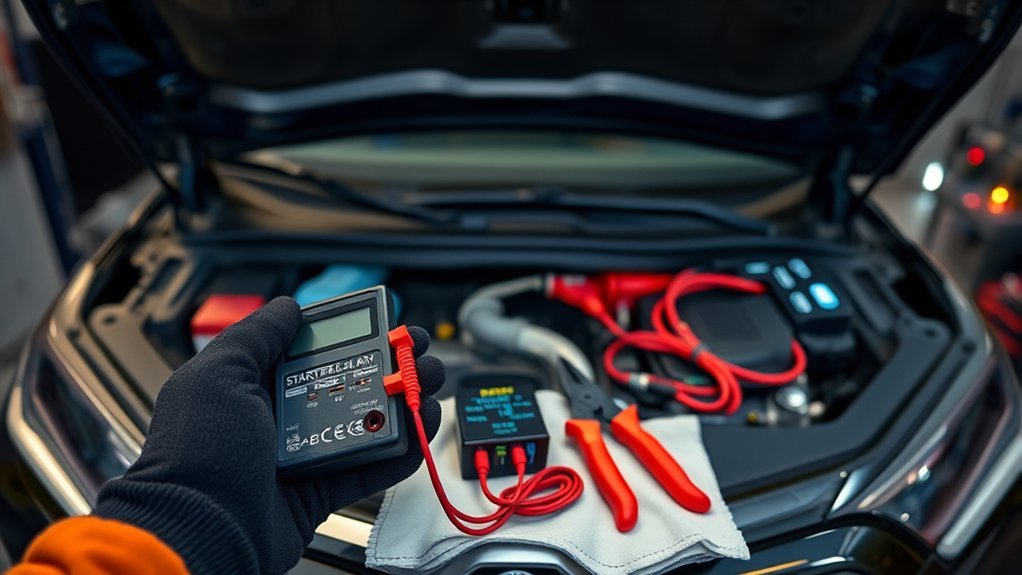
If your RAV4 won’t crank, start by checking five quick items you can do at home to isolate whether the starter or ignition relay is at fault. First, inspect the starter motor: find it in the engine bay and verify all connections are tight and free of corrosion—starter issues often trace to loose cables. Second, perform relay diagnostics with a multimeter: check for continuity on the ignition relay with the key on; no continuity means replace the relay. Third, check battery voltage; it should read above 12.4 volts—any lower and the starter and relay won’t get enough power. Fourth, listen for clicks when you turn the key; a single click or repeated clicking points to starter or relay problems, while silence suggests a deeper fault. Fifth, inspect the ignition fuse in the fuse box for blown or damaged contacts and replace if necessary. Follow safety precautions and disconnect the battery before touching electrical components.
Scan for Immobilizer/ECU Codes With an OBD2 (What to Look For)
When you connect an OBD2 scanner to your 2017 RAV4, make sure it’s compatible and powered up so you can pull ECU and immobilizer codes that pinpoint key, transponder, or security module faults. Start by reading stored and pending codes; note any P- or B- series codes that reference immobilizer circuits or transponder recognition failures. A blinking red security light during key insertion is a diagnostic clue—record that symptom with code timestamps.
- Look for immobilizer-specific codes that mention key, transponder, or smart key failures.
- Check ECU diagnostics for communication faults between the engine control module and the security module.
- Note related ABS or TPMS codes that could affect overall vehicle security state.
- Confirm scanner can clear codes and attempt a controlled reset after recording data.
- If codes persist, prepare for targeted reprogramming or module replacement steps.
You want freedom from mystery; use precise code data to guide immobilizer troubleshooting and decisive repair actions.
Find Parasitic Drains and Test the Alternator
Check for parasitic draw by connecting a multimeter in series with the battery when the car is off and confirming the current is about 50 mA or less. If you see excessive amps, pull fuses one at a time to isolate the offending circuit. Then start the engine and measure alternator output—13.7–14.7 volts indicates proper charging, and inspect connections for corrosion or wear.
Parasitic Draw Testing
Start by measuring the vehicle’s parasitic draw with a multimeter in series on the battery’s negative terminal, doors closed and everything at rest, so you can identify any excessive current that may be draining the battery. You’ll verify whether parasitic draw exceeds the normal 25–50 mA range, then isolate offending electrical components. Work methodically and stay safe.
- Confirm multimeter range and secure series connection to negative post.
- Ascertain all circuits are asleep (doors closed, keys removed) before reading.
- Note milliamps; anything above ~50 mA signals further inspection.
- Pull and replace fuses one at a time to find which circuit causes the draw.
- Inspect identified circuit wiring and components for shorts or failure.
You’ll liberate yourself from surprise drains by isolating and repairing the faulty circuit.
Alternator Output Check
Because a weak alternator can mimic parasitic drain symptoms, you’ll verify charging voltage at the battery with the engine running and test for internal faults before chasing other causes. Use voltage measurement techniques: with engine idling, multimeter should read 13.7–14.7V. If below, don’t assume a drain—inspect alternator for frayed wires, burnt components, and corroded terminals.
Measure parasitic draw by disconnecting the negative terminal and checking current; >50 mA is excessive. Test diodes with a multimeter; <0.5V in both directions means replacement.
| Check | Action |
|---|---|
| Voltage | 13.7–14.7V running |
| Parasitic | >50 mA = investigate |
| Diodes/Visual | Replace if faulty or damaged |
Follow alternator maintenance tips to free yourself from repeat failures.
When Fuel or Spark Can Mimic a No-Crank Condition
Although it may sound like the starter won’t turn, fuel delivery or ignition failures can produce the same “no-crank” symptom and fool your diagnosis. You need to separate starter issues from fuel and spark problems with direct checks. First, verify fuel delivery and then confirm spark presence before condemning the starter.
Before blaming the starter, verify fuel delivery and confirm spark — separate starter faults from ignition or fuel problems.
- Check fuel level and listen for the pump prime; low fuel can mimic a dead starter.
- Test fuel pressure at the rail with a gauge to confirm consistent delivery.
- Inspect spark plugs and coils; damaged components can cause ignition failure without cranking noises.
- Use an OBD2 scanner to pull codes that point to fuel or ignition faults rather than starter or starter relay problems.
- Probe for spark at a plug or coil pack while cranking (observe safety precautions) to rule in or out ignition issues.
Act methodically, document results, and free yourself from guesswork by proving where the failure truly lies.
Repair Options, Rough Costs, and When to Call a Mobile Mechanic
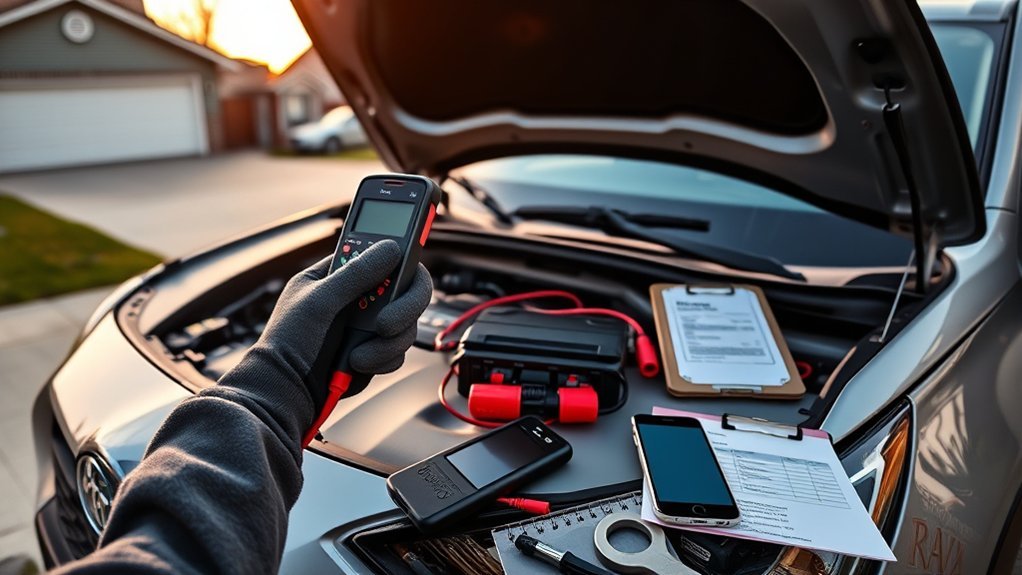
Now that you’ve isolated whether fuel or spark are at fault, you’ll move on to fixing the underlying cause or deciding if you need professional help. Diagnose: test for click/no-click, check immobilizer light, and inspect connections. If starter failure is confirmed, budget for starter replacement (~$300–$500). If the ignition relay is faulty, parts and labor are typically lower but vary.
| Problem | Rough Cost |
|---|---|
| Starter replacement | $300–$500 |
| Battery (if applicable) | $100–$200 |
| Connection cleaning/replacement | $50–$150 |
| Mobile mechanic call-out | $50–$100 + repairs |
Procedure: attempt basic fixes you can safely do—tighten/clean connections, swap relays if accessible. Call a mobile mechanic when the car is immobile, immobilizer faults persist, or you lack diagnostic tools. Mobile pros bring specialized testers, reduce towing, and free you from waiting. Choose empowerment: if repair scope or diagnostics exceed your skills, summon help to regain mobility quickly.
Preventive Steps to Avoid Future No-Starts (Battery, Keys, Wiring)
To reduce no-start risk, keep the battery, keys, and wiring in inspected, charged, and clean condition: check battery voltage and terminals monthly, clean corrosion, and replace weak batteries; swap the key fob battery every 18–24 months to avoid immobilizer faults; visually inspect starter, ignition, and ground connections for looseness or frayed insulation and tighten or repair as needed.
Keep battery, key fob, and wiring inspected, charged, and clean—monthly checks, corrosion cleanup, and timely replacements prevent no-starts.
Follow this concise preventive maintenance checklist to stay free and mobile:
- Test battery voltage monthly and replace batteries showing low reserve; practice strict battery care.
- Replace key fob battery every 18–24 months and reprogram if the car won’t recognize the fob.
- Inspect starter, ignition, and ground wiring for corrosion, loosened terminals, or damaged insulation; tighten or repair immediately.
- Keep fuel above a quarter tank to avoid delivery issues that mimic electrical no-starts.
- Periodically test alternator charging output; repair or replace if it fails to hold voltage.
Do these procedural steps regularly to minimize surprises, preserve autonomy, and avoid roadside dependence.
Frequently Asked Questions
Can a Worn Key Fob Battery Cause Immobilizer Issues?
Yes — a weak key fob battery can trigger immobilizer system failures. You should try battery replacement first, then use diagnostic tools to read codes and re-sync the fob; that restores control and frees you.
Will Jump-Starting Harm Modern RAV4 Electronics?
Yes — if you follow jump starting precautions, you won’t harm electronics. You should ground properly, connect clamps in correct order, avoid reverse polarity, disconnect accessories, and protect the electronic system protection modules to prevent surges and damage.
Can Aftermarket Stereos Cause No-Start Conditions?
Like a snake hiding in grass, yes — aftermarket stereos can cause no-starts. Check wiring issues and battery connections first; you’ll trace loose grounds, blown fuses, or shorted power leads, then restore proper grounding and reconnection.
How Long After Sitting Will Gasoline Degrade Enough to Prevent Start?
Within months you’ll notice fuel stability issues; gasoline shelf life is typically 3–6 months untreated. You should drain or treat old fuel, inspect for varnish, and replace it before it prevents starting and limits your mobility.
Is It Safe to Tow a RAV4 With a No-Start for Long Distances?
Like rowing upstream, you can tow a RAV4 long distance, but you’ll face towing methods and safety concerns: choose a flatbed truck for liberation, avoid dolly/flat tow unless drivetrain prepped, secure wheels, and monitor brakes.
Conclusion
Keep calm and quickly check basic causes: battery health and clean terminals, secure key/transponder, starter and relay function, and OBD2 codes for immobilizer or ECU faults. Probe for parasitic drains and alternator output, then verify fuel and spark so a no-crank isn’t misread. Prioritize practical repairs or a mobile mechanic if parts or tools are lacking. Consistent care—battery, keys, wiring—prevents repeat roadside rigmaroles and saves stress.