RAV4 Brake Squeak: What to Check First
A Toyota RAV4 brake squeak during light or moderate braking deserves a diagnosis before you replace pads or rotors. Toyota T-SB-0001-22 Rev1 specifically covers some 2019-2023 RAV4 and RAV4 Hybrid vehicles with front-brake squeal or squeak during light to moderate braking. The bulletin directs dealers to confirm the symptom, replace both front anti-squeal shim kits, and test-drive the vehicle. If your RAV4 is outside those model years, do not assume the bulletin applies; inspect the brakes normally for pad wear, rotor condition, rust, contamination, loose hardware, or caliper problems.
Last updated: August 16, 2026. This update verifies Toyota TSB applicability, TCMC Tech Tip dates, current RepairPal pricing, internal references, and structured data.
What’s in This Article
A slow-stop squeal can make a good SUV feel worn out even when the brakes still stop normally. Start by matching the symptom to the model year and braking condition. Then inspect the pads, rotors, shims, clips, and caliper hardware before authorizing replacement parts.
Quick Answer
If your 2019-2023 Toyota RAV4 or RAV4 Hybrid squeals from the front brakes during light or moderate braking, ask the dealer to check Toyota T-SB-0001-22 Rev1. Toyota’s repair procedure calls for confirming the condition, replacing both front anti-squeal shim kits, and test-driving the vehicle. If your RAV4 is a different model year or the symptom does not match, use a normal brake inspection to check for worn or glazed pads, damaged rotors, rust, debris, hardware problems, or caliper issues.
Key Takeaways
- Check the front brakes first when a 2019-2023 RAV4 squeals during light or moderate braking.
- Do not assume Toyota T-SB-0001-22 Rev1 applies to a 2024 or newer RAV4; the bulletin specifically lists 2019-2023 vehicles.
- Record the noise, mileage, speed, direction, and pedal input before visiting a dealer or shop.
- Inspect pads, rotors, shims, clips, and caliper slide points before replacing parts.
- Stop normal driving and get professional help if you hear grinding, feel weak braking, notice pulling, smell burning, or see a brake warning light.
RAV4 Brake Squeak at a Glance
| What You Notice | What It Means | Best Next Step |
|---|---|---|
| 2019-2023 RAV4 or RAV4 Hybrid, front squeal during light to moderate braking | Symptom may match Toyota T-SB-0001-22 Rev1 | Ask the dealer to verify the TSB condition and VIN |
| 2024 or newer RAV4 with similar squeal | This specific TSB does not list that model year | Request normal brake diagnosis and a check for current Toyota service information |
| Brief squeal after rain or sitting overnight | Moisture or light surface rust may be involved | Note whether the sound disappears after normal braking; inspect if it keeps returning |
| Grinding, weak pedal, pulling, burning smell, or warning light | Possible safety-related brake problem | Stop normal driving and arrange professional inspection |
Quick Diagnosis: Is Your RAV4 Brake Squeak the Known Front-Brake Issue?
Toyota T-SB-0001-22 Rev1 applies to some 2019-2023 RAV4 and RAV4 Hybrid vehicles that make a squeal or squeak from the front brakes during light to moderate braking. The first diagnostic question is therefore not simply, “Do the brakes squeak?” It is whether the model year, brake location, and braking condition match the bulletin.
If they match, ask the dealer to verify the condition before replacing unrelated parts. If they do not match, continue with normal brake diagnosis rather than treating the TSB as a universal RAV4 repair.
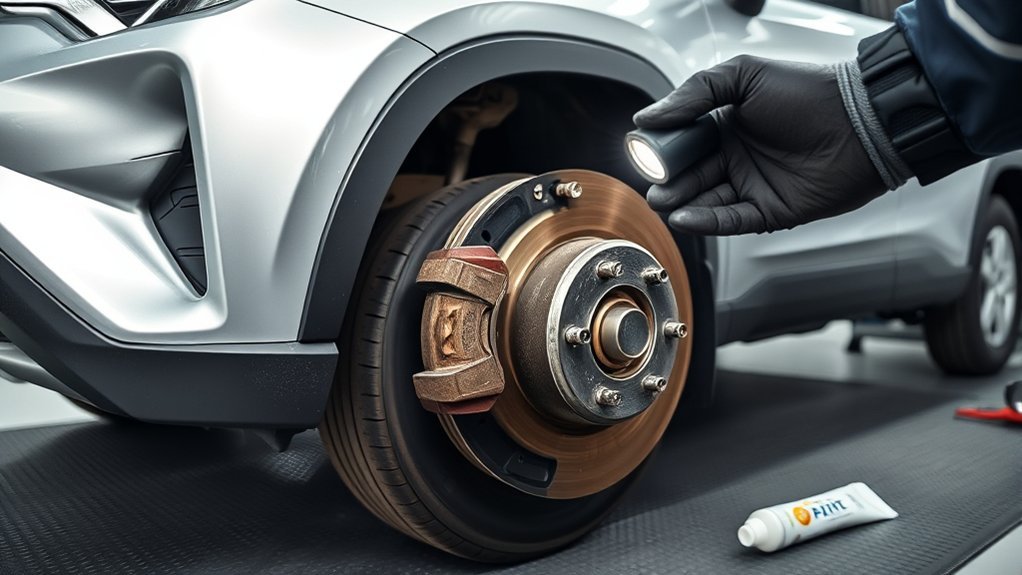
Safely inspect the pad surface, rotor face, shims, clips, and caliper hardware for wear, glazing, rust, contamination, missing parts, or abnormal movement. If you do not have the correct lifting equipment, jack stands, tools, torque information, or brake experience, ask a qualified mechanic to inspect the system.
Record clear video or audio during a controlled low-speed stop. Note the mileage, weather, direction of travel, approximate speed, and whether the pedal input is light, moderate, or hard. That evidence can help a dealer reproduce the complaint and compare it with the Toyota bulletin.
For routine inspection timing, see the RAV4 brake maintenance schedule and confirm the schedule against the guide for your exact model year.
Find the Noisy Wheel Fast
Use the sound location as a clue, not final proof. Brake noise can travel through the caliper, knuckle, suspension, and body, so a sound that appears to come from one corner may require a wheel-off inspection to confirm.
Start with the front axle when the symptom matches Toyota’s RAV4 bulletin, but inspect both front sides. Look for uneven pad wear, rotor scoring, loose clips, missing or damaged shims, rust buildup, pad movement, or signs that one caliper is not releasing normally.
If you perform a controlled listening test, use a safe, traffic-free location and keep every observer well away from the moving vehicle. Compare forward and reverse braking only at low speed. A technician may use dedicated listening equipment when the sound is difficult to isolate.
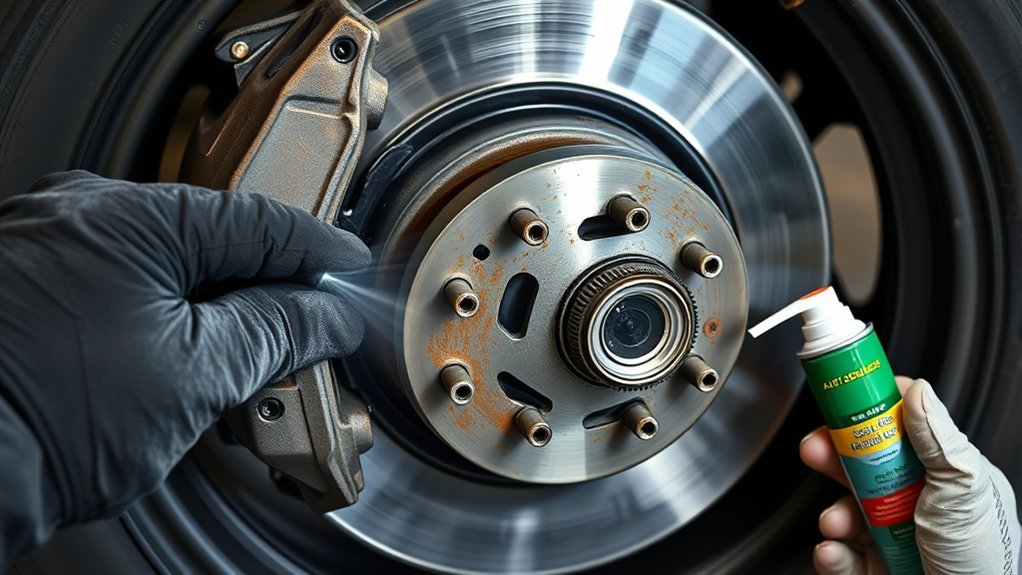
Clean loose brake dust only with a product intended for brake components and only when the parts are cool enough to service safely. Do not use household cleaners, oil, or products that can leave residue on a rotor or pad friction surface.
Why TCMC Pads May Squeak
Toyota Complete Maintenance Care (TCMC) brake pads have separate historical service guidance. Toyota Tech Tip T-TT-0636-20 states that some Toyota vehicles fitted with TCMC brake pads may exhibit groan or squeak noise and points technicians to proper installation guidance.
However, the NHTSA-hosted version of that Tech Tip expired on March 12, 2022. Its vehicle list includes RAV4 applications through model year 2020 and RAV4 Hybrid applications from 2016-2020. Treat it as historical installation guidance, not as a current TCMC bulletin for every RAV4.
Do not assume TCMC pads are the cause simply because your RAV4 squeaks. Brake noise can also result from worn or glazed pads, rotor surface problems, corrosion, contamination, loose hardware, stuck slide components, damaged shims, or poor pad fit. Confirm the installed parts and actual fault before buying replacements.
Pad Material and Fit
Pad friction material can influence brake sound, pedal feel, dust, and rotor interaction, but material alone does not diagnose a squeak. Exact fit, backing-plate contact, rotor condition, shim installation, hardware condition, and lubrication practices also affect vibration and noise.
- Inspect the pad face for glazing, cracks, uneven wear, or contamination.
- Check the backing plate for unusual movement, poor fit, or abnormal contact marks.
- Compare the installed pad part number with the service invoice or parts record.
- Ask the shop to confirm pad fit, hardware condition, approved lubrication points, and installation procedure.
These checks give you a specific reason for the next repair instead of replacing pads based on noise alone.
Shim or Hardware Problems
Brake shims and clips help manage pad movement and vibration between the pad, caliper, and bracket. Toyota’s dedicated RAV4 bulletin makes shim condition especially important because its specified repair is replacement of both front anti-squeal shim kits when the listed condition is confirmed.
| Component | What to Check |
|---|---|
| Shim | Missing, bent, damaged, loose, or poorly seated |
| Clips | Rust, damage, weak tension, or incorrect fit |
| Pad backing | Movement, wear marks, contamination, or poor contact |
Ask the dealer or shop to document what it found. If shims are replaced, keep the repair order and part numbers.
Quick DIY Checks Before the Dealer
Before scheduling a repair, gather enough information to separate a simple noise complaint from a wear or safety problem. Visual checks are reasonable if you can perform them safely, but brake disassembly should not become a trial-and-error project.
- Check pads for obvious glazing, uneven wear, cracks, or heavy contamination.
- Check visible rotor surfaces for scoring, severe rust ridges, grooves, or abnormal discoloration.
- Check accessible clips, shims, and backing hardware for obvious looseness or missing parts.
- Record the sound at low speed and note whether it appears in forward motion, reverse, or both.
- Write down the mileage, model year, recent brake work, pad brand if known, and weather conditions.
If you want to understand rotor measurements and wear limits before discussing the repair with a shop, see the RAV4 brake wear and rotor thickness guide.
Keep DIY checks simple unless you have the equipment and experience required for brake work. Brakes are safety-critical components, and incorrect lifting, assembly, lubrication, or torque can create serious risk.
At-Home Fixes: Bedding, Cleaning, and Brake Lube
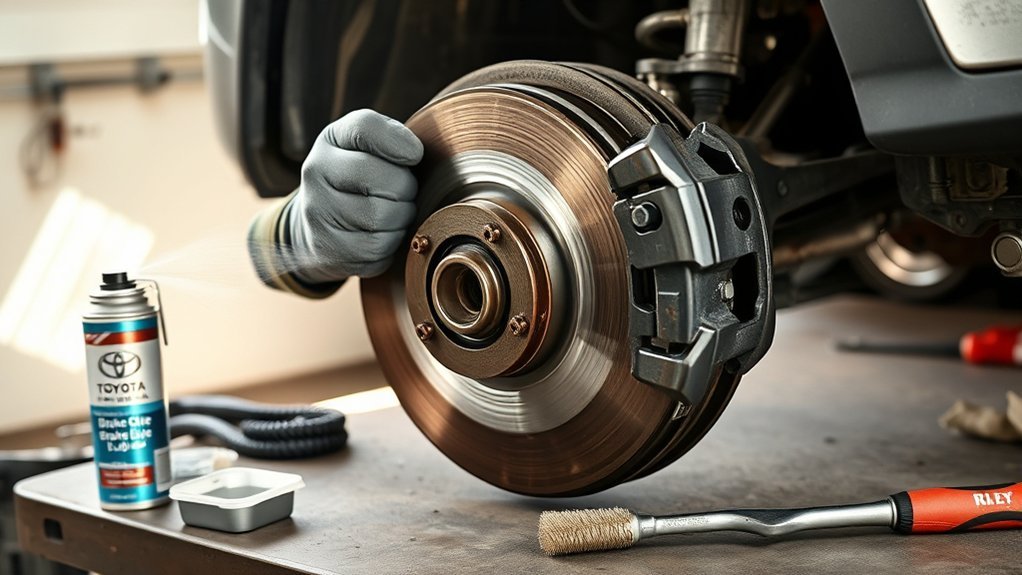
If inspection does not show worn parts or damaged hardware, careful cleaning and an installation check may help identify a simple source of noise. Use brake-specific cleaner as directed on cool parts and remove loose dust or debris without contaminating the friction surfaces.
For newly installed pads, follow the pad or rotor manufacturer’s bedding instructions. If no specific procedure was supplied, RepairPal recommends gentle braking for the first 40 to 50 miles after pad replacement to allow the pads to adjust to the rotors and help reduce squeaking. Always brake as firmly as road safety requires.
Warning: Never put brake lubricant, anti-squeal compound, oil, or cleaner residue on the brake-pad friction surface or rotor braking face.
Apply brake lubricant only to locations approved for the exact brake assembly and only with the correct product. Reassemble components using the required service procedure and torque specifications. Test braking at very low speed before normal driving.
For a broader replacement procedure and bedding context, see the RAV4 brake rotor replacement guide.
| Action | Potential Benefit | Risk if Done Wrong |
|---|---|---|
| Cleaning | Removes loose dust or debris | Residue or contamination on braking surfaces |
| Lubricating approved points | Helps correct hardware movement and contact | Contaminated pads or rotors if grease reaches friction surfaces |
| Pad bedding | Helps new pads and rotors establish an even working surface | Poor bedding or excessive heat if instructions are ignored |
[Products Worth Considering]

This custom full-set liner system is molded for Toyota 4Runner models to deliver a precise fit with complete interior coverage. It includes floor mats, cargo liner, and backrest mat to help protect against dirt, spills, mud, and daily wear while staying securely in place. Made from odorless TPE material, these mats are easy to install, simple to clean, and built for all-weather use.
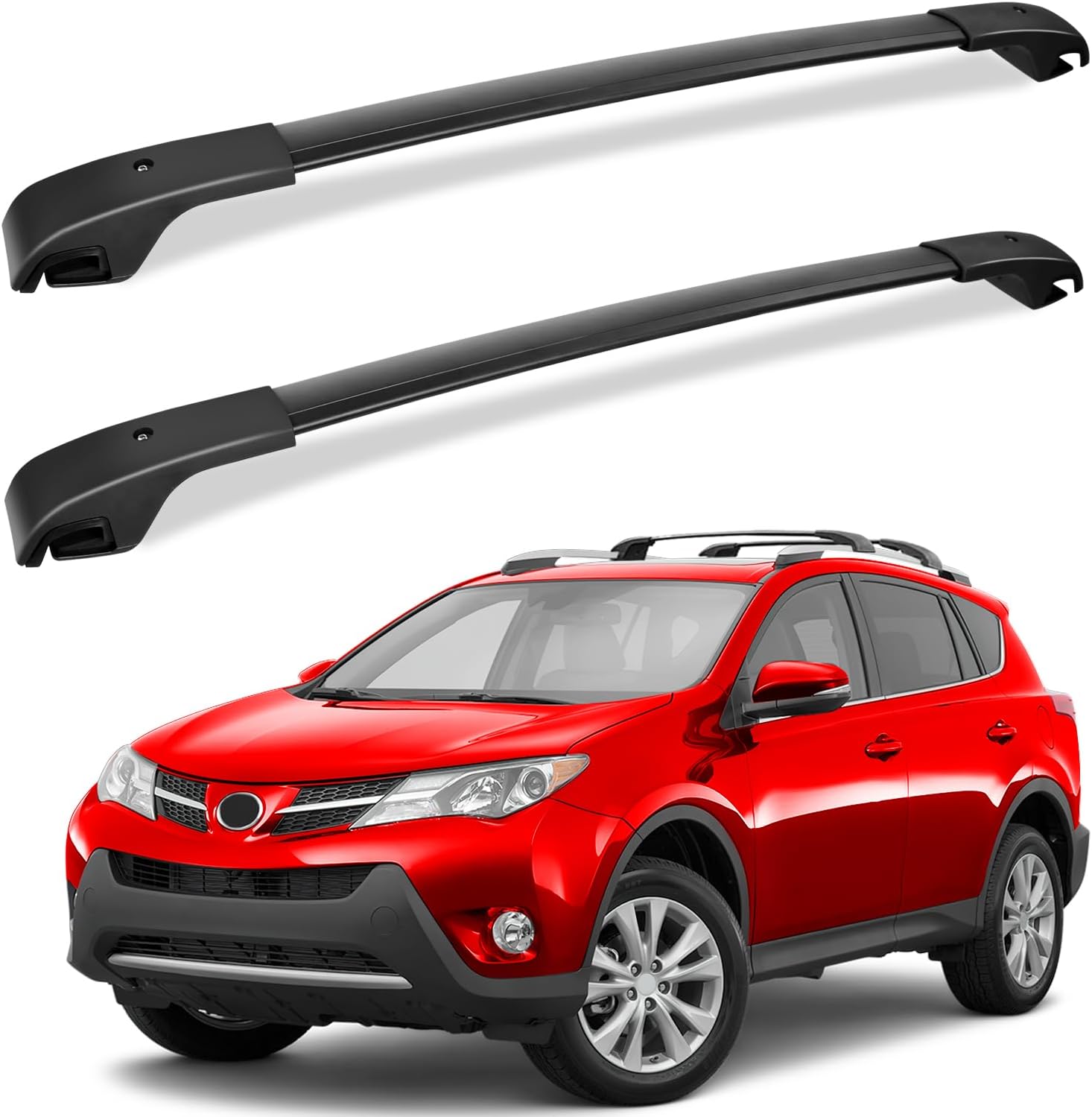
These roof rack cross bars are designed specifically for Toyota RAV4 models from 2013 to 2018 with side rails, offering a secure fit across multiple trims. Built with thickened aluminum, durable clamps, rubber padding, and stainless steel hardware, they provide dependable cargo support for travel and daily hauling. The easy-install design and high load capacity make them a practical upgrade for carrying luggage and other gear.
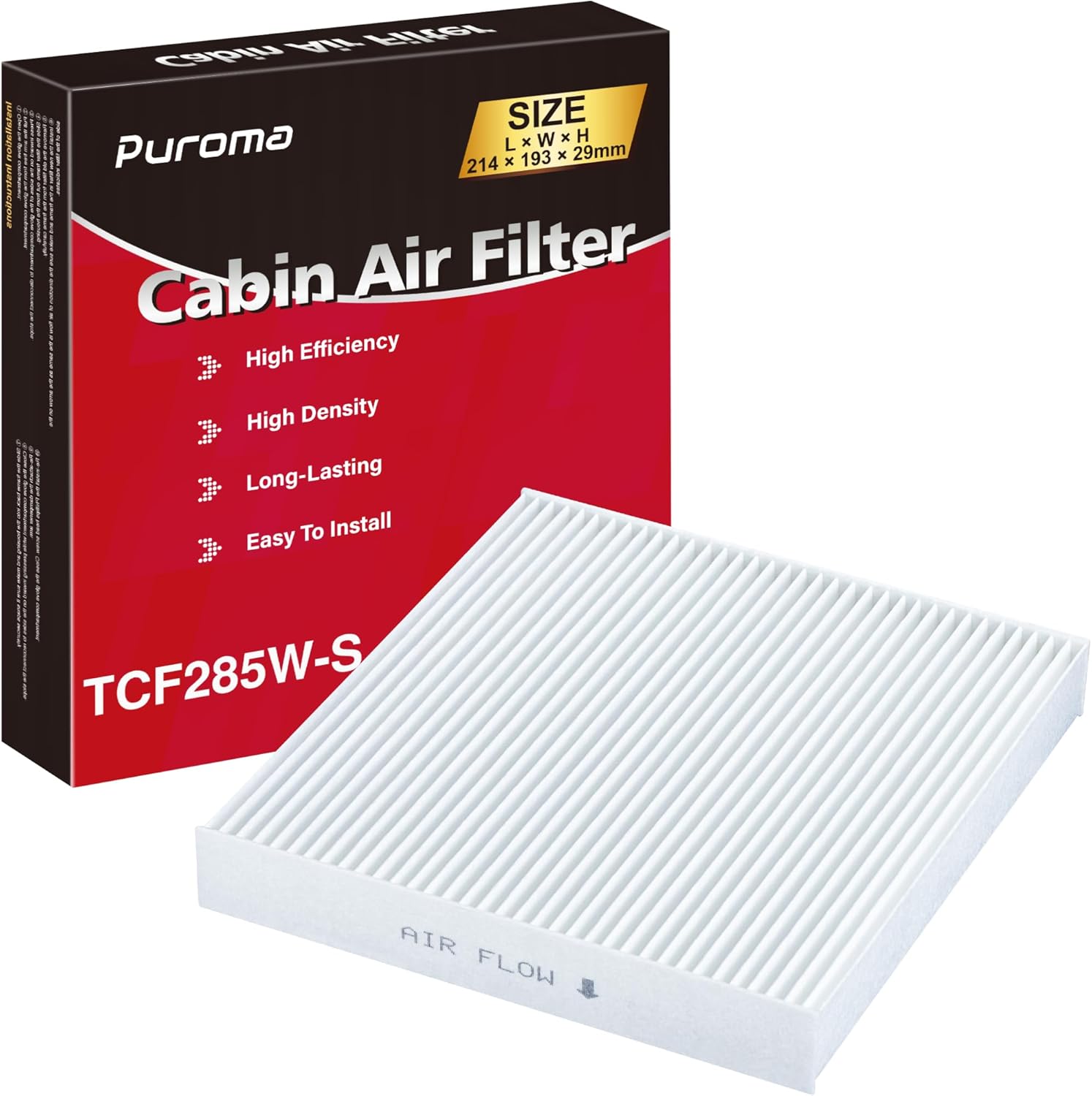
This Puroma cabin air filter helps keep your vehicle interior supplied with cleaner air while supporting efficient HVAC performance. Its multi-layer design helps reduce odors and trap airborne particles, making daily driving more comfortable. With wide compatibility across many Toyota, Lexus, Subaru, and other models, it is designed for quick replacement and easy installation.
When to Swap Pads: OEM vs. Ceramic Aftermarket
Replace pads when inspection confirms that pad wear, damage, contamination, glazing, poor fit, or an unsuitable installation is contributing to the noise. Do not replace good pads simply because a squeak happened once.
Toyota OEM pads provide a factory-fit option for the exact application. Some ceramic aftermarket formulations are marketed for lower dust and quieter operation, but no friction material guarantees a silent brake system. Pad fit, rotor condition, shims, clips, installation, and the specific friction compound all matter.
Use this checklist before approving replacement.
Choose brake pads by exact fit, inspection results, driving needs, hardware condition, warranty, and supplier quality rather than noise claims alone.
- Choose OEM pads when you prefer the Toyota factory application and dealer parts documentation.
- Consider a quality aftermarket pad when the exact application, friction characteristics, included hardware, and warranty meet your needs.
- Replace damaged hardware when shims, clips, or related components show wear, corrosion, deformation, or incorrect fit.
- Avoid choosing only by price when you are already trying to solve repeat squeal, vibration, or uneven wear.
Make the swap when inspection supports a pad-related cause or when pad condition requires replacement independently of the noise.
[Products Worth Considering]

The MOTOPOWER MP0514A makes it easy to check battery and charging system health with simple plug-and-test operation. Its digital LCD display and LED indicators provide clear voltage readings and alternator status, while built-in reverse connection and over-voltage protection help support safe use. Compact and portable, it is a practical tool for drivers and mechanics who want quick, reliable diagnostics.

[THE BOSCH ADVANTAGE] - The Bosch QuietCast line draws on over 77 years of OE braking excellence; promising the highest quality performance, industry-leading strength and durability, and exclusive innovations including Molded Shim Technology (MST)
Dealer Solutions: Shims, Pad Inspection, and Replacement
If your RAV4 matches the model year and symptom in Toyota T-SB-0001-22 Rev1, ask the service adviser to check that bulletin before authorizing unrelated parts. Toyota’s procedure tells technicians to confirm front-brake squeal during light to moderate braking, replace both front anti-squeal shim kits, and test-drive the vehicle at low speed.
The bulletin’s parts information identifies updated front anti-squeal shim kit part number 04945-76010. For warranty processing and actual repair fitment, Toyota also directs technicians to identify the correct original part information using the vehicle’s VIN, so the dealer should verify the parts for your specific vehicle rather than relying on a number copied from an article.
If the shim repair does not solve the noise, the next step is renewed diagnosis of the pads, clips, rotor surfaces, caliper movement, and installation. An anti-squeal treatment should never substitute for damaged hardware repair or correct pad installation.
Shim Installation Benefits
Shim replacement can reduce vibration at the pad-to-caliper interface when the squeal matches Toyota’s bulletin condition. Toyota instructs technicians to replace both front anti-squeal shim kits and notes that grease should not leak from the sides of the shims after assembly.
- Confirm the dealer checked T-SB-0001-22 Rev1 and your VIN.
- Ask whether the reported noise matches light-to-moderate front braking.
- Ask whether both front anti-squeal shim kits were replaced.
- Request the installed part numbers and repair-order notes.
- Retest the vehicle with a technician if the sound continues.
Clear documentation makes repeat diagnosis easier if the complaint returns.
Pad Swap and Treatments
Use the least invasive repair that matches the confirmed fault. A shim repair can address the bulletin condition. A pad replacement may be appropriate when the pads are worn, glazed, contaminated, damaged, or poorly fitted. Rotor service should be based on measured or visible rotor condition rather than brake noise alone.
Do not approve a pad replacement solely because the brakes squeaked once. Ask the shop to document the wheel location, pad condition, rotor condition, hardware condition, caliper operation, and warranty status first.
| Treatment | Best Use |
|---|---|
| Shim kit | Confirmed 2019-2023 TSB-type front squeal |
| Approved brake lubricant | Specified metal or sliding contact points only |
| Pad replacement | Worn, damaged, contaminated, glazed, or poor-fit pads |
| Rotor service | Rotor condition is outside specification or shows repairable damage |
Warranty, TSBs, and How to Document Your Case
Toyota T-SB-0001-22 Rev1 states that its specified repair is covered under the Toyota Basic Warranty for 36 months or 36,000 miles, whichever occurs first, from the vehicle’s in-service date, when the vehicle has the condition described in the bulletin. The bulletin does not create unlimited coverage beyond those terms.
Because coverage depends on the original in-service date, mileage, VIN, and verified condition, ask the dealer to confirm your current eligibility rather than assuming that every 2019-2023 RAV4 remains under warranty today.
Note: A Technical Service Bulletin is not the same as a safety recall. A TSB gives technicians service information for a defined condition; warranty coverage still depends on the applicable warranty terms and the vehicle.
Toyota’s Technical Information System (TIS) contains service bulletins, repair manuals, and other technical information. Ask the service adviser to check current Toyota information for your exact model year and VIN, especially if your RAV4 falls outside the 2019-2023 TSB range.
- Record video or audio with the approximate speed, direction, and brake-pressure description.
- Save invoices that identify the pad type, part numbers, and service dates.
- Ask the dealer to write the brake-noise complaint clearly on the repair order.
- Request a test drive with a technician if the shop cannot reproduce the sound.
- Keep copies of previous shim, pad, rotor, or caliper work.
These records make the complaint easier to reproduce and prevent later technicians from repeating work without knowing what has already been changed.
Typical Costs and What Independent Shops Will Do
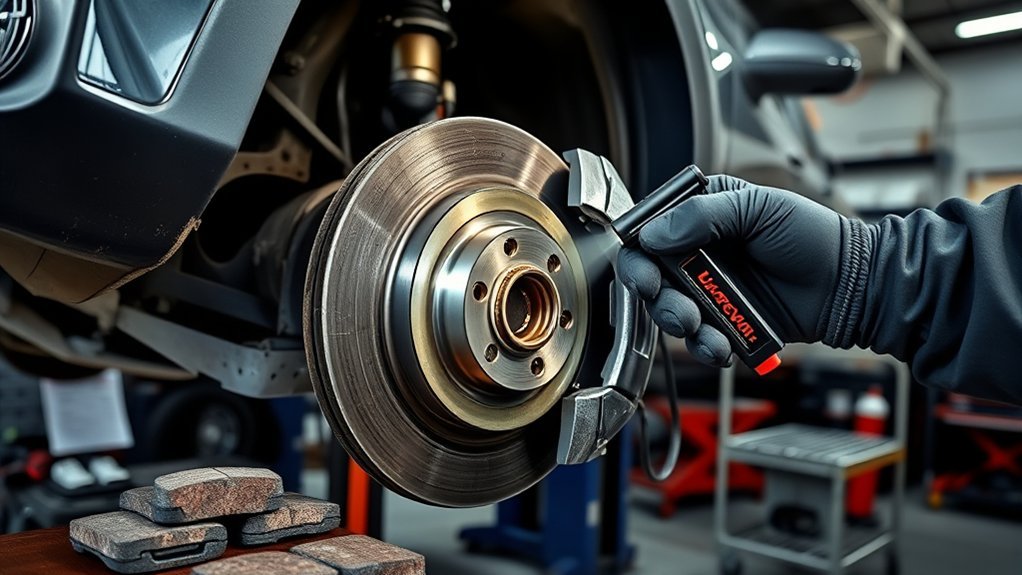
Brake repair cost depends on location, labor rate, model year, pad brand, rotor condition, and whether hardware or other components need replacement.
RepairPal’s estimate updated July 25, 2026 lists a 2023 Toyota RAV4 brake-pad replacement at $309 to $366. Its estimate includes $122 to $179 in labor and about $187 in parts. Taxes, fees, location, and related repairs can change the final total.
That estimate is for brake-pad replacement, not a guarantee that noisy brakes need new pads. If squeal is the only complaint, ask the shop to diagnose the pads, rotors, shims, clips, caliper slides, and other hardware before quoting a parts-only repair.
| Item | What to Ask |
|---|---|
| Diagnosis | Which wheel and component is actually causing the noise? |
| Pad type | Toyota OEM, TCMC where applicable, ceramic aftermarket, or another formulation? |
| Price | What are the separate parts, labor, hardware, taxes, and fees? |
| Rotor condition | Was thickness, runout, scoring, or other damage checked? |
| Warranty | What parts-and-labor warranty applies to the repair? |
Save the receipts and part numbers after the work. If the squeal continues, that paper trail gives a dealer or second shop a clear starting point.
Preventing Future Squeaks: Driving and Maintenance Tips
No maintenance routine can guarantee silent brakes, but correct parts, clean hardware, proper installation, scheduled inspection, and prompt attention to changing symptoms can reduce repeat problems.
Have the brakes inspected at the scheduled maintenance intervals for your exact RAV4 model year. Ask for an earlier inspection if you notice new squeal, scraping, grinding, vibration, pulling, a change in pedal feel, a warning light, or abnormal heat or odor.
Use parts that fit the exact brake application and replace damaged hardware when needed. After pad or rotor replacement, follow the friction-material manufacturer’s bedding instructions. Avoid unnecessary repeated hard stops during the initial break-in period, while always braking as firmly as traffic conditions require.
- Follow the factory maintenance schedule for your exact RAV4.
- Investigate new or changing brake noises instead of assuming they are normal.
- Use correctly fitted pads, shims, clips, and related hardware.
- Follow the specified torque procedure when wheels or brake components are reinstalled.
- Keep repair records so repeat noise can be compared with previous work.
Frequently Asked Questions
Why Do Toyota RAV4 Brakes Squeak?
Toyota RAV4 brakes can squeak because of pad vibration, glazing, corrosion, brake dust, worn or damaged hardware, contamination, missing shims, poor pad fit, or other brake-component problems. Toyota also published T-SB-0001-22 Rev1 for some 2019-2023 RAV4 and RAV4 Hybrid vehicles that squeal from the front brakes during light to moderate braking.
What Is the Number One Cause of Squeaky Brakes?
There is no single cause that explains every RAV4 brake squeak. Check pad condition, rotor surfaces, corrosion, contamination, shims, clips, caliper movement, and installation. If a 2019-2023 RAV4 squeals specifically during light or moderate front braking, also ask the dealer to check Toyota T-SB-0001-22 Rev1.
Does the RAV4 Brake Squeal TSB Apply to 2024 or Newer Models?
Toyota T-SB-0001-22 Rev1 specifically lists 2019-2023 RAV4 and RAV4 Hybrid vehicles. A 2024, 2025, or 2026 RAV4 may develop brake noise for similar or different reasons, but you should not assume this particular bulletin applies. Ask a Toyota dealer to check current service information for your VIN and diagnose the brakes normally.
Why Do My RAV4 Brakes Squeak in Reverse?
A brief squeak when first reversing after the vehicle has been parked, especially after rain or overnight moisture, can involve light surface corrosion or moisture on the brake surfaces. If the noise continues after normal braking, happens repeatedly in both directions, or comes with grinding, vibration, pulling, weak braking, or a warning light, have the brakes inspected.
What Is the Toyota Lawsuit About Brakes?
Public reporting about a 2021 Toyota and Lexus brake-squeal lawsuit identified certain Lexus LC 500, RC F, and GS F models plus the 2013-2018 Toyota Corolla. It did not identify the 2019-2023 RAV4 as one of the lawsuit models. For a RAV4 brake squeak, focus on the vehicle’s actual inspection findings, Toyota service information, and warranty status.
Can I Drive My RAV4 If the Brakes Squeak?
A light squeak with otherwise normal braking still deserves inspection, particularly if it keeps returning. Stop normal driving and arrange professional help if the vehicle grinds, pulls, has weak or abnormal pedal feel, smells hot or burnt, shows smoke, or displays a brake-system warning. Do not use an article to rule out a safety problem.
Will New Shims Stop RAV4 Brake Squeal?
They can when the noise matches the condition addressed by Toyota T-SB-0001-22 Rev1. That bulletin tells technicians to replace both front anti-squeal shim kits after confirming the specified front-brake squeal. If the real cause is worn pads, rotor damage, contamination, caliper trouble, or other hardware, shims alone may not solve it.
Safety and Warranty Disclaimer: This article is for informational purposes only and does not replace professional brake diagnosis, legal advice, Toyota repair information, or warranty guidance. Brakes are safety-critical parts. Consult a qualified mechanic or Toyota dealer before repairing, modifying, or continuing to drive with a brake concern.
Conclusion
A RAV4 brake squeak needs a diagnosis before it needs new parts. If you have a 2019-2023 RAV4 or RAV4 Hybrid and the front brakes squeal during light to moderate braking, Toyota T-SB-0001-22 Rev1 gives you a specific dealer conversation to start with: confirm the condition and inspect the front anti-squeal shims.
For other model years or different symptoms, do not force the TSB to fit the problem. Check the pads, rotors, shims, clips, caliper hardware, and recent service history. Keep recordings and repair records, request written findings, and address grinding, weak braking, pulling, warning lights, smoke, or burning odors promptly.
References
- Toyota T-SB-0001-22 Rev1: Front Brake Squeal/Squeak Noise – Toyota Motor Sales, USA, 2022
- Toyota Tech Tip T-TT-0636-20: Best Practices for TCMC Brake Pads – Toyota Motor Sales, USA, 2021
- Toyota Technical Information System (TIS) – Toyota Motor Sales, Inc.
- 2023 Toyota RAV4 Brake Pad Replacement Cost Estimate – RepairPal, updated July 25, 2026
- Lexus Class Action Lawsuit Alleges Brakes Squeal – CarComplaints.com, 2021