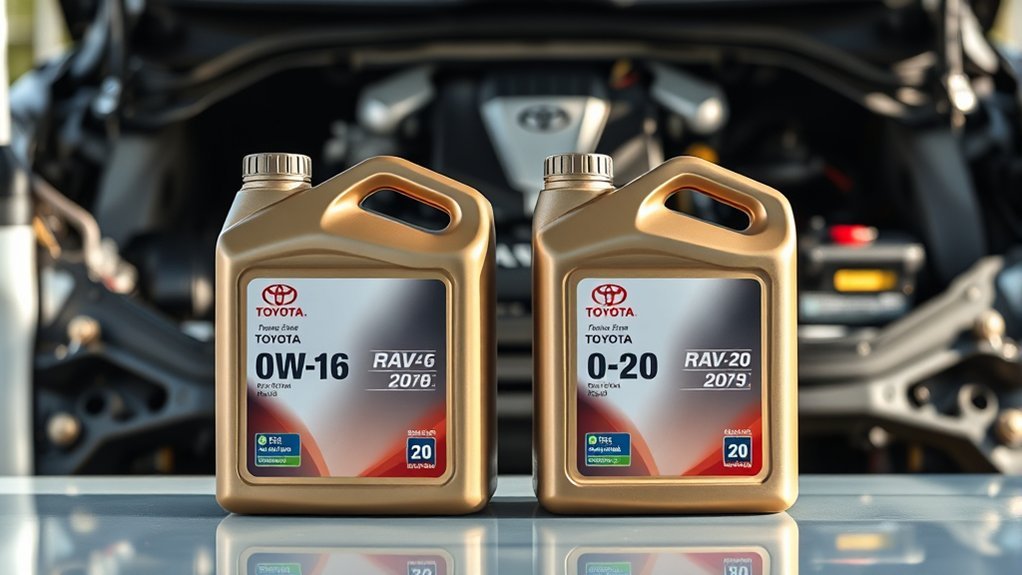
Use the oil grade listed in your Toyota RAV4 owner’s manual and on the oil filler cap. If your manual specifies SAE 0W-16, use 0W-16 for routine service. Use SAE 0W-20 only as a temporary substitute when the same manual explicitly allows it, then return to 0W-16 at the next oil change. This rule is more reliable than choosing oil by climate, mileage, or forum advice.
Last updated: July 23, 2026
Quick Answer
If your RAV4 manual lists 0W-16, use 0W-16 for normal oil changes. Use 0W-20 only when the manual permits it as a temporary substitute because 0W-16 is unavailable. Return to 0W-16 at the next oil change. Check the exact manual for your model year, engine, and market before buying oil because newer RAV4 requirements can differ.
Key Takeaways
- Use 0W-16 first when your RAV4 owner’s manual lists it as the recommended oil.
- Use 0W-20 only as a temporary substitute when your manual permits it.
- Both oils meet the SAE 0W winter-grade requirements, but 0W-20 is thicker at operating temperature.
- Do not switch grades only because the weather is hot or your driving is demanding.
- For current oil labels, 0W-16 may carry the API Shield for ILSAC GF-7B; follow the standard accepted by your manual.
At a Glance: 0W-16 vs 0W-20 for a Toyota RAV4
| Decision point | SAE 0W-16 | SAE 0W-20 |
|---|---|---|
| Normal use | Use when your RAV4 manual lists it as the recommended grade. | Use as the normal grade only when your manual lists it. |
| Temporary substitution | Return to this grade at the next oil change when the manual requires it. | May be allowed temporarily when 0W-16 is unavailable; check the exact manual wording. |
| Operating-temperature viscosity | Thinner of the two grades after warm-up. | Slightly thicker after warm-up. |
| Current ILSAC category | GF-7B, identified by the API Shield for licensed 0W-16 oil. | GF-7A for licensed oils in this viscosity grade. |
Which RAV4s Does This 0W-16 vs 0W-20 Guidance Cover?
This guide applies to a Toyota RAV4 whose owner’s manual recommends SAE 0W-16 and may allow SAE 0W-20 when 0W-16 is unavailable. Do not apply the rule to every RAV4 by model name alone. Oil requirements can vary by model year, gasoline or hybrid powertrain, engine, and sales market.
Before buying oil, confirm the vehicle by model year and engine, then open the matching Toyota owner’s manual. For a 2026 or later RAV4, do not assume the previous generation’s specification still applies. The exact manual and oil filler cap take priority over a year chart or a general article.
Key Differences Between 0W-16 and 0W-20 Oils
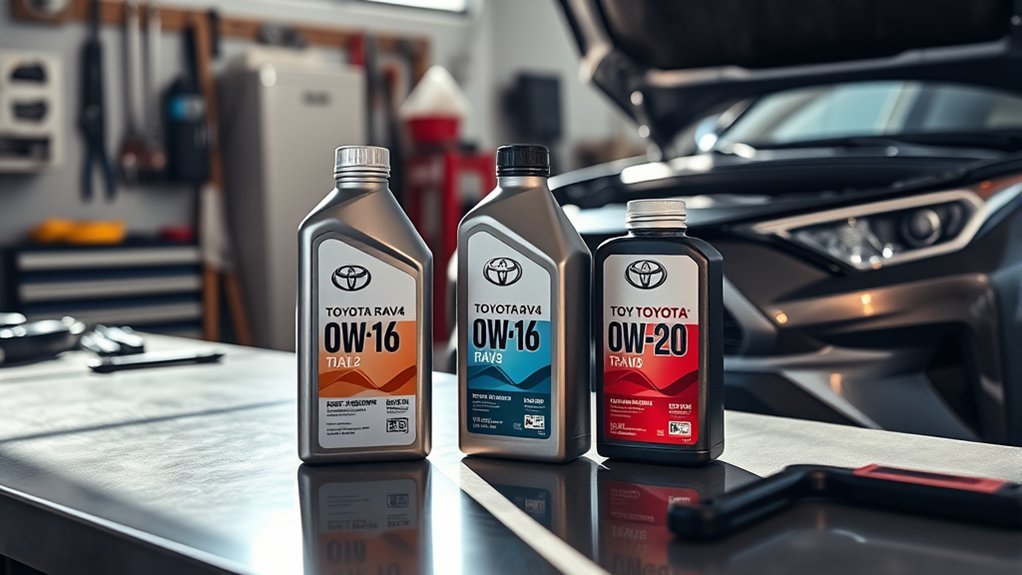
When you compare 0W-16 and 0W-20 for a Toyota RAV4, focus on the viscosity grade after warm-up. Both are multigrade oils with an SAE 0W winter designation, so both meet low-temperature requirements for that winter grade. The shared 0W label does not mean the two oils have identical cold viscosity or identical additive packages.
0W-16 has a lower operating-temperature viscosity than 0W-20. In an engine designed for 0W-16, that lower viscosity helps the lubrication system operate within Toyota’s intended efficiency and oil-flow targets. It is not automatically suitable for an older RAV4 or another engine that specifies a different grade.
0W-20 remains slightly thicker at operating temperature. That difference does not make it a universal upgrade for hot weather, towing, or high mileage. Use it only as the normal or temporary grade described in the owner’s manual for your exact vehicle.
[Products Worth Considering]

Advanced protection against the four main causes of engine breakdown: wear friction heat and deposits


3X Stronger than the leading full synthetic*
Benefits of Using 0W-16 in Your Toyota RAV4
Using 0W-16 in a RAV4 that specifies it keeps the engine on Toyota’s intended viscosity. The grade supports quick circulation, lower pumping resistance, and the fuel-economy target for which the engine was calibrated. The real-world fuel-economy difference from 0W-20 is usually too small and variable to promise as a fixed percentage.
Correct viscosity also removes guesswork. You do not need to select a thicker grade because summer temperatures rise or because the vehicle sometimes carries a heavy load. If Toyota provides a separate viscosity chart or severe-service instruction for your model, follow that exact guidance instead of making an unsourced change.
Note: The oil cap and owner’s manual matter more than general advice from a forum, parts store, or quick-lube shop.
Should Climate or Severe Driving Change Your Oil Grade?
Climate and driving conditions can change how often your RAV4 needs service, but they do not automatically change the approved oil viscosity. Both 0W-16 and 0W-20 carry the 0W winter designation. At operating temperature, 0W-20 remains slightly thicker, but that fact alone is not permission to substitute it.
- Choose 0W-16 when your RAV4 manual lists it as the recommended oil grade.
- Use 0W-20 only when the manual lists it as the normal grade or allows it as a temporary substitute.
- Follow the shorter interval in the Toyota maintenance guide when your driving qualifies as a special operating condition.
- Keep receipts showing the oil grade, certification, mileage, and service date.
Frequent short trips, towing, dusty-road driving, and repeated low-speed use can affect the maintenance schedule. They do not justify changing viscosity without Toyota approval. For the service procedure, capacity check, and refill steps, use this Toyota RAV4 oil change guide together with your owner’s manual.
Can You Use 0W-20 Instead of 0W-16 in a RAV4?
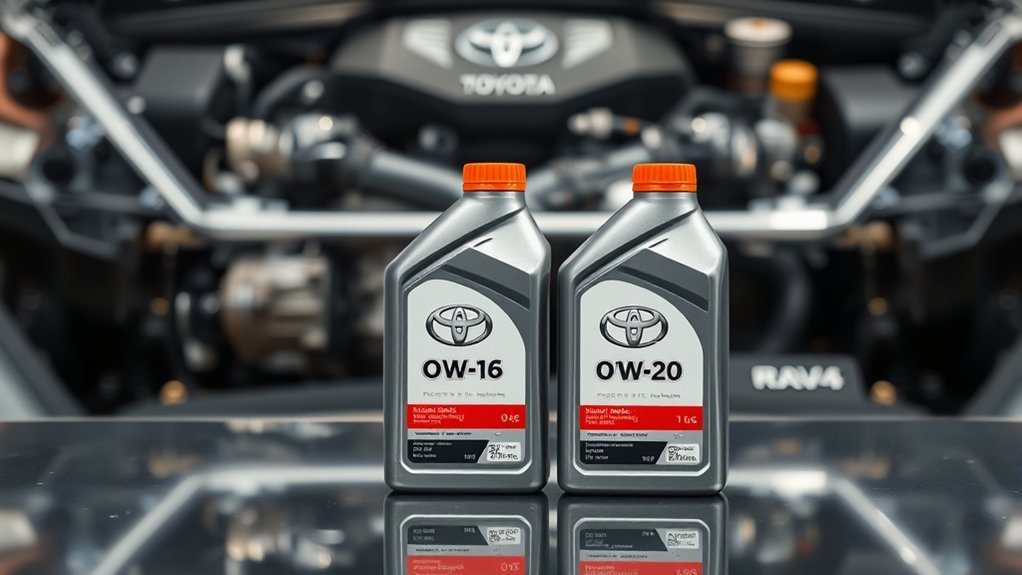
Yes, but only when the owner’s manual for your exact RAV4 permits it. Toyota manuals for several 0W-16 applications state that 0W-20 may be used when 0W-16 is unavailable and that 0W-16 should be installed at the next oil change. That is a temporary substitution rule, not a blanket approval for every RAV4 or indefinite use.
If a shop installs 0W-20, compare the invoice with the manual before deciding what to do. When the manual expressly allows the substitute, follow its instruction and return to 0W-16 at the next change. When the manual does not allow it, contact the servicing shop or Toyota dealer for vehicle-specific guidance rather than relying on a general internet answer.
Warning: Do not assume another RAV4 owner’s oil choice applies to your model year, engine, market, or warranty terms.
[Products Worth Considering]

Genuine K-Metal part that fits your specific vehicle

Phosphorus Replacement Technology to help extend the life of the emission system
What Should You Check Before Your Next Oil Change?
Use this five-step check before buying or approving an oil change:
- Match the vehicle: confirm the model year, engine, and market shown in the manual.
- Read the viscosity line: identify the recommended SAE grade.
- Read the substitute note: check whether Toyota allows another grade and when you must switch back.
- Check the certification mark: choose oil that meets the API or ILSAC requirement accepted by the manual.
- Verify capacity separately: capacity can vary by engine and whether the filter is replaced.
For current licensed oils, the API Shield identifies 0W-16 products meeting ILSAC GF-7B. Older bottles may show an earlier category accepted by the vehicle’s manual. Do not choose a bottle by viscosity alone; the certification and manufacturer approval matter too.
After refilling, check the dipstick on level ground using the procedure in the owner’s manual. If the oil-pressure warning stays on, shut the engine off and investigate the cause before driving. This RAV4 oil warning light guide explains the immediate safety steps.
[Products Worth Considering]
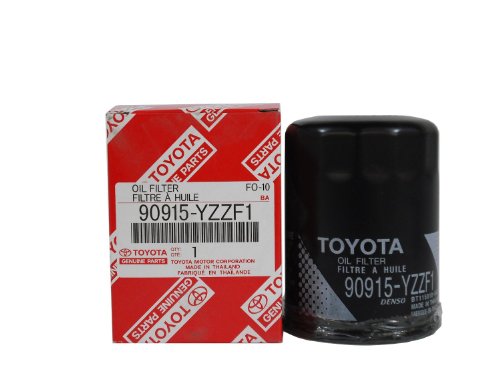
Item Package Dimension: 13.69L x 6.019W x 4.20H inches

Genuine OEM - direct fit
Long-Term Considerations for Oil Selection and Engine Health
Choosing the specified viscosity and certification supports the oil-flow, efficiency, wear-control, and emissions-system targets built into the engine. It also creates a clear maintenance record if a shop, dealer, or warranty administrator later asks what oil was used.
Choose the oil grade Toyota lists for your specific RAV4, then change it on the schedule for your actual driving conditions.
- Fuel economy: 0W-16 can reduce pumping resistance in engines designed for it, but do not promise a fixed real-world percentage.
- Cold starts: Both oils meet SAE 0W winter-grade requirements; they are not chemically or physically identical.
- Heat and load: Do not move to 0W-20 solely because it is hotter or the vehicle works harder.
- Service records: Keep receipts and notes that identify viscosity, certification, mileage, and date.
Oil quality matters as much as the number on the front label. Use a product that meets the performance standard in the manual or a later standard that the manufacturer accepts. If the label, service invoice, and manual do not agree, resolve the mismatch before the next trip.
Frequently Asked Questions
Is There a Big Difference Between 0W-16 and 0W-20?
The difference is small but important. Both oils have an SAE 0W winter designation, while 0W-16 is thinner than 0W-20 at operating temperature. Use the grade specified for the engine rather than treating the two as permanently interchangeable.
Can I Use 0W-20 in My RAV4?
You can use 0W-20 when your RAV4 owner’s manual lists it as the normal grade or permits it as a temporary substitute. If the manual says to return to 0W-16 at the next oil change, follow that instruction.
Is 0W-16 Too Thin?
0W-16 is not too thin for an engine designed and approved to use it. It may be unsuitable for an engine that specifies a different viscosity, so do not apply a 0W-16 recommendation across all RAV4 generations.
What Oil Does Toyota Recommend for a RAV4?
Toyota’s recommendation varies by model year, engine, and market. Many recent RAV4 manuals specify SAE 0W-16, while other RAV4s use a different grade. Check the exact owner’s manual and oil filler cap rather than relying only on a model-year chart.
Does Hot Weather Mean I Should Use 0W-20 Instead of 0W-16?
No. Hot weather alone does not override Toyota’s viscosity specification. Use 0W-20 only when the owner’s manual approves it for your exact RAV4.
What Oil Certification Should I Look For?
Use the API or ILSAC performance standard required or accepted by your owner’s manual. For current licensed 0W-16 oil, the API Shield identifies ILSAC GF-7B. Confirm the bottle label before purchase.
Will 0W-20 Void My RAV4 Warranty?
Warranty coverage is fact-specific. When your manual expressly permits 0W-20 as a temporary substitute and you follow the return-to-0W-16 instruction, you are following Toyota’s published service guidance. Keep the invoice and contact Toyota for a decision about a specific warranty claim.
Conclusion
For a Toyota RAV4 that specifies 0W-16, use 0W-16 as the normal oil. Treat 0W-20 as a temporary substitute only when the exact owner’s manual allows it, then return to 0W-16 at the next change. Before service, confirm the model year, engine, viscosity, substitute note, certification mark, and capacity. That process is safer than choosing a grade from climate, mileage, or another owner’s experience.
References
- Toyota Owner’s Manuals and Warranty Information — Toyota Motor Sales, U.S.A.
- 2023 Toyota RAV4 Hybrid Warranty and Maintenance Guide — Toyota Motor Sales, U.S.A.
- 2025 Toyota RAV4 Hybrid Warranty and Maintenance Guide — Toyota Motor Sales, U.S.A.
- Toyota Guidance on Synthetic-Oil Change Intervals — Toyota Support
- API Motor Oil Guide: Current Certification Marks and ILSAC Categories — American Petroleum Institute, 2025