

For U.S.-market Toyota Camrys, the transmission depends on the model year and powertrain. 2018 through 2024 gas models use Toyota’s Direct Shift 8-speed automatic, while 2025 and 2026 Camrys are hybrid-only and use an electronically controlled continuously variable transmission (eCVT). Gas Camrys from 2012 through 2017 use a 6-speed automatic. Camry Hybrid models use a power-split eCVT rather than the belt-and-pulley CVT found in many gas-only cars. Verify 2011 and older cars by VIN, owner’s manual, or original window sticker.
Last updated: August 26, 2026
Quick Answer
A 2025 or 2026 U.S. Toyota Camry has a hybrid eCVT. A 2018 through 2024 gas Camry has Toyota’s Direct Shift 8-speed automatic, while a 2012 through 2017 gas Camry has a 6-speed automatic. Camry Hybrid models use an eCVT-style power-split transaxle. If you want traditional stepped shifts, shop a gas model and confirm the exact powertrain by VIN before buying.
Key Takeaways
- Choose a 2018 through 2024 U.S. gas Camry if you want Toyota’s 8-speed automatic and traditional gear changes.
- Choose a 2025 or 2026 Camry if you want the current hybrid-only lineup with an eCVT.
- Gas Camrys from 2012 through 2017 use a 6-speed automatic, which helps narrow a used-car search.
- Check 2007 through 2011 cars closely: those years used a 5-speed or 6-speed automatic depending on engine, and the SE four-cylinder was the last U.S. Camry sold with a manual gearbox.
- Drivetrain matters as much as model year. The 2020 through 2024 AWD gas Camry uses a different 8-speed case (UB80F) than the front-drive UB80E, and the 2025 through 2026 hybrid AWD drives the rear wheels with a separate electric motor.
- Use the exact transmission or transaxle fluid listed for your model; do not assume one Toyota fluid fits every Camry.
Toyota Camry Transmission Options by Model Year
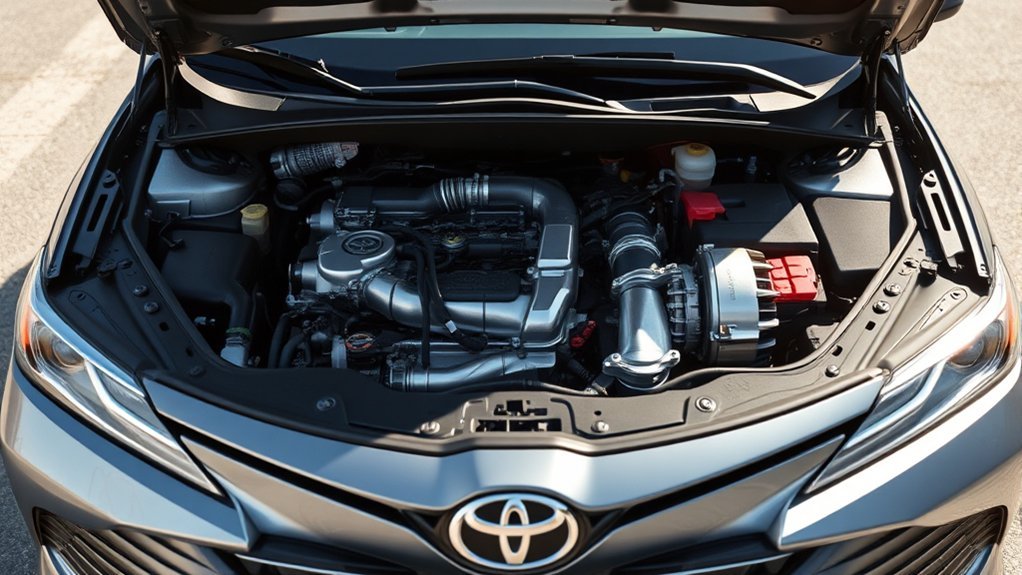
Recent U.S. Camrys use either a stepped automatic or Toyota’s hybrid eCVT. Toyota introduced the Direct Shift 8-speed automatic with the redesigned 2018 Camry and paired it with the gas 2.5-liter four-cylinder and 3.5-liter V6. Toyota then made the U.S. Camry hybrid-only for 2025, and the 2026 lineup continues with an eCVT across all grades.
The eCVT manages engine and electric-motor power without normal fixed gear changes. It is part of Toyota’s hybrid system, not a belt-and-pulley CVT. The 8-speed automatic feels more familiar because it moves through fixed ratios, while the eCVT prioritizes smooth power delivery and fuel economy.
| U.S. Camry Model Years | Powertrain | Transmission | What It Feels Like |
|---|---|---|---|
| 2025 through 2026 | Hybrid-only | Electronically controlled CVT (eCVT) | Smooth acceleration without fixed shift steps |
| 2018 through 2024 | Gas | Direct Shift 8-speed automatic | Traditional stepped gear changes |
| 2018 through 2024 | Hybrid | Electronically controlled CVT (eCVT) | Smooth hybrid power flow |
| 2012 through 2017 | Gas | 6-speed automatic | Fewer, more noticeable shifts than the 8-speed |
| 2007 through 2011 | Gas | 6-speed automatic (V6), 5-speed automatic (4-cylinder), or 6-speed manual on the SE 4-cylinder | The last U.S. Camry offered with a manual gearbox |
| 2006 and older | Varies | Confirm by VIN, engine, and market | Depends on the exact configuration |
Toyota’s U.S. product releases confirm the 2012 gas Camry’s 6-speed automatic, the 2018 gas Camry’s 8-speed automatic, and the 2026 hybrid-only eCVT lineup.
[Products Worth Considering]
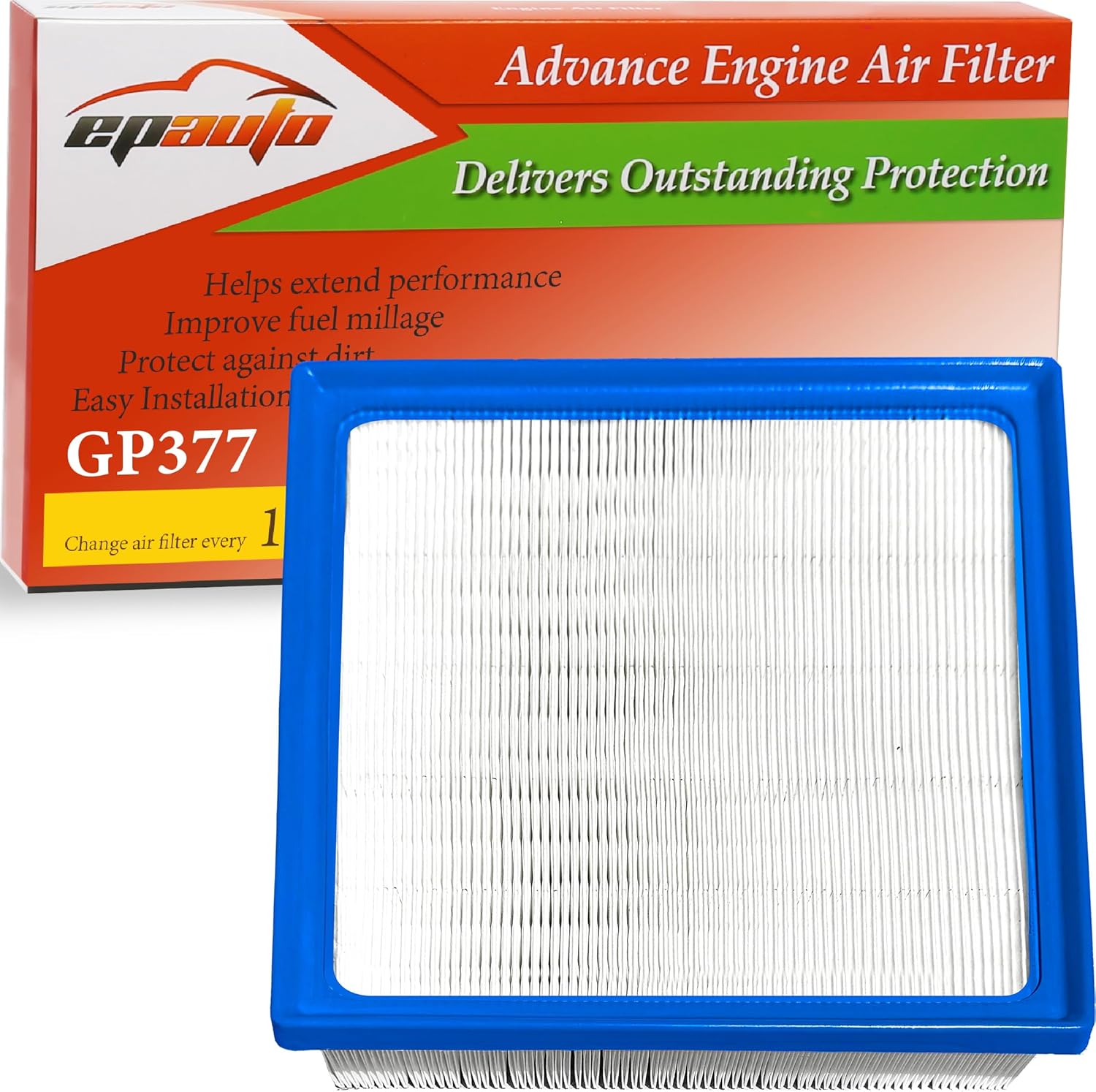
This EPAuto GP377 engine air filter replacement is designed for select Toyota and Lexus gas models, offering a direct-fit solution that helps maintain engine performance and protection. It meets or exceeds original equipment standards for fit, form, and function while trapping dirt and debris to support cleaner airflow. Compatible with multiple popular vehicles, it provides an easy, tool-free replacement for routine maintenance.

This flexible oil funnel is designed to make fluid changes cleaner and easier by guiding oil around obstacles like skid plates and crossmembers. Its shape-retaining core and silicone body can be molded for custom positioning, while the heat-resistant, leak-proof design helps prevent spills during draining and filter removal. Reusable and easy to clean, it works well for cars, trucks, motorcycles, and other hard-to-reach fluid fill or drain applications.

This A-Premium serpentine belt drive kit is designed for compatible Toyota Camry, RAV4, and Scion tC models with a DOHC 2.5L L4 engine. It includes a serpentine belt and belt tensioner to help maintain smooth engine operation, reduce noise, and support reliable power transfer. Built for dependable replacement performance, it also comes with a one-year unlimited-mileage guarantee for added peace of mind.
What to Check Before Buying a Used Camry
Before you compare two used Camrys, confirm the exact transmission rather than relying on the listing title. Ask for the VIN, check the owner’s manual, and review the original window sticker if the seller has it. You can also use the Camry transmission code and serial number to verify the installed unit before ordering parts or approving a repair.
Toyota Camry Transmission Codes by Year
| Model Years | Powertrain and Drivetrain | Unit Code |
|---|---|---|
| 2025 through 2026 | Hybrid, FWD and AWD | Aisin T110 eCVT |
| 2018 through 2024 | Gas 2.5-liter, FWD | UB80E |
| 2018 through 2024 | Gas 2.5-liter, AWD | UB80F |
| 2018 through 2024 | Gas 3.5-liter V6, FWD | UA80E |
| 2018 through 2024 | Hybrid, FWD | Power-split hybrid transaxle; identify by Toyota part number rather than a U-series code |
| 2012 through 2017 | Gas 2.5-liter, FWD | U760E |
| 2012 through 2017 | Gas 3.5-liter V6, FWD | U660E |
| 2012 through 2017 | Hybrid, FWD | Power-split hybrid transaxle |
| 2007 through 2011 | Gas V6 / gas 4-cylinder / manual | U660E / U250E / 6-speed manual on SE 4-cylinder |
Test-drive the car both cold and fully warmed up. Check how quickly it engages Drive and Reverse, then use light and firm acceleration. Walk away or get a pre-purchase inspection if you notice slipping, a hard bang into gear, repeated shift flare, shuddering, a warning light, fluid leaks, or a burning smell.
How the 8-Speed Automatic Transmission Works
The Toyota Camry’s 8-speed automatic transmission uses fixed gear ratios and a torque converter. You feel normal gear changes as the car speeds up or slows down. Toyota introduced this Direct Shift unit for the 2018 Camry and paired it with gas Camry engines through the 2024 model year.
Key Performance Advantages
The 8-speed automatic can feel more direct than older 6-speed units. Its wider gear spread helps the engine stay closer to the right speed for passing, cruising, and lower-speed driving. You also get a more familiar feel if you prefer normal shifts.
| Feature | Benefit | Impact |
|---|---|---|
| Fixed Gear Ratios | Clearer shift feel | More traditional driving response |
| Wide Ratio Spread | Better low-speed and highway balance | Improved everyday drivability |
| Downshift Control Logic | Engine torque matching on downshifts | Smoother passing and slowing transitions |
| Torque Converter | Smooth takeoff from a stop | Less harsh low-speed movement |
| Manual Mode | More driver control on some trims | Better control on hills or curves |
What the 8-Speed Automatic Feels Like
The 8-speed automatic suits you if you like to feel the car move through gears. Sport-focused gas grades such as the XSE V6 and the Camry TRD add paddle shifters, which let you request gear changes without moving the shift lever. This can help on hills, curves, or quick passing moves.
A healthy 8-speed automatic should shift cleanly, without a hard bang, flare, or long delay. If you notice Camry hard-shifting symptoms, hesitation, or slipping, don’t guess. Ask a Toyota dealer or qualified transmission shop to scan the car and check for leaks, stored codes, mounts, and calibration updates.
What Makes the eCVT Different in Toyota Camry Hybrids?
The Camry Hybrid’s eCVT works differently from a belt-and-pulley CVT found in many gas cars. Toyota’s hybrid system uses electric motor-generators and a power-split device with planetary gears. This setup blends gas and electric power while the control system adjusts engine speed for efficiency.
[Products Worth Considering]

This replacement filter set is designed for a range of Toyota hybrid vehicles, including popular models like RAV4 Hybrid, Camry Hybrid, Highlander Hybrid, Sienna, Venza, and more. It combines cabin and engine filtration to help support cleaner airflow, reduce dust and odors, and protect your HVAC and engine systems. Built for easy installation and extended service life, it offers a convenient maintenance upgrade for compatible hybrid and gas-only Corolla models.

This ALLWELL engine air filter is designed to help maintain clean airflow for compatible Toyota, Lexus, and Subaru vehicles, supporting engine performance and efficient operation. It serves as a direct replacement for multiple OE part numbers and fits a wide range of hybrid and standard models across several years. Built for broad compatibility, it is a practical maintenance part for keeping your vehicle’s intake system protected.

This front bumper license plate bracket is designed for Toyota Camry and Camry Hybrid models from 2018 to 2026, offering a secure and street-legal way to mount your plate. Built from durable, rust-proof plastic with included screw bolts and a wrench, it helps protect your bumper paint while making installation straightforward. The bracket fits US and Canada plates and is made to keep your license plate and registration sticker visible.
Key Features of eCVT
The eCVT helps the hybrid system move the car without normal stepped gear changes. You may hear the engine hold a steady sound during firm acceleration, but that doesn’t mean the transmission slips. The system simply manages engine speed and electric motor power in a different way.
- Smooth Power Flow: The eCVT blends engine and electric motor output without normal gear steps.
- Efficient Engine Control: The system can keep the engine closer to an efficient speed range.
- Hybrid Driving Modes: Drive modes can change throttle response and the way the car feels under acceleration.
Fuel Efficiency Advantages
The EPA rates the 2026 Camry LE with front-wheel drive at 52 mpg city, 49 mpg highway, and 51 mpg combined. The LE with all-wheel drive is rated 50/49/50. SE, XLE, and XSE grades drop to 46 mpg combined, and the XSE AWD to 43, so check the exact grade and drivetrain rather than assuming the headline number. The eCVT helps the hybrid system blend engine power, electric assist, and regenerative braking, which is especially useful in stop-and-go driving.
| Feature | Benefit |
|---|---|
| Planetary Gear Power Split | Blends engine and electric motor power |
| No Fixed Mechanical Ratios | Smoother acceleration; SE and XSE grades add six simulated steps via Sequential Shiftmatic |
| Efficient Engine Speed Control | Supports strong fuel economy |
| Regenerative Braking | Recovers energy during slowing |
| 2026 LE FWD EPA Estimate | 52/49/51 mpg city/highway/combined (FWD) |
What the eCVT Feels Like on the Road
The eCVT gives you quiet low-speed driving and smooth takeoff from a stop. It suits daily commuting well, and you will notice its biggest benefit in city driving, where the hybrid system can use electric power more often. It is not as inert as its reputation suggests, either: on 2018 through 2024 Camry Hybrid SE and XSE grades, Toyota adds paddle shifters and Sequential Shiftmatic, which lets you “shift” the eCVT through six simulated steps. The gearset never changes ratio mechanically, but the control software holds engine speed in stages so the car responds like a stepped automatic when you want it to.
This matters for diagnosis as well as parts. A vibration or driveline noise on an AWD hybrid may have nothing to do with the transaxle, because the rear motor is a separate system with its own control logic and its own fault codes.
The 2025 and 2026 hybrid handles all-wheel drive a different way again. Instead of sending power rearward through a driveshaft, it adds a separate electric motor on the rear axle. There is no mechanical link between the front and rear wheels at all, so the rear motor engages only when the system detects slip or hard acceleration. That design keeps the fuel-economy penalty small: the 2026 LE AWD is rated 50/49/50 against 52/49/51 for the LE FWD.
The 3.5-liter V6 was never offered with all-wheel drive. If you are shopping a 2020 through 2024 Camry and you want AWD, you are shopping a four-cylinder, and that narrows the used-car search more than most listings make clear.
Drivetrain changes the transmission itself, not just the badge on the trunk. Toyota added all-wheel drive to the Camry for the 2020 model year and kept it available through 2024 on the four-cylinder LE, XLE, SE, SE Nightshade, and XSE grades. Those cars use the same Direct Shift 8-speed automatic, but in a different case with a transfer unit built in. Front-drive cars carry the UB80E; all-wheel-drive cars carry the UB80F. The two are not interchangeable, so confirm the drivetrain before you order a rebuilt unit, a torque converter, or a valve body.
Front-Wheel Drive or All-Wheel Drive: Why It Changes the Transmission
Common Toyota Camry Transmission Symptoms to Watch
If your Camry shifts hard, hesitates, slips, or delays engagement, treat the symptom as a warning. Start with a scan for diagnostic trouble codes, a leak inspection, and a review of service history. Mounts, sensors, engine performance, software calibration, fluid condition, and internal transmission wear can create similar symptoms.
Toyota’s revised
T-SB-0152-19 Rev1
applies only to certain 2018 through 2019 Camrys with an A25A engine and listed vehicle identifiers. The bulletin addresses hesitation at 6 mph or below, immediately after a 3-to-1 downshift, and with less than 40% accelerator input. The repair is an ECM calibration update followed by a specified drive pattern, not a blanket transmission replacement. Ask a Toyota dealer to confirm the VIN, calibration, and exact symptom before assuming it applies.
Warning: Stop driving and get the car checked if the transmission slips, loses drive, leaks fluid, or makes a burning smell.
Don’t blame every shift concern on a bad transmission. Software, fluid condition, mounts, sensors, or engine performance can also affect shift feel. A proper diagnosis saves money because it helps you fix the real cause.
[Products Worth Considering]

This coolant electric water pump is designed as a replacement for select Toyota vehicles, helping maintain proper engine cooling performance and reliable temperature control. Built to OE specifications, it offers fitment support for compatible Avalon, Camry, and RAV4 models with 2.5L L4 engines. It also includes cross-reference part numbers for easier matching and comes with after-sales support for covered defects.
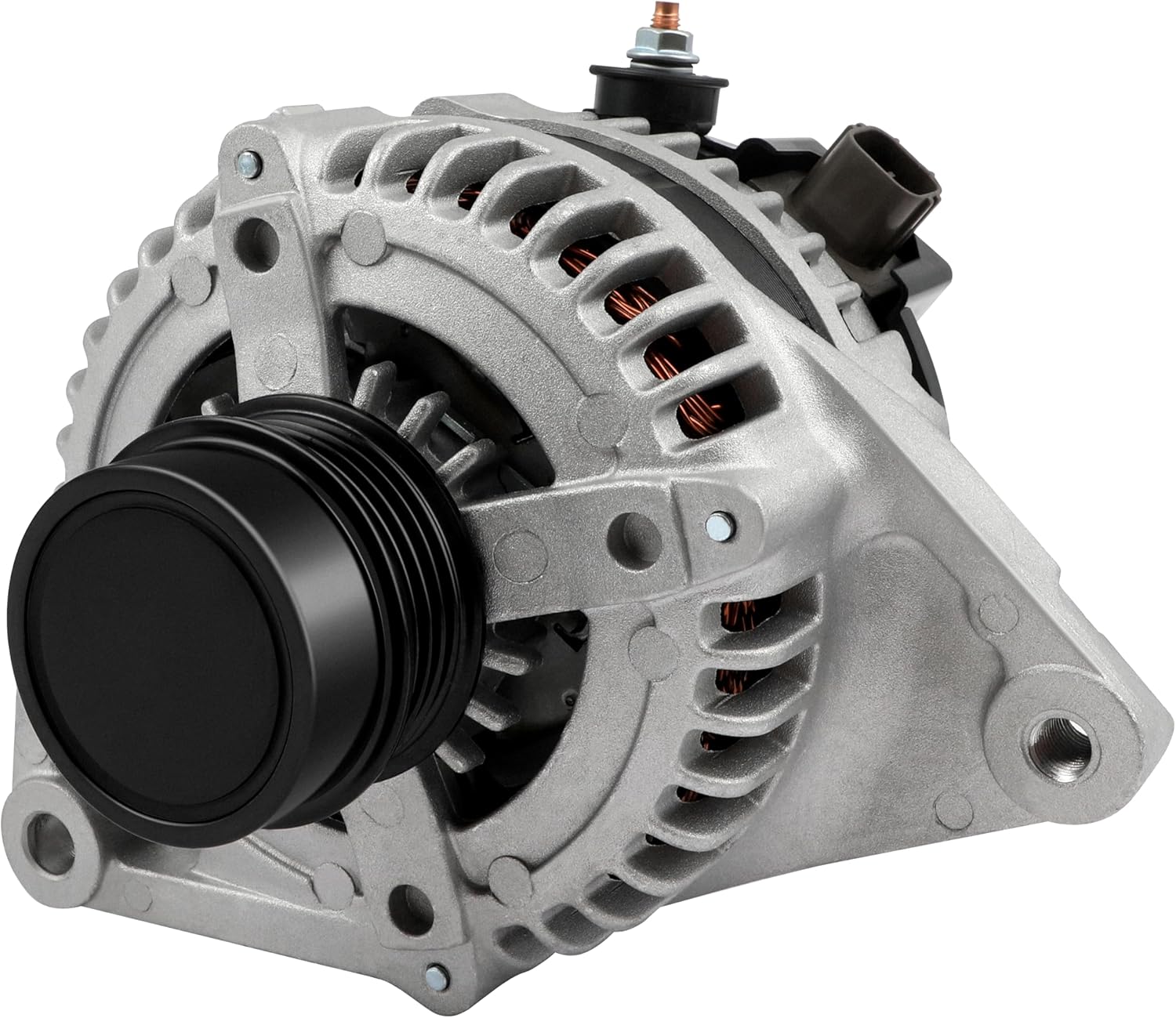
This high output alternator is designed to fit select Toyota, Scion, and RAV4 2.5L applications, delivering reliable charging performance for everyday driving. Built with a 12-volt, 100-amp design and precision-engineered components, it helps support battery recharge, stable electrical output, and consistent operation when your vehicle shows signs of charging issues.

This 2-piece oil control variable valve timing solenoid set is designed to help restore proper VVT operation and engine performance across a wide range of Toyota, Lexus, Scion, and Pontiac applications. Built to meet or exceed OE performance, it uses quality seals for reliable oil control and helps reduce issues caused by improper oil flow. It is a practical replacement choice for maintaining smooth engine timing and dependable drivability.
How to Choose the Best Toyota Camry Transmission
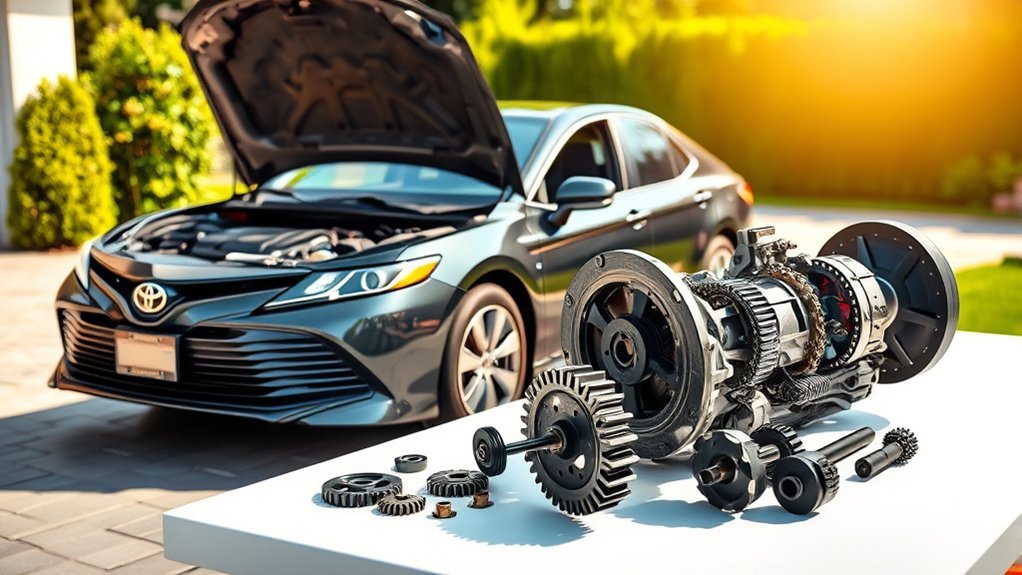
Your best Toyota Camry transmission choice starts with the model year you plan to buy. A new U.S. Camry means a hybrid eCVT. The 8-speed automatic is limited to 2018 through 2024 gas models, while 2012 through 2017 gas models use a 6-speed automatic.
- Driving Feel: Pick the 8-speed automatic if you want traditional shifts. Pick the eCVT if you want smooth hybrid power.
- Fuel Economy: Choose the eCVT hybrid if city fuel savings matter most to you.
- Model Year: Check the year before you shop because 2025 and 2026 U.S. Camry models use hybrid power.
- Service History: Ask for maintenance records, repair invoices, and any dealer calibration history.
- Use Case: The U.S. Camry carries no factory tow rating, so do not plan on towing with one whichever transmission it has. Heavy loading and sustained low-speed use do change the fluid service schedule, which is covered below.
A test drive can tell you more than a spec sheet. Drive the car cold and warm, then check for harsh shifts, hesitation, warning lights, or unusual noises.
Simple Maintenance Tips for Your Camry Transmission
Good maintenance starts with the owner’s manual and maintenance guide for your exact year, powertrain, and drivetrain. As a general guide, Toyota moved the Camry to Toyota Genuine ATF WS with the sealed, dipstick-less automatics that arrived in the mid-2000s, and the older Type T-IV fluid belongs to earlier generations rather than being a substitute for WS. Gas automatics and hybrid transaxles can also carry different specifications from each other in the same model year. Confirm the exact fluid against your VIN through a Toyota parts counter or the parts catalog before you buy anything, because the wrong fluid can cause poor operation or damage.
Two practical notes on service. Toyota does not schedule a routine fluid change for these units under normal driving, so a shop that recommends one at every oil change is going beyond Toyota’s own interval. And when fluid is replaced on a high-mileage car, many shops prefer a drain-and-fill over a pressurized flush.
Toyota’s 2024 Camry maintenance guide lists inspection of the automatic transmission for leakage and inspection of its fluid-cooler hoses and connections at 60,000 miles. At the same interval, it calls for automatic transmission fluid replacement when the car is used mainly for towing, a car-top carrier, heavy loading, or extensive low-speed service such as taxi or delivery use. Normal-use schedules can differ, so follow the guide for your model rather than a universal interval.
Many newer Camry transmissions and transaxles do not have a traditional dipstick. Correct level checks can require the vehicle to be level and the fluid to be within a specified temperature range. Use the Camry ATF WS service guide for applicable gas automatics and the Camry Hybrid transaxle fluid guide for eCVT models. If you see a leak, smell burnt fluid, or notice slipping or delayed engagement, schedule diagnosis promptly.
Frequently Asked Questions
Which Is Better, CVT or TC?
TC usually means a torque-converter automatic, and CVT means continuously variable transmission. The better choice depends on your needs. Choose a torque-converter automatic if you want a normal shift feel, or choose Toyota’s hybrid eCVT if you want smoother city driving and better fuel economy.
What Type of Transmissions Do Toyota Camrys Have?
U.S. gas Toyota Camry models from 2018 through 2024 use an 8-speed automatic transmission. Camry Hybrid models use an eCVT-style hybrid transaxle. Toyota sells the 2025 and 2026 U.S. Camry as hybrid-only, so those new models use the hybrid eCVT setup.
What Transmission Does a 2012 to 2017 Toyota Camry Have?
U.S. gas-powered Toyota Camry models from 2012 through 2017 use a 6-speed automatic transmission. Camry Hybrid versions from those years use an electronically controlled hybrid transaxle/eCVT.
Do All Toyota Camrys Have CVT Transmissions?
No. Gas Camrys from 2018 through 2024 use an 8-speed automatic, while Camry Hybrid models use an electronically controlled CVT-style hybrid transaxle. Older used Camrys vary by generation and engine, so confirm the exact transmission by VIN.
Is the Toyota Camry eCVT the Same as a Regular CVT?
No. Toyota’s hybrid eCVT does not work like a belt-and-pulley CVT in many gas-only cars. It uses the hybrid system’s motor-generators and a power-split gearset to blend gas and electric power.
Did Toyota Stop Selling the Gas-Only Camry?
Yes, Toyota moved the U.S. Camry lineup to hybrid-only for the 2025 model year. The 2026 Camry continues with hybrid power. Used 2018 through 2024 gas Camry models remain the main choice if you want the 8-speed automatic.
How Often Should You Change Camry Transmission Fluid?
Follow the maintenance guide for your exact Camry. Toyota’s 2024 guide calls for automatic transmission fluid replacement at 60,000 miles only under listed special operating conditions, including heavy loading, certain towing or car-top-carrier use, and extensive low-speed service. Normal driving may follow a different schedule.
Why Does a Camry Hybrid Sound Different When Accelerating?
The eCVT can let the engine hold a steady sound while the car gains speed. That behavior can feel different from a stepped automatic, but it can be normal. Get the car checked if you also feel slipping, shuddering, warning lights, or loss of power.
Conclusion
Your Camry transmission choice should match the model year and driving feel you want. Pick a 2025 or 2026 U.S. Camry for the current hybrid eCVT, a 2018 through 2024 gas Camry for the 8-speed automatic, or a 2012 through 2017 gas Camry for the 6-speed automatic. Before buying, confirm the VIN and service history, then test-drive the car cold and warm. For maintenance, use the exact fluid and schedule listed for that powertrain.
References
- Toyota Introduces Seventh-Generation Camry for 2012 – Toyota USA Newsroom, 2011
- 2017 Toyota Camry and Camry Hybrid – Toyota USA Newsroom, 2016
- Ready for Launch: All-New 2018 Toyota Camry – Toyota USA Newsroom, 2017
- 2024 Toyota Camry: Style and Performance – Toyota USA Newsroom, 2023
- Toyota Camry Goes Exclusively Hybrid – Toyota USA Newsroom, 2024
- Toyota Camry Brings Nightshade Edition to the 2026 Lineup – Toyota USA Newsroom, 2025
- 2026 Toyota Camry vs. Hyundai Sonata – Toyota, 2026
- 2024 Toyota Camry Warranty and Maintenance Guide – Toyota, 2024
- T-SB-0152-19 Rev1: Hesitation on Acceleration From a Slow Roll or Rolling Stop – Toyota via NHTSA, revised 2020
- How Often Should You Change Your Transmission Fluid? – Toyota
- My Vehicle Does Not Have a Dipstick to Check the Automatic Transmission Fluid Level – Toyota Support
- 2026 Fuel Economy Guide, Toyota Camry entries – U.S. EPA and U.S. Department of Energy, 2026



Frisse adult websites bieden geavanceerde inhoud voor volwassenen. Kies voor veilige nieuwe hubs voor veilig kijken.
[…] abnormal vibration, or stored hybrid-control code still needs diagnosis. See the site’s Camry transmission-types guide for the main differences between conventional automatics and hybrid […]