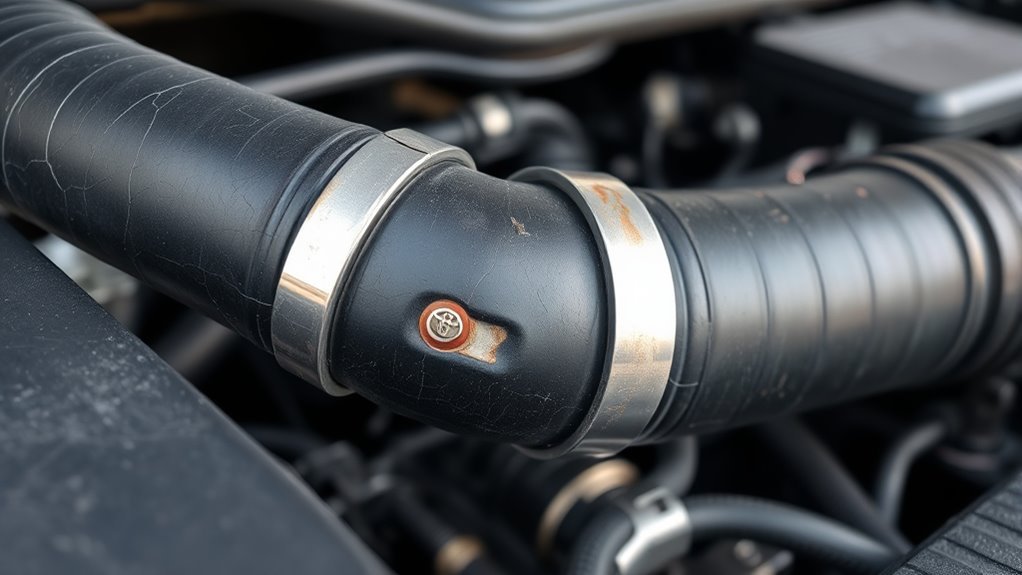
You’ll usually know a Toyota Camry radiator hose is aging by the way it looks, feels, or leaks. Cracks, bulges, swollen sections, dried coolant around the clamps, a sweet coolant smell, repeated coolant loss, or a hose that feels soft, mushy, rock-hard, or crunchy are all signs the hose may be near failure. Inspect only when the engine is completely cool, and replace a questionable hose before it splits and causes overheating.
Quick Answer
A Camry radiator hose is likely bad if you see cracks, bulges, swelling, coolant residue, dampness near the clamps, or oil contamination, or if the hose feels soft, spongy, unusually hard, or crunchy when the engine is cool. Replace it immediately if it leaks, collapses, or shows structural damage.
Key Takeaways
- Inspect the upper and lower radiator hoses only after the Camry has cooled completely.
- Cracks, bulges, swelling, soft spots, crunching, coolant crust, or seepage at clamps usually mean replacement is the safest choice.
- Oil on a hose can weaken the rubber, so fix the oil leak as well as replacing the hose.
- Use the coolant recommended in your specific Camry owner’s manual, not plain water or a random universal coolant.
- Do not keep driving if the temperature warning comes on, steam appears, or coolant is actively leaking.
At a Glance
| Time Required | 10–20 minutes for inspection; longer if replacing a hose |
| Difficulty | Easy inspection; moderate DIY replacement |
| Tools Needed | Flashlight, gloves, rag, inspection mirror, coolant-safe drain pan if replacing |
| Cost | Inspection is free; replacement cost depends on hose, clamps, coolant, and labor |
Visible Signs of an Aging Radiator Hose on a Toyota Camry
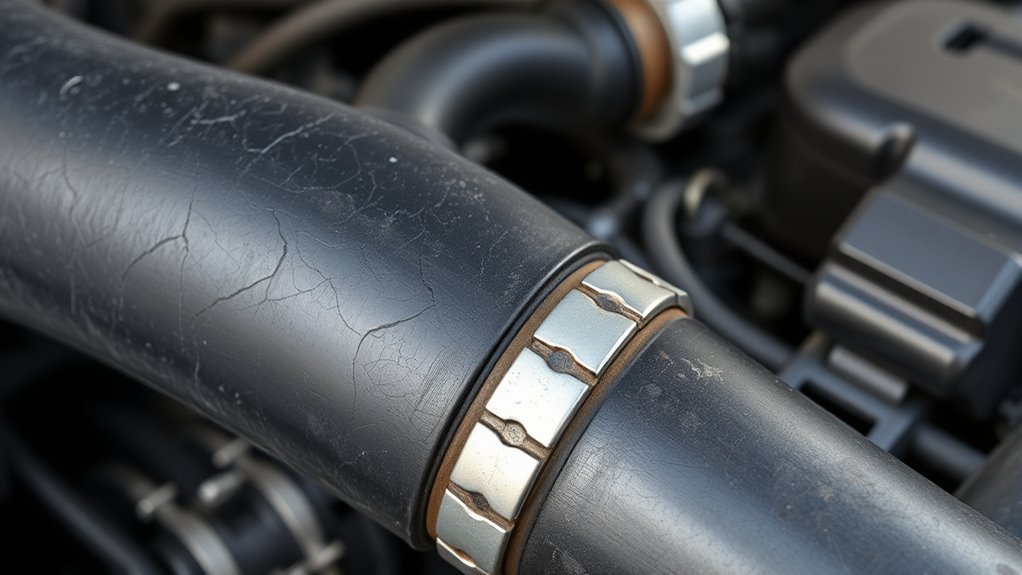
Start with a visual inspection. The upper radiator hose is usually easier to see near the top of the engine bay, while the lower hose may require a flashlight and a careful look from the front or underside of the vehicle. You are looking for changes in the rubber, the hose shape, and the hose connections.
| What You See or Feel | What It Usually Means | What To Do |
|---|---|---|
| Surface cracks, splits, or dry rot | Aging rubber has lost flexibility | Replace the hose |
| Bulges or swelling | Internal weakening, heat damage, or oil contamination | Replace the hose and check for oil leaks |
| Soft, mushy, or spongy feel | Internal hose deterioration | Replace soon; do not wait for a leak |
| Rock-hard or glossy hose cover | Heat-aged rubber | Plan replacement, especially if cracking is present |
| White, pink, green, or rusty crust near clamps | Slow coolant seepage | Inspect clamp and hose end; replace damaged parts |
| Collapsed, kinked, or rubbed hose | Restricted coolant flow or abrasion damage | Correct routing or replace the hose |
These checks align with common coolant hose failure patterns described by Gates coolant hose failure guidance, including leakage at clamps, heat damage, soft/mushy hose ends, swelling, and oil contamination.
Safety First: Before You Touch a Radiator Hose
Warning: Never remove the radiator cap or coolant reservoir cap while the engine is hot. The cooling system can be pressurized, and hot coolant or steam can spray out and cause serious burns. Let the engine cool completely before inspecting hoses or adding coolant.
Park the Camry on level ground, turn the engine off, set the parking brake, and wait until the engine bay is cool to the touch. Wear gloves if possible, because old coolant residue, oil, and road grime can irritate skin.
If you find a puddle, keep children and pets away. Many antifreeze products contain ethylene glycol, which can be dangerous if swallowed. Clean spills promptly and dispose of used coolant according to your local hazardous-waste rules. The National Capital Poison Center warns not to pour antifreeze onto the ground or into storm drains.
How to Test a Camry Radiator Hose: Squeeze, Bend, Inspect
Once the engine is cool, inspect both the upper and lower radiator hoses. A good hose should feel firm but flexible. It should not feel brittle, mushy, hollow, crunchy, or uneven from one section to the next.
[Products Worth Considering]

This spill-proof radiator coolant filling funnel kit helps you refill cooling systems cleanly while reducing trapped air pockets that can affect heater and engine performance. It includes a 5-inch extension bar and 45-degree elbow for easier access under shrouds or at awkward angles. Color-matched caps for dedicated adapters make setup simpler and more organized.

This upgraded Dorman OE FIX oil filter housing replaces failure-prone plastic on select Chrysler, Dodge, Jeep, and Ram vehicles with a durable aluminum design. It includes the oil cooler, filter element, cap, and required gaskets to help deliver a complete repair and updated fitment. Engineered for reliable sealing and long-term leak resistance, it is designed to help solve recurring oil filter housing failures.

Castrol GTX Full Synthetic 5W-30 motor oil is designed to deliver maximum engine protection in severe driving conditions. It helps fight wear, control sludge, and resist viscosity breakdown while supporting longer intervals between oil changes. Formulated to meet or exceed key industry and vehicle manufacturer specifications, it offers dependable performance for modern engines.
Step 1: Look Over the Entire Hose
Use a flashlight and follow the hose from one end to the other. Look for cracks, splits, swollen areas, rubbing marks, cuts, oil stains, coolant residue, and areas where the hose touches a sharp edge, belt, pulley, fan shroud, or hot exhaust component.
Pay close attention to the last two inches near each connector. Hose ends often show problems first because clamps, heat cycling, and chemical exposure stress those areas.
Step 2: Squeeze for Firmness
Squeeze along the hose with moderate hand pressure. Compare the ends with the middle. If one section feels much softer, mushier, or weaker than the rest, the hose may be breaking down internally. If it feels rock-hard and no longer flexes, the rubber may be heat-aged.
Do not use pliers or sharp tools for a basic inspection. You want to feel the hose, not crush or cut it.
Step 3: Bend and Twist Gently
Bend the hose lightly where you can access it. Small hidden cracks often open when the rubber flexes. Listen and feel for crunching, cracking, or uneven folding. If the hose folds flat, kinks easily, or makes a crunchy sound, replace it.
Step 4: Check the Clamps and Connections
Look around each clamp for dampness, dried coolant, rust-colored residue, or a sweet antifreeze smell. A loose or corroded clamp can leak, but an aged hose end may keep leaking even after a clamp is tightened. Do not overtighten clamps on plastic radiator necks or fittings; you can crack the connection.
Pro Tip: If one radiator hose is clearly old, inspect the other hoses too, including heater hoses and bypass hoses. Cooling-system rubber parts often age together because they live in the same hot engine bay.
Hidden Signs: Coolant Loss, Crust, and Temperature Warnings
Not every aging Camry radiator hose fails with a dramatic split. Some hoses seep slowly, leak only when hot, or fail internally before the outside looks terrible.
Unexplained Coolant Drops
If the coolant level keeps dropping after you top it off, suspect a leak somewhere in the cooling system. Check the radiator hoses, hose ends, coolant reservoir, radiator, radiator cap area, water pump area, and the ground under the car.
Use only the coolant recommended for your specific Camry model year. Toyota’s official parts information says to check the coolant reservoir and use the coolant recommended in the vehicle owner’s manual; Toyota also lists Toyota Super Long Life Coolant as a Toyota Genuine coolant. Confirm the exact coolant requirement in your Toyota Camry owner’s manual for your year and engine.
Crust Around Connections
Crust around a hose connection usually means coolant seeped out and dried. Depending on the coolant and the surrounding dirt or corrosion, the residue may look pink, white, green, orange, or rusty. Do not ignore it just because the area is dry when you inspect it. A hose can leak only under pressure, then dry after the engine cools.
Warning Light, Rising Gauge, or Overheating
A low coolant warning, rising temperature gauge, steam, or overheating warning is more urgent than a normal driveway inspection. Pull over safely, shut the engine off, and let the car cool. Driving an overheating Camry can turn a hose problem into a radiator, head gasket, or engine problem.
Note: A bad radiator hose is only one possible cause of coolant loss or overheating. A radiator, water pump, thermostat, cap, heater hose, reservoir, or head gasket issue can create similar symptoms.
Why Camry Radiator Hoses Fail: Heat, Oil, Age, Pressure, and Clamps
Radiator hoses live in a harsh place. They carry hot coolant, expand and contract with pressure, sit near hot engine parts, and deal with vibration every time the engine runs. Over time, that environment breaks down rubber.
The most common failure causes include:
- Heat cycling: Repeated heating and cooling can harden, crack, or weaken the hose cover.
- Oil contamination: Oil can soften and swell hose material. If you see oil on a radiator hose, replace the damaged hose and fix the oil source.
- Age: Rubber can deteriorate even on a low-mileage car because time, heat, ozone, and coolant chemistry still affect it.
- Clamp problems: Loose, rusted, weak, or incorrectly positioned clamps can cause seepage at the hose ends.
- Rubbing or kinking: A hose that rubs against a sharp edge or sits kinked can fail early or restrict coolant flow.
- Internal deterioration: Some hose damage starts inside and shows up as soft spots, weak ends, or a crunchy feel.
Dayco hose guidance notes that hoses handle heat, pressure, and chemicals and recommends following OE specifications for replacement intervals. That is why condition matters as much as age.
Immediate Steps and When to Call a Mechanic
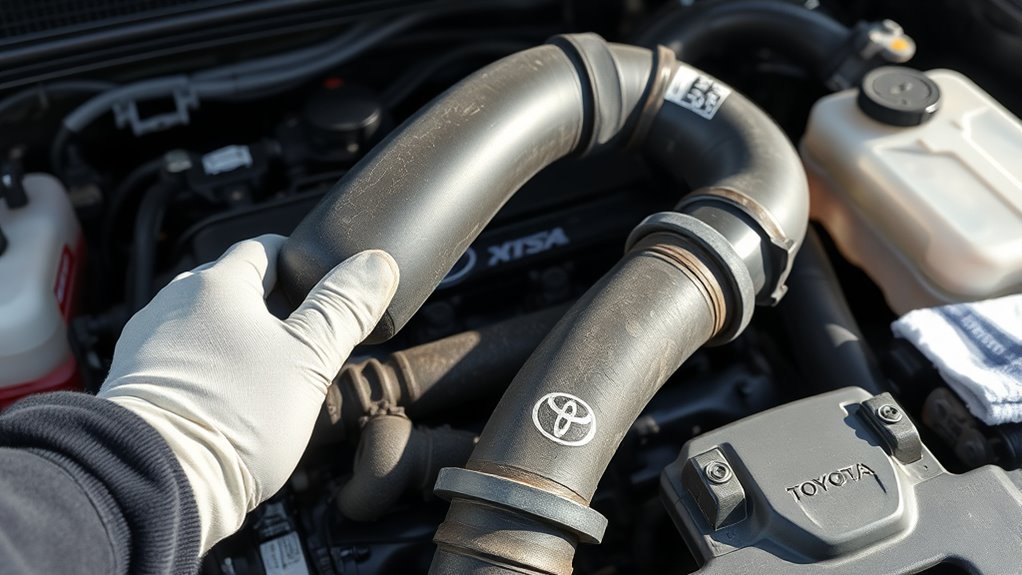
If you see active coolant dripping, steam, a burst hose, or a temperature warning, stop driving as soon as it is safe. Shut the engine off and let it cool completely. Do not open the coolant cap while hot, and do not pour cold coolant into a very hot engine.
Call a mechanic or tow the vehicle if:
- The Camry overheated or the temperature warning came on.
- Coolant is actively leaking or spraying.
- The hose is split, collapsed, swollen, or oil-soaked.
- The leak source is unclear.
- The coolant level drops again shortly after topping off.
- You are not comfortable draining coolant, replacing clamps, bleeding air, or pressure-testing the system.
If the hose only has mild surface aging and no leaks, you may have time to schedule service. But if the hose is cracked, bulging, spongy, crunchy, or wet with coolant, replacement should not wait.
Replace or Monitor? Radiator Hose Decision Guide
| Condition | Risk Level | Best Action |
|---|---|---|
| Clean, firm, flexible hose with no cracks or residue | Low | Recheck at each oil change |
| Minor surface aging but no seepage, swelling, or soft spots | Moderate | Plan replacement and inspect more often |
| Cracks, bulges, soft spots, crunching, or oil contamination | High | Replace the hose |
| Coolant crust or dampness near a clamp | High | Inspect clamp and hose end; replace worn parts |
| Active leak, steam, split hose, or overheating | Severe | Stop driving and get repair help |
[Products Worth Considering]

Castrol EDGE 0W-20 advanced full synthetic motor oil is engineered for drivers seeking strong wear protection, excellent viscosity control, and thermal stability. It delivers superior performance in critical engine areas, including fuel economy, high-temperature protection, sludge control, and wear defense. Designed for extended oil-change intervals, it helps keep modern engines running smoothly under demanding conditions.

This 12V relay box provides six organized relay slots and six fuse positions, helping you build cleaner, safer electrical setups for vehicles and marine systems. Pre-wired, color-coded 12 AWG wiring simplifies installation while the sealed cover and gasket help protect against dust and splashing water in demanding environments. It is a versatile solution for controlling lights, pumps, motors, and other accessories in automotive, truck, RV, or boat applications.

Fit for Toyota Camry 2002 2003 2004 2005 2006; Fit for Solara 4cyl Radiator 2004 2005 2006 2007 2008; Replace 16571-28080, 16572-28080, 165710H020,165720H020
Replacement Options & Maintenance Tips for Longer Life
When it is time to replace a Camry radiator hose, choose an OEM Toyota hose or a quality aftermarket hose made for your exact year, engine, and position. The upper and lower radiator hoses are not always interchangeable, and molded hose shape matters for clearance and flow.
Good replacement habits include:
- Replace weak clamps: A new hose with a rusty or tired clamp can still leak.
- Use the correct coolant: Check your Camry owner’s manual before mixing coolant types.
- Drain coolant safely: Catch used coolant in a closed container and recycle or dispose of it properly.
- Seat the hose fully: Push the hose onto the fitting until it reaches the proper stop or bead.
- Position clamps correctly: Place clamps behind the bead or raised fitting area, not on the very edge.
- Bleed air if required: Air pockets can cause overheating after cooling-system service.
- Pressure-test after repair: A pressure test helps confirm the leak is fixed before normal driving.
A radiator hose that looks “mostly fine” can still be close to failure if it feels mushy near the ends, shows dried coolant at the clamps, or has swelling from heat or oil exposure.
As a general guideline, many aftermarket hose makers and parts retailers discuss replacement planning around the four-to-five-year range, but your Camry’s condition, climate, mileage, coolant service history, and Toyota’s model-specific guidance matter more than a single fixed age. Replace immediately when defects appear.
Frequently Asked Questions
How do I know when to replace my Camry radiator hose?
Replace it when you see cracks, splits, bulges, swelling, coolant leaks, dried coolant around the clamps, oil contamination, or a collapsed section. Also replace it if the hose feels soft, mushy, crunchy, unusually hard, or uneven when the engine is completely cool.
Can I drive with a cracked radiator hose?
You should avoid driving with a cracked radiator hose. A small crack can open quickly under heat and pressure, causing coolant loss and overheating. If coolant is leaking, the temperature gauge rises, or steam appears, pull over safely and shut the engine off.
Should a radiator hose feel hard or soft?
When the engine is cool, a healthy radiator hose should feel firm but flexible. A hose that feels mushy, spongy, hollow, crunchy, or rock-hard may be deteriorating. When the engine is hot, pressure can make hoses feel firmer, so do not use hot-hose feel as your main inspection method.
What does dried coolant around the hose clamp mean?
Dried coolant around a clamp usually means slow seepage. The cause may be a loose clamp, a corroded clamp, a damaged hose end, or a fitting problem. Clean the area, inspect it after driving, and replace worn parts if residue or dampness returns.
Do Camry radiator hoses need replacement every 4–5 years?
Four to five years is a common planning guideline for many coolant hoses, but it is not a universal rule for every Camry. Follow your Toyota maintenance information, inspect hoses regularly, and replace sooner if you see cracks, leaks, bulges, swelling, soft spots, or oil damage.
Conclusion
An aging Camry radiator hose usually warns you before it fails. Cracks, bulges, swelling, soft spots, coolant crust, clamp seepage, oil contamination, a sweet coolant smell, repeated coolant loss, or a temperature warning all deserve attention. Inspect the hoses when the engine is cool, use the correct coolant, and replace damaged hoses before they burst. A simple inspection can prevent overheating, roadside trouble, and expensive cooling-system damage.
Sources
- Toyota Manuals and Warranties — model-year owner’s manual and maintenance reference for Toyota Camry owners
- Toyota Super Long Life Coolant — Toyota Genuine coolant information and owner’s-manual coolant reminder
- Gates TechZone: Hose Failure Symptoms — coolant hose failure signs, leakage, heat damage, and oil contamination
- Dayco Hoses — hose replacement guidance and OE-spec reminder
- National Capital Poison Center: Antifreeze Safety — antifreeze poison prevention, spill cleanup, and disposal guidance