
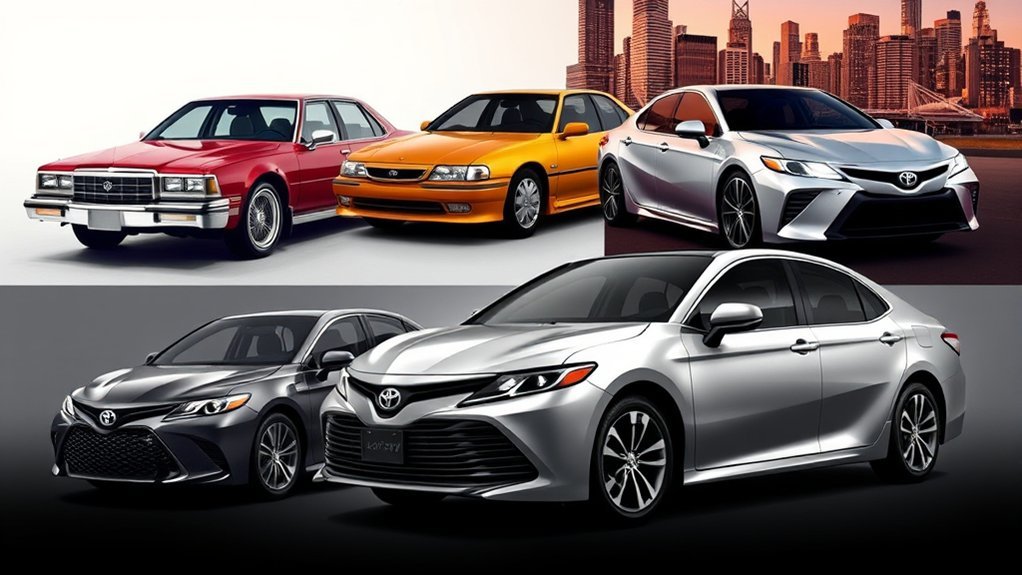
The Toyota Camry has lasted because it keeps changing without losing the traits buyers expect: easy daily driving, strong reliability, practical space, and improving efficiency. From its early compact roots to the current hybrid-only lineup, the Camry’s evolution shows how Toyota adapted one sedan through changing fuel prices, safety rules, design trends, and the market’s shift toward electrified vehicles.
Quick Answer
The Toyota Camry evolved from a compact front-wheel-drive sedan in the early 1980s into one of America’s best-known midsize family cars. Its biggest milestones include the wider 1992 redesign, the first Camry Hybrid for 2007, the sportier TNGA-based 2018 model, and the 2025 switch to an all-hybrid lineup.
Key Takeaways
- The Camry began as a compact Toyota model in 1982 globally and reached the U.S. market for the 1983 model year.
- The 1992 redesign helped move the Camry firmly into the midsize family-sedan class.
- The 2007 Camry Hybrid marked a major efficiency milestone and set up the model’s long-term hybrid direction.
- The 2018 Camry adopted Toyota’s TNGA platform, giving it sharper styling, better handling, and a more modern cabin.
- For 2025 and 2026, the U.S.-market Camry is hybrid-only, with available all-wheel drive and up to an EPA-rated 51 mpg combined in the most efficient LE front-wheel-drive configuration.
The Origins of the Toyota Camry
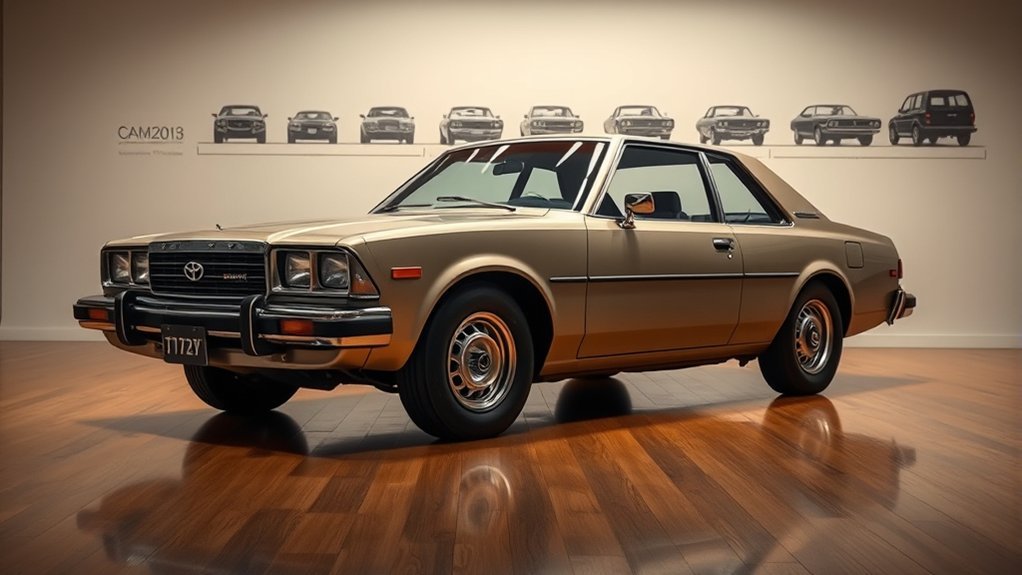
The Camry story starts before the standalone Camry became a household name. Toyota’s official global vehicle gallery lists a Celica Camry in 1980 and a separate Camry line beginning in 1982, showing how the name moved from a related sedan into its own long-running model family. In the United States, the first front-wheel-drive Camry arrived for the 1983 model year as a compact sedan and liftback.
The name “Camry” is commonly tied to the Japanese word kanmuri, meaning “crown,” which fits Toyota’s long tradition of crown-related model names such as Crown, Corona, and Corolla. More important than the name, though, was the formula: front-wheel drive, good interior space for its size, efficient four-cylinder engines, and Toyota’s growing reputation for durability.
The early Camry was not yet the dominant midsize sedan people know today. It was a practical compact car competing in a market still adjusting to fuel-economy concerns, changing buyer expectations, and the rise of Japanese brands in North America. That practical foundation became the model’s strongest long-term advantage.
Note: Camry generation counts can differ by market. Toyota’s global timeline includes the Celica Camry and Japan-market generations, while U.S. shoppers usually count the 1983 front-wheel-drive Camry as the first U.S. generation.
Key Design Features Through the Generations
The Camry’s design changed most when Toyota needed it to match the expectations of family-sedan buyers. Early models were boxy, efficient, and simple. Later generations grew wider, quieter, more aerodynamic, and more upscale.
1983–1986: Compact, Boxy, and Practical
The first U.S. Camry used a straightforward 1980s shape with upright glass, clean body lines, and sedan or liftback body styles. Its design focused on visibility, usable space, and fuel economy rather than sportiness.
1987–1991: More Streamlined and More Refined
The second-generation Camry became smoother and more aerodynamic. Toyota also added wagon availability in this era, giving families more cargo flexibility. The introduction of a V6 option helped the Camry compete with larger, more powerful sedans.
1992–1996: The Big Move to Midsize
The 1992 redesign was one of the Camry’s most important turning points. The car became wider, smoother, and more comfortable, helping it move from compact-car roots into the midsize category. This generation also included a short-lived coupe body style.
1997–2001: Conservative, Comfortable, and Built for Volume
The fourth U.S. generation leaned into what buyers wanted most: comfort, quietness, reliability, and low-stress ownership. Its styling was conservative, but that restraint helped it appeal to a broad audience. The Camry Solara coupe and convertible also gave Toyota a sportier two-door offshoot.
2002–2017: More Space, More Technology, and Broader Appeal
Through the fifth, sixth, and seventh U.S. generations, the Camry gained more interior space, stronger engines, better crash protection, and more convenience features. The 2007 model added the first Camry Hybrid, while later models brought larger screens, improved infotainment, and more standard safety equipment.
2018–2024: Sharper Styling on the TNGA Platform
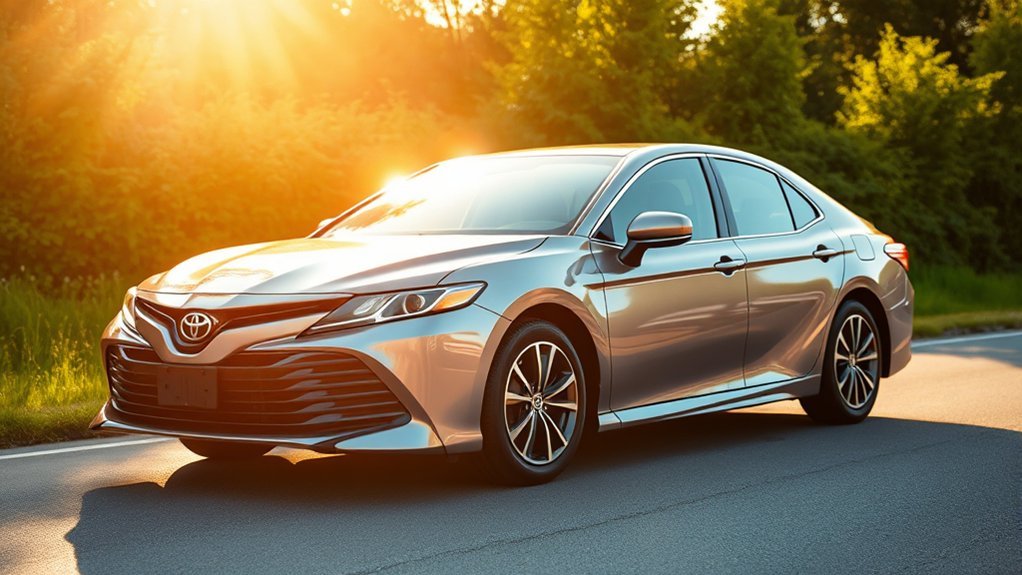
The 2018 redesign gave the Camry a lower, wider stance and a more expressive look. Built on Toyota’s TNGA architecture, it felt more planted than earlier versions and offered more personality through trims such as SE, XSE, and TRD.
2025–Present: Hybrid-Only and More Modern
The current U.S. Camry generation moved fully to hybrid power. Toyota’s 2025 Camry announcement confirmed the fifth-generation Toyota Hybrid System, front-wheel drive or available Electronic On-Demand All-Wheel Drive, and a more modern interior with available larger displays and updated driver-assistance technology.
Major Generational Changes and Their Impact
The Camry’s biggest changes were not just styling updates. They changed who the car appealed to and how it competed in the sedan market.
| Era | Major Change | Why It Mattered |
|---|---|---|
| 1983 U.S. debut | Front-wheel-drive compact sedan and liftback | Established the Camry as a practical, efficient Toyota family car. |
| 1987 redesign | Smoother styling, wagon body, available V6 | Made the Camry feel more refined and competitive against larger sedans. |
| 1992 redesign | Wider midsize body | Helped define the Camry as a mainstream midsize family sedan. |
| 2007 model year | First Camry Hybrid | Expanded the Camry’s appeal to fuel-conscious buyers. |
| 2018 redesign | TNGA platform and sportier styling | Improved handling and helped fight the Camry’s “boring sedan” reputation. |
| 2025 redesign | Hybrid-only U.S. lineup | Aligned the Camry with modern efficiency demands while keeping sedan practicality. |
Each change solved a different problem. The early Camry needed to prove Toyota could build a front-wheel-drive family car for global markets. The 1990s Camry needed to satisfy American midsize-sedan buyers. The 2007 hybrid needed to answer fuel-economy concerns. The current hybrid-only Camry responds to today’s mix of emissions pressure, fuel savings, and buyer demand for more efficient daily transportation.
Engine Innovations: Performance Milestones of the Toyota Camry
The Camry’s engine history shows Toyota balancing three goals: enough power for family driving, strong fuel economy, and long-term dependability. It started with efficient four-cylinder engines, added V6 power as the car grew, and eventually moved toward hybrid systems as efficiency became more important.
Engine Variants Over Generations
| Generation / Era | Notable Engine Direction | Impact |
|---|---|---|
| Early 1980s | Four-cylinder gasoline and diesel choices in some markets | Focused on economy and simple daily use. |
| Late 1980s | Available V6 in North America | Gave the Camry stronger performance and broader appeal. |
| 1990s | 2.2-liter four-cylinder and 3.0-liter V6 became familiar choices | Balanced durability, comfort, and highway power. |
| 2007 model year | Hybrid model joins the lineup | Made the Camry a serious option for buyers who wanted a midsize sedan with better fuel economy. |
| 2018–2024 | Four-cylinder, V6, and hybrid options | Let buyers choose efficiency, power, or a mix of both. |
| 2025–2026 | Hybrid-only 2.5-liter-based system | Simplified the lineup and made hybrid efficiency standard. |
Performance Enhancements Timeline
In the early years, the Camry’s performance was modest but appropriate for an efficient family car. As the sedan grew, Toyota added more power through V6 engines. The 2007-era 3.5-liter V6 made the Camry surprisingly quick for a mainstream midsize sedan, while the 2018 generation sharpened the driving feel with a stiffer platform and more responsive suspension tuning.
The biggest modern shift is that Toyota no longer treats the hybrid as a niche version. For 2025 and 2026, the Camry uses a hybrid system as standard equipment in the U.S. Toyota lists 225 net combined horsepower for front-wheel-drive models and up to 232 net combined horsepower for all-wheel-drive models. That means the modern Camry’s efficiency focus no longer comes with the slow, compromised feel many early hybrid skeptics expected.
The current Camry’s biggest engineering shift is not simply better mpg; it is the decision to make hybrid power the standard Camry powertrain rather than a separate eco-focused option.
The Evolution of Safety Features Over Time
Safety is one of the clearest ways to see the Camry’s progress. Early models relied on basic structure, seat belts, and simple braking systems. Over time, the Camry gained airbags, anti-lock brakes, stability control, stronger crash structures, backup cameras, and advanced driver-assistance systems.
Modern Camry models include Toyota Safety Sense technology, which bundles driver-assistance features such as pre-collision assistance, lane-related alerts, adaptive cruise control, and other support systems depending on model year and trim. Toyota’s 2025 Camry materials list Toyota Safety Sense 3.0 as standard, along with Blind Spot Monitor with Rear Cross-Traffic Alert and Safe Exit Alert.
Independent safety testing also supports the Camry’s reputation. The Insurance Institute for Highway Safety lists the 2025–2026 Toyota Camry as a Top Safety Pick+ in the midsize car category. That does not make the car crash-proof, but it does show that the latest Camry performs strongly under IIHS’s current test criteria.
Warning: Driver-assistance systems are not a replacement for attentive driving. Toyota’s own owner materials caution that systems such as Toyota Safety Sense have recognition and control limits, so drivers should not over-rely on them.
[Products Worth Considering]

ECOGARD XA5786 is a premium engine air filter designed to help protect your engine by trapping dust, dirt, pollen, and road particles before they enter the intake system. It supports smooth airflow for consistent engine response and fuel efficiency, and it is intended for regular replacement to help maintain reliable performance and engine longevity.

KAX CA12377 engine air filter is designed as a replacement for select Toyota and Lexus vehicles, helping deliver cleaner airflow to the engine for smoother operation and maintained performance. Its resin-impregnated fiber paper media and 3-layer composite construction are engineered to meet or exceed OE air filter requirements with low resistance and high efficiency. Built for dependable fit and recommended periodic replacement, it supports long-term engine protection across a wide range of compatible models.

This dual filter kit helps keep your vehicle running and riding cleaner by replacing both the engine air filter and cabin air filter at the same time. It is designed for a range of Toyota and Lexus hybrid models, helping support engine performance while reducing odors and airborne particles inside the cabin. Built with high-quality filtration materials, it offers a convenient maintenance solution for routine filter replacement.
Market Strategies That Made the Toyota Camry a Best-Seller
The Camry became a best-seller because Toyota understood the center of the family-sedan market. Instead of chasing one extreme, the Camry aimed for the middle: roomy enough for families, efficient enough for commuters, comfortable enough for long drives, and reliable enough for owners who wanted low drama.
Several strategies helped the Camry succeed:
- Clear positioning: It sat above the Corolla for buyers who needed more space but below larger or more premium Toyota sedans.
- U.S. production: Toyota Kentucky began building Camrys in the late 1980s, helping Toyota serve American demand more directly.
- Conservative trust-building: Toyota usually avoided risky redesigns that might alienate loyal buyers.
- Broad trim range: Buyers could choose basic commuter trims, comfort-focused trims, sportier SE/XSE versions, and later hybrid options.
- Strong resale reputation: The Camry’s reliability image helped make it attractive both new and used.
The Camry first became America’s best-selling passenger car in 1997, according to Car and Driver’s historical sales roundup. Toyota later described the Camry as dominating the U.S. best-selling sedan category for 22 years, showing how long the model remained a benchmark even as SUVs and pickups took over more of the overall market.
The Shift to Hybrid Technology: Meeting Modern Demands
The Camry Hybrid arrived for the 2007 model year, giving Toyota a fuel-efficient midsize sedan at a time when gas prices and emissions concerns were becoming bigger buying factors. That first hybrid was important because it brought Toyota’s hybrid knowledge into a mainstream family car, not just a smaller dedicated hybrid like the Prius.
For years, Toyota offered the Camry with a mix of four-cylinder, V6, and hybrid powertrains. That changed with the 2025 U.S. Camry. Toyota moved the lineup to an exclusively hybrid setup using a 2.5-liter four-cylinder-based Toyota Hybrid System. Front-wheel drive is standard, and Electronic On-Demand All-Wheel Drive is available.
The EPA lists the most efficient 2025 Camry configuration, the HEV front-wheel-drive LE, at 51 mpg combined, 53 mpg city, and 50 mpg highway. Other trims trade some fuel economy for larger wheels, sportier tuning, or all-wheel drive, but the key point remains: every new Camry in the current U.S. lineup is built around hybrid efficiency.
Pro Tip: When comparing modern Camry trims, look beyond the headline “up to 51 mpg combined” number. Wheel size, trim, and all-wheel drive can lower the EPA rating, so check the exact configuration before buying.
[Products Worth Considering]

This replacement fuel gas cap is designed to fit a wide range of Toyota and Lexus vehicles, making it a practical solution for a lost, worn, or damaged original cap. It helps restore a secure fuel tank seal and supports proper vehicle operation while offering broad compatibility across many popular model years. The package includes one gas cap, and buyers should confirm fitment before ordering.

This oil filter housing cap assembly is designed as a direct replacement for a wide range of Toyota and Lexus vehicles, helping restore a secure seal for proper oil filtration. It is made for easy installation and tested for compatibility with multiple part numbers and model years. The package includes the cap, plug, and gasket for a complete replacement solution.

Size- Gven Car front window shades are L 63" x 33.5" W. Fits for most full-size sedan& SUV, mid-size SUV,Sports cars, wagon and mid-size pickup truck. Please check porduct page image 3&4 to choose the right size for your car.
Sales Milestones and Market Reception
The Camry’s market reception has been unusually consistent. It grew from a practical imported compact into a default recommendation for families, commuters, company fleets, and used-car shoppers.
One major production milestone came in July 2021, when Toyota Kentucky produced its 10 millionth Camry. That milestone referred specifically to Camry production at Toyota’s Kentucky plant, not total global Camry production, but it still shows how central the model has been to Toyota’s U.S. manufacturing story.
On the sales side, the Camry’s peak years came when midsize sedans were still dominant family vehicles. It became America’s best-selling passenger car for the first time in 1997, then built a long run of annual sales leadership in the car category through the 2000s and 2010s. Even as crossovers reduced sedan demand, the Camry remained one of the strongest-selling passenger cars in the United States.
Current Trends and Future Outlook for the Toyota Camry
The current Camry reflects three major trends: electrification, safety technology, and sedan survival in an SUV-heavy market. Toyota has not turned the Camry into a plug-in hybrid or full EV for the U.S. market, but it has made hybrid power standard. That move fits Toyota’s broader strategy of using hybrids to cut fuel use without requiring owners to charge.
For 2026, Toyota’s U.S. newsroom highlights the Nightshade Edition as a new design-focused addition built from the SE grade. Mechanically, the bigger story remains the same: the Camry continues as a hybrid-only sedan with available all-wheel drive and up to 232 net combined horsepower on AWD models.
The Camry’s future will depend on how long buyers continue to support midsize sedans. SUVs now dominate family-vehicle shopping, but the Camry still has advantages: lower ride height, strong fuel economy, comfortable road manners, and a lower starting price than many comparable crossovers. If Toyota keeps improving the hybrid system, cabin technology, and active safety features, the Camry can remain relevant even in a shrinking sedan segment.
What’s Under the Hood? Engine Innovations Over the Years
Under the hood, the Camry’s evolution can be summed up in three phases. First came efficient four-cylinder engines that helped Toyota build trust with economy-minded buyers. Then came V6 engines that gave the Camry stronger highway performance and a more premium feel. Now the Camry has entered its hybrid-first phase, where electric assistance improves fuel economy and drivability without requiring plug-in charging.
The current hybrid system is the most important powertrain change in the Camry’s recent history. It combines a 2.5-liter four-cylinder engine with electric motors, and all-wheel-drive versions add a rear electric motor for extra traction when needed. This setup helps the Camry stay efficient while still offering enough power for daily commuting, highway merging, and family travel.
That is the key to the Camry’s long-term success: Toyota rarely changes the car just for novelty. Most changes answer a real buyer need, whether that need is more space, more safety, better mpg, stronger acceleration, or a more modern cabin.
Best and Worst Camry Years to Know
No Camry generation is perfect, and condition matters more than model year when shopping used. Still, some eras stand out for different reasons.
[Products Worth Considering]

O.D.(outside diameter): 24 mm / 0.94 inch , I.D.(inside diameter): 18 mm / 0.71 inch , Thickness: 2 mm / 0.08 inch

【Replacement OE Part Number】Our Engine Oil Drain Plug Gasket Replace for 90012300930 90012307130 90012310630 9043018008 977751 9777517 995641800 K995641800 MD000312.Include 1995 1996 1997 1998 1999 2000 2001 2002 2003 2004 2005 2006 2007 2008 2009 2011 2012 2013 2014 2015 2016 2017 2018 L4 2.6L 1.6L 1.4L 2.0L 1.5L 1.8L L5 2.3L 2.4L 2.5L 1.9L L6 3.0L 2.9L 3.2L V8 4.4L VEHICLES | | Please Double Check The Year Make Model To Make Sure What You Need Before Ordering Thank You!

📨【Pre-Purchase Notes】 Please confirm the fitment of your vehicle's year, model, radiator size and radiator type by using the owner's manual or actual measurements. Double check with the applicable model information and Amazon Fitment provided by us to confirm that there is no error before placing your order to avoid not being able to use it after purchase.
Often-Liked Camry Eras
- 1997–2001: Known for simple design, comfort, and long-term durability.
- 2002–2006: Spacious and comfortable, with a strong reputation among used-car shoppers.
- 2012–2017: A practical balance of modern safety, good fuel economy, and familiar Toyota dependability.
- 2018–2024: Better handling, sharper styling, available V6 power, and stronger tech features.
- 2025–2026: Best choice for buyers who want standard hybrid efficiency and current safety tech.
Years to Inspect Carefully
Some 2007–2009 Camry models are often discussed by owners and used-car shoppers because of oil-consumption complaints, and any older Camry can have age-related suspension, engine, transmission, or rust issues depending on maintenance and climate. A pre-purchase inspection is more useful than relying only on a “good year” or “bad year” list.
Note: For used Camrys, service history matters. A well-maintained “average” year is usually a better buy than a neglected example from a highly recommended year.
Frequently Asked Questions
What are the different generations of the Toyota Camry?
In the U.S., Camry generations usually begin with the 1983–1986 front-wheel-drive model, followed by major redesigns for 1987, 1992, 1997, 2002, 2007, 2012, 2018, and 2025. Toyota’s global generation timeline differs because it includes the Celica Camry and Japan-market models.
Are there any Camry years to avoid?
Some shoppers inspect 2007–2009 models especially carefully because of commonly reported oil-consumption concerns. However, no used Camry should be judged by year alone. Maintenance records, mileage, accident history, rust, and a mechanical inspection matter more than internet reputation.
Which Camry years are considered the best?
Many used-car shoppers like the 1997–2001, 2002–2006, 2012–2017, and 2018–2024 Camry generations for their mix of reliability, comfort, and value. The 2025–2026 Camry is best for buyers who want standard hybrid power, modern safety technology, and the latest interior features.
How has the Camry changed over the years?
The Camry changed from a compact, boxy, fuel-efficient sedan into a wider midsize family car with stronger engines, better crash protection, more comfort, and more technology. Its latest major change is the move to a hybrid-only U.S. lineup beginning with the 2025 model year.
Is the Toyota Camry still available with a V6?
Not in the current U.S. lineup. The 2025 and 2026 Camry models use hybrid powertrains as standard. Earlier 2018–2024 models were available with a 3.5-liter V6 on select trims.
What mpg does the latest Toyota Camry get?
The most efficient 2025 Camry listed by the EPA is the HEV front-wheel-drive LE at 51 mpg combined, 53 mpg city, and 50 mpg highway. Ratings vary by trim and drivetrain, so sportier trims and all-wheel-drive versions may return lower numbers.
Conclusion
The Toyota Camry’s legacy is not built on one dramatic reinvention. It is built on steady, useful improvement. Toyota made the Camry larger when families needed more room, more powerful when buyers expected stronger highway performance, safer as crash standards and driver-assistance technology improved, and more efficient as hybrid demand grew.
Today’s hybrid-only Camry is the clearest sign of where the model is going. It keeps the comfort and practicality that made the Camry famous, but it now makes fuel-saving technology standard instead of optional. That balance is why the Camry remains one of the most important midsize sedans even in an SUV-dominated market.
Sources
- Toyota Motor Corporation Global Camry Vehicle Gallery — backs up the official global Camry timeline.
- Toyota USA Newsroom: 2025 Camry Goes Exclusively Hybrid — backs up the 2025 hybrid-only lineup, horsepower, AWD, and standard safety-feature claims.
- FuelEconomy.gov: 2025 Toyota Camry Fuel Economy — backs up EPA mpg ratings by trim and drivetrain.
- IIHS 2025 Top Safety Picks: Toyota — backs up the 2025–2026 Camry Top Safety Pick+ reference.
- Toyota USA Newsroom: 10 Millionth Camry at Toyota Kentucky — backs up the July 2021 Toyota Kentucky production milestone.
- Toyota USA Newsroom: 2026 Toyota Camry — backs up the latest 2026 Camry updates, including the Nightshade Edition.


[…] may notice rough idle, high or erratic idle, oil leaks, oil-cap hissing, smoke, sludge, or rising oil consumption. Inspect the valve, hose, and grommet first, then replace any suspect part with a VIN-correct PCV […]