
The P0300 code in a Toyota Camry means the engine computer has detected random or multiple-cylinder misfires. In plain terms, one or more cylinders are not burning the air-fuel mixture correctly, but the computer is not pointing to just one cylinder. The fix can be as simple as worn spark plugs, but it can also involve fuel delivery, vacuum leaks, sensor data, or engine compression, so diagnosis matters.
Quick Answer
A Toyota Camry P0300 code means random or multiple-cylinder misfire detected. Start by scanning all codes and saving freeze-frame data, then check spark plugs, ignition coils, intake leaks, fuel delivery, and compression. If the check engine light is flashing, stop driving safely and arrange diagnosis or towing.
Key Takeaways
- P0300 is a random/multiple misfire code, not a direct “replace this part” command.
- A flashing check engine light means the misfire may be severe enough to damage the catalytic converter.
- The most efficient diagnosis starts with all stored codes, freeze-frame data, and a basic inspection before replacing parts.
- Common Camry P0300 causes include worn spark plugs, weak ignition coils, vacuum leaks, low fuel pressure, dirty injectors, timing/sensor faults, and low compression.
- Use the maintenance schedule for your exact Camry year and engine because service intervals and engine layouts vary.
At a Glance
| Time Required | 30–90 minutes for basic checks; longer if fuel-pressure, smoke, compression, or leak-down testing is needed |
| Difficulty | Beginner for scanning and visual checks; intermediate to advanced for fuel, electrical, and compression tests |
| Tools Needed | OBD-II scanner with live data, basic hand tools, spark plug socket, multimeter, flashlight, vacuum/smoke tester, fuel-pressure tester, compression tester |
| Cost | Varies by cause: inspection may cost little if you own tools; repairs can range from maintenance parts to professional fuel, timing, or internal-engine work |
What P0300 Means on a Toyota Camry
P0300 stands for random or multiple-cylinder misfire detected. Unlike a code such as P0301, P0302, P0303, or P0304, which points toward a specific cylinder number, P0300 tells you the misfire pattern is not isolated clearly enough to one cylinder. On some V6 Camry engines, you may also see cylinder-specific codes up to P0306.
Your Camry’s onboard diagnostic system monitors emission-related powertrain faults, stores diagnostic trouble codes, and turns on the malfunction indicator light when a fault is detected. A misfire can raise emissions, waste fuel, overheat the catalytic converter, and make the car run rough. That is why the right response is to diagnose the cause instead of clearing the code and hoping it stays gone.
Exact repair steps can vary by model year, engine, and hybrid/non-hybrid setup. Use your owner’s manual, maintenance guide, or factory repair information for torque specs, plug type, coil layout, and fuel-pressure procedures.
Common Symptoms of P0300 Misfires
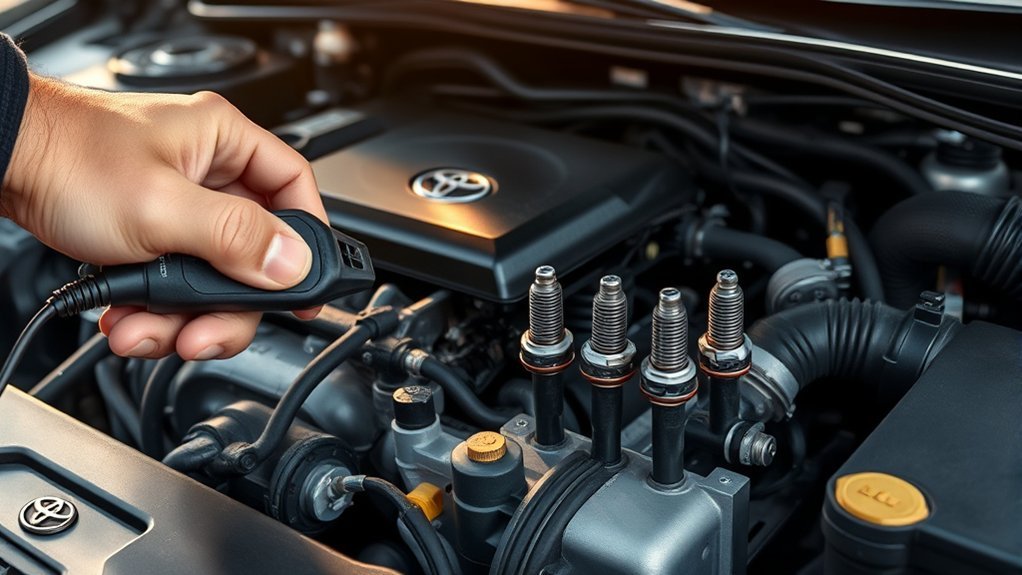
When your Toyota Camry triggers the P0300 code, the symptoms may be mild at first or obvious right away. Watch for these signs:
- Check engine light on or flashing: A steady light means a fault has been stored. A flashing light means the misfire may be active and severe.
- Rough idle: The engine may shake, stumble, or feel uneven at stoplights.
- Loss of power: The Camry may feel sluggish, especially when merging or climbing hills.
- Hesitation on acceleration: The engine may stumble when you press the accelerator.
- Vibration under load: Misfires often feel worse during acceleration than while cruising.
- Hard starting or stalling: A fuel, air, or ignition problem can make the engine harder to start or keep running.
- Fuel smell or poor fuel economy: Unburned fuel from a misfire can waste gas and stress the exhaust system.
Warning: If the check engine light is flashing, reduce speed, avoid hard acceleration, pull over safely, and shut the engine off when it is safe to do so. Continuing to drive with an active severe misfire can damage the catalytic converter and may leave you stranded.
Can You Drive With a P0300 Code?
It depends on how the Camry is running and whether the check engine light is steady or flashing.
| Situation | What It Usually Means | Best Action |
|---|---|---|
| Steady check engine light, mild or no symptoms | Stored misfire fault or intermittent misfire | Drive gently only if necessary and diagnose soon. |
| Steady light with rough running, shaking, or low power | Active misfire may still be present | Limit driving and schedule repair immediately. |
| Flashing check engine light | Potential catalyst-damaging misfire | Stop safely and arrange towing or professional help. |
Do not ignore a P0300 code because the misfire can get worse, cause poor drivability, and lead to more expensive exhaust or engine repairs.
Common Causes of P0300 Misfires in Toyota Camrys
Understanding the common causes of P0300 misfires in your Toyota Camry helps you diagnose the problem without replacing good parts. Think of the engine as needing four basics: spark, fuel, air, and compression at the right time.
| Possible Cause | Common Clues | How to Check |
|---|---|---|
| Worn spark plugs | Rough idle, hesitation, high mileage, overdue maintenance | Inspect plug gap, deposits, cracks, oil fouling, and service history. |
| Weak ignition coils or coil boots | Misfire worsens under load, coil-related cylinder codes may appear | Inspect for carbon tracking, damaged boots, moisture, and connector issues. |
| Vacuum or intake leak | Lean codes such as P0171/P0174, high fuel trims, rough idle | Check hoses, intake tube, PCV hose, brake-booster hose, and intake gasket area. |
| Fuel delivery problem | Hard start, lack of power, misfire at higher rpm or load | Check fuel pressure, fuel trims, injector operation, and fuel quality. |
| Dirty or clogged injectors | Uneven idle, long-term fuel-trim changes, misfire after sitting | Use scan data, injector balance testing, or professional cleaning/testing. |
| MAF, crankshaft, camshaft, or oxygen sensor issues | Companion sensor codes, bad live-data readings, timing correlation codes | Compare live data to specifications and inspect wiring/connectors. |
| Low compression or valve-train problem | Persistent misfire, uneven cranking, oil/coolant symptoms, no improvement after ignition checks | Perform compression, leak-down, or cylinder power-balance testing. |
Note: P0300 often appears with other codes. Companion codes such as P0171, P0174, P0101, P0301–P0306, P0335, or P0340 can narrow the diagnosis. Always read all codes before clearing anything.
Tools and Safety Before Diagnosis
Before you begin, gather the right tools and work safely. A basic code reader can show P0300, but a scanner with freeze-frame and live data is much more useful because it shows what was happening when the fault set.
- OBD-II scanner with freeze-frame and live-data capability
- Basic socket set and spark plug socket
- Flashlight and inspection mirror
- Multimeter for basic electrical checks
- Vacuum gauge or smoke tester for intake leaks
- Fuel-pressure tester compatible with your Camry’s system
- Compression tester or leak-down tester for mechanical checks
- Repair information for your exact model year and engine
Warning: Work on a cool engine when possible, keep hands and tools away from belts and fans, relieve fuel pressure before opening fuel lines, and use eye protection. On Camry Hybrid models, do not touch orange high-voltage cables, the service plug, inverter components, or the hybrid battery system unless you are trained and equipped to do so.
Diagnosing P0300 Code Issues
Diagnosing the P0300 code in your Toyota Camry requires a systematic approach. The goal is to find the cause of the misfire, not just clear the light.
- Scan all codes: Record P0300 and every companion code. Save freeze-frame data before clearing anything.
- Check when the misfire happens: Note whether it appears at idle, cold start, highway speed, acceleration, or under load.
- Inspect the basics: Look for loose connectors, cracked intake hoses, disconnected vacuum lines, low oil, coolant loss, damaged coil connectors, and obvious wiring damage.
- Check ignition components: Inspect spark plugs, ignition coils, coil boots, and plug wells for oil or moisture.
- Check intake air and vacuum leaks: Review fuel trims and inspect the intake tube, PCV hose, brake-booster hose, and intake manifold area.
- Check fuel delivery: Verify fuel pressure, injector operation, and fuel quality if the ignition and intake checks do not reveal the problem.
- Check sensor and timing data: Review MAF, oxygen sensor, crankshaft, camshaft, and timing-related codes or live data.
- Check mechanical health: If the misfire remains, perform compression and leak-down testing to rule out valves, rings, head gasket, or timing-chain issues.
Pro Tip: Do not start with a parts cannon. If a scan tool shows misfire counts favoring one cylinder, inspect that cylinder first. If misfires are spread across all cylinders, look harder at shared causes such as air leaks, fuel pressure, fuel quality, MAF data, or timing.
[Products Worth Considering]

The ANCEL AD410 PRO combines engine diagnostics and 12V battery testing in one easy-to-use tool, helping you read and clear check engine codes while checking battery health, cranking, and charging performance. It also provides live data, freeze frame details, and I/M readiness checks to help you diagnose issues faster and prepare for emissions testing. With plug-and-play operation, a clear screen, and broad vehicle compatibility, it is a practical solution for home mechanics and everyday drivers.

The VIOFO A229 Plus delivers sharp 2K front and rear recording with dual Sony STARVIS 2 sensors for improved night clarity, reduced noise, and better motion handling. HDR support helps preserve license plate detail and balanced exposure in challenging light, while voice control, quad-mode GPS, and fast 5GHz Wi-Fi make daily use simple. With multiple parking modes and a user-friendly interface, it is built to protect your vehicle on the road and while parked.

These adjustable oil filter pliers are designed to help remove engine filters, conduit, and fittings with better reach and control in tight spaces. The bent head design improves access, while soft nonslip grips add leverage and comfort during use. Built with high carbon steel and a Permalock fastener, they offer dependable strength and long-lasting performance.
Step-by-Step Guide to Fixing P0300 Problems
To effectively tackle P0300 code issues in your Toyota Camry, work through the repair path in order. This keeps the diagnosis focused and helps avoid replacing parts that are still good.
[Products Worth Considering]

The Fluke 15B+ Digital Multimeter is a rugged, easy-to-use tool designed for accurate electrical troubleshooting in residential, commercial, automotive, and equipment applications. It measures AC/DC voltage and current, resistance, continuity, diode, and capacitance, helping you diagnose problems quickly and confidently. With a safety-focused design and one-handed operation, it is built for dependable everyday use.
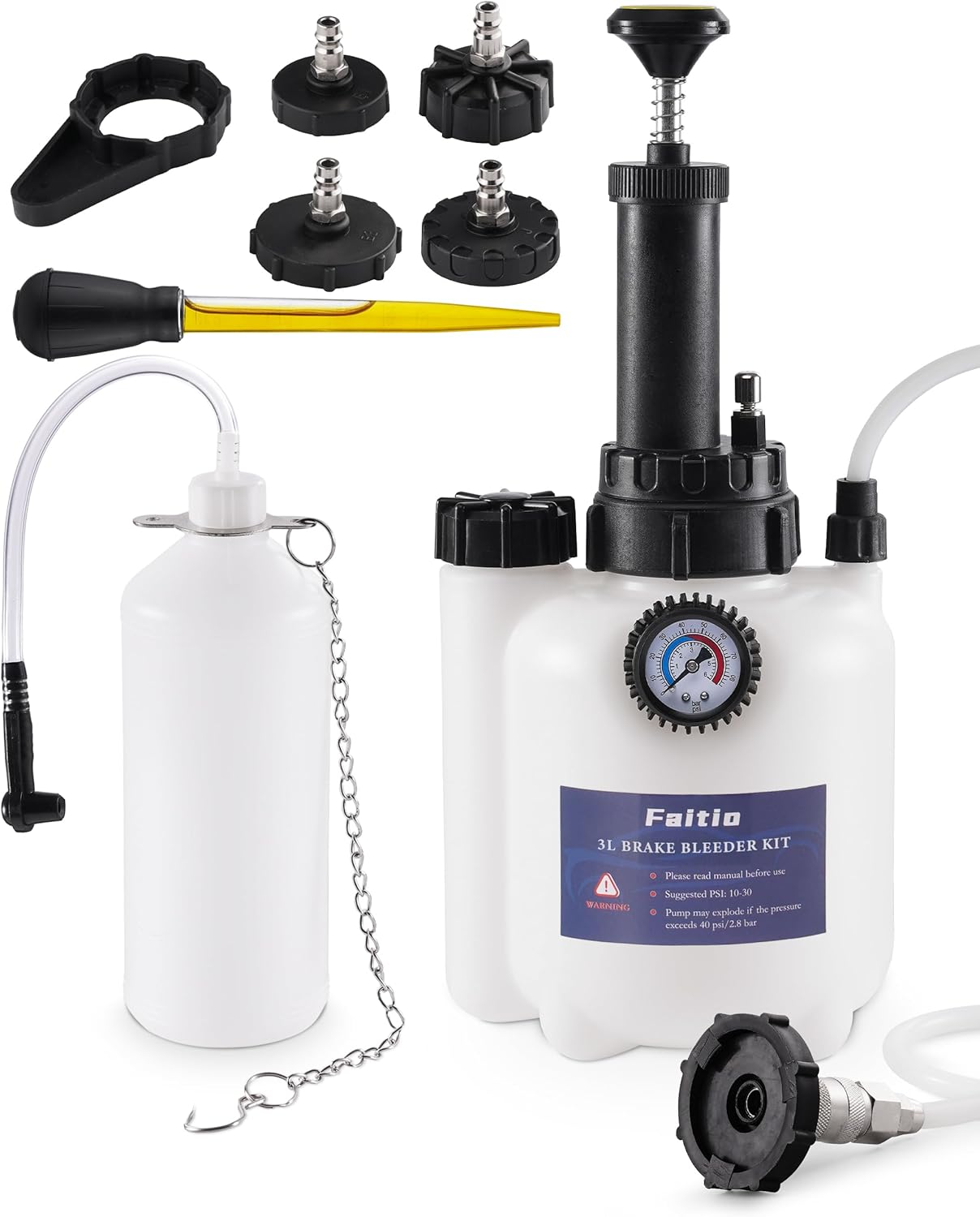
This one-man brake bleeding kit helps flush old brake fluid and remove trapped air for firmer, more responsive braking without the hassle of a second person. Its improved sealing and translucent catch bottle help prevent leaks while making fluid level checks easy during use. With multiple adapter sizes for many vehicle makes, it is a practical tool for clean, efficient brake system maintenance.

CEL Doctor: The ANCEL AD310 is one of the best-selling OBD II scanners on the market and is recommended by Scotty Kilmer, a YouTuber and auto mechanic. It can easily determine the cause of the check engine light coming on. After repairing the vehicle's problems, it can quickly read and clear diagnostic trouble codes of emission system, read live data & hard memory data, view freeze frame, I/M monitor readiness and collect vehicle information
Step 1: Save Codes and Freeze-Frame Data
Use a diagnostic scanner to record all stored, pending, and permanent codes. Save freeze-frame data such as engine rpm, coolant temperature, vehicle speed, fuel trims, and load. This tells you whether the misfire happened cold, hot, at idle, or under acceleration.
Step 2: Check for Obvious Maintenance and Connection Problems
Inspect the engine bay for loose electrical connectors, cracked vacuum hoses, damaged intake tubing, oil in spark plug wells, rodent damage, and signs of coolant or oil leaks. If maintenance is overdue, note it before testing deeper.
Step 3: Inspect Spark Plugs and Ignition Coils
Remove and inspect the spark plugs if access is reasonable. Look for worn electrodes, excessive gap, cracked porcelain, carbon tracking, oil fouling, or coolant contamination. Toyota maintenance guidance says spark plugs should be replaced at specified intervals and with the same type originally equipped, and a qualified technician should perform the operation when needed.
Inspect ignition coils and boots for cracks, burn marks, oil contamination, or moisture. If a companion cylinder code is present, a coil-swap test can help confirm whether a coil fault follows the coil to another cylinder. Avoid swapping parts randomly without tracking results.
Step 4: Check Air Leaks and Fuel Trims
A vacuum leak can create a lean mixture and trigger random misfires. Check the intake tube after the mass airflow sensor, the PCV hose, brake-booster hose, vacuum lines, and intake manifold gasket area. If your scanner shows high positive fuel trims, the engine may be adding fuel to compensate for unmetered air or low fuel delivery.
Step 5: Check Fuel Delivery
If ignition and air checks look good, verify the fuel system. Low fuel pressure, a weak pump, restricted filter or strainer, poor fuel quality, or clogged injectors can all create random misfires. Use the correct Toyota procedure for your model year because fuel-system layouts vary.
Step 6: Review Sensor and Timing Data
Bad or misleading sensor data can cause the engine computer to command the wrong fuel or timing strategy. Check for MAF, crankshaft position, camshaft position, oxygen sensor, or timing correlation codes. Inspect wiring and connectors before replacing sensors.
Step 7: Test Compression if the Misfire Stays
If the misfire continues after ignition, air, fuel, and sensor checks, test engine mechanical condition. Low compression, leaking valves, a head-gasket problem, timing-chain wear, or valve-train issues can cause a P0300 that will not be fixed with plugs or coils.
After the Repair: Clear the Code and Confirm the Fix
Once the cause has been repaired, clear the fault codes with your scanner and test drive the Camry under the same conditions shown in the freeze-frame data. Monitor misfire counters, fuel trims, and the check engine light. The repair is not confirmed until the engine runs smoothly and the misfire monitor does not reset the code.
If the check engine light returns quickly, rescan the car instead of repeating the same repair. A returning P0300 means either the root cause remains or there is more than one problem.
Tips for Successful Repairs and Preventing Future Misfires
Once you have addressed the P0300 code issues in your Toyota Camry, ongoing maintenance helps reduce the chance of repeat misfires.
- Follow the Toyota maintenance schedule: Toyota recommends scheduled maintenance by mileage or time, whichever comes first. Check the guide for your exact Camry year.
- Use the correct spark plugs: Install the same type originally equipped or the exact approved replacement. Incorrect plugs can cause poor ignition performance.
- Fix oil or coolant leaks early: Oil in plug wells or coolant entering a cylinder can ruin ignition parts and create repeat misfires.
- Keep the intake system sealed: Replace cracked intake boots, brittle hoses, and damaged PCV hoses.
- Use quality fuel from a busy station: Contaminated or stale fuel can create rough running and misfire symptoms.
- Do not ignore small drivability changes: A slight stumble, rough cold start, or intermittent light can become a larger repair if left alone.
The best P0300 repair is not the fastest part replacement. It is the test that proves whether the engine is missing spark, fuel, air control, compression, or correct timing.
When to Call a Mechanic
DIY checks are reasonable if you are scanning codes, inspecting hoses, or checking spark plugs on an accessible engine. Call a qualified technician if the check engine light flashes, the engine shakes badly, fuel-pressure testing is needed, compression is low, timing codes are present, or the Camry is a hybrid and the repair could involve high-voltage areas.
A professional scan tool can also view Mode $06 misfire data, fuel trims, and manufacturer-specific information that many basic code readers cannot show.
[Products Worth Considering]

Multi-Functions - Practical Multi-Functions OBD2 code reader features built-in OBD2 DTC lookup library, which help you to determine the cause of the engine light, read code, erase code, view freeze frame, I/M ready, vehicle information, data flow, real-time curve, get vehicle speed information, calculate load value, engine coolant temperature, get engine speed.

[Easy to Use—Work Out of the Box] + [FOXWELL 2026 New Version] FOXWELL NT604 Elite scan tool is the 2026 new version from FOXWELL, designed for car owners who want to figure out the cause of issues before fixing car problems by scanning common systems like ABS, SRS, engine, and transmission. The NT604 Elite obd2 scanner diagnostic tool comes with the latest software—no need to waste time downloading software first. Plug the scanner into the OBDII port with OBDII cable to start the diagnosis.

SUBSCRIPTION REQUIRED for Advanced Features: The Carista EVO Scanner activates basic OBD2 features upon purchase. To access advanced diagnostics, service tools, live data parameters, and vehicle customization, a paid subscription to the Carista App is required. Choose between 1-month, or 12-month plan to access Carista Advanced features.
Frequently Asked Questions
How long can you drive with a P0300 code?
You should not drive long with a P0300 code. If the check engine light is flashing, stop safely and arrange towing or immediate diagnosis. If the light is steady and the car runs normally, drive gently only as needed and repair it soon.
Can bad spark plugs cause P0300 on a Toyota Camry?
Yes. Worn, fouled, cracked, or incorrect spark plugs can cause random misfires. However, P0300 can also come from ignition coils, vacuum leaks, fuel delivery problems, sensor data issues, or low compression, so inspect before replacing parts.
Is P0300 the same as P0301?
No. P0300 means random or multiple-cylinder misfires. P0301 points to cylinder 1 specifically. Cylinder-specific codes can make diagnosis easier because they help you focus on one cylinder first.
Will clearing the P0300 code fix the problem?
No. Clearing the code only turns off the warning temporarily and erases useful diagnostic data. If the misfire cause is still present, the code will return after the engine computer detects the fault again.
Can a vacuum leak cause a random misfire?
Yes. A vacuum or intake leak can let unmetered air enter the engine, creating a lean mixture. That can cause rough idle, hesitation, high fuel trims, lean codes, and P0300 misfires.
Conclusion
Dealing with the P0300 code in your Toyota Camry can feel frustrating because it does not name one failed part. The code means the engine has random or multiple-cylinder misfires, so the best repair starts with scan data, visual checks, ignition inspection, air and fuel testing, and mechanical checks when needed. Do not ignore a flashing check engine light, and do not clear codes before saving the diagnostic information. With a careful step-by-step process and regular maintenance, you can fix the root cause and reduce the chance of future misfires.
Sources
- Toyota Owners Manuals and Warranties — official Toyota location for model-specific manuals and warranty/maintenance guides.
- 2025 Toyota Camry Warranty & Maintenance Guide — maintenance schedule, spark plug service notes, and hybrid safety cautions.
- eCFR 40 CFR § 86.1806-17 Onboard diagnostics — OBD system requirements for detecting malfunctions, storing codes, and alerting operators.
- California Air Resources Board OBD II Regulation Order — OBD II monitoring, MIL, and fault-code requirements for applicable vehicles.
- Toyota Support: Technical Service Bulletins — explains Toyota TSBs and how they can update service procedures.
- CarParts.com P0300 Code Guide — ASE-reviewed overview of P0300 meaning, symptoms, causes, and diagnostic considerations.



[…] and freeze-frame data before clearing them. If you have a code such as P0300, compare it with a Camry-specific diagnostic guide as well as Toyota service […]