UTQG treadwear grades can help Toyota Camry owners compare tire durability, but they are not mileage promises. The safest way to use the number is to read it with the tire’s traction grade, temperature grade, warranty, exact Camry tire size, and your maintenance habits.
Quick Answer
For a Toyota Camry, a good UTQG treadwear grade is usually in the 500–800 range for daily driving, but the number is only a relative wear rating. Check the exact tire sidewall, tire warranty, load index, speed rating, and Toyota door placard before choosing a tire.
Key Takeaways
- UTQG stands for Uniform Tire Quality Grading and covers treadwear, traction, and temperature resistance.
- A higher treadwear number usually suggests slower wear, but it does not guarantee a specific number of miles.
- Use UTQG mainly to compare similar tires, preferably within the same brand or tire category.
- For a Camry, comfort-focused touring and all-season tires often make more sense than very low-treadwear performance tires.
- The best tire is the one that matches your Camry’s tire size, load index, speed rating, climate, driving style, and warranty needs.
At a Glance
| Time Required | 10–15 minutes to check the sidewall, door placard, warranty, and product specs |
| Difficulty | Easy |
| Tools Needed | Flashlight, tire pressure gauge, tread-depth gauge or penny, and your Camry’s tire information label |
| Cost | Free to inspect; replacement tire cost varies by size, brand, and warranty |
What Camry Owners Need to Know About UTQG Treadwear

UTQG is a tire comparison system used in the United States for many passenger-car tires. It appears as a three-part label such as TREADWEAR 600 TRACTION A TEMPERATURE A. The first number is the treadwear grade, while the two letters describe wet braking traction and heat resistance.
For Camry owners, the treadwear number is useful because the Camry is usually a daily-driver sedan. Many owners care more about quiet ride, wet grip, fuel economy, and long service life than maximum cornering grip. A tire with a higher treadwear grade can be a good fit for commuting, highway driving, and family use, as long as it also matches your Camry’s required tire size, load index, and speed rating.
Note: UTQG is not the same as a treadwear warranty. A warranty is the tire maker’s written mileage promise under specific conditions. A UTQG grade is a relative comparison number.
How UTQG Treadwear Ratings Are Measured
The federal Uniform Tire Quality Grading standard sets the framework for how passenger-car tire grades are assigned. Treadwear is tested on a government-specified road course near San Angelo, Texas. The procedure includes an 800-mile break-in and about 6,400 miles of measured convoy driving after break-in.
The grade compares the candidate tire’s projected wear rate with the government’s reference system. In simple terms, a higher treadwear number means the tire should take longer to wear down under the test conditions. However, that does not mean a 600 tire is guaranteed to last 60,000 miles or an 800 tire is guaranteed to last 80,000 miles.
Use the treadwear grade as a comparison tool, not as an odometer prediction.
Real Camry tire life depends on inflation pressure, rotation schedule, alignment, driving style, road surface, climate, load, and tire compound. A high-treadwear tire can still wear quickly if it is underinflated, overloaded, misaligned, or driven aggressively.
How UTQG Numbers Translate to Real-World Miles on a Camry
It is tempting to read a UTQG number as a mileage estimate, but that is not how the system is designed. A 600-rated tire should generally wear more slowly than a 400-rated tire in the same category and test context, but real-world mileage can vary widely.
| UTQG Treadwear Range | What It Usually Suggests | Best Camry Use Case |
|---|---|---|
| 300–400 | More emphasis on grip or sporty response; faster wear is possible | Sportier driving, performance trims, or drivers who prioritize handling |
| 500–700 | Balanced tread life, comfort, and everyday traction | Most daily-driven Camrys |
| 700+ | Long-life touring focus, often paired with longer mileage warranties | High-mileage commuting and highway use |
A mileage warranty is often more practical than the UTQG number when you are comparing tires. For example, some long-life touring tires carry 70,000- or 80,000-mile limited treadwear warranties, but the warranty usually requires proper rotation, inflation, alignment, proof of maintenance, and even wear across the tire set.
Common UTQG Numbers for Camry OE and Aftermarket Tires
Toyota Camry original equipment tires vary by model year, trim, wheel size, and supplier. That means there is no single “Camry UTQG number.” Some factory tires prioritize comfort, efficiency, or cost; replacement tires may prioritize longer life, quiet ride, wet grip, or sportier response.
[Products Worth Considering]

This universal wheel alignment tool helps you perform precise toe alignment at home with professional-grade accuracy and easy DIY operation. Its no-caliper-removal design simplifies setup, while the heavy-duty stainless steel construction and compact detachable form make it durable, stable, and easy to store. It is suitable for a wide range of vehicles, including cars, trucks, SUVs, ATVs, and UTVs.

This wheel alignment tool makes it easy to check and adjust toe-in and toe-out at home for better handling, stability, and more even tire wear. Designed for one-person use, it includes tape-measure slots for simple setup and accurate measurements without extra help. Its stainless steel construction and broad vehicle compatibility make it a practical addition to any DIY garage.

This DIY toe alignment tool kit helps home mechanics quickly check and adjust front-end toe after suspension, steering, or tire service. Stainless steel toe plates and dual tape measures provide a simple, reliable reference for reducing uneven tire wear and improving straight-line tracking without needing a full alignment machine.
Camry OE Treadwear Ranges
Many OE-style all-season tires fitted to family sedans fall around the middle of the UTQG range, but the only number that matters is the one printed on your actual tire sidewall or listed in the tire’s specification sheet. If your Camry came with a sport-oriented trim or larger wheels, its tire may trade some tread life for sharper handling.
- Look at the sidewall: Search for wording like “TREADWEAR 500 TRACTION A TEMPERATURE A.”
- Check all four tires: Previous owners may have mixed tire lines or replaced only two tires.
- Compare the warranty: A high UTQG number with a weak or short warranty is less useful than it looks.
- Match your exact fitment: Size, load index, and speed rating matter as much as treadwear.
Common Aftermarket Ratings
Aftermarket Camry tires often span a wider range because you can choose between budget all-season, grand touring, performance all-season, all-weather, and winter tires. A comfort-focused touring tire may have a higher treadwear number, while a performance tire may have a lower number but better steering feel.
Use this simple rule: for most Camry drivers, start with a touring or grand-touring all-season tire with strong wet traction, a clear mileage warranty, and a treadwear grade that fits your driving style.
How to Find the UTQG Grade on Your Camry’s Tire Sidewall and Specs
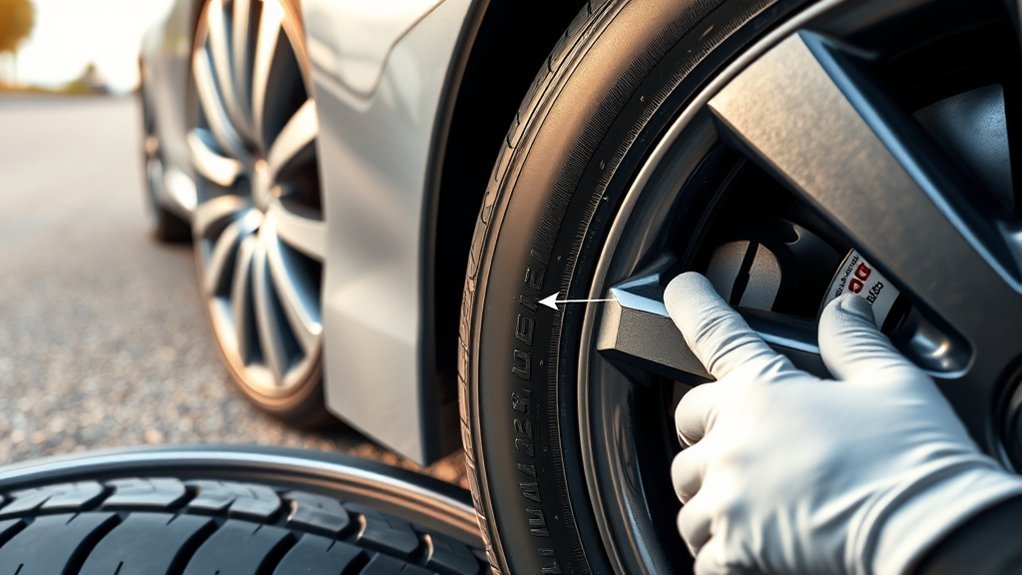
To find the UTQG grade, inspect the outer sidewall near the shoulder of the tire. The label may be molded into the rubber and can be easier to see with a flashlight. It usually appears in this order:
TREADWEAR 600 TRACTION A TEMPERATURE A
- Treadwear: A number, usually two or three digits, that compares relative wear rate.
- Traction: AA, A, B, or C. This measures wet straight-line braking traction under controlled conditions.
- Temperature: A, B, or C. This measures heat resistance under controlled conditions.
For tire size and cold tire pressure, use your Camry’s tire and loading information label, usually on the driver-side door jamb, and confirm details in the Toyota owner’s manual tire inflation section. Do not use the maximum pressure molded on the tire sidewall as your normal inflation target.
Pro Tip: Before buying, search the exact tire size, such as 215/55R17 or 235/45R18, plus the tire model name. UTQG, warranty, and availability can vary by size.
What UTQG Does Not Tell You
UTQG is helpful, but it leaves out several things Camry owners care about. A tire with a strong treadwear grade can still be noisy, weak in snow, slow to stop in the rain, or uncomfortable over rough pavement.
| UTQG Does Not Measure | Why It Matters for a Camry |
|---|---|
| Snow and ice traction | All-season tires are not the same as true winter tires or severe-snow-rated all-weather tires. |
| Hydroplaning resistance | Wet braking grade does not fully predict how the tire handles standing water. |
| Cornering grip | The traction grade is based on straight-ahead braking, not sporty handling. |
| Road noise and comfort | Two tires with similar UTQG numbers can feel very different on the highway. |
| Fuel economy | Rolling resistance is separate from UTQG and can affect hybrid Camry efficiency. |
Because of those limits, always combine UTQG with independent tests, owner reviews, treadwear warranty terms, and your local climate.
Why Camry Treadwear Varies: Driving, Alignment, Load, and Environment
The same tire can last very different lengths of time on two different Camrys. Smooth highway driving is easier on tires than stop-and-go traffic, potholes, heat, gravel, hard braking, or frequent high-speed cornering.
Driving Style Effects
Aggressive acceleration, hard braking, and fast cornering create heat and scrub the tread blocks against the road. That can shorten tire life even when the UTQG rating is high. A smoother driving style helps the tread wear evenly and keeps the tire closer to its expected performance.
- Accelerate and brake gradually when possible.
- Avoid hitting curbs and potholes.
- Slow down before sharp turns instead of braking hard mid-corner.
- Do not ignore vibration, pulling, or cupping; those can point to tire, balance, or alignment problems.
Alignment And Load
Wheel alignment has a major effect on treadwear. Too much toe, camber problems, worn suspension parts, or bent wheels can wear one edge of the tire long before the center tread is worn out. Heavy cargo can also increase heat and wear, especially when tire pressure is low.
Warning: Underinflation, overloading, and excessive speed can cause heat buildup and tire failure. Check cold tire pressure at least monthly, and replace tires when tread reaches 2/32 inch or when damage, cracking, bulges, or uneven wear appears.
When Camry Owners Should Choose Lower vs Higher UTQG Tires
Choose a higher UTQG treadwear grade when you want fewer replacements, predictable commuting comfort, and a stronger mileage warranty. Choose a lower UTQG tire only when you are intentionally prioritizing steering response, dry grip, or sporty handling over tread life.
- Choose higher UTQG: daily commuting, highway driving, rideshare work, long road trips, and low-maintenance ownership.
- Choose moderate UTQG: balanced all-season use with good wet traction and comfort.
- Choose lower UTQG: sportier driving, performance-focused tires, or warm-weather grip where faster wear is acceptable.
- Do not choose by treadwear alone: a high number is not useful if the tire has weak wet traction, poor reviews, or the wrong load/speed rating.
If you live where winter roads are common, also look beyond UTQG. Dedicated winter tires and some severe-snow-rated all-weather tires may not be judged the same way as standard all-season tires, and snow performance is not captured by the UTQG traction grade.
[Products Worth Considering]
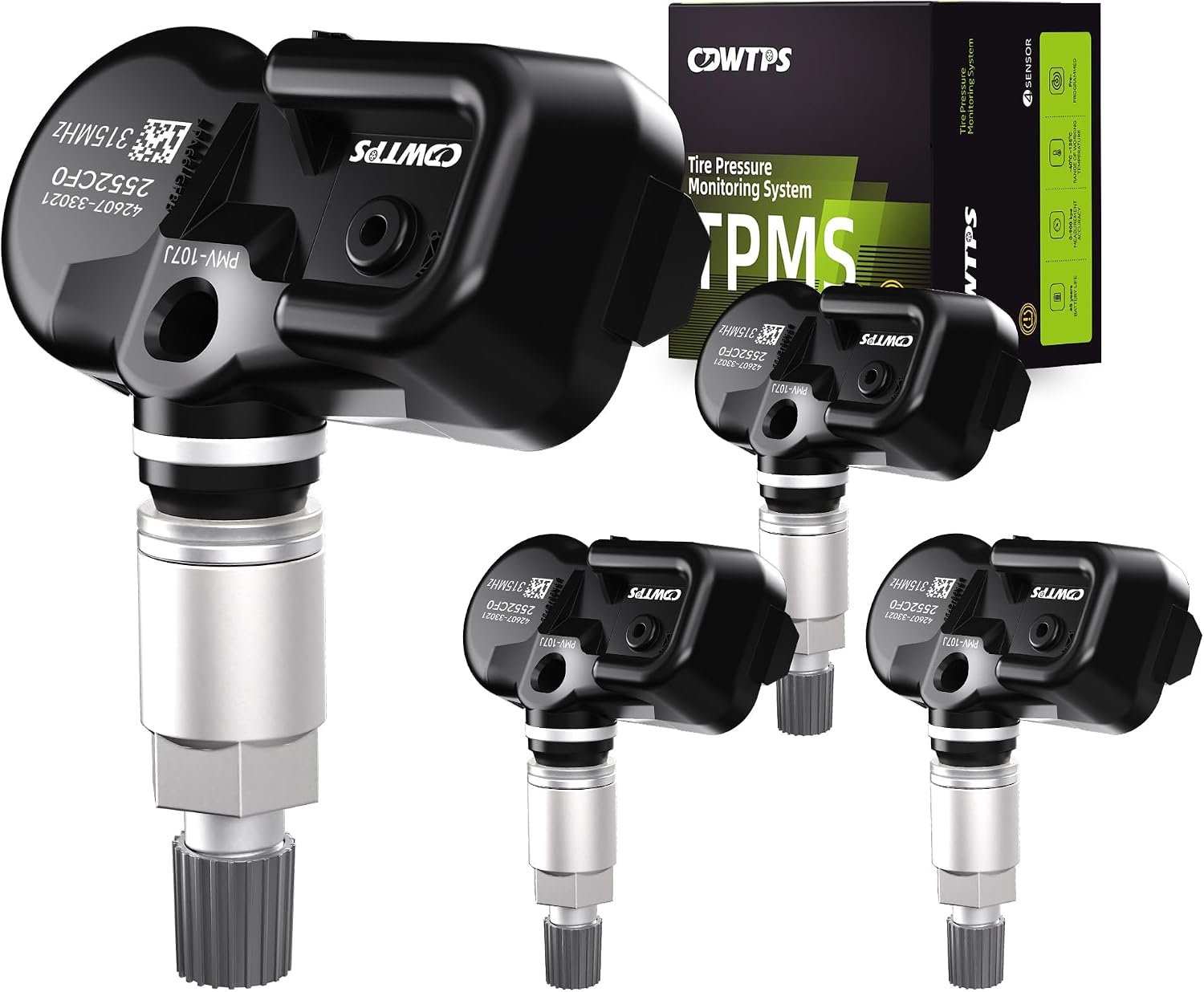
This set of four pre-programmed TPMS sensors is designed as a direct-fit replacement for compatible Toyota, Lexus, and Scion vehicles. It helps restore accurate tire pressure monitoring without sensor programming, and each unit is factory-tested for dependable performance. Built for long service life, these sensors offer a convenient solution for replacing worn or failed tire pressure monitors.
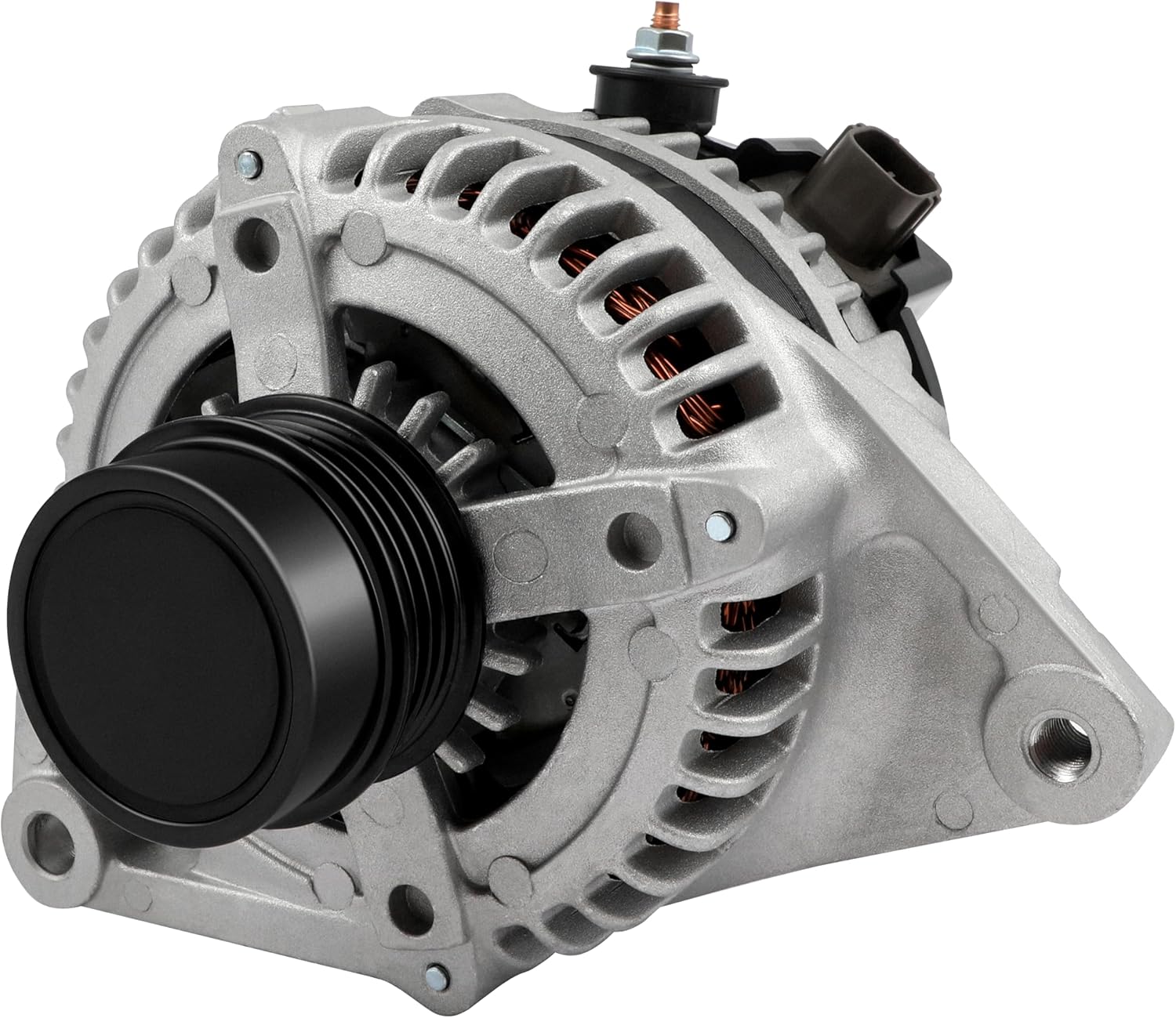
This high output alternator is designed to fit select Toyota, Scion, and RAV4 2.5L applications, delivering reliable charging performance for everyday driving. Built with a 12-volt, 100-amp design and precision-engineered components, it helps support battery recharge, stable electrical output, and consistent operation when your vehicle shows signs of charging issues.

This coolant electric water pump is designed as a replacement for select Toyota vehicles, helping maintain proper engine cooling performance and reliable temperature control. Built to OE specifications, it offers fitment support for compatible Avalon, Camry, and RAV4 models with 2.5L L4 engines. It also includes cross-reference part numbers for easier matching and comes with after-sales support for covered defects.
How to Use UTQG, Warranties, and Reviews to Pick the Right Camry Tires
Start with fitment, then compare performance. The correct tire must match your Camry’s size, load index, speed rating, and intended use before UTQG becomes useful.
- Read the Toyota door placard: Confirm the original tire size and cold tire pressure.
- Check your current sidewall: Write down the tire size, load index, speed rating, and UTQG grade.
- Decide your priority: long life, quiet ride, wet braking, light snow, fuel economy, or sporty handling.
- Compare similar tires: UTQG is most useful when comparing tires in the same category, such as grand-touring all-season tires.
- Read the warranty terms: Look for mileage coverage, rotation requirements, exclusions, and whether staggered fitments reduce coverage.
- Use official data: The NHTSA UTQGS tire ratings lookup can help verify ratings for many tire lines.
- Check real-world reviews: Focus on Camry-sized tires and drivers with similar climates and mileage.
For example, a tire such as the Michelin Defender2 is marketed as a long-life all-season tire with an 80,000-mile warranty on that line, while Bridgestone’s Turanza family focuses on quiet touring comfort and long wear. These are examples, not automatic recommendations. Always confirm your exact size and current warranty before buying.
[Products Worth Considering]

This set of four pre-programmed TPMS sensors is designed to restore accurate tire pressure monitoring for a wide range of Toyota, Lexus, and Scion vehicles. Built to OE-quality standards with long battery life and broad compatibility, these sensors help maintain proper tire pressure, improve safety, and eliminate TPMS warning lights when installed and activated correctly.

This AstroAI digital tire pressure gauge delivers factory-calibrated readings with dependable ±1 PSI accuracy, helping you keep cars, trucks, motorcycles, and spare tires at the right pressure. Its bright backlit LCD and illuminated nozzle make nighttime checks easy, while the one-button unit switch and auto-off design add convenience and battery efficiency for routine maintenance.

This key fob shell is a replacement case and button pad designed to refresh worn or damaged Toyota remote housings. It fits select Camry, Corolla, RAV4, and Highlander models and installs without programming when you transfer your existing electronics and battery. It is a simple way to restore the look and function of your keyless entry remote.
Maintenance Steps That Protect Camry Treadwear
Good maintenance can make a bigger difference than a small UTQG difference. The NHTSA tire safety guide recommends checking tire pressure when tires are cold, checking tread regularly, balancing tires when needed, and following the vehicle manufacturer’s rotation guidance.
- Check cold pressure monthly: Use the Camry’s door placard or owner’s manual, not the tire’s maximum sidewall pressure.
- Rotate on schedule: Follow Toyota’s maintenance schedule or your tire warranty requirement.
- Inspect tread depth: Replace tires at 2/32 inch minimum, or sooner if wet traction is declining.
- Check alignment: Do it after impacts, uneven wear, steering pull, or suspension repairs.
- Keep records: Tire warranty claims often require rotation and maintenance proof.
- Replace damaged tires: Bulges, exposed cords, sidewall cuts, or repeated air loss are safety issues.
Frequently Asked Questions
What is a good UTQG treadwear rating for a Toyota Camry?
For most daily-driven Camrys, a treadwear grade around 500–800 is a practical range. Lower numbers can still be fine if you want sportier grip, but higher numbers usually fit commuting and long-distance driving better.
Is UTQG 600 AA good?
Yes, UTQG 600 AA is generally a strong combination for a daily driver because it suggests solid relative treadwear and the highest wet straight-line braking traction grade. Still, check the temperature grade, warranty, tire size, load index, and real-world reviews.
How many miles is a 400 treadwear rating?
A 400 treadwear rating does not equal a guaranteed mileage number. It means the tire’s wear rate is graded relative to the UTQG reference system. Actual Camry mileage depends on driving style, pressure, alignment, rotation, road surface, load, and tire design.
What is the best tire to put on a Toyota Camry?
There is no single best tire for every Camry. For most owners, a touring or grand-touring all-season tire with strong wet traction, a good warranty, low noise, and the correct size is the safest starting point. Choose winter or severe-snow-rated tires if your climate demands them.
Can I compare UTQG ratings across different brands?
You can compare them, but do it carefully. UTQG is most useful when comparing similar tires in the same category. Across brands, warranties, independent tests, and owner reviews can be just as important as the treadwear number.
Does UTQG traction grade show snow performance?
No. UTQG traction grade is based on wet straight-line braking on specified test surfaces. It does not measure snow traction, ice traction, hydroplaning resistance, cornering grip, or acceleration grip.
Conclusion
UTQG is a useful starting point for choosing Toyota Camry tires, but it should not be the only factor. Read the treadwear number as a relative durability clue, then confirm the traction grade, temperature grade, warranty, exact fitment, and safety condition of the tire.
For most Camry owners, the best choice is a properly sized touring or grand-touring tire with strong wet traction, a clear mileage warranty, good comfort reviews, and maintenance records that keep the warranty valid. If you use UTQG that way, it becomes a practical shopping tool instead of a misleading mileage shortcut.
Sources
- NHTSA TireWise tire safety guide — UTQG basics, tire pressure, tread depth, rotation, and maintenance safety.
- 49 CFR § 575.104 Uniform Tire Quality Grading Standards — official UTQG test procedures, grade definitions, and labeling requirements.
- NHTSA UTQGS Tire Rating Lookup — official tire rating database.
- Toyota Camry Owner’s Manual: Tire Inflation Pressure — tire pressure and tire/loading label guidance.
- Michelin Warranty Information — example of tire warranty terms and mileage warranty variability.
- Bridgestone Tire Warranties — example of manufacturer warranty information to review before purchase.