
Toyota Camry Engine Codes: 2AR-FE vs. 2GR-FE
What’s in This Article
- 2AR-FE vs. 2GR-FE: Quick Verdict
- Key Specifications of the 2AR-FE Engine
- Performance and Power Output of the 2GR-FE Engine
- Fuel Efficiency: Comparing 2AR-FE vs. 2GR-FE
- Where to Find the 2AR-FE and 2GR-FE Engines in Toyota Models
- What Changed for 2025 and 2026 Camry Models
- What the Toyota Engine Code Actually Means
- Frequent Maintenance Issues and Solutions for the 2AR-FE Engine
- 2GR-FE Reliability: How It Holds Up Over Time
- How to Find Your Camry’s Engine Code
- How to Choose Between the 2AR-FE and 2GR-FE Engines Based on Your Driving Needs
The wrong Camry engine can make a good used-car deal feel less useful for your daily driving. One engine saves more fuel, while the other gives you stronger acceleration and smoother passing power. This guide explains the 2AR-FE and 2GR-FE engine codes, how they compare, and which one fits your needs best.
Quick Answer
The 2AR-FE is Toyota’s 2.5L four-cylinder engine used in many older Camry models. It favors lower fuel use and simple daily driving. The 2GR-FE is Toyota’s 3.5L V6 engine used in V6 Camry trims. It gives you stronger power, but it uses more fuel and can cost more to maintain.
Key Takeaways
- Choose the 2AR-FE if you want better fuel economy and lower running costs.
- Choose the 2GR-FE if you want stronger acceleration and smoother highway passing.
- Check the model year because 2010-2011 four-cylinder Camry output differs by trim.
- Use the VIN or engine stamp when you need a reliable engine-code match.
- For 2025 and 2026 U.S. Camry models, Toyota lists the Camry with an all-hybrid powertrain.
2AR-FE vs. 2GR-FE: Quick Verdict
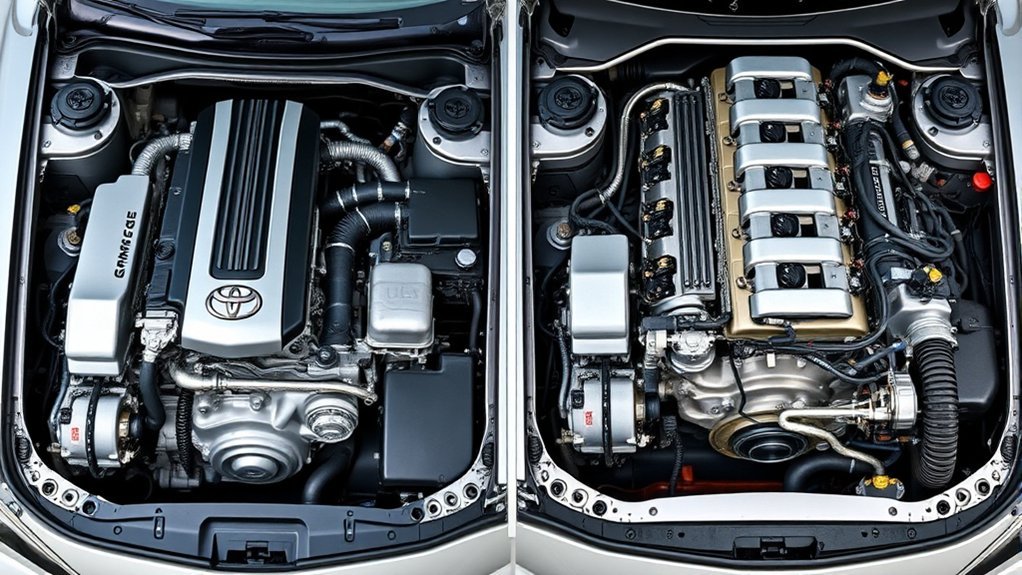
The 2AR-FE fits you best if you drive in the city, want lower fuel costs, and prefer simple daily use. The 2GR-FE fits you best if you value stronger acceleration, quieter power delivery, and easier highway merging.
In the Camry, Toyota rated the later 2.5L four-cylinder at 178 horsepower and 170 lb-ft of torque. Toyota rated the 3.5L V6 at 268 horsepower and 248 lb-ft of torque in the same Camry generation.
| Category | 2AR-FE | 2GR-FE |
|---|---|---|
| Engine type | 2.5L inline-four | 3.5L V6 |
| Main strength | Fuel economy and lower running cost | Power and smoother acceleration |
| Camry output | 178 hp and 170 lb-ft in many 2012-2017 models | 268 hp and 248 lb-ft in V6 models |
| Typical Camry MPG | 25 city / 35 highway in 2014 Camry | 21 city / 31 highway in 2014 Camry |
| Best for | Commuting, city driving, and lower fuel use | Highway driving, faster passing, and more load |
Note: Toyota made the U.S. Camry all-hybrid starting with the 2025 model year, so these engine codes mainly matter for older used Camry shoppers.
Key Specifications of the 2AR-FE Engine
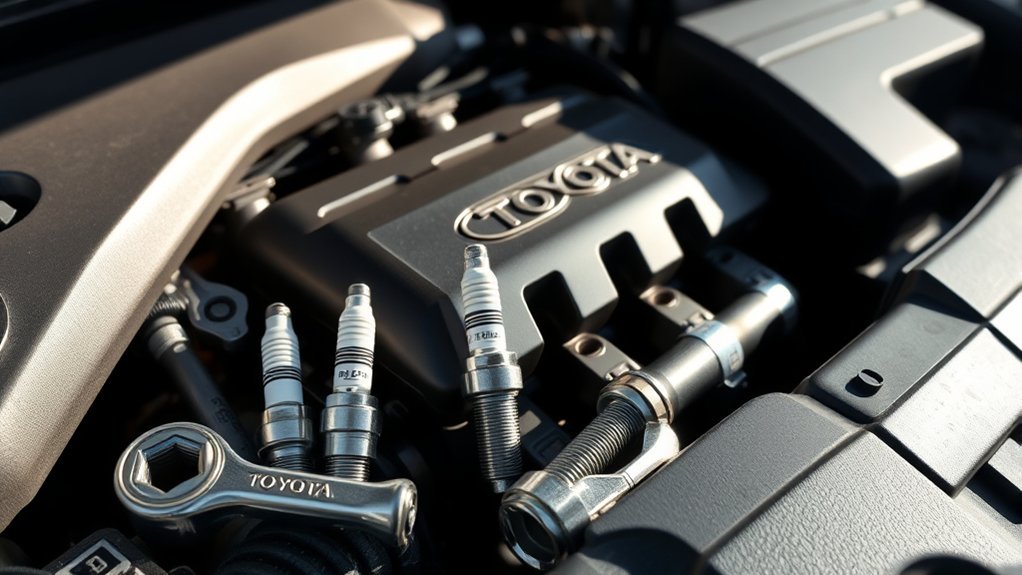
The 2AR-FE is a 2.5L inline-four engine built for steady daily driving. It uses dual overhead cams (DOHC) and Dual Variable Valve Timing with intelligence (Dual VVT-i) to balance fuel use and power.
In many 2012-2017 Camry models, this engine makes 178 horsepower and 170 lb-ft of torque. In 2010-2011 Camry models, output can differ by trim, so you should confirm the exact year and grade before you compare specs.
Engine Characteristics Overview
The 2AR-FE suits drivers who want a reliable, easy-to-live-with Camry engine. Its four-cylinder layout keeps weight and fuel use lower than the V6.
The timing chain also removes the routine timing-belt replacement concern found on some older engines. You still need regular oil, coolant, spark plug, and inspection service to keep it healthy.
Performance Metrics Comparison
The 2AR-FE gives you enough power for normal commuting, but it does not feel as quick as the V6. You may notice the difference most during fast merging, climbing hills, or driving with passengers and cargo.
Its biggest advantage comes from lower fuel use. Toyota listed the 2014 Camry four-cylinder at 25 miles per gallon (MPG) city and 35 MPG highway, which makes it the better choice for daily cost control.
Common Applications Identified
You can find the 2AR-FE in many U.S. Camry four-cylinder models from the 2010 model year through the 2017 model year. Toyota also used this engine family in models such as the RAV4, though exact years and market details vary.
Avalon shoppers should check closely before assuming a 2AR-FE fit. The gasoline Avalon commonly used the V6, while the Avalon Hybrid used the related 2AR-FXE hybrid engine, not the 2AR-FE.
Performance and Power Output of the 2GR-FE Engine
The 2GR-FE is the 3.5L V6 used in older V6 Camry trims. In the Camry, it delivers 268 horsepower and 248 lb-ft of torque.
This engine feels stronger than the 2AR-FE because it makes more torque and pulls harder at speed. You will notice that extra power when you merge onto highways, pass slower traffic, or drive with more weight in the car.
Do not confuse the Camry 2GR-FE with newer GR-family V6 engines. Some later Toyota and Lexus models used newer versions, such as the 2GR-FKS, with different fuel systems and higher output.
[Products Worth Considering]

Refresh your vehicle with Febreze Car Air Freshener Vent Clips in Platinum Ice, designed to deliver consistent scent for up to 40 days on low. Patented Steady Release Technology helps spread an even fragrance through your car’s vents while odor-fighting freshness keeps every ride pleasant. The Platinum Ice scent blends Italian orange, magnolia, amber, and oakmoss for a cool, clean driving experience.

【Notices Before Order】There might be more than 1 Choice for Toyota '2GR-FE' 3.5L V6 DOHC Engine Oil Pumps, due to the vehicle's oil pressure and volume requirement varied. For Any problems or uncertainty in verifying the fitment for your specific vehicle, please contact us or use the Amazon Parts Finder at the top of this page to ensure your application.

Camry Sienna Avalon ES350 RX350 Drive Belt Tensioner Idler Pulley Kit
Fuel Efficiency: Comparing 2AR-FE vs. 2GR-FE
Fuel economy gives the 2AR-FE its clearest win. Toyota listed the 2014 Camry four-cylinder at 25 MPG city and 35 MPG highway.
The 2GR-FE V6 trades some of that economy for power. Toyota listed the 2014 Camry V6 at 21 MPG city and 31 MPG highway.
If you drive mostly in town, the four-cylinder can save fuel over time. If you spend more time on open highways and want easier passing, the V6 may feel worth the higher fuel use.
Where to Find the 2AR-FE and 2GR-FE Engines in Toyota Models
Engine availability depends on model year, trim, and market. Use the table below as a quick guide, then confirm with the vehicle identification number (VIN) before you buy parts or compare vehicles.
| Engine Code | Common Toyota/Lexus Applications | Important Notes |
|---|---|---|
| 2AR-FE | Camry 2010-2017, RAV4 2009-2012, and some Toyota/Scion applications | Best known for fuel economy and simple daily use |
| 2GR-FE | Camry V6, Avalon V6, Highlander, Sienna, Lexus ES 350, and Lexus RX 350 | Best known for stronger power and smooth V6 driving |
Toyota’s VIN specification tool can help you confirm factory details from the 17-digit VIN. Toyota also states that the engine number sits on the engine block, though the exact location can vary by engine.
What Changed for 2025 and 2026 Camry Models
As of May 2026, Toyota lists the U.S. Camry with an all-hybrid powertrain. That means the 2AR-FE and 2GR-FE matter most when you shop older gas-only or V6 Camry models.
The current Camry lineup uses a hybrid system instead of the older 2AR-FE four-cylinder or 2GR-FE V6. If you compare a used 2010-2017 Camry with a 2025 or 2026 Camry, treat them as different powertrain generations.
What the Toyota Engine Code Actually Means
The code tells you the engine family and key design features. In 2AR-FE, “2” points to the second version in the AR engine family, while “AR” identifies the engine family.
The suffix matters too. Toyota-style code references explain that “F” refers to an economy or normal narrow-angle DOHC design, while “E” refers to electronic fuel injection.
The 2GR-FE follows the same logic. “2” points to the second version in the GR family, “GR” identifies the V6 family, and “FE” describes the cylinder-head and fuel-injection setup.
Frequent Maintenance Issues and Solutions for the 2AR-FE Engine
The 2AR-FE has a strong reputation, but age and poor maintenance can still create problems. Watch for oil level changes, coolant leaks, rough idle, and worn ignition parts.
[Products Worth Considering]

[Important Reminder] Ignition Coil UF333 is only compatible with Japan-manufactured vehicles (VIN starts with letter "J"). It does NOT fit US-manufactured vehicles (VIN starts with a number). Please verify your vehicle VIN prior to purchase to ensure proper fitment

[Vehicle Fitment-1]: Compatible with Toyota Corolla 2009-2010 L4 2.4L (Built In Japan), Camry 2002-2002 L4 2.4L (Built In U.S.), Camry 2003-2003 L4 2.4L (Built In U.S.; Built In Japan), Camry 2004-2009, 2011 L4 2.4L (Built In Japan), Camry 2010-2010 L4 2.4L Hybrid (Built In Japan), Highlander 2001-2007 L4 2.4L (Built In Japan), Matrix 2009-2013 L4 2.4L (Built In Japan), RAV4 2001-2003 L4 2.0L, RAV4 2004-2008 L4 2.4L, Solara 2002-2006 L4 2.4L (Built In Japan)

【Vehicle Fitment-1】--Compatible with 2002-2005 Toyota Camry L4 2.4L,Compatible with 2001-2007 Toyota Highlander L4 2.4L,Compatible with 2013 Toyota Matrix 2.4L L4,Compatible with 2001-2003 Toyota Rav4 L4 2.0L,Compatible with 2004-2008 Toyota Rav4 L4 2.4L,Compatible with 2002-2006 Toyota Solara L4 2.4L,Compatible with 2010-2012 Lexus HS250h L4 2.4L,Compatible with 2009-2010 Pontiac Vibe L4 2.4L,Compatible with 2005-2010 Scion TC L4 2.4L
Common Engine Problems
Some older or high-mileage engines may use more oil than expected. Check the dipstick often, inspect the positive crankcase ventilation (PCV) valve when symptoms point to it, and fix leaks before they get worse.
Cooling-system parts also deserve attention. A weak water pump, leaking thermostat housing, or old coolant can raise engine temperature and shorten engine life.
Ignition coils and spark plugs can also cause misfires as the engine ages. If your Camry shakes at idle or flashes a check-engine light, scan the codes and fix the cause before you keep driving.
Maintenance Best Practices
Use the oil grade and service interval listed in your owner’s manual or Toyota maintenance guide. Many Camry owners shorten oil-change intervals when they drive mostly short trips, heavy traffic, heat, or dusty roads.
Check coolant, belts, hoses, mounts, and leaks during routine service. Small issues cost less when you catch them early.
Keep repair records if you plan to sell the car later. A clean service history gives buyers more confidence and helps you prove regular care.
2GR-FE Reliability: How It Holds Up Over Time
The 2GR-FE can last well with steady maintenance, but it has more parts and higher service costs than the four-cylinder. Its V6 layout gives you more power, but it also adds more plugs, more oil capacity, and tighter service access.
One known issue affected certain 2007-early 2010 Camry V6 models. Toyota’s Limited Service Campaign 90K addressed a Variable Valve Timing with intelligence (VVT-i) oil hose that could leak and trigger abnormal engine noise or an oil pressure warning.
Warning: Stop driving and check the engine immediately if you see a low oil pressure light or hear sudden abnormal engine noise.
When you inspect a used V6 Camry, look for oil leaks near the front of the engine, cooling-system leaks, and complete service records. A pre-purchase inspection can save you from expensive repairs.
How to Find Your Camry’s Engine Code
You can start by checking the owner’s manual, underhood labels, and any service records that came with the car. Some engine covers or labels may show useful clues, but you should not rely on them alone.
For a stronger match, use the 17-digit VIN with Toyota’s official vehicle specification tool or ask a Toyota dealer to confirm the engine. Toyota also says the engine number sits on the engine block, though the exact location varies by engine.
This matters when you buy parts. A part for a 2AR-FE four-cylinder may not fit a 2GR-FE V6, even when both cars carry the Camry name.
How to Choose Between the 2AR-FE and 2GR-FE Engines Based on Your Driving Needs
Your best choice depends on how you drive, not only on horsepower. Think about your commute, fuel budget, repair budget, and how often you carry passengers or cargo.
[Products Worth Considering]

CEL Doctor: The ANCEL AD310 is one of the best-selling OBD II scanners on the market and is recommended by Scotty Kilmer, a YouTuber and auto mechanic. It can easily determine the cause of the check engine light coming on. After repairing the vehicle's problems, it can quickly read and clear diagnostic trouble codes of emission system, read live data & hard memory data, view freeze frame, I/M monitor readiness and collect vehicle information

Multi-Functions - Practical Multi-Functions OBD2 code reader features built-in OBD2 DTC lookup library, which help you to determine the cause of the engine light, read code, erase code, view freeze frame, I/M ready, vehicle information, data flow, real-time curve, get vehicle speed information, calculate load value, engine coolant temperature, get engine speed.

⚠️【Important Tips Before Purchcase】1. Compatible with standard OBD II vehicles from 1996 onward in the US market. ⚠️2. Due to the Safe Gateway (SGW) / FCA AutoAuth security system, this tool cannot access OBDII modules to clear codes for FCA vehicles (including Chrysler, Dodge, Jeep, etc.) manufactured after 2017. ⚠️And vehicle brands equipped with a SGW are not supported either. ⚠️3. Not support TPMS or other service functions. Only the basic OBDII code reader. Functions not universal, please s-end mes-sage via Ama-zon or 📞autelofficial @ outlook . com📞 to check before order.
Choose the 2AR-FE if…
- You want lower fuel use for daily commuting.
- You drive mostly in city traffic or short highway trips.
- You prefer a simpler engine with lower routine service costs.
- You do not need fast acceleration or heavy-load power often.
Choose the 2GR-FE if…
- You want stronger acceleration and easier highway passing.
- You drive longer trips where smooth V6 power matters.
- You accept higher fuel use for better performance.
- You can budget for higher maintenance and repair costs.
If you shop for a used Camry, do not choose by engine code alone. Check the car’s service history, scan for diagnostic codes, inspect for leaks, and compare the total condition of each vehicle.
Frequently Asked Questions
How do you read a Toyota engine code?
Read the number first, then the engine family letters, then the suffix after the dash. In 2AR-FE, “2” identifies the engine version, “AR” identifies the engine family, and “FE” describes the head and fuel-injection setup.
Is the 2GR-FE better than the 2AR-FE?
The 2GR-FE is better for power, smooth acceleration, and highway passing. The 2AR-FE is better for fuel savings, lower running costs, and simple daily driving.
What is the difference between 2AR-FE and 2AR-FSE?
The 2AR-FE uses a simpler port fuel-injection setup and appears in many non-hybrid Toyota models. The 2AR-FSE is a related engine variant with Toyota’s D-4S direct and port injection setup, used in different applications.
What is the engine code for the 2.5L Camry four-cylinder?
Many 2010-2017 U.S. Camry four-cylinder models use the 2AR-FE engine. You should still confirm your exact engine with the VIN, service records, or Toyota dealer lookup before buying parts.
What does FE mean in a Toyota engine code?
In Toyota-style engine codes, “F” refers to an economy or normal narrow-angle DOHC head design. “E” refers to electronic fuel injection, so “FE” does not mean only fuel injection.
Conclusion
The 2AR-FE is the better Camry engine for fuel savings, while the 2GR-FE is the better choice for stronger power. Start with your driving needs, then confirm the engine code through the VIN or engine stamp. Before you buy a used Camry, check the service history and inspect for leaks, warning lights, and rough running. A clean, well-maintained car will matter more than the engine code alone.
References
- 2014 Toyota Camry, America’s Best-Selling Passenger Car Offers Four-Cylinder, V6 and Hybrid Models – Toyota USA Newsroom, 2013
- Camry Gains New Powertrain, New Styling for 2010 – Toyota USA Newsroom, 2009
- Toyota Camry Goes Exclusively Hybrid Plus a New Look and More Technology – Toyota USA Newsroom, 2024
- 2026 Toyota Camry – Toyota, 2026
- Where do I find my engine number? – Toyota Customer Support
- Toyota VIN Decoder and Vehicle Specification Tool – Toyota
- Toyota Engine Codes Explained – Olathe Toyota Parts Center
- Limited Service Campaign 90K Phase 2, Camry V6 VVT-i Oil Hose Replacement – Toyota Motor Sales, U.S.A., Inc., 2010


[…] weather can make your Toyota Camry feel less sure on the road before you spot a tire problem. A small pressure drop can affect grip, […]
[…] For engine-family details on later used models, see the Camry engine-code guide. […]
[…] an in-depth technical comparison of four-cylinder and V6 designs, review our Camry engine-code guide. For generation-by-generation powertrain specifications, explore our guide to Toyota Camry engines […]